Driving dynamics control system for vehicles
US20070150116A1
2007-06-28
10/556,575
2004-05-07
✅ Patent granted
US 8,204,634 B2
2012-06-19
WO; PCT/EP2004/050735; 20040507
WO; WO2004/101337; 20041125
Dalena Tran
2028-03-08
Abstract:
The present device relates to a driving dynamics control system for vehicles, including at least one signal distribution to which vehicle data, environment data and data regarding the driver's request are sent in the form of input data, and including several controllable or regulatable subsystems which modify the dynamics of the vehicle such as a driver-independently adjustable steering system, a driver-independently adjustable chassis, a driver-independently adjustable brake, and a driver-independently adjustable driving track. The system is characterized in that the data of the signal distribution is sent to a central determining unit (driving condition detection, driver request detection), in that the central determining unit determines from the data of the signal distribution a central control target, and these items of data regarding the central control target are sent to a central regulating variable distribution or a central driving condition controller, respectively, which, in an interactive communication with the subsystems, actuates these subsystems in such a way that the control target is realized by the subsystems on the vehicle.
Inventors:
- Stefan Fritz 12 🇩🇪 Erzhausen, Germany
- Ralf Schwarz 10 🇩🇪 Ingolstadt, Germany
- Steffen Troster 3 🇩🇪 Metzingen, Germany
- Sieghard Schrabler 1 🇩🇪 Frankfurt am Main, Germany
- Urs Bauer 1 🇩🇪 Ludigsburg, Germany
- Markus Weinreuter 1 🇩🇪 Gross-Zimmerr, Germany
- Sighard Schräbler 1 🇩🇪 Frankfurt am Main, Germany
Assignee:
- CONTINENTAL TEVES AG &CO. OHG 845 🇩🇪 Frankfurt, Germany
Interested in similar patents?
Get notified when new applications in this technology area are published.
Classification:
F16H61/66 » CPC main
Control functions within change-speed- or reversing-gearings for conveying rotary motion specially adapted for continuously variable gearings
B60T8/1755 » CPC further
Arrangements for adjusting wheel-braking force to meet varying vehicular or ground-surface conditions, e.g. limiting or varying distribution of braking force; Using electrical or electronic regulation means to control braking Brake regulation specially adapted to control the stability of the vehicle, e.g. taking into account yaw rate or transverse acceleration in a curve
B60W40/09 » CPC further
Estimation or calculation of driving parameters for road vehicle drive control systems not related to the control of a particular sub unit, related to drivers or passengers Driving style or behaviour
B62D6/003 » CPC further
Arrangements for automatically controlling steering depending on driving conditions sensed and responded to, e.g. control circuits computing target steering angles for front or rear wheels in order to control vehicle yaw movement, i.e. around a vertical axis
B60T2260/02 » CPC further
Interaction of vehicle brake system with other systems Active Steering, Steer-by-Wire
B60T2260/06 » CPC further
Interaction of vehicle brake system with other systems Active Suspension System
B60T2260/08 » CPC further
Interaction of vehicle brake system with other systems Coordination of integrated systems
B60T2260/09 » CPC further
Interaction of vehicle brake system with other systems Complex systems; Conjoint control of two or more vehicle active control systems
B60W10/04 » CPC further
Conjoint control of vehicle sub-units of different type or different function including control of propulsion units
B60W10/18 » CPC further
Conjoint control of vehicle sub-units of different type or different function including control of braking systems
B60W10/20 » CPC further
Conjoint control of vehicle sub-units of different type or different function including control of steering systems
B60W10/22 » CPC further
Conjoint control of vehicle sub-units of different type or different function including control of suspension systems
B60W2050/0005 » CPC further
Details of control systems for road vehicle drive control not related to the control of a particular sub-unit, e.g. process diagnostic or vehicle driver interfaces; Details of the control system; Automatic control, details of type of controller or control system architecture; In digital systems, e.g. discrete-time systems involving sampling Processor details or data handling, e.g. memory registers or chip architecture
B60W2050/0044 » CPC further
Details of control systems for road vehicle drive control not related to the control of a particular sub-unit, e.g. process diagnostic or vehicle driver interfaces; Details of the control system; Signal treatments, identification of variables or parameters, parameter estimation or state estimation In digital systems
B60W2050/0297 » CPC further
Details of control systems for road vehicle drive control not related to the control of a particular sub-unit, e.g. process diagnostic or vehicle driver interfaces; Ensuring safety in case of control system failures, e.g. by diagnosing, circumventing or fixing failures; Adapting to failures or work around with other constraints, e.g. circumvention by avoiding use of failed parts Control Giving priority to different actuators or systems
B60W2710/20 » CPC further
Output or target parameters relating to a particular sub-units Steering systems
G05D1/00 IPC
Control of position, course or altitude of land, water, air, or space vehicles, e.g. automatic pilot
B60G21/00 IPC
Interconnection systems for two or more resiliently-suspended wheels, e.g. for stabilising a vehicle body with respect to acceleration, deceleration or centrifugal forces
Description
BACKGROUND OF THE INVENTIONThe present invention relates to a driving dynamics control system for vehicles, including at least one signal distribution to which vehicle data, environment data and data regarding the driver's request are sent in the form of input data, and including several controllable or regulatable subsystems which modify the dynamics of the vehicle such as a driver-independently adjustable steering system, a driver-independently adjustable chassis, a driver-independently adjustable brake, and a driver-independently adjustable driving track.
Both comfort and safety engineering in vehicles gain in significance. The result is that vehicles are equipped with electronic and electromechanical components or subsystems at an increasing rate. Each subsystem necessitates its own control unit in order to render sensor signals plausible, condition them, to calculate corrective signals and adjust its actuators. Each of these subsystems or control units operates, however, on its own (stand-alone) and often does not know about the others.
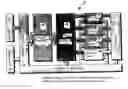
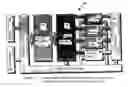
Apart from comfort systems such as automatic window lifters, inside adjusters of the outside rear-view mirrors, etc., mainly the number of subsystems for influencing or improving the driving performance or the driving dynamics and for improving safety is significantly rising. The trend to more electronics and electromechanics can also be found in the subsystems for influencing the driving performance or driving dynamics, respectively. Among the subsystems that allow influencing the driving performance actively, that means irrespective of the driver, are the electronic brake system, the active steering system, active and semi-active chassis components, and also the driving system in vehicles with controllable intermediate gears. Each of these subsystems is meant to influence the vehicle in such a manner that improvements in the driving performance are achieved. Depending on the subsystem concerned, the control algorithms have their focus in different fields (safety, handling, or comfort). Therefore, the subsystems are primarily tuned only for their respective control target or their main range of application, respectively. The ranges of application or the focuses of the individual subsystems overlap each other, however, in wide ranges of the driving dynamics-related range of application of vehicles. Each of these subsystems works on its own (stand-alone), although frequently the same driving dynamics quantities are intended to be influenced or controlled (FIG. 1 relating to the example of the horizontal control). This causes a very great complexity of application, above all for the mutual protection of the individual subsystems with respect to each other, and results in functional restrictions for each subsystem (i.e. each subsystem is unable to reach its control target in an ideal manner because it must not limit or hinder the other subsystems).
SUMMARY OF THE INVENTIONIn view of the above, an object of the invention involves enhancing the functionality of a driving dynamics control.
This object is achieved by a driving dynamics control system for a vehicle include a signal distribution, two or more controllable subsystems which modify dynamics of the vehicle and a central determining unit that actuates the controllable subsystems based on a control target.
The fact that the data of the signal distribution is sent to a central driving condition detection, that the central determining unit determines from the data of the signal distribution a central, overall control target and these items of data regarding the central control target are sent to a central regulating variable distribution which, in an interactive communication with the subsystems, actuates these subsystems in such a way that the control target is realized by the subsystems on the vehicle, will reduce the complexity of application, above all for the mutual protection of the individual subsystems with respect to each other, and the functional restrictions for each of the subsystems are eliminated.
The division is carried out by the central driving condition controller or the regulating variable distribution itself. The driving condition controller or the regulating variable distribution is a multivariable controller, and the corresponding division of the control requests among the individual subsystems is based on the controller design (controller concept, controller approach, controller algorithm) itself, on a quality criterion or optimization criterion predetermined to the controller and/or by means of tunable weighting factors (weighting corresponding to intensity and activation order of the subsystems). For example, it may be the objective of this division that in the presence of a minor tendency to instability, the stabilization request is first of all assigned to the chassis and the steering system for comfort reasons. When there is a greater tendency to instability, the brake and the driving track, respectively, must additionally be taken into account. Depending on the controller approach, it is possible to derive a quality criterion or corresponding weighting factors for the controller design or the controller from this preset target.
BRIEF DESCRIPTION OF THE DRAWINGSIn the drawings:
FIG. 1 depicts a horizontal control system for a driving system:
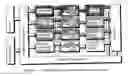
FIG. 2 depicts a control system.
DETAILED DESCRIPTION OF THE DRAWINGSThe combination of all control functions of the individual actuators in a central driving dynamics control algorithm (integrated approach), compared to the stand-alone variant, achieves various advantages with respect to driving dynamics and also under topological or system-technical aspects:
-
- The different subsystems or intelligent actuators, respectively, are actuated by a control algorithm closed in itself in the integrated approach. Thus, the harmonious interaction of the individual intelligent actuators is structurally protected. The control of the driving condition is protected because the individual intelligent actuators corresponding to the multivariable controller approach cannot mutually influence each other negatively.
- There is a simple possibility of extending the central driving dynamics controller by new intelligent actuators because the increase in complexity is insignificant.
- The mutual consideration of the intelligent actuators in the control approach results in a reduced complexity of application (in stand-alone subsystems the actuators must be protected against each other by driving tests). The complexity rises enormously in extensions of the stand-alone subsystem network, what shows above all in a highly increasing complexity of application.
- The central network of the individual intelligent actuators in the control approach results in a low bus load and a small number of physical interfaces between the central processor and the intelligent actuators. If the stand-alone systems were ‘network-connected’, this would cause an extent of communication among the stand-alone systems which is difficult to control and attend to.
- The shift and combination or integration, respectively, of all control functions, driving condition detections, and driver interpretations of the subsystems into a central control unit saves costs. The individual intelligent actuators require less calculating efforts in order to execute their basic functions (control operations). Thus, less costly and nearly wattless calculator units with less physical memory requirements can be used in the intelligent actuators.
- The effort needed for the extension and servicing of the entire software provided in the vehicle is reduced, because it is no longer required that each subsystem has control algorithms of its own, a driving condition determining unit and a driver request detection, as is the case with the stand-alone subsystems. The control algorithms, the driving condition determining unit and the driver request detection need being extended and attended to only one time in a central fashion in the integrated approach.
- A clear-cut and unambiguous separation of basic functions (controls) and driving dynamics control functions (adjustment of driving condition variables by means of feedback of variables relevant for driving dynamics such as the yaw rate, lateral acceleration, sideslip angle, etc.).
The optimal interplay between the individual subsystems results in an optimal control performance or an optimal attainment of the control targets when looking upon all functions of the vehicle. All primary control functions of the individual subsystems are grouped (integrated) centrally in a control algorithm in order to ensure optimal interaction of the individual subsystems. This means that all functions, which influence the vehicle by feedback, i.e. control of vehicle condition variables, are combined centrally in a control algorithm. Using the example of the horizontal control, this implies according to FIG. 2 that the individual subsystems (brake system, steering system, chassis system, and drive system) become intelligent actuators. The control of the driving dynamics condition is performed based on a central primary control algorithm which purposefully addresses the individual intelligent actuators in order to reach its control targets. An intelligent actuator not only adjusts nominal values of the primary driving dynamics controller but also reports its current condition and its still possible adjusting potential back to the primary driving dynamics controller, enabling the primary driving dynamics controller to take this data into account in its control strategy. In addition, each intelligent actuator has basic functions. These basic functions in turn are pure controls, that means, they act without feedback of driving dynamics variables. For example, this concerns the electronic brake force distribution in the brake system, it concerns a speed-responsive variation of the steering ratio in an active steering system, or it concerns the distribution of roll moments controlled by the lateral acceleration in a chassis system with active stabilizers. All control functions or feedbacks and adjustments of driving dynamics variables are executed in the central driving dynamics control algorithm. The determination of the current driving condition and the determination of the driver's request also take place centrally in a block connected upstream of the primary driving dynamics controller (FIG. 2).
FIG. 2 shows a driving dynamics control 10 according to the invention including a signal distribution 11. The signal distribution receives input data from the vehicle (measured variables such as the lateral acceleration, the yaw rate), from the driver 13 (direction requested by the driver by way of steering angle and/or accelerator pedal position, brake pedal position), and from the environment 14 (if measurable e.g. the angle of inclination of the roadway, the coefficient of friction of the roadway, etc.). The signal distribution 11 is connected to a determining unit 15 (driving condition detection, driver request detection) and the regulating variable distribution or the determining unit of the central driving condition controller 16 and the subsystems 17 to 20. The determining unit 15 is supplied with input data of the systems driver, vehicle and environment, and the determining unit 15 determines from this signal the nominal performance of the vehicle as desired by the driver as well as non-measurable condition and environment variables (e.g. coefficient of friction of the roadway) and sends these variables to the central driving condition controller in block 16. The regulating variable distribution or the central driving condition controller 16, respectively, communicates interactively with the signal distribution 11 and also sends to it data about the regulating variables. Said data can be fed back to the determining unit 15. The regulating variable distribution or the central driving condition controller, respectively, is connected interactively with each of the subsystems and this way conveys its control commands to the individual chassis subsystems, yet receives also this way information about their condition (e.g. operable, partly operable, inoperable) and about their current adjusting potential and takes this information of the e.g. chassis subsystems in account in its adjusting requirements. The subsystems 17-20 adjust the control commands of the central driving condition controller and furnish in turn the actual values or the adjusted or the actual condition of the respective subsystem, respectively, to the signal distribution 11 which in turn sends this information in the closed control loop to the determining unit 15 (driving condition detection and signal conditioning).
Claims
1-7. (canceled)
8. A driving dynamics control system for a vehicle comprising:
at least one signal distribution which receives vehicle data, environment data and data regarding driver's request as input data;
two or more controllable subsystems which modify dynamics of the vehicle such as a driver-independently adjustable steering system, a driver-independently adjustable chassis, a driver-independently adjustable brake, and a driver-independently adjustable driving track; and
a central determining unit receives data from the signal distribution, wherein the central determining unit determines from the received data a central control target, and items of data regarding the central control target are sent to a central regulating variable distribution or a central driving condition controller, respectively, which, in an interactive communication with the subsystems, actuates the two or more controllable subsystems in such a way that the control target is realized by the subsystems on the vehicle.
8. The control system according to claim 7, wherein the control target is divided among the subsystems and executed depending on the respective subsystems current adjusting potential and possible contribution to the current control target.
9. The control system according to claim 8, wherein the division of the control target among the subsystems is executed depending on the subsystems current condition
10. The control system according to claim 8, wherein the division of the control target among the subsystems is executed depending on the current driving condition of the vehicle.
11. The control system according to claim 7, wherein the central control target is determined in the central driving condition detection (15) and is divided among the subsystems by the central driving condition controller (psip controller, beta controller).
12. The control system according to claim 11, wherein the division of the central control target among the subsystems is executed according to a controller concept or controller algorithm, respectively, predetermined to the central driving condition controller or the regulating variable distribution, respectively, according to a quality criterion or optimization criterion predetermined to the driving condition controller or the regulating variable distribution (16).
13. The control system according to claim 12, wherein weighting is executed corresponding to an intensity and activation order of the subsystems.
Images & Drawings included:
Sources:
- United States Patent and Trademark Office - verify current appl. status at the USPTO↗
Similar patent applications:
- » 20230001940
Method and device for optimum parameterization of a driving dynamics control system for vehicles - » 20110202237
Driving dynamics control system for vehicles - » 20250001987
DRIVING DYNAMICS SYSTEM, ELECTRIC VEHICLE WITH CENTRAL CONTROL - » 20220080954
Automotive electronic lateral dynamics control system for a self-driving motor vehicle - » 20230029148
Systems and methods for controlling driving dynamics in a vehicle - » 20090210124
Method and device for controlling a motor vehicle comprising an electronically controlled brake system with driving dynamics control - » 20200324649
Systems and methods for controlling driving dynamics in a vehicle - » 20240375508
SYSTEMS AND METHODS FOR CONTROLLING DRIVING DYNAMICS IN A VEHICLE - » 20200331478
METHOD AND DRIVING DYNAMICS SYSTEM FOR CONTROLLING A STARTING PROCESS OF A VEHICLE - » 20230174077
METHOD FOR OPERATING A DRIVING DYNAMICS SYSTEM FACILITY OF A MOTOR VEHICLE WHILE DRIVING WITH THE MOTOR VEHICLE, CONTROL DEVICE, AND MOTOR VEHICLE
Recent applications in this class:
- » 20250043863 2025-02-06
METHOD FOR OPERATING A DRIVELINE - » 20220090676 2022-03-24
Continuously variable transmission control - » 20210025492 2021-01-28
Continuously variable transmission control device and control method - » 20200318736 2020-10-08
Control device and control method for vehicle including continuously variable transmission - » 20200300357 2020-09-24
Transmission control device - » 20200278025 2020-09-03
Continuously variable transmission control - » 20200248799 2020-08-06
Control device and control method for continuously variable transmission - » 20200248798 2020-08-06
Device and method for controlling continuously variable transmission - » 20200158236 2020-05-21
Shift control device - » 20190277399 2019-09-12
CVT ratio control with respect to the actual engine torque of the prime mover
Recent applications for this Assignee:
- » 20210321232 2021-10-14
Vehicle-to-X communication in the USA and Europe using a standard transmitter - » 20210210248 2021-07-08
Seal mold divided structure for combination cable and method for manufacturing the same - » 20210190812 2021-06-24
Method for determining the direction of travel of a vehicle - » 20210179045 2021-06-17
Method for controlling a brake system of a vehicle - » 20210178847 2021-06-17
METHOD FOR OPERATING AN AIR SUSPENSION SYSTEM, AND AIR SUSPENSION SYSTEM - » 20210031800 2021-02-04
Method and apparatus for cooperatively coordinating future driving maneuvers of a vehicle with foreign maneuvers of at least one foreign vehicle - » 20200406897 2020-12-31
Method and device for recognizing and evaluating roadway conditions and weather-related environmental influences - » 20200393848 2020-12-17
Method for detecting a road class - » 20200317199 2020-10-08
Method and system for avoiding lateral collisions - » 20200300636 2020-09-24
Method for determining correction values, method for determining a position of a motor vehicle