Magnetic nanoparticles comprising a core formed from noble metals
US20070151631A1
2007-07-05
11/525,119
2006-09-22
✅ Patent granted
US 7,960,025 B2
2011-06-14
-
-
H. (Holly) T Le
2028-06-19
Abstract:
The invention relates to nanoparticles of noble metals, having a controlled microstructure which leads to the appearance of ferromagnetic behaviour in said nanoparticles, thereby enabling the use of very small magnets (<5 nm) in a range in which standard ferromagnetic metals behave as superparamagnetic entitles (disappearance of hysteresis cycle). The inventive nanoparticles can be used, for example, to reduce the dimensions in magnetic recordings, as well as in biomedicine as tools for biomolecule recognition, nuclear magnetic resonance imaging, drug-release control or hypothermia treatments.
Inventors:
- Antonio Hernando Grande 9 🇪🇸 Madrid, Spain
- M' Asuncion Fernandez Camacho 1 🇪🇸 Sevilla, Spain
- Rocio Litran Ramos 1 🇪🇸 Sevilla, Spain
- Teresa Cristina Rojas Ruiz 1 🇪🇸 Sevilla, Spain
- Juan Carlos Sanchez Lopez 1 🇪🇸 Sevilla, Spain
- Patricia Crespo Del Arco 1 🇪🇸 Madrid, Spain
- Blanca Sampedro Rozas 1 🇪🇸 Madrid, Spain
- M' Asunción Fernandez Camacho 1 🇪🇸 Seville, Spain
- Rocio Litran Ramos 1 🇪🇸 Seville, Spain
- Teresa Cristina Rojas Ruiz 1 🇪🇸 Seville, Spain
- Juan Carlos Sanchez Lopez 1 🇪🇸 Seville, Spain
Assignee:
- CONSEJO SUPERIOR DE INVESTIGACIONES CIENTIFICAS 273 🇪🇸 Madrid, Spain
- UNIVERSIDAD COMPLUTENSE DE MADRID 30 🇪🇸 Madrid, Spain
Interested in similar patents?
Get notified when new applications in this technology area are published.
Classification:
B32B5/16 IPC
Layered products characterised by the non- homogeneity or physical structure, i.e. comprising a fibrous, filamentary, particulate or foam layer; Layered products characterised by having a layer differing constitutionally or physically in different parts characterised by features of a layer formed of particles, e.g. chips, powder or granules
B05D7/00 IPC
Processes, other than flocking, specially adapted for applying liquids or other fluent materials to particular surfaces or for applying particular liquids or other fluent materials
A61K41/0052 » CPC further
Medicinal preparations obtained by treating materials with wave energy or particle radiation ; Therapies using these preparations Thermotherapy; Hyperthermia; Magnetic induction; Induction heating therapy
A61K49/1878 » CPC further
Preparations for testing; Nuclear magnetic resonance [NMR] contrast preparations; Magnetic resonance imaging [MRI] contrast preparations characterised by a special physical form, e.g. emulsions, microcapsules, liposomes particles, e.g. uncoated or non-functionalised microparticles or nanoparticles coated or functionalised microparticles or nanoparticles coated or functionalised nanoparticles the nanoparticle having a magnetically inert core and a (super)(para)magnetic coating
B22F9/24 » CPC further
Making metallic powder or suspensions thereof using chemical processes with reduction of metal compounds starting from liquid metal compounds, e.g. solutions
B82Y5/00 » CPC further
Nanobiotechnology or nanomedicine, e.g. protein engineering or drug delivery
B82Y25/00 » CPC further
Nanomagnetism, e.g. magnetoimpedance, anisotropic magnetoresistance, giant magnetoresistance or tunneling magnetoresistance
B82Y30/00 » CPC further
Nanotechnology for materials or surface science, e.g. nanocomposites
G01N33/54373 » CPC further
Investigating or analysing materials by specific methods not covered by groups -; Biological material, e.g. blood, urine ; Haemocytometers; Chemical analysis of biological material, e.g. blood, urine; Testing involving biospecific ligand binding methods; Immunological testing; Immunoassay; Biospecific binding assay; Materials therefor with an insoluble carrier for immobilising immunochemicals; Apparatus specially adapted for solid-phase testing involving physiochemical end-point determination, e.g. wave-guides, FETS, gratings
G11B5/712 » CPC further
Recording by magnetisation or demagnetisation of a record carrier; Reproducing by magnetic means; Record carriers therefor; Record carriers characterised by the selection of the material comprising one or more layers of magnetisable material homogeneously mixed with a bonding agent on a base layer characterised by the surface treatment or coating of magnetic particles
G11B5/714 » CPC further
Recording by magnetisation or demagnetisation of a record carrier; Reproducing by magnetic means; Record carriers therefor; Record carriers characterised by the selection of the material comprising one or more layers of magnetisable material homogeneously mixed with a bonding agent on a base layer characterised by the dimension of the magnetic particles
H01F1/0054 » CPC further
Magnets or magnetic bodies characterised by the magnetic materials therefor; Selection of materials for their magnetic properties showing low dimensional magnetism, i.e. spin rearrangements due to a restriction of dimensions, e.g. showing giant magnetoresistivity,; Zero dimensional, e.g. nanoparticles, soft nanoparticles for medical/biological use Coated nanoparticles, e.g. nanoparticles coated with organic surfactant
Y10S977/773 » CPC further
Nanotechnology; Nanostructure Nanoparticle, i.e. structure having three dimensions of 100 nm or less
Y10S977/81 » CPC further
Nanotechnology; Nanostructure Of specified metal or metal alloy composition
Y10S977/838 » CPC further
Nanotechnology; Nanostructure having specified property, e.g. lattice-constant, thermal expansion coefficient Magnetic property of nanomaterial
Y10S977/925 » CPC further
Nanotechnology; Specified use of nanostructure for medical, immunological, body treatment, or diagnosis Bioelectrical
Y10S977/953 » CPC further
Nanotechnology; Specified use of nanostructure for electronic or optoelectronic application Detector using nanostructure
Y10S977/96 » CPC further
Nanotechnology; Specified use of nanostructure for electronic or optoelectronic application; Detector using nanostructure Of magnetic property
Y10T428/2991 » CPC further
Stock material or miscellaneous articles; Coated or structually defined flake, particle, cell, strand, strand portion, rod, filament, macroscopic fiber or mass thereof; Particulate matter [e.g., sphere, flake, etc.] Coated
H01F1/20 IPC
Magnets or magnetic bodies characterised by the magnetic materials therefor; Selection of materials for their magnetic properties of inorganic materials characterised by their coercivity of soft-magnetic materials metals or alloys in the form of particles, e.g. powder
Description
SECTOR OF THE ARTThe object of this invention falls within nanotechnology applications. Magnets of very small dimensions (<5 nm) are provided in a range in which standard ferromagnetic metals behave as superparamagnetic entitles (disappearance of hysteresis cycle). It is first of all proposed to reduce the dimensions in magnetic recordings by using the developed nanoparticles. Applications are likewise proposed in biomedicine, as tools for biomolecule recognition, in nuclear magnetic resonance imaging, drug-release control or hyperthermia treatments.
OBJECT OF THE INVENTIONThe object of this invention consists of nanoparticles of noble metals, with a controlled microstructure leading to the appearance of magnetic behaviour therein.
Equally constituting the object of this invention is a process for preparation of said nanoparticles.
STATE OF THE ARTThe appearance of ferromagnetism in noble metals failing to meet the Stoner condition (N. Takano, T. Kai, K. Shiiki, F. Terasaki, Solid State Común. 97 (1996) 153) is a phenomenon which has so far been reported in the case of nanoparticles of palladium and has been attributed to confinement phenomena due to small size, surface anisotropy owing to the high surface/volume ratio in a nanoparticle and/or anisotropy introduced into the edges of twin crystals in twinned nanoparticles (B. Sampedro, P. Crespo, A. Hernando, R. Litrán, J. C. Sánchez-López, C. López-Cartes, A. Fernández, J. Ramírez, J. González-Calbet, M. Vallet, Phys. Rev. Let 91 (2003) 237203-1; T. Sinohara, T. Sato, T. Taniyama, Phys. Rev. Let. 91 (2003) 197201; T. Taniyama, E. Ohta, T. Sato, Phys. B 237 (1997) 286; E. Huger, K. Osuch, Europhys. Let. 63 (2003) 90; V. Kumar, Y. Kawazoe, Phys. Rev. B 66 (2002) 144413). In these works the sizes of the nanoparticles reported are in the range 2-15 nm. Some previous works also point to the possible existence of ferromagnetism in Au (H. Hori, T. Teranishi, M. Taki, S. Yamada, M. Miyake, Y. Yamamoto, J. Mag. Mag. Mat. 226 (2001) 1910) though no hysteresis cycles have been reported.
Nanoparticles of Au/Fe have also been reported consisting of an iron core and a crust of gold, functionalised with thiols or protected by surfactants (B. Ravel, E. E. Carpenter, V. G. Harris, J. of Appl. Phys. 91 (2002) 8195). The magnetic behaviour of the iron core gives rise to the appearance of superparamagnetism in these nanoparticles, and the proposal of possible applications in biomedicine (WO03072830, EP1339075, WO03057175). Likewise, nanoparticles of gold have been reported functionalised with organic radicals which confer a magnetic behaviour on the particles (EP1211698).
For nanoparticles of typically magnetic metals and oxides such as the metals Fe, Go, Ni and their magnetic oxides, there are numerous works and patents (F. del Monte, M. P. Morales, D. Levy, A. Fernández, M. Ocaña, A. Roig, E. Molins, K. O'Grady, C. J. Sema, Langmuir 13 (1997) 3627; D. Sunil, H. D. Gafney, M. H. Rafailovich, J. Non-Cryst. Solids (2003) 319; S. Okamoto, O. Kitakani, N. Kkuchi, Phys. Rev. B 67 (2003); M. Guzman, J. L Delplancke, G. J. Long, J. Appl. Phys. 92 (2002) 2634; Y. D. Yao, Y. Y. Chen, S. D. F. Lee, J. Magn. Magn. Mater. 239 (2002) 249, JP2003132519). Nevertheless, in standard ferromagnetic materials for particle sizes of the order of 5 nm or less, the ferromagnetic behaviour disappears, which eliminates the appearance of the hysteresis cycle and coercivity. This currently limits the possibility of increasing the density of information in magnetic recording (J. L. Dormann, Revue Phys. Appl. 16 (1981) 275).
The preparation of metallic nanoparticles protected by functionalisation (C. M. Shen, Y. K. Su, H. T. Yang, T. Z. Yang, H. J. Gao, Chem. Phys. Lett. 373 (2003) 39; S. Chen, K. Huang, J. A. Stearns, Chem. Mater. 12 (2000) 540) or using a surfactant (G. Schmid, B. Morun, J. O. Malm, Angew. Chem. 101 (1989) 772; J. S. Bradley, J. M. Miller, E. W. Hill, J. Am. Chem. Soc. 113 (1991) 4016; H. Bonnemann, W. Brijoux, R. Brikmann, E. Dinjus, T. Joussen, B. Korall, Angew. Chem. 103 (1991) 1344; K. R. Brown, M. J. Natan, Langmuir 14 (1998) 726, Z. S. Pilla, P. V. Kamat, J. Phys. Chem. B 108 (2004) 945) are widely reported processes. In particular, the preparation of gold nanoparticles by reduction of a metal salt with borohydride and functionalised with thiol type derivatives is a well-established method (M. Brust, M. Walker, D. Bethell, D. Schriffin, R. Whyman, J. Chem. Soc., Chem. Commun. (1994) 801; Patent WO0232404). Likewise, the stabilization of palladium nanoparticles with salts of quaternary ammonium has also been reported (M. T. Reetz, M. Maase, Adv. Mater. 11 (1999) 773, M. Reetz, W. Helbig, S. A Quaiser, U. Stimming, N. Breuer, R. Vogel, Science 20 (1995) 367).
The present invention has adapted the reported methods for preparation of nanoparticles of Au and Pd functionalised with thiols in order to prepare particles of very small size (<5 nm in diameter). In particular, the obtaining of metallic cores surrounding or embedded in phases modified by a metal-sulphur covalent bond is controlled. A magnetic behaviour for these nanoparticles has been found which in some cases reaches up to room temperature with magnetizations of the order of 1 emu per gram of metal.
EXPLANATION OF THE INVENTIONThe object of this invention consists of magnetic nanoparticles of noble metals non-magnetic in the mass state, of size less than 5 nm comprising:
a) a ore formed from a noble metal and
b) an anisotropic crust formed from compounds containing at least one metal-sulphur covalent bond.
The size of the nanoparticles preferably lies between 1.0 and 2.0 nm, more preferably between 1.2 and 1.4 nm.
The noble metal for the core is Au, Pd, Pt, Ag or any other metal non-ferromagnetic in the mass state. When the core is formed from Au or Pd, the anisotropic crust contains Au—S/Pd—S compounds and Au—S—R/Pd—S—R compounds in proportions between 1/1000 and 1000/1 (Au—S/Au—S—R or Pd—S/Pd—S—R).
R is an aliphatic chain in turn joined to other molecules, in particular proteins or other biomolecules.
The magnetic nanoparticles of the present invention can display a ferromagnetic behaviour, a ferromagnetic behaviour with low coercive field or a paramagnetic behaviour.
Likewise constituting an object of the present invention is a procedure for preparation of said magnetic nanoparticles which comprises the reaction of a precursor of the non-ferromagnetic noble metal with a thiol derivative of general formula HS—R in stoichiometric excess and in the presence of a reducing agent. When the non-magnetic noble metal is gold the precursor is prepared by means of reaction of tetrachloroauric acid with any quaternary ammonium salt in stoichiometric excess. When the non-magnetic noble metal is palladium the precursor is prepared by means of reaction of any palladium salt, in particular nitrate, sulphate or chloride, with any quaternary ammonium salt in stoichiometric excess.
Finally, likewise constituting an object of the present invention is the use of said magnetic nanoparticles in various fields:
-
- increase in the density of information in a magnetic recording
- development of diagnostic techniques in biomedicine,
- controlled release of drugs
- hyperthermia treatment
- improving the imaging in nuclear magnetic resonance
- biosensors and biochips
- magnetic printing
- magneto-optical applications
- coding
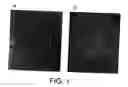
FIG. 1: Micrographs obtained by transmission electron microscopy of: a) nanoparticles of gold functionalised with dodecanethiol, b) nanoparticles of palladium functionalised with dodecanethiol.
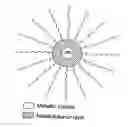
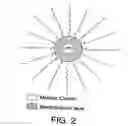
FIG. 2: Diagram of the microstructure of a nanoparticle of diameter 1.4 nm functionalised with dodecanethiol. The metallic nanoparticle is formed from a core crust structure.
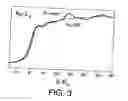
FIG. 3: XANES spectra for conventional gold leaf (gold leaf) and for a sample of nanoparticles of gold functionalised with thiol (Au—SR).
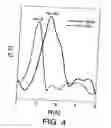
FIG. 4: Fourier transforms of EXAFS oscillations for conventional gold leaf (gold leaf) and for a sample of nanoparticles of gold functionalised with thiol (Au—SR).
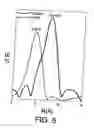
FIG. 5: Fourier transforms of EXAFS oscillations for conventional palladium leaf (palladium leaf) and for a sample of nanoparticles of palladium functionalised with thiol (Pd—SR).
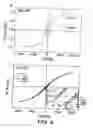
FIG. 6: Hysteresis cycle for: a) nanoparticles of gold functionalised with thiol derivatives measured at room temperature and at 5 K; b) nanoparticles of palladium functionalised with thiol derivatives measured at different temperatures.
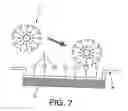
FIG. 7: Diagram of a biosensor device based on magnetic nanoparticles.
DETAILED DESCRIPTION OF THE INVENTIONThe object of the present invention consists of nanoparticles in which the appearance is observed of magnetic behaviour. The nanoparticles are of noble metals, in particular gold and palladium, modified in such a way that a microstructure is produced of the core-crust or “nanocomposite” type, which in turn gives rise to a strong surface anisotropy due to covalent bonds or interaction with dipoles. The attaining of the desired magnetic properties is in all cases based on the preparation of colloidal nanoparticles (see FIG. 1) of noble metals by reduction of precursor salts according to various conditions:
-
- i) Reduction of gold or palladium salts in the presence of thiol derivatives of various organic compounds of the type R—SH. R is generally an aliphatic chain. The reducing agent is borohydride. The reaction is carried out in an excess of thiol derivative in order to achieve the desired microstructure.
- ii) Reduction of gold or palladium salts in aqueous medium in the presence of water soluble thiol derivatives. Similar to the method described in i).
The methods described using the conditions for the generation of very small size nanoparticles produce a microstructure formed from a metallic core (<5 nm) and a crust containing metal-sulphur covalent bonds (see FIG. 2). The presence of this crust, or the presence of surface dipoles, gives rise to a strong anisotropy in these particles. The preparation conditions must be exact in order to achieve the desired microstructure. In the case of gold and palladium, the ferromagnetic behaviour appears by functionalisation with thiol derivatives. A fundamental parameter permitting the microstructures of the generated nanoparticles to be assessed is the X-ray absorption spectrum. In the case of nanoparticles of gold functionalised with thiols, the spectrum close to the threshold (XANES) for the L3 border of the gold shows the charge transfer of level 5d of the Au to the S, which is necessary for the appearance of the ferromagnetic behaviour in these particles (see FIG. 3). Likewise, FIG. 4 contains the Fourier transform of the EXAFS oscillations indicating the presence of an extremely small metallic core and the presence of a modified layer of gold covalently bonded to sulphur. In the case of nanoparticles of palladium functionalised with thiols, the Fourier transform of the EXAFS oscillations is shown in FIG. 5 for the K border of the Pd. In a similar way to the case with gold, the spectrum indicates the presence of an extremely small metallic core and the presence of a palladium phase bonded to sulphur. In both cases, the phenomenon is greater (greater coercive field, greater magnetization) the greater the metallic aggregate, and the interaction with the modified layer of metal is also necessary.
The phenomenon of the appearance of the hysteresis cycle can, depending on the sample, be extended to room temperature and reach coercive fields of 860 Oe and magnetizations of 1 emu/g of metal at temperatures of 5 K (see FIG. 6).
Various specific cases have been characterised and described of magnetic nanoparticles of noble metals that are non-magnetic in the mass state:
i) Nanoparticles of gold functionalised with thiols. Nanoparticles of diameter 1.4 nm as observed by transmission electronic microscopy (see FIG. 1). This inorganic part could be modelled as consisting of a core of 13 atoms of gold surrounded by 30 atoms of gold bonded to 20 atoms of interstitial sulphur. These 30 atoms of gold are all surface atoms and are linked to 30 chains of dodecanethiol via atoms of sulphur covalently bonded to gold (see FIG. 2). At room temperature, these particles display a magnetization of 0.4 emu/g and a coercive field of 250 Oe. At 5 K the saturation magnetization reaches the value of 1 emu/g, with the coercive field being 860 Oe (see FIG. 6).
ii) Nanoparticles of palladium functionalised with thiols. Nanoparticles of diameter 1.2 nm embedded in an amorphous mass as observed by transmission electronic microscopy (see FIG. 1). The microstructure of the nanoparticles is again made up of a very small metal core surrounded by a layer of PdS. The polymer mass in which the particles are embedded consists of Pd—S bonds with some thiol chains. These particles display a saturation magnetization of 0.15 emu/g and a coercive field with values from 30 Oe at 275 K up to 50 Oe at 5 K (see FIG. 6).
iii) Nanoparticles of gold and palladium with diameters of the order of 2 nm or more functionalised with thiols. They display the phenomenon with less magnetization and smaller coercive fields in comparison with particles of less than 2 nm. In these cases the microstructure is more typical of a pure metallic core with the metal atoms of the surface bonded to the organic chain via sulphurs.
In some nanoparticles, the appearance of resonance plasmons in the UV-VIS absorption spectrum tells us of the appearance of electron delocalisation phenomena; while in others the absence of plasmons indicates the localisation of holes and electrons. The physical mechanisms of the appearance of the magnetic behaviour has to be different in both types of particle. For particles with plasmons, the Stoner ferromagnetism condition is produced as a consequence of the increase in density of states in the Fermi level. For particles without plasmons, the localisation of the density of holes produced by electron transfer of d levels of the metal (Au or Pd) to sulphur atoms has to play a fundamental role.
No kind of ferromagnetic behaviour has been observed in macroscopic samples of palladium sulphide.
In terms of the use of the magnetic nanoparticles of the present invention, some possible applications are described below:
Use in Devices for the Controlled Release of Drugs
The nanoparticles of the present invention can be employed instead of radioactive materials used as tracers for the release of drugs.
The use of these magnetic nanoparticles in place of radioactive substances permits the release of a drug to be monitored by means of measuring the variations in magnetic properties, thus eliminating the harmful effects of radiation.
In addition, the magnetic nanoparticles can be used in vaccination guns as an alternative to vaccine impellers, usually compressed air or gas (particularly helium), which cause pain and marks on the skin. The impelling power would in this case by provided by the application of a magnetic field, which would cause the acceleration of the nanoparticles as they pass through the epidermis.
Use for Hyperthermia Treatments
An external AC magnetic field is applied for locally heating a region (for example a tumour zone) in which the magnetic nanoparticles have been deposited or accumulated. The supplied preparation can, as well as the metallic core, also contain specific ligands which can in turn be medicines or they can favour the accumulation of the nanoparticles in a specific tissue.
The system would consist of an AC magnetic field generator perpendicular to the axial direction of the patient. The system would have an AC frequency also adjustable in the 100 kHz range and a variable field strength from 0 to 15 kA/m. Similar systems have been proposed for nanoparticles of ferromagnetic materials in the mass state (see for example A. Jordan et al., J. Mag. Mag. Mat. 225 (2001) 118-126).
The magnetic nanoparticles of noble metals would have major advantages owing to their very small size, the biocompatible nature of gold and the possibility of carrying out a functionalisation made to measure for each type of treatment, tumour type, etc.
Use for Improving Imaging in Magnetic Resonance (MR)
The magnetic nanoparticles of noble metals can be used for improving the imaging in MR.
MR images in some cases lack sufficient contrast for permitting an efficient viewing of structures such as tumours.
Such images can be improved using magnetic nanoparticles as the contrast medium, which would allow, for example, the detection of tumours that are small size and therefore with better possibilities of treatment.
The magnetic nanoparticles of the present invention having noble metals such as Au or Pd in their core are especially useful for this application since the metals in the elemental state are better contrast agents than oxides of those same metals.
In addition, these nanoparticles have a better biocompatibility than do other nanoparticles, for example Au+Fe in the core.
Use as Biosensors and Biochips
FIG. 7 illustrates a diagram of a biosensor device based on magnetic nanoparticles functionalised with type A ligands (1). When the type A ligands recognise the type B biomolecule (2), the nanoparticle becomes attached and a signal is detected in the magnetic sensor (3) which is separated from the nanoparticles by a protective passivation layer (4). An array of devices like that represented in the diagram could be ordered forming a biochip type unit in which each magnetoresistive sensor could read the signal corresponding to one component of an array of biomolecules.
Use for Increasing the Density in Magnetic or Magneto-Optics Recordings
An ordered distribution of magnetic nanoparticles of noble metals on a support serves as the basis for the manufacture of compact discs using magnetic fields for storing data. The reading of the information can in turn be done with a magnetic sensor (magnetoresistive type) or by the Kerr effect using a laser.
Use in Magnetic Printing and Coding
The magnetic nanoparticles of noble metals are processed and stored in the form of a powder. The precursor powder is used in preparations of colloidal solutions (ferrofluids). By varying the functionalisation of the nanoparticle, ferrofluids are manufactured in different types of solvent: organic or aqueous. The magnetic ink is processed in magnetic printing, writing of bar codes, etc.
MODE OF EMBODIMENT OF THE INVENTIONTwo examples of embodiment of the invention consist of the preparation, microstructural characterisation and recording of the ferromagnetic behaviour of nanoparticles of gold and palladium modified with thiol derivatives.
Example 1 Ferromagnetic Behaviour in Nanoparticles of Gold Functionalised with Chains of DodecanethiolTo a solution of 0.11 g of 98% tetraoctylammonium bromide (N(C8H17)4Br (Aldrich) in 20 ml of toluene previously dried and degasified, are added 0.075 g of tetrachloroauric acid (HAuCl4, 99%, Aldrich) dissolved in 7.5 ml of Milli-Q water (the molar ratio of the ammonium salt with respect to the gold salt is 2). The mixture is subjected to strong magnetic stirring at room temperature for 30 minutes, until all the gold precursor has been extracted from the aqueous phase to the organic phase. The aqueous phase is separated in a decanting funnel and discarded. To the organic phase, subjected to vigorous magnetic stirring, is added 0.1 ml of dodecanethiol (the molar ratio of the dodecanethiol with respect to the gold precursor is 2) and then drop by drop a solution of 0.09 g of sodium borohydride is added (NaH4B, 99%, Aldrich) dissolved in 6.25 ml of Milli-Q water (the reducing agent is added in excess, 11.7 mols of the agent with respect to the gold precursor) It is observed that after a few seconds the solution, which was previously orange, takes on an intense black coloration owing to the formation of metallic cores. After 1 hour of strong magnetic stirring, the aqueous phase is again discarded with the aid of a decanting funnel. The toluene in the solution obtained is eliminated by means of a rotovapor, and the metallic particles are then precipitated in 200 ml of absolute ethanol. This dispersion is subjected to a temperature of −20° C. for 8 hours and filtered using a millipore filter of pore size 0.1 microns. The precipitate remaining on the filter is again redissolved in toluene, precipitated in absolute ethanol and filtered. This process is repeated three times with the aim of eliminating remains of dodecanethiol and possible impurities.
The X-ray absorption spectrum is recorded for the nanoparticles obtained by the process described above, with the Fourier transform shown in FIG. 4 being obtained. The obtaining of this spectrum shows the appearance of the microstructure formed by an extremely small metal core and a crust consisting of gold covalently bonded to sulphur. This microstructure is a necessary condition for the appearance of ferromagnetic behaviour in gold nanoparticles. The hysteresis cycle is recorded at 5 K and at room temperature (see FIG. 6). At room temperature, magnetization values of 0.4 emu/g and a coercive field of 250 Oe are obtained. At 5 K the saturation magnetization reaches the value of 1 emu/g, with the coercive field being 860 Oe.
Example 2 Ferromagnetic Behaviour in Nanoparticles of Palladium Functionalised with Chains of DodecanethiolTo a solution of 0.55 g of 98% tetraoctylammonium bromide (N(C8H17)4Br (Aldrich) in 20 ml of toluene previously dried and degasified, are added 0.050 g of palladium nitrate (Pd(NO3)2, 99%, Aldrich) dissolved in 10 ml of a solution of Milli-Q water acidified with hydrochloric acid at a concentration of 0.5 N. The mixture is subjected to strong magnetic stirring at room temperature for 30 minutes, until all the palladium precursor has been extracted from the aqueous phase to the organic phase. The aqueous phase is separated in a decanting funnel and discarded. To the organic phase, subjected to vigorous magnetic stirring, is added 0.1 ml of dodecanethiol (the molar ratio of the dodecanethiol with respect to the palladium precursor is 2) and after 15 minutes of magnetic stirring a solution of 0.10 g is quickly added of sodium borohydride (NaH4B, 99%, Aldrich) dissolved in 5 ml of Milli-Q water (the reducing agent is added in excess, 12 mols of the agent per mol of the palladium salt). It is observed that after a few seconds the solution, which was previously orange, takes on a dullish coloration owing to the formation of metallic cores. The reaction is carried out in a nitrogen atmosphere with the aim of avoiding possible reoxidations of the palladium. After 30 minutes of strong magnetic stirring, the aqueous phase is again discarded with the aid of a decanting funnel. The toluene in the solution obtained is eliminated by means of a rotovapor, and the metallic particles are then precipitated in 200 ml of methanol. This dispersion is filtered using a millipore filter of pore size 0.1 microns. The precipitate remaining on the filter is again redissolved in toluene, precipitated in methanol and filtered. This process is repeated three times with the aim of eliminating remains of dodecanethiol and possible impurities.
The X-ray absorption spectrum is recorded for the nanoparticles obtained by the process described above, with the Fourier transform shown in FIG. 5 being obtained. The obtaining of this spectrum shows the appearance of the microstructure formed by an extremely small metal core surrounded by a palladium phase covalently bonded to sulphur. This microstructure is a necessary condition for the appearance of ferromagnetic behaviour in palladium nanoparticles.
The hysteresis cycle is recorded at different temperatures (see FIG. 6). These particles display a saturation magnetization of 0.15 emu/g and a coercive field with values from 30 Oe at 275 K up to 50 Oe at 5 K.
Claims
1-22. (canceled)
23. Magnetic nanoparticles of noble metals non-magnetic in the mass state of size less than 5 nm comprising:
a) a core formed from a noble metal and
b) an anisotropic crust formed from compounds containing at least one metal-sulphur covalent bond.
24. Magnetic nanoparticles of noble metals non-magnetic in the mass state according to claim 23, wherein the noble metal for the core is Au, Pd, Pt, Ag or any other metal non-ferromagnetic in the mass state.
25. Magnetic nanoparticles of noble metals according to claim 23, wherein the size of the nanoparticles lies between 1.0 and 2.0 nm, preferably between 1.2 and 1.4 nm.
26. Magnetic nanoparticles of noble metals non-magnetic in the mass state according to claim 23, wherein when the core is formed from Au, the anisotropic crust contains Au—S compounds and Au—S—R compounds in proportions between 1/1000 and 1000/1 (Au—S/Au—S—R).
27. Magnetic nanoparticles of noble metals non-magnetic in the mass state according to claim 23, wherein when the core is formed from Pd, the anisotropic crust contains Pd—S compounds and Pd—S—R compounds in proportions between 1/1000 and 1000/1 (Pd—S/Pd—S—R).
28. Magnetic nanoparticles of noble metals non-magnetic in the mass state according to claim 26, wherein R is an aliphatic chain or an aliphatic chain in turn joined to other molecules, in particular proteins or other biomolecules, R in turn being able to contain a marker, a fluorescent group or a radioactive isotope.
29. Magnetic nanoparticles of noble metals non-magnetic in the mass state according to claim 27, wherein R is an aliphatic chain or an aliphatic chain in turn joined to other molecules, in particular proteins or other biomolecules, R in turn being able to contain a marker, a fluorescent group or a radioactive isotope.
30. Magnetic nanoparticles of noble metals non-magnetic in the mass state according to claim 23, wherein the nanoparticles display a ferromagnetic behavior.
31. Magnetic nanoparticles of noble metals non-magnetic in the mass state according to claim 30, wherein the nanoparticles display a ferromagnetic behavior with low coercive field.
32. Magnetic nanoparticles of noble metals non-magnetic in the mass state according to claim 23, wherein the nanoparticles display a paramagnetic behaviour.
33. Process for preparation of magnetic nanoparticles according to claim 23, comprising the reaction of a precursor of the non-magnetic noble metal with a thiol derivative of general formula HS—R in stoichiometric excess and in the presence of a reducing agent.
34. Process for preparation of magnetic nanoparticles according to claim 33, wherein when the non-magnetic noble metal is gold the precursor is prepared by means of reaction of tetrachloroauric acid with any quaternary ammonium salt in stoichiometric excess.
35. Process for preparation of magnetic nanoparticles according to claim 33, wherein when the non-magnetic noble metal is palladium the precursor is prepared by means of reaction of any palladium salt, in particular nitrate, sulphate or chloride, with any quaternary ammonium salt in stoichiometric excess.
36. Method for increasing the density of information in a magnetic recording which comprises employing the magnetic nanoparticles of claim 23 therefor.
37. Method for controlled release of drugs which comprises employing the nanoparticles of claim 23 in a device for such release.
38. Method for hyperthermia treatment which comprises employing the nanoparticles of claim 23 therefor.
39. Method for improving the imaging in nuclear magnetic resonance which comprises employing the nanoparticles of claim 23 therefor.
40. Biosensor which comprises the magnetic nanoparticles of claim 23 therein.
41. Method for magnetic printing which comprises employing the magnetic nanoparticles of claim 23 therein.
42. Magneto-optical device or method employing the magnetic nanoparticles of claim 23 therein.
43. Coding device or method which comprises employing the magnetic nanoparticles of claim 23 therein.
44. A system which comprises a population of one or more of the nanoparticles according to claim 23.
45. A system according to claim 44 which comprises a plurality of nanoparticles containing different functional groups.
Images & Drawings included:
Sources:
- United States Patent and Trademark Office - verify current appl. status at the USPTO↗
Recent applications in this class:
- » 20220062985 2022-03-03
POROUS SILVER POWDERS AND METHOD FOR PREPARING THE SAME - » 20210308752 2021-10-07
Compositions comprising eutectic metal alloy nanoparticles - » 20210229169 2021-07-29
Method of producing stable Cu-based core-shell nanoparticles - » 20210220909 2021-07-22
Methods for nanofunctionalization of powders, and nanofunctionalized materials produced therefrom - » 20210197256 2021-07-01
METHODS OF PREPARING PURIFIED ATOMIC QUANTUM CLUSTERS - » 20210170481 2021-06-10
Decorative coating film - » 20210114092 2021-04-22
Polyhedral metal nanocages with well-defined facets and ultrathin walls and methods of making and uses thereof - » 20210114091 2021-04-22
Alloy powder, fe-based nanocrystalline alloy powder and magnetic core - » 20210078071 2021-03-18
Production of silicon nano-particles and uses thereof - » 20200406349 2020-12-31
Iron alloy particle and method for producing iron alloy particle
Recent applications for this Assignee:
- » 20250230421 2025-07-17
ENZYMES AND METHOD FOR BIODEGRADING POLYOLEFIN-DERIVED POLYMERS - » 20240336856 2024-10-10
METHODS AND SYSTEMS FOR THE CONVERSION OF CRUDE OIL TO PETROCHEMICAL PRODUCTS - » 20240336855 2024-10-10
METHODS AND SYSTEMS FOR THE CONVERSION OF CRUDE OIL TO PETROCHEMICAL PRODUCTS - » 20240035996 2024-02-01
CHEMIRESISTIVE SENSOR FOR DETECTING NO2 - » 20240035996 2024-02-01
CHEMIRESISTIVE SENSOR FOR DETECTING NO2 - » 20230251414 2023-08-10
WAVEGUIDE, WAVEGUIDE PRODUCTION METHOD, AND POLARISATION SPLITTER USING SAID WAVEGUIDE - » 20230009041 2023-01-12
MODIFIED IMMUNIZATION VECTORS - » 20220373698 2022-11-24
Device and method for detecting photons and charged particles and use of same - » 20220346642 2022-11-03
METHOD OF ESTIMATING A FULL SHAPE OF THE CRYSTALLINE LENS FROM MEASUREMENTS TAKEN BY OPTIC IMAGING TECHNIQUES AND METHOD OF ESTIMATING AN INTRAOCULAR LENS POSITION IN A CATARACT SURGERY - » 20220313742 2022-10-06
Cell populations having immunoregulatory activity, method for isolation and uses