Aluminum-based composite materials and methods of preparation thereof
US20070154731A1
2007-07-05
11/319,290
2005-12-29
Abstract:
There are provided sandwich type composite materials comprising a first layer comprising aluminium, titanium, or steel; a foamable core layer comprising aluminium and a foaming agent; and a second layer comprising aluminium, titanium, or steel. The first and second layers can be the same or different. There are also provided processes for preparing such composite materials.
Interested in similar patents?
Get notified when new applications in this technology area are published.
Classification:
B32B15/016 » CPC main
Layered products comprising a layer of metal all layers being exclusively metallic all layers being formed of aluminium or aluminium alloys
B22F3/1125 » CPC further
Manufacture of workpieces or articles from metallic powder characterised by the manner of compacting or sintering; Apparatus specially adapted therefor ; Presses and furnaces; Sintering only; Making porous workpieces or articles by using decomposable, meltable or sublimatable fillers involving a foaming process
B22F7/04 » CPC further
Manufacture of composite layers, workpieces, or articles, comprising metallic powder, by sintering the powder, with or without compacting wherein at least one part is obtained by sintering or compression of composite layers with one or more layers not made from powder, e.g. made from solid metal
B32B15/012 » CPC further
Layered products comprising a layer of metal all layers being exclusively metallic one layer being formed of an iron alloy or steel, another layer being formed of aluminium or an aluminium alloy
B32B15/017 » CPC further
Layered products comprising a layer of metal all layers being exclusively metallic one layer being formed of aluminium or an aluminium alloy, another layer being formed of an alloy based on a non ferrous metal other than aluminium
C22C1/08 » CPC further
Making alloys Alloys with open or closed pores
C22C21/02 » CPC further
Alloys based on aluminium with silicon as the next major constituent
C22C21/08 » CPC further
Alloys based on aluminium with magnesium as the next major constituent with silicon
C22C21/16 » CPC further
Alloys based on aluminium with copper as the next major constituent with magnesium
C22C38/00 » CPC further
Ferrous alloys, e.g. steel alloys
C22C49/06 » CPC further
Alloys containing metallic or non-metallic fibres or filaments characterised by the matrix material; Light metals Aluminium
C22C14/00 » CPC further
Alloys based on titanium
C22C32/00 » CPC further
Non-ferrous alloys containing at least 5% by weight but less than 50% by weight of oxides, carbides, borides, nitrides, silicides or other metal compounds, e.g. oxynitrides, sulfides whether added as such or formed
Y10T428/12042 » CPC further
Stock material or miscellaneous articles; All metal or with adjacent metals having metal particles; Composite; i.e., plural, adjacent, spatially distinct metal components [e.g., layers, etc.] Porous component
Y10T428/12493 » CPC further
Stock material or miscellaneous articles; All metal or with adjacent metals Composite; i.e., plural, adjacent, spatially distinct metal components [e.g., layers, joint, etc.]
Y10T428/12576 » CPC further
Stock material or miscellaneous articles; All metal or with adjacent metals; Composite; i.e., plural, adjacent, spatially distinct metal components [e.g., layers, joint, etc.] with additional, spatially distinct nonmetal component Boride, carbide or nitride component
Y10T428/1259 » CPC further
Stock material or miscellaneous articles; All metal or with adjacent metals; Composite; i.e., plural, adjacent, spatially distinct metal components [e.g., layers, joint, etc.] with additional, spatially distinct nonmetal component; Component contains compound of adjacent metal Oxide
Y10T428/12736 » CPC further
Stock material or miscellaneous articles; All metal or with adjacent metals; Composite; i.e., plural, adjacent, spatially distinct metal components [e.g., layers, joint, etc.] Al-base component
Y10T428/12771 » CPC further
Stock material or miscellaneous articles; All metal or with adjacent metals; Composite; i.e., plural, adjacent, spatially distinct metal components [e.g., layers, joint, etc.] Transition metal-base component
B32B15/00 IPC
Layered products comprising a layer of metal
B32B15/01 IPC
Layered products comprising a layer of metal all layers being exclusively metallic
C25D5/10 IPC
Electroplating characterised by the process; Pretreatment or after-treatment of workpieces Electroplating with more than one layer of the same or of different metals
Description
FIELD OF THE INVENTION
The invention relates to the field of powder metallurgy. In particular, it relates to aluminum based composite materials and methods of preparation thereof.
BACKGROUND OF THE INVENTION
Products made from aluminum foam can be used in various fields of industry. They can be used, for example, in transportation engineering and in the construction, where the following functional properties of a material are required: vibration and shock energy suppression, low weight and high strength of structural elements, fire retardantcy and ecological cleanness. From the standpoint of obtaining metal foams with a uniform structural porosity, foams obtained from aluminum are most promising. The low density of aluminum (˜2.7 g/cm3) and low melting point (˜660° C.) reduce the energy spent on its conversion of aluminum into foam and simplify the selection of blowing agents with a temperature of decomposition of 500-700° C.
The technique of aluminum powder metallurgy usually includes the following operations: mixing of the metal powders and blowing agent, preliminary consolidation of the stock (mixture), thermal compaction, deformation treatment, foaming and finishing of the semi-fabricated material into the finished product. The existing methods (U.S. Pat. No. 5,151,246, U.S. Pat. No. 5,393,485, Reissue U.S. Pat. No. 2,139,774, Reissue U.S. Pat. No. 2,154,548, and PCT/RU/99/00133) differ very little from each another. In some of them, hot pressing or extrusion is used. In others, hot rolling or gas static pressing. And in a third group a combination of processes. However, the qualitative parameters and output of suitable production have not substantially improved.
Oxide films of Al2O3 are the main factors affecting foaming and determining the physical and mechanical properties of aluminum foam. They significantly displace the solidus (Ts) and liquidus (TL) curves in the high temperature region. In addition, the temperature range between them (Ts and TL) is enlarged, i.e. the area of Ts-TL crystallization is expanded. As a consequence of this, the viscosity of the melt increases. For this reason, superheating Tv>TL is required for foaming, where Tv is the foaming temperature, i.e. the necessary temperature gradient is: ΔTg=Tv-TL. The greater the temperature factor ΔTf=Tv-Ts, the more depleted becomes the capacity of the alloy for simultaneous foam formation. It is for precisely this reason that aluminum foam acquires a structural porosity that is non-uniform in shape and dimensions, with characteristic partial fusions. The regulation of the gelation processes is considerably hampered.
SUMMARY OF THE INVENTION
The purpose of this invention is to obtain aluminum-based composite materials with a compact porous structure and which are distinguished by their functional properties. Precisely, metal foams, as highly porous structures, can be modified into composite materials with a wide spectrum of properties. This is achieved by cladding with various materials, and also by reinforcing with high-melting particles and filamentary fibers.
Mixtures comprising aluminum powders, a blowing agent, and reinforcing agents in the form of fibers and particles, are pre-compacted, then subjected to hot rolling in metal containers and then foamed to obtain a sandwich-type composite material. Without using a blowing agent and, consequently, eliminating the foaming operation. The methods of the present invention can thus also permit to obtain laminated materials with a compact, i.e. non-porous structure.
The following formulas and processes for obtaining composite materials have been developed for structural use <M′-Al(a)-M″>: not foamable, i.e., not containing a blowing agent) and for functional use <M′-Alf(a)-M″>. The Alf(a) notation provisionally signifies the structures that can be obtained. For example: <Ti—Alfa-St> is a sandwich cladded with Ti and St (steel), reinforced (a) and foamable (f), (f) can also designate a foamed material;
<Al—Alf—Al> is a foamable sandwich (f); <Ti—Al—Ti> is a compact sandwich;
<Ti—Ala—Ti> is a compact and reinforced (a) sandwich.
For example, the following composite materials have been obtained:
materials having a compact structures: <M′-Al-M″><M′-Ala-M″> (FIG. 1), i.e. non-foamable. The materials have a high porosity and viscosity, and so belong to the category of materials for structural use;
materials having a porous structures: <M′-Alf-M″><M′-Alfa-M″> (FIG. 2), i.e. foamable. The materials are noted for being lightweight and having structural density, i.e. rigidity. They belong to metal foams, with the properties characteristic for them and, consequently, their spectrum of use;
materials having a compact porous structure, consisting of non-detachable layers for functional use (FIG. 3). The middle layer is reinforced aluminum foam, for example, <Ti—Alfa—Ti>.
These materials have a set of functional properties, specifically, capable of absorbing explosive shock energy and of protecting objects from bullet and fragmentation damage.
Reinforcement (a) can be combined (particles and fibers) or separate (particles or fibers). Both nonferrous and ferrous metals can be used as cladding layers, i.e. M′ and M″. Cladding can be done in the form of a dual-layer (M′-Alf(a)-M″) or single-layer (M-Alf(a)) sandwich. For all of the materials developed, aluminum (compact or porous) is the matrix metal or core metal. For this reason the density of them is comparatively small.
According to one aspect of the invention, there is provided a method for obtaining composite materials with a compact structure that is of the sandwich type <Metal #1-Aluminum-Metal #2>, incorporating the layer by layer packing of aluminum powder or a mixture of them (matrix) and cladding sheets made from different metals, for example titanium (Metal #1) and stainless steel (Metal #2) into a container; heating it to a temperature of 500-600° C.; hot rolling; and releasing of the rolled sandwich from the container.
The composite materials can comprise reinforcing elements, for instance dispersed particles (oxides, carbides, borides, etc.) or discrete fibers (metallic or high-modulus) or particles or fibers or combination thereof that can be introduced into the composition of the aluminum powder or mixture of them in a quantity of 5-30% of the volume.
The container can be made of metal, for instance, steel (St) or titanium (Ti) that are used as cladding layers of the sandwiches, specifically <St-Al-St > or <Ti—Ala—Ti>. The container can also be manufactured from metals such as aluminum (Al) or titanium (Ti) that are the cladding layers of the sandwiches, specifically <Al—Alf—Al> or <Ti—Alfa—Ti> types, foamed in a temperature range of <Ts-TL>.
According to another aspect of the present invention there is provided a method for obtaining composite materials with a porous structure, i.e. aluminum foam of the <M′-Alf-M″> sandwich type. The method comprises incorporating layer by layer packing of powder composites into a container made from metals, for instance mild steel. The powder comprises a mixture of aluminum powders (matrix) and a blowing agent such as TiH2 or CaCO3, and the cladding sheets are made of different metals, for example, titanium (M′) and aluminum (M″). The sandwich structure thus obtained is heated to a temperature of 500-600° C.; hot rolled to ensure that a compact structure of the formed material is obtained; and then extraction of the rolled precursor from the container is carried out. The precursor can then be foamed at a temperature range of <Ts-TL>.
According to another aspect of the present invention, there is provided a method for obtaining composite materials with a compact-porous structure of the single-layer sandwich type and incorporating layer-by-layer packing of powder composites of various composition into a container made from ordinary steel of cladding and reinforcing sheets made from different metals, such as high-strength steel and titanium; heating to a temperature of 500-600° C., hot rolling to ensure that a compact structure of the formed materials is obtained; extraction of the rolled material from the container and foaming of the layer that contains the blowing agent in a temperature range of <Ts-TL>.
The distribution of the multi layers can be as follows:
- a) a compact layer consisting of an alloy of aluminum and fiber-reinforced glass ceramic;
- b) a foamable layer, of 25-45% porosity, made up of fiber-reinforced aluminum alloy;
- c) a compact layer comprising an alloy of aluminum strengthened with dispersed particles and reinforced with discrete fibers.
In the present invention, the sandwich type composite materials can be reinforced with metal sheets, titanium for example, disposed between layers. The sandwich type composite materials can be structurally monolithic materials that can be cladded with sheets of high-strength steel.
The mixing of the powder components and fibers can be done with a mixter, for example, one loaded with an alcohol-glycerin solution, ensuring explosion resistance and the yield of a uniform composition (blend).
In the present invention, single-layer or a composite material having a single cladding can be obtained. Such a composite material can be obtained by packing a powder composite and a single cladding layer into a container, thereby providing a single-layer sandwich composite material that has a compact (foamable or non-foamable) or porous (after foaming) structure and a cladding layer.
BRIEF DESCRIPTION OF DRAWINGS
In the following drawings, which represent by way of examples only, particular embodiments of the invention;
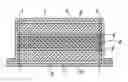
FIG. 1(a) is a cross-section view of a composite material according to one embodiment of the present invention, which is disposed in a container used for its preparation, wherein said composite is a non-foamable sandwich type composite having the following structure <Al—Al—Ti>;
FIG. 1(b) is a cross-section view of a composite material according to another embodiment of the present invention, which is disposed in a container used for its preparation, wherein said composite is a non-foamable sandwich type composite having the following structure <Ti—Ala-St>;
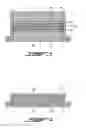
FIG. 2(a) is a cross-section view of a composite material according to another embodiment of the present invention, which is disposed in a container used for its preparation, wherein said composite is a foamable sandwich type composite having the following structure <Al—Alf-St>;
FIG. 2(b) is a cross-section view of a composite material according to another embodiment of the present invention, which is disposed in a container used for its preparation, wherein said composite is a foamable sandwich type composite having the following structure <Ti—Alfa-St>;
FIG. 3 is a cross-section view of a composite material according to another embodiment of the present invention, which is disposed in a container used for its preparation, wherein said composite is a foamable sandwich type composite having the following structure <(St-Ala)—[Ti—Alfa—Ti]—(Ala-St) > in which the (St-Ala) and (Ala-St) portions are non-foamable;
FIG. 4 is a cross-section view of a composite material according to another embodiment of the present invention, which is disposed in a container used for its preparation, wherein said composite is a foamable sandwich type composite having the following structure <Al—Alf—Al>, and wherein;
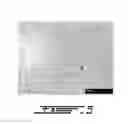
FIG. 5 is a picture showing the microstructure of an aluminum-cladded sandwich composite according to another embodiment of the present invention, wherein the composite as the following structure <Ti—Alfa-St>, and wherein the dark colored fine inclusions represent the foaming agent uniformly distributed;
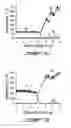
FIGS. 6(a) and 6(b) are scanograms or spectrums of composite materials of structures according to another embodiment of the present invention, wherein FIGS. 6(a) and 6(b) respectively represent composite materials of structures <St-Al-St> and <Ti—Al—Ti>, and wherein the scanograms illustrate the element distributions (Al, Ti, Si) of these structures;
FIGS. 7(a), 7(b), and 7(c) show tomographic images of a composite material according to another embodiment of the present invention, wherein the composite material is a reinforced and foamed aluminum sandwich composite of structure <Ti—Alfa—Ti>, and wherein FIG. 7(a) shows a side elevation view of a the composite, FIG. 7(b) shows the structural porosity of the composite, and FIG. 7(c) shows the disposition of discrete fibers (c), which confirm uniform distribution of the pores and fibers within the bulk of the foamed sandwich composite.
DETAILED DESCRIPTION OF THE INVENTION
The base materials were aluminum alloy powders: casting types (AA4047 etc.) and deforming types (6061, 2124, etc.). Titanium hydride (TiH2.) served as the blowing agent (foaming agent). Dispersible powders of high-melting compounds (oxides, carbides, borides, nitrides, etc.) and discrete fibers made from martensite aged steel (σb=2400-3000 MPa) or screens were used as reinforcing agents. Their volumetric concentration 5-25%. The ratio of fiber length to diameter was taken in the range of l/d=70-90, which provided a maximum tensile strength (σb, MPa) close to the strength of a material reinforced with unbroken fibers. During mixing, mixtures were used in order for there to be an even distribution of the powder composite components having various sizes and densities −2.7 (Al), 3.9 (TiH2) and 7.86 g/cm3 (fibers). They do not only ensure that a uniform mix is obtained, but they also prevent dust formation and segregation of the components during the operations of loading and compacting the mixtures.
Since rolling can be a high-speed process (u=0.1-0.5 m/s) and that heating temperature sometimes does not exceed 450-550° C., the interaction of the fiber and matrix (aluminum powder) occurs on the level of atomic bonds. This means that intermediate products of the chemical reactions of the metals, which weaken the “fiber-matrix” adhesive bond, do not form on the contact boundaries (boundary surfaces).
In examples 1, 2, and 3, the structures of compact porous materials are shown. If the cladding layers are comprised of a single metal, aluminum for example <Al—Alf—Al>, then aluminum containers are used to prepare them (FIG. 4). If the cladding layers consist of different metals, <Al—Al—Ti> for example (FIG. 1,a), then steel containers are used. In this case, the cladding sheets are put into the containers in layers, as shown in FIGS. 1, 2, and 3. The loaded containers with powder composites are then heated to the determined temperature and rolled until a compact state is achieved, i.e. until a non-porous structure is obtained. After mechanical tooling, the roll precursor containing the blowing agent is foamed. It is possible to obtain a different profile stock by means of deformation treatment.
EXAMPLE 1
Sandwiches with a Non-Foamable Structure (FIGS. 1(a) and 1(b)):
- 1—casing of container made from low-carbon steel;
- 2—sheet aluminum (cladding layer);
- 3—caked aluminum (hot rolling), matrix;
- 4—sheet titanium (cladding layer);
- 5—container lid made from low-carbon steel;
- 6—caked aluminum (matrix), reinforced;
- 7—sheet steel (cladding layer); lines land 11 represent lines of mechanical cutting after hot rolling;
- FIG. (1a) is <Al—Al—Ti> and FIG. (1b) is <Ti—Ala-St>.
EXAMPLE 2
Sandwiches with a Foamable Structure (FIGS. 2(a) and 2(b)):
- 1—casing of container made from low-carbon steel;
- 2—sheet aluminum (cladding layer);
- 4—sheet titanium (cladding layer);
- 5—container lid made from low-carbon steel;
- 7—sheet steel (cladding layer);
- 8—foamable aluminum (matrix);
- 9—foamable aluminum (matrix), reinforced;
- lines I and II represent lines of mechanical cutting after hot rolling.
- FIG. (2a) is <Al—Alf-St> and FIG. (2b) is <Ti—Alfa-St>.
EXAMPLE 3
Sandwiches with a Compact Porous Structure (FIGS. 3(a) and 3(b)):
- 1—casing of container made from low-carbon steel;
- 4—sheet titanium (reinforced layer);
- 5—container lid made from low-carbon steel;
- 6—aluminum (matrix), reinforced;
- 7—sheet steel (cladding layer);
- 9—foamable aluminum (matrix), reinforced;
- lines I-I and II-II represent lines of mechanical cutting after hot rolling.
- FIG. 3 is <(St-Ala)—[Ti—Alfa—Ti]—(Ala-St) >
EXAMPLE 4
Sandwich with a Foamable Structure (FIG. 4) in which the Casing and the Lid of the Container are Used as Cladding Layers
- 10—casing of container made of aluminium;
- 8—foamable aluminum (matrix);
- 11—container lid made of aluminium;
- lines I and II represent lines of mechanical cutting after hot rolling;
- FIG. 4 is <Al—Alf—Al>.
From the standpoint of technical execution, the method developed for obtaining the sandwich composite materials of the invention arefairly simple and economically efficient. It allows one to obtain, for example, sandwiches with cladding layers 0.5-10 mm or greater in thickness.
The steel container (casing 1 and lid 5) can easily be removed by means of mechanical tooling of the side edges (lines <I-II>, FIGS. 1, 2, 3, 4). Scorching of the cladding layers onto the container can be eliminated, since the temperatures of the hot rolling process are comparatively low (500-600° C.). If necessary, fine layers of graphite, alumina, lime, etc. (≦0.1 mm) can be dusted onto the contacting surfaces.
The problem of high-grade caking of the aluminum matrix with the cladding layers has been solved. Without resorting to expensive processes to activate the caking surface of the cladding layer, specifically gas-plasma spray-coating or chemical etching, it is sufficient to refine it by a mechanical method, for example, by sandblasting or by using an abrasive fabric.
FIG. 5 shows the microstructure of an aluminum-cladded sandwich precursor of structure <Ti—Alfa-St>. The structure is compact and non-porous. The distribution of TiH2 is uniform (dark colored, fine inclusions). The <aluminum matrix—cladding layer> junction is monolithic (lower part of the image). The borders of the sections <—Al—Ti><—Al-St> are revealed by using x-ray spectral microanalysis.
The scanograms given in FIGS. 6(a, b) are evidence of mutual diffusion <Al⇄Ti> (a) and <Al⇄St> (b) which ensures the high fusion strength of the precursors-sandwiches
- <Ti—Al—Ti> and <St-Al-St>. The depth of the diffusion layer <—Al—Ti> (a) is greater than the layer <—Al-St> (b). This can be explained by the <Ti—Al> status, that is, by the better metallic compatibility of Ti and Al, than St and Al. Thus, the solubility of Al in α-Ti at 600° C. is 7.5% by mass. FIG. 7 shows a tomographic image of an aluminum foam sandwich (a), structural porosity (b) and the disposition of discrete fibers (c), which confirm uniform distribution of the pores and fibers within the bulk of the foamed sandwich <Ti—Alfa—Ti>.
Firing range tests of the compact porous material 25-35 mm in thickness showed positive results.
The layer absorbing the impact can be manufactured from a ceramic-metallic material (cermet) containing a glass ceramic in a composition of aluminum powder and filamentary fibers. The glass ceramic, or glass melt, crystallizes during the process of hot rolling and subsequent cooling, acquiring a high rigidity approaching that of sital.
The middle layer or core layer, the foamed one, can be strengthened enough to maximally absorb the energy of an impact or explosion. The layer can be reinforced with filamentary fibers 5-10% of volume. Optimal porosity can be 25-45%.
The support layer can be manufactured out of ceramic metals. The matrix can be reinforced with dispersed particles and filamentary fibers (10-25% of volume) that provide the high strength and viscoelastic properties of the layer.
It was thus shown that it was possible to obtain laminate materials such as sandwiches and cladded sheets made out of aluminum, titanium, and steel or combination of such. Also, powdered aluminum alloys can easily be reinforced with dispersed particles and discrete fibers.
The uniqueness of these properties can be due to the fact that the region of aluminum alloy crystallization, that is, of the solidus (Ts)—liquidus (TL) boundary, is situated in the comparatively low temperature range of 570-600° C. Consequently, the processes of powder composite consolidation on an aluminum base takes place during active caking conditions. The presence of a low-temperature eutectic state (˜577° C.), i.e., a liquid-phase wetting state, makes it possible to successfully carry out the cladding and reinforcing processes, at the same time retaining the structural integrity of the aluminum foam.
Claims
1-12. (canceled)
12. A sandwich type composite material comprising:
a first layer comprising aluminium, titanium, or steel;
a foamable core layer comprising aluminium and a foaming agent;
a second layer comprising aluminium, titanium, or steel,
said first and second layers being same or different, and being connected to said foamable core layer.
13. The composite material of claim 12, wherein said foamable core layer is an aluminium matrix into which the foaming agent is uniformly distributed.
14. The composite material of claim 12, wherein said foamable core layer further comprises a reinforcing agent.
15. The composite material of claim 14, wherein said reinforcing agent is present in said foamable core layer in an amount of 5 to 30 volume % as compared to the volume of aluminium powder used to prepare the core layer.
16. The composite material of claim 14, wherein said reinforcing agent is chosen from dispersible powders or particles, discrete fibers, or mixtures thereof.
17. The composite material of claim 14, wherein said reinforcing agent is a dispersible powder of a high-melting compound.
18. The composite material of claim 14, wherein said reinforcing agent is chosen from oxides, carbides, borides, nitrides, martensite aged steel, metallic fibers, high-modulus fibers, ceramic materials, ceramic-metallic materials, glass ceramic materials, and mixtures thereof.
19. The composite material of claim 12, wherein said foaming agent is chosen from TiH2, CaCO3, and, mixtures thereof.
20. The composite material of claim 12, wherein said steel is chosen from mild steel, stainless steel, ordinary steel, high-strength steel, and low-carbon steel.
21. The composite material of claim 14, wherein said foamable core layer is an aluminium matrix into which the foaming agent and the reinforcing agent are uniformly distributed.
22. The composite material of claim 12, wherein said first and second layers are cladded on said foamable core layer.
23. The composite material of claim 12, wherein the junction between said first layer and said core layer and the junction between said second layer and said core layer are monolithic junctions.
24. The composite material of claim 12, wherein the sandwich type composite material is a structurally monolithic material.
25. The composite material of claim 12, wherein said first and second layers comprise aluminium.
26. The composite material of claim 12, wherein said composite material sequentially comprises:
a layer comprising aluminium, titanium, or steel;
a layer comprising aluminium and optionally a foaming agent;
said first layer;
said foamable core layer;
said second layer;
another layer comprising aluminium and optionally a foaming agent; and
another layer comprising aluminium, titanium, or steel.
27. A sandwich type composite material comprising:
a first layer comprising aluminium, titanium, or steel;
a foamable core layer comprising an aluminium matrix into which a foaming agent is uniformally distributed;
a second layer comprising aluminium, titanium, or steel,
said first and second layers being same or different, and being disposed on opposite sides of said foamable core layer, wherein the junction between said first layer and said core layer and the junction between said second layer and said core layer are monolithic junctions.
28. A sandwich type composite material comprising:
a first layer comprising aluminium, titanium, or steel;
a porous core layer comprising a foamed aluminium matrix, said matrix optionally comprising a reinforcing agent;
a second layer comprising aluminium, titanium, or steel,
said first and second layers being same or different, and being connected to said core layer.
29. The composite material of claim 28, wherein said porous core layer has a porosity ranging from 25% to 45%.
30. A method for preparing a sandwhich type composite material as defined in claim 1, said method comprising:
heating a mixture comprising an aluminium powder, a foaming agent, and optionally a reinforcing agent, wherein said mixture is disposed within a container and is contacting at least two opposite ends of said container or is disposed between two metal sheets, each of said sheets being contacting one of said opposite ends, said sheets being same or different and comprising aluminium, titanium or steel,
compacting the mixture by hot rolling, said hot rolling being carried out by applying a pressure on at least one of said opposite ends of the container; and
removing at least a portion of said container so as to obtain the desired composite material.
31. The method of claim 30, wherein said mixture is heated at a temperature of 500 to 600° C., and wherein said process further comprises, after removing said at least portion of the container, heating, at a temperature between Tsolidus and Tliquidus, the compacted composite material in order to foam the foamable core layer and convert it into a porous core layer.
Images & Drawings included:


Sources:
- United States Patent and Trademark Office - verify current appl. status at the USPTO↗
Similar patent applications:
Recent applications in this class:
- » 20250144917 2025-05-08
HIGH PERFORMANCE LAMINATED ALUMINUM ALLOY MANUFACTURING METHOD - » 20250050621 2025-02-13
HIGH PERFORMANCE LAMINATED ALUMINUM ALLOY MANUFACTURING METHOD - » 20240399710 2024-12-05
ALUMINUM ALLOY CLAD MATERIAL FOR HEAT EXCHANGER - » 20240217210 2024-07-04
DIRECTLY BONDED METAL STRUCTURES HAVING ALUMINUM FEATURES AND METHODS OF PREPARING SAME - » 20230278316 2023-09-07
Homogenizing heterogeneous foils for light alloy metal parts - » 20230256714 2023-08-17
Homogenizing heterogeneous foils for light alloy metal parts - » 20230256713 2023-08-17
Homogenizing heterogeneous foils for light alloy metal parts - » 20230191749 2023-06-22
Clad 2XXX-series aerospace product - » 20220339909 2022-10-27
Three-dimensional laminated metallic objects with periodically-diffused marking material - » 20200307160 2020-10-01
Clad aluminum alloy products