Moving element game
US20070155461A1
2007-07-05
11/717,943
2007-03-14
Abstract:
A method to play a game and an electronic device that displays the game is disclosed. The game is played by having rows or columns of cards move across a video screen. A player controlled icon moves across the screen. When the icon hits a card, that card is selected. The group of selected cards is compared to a paytable.
Inventors:
- David Loewenstein 4 🇺🇸 Rye Brook, NY, United States
- Martin Joel Wolff 5 🇺🇸 New York, NY, United States
Interested in similar patents?
Get notified when new applications in this technology area are published.
Classification:
G07F17/32 » CPC main
Coin-freed apparatus for hiring articles; Coin-freed facilities or services for games, toys, sports, or amusements
G07F17/3269 » CPC further
Coin-freed apparatus for hiring articles; Coin-freed facilities or services for games, toys, sports, or amusements; Game play aspects of gaming systems Timing aspects of game play, e.g. blocking/halting the operation of a gaming machine
G07F17/3293 » CPC further
Coin-freed apparatus for hiring articles; Coin-freed facilities or services for games, toys, sports, or amusements; Type of games Card games, e.g. poker, canasta, black jack
A63F9/24 IPC
Games not otherwise provided for Games using electronic circuits not otherwise provided for
Description
This is a continuation of application Ser. No. 10/640,084 first filed on Aug. 13, 2003, which claims priority in part from application Ser. No. 10/156,381, first filed on May 28, 2002. The disclosures of these applications are incorporated herein in their entirety.
This invention is a poker-type card game that incorporates moving cards to enhance the player's enjoyment, which will make them him play the game longer and more frequently, and thus be lucrative for casinos. This game can be played on electronic devices such as conventional casino video games, hand-held electronic games, home computers, and over the internet. Another version of the invention uses moving symbols instead of moving cards.
BACKGROUNDThere is a popular video game called “Frogger” in which a player, using a frog icon, travels through a maze-like path. One of the obstacles the frog must traverse is a river with logs that float past the frog. The frog must leap from the shore across the logs to the other side. The timing of the player's frog leaps is crucial—if he does not time his leaps correctly, the frog will fall into the water and the player's turn is over.
In the applicant's parent application Ser. No. 10/156,381, he described, inter alia, a poker game that had five horizontal rows of cards moving across the screen. In that game, the player tried to line up the most valuable poker hand under a line on the screen. When the player believed he had the best hand aligned, he would select those cards and they would become his hand.
The current invention is related to that game insofar as in one embodiment it has five horizontal rows with random cards that move across the screen. However, instead of a line, as in the parent application, which the player uses to select all the cards simultaneously, the player selects one card at a time from each row by moving an icon vertically across the screen one row at a time. Each card the icon touches becomes part of his hand. In the case where the icon touches two cards simultaneously, the card that is selected is the card that has its center closest to the center of the icon. Alternatively, the card closest to the icon when it moves across a row can become the selected card.
In the symbol version of the game, the symbols the icon touches become part of a group of symbols that are compared to a paytable to determine if the player has won.
The current invention can also include an autoplay mode in which the icon moves automatically across the screen to select cards. Another embodiment is where multiple icons are used for selecting multiple hands or groups of symbols.
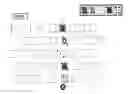
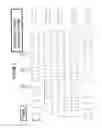
SUMMARY OF THE FIGURESFIG. 1 shows and embodiment of the game where the cards move across the screen horizontally and the icon moves from the top to the bottom crossing the rows of cards.
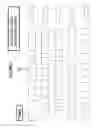
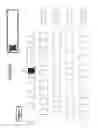
FIG. 2 shows the same embodiment with one card selected FIG. 3 shows this embodiment with all five cards selected.
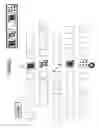
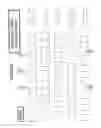
FIG. 4 shows the embodiment where three icons start at the top of the screen and travel down.
FIG. 5 shows the embodiment where three icons are used, one at the top and two at the bottom.
DETAILED DESCRIPTION OF THE FIGURESFIGS. 1 to 3 show five horizontal rows of random cards that move across the screen. The cards can be all face up or some can be face down. For example, the center row of cards could be face down and the other all face up.
The player starts at the top or bottom of the screen and is required to reach the other side to complete his hand. In a preferred embodiment, an electronic gaming device is used that has a visual display and various controls, including a control that allows the player to control the motion of the icon. The control could be a push button or it could be a voice command. In one embodiment the player would attempt to time the icon's motion so that when the icon moves to a row of cards it touches a card that he believes will provide a good poker hand.
When the icon touches a card in a row, that card would be selected to be part of the player's hand, as shown in FIG. 2.
The selected cards could be displayed at the margin of the screen (see FIG. 2) or highlighted in the row after they are selected or both. FIG. 2 show the same embodiment as FIG. 1 with one card, the king of hearts, selected from the first row and displayed separately in the upper right hand portion of the screen. In a preferred embodiment, after a card is selected in a row, the row stops moving, and the icon continues to the next row.
To make the game less predictable, and perhaps more enjoyable, bonus cards could be inserted in a row, or blank cards could be in each row. If the player's icon landed on a blank card, he would lose. Bonus cards and blank cards could be arranged next to each other so that the player would have the incentive to land on the bonus card, but if he missed, he would have a blank card and would lose.
In another version of the game, face up and face down cards could be interspersed in each row.
Obviously, the same game could be played with vertical columns of cards where the player was required to go from one side to the other horizontally.
To quicken the pace of the game, the speed at which the cards move could increase with how long the player takes to complete the trip from one side of the screen to the other. Another method would be to implement a timer that requires the player to select his cards within a fixed period of time. If the player has not made his selection within that time, the game will automatically select the cards. If a timer is used, the remaining time can be displayed on the screen as shown in FIG. 1.
To make the game play faster or to remove any skill, the icon can be made to move automatically from row to row, thereby automatically selecting cards. Furthermore, more than one icon can be made to move across the screen, either automatically or under the player's control, so that more than one hand or group of symbols can be selected in a single game. An embodiment with three icons is shown in FIGS. 4 and 5.
In FIG. 4, three icons start at the top of the screen and move down either under the player's control or automatically.
In FIG. 5, one icon is on the top and two are on the bottom. In this embodiment the top icon moves down and the bottom icons move up. The movement can be done simultaneously. In either of the multiple icon configurations, one or more of the icons could be controlled by the player and the remaining icons could move automatically.
The symbols selected by the icon need not be limited to playing cards. Other symbols such as fruits, numbers, or similar indicia could used to form a group. If more than one icon is used, groups of symbols are selected as the icons move across the rows. The group or groups of symbols would then be compared to a paytable.
This game can be played as a separate game or possibly as a bonus round for another game.
Claims
1. A method to play a poker type game on an electronic device comprising one or more visual displays, the method comprising:
a. two or more parallel lines of playing cards moving across at least one of the one or more visual displays;
b. selecting a card in a first line of the two or more parallel lines of playing cards by controlling the movement of an icon on the visual display until it touches the playing card in the first line of symbols, said icon capable of traveling across the visual display;
c. selecting a playing card in a second line of the two or more parallel lines of playing cards by moving the icon until it touches the playing card in the second line of playing cards;
d. selecting a playing card in each remaining lines of the two or more parallel lines of playing cards sequentially by moving the icon until it touches the respective playing card in each line of playing cards;
e. forming a poker hand from all selected playing cards;
f. comparing the poker hand to a paytable; and
g. awarding the player according to the paytable.
2. The method of claim 1 where there are five or fewer horizontal lines of playing cards.
3. The method of claim 1 where there are five or fewer vertical lines of playing cards.
4. The method of claim 1 comprising displaying the selected playing cards as a separate group on the one or more visual displays as they are selected.
5. The method of claim 1 where some, but not all of the playing cards in the two or more parallel lines of playing cards are face up, and all selected playing cards are face up.
6. The method of claim 1 further comprising timing the selecting the playing cards, and, if the amount of time exceeds a predetermined limit, automatically selecting the playing cards.
7. The method of claim 1 further comprising displaying the cards selected separately, discarding one or more of the selected cards; and replacing the discarded playing cards from a deck of cards and comparing the resulting hand to a pay table.
8. The method of claim 1 wherein selecting a playing card comprises selecting a playing card as the playing card closest to the icon when it moves across each respective line of playing cards.
9. The method of claim 1 wherein the icon moves automatically.
10. The method of claim 1 comprising changing the direction and or speed of at least one of the two or more parallel lines of playing cards moving across at least one of the one or more visual displays.
11. The method of claim 1 where the playing cards in each of the two or more parallel lines of playing cards repetitively move in the same parallel lines respectively.
12. The method of claim 1 where the playing cards in each of the two or more parallel lines of playing cards move in different parallel lines respectively.
13. An video poker game comprising:
a. two or more parallel lines of playing cards for moving across a visual display;
b. an icon, the movement of which is controlled by a player, for traveling across the visual display, and for selecting a card in each line of playing cards by moving the icon until it touches the respective card in each respective line of playing cards, the playing cards so selected forming a poker hand; and
c. a paytable for comparing with the poker hand.
14. The game of claim 13, where there are five or fewer horizontal lines of playing cards.
15. The game of claim 13 where there are five or fewer vertical lines of playing cards.
16. The game of claim 13 where the selected playing cards are displayed separately as they are selected.
17. The game of claim 13 where some, but not all of the playing cards in the two or more parallel lines of playing cards are face up, and all selected playing cards are face up.
18. The game of claim 13 comprising a timer for limiting the amount of time the player has to select his cards.
19. The game of claim 13 where the icon moves automatically.
20. A method to play a game on an electronic device comprising one or more visual displays, the method comprising:
a. two or more parallel lines of symbols moving across at least one of the one or more visual displays;
b. selecting a symbol in a first line of the two or more parallel lines of symbols by controlling the movement of an icon on the visual display until it touches the symbol in the first line of symbols, said icon capable of traveling across the visual display;
c. selecting a symbol in a second line of the two or more parallel lines of symbols by moving the icon until it touches the symbol in the second line of symbols;
d. selecting a symbol in each remaining line of the two or more lines of symbols sequentially by moving the icon until it touches the respective symbol in each line of symbols;
e. forming a group of symbols from all selected symbols;
f. comparing the group of symbols to a paytable; and
g. awarding the player according to the paytable.
21. The method of claim 20 where the selected card in each line of the two or more parallel lines is the one closest to the icon when it moves across said line of cards.
22. The method of claim 20 wherein the icon moves automatically.
23. The method of claim 20 where the direction and or speed of the parallel lines of cards moving across at least one of the one or more visual displays changes.
24. The method of claim 20 where the cards in each of the two or more parallel lines of cards remain in their respective parallel lines.
25. The method of claim 20 where the cards in each of the two or more parallel lines of cards move to different parallel lines after moving across the visual display.
Images & Drawings included:
Sources:
- United States Patent and Trademark Office - verify current appl. status at the USPTO↗
Similar patent applications:
- » 20080211179
Game apparatus with multiple moving elements - » 20240316443
Multi-move Checkers Game with Chance Element
Recent applications in this class:
- » 20250157280 2025-05-15
SORTING GAMES OF CHANCE - » 20250046142 2025-02-06
SYSTEM AND METHOD FOR PROVIDING A MULTIPLE-STAGE CONTEST - » 20240233472 2024-07-11
APPARATUS FOR PARI-MUTUEL RACING GAME WITH FINISH ORDER BETTING - » 20240112520 2024-04-04
MAHJONG ROULETTE GAMING SYSTEM, AND METHOD - » 20230326284 2023-10-12
ELECTRICAL COMPUTERS AND DIGITAL PROCESSING SYSTEMS INVOLVING INTERPROGRAM OR INTERPROCESS COMMUNICATION REGARDING AMUSEMENT DEVICES AND GAMES - » 20230196867 2023-06-22
APPARATUS FOR PARI-MUTUEL RACING GAME WITH FINISH ORDER BETTING - » 20230132436 2023-05-04
Enhanced peer-to-peer networking exchange - » 20230092934 2023-03-23
ELECTRICAL COMPUTERS AND DIGITAL PROCESSING SYSTEMS INVOLVING INTERPROGRAM OR INTERPROCESS COMMUNICATION REGARDING AMUSEMENT DEVICES AND GAMES - » 20230085241 2023-03-16
GAME OF CHANCE DISPLAY - » 20230005323 2023-01-05
REAL TIME PARLAY