Exercise method (utility/process)
US20070155590A1
2007-07-05
11/604,000
2006-11-24
Abstract:
The present invention relates to a bodily exercise. While lying down the person performs a bodily movement that consists of tensing and releasing a select group of upper body muscles (mainly the chest). The purpose of this exercise is to promote a sense of physical, emotional, mental and state of well being.
Interested in similar patents?
Get notified when new applications in this technology area are published.
Classification:
A63B21/4037 » CPC main
Exercising apparatus for developing or strengthening the muscles or joints of the body by working against a counterforce, with or without measuring devices; Interfaces with the user related to strength training; Details thereof; Specific exercise interfaces Exercise mats for personal use, with or without hand-grips or foot-grips, e.g. for Yoga or supine floor exercises
A63B23/0211 » CPC further
Exercising apparatus specially adapted for particular parts of the body for the abdomen, the spinal column or the torso muscles related to shoulders (e.g. chest muscles); Abdomen moving torso with immobilized lower limbs
A63B2208/0252 » CPC further
Characteristics or parameters related to the user or player posture; Lying down supine
A63B26/00 IPC
Exercising apparatus not covered by groups -
Description
CROSS REFERENCES TO RELATED APPLICATIONS
U.S. Pat. No. 5,787,898 (closest—relieves pain) and/or U.S. Pat. No. 6,679,817 [note: related were difficult to find because of the uniqueness of the exercise and does not involve a device other than a common household item (bed)]
FEDERAL SPONSORSHIP
None
JOINT PARTIES OF RESEARCH
None
REFERENCE TO A SEQUENCE LISTING
None
BACKROUND OF THE INVENTION
The present invention is based on a previous provisional application (No. 60/755,922) filed on Jan. 3, 2006 by Inventor Andrew Wyndham with invention name different than current “Exercise Method.”
Physical fitness and awareness of the body has become more popular in the last few years. And with rising costs for joining a gym, home exercise has become more and more popular. The present invention is not only something that can be done at home, but can be done without conventional weight training (anaerobic) or aerobic devices. It is simply someone can do on their bed.
The present invention relates to a tense and release exercising method particularly aiming to the relief of mental, emotional psychosomatic and physical pain. By being in the moment, the person is able to quell mental and emotional hang-ups and negative feelings.
SUMMARY OF THE INVENTION
According to the invention there is provided a human exercising method which involves laying on firm mattress and performing a bodily act that reduces stress and other negative qualities such as anger, anxiety and depression.
According to the invention this is a method particularly for grounding oneself in the body, thereby noticing the feelings of mental, emotional and psychosomatic pain or illness. By being in the moment, the person may disperse of these negative upsets or qualities, thus healing and bettering oneself in all dimensions of his/her being.
BRIEF DESCRIPTION OF THE DRAWINGS
The invention is exemplified in the following description, considered along with the accompanying drawings, wherein:
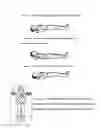
FIG. 1 illustrates the (laying down on back) from a side view, that the person has which immediately precedes the exercise method.
FIG. 2 Illustrates the body jolt exercise in action from a side view. The body is shown here in the “tensed” position, which only lasts for a split second. This is the exercise method itself.
FIG. 2a Illustrates the body jolt exercise in action from a frontal/bird's eye view. The body is shown here in the tensed position, which only lasts for a split second. This is the exercise method itself.
FIG. 3 Illustrates the position of the body from a side view having relaxed ALL muscles in body and thus, again laying down on their back.
DETAILED DESCRIPTION OF THE PREFERRED EMBODIMENTS
Directions:
-
- i) Lightly squeeze a soft a pillow and put it under you neck as you lay down on your back. (Use a firm bed, nothing loose and old or with old springs. Use a bed that's got newer springs in it if you have one. The bed should be firm but not rigid.)
- ii) Tilt your head back at an angle of at least 20-300 [as shown in FIGS. 1-3]
1) Lay there for a moment. Cross your arms over your chest area (as illustrated best in FIG. 2a). You are in position as shown in FIG. 1 in Drawings. Imagine energy flowing into your abdominal region (See FIG. 1A in Drawings).
2) The exercise method: Thrust your shoulders and chest muscles forward altogether at once with a fair amount of force while simultaneously tensing your abdominal muscles. Your arms/elbows will naturally move down and in towards body. You are looking to produce a “clack”—which is both simultaneously feeling and sound when performing the thrust, like two dry wooden boards sound when slapped together at a perfect parallel. The pillow having been squeezed will, most times, expand and fill up the space created when thrusting. (This is body position as shown in FIG. 2 in Drawings Section and only lasts for a split second as . . .
3) Naturally, your body will fall back into original position when you relax your whole body (as described and shown in FIG. 3 in Drawings Section).
Desired Results:
A lowering of any of the following negative traits in people:
Anxiety, anger, depression, lust, confusion, lack of focus, apathy, irritableness and tiredness.
Possible Positive Aspects: By being more grounded in the body, disease or some other strong physical, emotional or mental pain may subside.
Suggested Fluidity: At least 5 (on a scale of 1-10.) Fluidity will produce a “cut & dry” thrust, which basically means a defined feeling of impact.
WARNING: The person doing said exercise should not perform it by themselves without the aid of a certified Exercise Representative which is appointed directly, or indirectly, by the inventor. Doing so can cause you serious bodily injury.
Also, the person doing said exercise method should not teach it without the express permission of an Exercise Representative (appointed directly, or indirectly, by the inventor). Teaching others without having had formal instruction can cause your students serious bodily injury.
Claims
What is claimed is:1. The person uses preferably a mattress—that is, one that is firm but not rigid or hard, not loose nor old or with old springs. The person lays down on their back in such manner and such order and:
i) Partially rolls up a pillow—placing that partially rolled up part under the neck, allowing it to expand, for some support and comfort.
ii) Crosses the arms over the chest area.
The above is an independent claim.
2. The method of claim 1 wherein the person tilts his/her head back to at least a 20-30 degree angle.
3. The exercise method: The person simultaneously thrusts his/her shoulders and chest muscles forward—this is all one movement, not two. In this movement the chest muscles tense and release within a split second. (Doing this thrust correctly creates a sound, louder in respect to the performer, in a similar way two wooden boards sound (“clack”) when hit together in a parallel fashion.) The impact is startling.
The above is an independent claim.
5. The method of claim 3 wherein the exercise method, if performed correctly, is felt as a clear, concise defined bodily act.
6. The method of claim 3 wherein the exercise method, as time goes on and the person feels more comfortable that they can do them correctly, requires a high (but not extreme) amount of bodily thrust or raw physical power.
Images & Drawings included:

Sources:
- United States Patent and Trademark Office - verify current appl. status at the USPTO↗
Recent applications in this class:
- » 20250135270 2025-05-01
SUSTAINABLE THREE-LAYER YOGA MAT AND A METHOD OF MAKING THE SAME - » 20250135269 2025-05-01
Improved mat and support structure - » 20250114660 2025-04-10
EXERCISE BOARD - » 20250108251 2025-04-03
FOLDABLE EXERCISE BOARD WITH FOOT ANCHOR - » 20250041657 2025-02-06
CUSTOMISABLE EXERCISE MAT SYSTEM - » 20250032848 2025-01-30
ALIGNMENT MAT - » 20250001242 2025-01-02
RETRACTABLE AND PORTABLE FITNESS MAT ASSEMBLY - » 20240424337 2024-12-26
EXERCISE BLOCKS - » 20240416172 2024-12-19
Foldable and Highly Portable Yoga Mat - » 20240416171 2024-12-19
YOGA MAT WITH ADDITIONAL FEATURES