CIRCUIT BOARD
US20070181996A1
2007-08-09
11/616,902
2006-12-28
Abstract:
A circuit board including a first surface, a second surface, and a third surface is provided. The first surface has a first conductive region, and the second surface is opposite to the first surface. The third surface located between the first surface and the second surface and is connected with the first surface and the second surface. The third surface has a second conductive region, and the first conductive region is electrically connected to at least a part of the second conductive region. The circuit board has good electromagnetic compatibility.
Assignee:
- ASUSTEK COMPUTER INC. 1,670 🇹🇼 Taipei, Taiwan
Interested in similar patents?
Get notified when new applications in this technology area are published.
Classification:
H01L23/49805 » CPC main
Details of semiconductor or other solid state devices; Arrangements for conducting electric current to or from the solid state body in operation, e.g. leads, terminal arrangements ; Selection of materials therefor consisting of soldered constructions; Leads, on insulating substrates, the leads being also applied on the sidewalls or the bottom of the substrate, e.g. leadless packages for surface mounting
H05K1/0218 » CPC further
Printed circuits; Details; Electrical arrangements not otherwise provided for; Reduction of cross-talk, noise or electromagnetic interference by printed shielding conductors, ground planes or power plane
H05K1/0218 » CPC further
Printed circuits; Details; Electrical arrangements not otherwise provided for; Reduction of cross-talk, noise or electromagnetic interference by printed shielding conductors, ground planes or power plane
H05K3/403 » CPC further
Apparatus or processes for manufacturing printed circuits; Forming printed elements for providing electric connections to or between printed circuits Edge contacts; Windows or holes in the substrate having plural connections on the walls thereof
H05K3/403 » CPC further
Apparatus or processes for manufacturing printed circuits; Forming printed elements for providing electric connections to or between printed circuits Edge contacts; Windows or holes in the substrate having plural connections on the walls thereof
H05K3/429 » CPC further
Apparatus or processes for manufacturing printed circuits; Forming printed elements for providing electric connections to or between printed circuits; Plated through-holes or plated via connections Plated through-holes specially for multilayer circuits, e.g. having connections to inner circuit layers
H05K3/429 » CPC further
Apparatus or processes for manufacturing printed circuits; Forming printed elements for providing electric connections to or between printed circuits; Plated through-holes or plated via connections Plated through-holes specially for multilayer circuits, e.g. having connections to inner circuit layers
H05K2201/09354 » CPC further
Indexing scheme relating to printed circuits covered by; Shape and layout; Shape and layout details of conductors; Conductive planes Ground conductor along edge of main surface
H05K2201/09354 » CPC further
Indexing scheme relating to printed circuits covered by; Shape and layout; Shape and layout details of conductors; Conductive planes Ground conductor along edge of main surface
H01L2924/0002 » CPC further
Indexing scheme for arrangements or methods for connecting or disconnecting semiconductor or solid-state bodies as covered by; Technical content checked by a classifier Not covered by any one of groups , and
H01L2924/00 » CPC further
Indexing scheme for arrangements or methods for connecting or disconnecting semiconductor or solid-state bodies as covered by
H01L23/053 IPC
Details of semiconductor or other solid state devices; Containers; Seals characterised by the shape of the container or parts, e.g. caps, walls the container being a hollow construction and having an insulating or insulated base as a mounting for the semiconductor body
Description
CROSS-REFERENCE TO RELATED APPLICATION
This application claims the priority benefit of Taiwan application serial no. 95104014, filed Feb. 7, 2006. All disclosure of the Taiwan application is incorporated herein by reference.
BACKGROUND OF THE INVENTION
1. Field of the Invention
The present invention relates to a circuit board. More particularly, the present invention relates to a circuit board being capable of good electromagnetic compatibility (EMC).
2. Description of Related Art
Electromagnetic compatibility (EMC) is a key quality indicator in the evaluation standards of various electronic devices. The evaluation of EMC includes electromagnetic interference (EMI) and electromagnetic susceptibility (EMS). EMI refers to whether an electronic device itself will affect other electronic devices electromagnetically, and EMS refers to whether an electronic device itself will not be able to work properly due to the electromagnetic interference by other electronic devices.
Generally, the density of the electronic components installed in a circuit board of an electronic device is very high. In such condition, the signal transmits among the electronic components within the circuit board will being affected by each other and a phenomenon of cross talk will be produced. In addition, presently most electronic components transmits signals with high frequency, thus, EMI can be induced easily between the electronic components disposed within an electronic device, and further the operation of the electronic device will be affected.
To prevent electromagnetic waves from the external of the electronic device from interfering signal transmitting within the electronic device, or to prevent electromagnetic waves produced by the signal transmitting within the electronic device from being radiated to the external of the electronic device, the casing of the electronic device used for containing and protecting the electronic components usually uses conductive material (for example, metal), or a conductive layer formed on the surface of the casing so as to provide electromagnetic shielding effect, or a metal cover is constructed at the external of a particular electronic component on the circuit board for providing electromagnetic shielding.
SUMMARY OF THE INVENTION
Accordingly, the present invention is directed to provide a circuit board having good electromagnetic compatibility (EMC).
To achieve the aforementioned and other objectives, a circuit board including a first surface, a second surface, and a third surface is provided. The first surface has a first conductive region, and the second surface is opposite to the first surface. The third surface disposed between the first surface and the second surface is connected to the first surface and the second surface. The third surface has a second conductive region, and the first conductive region is electrically connected to at least a part of the second conductive region.
In an embodiment of the present invention, the first conductive region is a ground region.
In an embodiment of the present invention, the first surface has a trace, the first conductive region is a bare copper, and the trace connects the first conductive region and the second conductive region.
In an embodiment of the present invention, the second conductive region is a printed conductive layer, an electroplated conductive layer, a sputtered conductive layer, or a dipped conductive layer.
A circuit board including a first conductive region, a first surface, a second surface, and a third surface is further provided. The first conductive region is disposed inside the circuit board and the second surface is opposite to the first surface. The third surface disposed between the first surface and the second surface is connected to the first surface and the second surface. The third surface has at least one second conductive region, and the first conductive region is electrically connected to at least a part of the second conductive region.
In an embodiment of the present invention, the first conductive region is a ground region.
In an embodiment of the present invention, the second conductive region is a printed conductive layer, an electroplated conductive layer, a sputtered conductive layer, or a dipped conductive layer.
According to the present invention, the second conductive region is formed on the third surface of the circuit board to serve as a metal shield of the circuit board, thus, the circuit board has good EMC.
In order to make the aforementioned and other objects, features and advantages of the present invention comprehensible, a preferred embodiment accompanied with figures is described in detail below.
It is to be understood that both the foregoing general description and the following detailed description are exemplary, and are intended to provide further explanation of the invention as claimed.
BRIEF DESCRIPTION OF THE DRAWINGS
The accompanying drawings are included to provide a further understanding of the invention, and are incorporated in and constitute a part of this specification. The drawings illustrate embodiments of the invention and, together with the description, serve to explain the principles of the invention.
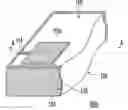
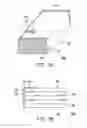
FIG. 1A is a diagram of a circuit board according to the first embodiment of the present invention.
FIG. 1B is a cross-sectional view of FIG. 1A along line A-A.
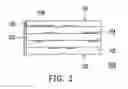
FIG. 2 is a cross-sectional view of a circuit board according to the second embodiment of the present invention.
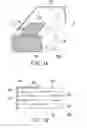
FIG. 3A is a diagram of a circuit board according to the third embodiment of the present invention.
FIG. 3B is a cross-sectional view of FIG. 3A along line B-B.
FIG. 4 is a cross-sectional view of a circuit board according to the fourth embodiment of the present invention.
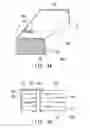
FIG. 5A is a diagram of a circuit board according to the fifth embodiment of the present invention.
FIG. 5B is a cross-sectional view of FIG. 5A along line C-C.
DESCRIPTION OF EMBODIMENTS
FIG. 1A is a diagram of a circuit board according to the first embodiment of the present invention. Referring to FIG. 1A, the circuit board 100a includes a first surface 110, a second surface 120, and a third surface 130. The first surface 110 has a first conductive region 112a, and the first conductive region 112a is a bare copper. The second surface 120 is opposite to the first surface 110, and the third surface 130 is connected with the first surface 110 and the second surface 120, wherein the third surface 130 has at least one second conductive region 132, and the first conductive region 112a is electrically connected to at least a part of the second conductive region 132.
FIG. 1B is a cross-sectional view of FIG. 1A cut along line A-A. Referring to both FIG. 1A and FIG. 1B, the circuit board 100a in the present embodiment is formed by a plurality of circuit layers 104 and a plurality of insulating layers 102, wherein the circuit layers 104 include a trace 114, and the first conductive region 112a is electrically connected to the second conductive region 132 through the trace 114. In addition, an insulating layer 102 is disposed between two adjacent circuit layers 104. The electronic components (not shown) on the circuit board 100a transmit signals through the circuit layers 104, wherein the circuit layers 104 can be electrically connected with each other through the buried vias (not shown) or the plated through holes (not shown) of the circuit board 100a. In the first embodiment, the material of the circuit layers 104 is copper, and the second conductive region 132 may be a conductive layer formed through printing, electroplating, sputtering, or dipping.
According to an important aspect of the present embodiment, the circuit board 100a has a second conductive region 132 which covers the entire third surface 130, thus, the second conductive region 132 can provide very good metal shielding function while signals are transmitted within the circuit board 100a, so that the signals transmitted within the circuit board 100a will not be interfered by electromagnetic waves coming from outside of the third surface 130 of the circuit board 100a, and the electromagnetic waves generated by the signals transmitted within the circuit board 100a will not radiate to outside of the circuit board 100a. Thus, the circuit board 100a has good EMC because of the second conductive region 132.
FIG. 2 is a cross-sectional view of a circuit board according to the second embodiment of the present invention. Referring to FIG. 2, compared to the first embodiment in FIG. 1B, the first conductive region 112b of the second embodiment can be a ground region in the circuit board 100b and which is formed by one of the circuit layers 104, and the edge of the first conductive region 112b can be electrically connected to the second conductive region 132 directly. In another embodiment which is not illustrated, the first conductive region 112b can be connected to the second conductive region 132 through the trace 114 in FIG. 1A.
FIG. 3A is a diagram of a circuit board according to the third embodiment of the present invention, and FIG. 3B is a cross-sectional view of FIG. 3A along line B-B. In FIG. 1A and FIG. 3A, similar reference numerals refer to the similar elements throughout so they will not be described here again. Referring to FIGS. 1A, 1B, 3A, and 3B, the circuit board 100c in the third embodiment is similar to the circuit board 100a in the first embodiment except for the first conductive region 112c in the third embodiment is a via pad, and the first conductive region 112c is further electrically connected to the second conductive region 132 through the trace 114. The circuit board 100c further includes a conductive through via 140, and the first conductive region 112c is connected to one end of the conductive through via 140.
FIG. 4 is a cross-sectional view of a circuit board according to the fourth embodiment of the present invention. Referring to FIG. 4, compared to the third embodiment in FIG. 3B, the first conductive region 112d in the fourth embodiment is disposed inside the circuit board 100d, and the via pad (not shown) located on the first surface 110 may not be electrically connected to the second conductive region 132 directly, instead, it may be electrically connected to the second conductive region 132 through the conductive through via 140 and the first conductive region 112d.
FIG. 5A is a diagram of a circuit board according to the fifth embodiment of the present invention, and FIG. 5B is a cross-sectional view of FIG. 5A along line C-C. In FIG. 3A and FIG. 5A, similar reference numerals refer to the similar elements throughout so they will not be described here again. Referring to FIGS. 3A, 5A, and 5B, the circuit board 100e in the fifth embodiment is similar to the circuit board 100c in the third embodiment except for the first conductive region 112e in the fifth embodiment is a bare copper, and the first conductive region 112e is further electrically connected to the second conductive region 132 through the trace 114.
In summary, according to the preferred embodiments of the present invention, a conductive layer is formed on the third surface of the circuit board through printing, electroplating, sputtering, or dipping, and which is used as a metal shield of the circuit board to prevent the signals transmitted within the circuit board from being interfered by electromagnetic waves coming from outside of the circuit board, or to prevent electromagnetic waves generated by the signals transmitted within the circuit board from being radiated to outside of the circuit board. Thus, the circuit board in the present invention and the electronic devices using the circuit board has good EMC.
It will be apparent to those skilled in the art that various modifications and variations can be made to the structure of the present invention without departing from the scope or spirit of the invention. In view of the foregoing, it is intended that the present invention cover modifications and variations of this invention provided they fall within the scope of the following claims and their equivalents.
Claims
What is claimed is:1. A circuit board, comprising:
a first surface, having at least one first conductive region formed thereon;
a second surface, being opposite to the first surface; and
a third surface, being disposed between the first surface and the second surface, the third surface being connected with the first surface and the second surface, the third surface having at least one second conductive region, the first conductive region being electrically connected to at least a part of the second conductive region.
2. The circuit board as claimed in claim 1, wherein the first conductive region is a ground region.
3. The circuit board as claimed in claim 1, wherein the first surface has a trace, the first conductive region is a bare copper, and the trace electrically connects the first conductive region and the second conductive region.
4. The circuit board as claimed in claim 1, wherein the second conductive region is a printed conductive layer, an electroplated conductive layer, a sputtered conductive layer, or a dipped conductive layer.
5. A circuit board, comprising:
a first conductive region, being disposed inside the circuit board;
a first surface;
a second surface, being opposite to the first surface; and
a third surface, being disposed between the first surface and the second surface, the third surface being connected with the first surface and the second surface, the third surface having at least one second conductive region, the first conductive region being electrically connected to at least a part of the second conductive region.
6. The circuit board as claimed in claim 5, wherein the first conductive region is a ground region.
7. The circuit board as claimed in claim 5, wherein the second conductive region is a printed conductive layer, a electroplated conductive layer, a sputtered conductive layer, or a dipped conductive layer.
Images & Drawings included:

Sources:
- United States Patent and Trademark Office - verify current appl. status at the USPTO↗
Similar patent applications:
- » 20220135767
Resin composition for circuit board, molded body for circuit board, layered body for circuit board, and circuit board - » 20140000941
Method for integrating an electronic component into a printed circuit board or a printed circuit board intermediate product, and printed circuit board or printed circuit board intermediate product - » 20120152592
Method for manufacturing printed circuit board, method for manufacturing printed circuit board assembly sheet, printed circuit board, and printed circuit board assembly sheet - » 20130302651
Battery pack including circuit board assembly having first circuit board connected to terminals and second circuit board connected to first circuit board - » 20230383030
MODIFIED FLUORORESIN MATERIAL, MATERIAL FOR CIRCUIT BOARD, LAMINATE FOR CIRCUIT BOARD, CIRCUIT BOARD, AND METHOD FOR PRODUCING MODIFIED FLUORORESIN MATERIAL - » 20050254218
Printed circuit board with improved heat dissipation efficiency, electronic apparatus having printed circuit board with improved heat dissipation efficiency, CRT display device having printed circuit board with improved heat dissipation efficiency, and recording/reproducing device or video display device incorporating recording/reproducing device having printed circuit board with improved heat dissipation efficiency - » 20230043114
Circuit board, circuit board connection structure, and method of manufacturing circuit board connection structure - » 20060217462
Flame-retardant epoxy resin composition, and electronic device, laminated circuit board, multilayered circuit board and printed circuit board using the flame-retardant epoxy resin composition - » 20200120795
METHOD FOR MANUFACTURING PRINTED CIRCUIT BOARD, PRINTED CIRCUIT BOARD AND DRIVE CIRCUIT BOARD - » 20130044448
Method for Mounting a Component to an Electric Circuit Board, Electric Circuit Board and Electric Circuit Board Arrangement
Recent applications in this class:
- » 20250125233 2025-04-17
Integrated Antenna-In-Package Structure - » 20240363506 2024-10-31
SEMICONDUCTOR DEVICE AND MANUFACTURING METHOD THEREOF - » 20240332145 2024-10-03
CLIPS WITH ALIGNMENT FEATURES AND RELATED METHODS - » 20240145357 2024-05-02
ELECTRONIC ASSEMBLY - » 20240128170 2024-04-18
HYBRID CHIP CARRIER PACKAGE - » 20240096771 2024-03-21
WAFER BASED MOLDED FLIP CHIP ROUTABLE IC PACKAGE - » 20240096770 2024-03-21
Integrated antenna-in-package structure - » 20240038640 2024-02-01
SEMICONDUCTOR DEVICE - » 20240014110 2024-01-11
SEMICONDUCTOR INTERPOSER STRUCTURE - » 20240014109 2024-01-11
SEMICONDUCTOR INTERPOSER STRUCTURE
Recent applications for this Assignee:
- » 20240384730 2024-11-21
Fan fixing device for electronic device - » 20240265845 2024-08-08
Method for reducing color edge phenomenon of display panel - » 20240211054 2024-06-27
Electronic device - » 20240181568 2024-06-06
Method for producing graphene - » 20240106112 2024-03-28
Antenna module and electronic device - » 20240103575 2024-03-28
Foldable electronic device - » 20240102483 2024-03-28
Fan module - » 20240077914 2024-03-07
Foldable electronic device - » 20240070416 2024-02-29
Reading method and reading device for two-dimensional code - » 20240069618 2024-02-29
Power management method and electronic device using same