DEVICE FOR SAVING POWER CONSUMPTION OF HEATING AND AIR CONDITIONING SYSTEM
US20070193288A1
2007-08-23
11/428,894
2006-07-06
Abstract:
A device for saving power consumption of heating and air conditioning system is provided. The energy saving device is adapted to automatically stop an air conditioner when outdoor temperature is lower than a set temperature or automatically stop a heater when outdoor temperature is higher than a set temperature. The energy saving device is provided with an outdoor temperature sensor and converter for measuring an outdoor temperature and converting the measured temperature into a first voltage value, a conversion circuit for converting a set temperature of stopping the air conditioner/heater into a second voltage value, a control circuit for controlling the air conditioner/heater, and a comparison circuit for comparing the first voltage value with the second voltage value and transmitting the result to the control circuit.
Inventors:
- Yi Jwo-Hwu 1 🇹🇼 Tainan City, Taiwan
- Wen-Chwan Hwang 1 🇹🇼 Tainan City, Taiwan
- Jian-Ming Li 1 🇹🇼 Lunbei Township, Taiwan
- Ming-Feng Cai 1 🇹🇼 Kaohsiung City, Taiwan
- Meng-Zhi Wu 1 🇹🇼 Pingtung City, Taiwan
- Yi-Lin Jiang 1 🇹🇼 Ligang Township, Taiwan
- Tyun-Jay Guo 1 🇹🇼 Jiali Township, Taiwan
Interested in similar patents?
Get notified when new applications in this technology area are published.
Classification:
F24F11/30 » CPC main
Control or safety arrangements for purposes related to the operation of the system, e.g. for safety or monitoring
F24F11/62 » CPC further
Control or safety arrangements characterised by the type of control or by internal processing, e.g. using fuzzy logic, adaptive control or estimation of values
F24F11/46 » CPC further
Control or safety arrangements for purposes related to the operation of the system, e.g. for safety or monitoring Improving electric energy efficiency or saving
F24F2110/12 » CPC further
Control inputs relating to air properties; Temperature of the outside air
F25B1/00 IPC
Compression machines, plants or systems with non-reversible cycle
F25B1/00 IPC
Compression machines, plants or systems
F25B49/00 IPC
Arrangement or mounting of control or safety devices
Description
BACKGROUND OF THE INVENTION
1. Field of Invention
The present invention relates to an energy saving device for a heating and air conditioning system adapted to automatically stop an air conditioner when outdoor temperature is lower than a set temperature or automatically stop a heater when outdoor temperature is higher than a set temperature.
2. Related Art
Conventionally, an operating air conditioner will not stop when outdoor temperature is lower than a set temperature. This consumes power greatly. For example, room temperature is 28° C. at 10 p.m., and a set temperature of an air conditioner is 26° C. The operating air conditioner is adapted to lower room temperature from 28° C. to 26° C. It is possible that outdoor temperature drops to 24° C. at 2 a.m. due to radiation cooling effect, rain, or the like. That is, outdoor temperature is lower than the set temperature. Thus, electric energy is consumed undesirably because the operating air conditioner does nothing to the lowering of room temperature. Also, the air conditioner typically operates continuously until a person in the room wakes up in the morning (i.e., energy waste). The same principle is applied to heater too. Thus, a need for improvement exists.
SUMMARY OF THE INVENTION
It is therefore an object of the present invention to provide a device for saving power consumption of heating and air conditioning system.
To achieve the above and other objects, the present invention provides an energy saving device for a heating and air conditioning system adapted to automatically stop an air conditioner when outdoor temperature is lower than a set temperature or automatically stop a heater when outdoor temperature is higher than a set temperature. The energy saving device is provided with an outdoor temperature sensor and converter for measuring an outdoor temperature and converting the measured temperature into a first voltage value, a conversion circuit for converting a set temperature of stopping the air conditioner/heater into a second voltage value, a control circuit for controlling the air conditioner/heater, and a comparison circuit for comparing the first voltage value with the second voltage value and transmitting the result to the control circuit.
The above and other objects, features and advantages of the present invention will become apparent from the following detailed description taken with the accompanying drawings.
BRIEF DESCRIPTION OF THE DRAWINGS
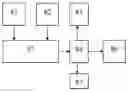
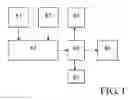
FIG. 1 is a block diagram a preferred embodiment of an energy saving device according to the invention.
DETAILED DESCRIPTION OF THE INVENTION
Referring to FIG. 1, an energy saving device in accordance with a preferred embodiment of the invention is shown. In this embodiment, the device is adapted to control the operation of an air conditioner 85 and comprises an outdoor temperature sensor and converter 81 for sensing outdoor temperature (e.g., 30° C. measured at 10 p.m.) and converting the sensed temperature into a first voltage value, a conversion circuit 82 for converting a set temperature (e.g., 27° C.) of stopping the air conditioner 85 into a second voltage value, a comparison circuit 83. The comparison circuit 83 has a first input for receiving the first voltage value from the outdoor temperature sensor and converter 81, a second input for receiving the second voltage value from the conversion circuit 82, and an output. The device can further comprises a fan 86, an electric window 87, and a control circuit 84 electrically connected to the output for controlling each of the air conditioner 85, the fan 86, and the electric window 87.
For instance, an outdoor temperature measured by the outdoor temperature sensor and converter 81 is 30° C. at 10 p.m., a set temperature of stopping the air conditioner 85 is set at 27° C. and the air conditioner 85 is adapted to operate to lower room temperature to 25° C. The air conditioner 85 will continue its operation as long as the outdoor temperature is higher than the set temperature (27° C. in this example) of stopping the air conditioner after comparing the first voltage value with the second voltage value by the comparison circuit 83 (i.e., the first voltage value is larger than the second voltage value). Outdoor temperature continues to drop as night goes on. Then, the comparison circuit 83 will stop the air conditioner 85 through the control circuit 84 if the outdoor temperature (e.g., 27° C. at 2 a.m.) is equal to or lower than the set temperature (27° C. in this example) of stopping the air conditioner after the comparison (i.e., the first voltage value is equal to or smaller than the second voltage value). Then, preferably, the fan 86 is actuated and the electric window 87 is opened by the control circuit 84 (i.e., the fan 86 operates to cool the room and the electric window 87 is opened for ventilation). Advantageously, room temperature (e.g., 25° C. at this time) will not rise because operations of the fan 86 and opening of the electric window 87 will maintain room temperature at 25° C. even when the air conditioner 85 has stopped. It is understood that a total power consumption of both the fan 86 and the electric window 87 is much lower than a power consumption of the single air conditioner 85. Thus, both energy saving and the effect of regulating room temperature are accomplished. Further, the air conditioner 85 will start again if the outdoor temperature (e.g., 28° C. at 5 a.m.) is higher than the set temperature (27° C. in this example) of stopping the air conditioner after the comparison (i.e., the first voltage value is larger than the second voltage value). The fan 86 is immediately turned off and the electric window 87 is immediately closed in response to the air conditioner 85 being started. Note that the number of each of the fan 86 and the electric window 87 may be more than one in other embodiments. It is further noted that the same principle is applied to the operation of heater too.
While the invention herein disclosed has been described by means of specific embodiments, numerous modifications and variations could be made thereto by those skilled in the art without departing from the scope and spirit of the invention set forth in the claims.
Claims
What is claimed is:1. An energy saving device for a heating and air conditioning system comprising at least:
an air conditioner;
an outdoor temperature sensor and converter for measuring an outdoor temperature and converting the measured temperature into a first voltage value;
a conversion circuit for converting a set temperature of stopping the air conditioner into a second voltage value;
a control circuit for controlling the air conditioner;
a comparison circuit for comparing the first voltage value with the second voltage value and transmitting the result to the control circuit;
wherein the control circuit will control the air conditioner to continue its operation if the outdoor temperature is higher than the set temperature of stopping the air conditioner in response to the comparison resulted transmitted from the comparison circuit and the control circuit will stop the air conditioner if the outdoor temperature is equal to or lower than the set temperature of stopping the air conditioner in response to the comparison result transmitted from the comparison circuit.
2. An energy saving device of claim 1, further comprising one or more fan, wherein the one or more fan is disabled while the air conditioner is continuously actuated, and actuated by the control circuit while the air conditioner is stopped to operate so as to maintain the room temperature at the set temperature of the air conditioner in response to stop of the air conditioner.
3. An energy saving device of claim 1, further comprising one or more electric window, wherein the one or more electric window is closed while the air conditioner is continuously actuated, and opened by the control circuit for ventilation in response to the air conditioner being stopped.
4. An energy saving device of claim 1, further comprising one or more fan and one or more electric window, wherein the one or more fan is disabled and the one or more electric window is closed while the air conditioner is continuously actuated, and the one or more fan is actuated and the one or more electric window is opened by the control circuit for ventilation while the air conditioner is stopped to operate so as to maintain the room temperature at the set temperature of the air conditioner in response to the air conditioner being stopped.
5. An energy saving device for a heating and air conditioning system comprising at least:
a heater;
an outdoor temperature sensor and converter for measuring an outdoor temperature and converting the measured temperature into a first voltage value;
a conversion circuit for converting a set temperature of stopping the heater into a second voltage value;
a control circuit for controlling the heater;
a comparison circuit for comparing the first voltage value with the second voltage value and transmitting the result to the control circuit;
wherein the control circuit will control the heater to continue its operation if the outdoor temperature is lower than the set temperature of stopping the heater in response to the comparison resulted transmitted from the comparison circuit and the control circuit will stop the heater if the outdoor temperature is equal to or higher than the set temperature of stopping the heater in response to the comparison result transmitted from the comparison circuit.
6. An energy saving device of claim 5, further comprising one or more electric window, wherein the one or more electric window is closed while the heater is continuously actuated, and opened by the control circuit for ventilation in response to the air conditioner being stopped.
Images & Drawings included:
Sources:
- United States Patent and Trademark Office - verify current appl. status at the USPTO↗
Recent applications in this class:
- » 20250172306 2025-05-29
Systems and Methods for Controlling Rate of Change of Air Temperature in a Building - » 20250164130 2025-05-22
LIQUID MICRONIZATION APPARATUS - » 20250155146 2025-05-15
DEVICE BASED ON ACTIVITY WITHIN PROPERTY - » 20250146689 2025-05-08
AIR-CONDITIONING APPARATUS AND INSTALLATION-POSITION DETERMINATION METHOD - » 20250146688 2025-05-08
Determining HVAC Cycle Type Through Remote Web-Connected Sensor Data - » 20250116416 2025-04-10
SYSTEMS AND METHODS FOR CONTROLLING A HEATING AND AIR-CONDITIONING (HVAC) SYSTEM - » 20250102169 2025-03-27
DETECTION OF HVAC EQUIPMENT WIRED TO A THERMOSTAT - » 20250102168 2025-03-27
SYSTEM AND METHOD FOR A CONTROLLED ENVIRONMENT - » 20250075924 2025-03-06
METHOD, SYSTEM, AND APPARATUS FOR CONTROLLING A PLURALITY OF PARAMETERS IN A NON-AIR-CONDITIONED CLOSED ENVIRONMENT - » 20250067452 2025-02-27
METHODS AND SYSTEMS FOR CONTROLLING AN HVAC SYSTEM TO IDENTIFY ENERGY USAGE UNDER DIFFERENT CONTROL STRATEGIES