Use of microcapsules for making paints and lacquers
US20070202139A1
2007-08-30
11/703,859
2007-02-08
✅ Patent granted
US 8,758,790 B2
2014-06-24
-
-
Randy Gulakowski | Jeffrey Washville
Servilla Whitney LLC
2030-01-23
Abstract:
The invention provides microcapsules having an average diameter of 0.1 to 25 μm, obtained by a process (a) or (b), wherein, (a1) preparing an aqueous emulsion comprising actives and optionally oil components and/or emulsifiers; (a2) treating the emulsifier with an aqueous solution of anionic polymers to form a matrix; (a3) contacting the matrix with an aqueous solution of cationic polymers to form a capsule and optionally (a4) separating the aqueous phase from the capsules, or (b1) preparing an aqueous emulsion containing actives and optionally oil components and/or emulsifiers; (b2) treating the aqueous emulsion with an aqueous solution of cationic polymers to form a matrix; (b3) contacting the matrix with an aqueous solution of an anionic polymer to form a capsule and optionally (b4) separating the aqueous phase from the capsule. The microcapsules are useful in paint and lacquer formulations.
Inventors:
- Joaquin Bigorra Llosas 32 🇪🇸 Sabadell, Spain
- Josep LLuis Viladot Petit 10 🇪🇸 Barcelona, Spain
- Heinz-Guenther Schulte 3 🇩🇪 Kaarst, Germany
- Otilia Par 2 🇪🇸 Barcelona, Spain
- Elisabet Graupera 2 🇪🇸 Barcelona, Spain
- Andres Ortuno 2 🇪🇸 Barcelona, Spain
Assignee:
- COGNIS IP MANAGEMENT GMBH 264 🇩🇪 Duesseldorf, Germany
Applicant:
Interested in similar patents?
Get notified when new applications in this technology area are published.
Classification:
B01J13/10 » CPC main
Colloid chemistry, e.g. the production of colloidal materials or their solutions, not otherwise provided for; Making microcapsules or microballoons; Making microcapsules or microballoons by phase separation Complex coacervation, i.e. interaction of oppositely charged particles
C09D5/14 » CPC further
Coating compositions, e.g. paints, varnishes or lacquers, characterised by their physical nature or the effects produced ; Filling pastes Paints containing biocides, e.g. fungicides, insecticides or pesticides
C09D7/65 » CPC further
Features of coating compositions, not provided for in group ; Processes for incorporating ingredients in coating compositions; Additives macromolecular
C09D7/68 » CPC further
Features of coating compositions, not provided for in group ; Processes for incorporating ingredients in coating compositions; Additives characterised by particle size Particle size between 100-1000 nm
C09D7/69 » CPC further
Features of coating compositions, not provided for in group ; Processes for incorporating ingredients in coating compositions; Additives characterised by particle size Particle size larger than 1000 nm
C09D7/70 » CPC further
Features of coating compositions, not provided for in group ; Processes for incorporating ingredients in coating compositions; Additives characterised by shape, e.g. fibres, flakes or microspheres
C08K9/10 » CPC further
Use of pretreated ingredients Encapsulated ingredients
A01N25/34 IPC
Biocides, pest repellants or attractants, or plant growth regulators, characterised by their forms, or by their non-active ingredients or by their methods of application, e.g. seed treatment or sequential application ; Substances for reducing the noxious effect of the active ingredients to organisms other than pests Shaped forms, e.g. sheets, not provided for in any other sub-group of this main group
A61K9/50 IPC
Medicinal preparations characterised by special physical form; Preparations in capsules, e.g. of gelatin, of chocolate Microcapsules having a gas, liquid or semi-solid filling; Solid microparticles or pellets surrounded by a distinct coating layer, e.g. coated microspheres, coated drug crystals
Description
CROSS-REFERENCE TO RELATED APPLICATIONSThis application claims priority from European application number EP 06002518.6 filed Feb. 8, 2006, the entire contents of which are incorporated herein by reference.
FIELD OF THE INVENTIONThe present invention belongs to the field of paints and lacquers and relates to the use of defined types of encapsulated actives for making paints and lacquers and paints and lacquers comprising said encapsulated actives.
BACKGROUND OF THE INVENTIONPaint and lacquer compositions typically include colorant particles dispersed in a resinous binder. In addition, those products may comprise further auxiliaries, more particularly active ingredients providing for example a fresh smell or protecting the objects, which have been treated with the paints or lacquers, against insects, corrosion and the like. Unfortunately, very often those actives do not show a sufficient stability in the final composition, either since they interfere with other ingredients or they are simply disintegrated by light or water. A simple solution to this problem could be to encapsulate such actives in order to achieve both, a protection of the compounds and their controlled release over a longer period of time. Nevertheless, what one can observe is that well known microcapsules, for example based on gelatine as a matrix, show a strong tendency to increase the viscosity of the paints and lacquers, especially when storage takes place at elevated temperatures, which is definitely unwanted by the customer. Another serious disadvantage is that paints comprising common microcapsules when applied on surface provide films of poor quality, since they show lots of visual defects, like spots and craters, since e.g. the size distribution is not narrow enough and comprise too many particles with large diameters.
The object of the present invention has therefore been to provide a solution to said complex problem and to develop paints and lacquers comprising encapsulated actives which show improved storage stability and exhibit a superior film quality.
BRIEF DESCRIPTION OF THE INVENTIONThe present invention claims microcapsules having an average diameter of 0.1 to 25 μm, obtained by process (a) or (b)
-
- (a1) an emulsion is prepared comprising actives and optionally oil components and/or emulsifiers;
- (a2) said composition is treated with aqueous solutions of anionic polymers to form a matrix;
- (a3) said matrix is brought into contact with aqueous solutions of cationic polymers to form a capsule and optionally
- (a4) said capsules being separated from the aqueous phase,
- or
- (b1) an emulsion is prepared comprising actives and optionally oil components and/or emulsifiers;
- (b2) said composition is treated with an aqueous solution comprising a cationic polymer to form a matrix;
- (b3) said matrix is brought into contact with an aqueous solution of anionic polymers to form a capsule and optionally
- (b4) said capsules being separated from the aqueous phase,
for making paints and lacquers.
Surprisingly, it has been found that the cited microcapsules obtained from the coazervation of anionic and cationic polymers solve the complex problem, since they do not raise the viscosity when introduced into the final formulation, even when stored at elevated temperatures over a period of two months. Moreover, the paint films do not exhibit visual defects, spots or craters due to the fact that the specific microcapsules show a regular form with a soft, flexible shell and exhibit a small and narrow size distribution.
Therefore, microcapsules which were found particular useful for the claimed application, show a size distribution where at least 50% b.w. of said capsules have a diameter between 0.5 and 5 and more particularly between 1 and 4 μm.
Actives
Although the nature of the active is not critical for the present invention, preferred examples are perfumes, fragrances, aromas, insecticides and biocides.
DETAILED DESCRIPTION OF THE INVENTIONPerfumes, Fragrances and Aromas
-
- Suitable perfume oils are mixtures of natural and synthetic perfumes. Natural perfumes include the extracts of blossoms (lily, lavender, rose, jasmine, neroli, ylang-ylang), stems and leaves (geranium, patchouli, petitgrain), fruits (anise, coriander, caraway, juniper), fruit peel (bergamot, lemon, orange), roots (nutmeg, angelica, celery, cardamom, costus, iris, calmus), woods (pinewood, sandalwood, guaiac wood, cedarwood, rosewood), herbs and grasses (tarragon, lemon grass, sage, thyme), needles and branches (spruce, fir, pine, dwarf pine), resins and balsams (galbanum, elemi, benzoin, myrrh, olibanum, opoponax). Animal raw materials, for example civet and beaver, may also be used. Typical synthetic perfume compounds are products of the ester, ether, aldehyde, ketone, alcohol and hydrocarbon type. Examples of perfume compounds of the ester type are benzyl acetate, phenoxyethyl isobutyrate, p-tert.butyl cyclohexylacetate, linalyl acetate, dimethyl benzyl carbinyl acetate, phenyl ethyl acetate, linalyl benzoate, benzyl formate, ethylmethyl phenyl glycinate, allyl cyclohexyl propionate, styrallyl propionate and benzyl salicylate. Ethers include, for example, benzyl ethyl ether while aldehydes include, for example, the linear alkanals containing 8 to 18 carbon atoms, citral, citronellal, citronellyloxyacetaldehyde, cyclamen aldehyde, hydroxycitronellal, lilial and bourgeonal. Examples of suitable ketones are the ionones, isomethylionone and methyl cedryl ketone. Suitable alcohols are anethol, citronellol, eugenol, isoeugenol, geraniol, linalool, phenylethyl alcohol and terpineol. The hydrocarbons mainly include the terpenes and balsams. However, it is preferred to use mixtures of different perfume compounds which, together, produce an agreeable perfume. Other suitable perfume oils are essential oils of relatively low volatility which are mostly used as aroma components. Examples are sage oil, camomile oil, clove oil, melissa oil, mint oil, cinnamon leaf oil, lime-blossom oil, juniper berry oil, vetiver oil, olibanum oil, galbanum oil, ladanum oil and lavendin oil. The following are preferably used either individually or in the form of mixtures: bergamot oil, dihydromyrcenol, lilial, lyral, citronellol, phenylethyl alcohol, hexylcinnamaldehyde, geraniol, benzyl acetone, cyclamen aldehyde, linalool, Boisambrene Forte, Ambroxan, indole, hedione, sandelice, citrus oil, mandarin oil, orange oil, allylamyl glycolate, cyclovertal, lavendin oil, clary oil, damascone, geranium oil bourbon, cyclohexyl salicylate, Vertofix Coeur, Iso-E-Super, Fixolide NP, evernyl, iraldein gamma, phenylacetic acid, geranyl acetate, benzyl acetate, rose oxide, romillat, irotyl and floramat.
Insecticides and Biocides
-
- Examples for suitable insecticides and biocides are sesquiterpenes, Diethyltoluamid (DEET), Ethyl Butylacetylaminopropionate (IR3535), Hydroxyethyl Isobutyl Piperidine Carboxylate and preferably pyrethroides and their mixtures. Typical representatives for pyrethroides are 5-Benzyl-3-furylmethyl (+)-cis-(1R,3S,E) 2,2-dimethyl-3-(2-oxo-2,3,4,5-tetrahyfrothiophenylidenmethyl)cyclopropancarboxylate, 6-Chloropiperonyl 2,2-dimethyl-3-(2-methylpropenyl)cyclopropancarboxylate, Acrinathrin, Allethrin, Bifentrin, Bioresmethrin, Cismethrin, Cyclethrin, Cycloprothrin, Cyfluthrin, Cyhalothrin, Cypermethrin, Cyphenotrin, Deltamethrin, Dimethrin, Empenthrin, Esfenvalerat, Fenfluthrin, Fenpropathrin, Fenvalerat, Flucythrinat, Flumethrin, Fluvalinat, Furethrin, Halfenprox, Imiprothrin, Methyl cis/trans-3-(2,2-dichlorovinyl)-2,2-dimethylcyclopropan-1-carboxylat, and particularly Permethrin and their mixtures. Also useful as biocides are certain pigments like the oxides of copper.
Oil Components
- Examples for suitable insecticides and biocides are sesquiterpenes, Diethyltoluamid (DEET), Ethyl Butylacetylaminopropionate (IR3535), Hydroxyethyl Isobutyl Piperidine Carboxylate and preferably pyrethroides and their mixtures. Typical representatives for pyrethroides are 5-Benzyl-3-furylmethyl (+)-cis-(1R,3S,E) 2,2-dimethyl-3-(2-oxo-2,3,4,5-tetrahyfrothiophenylidenmethyl)cyclopropancarboxylate, 6-Chloropiperonyl 2,2-dimethyl-3-(2-methylpropenyl)cyclopropancarboxylate, Acrinathrin, Allethrin, Bifentrin, Bioresmethrin, Cismethrin, Cyclethrin, Cycloprothrin, Cyfluthrin, Cyhalothrin, Cypermethrin, Cyphenotrin, Deltamethrin, Dimethrin, Empenthrin, Esfenvalerat, Fenfluthrin, Fenpropathrin, Fenvalerat, Flucythrinat, Flumethrin, Fluvalinat, Furethrin, Halfenprox, Imiprothrin, Methyl cis/trans-3-(2,2-dichlorovinyl)-2,2-dimethylcyclopropan-1-carboxylat, and particularly Permethrin and their mixtures. Also useful as biocides are certain pigments like the oxides of copper.
Although the actives usually represent oil phases the addition of further oil components can form another preferred embodiment of the present invention in order to introduce carriers into the capsules or to improve the lipophilic nature of the inner phase. Suitable oil components, which form constituents of the O/W emulsions, are, for example, Guerbet alcohols based on fatty alcohols having 6 to 18, preferably 8 to 10, carbon atoms, esters of linear C6-C22 fatty acids with linear or branched C6-C22 fatty alcohols or esters of branched C6-C13 carboxylic acids with linear or branched C6-C22 fatty alcohols, such as, for example, myristyl myristate, myristyl palmitate, myristyl stearate, myristyl isostearate, myristyl oleate, myristyl behenate, myristyl erucate, cetyl myristate, cetyl palmitate, cetyl stearate, cetyl isostearate, cetyl oleate, cetyl behenate, cetyl erucate, stearyl myristate, stearyl palmitate, stearyl stearate, stearyl isostearate, stearyl oleate, stearyl behenate, stearyl erucate, isostearyl myristate, isostearyl palmitate, isostearyl stearate, isostearyl isostearate, isostearyl oleate, isostearyl behenate, isostearyl oleate, oleyl myristate, oleyl palmitate, oleyl stearate, oleyl isostearate, oleyl oleate, oleyl behenate, oleyl erucate, behenyl myristate, behenyl palmitate, behenyl stearate, behenyl isostearate, behenyl oleate, behenyl behenate, behenyl erucate, erucyl myristate, erucyl palmitate, erucyl stearate, erucyl isostearate, erucyl oleate, erucyl behenate and erucyl erucate. Also suitable are esters of linear C6-C22 fatty acids with branched alcohols, in particular 2-ethylhexanol, esters of C18-C38 alkylhydroxy carboxylic acids with linear or branched C6-C22 fatty alcohols, in particular dioctyl malate, esters of linear and/or branched fatty acids with polyhydric alcohols (such as, for example, propylene glycol, dimerdiol or trimertriol) and/or Guerbet alcohols, triglycerides based on C6-C10 fatty acids, liquid mono-/di-/triglyceride mixtures based on C6-C18 fatty acids, esters of C6-C22 fatty alcohols and/or Guerbet alcohols with aromatic carboxylic acids, in particular benzoic acid, esters of C2-C12 dicarboxylic acids with linear or branched alcohols having 1 to 22 carbon atoms or polyols having 2 to 10 carbon atoms and 2 to 6 hydroxyl groups, vegetable oils, branched primary alcohols, substituted cyclohexanes, linear and branched C6-C22 fatty alcohol carbonates, such as, for example, dicaprylyl carbonate (Cetiol® CC), Guerbet carbonates, based on fatty alcohols having 6 to 18, preferably 8 to 10, carbon atoms, esters of benzoic acid with linear and/or branched C6-C22 alcohols (e.g. Finsolv® TN), linear or branched, symmetrical or asymmetrical dialkyl ethers having 6 to 22 carbon atoms per alkyl group, such as, for example, dicaprylyl ether (Cetiol® OE), ring-opening products of epoxidized fatty acid esters with polyols, silicone oils (cyclomethicones, silicone methicone grades, etc.), aliphatic or naphthenic hydrocarbons, such as, for example, squalane, squalene or dialkylcyclohexanes, and/or mineral oils.
Emulsifiers
In another preferred embodiment of the present invention emulsifiers are used for preparing the compositions, which more preferably represent non-ionic surfactants. Typical examples are:
-
- products of the addition of 2 to 30 mol ethylene oxide and/or 0 to 5 mol propylene oxide onto linear C8-22 fatty alcohols, onto C12-22 fatty acids and onto alkyl phenols containing 8 to 15 carbon atoms in the alkyl group;
- C12-18 fatty acid monoesters and diesters of addition products of 1 to 30 mol ethylene oxide onto glycerol;
- glycerol mono- and diesters and sorbitan mono- and diesters of saturated and unsaturated fatty acids containing 6 to 22 carbon atoms and ethylene oxide addition products thereof;
- addition products of 15 to 60 mol ethylene oxide onto castor oil and/or hydrogenated castor oil;
- polyol esters and, in particular, polyglycerol esters such as, for example, polyglycerol polyricinoleate, polyglycerol poly-12-hydroxy-stearate or polyglycerol dimerate isostearate. Mixtures of compounds from several of these classes are also suitable;
- addition products of 2 to 15 mol ethylene oxide onto castor oil and/or hydrogenated castor oil;
- partial esters based on linear, branched, unsaturated or saturated C6-22 fatty acids, ricinoleic acid and 12-hydroxystearic acid and glycerol, polyglycerol, pentaerythritol, dipentaerythritol, sugar alcohols (for example sorbitol), alkyl glucosides (for example methyl glucoside, butyl glucoside, lauryl glucoside) and polyglucosides (for example cellulose);
- C6-C22 alkyl and/or alkenyl oligoglycosides
- mono-, di and trialkyl phosphates and mono-, di- and/or tri-PEG-alkyl phosphates and salts thereof;
- wool wax alcohols;
- polysiloxane/polyalkyl polyether copolymers and corresponding derivatives;
- mixed esters of pentaerythritol, fatty acids, citric acid and fatty alcohol and/or mixed esters of C6-22 fatty acids, methyl glucose and polyols, preferably glycerol or polyglycerol,
- polyalkylene glycols and
- glycerol carbonate.
The addition products of ethylene oxide and/or propylene oxide onto fatty alcohols, fatty acids, alkylphenols, glycerol mono- and diesters and sorbitan mono- and diesters of fatty acids or onto castor oil are known commercially available products. They are homologue mixtures of which the average degree of alkoxylation corresponds to the ratio between the quantities of ethylene oxide and/or propylene oxide and substrate with which the addition reaction is carried out. C12/18 fatty acid monoesters and diesters of addition products of ethylene oxide onto glycerol are known as lipid layer enhancers for cosmetic formulations. The preferred emulsifiers are described in more detail as follows:
Alk(en)yl Oligoglycosides
-
- The alkyl or alkenyl oligoglycosides may be derived from aldoses or ketoses containing 5 or 6 carbon atoms, preferably glucose. Accordingly, the preferred alkyl and/or alkenyl oligoglycosides are alkyl or alkenyl oligoglucosides. These materials are also known generically as “alkyl polyglycosides” (APG). Preferably, the alk(en)yl oligoglycosides correspond to formula (I):
R1O[G]p (I) - wherein R1 is an alkyl or alkenyl radical having from 6 to 22 carbon atoms, G is a sugar unit having 5 or 6 carbon atoms and p is a number from 1 to 10. The index p in general formula (I) indicates the degree of oligomerisation (DP degree), i.e. the distribution of mono- and oligoglycosides, and is a number of 1 to 10. Whereas p in a given compound must always be an integer and, above all, may assume a value of 1 to 6, the value p for a certain alkyl oligoglycoside is an analytically determined calculated quantity which is mostly a broken number. Alk(en)yl oligoglycosides having an average degree of oligomerisation p of 1.1 to 3.0 are preferably used. Alk(en)yl oligoglycosides having a degree of oligomerisation below 1.7 and, more particularly, between 1.2 and 1.4 are preferred from the applicational point of view. Alkyl oligoglucosides based on hydrogenated C8-C16 coconut oil alcohol having a DP of 1 to 3 are preferred.
- The alkyl or alkenyl oligoglycosides may be derived from aldoses or ketoses containing 5 or 6 carbon atoms, preferably glucose. Accordingly, the preferred alkyl and/or alkenyl oligoglycosides are alkyl or alkenyl oligoglucosides. These materials are also known generically as “alkyl polyglycosides” (APG). Preferably, the alk(en)yl oligoglycosides correspond to formula (I):
Partial glycerides
-
- Typical examples of suitable partial glycerides are hydroxystearic acid monoglyceride, hydroxystearic acid diglyceride, isostearic acid monoglyceride, isostearic acid diglyceride, oleic acid monoglyceride, oleic acid diglyceride, ricinoleic acid monoglyceride, ricinoleic acid diglyceride, linoleic acid monoglyceride, linoleic acid diglyceride, linolenic acid monoglyceride, linolenic acid diglyceride, erucic acid monoglyceride, erucic acid diglyceride, tartaric acid monoglyceride, tartaric acid diglyceride, citric acid monoglyceride, citric acid diglyceride, malic acid monoglyceride, malic acid diglyceride and technical mixtures thereof which may still contain small quantities of triglyceride from the production process. Addition products of 1 to 30 and preferably 5 to 10 mol ethylene oxide onto the partial glycerides mentioned are also suitable.
Sorbitan Esters
-
- Suitable sorbitan esters are sorbitan monoisostearate, sorbitan sesquiisostearate, sorbitan diisostearate, sorbitan triisostearate, sorbitan monooleate, sorbitan sesquioleate, sorbitan dioleate, sorbitan trioleate, sorbitan monoerucate, sorbitan sesquierucate, sorbitan dierucate, sorbitan trierucate, sorbitan monoricinoleate, sorbitan sesquiricinoleate, sorbitan diricinoleate, sorbitan triricinoleate, sorbitan monohydroxystearate, sorbitan sesquihydroxystearate, sorbitan dihydroxystearate, sorbitan trihydroxystearate, sorbitan monotartrate, sorbitan sesquitartrate, sorbitan ditartrate, sorbitan tritartrate, sorbitan monocitrate, sorbitan sesquicitrate, sorbitan dicitrate, sorbitan tricitrate, sorbitan monomaleate, sorbitan sesquimaleate, sorbitan dimaleate, sorbitan trimaleate and technical mixtures thereof. Addition products of 1 to 30 and preferably 5 to 10 mol ethylene oxide onto the sorbitan esters mentioned are also suitable.
Polyglycerol Esters
-
- Typical examples of suitable polyglycerol esters are polyglyceryl-2 dipolyhydroxystearate (Dehymuls® PGPH), polyglycerin-3-diisostearate (Lameform® TGI), polyglyceryl-4 isostearate (Isolan® GI 34), polyglyceryl-3 oleate, diisostearoyl polyglyceryl-3 diisostearate (Isolan® PDI), polyglyceryl-3 methylglucose distearate (Tego Care® 450), polyglyceryl-3 beeswax (Cera Bellina®), polyglyceryl-4 caprate (polyglycerol caprate T2010/90), polyglyceryl-3 cetyl ether (Chimexane® NL), polyglyceryl-3 distearate (Cremophor® GS 32) and polyglyceryl polyricinoleate (Admul® WOL 1403), polyglyceryl dimerate isostearate and mixtures thereof. Examples of other suitable polyolesters are the mono-, di- and triesters of trimethylol propane or pentaerythritol with lauric acid, cocofatty acid, tallow fatty acid, palmitic acid, stearic acid, oleic acid, behenic acid and the like optionally reacted with 1 to 30 mol ethylene oxide.
Anionic Polymers
- Typical examples of suitable polyglycerol esters are polyglyceryl-2 dipolyhydroxystearate (Dehymuls® PGPH), polyglycerin-3-diisostearate (Lameform® TGI), polyglyceryl-4 isostearate (Isolan® GI 34), polyglyceryl-3 oleate, diisostearoyl polyglyceryl-3 diisostearate (Isolan® PDI), polyglyceryl-3 methylglucose distearate (Tego Care® 450), polyglyceryl-3 beeswax (Cera Bellina®), polyglyceryl-4 caprate (polyglycerol caprate T2010/90), polyglyceryl-3 cetyl ether (Chimexane® NL), polyglyceryl-3 distearate (Cremophor® GS 32) and polyglyceryl polyricinoleate (Admul® WOL 1403), polyglyceryl dimerate isostearate and mixtures thereof. Examples of other suitable polyolesters are the mono-, di- and triesters of trimethylol propane or pentaerythritol with lauric acid, cocofatty acid, tallow fatty acid, palmitic acid, stearic acid, oleic acid, behenic acid and the like optionally reacted with 1 to 30 mol ethylene oxide.
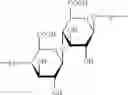
The use of anionic polymers like anionic polysaccharides, e.g. carboxymethyl cellulose and especially the use of poly(meth)acrylic acids and their esters is preferred, since the capsules based on these raw materials show a very regular size and do not exhibit any residue when used in the final paint or lacquer composition. The most preferred anionic polymer is a polyacrylate based on glycerol suspended in glycerol, which is obtainable in the market under the trademark Hispagel® (Cognis). Also salts of alginic acid are useful for this purpose. The alginic acid is a mixture of carboxyl-containing polysaccharides with the following idealized monomer unit:
The average molecular weight of the alginic acid or the alginates is in the range from 150,000 to 250,000. Salts of alginic acid and complete and partial neutralization products thereof are understood In particular to be the alkali metal salts, preferably sodium alginate (“algin”) and the ammonium and alkaline earth metal salts. Mixed alginates, for example sodium/magnesium or sodium/calcium alginates, are particularly preferred. In an alternative embodiment of the invention, however, anionic chitosan derivatives, for example the carboxylation and above all succinylation products are also suitable for this purpose. Usually, the anionic polymers are used in quantities of 0.01 to 1, preferably 0.05 to 0.1% b.w.—calculated on the weight of the final microcapsule.
Cationic Polymers
Suitable cationic polymers are, for example, cationic cellulose derivatives such as the quaternized hydroxyethyl cellulose obtainable from Amerchol under the name of Polymer JR 400®, cationic starch, copolymers of diallyl ammonium salts and acrylamides, quaternized vinyl pyrrolidone/vinyl imidazole polymers such as, for example, Luviquat® (BASF), condensation products of polyglycols and amines, quaternized collagen polypeptides such as, for example, Lauryldimonium Hydroxypropyl Hydrolyzed Collagen (Lamequat® L, Grünau), quaternized wheat polypeptides, polyethyleneimine, cationic silicone polymers such as, for example, amodimethicone, copolymers of adipic acid and dimethylaminohydroxypropyl diethylenetriamine (Cartaretine®, Sandoz), copolymers of acrylamide with dimethyl diallyl ammonium chloride (Merquat® 550, Chemviron), polyaminopolyamides and crosslinked water-soluble polymers thereof, condensation products of dihaloalkyls, for example dibromobutane, with bis-dialkylamines, for example bis-dimethylamino-1,3-propane, quaternized ammonium salt polymers such as, for example, Mirapol® A-15, Mirapol® AD-1, Mirapol® AZ-1 of Miranol and their mixtures. Also useful are cationic polymers of natural origin, e.g. chitosan or (cationic) whey proteins. Usually, the cationic polymers are used in quantities of 0.01 to 1, preferably 0.05 to 0.1% b.w.—calculated on the weight of the final micro-capsule.
INDUSTRIAL APPLICATIONAs outlined above, the microcapsules according to the present invention provide superior properties to paints and lacquers than other capsules found in the market. Therefore, another object of the present invention is directed to paints and lacquers comprising microcapsules having an average diameter of 0.1 to 25 μm, and obtainable in that
-
- (a1) an emulsion is prepared comprising actives and optionally emulsifiers,
- (a2) said composition is treated with aqueous solutions of anionic polymers to form a matrix,
- (a3) said matrix is brought into contact with aqueous solutions of cationic polymers to form a capsule and optionally
- (a4) said capsules being separated off from the aqueous phase,
- or
- (b1) an emulsion is prepared comprising actives and optionally emulsifiers,
- (b2) said composition is treated with aqueous solutions of cationic polymers to form a matrix,
- (b3) said matrix is brought into contact with aqueous solutions of anionic polymers to form a capsule and optionally
- (b4) said capsules being separated off from the aqueous phase.
In particular, those paints and lacquers comprising microcapsules are preferred where at least 50% b.w. of said capsules show a diameter of 0.1 to 5 μm. Typically, the content of said microcapsules in said paints and lacquers lies between 0.01 and 15, preferably 0.1 to 10 and more preferably 1 to 5% b.w.
EXAMPLES Example 1 Preparation of an Encapsulated PerfumeIn a first 250 ml flask 50 g of glycerol polyacrylate in glycerol (Hispagel® 50, Cognis) were placed and agitated at 20° C. with 14 g of water and 0.5 g butyl paraben (Phenonip®). The pH value of the resulting component A was adjusted to approximately 5.5 by adding either sodium hydroxide solution or citric acid. In a second 100 ml flask 20 g of perfume (Blau 111084) were placed and mixed at 20° C. with 0.5 g of a mixture of sorbitol esters (Dehymuls® SMO amd Polysorbat 20, weight ratio 1:1, both Cognis) to form component B. Finally, in a third 100 ml flask 5 g of a cationic polymer (Polyquart® 701 NA, Cognis) were placed and dispersed in 10 g water under vigorous agitation to form component C. Subsequently, components B was drop wise and under vigorous agitation given to component A. Once the mixture was homogenized, component C was also added drop by drop to form the capsules. Table 1 shows their size distribution:
| TABLE 1 |
| Size distribution |
| Diameter [μm] | Percentage b.w. | |
| 1 | 2 | |
| 2 | 17 | |
| 3 | 18 | |
| 4 | 19 | |
| 5 | 12 | |
| 6 | 7 | |
| 7 | 6 | |
| 8 | 5 | |
| 9 | 4 | |
| 10 | 3 | |
| 11 | 3 | |
| 12 | 2 | |
| 13 | 1 | |
| 14 | 0 | |
| 15 | 1 | |
| 16 | 0 | |
In a first 250 ml flask 50 g of polyacrylic acid (Pemulen® TR-2) were placed and agitated at 20° C. with 14 g of water and 0.5 g butyl paraben (Phenonip®). The pH value of the resulting component A was adjusted to approximately 5.5 by adding either sodium hydroxide solution or citric acid. In a second 100 ml flask 20 g of an insecticide (permethrin) were placed and mixed at 20° C. with 0.5 g of a mixture of sorbitol esters (Dehymuls® SMO and Polysorbat 20, weight ratio 1:1, both Cognis) to form component B. Finally, in a third 100 ml flask 5 g of a cationic polymer (Polyquart® 701 NA, Cognis) were placed and dispersed in 10 g water under vigorous agitation to form component C. Subsequently, components B was drop wise and under vigorous agitation added to component A. Once the mixture was homogenised, component C was also added drop by drop to form the capsules.
Application TestsAll applications tests were performed by adding 2.5% b.w. of the encapsulated product (equivalent to 6.25 g capsules per 250 g paint) either to a semi-gloss paint (Pintura Satinada Ciclón, Bruguer) or a flat paint (Pintura Mate Ciclón, Bruguer) under vigorous stirring (2,000 rpm, 10 min). Once the products were homogenised the following parameters were determined:
-
- Paint viscosity (according to Brookfield) after the addition of the capsules and paint stability after storage at 50° C.;
- Preparation of films (20 g of paint) by means of a brush (visual defects);
- Paint draw down at 100 μm (visual defects).
The tests according to the present invention were conducted with microcapsules obtained according to working example 1. The results are shown in Table 2:
| TABLE 2 |
| Application tests |
| Type | Properties | Example 1 | |
| Flat paint | Viscosity, 1 d (25° C.) | 5.400 | |
| Viscosity 20 d (50° C.) | 5.750 | ||
| Viscosity 2 m (50° C.) | 6.100 | ||
| Brush test | no defects | ||
| Draw-down test | no spots | ||
| Satin paint | Viscosity, 1 d (25° C.) | 7.300 | |
| Viscosity 20 d (50° C.) | 9.250 | ||
| Viscosity 2 m (50° C.) | 8.550 | ||
| Brush test | no defects | ||
| Draw-down test | no spots | ||
As one can see, the microcapsules according to the present invention allow the manufacture of flat, gloss and semi-gloss paints with stable viscosity. In the application said paints exhibit an excellent performance, the obtained films do not show any defects or spots or craters.
Claims
We claim:1. Microcapsules having an average diameter of 0.1 to 25 μm, formed by a process selected from the group consisting of
(a1) prepare an emulsion comprising active components and optionally oil components and/or emulsifiers;
(a2) treat the emulsion with an aqueous solution of anionic polymers to form a matrix;
(a3) contacting the matrix with an aqueous solution of cationic polymers to form capsules; and optionally
(a4) separating the capsules from the aqueous phase;
and
(b1) prepare an emulsion comprising active components and optionally oil components and/or emulsifiers;
(b2) treat the emulsion with an aqueous solution of cationic polymers to form a matrix;
(b3) contacting the matrix with an aqueous solution of anionic polymer to form capsules; and optionally
(b4) separating the capsules from the aqueous phase,
for making paints and lacquers.
2. The microcapsules of claim 1, wherein, at least 50% by weight of the microcapsules have a diameter in a range of 0.5 to 5 μm.
3. The microcapsules of claim 1, wherein, the active component comprises at least one member selected from the group consisting of perfumes, fragrances, aromas, insecticides and biocides.
4. The microcapsules of claim 1, wherein, the oil component comprises at least one member selected from the group consisting of Guerbet alcohols based on fatty alcohols having 6 to 18 carbon atoms, esters of linear C6-C22 fatty acids with linear or branched C6-C22 fatty alcohols, esters of branched C6-C13 carboxylic acids with linear or branched C6-C22 fatty alcohols, esters of C18-C38 alkylhydroxy carboxylic acids with linear or branched C6-C22 fatty alcohols, esters of linear and/or branched fatty acids with polyhydric alcohols and/or Guerbet alcohols, triglycerides based on C6-C10 fatty acids, liquid mono-/di-/triglyceride mixtures based on C6-C18 fatty acids, esters of C6-C22 fatty alcohols and/or Guerbet alcohols with aromatic carboxylic acids, esters of C2-C12 dicarboxylic acids with C1-22 linear or branched alcohols or C7-10 polyols having 2 to 6 hydroxyl groups, vegetable oils, branched primary alcohols, substituted cyclohexanes, linear and branched C6-C22 fatty alcohol carbonates, Guerbet carbonates, based on C6-18 fatty alcohols, linear or branched, symmetrical or asymmetrical dialkyl ethers having 6 to 22 carbon atoms per alkyl group, ring-opening products of epoxidized fatty acid esters with polyols, silicone oils, aliphatic hydrocarbons, naphthenic hydrocarbons and mineral oils.
5. The microcapsules of claim 1, wherein, the emulsifier used in the process are non-ionic surfactants.
6. The microcapsules of claim 1, wherein, the emulsifier comprises a member selected from the group consisting of products of the addition of 2 to 30 mol ethylene oxide and/or 0 to 5 mol propylene oxide to linear C8-22 fatty alcohols, addition of 2 to 30 mol ethylene oxide and/or 0 to 5 mol propylene oxide to C12-22 fatty acids, addition of 2 to 30 mol ethylene oxide and/or 0 to 5 mol propylene oxide to alkyl phenols containing 8 to 15 carbon atoms in the alkyl group, C12-18 fatty acid monoesters, diesters of addition products of 1 to 30 mol ethylene oxide to glycerol, glycerol monoesters, glycerol diesters, sorbitan monoesters and sorbitol diesters of saturated and unsaturated fatty acids containing 6 to 22 carbon atoms and ethylene oxide addition products thereof, addition products of 2 to 60 mol ethylene oxide onto castor oil and/or hydrogenated castor oil, polyol esters and partial esters based on linear, branched, unsaturated or saturated C6-22 fatty acids, ricinoleic acid, 12-hydroxystearic acid and glycerol, polyglycerol, pentaerythritol, dipentaerythritol, sugar alcohols, alkyl glucosides and polysaccharides, C6-C22 alkyl and/or alkenyl oligoglycosides, mono-, di and/or trialkyl phosphates and mono-, di- and/or tri-PEG-alkyl phosphates and salts thereof; wl wax alcohols, polysiloxane/polyalkyl polyether copolymers and corresponding derivatives; mixed esters of pentaerythritol, fatty acids, citric acid and fatty alcohol and/or mixed esters of C6-22 fatty acids, methyl glucose and polyols; glycerol carbonate, and mixtures thereof.
7. The microcapsules of claim 1, wherein, the anionic polymers comprise a member selected from the group consisting of anionic polysaccharides, poly(meth)acrylic acids and their esters, alginic acid and their salts and mixtures thereof.
8. The microcapsules of claim 1, wherein, the anionic polymer comprises a polyacrylate based on glycerol suspended in glycerol.
9. A paint or lacquer comprising from 0.001% to 25% by weight of the microcapsules of claim 1.
10. Paints and lacquers, comprising microcapsules according to claim 1.
11. The microcapsules of claim 2, wherein, the active component comprises at least one member selected from the group consisting of perfumes, fragrances, aromas, insecticides and biocides.
12. The microcapsules of claim 2, wherein, the oil component comprises at least one member selected from the group consisting of Guerbet alcohols based on fatty alcohols having 6 to 18 carbon atoms, esters of linear C6-C22 fatty acids with linear or branched C6-C22 fatty alcohols, esters of branched C6-C13 carboxylic acids with linear or branched C6-C22 fatty alcohols, esters of C18-C38 alkylhydroxy carboxylic acids with linear or branched C6-C22 fatty alcohols, esters of linear and/or branched fatty acids with polyhydric alcohols and/or Guerbet alcohols, triglycerides based on C6-C10 fatty acids, liquid mono-/di-/triglyceride mixtures based on C6-C18 fatty acids, esters of C6-C22 fatty alcohols and/or Guerbet alcohols with aromatic carboxylic acids, esters of C2-C12 dicarboxylic acids with C1-22 linear or branched alcohols or C7-10 polyols having 2 to 6 hydroxyl groups, vegetable oils, branched primary alcohols, substituted cyclohexanes, linear and branched C6-C22 fatty alcohol carbonates, Guerbet carbonates, based on C6-18 fatty alcohols, linear or branched, symmetrical or asymmetrical dialkyl ethers having 6 to 22 carbon atoms per alkyl group, ring-opening products of epoxidized fatty acid esters with polyols, silicone oils, aliphatic hydrocarbons, naphthenic hydrocarbons and mineral oils.
13. The microcapsules of claim 3, wherein, the oil component comprises at least one member selected from the group consisting of Guerbet alcohols based on fatty alcohols having 6 to 18 carbon atoms, esters of linear C6-C22 fatty acids with linear or branched C6-C22 fatty alcohols, esters of branched C6-C13 carboxylic acids with linear or branched C6-C22 fatty alcohols, esters of C18-C38 alkylhydroxy carboxylic acids with linear or branched C6-C22 fatty alcohols, esters of linear and/or branched fatty acids with polyhydric alcohols and/or Guerbet alcohols, triglycerides based on C6-C10 fatty acids, liquid mono-/di-/triglyceride mixtures based on C6-C18 fatty acids, esters of C6-C22 fatty alcohols and/or Guerbet alcohols with aromatic carboxylic acids, esters of C2-C12 dicarboxylic acids with C1-22 linear or branched alcohols or C7-10 polyols having 2 to 6 hydroxyl groups, vegetable oils, branched primary alcohols, substituted cyclohexanes, linear and branched C6-C22 fatty alcohol carbonates, Guerbet carbonates, based on C6-18 fatty alcohols, linear or branched, symmetrical or asymmetrical dialkyl ethers having 6 to 22 carbon atoms per alkyl group, ring-opening products of epoxidized fatty acid esters with polyols, silicone oils, aliphatic hydrocarbons, naphthenic hydrocarbons and mineral oils.
14. The microcapsules of claim 2, wherein, the emulsifier used in the process are non-ionic surfactants.
15. The microcapsules of claim 3, wherein, the emulsifier used in the process are non-ionic surfactants.
16. The microcapsules of claim 4, wherein, the emulsifier used in the process are non-ionic surfactants.
17. The microcapsules of claim 2, wherein, the emulsifier comprises a member selected from the group consisting of products of the addition of 2 to 30 mol ethylene oxide and/or 0 to 5 mol propylene oxide to linear C6-22 fatty alcohols, addition of 2 to 30 mol ethylene oxide and/or 0 to 5 mol propylene oxide to C12-22 fatty acids, addition of 2 to 30 mol ethylene oxide and/or 0 to 5 mol propylene oxide to alkyl phenols containing 8 to 15 carbon atoms in the alkyl group, C12-18 fatty acid monoesters, diesters of addition products of 1 to 30 mol ethylene oxide to glycerol, glycerol monoesters, glycerol diesters, sorbitan monoesters and sorbitol diesters of saturated and unsaturated fatty acids containing 6 to 22 carbon atoms and ethylene oxide addition products thereof, addition products of 2 to 60 mol ethylene oxide onto castor oil and/or hydrogenated castor oil, polyol esters and partial esters based on linear, branched, unsaturated or saturated C6-22 fatty acids, ricinoleic acid, 12-hydroxystearic acid and glycerol, polyglycerol, pentaerythritol, dipentaerythritol, sugar alcohols, alkyl glucosides and polysaccharides, C6-C22 alkyl and/or alkenyl oligoglycosides, mono-, di and/or trialkyl phosphates and mono-, di- and/or tri-PEG-alkyl phosphates and salts thereof; wl wax alcohols, polysiloxane/polyalkyl polyether copolymers and corresponding derivatives; mixed esters of pentaerythritol, fatty acids, citric acid and fatty alcohol and/or mixed esters of C6-22 fatty acids, methyl glucose and polyols; glycerol carbonate, and mixtures thereof.
18. The microcapsules of claim 4, wherein, the emulsifier comprises a member selected from the group consisting of products of the addition of 2 to 30 mol ethylene oxide and/or 0 to 5 mol propylene oxide to linear C8-22 fatty alcohols, addition of 2 to 30 mol ethylene oxide and/or 0 to 5 mol propylene oxide to C12-22 fatty acids, addition of 2 to 30 mol ethylene oxide and/or 0 to 5 mol propylene oxide to alkyl phenols containing 8 to 15 carbon atoms in the alkyl group, C12-18 fatty acid monoesters, diesters of addition products of 1 to 30 mol ethylene oxide to glycerol, glycerol monoesters, glycerol diesters, sorbitan monoesters and sorbitol diesters of saturated and unsaturated fatty acids containing 6 to 22 carbon atoms and ethylene oxide addition products thereof, addition products of 2 to 60 mol ethylene oxide onto castor oil and/or hydrogenated castor oil, polyol esters and partial esters based on linear, branched, unsaturated or saturated C6-22 fatty acids, ricinoleic acid, 12-hydroxystearic acid and glycerol, polyglycerol, pentaerythritol, dipentaerythritol, sugar alcohols, alkyl glucosides and polysaccharides, C6-C22 alkyl and/or alkenyl oligoglycosides, mono-, di and/or trialkyl phosphates and mono-, di- and/or tri-PEG-alkyl phosphates and salts thereof; wl wax alcohols, polysiloxane/polyalkyl polyether copolymers and corresponding derivatives; mixed esters of pentaerythritol, fatty acids, citric acid and fatty alcohol and/or mixed esters of C6-22 fatty acids, methyl glucose and polyols; glycerol carbonate, and mixtures thereof.
19. The microcapsules of claim 2, wherein, the anionic polymers comprise a member selected from the group consisting of anionic polysaccharides, poly(meth)acrylic acids and their esters, alginic acid and their salts and mixtures thereof.
20. The microcapsules of claim 18, wherein, the anionic polymers comprise a member selected from the group consisting of anionic polysaccharides, poly(meth)acrylic acids and their esters, alginic acid and their salts and mixtures thereof.
Images & Drawings included:
Sources:
- United States Patent and Trademark Office - verify current appl. status at the USPTO↗
Recent applications in this class:
- » 20250222421 2025-07-10
HIERARCHICAL CORE-SATELLITE PARTICLES AND METHODS OF PREPARATION THEREOF - » 20250186960 2025-06-12
BIODEGRADABLE MICROCAPSULES AND A METHOD FOR THEIR PREPARATION - » 20240335811 2024-10-10
Microcapsules and Methods for Preparing Microcapsules - » 20240216885 2024-07-04
COACERVATE CORE-SHELL MICROCAPSULES - » 20240173686 2024-05-30
LIPID NANOPARTICLE (LNP) ENCAPSULATION OF MRNA PRODUCTS - » 20240058782 2024-02-22
New Microcapsules Containing Active Substances - » 20240017234 2024-01-18
IMPROVED MICROCAPSULES AND METHOD FOR THE PRODUCTION AND USE THEREOF - » 20230277997 2023-09-07
IMPROVED MICROCAPSULES AND METHOD FOR THE PRODUCTION AND USE THEREOF - » 20230264161 2023-08-24
Microcapsule Clusters - » 20230201786 2023-06-29
Methods of Making Capsules
Recent applications for this Assignee:
- » 20170015846 2017-01-19
Use of Esters as Coalescing Agent - » 20150159111 2015-06-11
Lubricant compositions with improved oxidation stability and service life - » 20140303393 2014-10-09
Process for preparing sulfates and/or sulfonates in a micro-reaction system - » 20140221268 2014-08-07
Cleaning compositions comprising low HLB 2-propyl heptyl alcohol alkoxylates and alkyl polyglucosides - » 20140121394 2014-05-01
Cosmetic compositions containing esters based on 2-propylheptanol - » 20140121286 2014-05-01
Cosmetic compositions containing esters based on 2-propylheptanol - » 20140086863 2014-03-27
Cosmetic composition containing calcium citrate and N-acylated aminoalcohol derivative - » 20140046081 2014-02-13
Method for producing unsaturated compounds - » 20130317119 2013-11-28
Poly-α-olefin-containing cosmetic composition - » 20130281300 2013-10-24
Biocide compositions comprising amides based on 2-furoic acid and its derivatives