Butanoic acid derivatives, processes for the preparation thereof, pharmaceutical compositions comprising them, and therapeutic applications thereof
US20080032982A1
2008-02-07
11/579,362
2005-04-06
✅ Patent granted
US 7,678,831 B2
2010-03-16
WO; PCT/EP2005/003607; 20050406
WO; WO2005/105764; 20051110
Rei-tsang Shiao
2026-03-27
Abstract:
Compounds of the formula (I): in which R, R1 and R2 are as defined in the description, the use thereof for the treatment of dyslipidaemia, atherosclerosis and diabetes, pharmaceutical compositions comprising them, and . processes for the preparation of these compounds. Compounds of formula (I) are activators of PPARα and PPARα isoforms.
Inventors:
- Francis CONTARD 15 🇫🇷 Lyon, France
- Jean Jacques ZEILLER 16 🇫🇷 Lyon, France
- Daniel Guerrier 12 🇫🇷 Saint Genis Laval, France
- Hervé Dumas 9 🇫🇷 Vaulx-Milieu, France
- Valérie Guyard-Dangremont 9 🇫🇷 Saint Maurice de Gourdans, France
- Isabelle Berard 8 🇫🇷 Villard les Dombes, France
- Gérard Ferrand 7 🇫🇷 Lyon, France
- Yves Bonhomme 8 🇫🇷 Charbonnieres les Bains, France
- Jean Jacques Zeiller 12 🇫🇷 Lyons, France
- Francis Contard 12 🇫🇷 Lyons, France
- Gérard Ferrand 8 🇫🇷 Lyons, France
Assignee:
- MERCK PATENT GMBH 3,360 🇩🇪 DARMSTADT, Germany
Interested in similar patents?
Get notified when new applications in this technology area are published.
Classification:
A61P3/06 » CPC further
Drugs for disorders of the metabolism Antihyperlipidemics
A61P3/10 » CPC further
Drugs for disorders of the metabolism for glucose homeostasis for hyperglycaemia, e.g. antidiabetics
C07D213/30 » CPC further
Heterocyclic compounds containing six-membered rings, not condensed with other rings, with one nitrogen atom as the only ring hetero atom and three or more double bonds between ring members or between ring members and non-ring members having three double bonds between ring members or between ring members and non-ring members having no bond between the ring nitrogen atom and a non-ring member or having only hydrogen or carbon atoms directly attached to the ring nitrogen atom with substituted hydrocarbon radicals attached to ring carbon atoms; Radicals substituted by singly-bound oxygen or sulphur atoms Oxygen atoms
C07D213/50 » CPC further
Heterocyclic compounds containing six-membered rings, not condensed with other rings, with one nitrogen atom as the only ring hetero atom and three or more double bonds between ring members or between ring members and non-ring members having three double bonds between ring members or between ring members and non-ring members having no bond between the ring nitrogen atom and a non-ring member or having only hydrogen or carbon atoms directly attached to the ring nitrogen atom with substituted hydrocarbon radicals attached to ring carbon atoms; Radicals substituted by doubly-bound oxygen, sulfur, or nitrogen atoms, or by two such atoms singly-bound to the same carbon atom; Oxygen atoms Ketonic radicals
C07D213/64 » CPC further
Heterocyclic compounds containing six-membered rings, not condensed with other rings, with one nitrogen atom as the only ring hetero atom and three or more double bonds between ring members or between ring members and non-ring members having three double bonds between ring members or between ring members and non-ring members having no bond between the ring nitrogen atom and a non-ring member or having only hydrogen or carbon atoms directly attached to the ring nitrogen atom with hetero atoms or with carbon atoms having three bonds to hetero atoms with at the most one bond to halogen, e.g. ester or nitrile radicals, directly attached to ring carbon atoms; Oxygen or sulfur atoms; One oxygen atom attached in position 2 or 6
C07D213/65 » CPC further
Heterocyclic compounds containing six-membered rings, not condensed with other rings, with one nitrogen atom as the only ring hetero atom and three or more double bonds between ring members or between ring members and non-ring members having three double bonds between ring members or between ring members and non-ring members having no bond between the ring nitrogen atom and a non-ring member or having only hydrogen or carbon atoms directly attached to the ring nitrogen atom with hetero atoms or with carbon atoms having three bonds to hetero atoms with at the most one bond to halogen, e.g. ester or nitrile radicals, directly attached to ring carbon atoms; Oxygen or sulfur atoms; One oxygen atom attached in position 3 or 5
C07D213/89 » CPC further
Heterocyclic compounds containing six-membered rings, not condensed with other rings, with one nitrogen atom as the only ring hetero atom and three or more double bonds between ring members or between ring members and non-ring members having three double bonds between ring members or between ring members and non-ring members with hetero atoms directly attached to the ring nitrogen atom
C07D215/14 » CPC further
Heterocyclic compounds containing quinoline or hydrogenated quinoline ring systems having no bond between the ring nitrogen atom and a non-ring member or having only hydrogen atoms or carbon atoms directly attached to the ring nitrogen atom with substituted hydrocarbon radicals attached to ring carbon atoms Radicals substituted by oxygen atoms
C07D215/20 » CPC further
Heterocyclic compounds containing quinoline or hydrogenated quinoline ring systems having no bond between the ring nitrogen atom and a non-ring member or having only hydrogen atoms or carbon atoms directly attached to the ring nitrogen atom with hetero atoms or with carbon atoms having three bonds to hetero atoms with at the most one bond to halogen, e.g. ester or nitrile radicals, directly attached to ring carbon atoms Oxygen atoms
C07D217/02 » CPC further
Heterocyclic compounds containing isoquinoline or hydrogenated isoquinoline ring systems with only hydrogen atoms or radicals containing only carbon and hydrogen atoms, directly attached to carbon atoms of the nitrogen-containing ring; Alkylene-bis-isoquinolines
C07D231/12 » CPC further
Heterocyclic compounds containing 1,2-diazole or hydrogenated 1,2-diazole rings not condensed with other rings having two or three double bonds between ring members or between ring members and non-ring members with only hydrogen atoms, hydrocarbon or substituted hydrocarbon radicals, directly attached to ring carbon atoms
C07D231/28 » CPC further
Heterocyclic compounds containing 1,2-diazole or hydrogenated 1,2-diazole rings not condensed with other rings having two or three double bonds between ring members or between ring members and non-ring members with hetero atoms or with carbon atoms having three bonds to hetero atoms with at the most one bond to halogen, e.g. ester or nitrile radicals, directly attached to ring carbon atoms Two oxygen or sulfur atoms
C07D239/52 » CPC further
Heterocyclic compounds containing 1,3-diazine or hydrogenated 1,3-diazine rings not condensed with other rings having three or more double bonds between ring members or between ring members and non-ring members with hetero atoms or with carbon atoms having three bonds to hetero atoms with at the most one bond to halogen, directly attached to ring carbon atoms; Two or more oxygen, sulphur or nitrogen atoms Two oxygen atoms
C07D241/44 » CPC further
Heterocyclic compounds containing 1,4-diazine or hydrogenated 1,4-diazine rings condensed with carbocyclic rings or ring systems with only hydrogen or carbon atoms directly attached to the ring nitrogen atoms; Benzopyrazines with hetero atoms or with carbon atoms having three bonds to hetero atoms with at the most one bond to halogen, e.g. ester or nitrile radicals, directly attached to carbon atoms of the hetero ring
C07D249/08 » CPC further
Heterocyclic compounds containing five-membered rings having three nitrogen atoms as the only ring hetero atoms not condensed with other rings 1,2,4-Triazoles; Hydrogenated 1,2,4-triazoles
C07D263/57 » CPC further
Heterocyclic compounds containing 1,3-oxazole or hydrogenated 1,3-oxazole rings condensed with carbocyclic rings or ring systems; Benzoxazoles; Hydrogenated benzoxazoles with only hydrogen atoms, hydrocarbon or substituted hydrocarbon radicals, directly attached in position 2 Aryl or substituted aryl radicals
C07D265/38 » CPC further
Heterocyclic compounds containing six-membered rings having one nitrogen atom and one oxygen atom as the only ring hetero atoms 1,4-Oxazines; Hydrogenated 1,4-oxazines condensed with carbocyclic rings [b, e]-condensed with two six-membered rings
C07D277/66 » CPC further
Heterocyclic compounds containing 1,3-thiazole or hydrogenated 1,3-thiazole rings condensed with carbocyclic rings or ring systems; Benzothiazoles with only hydrocarbon or substituted hydrocarbon radicals attached in position 2 with aromatic rings or ring systems directly attached in position 2
C07D285/06 » CPC further
Heterocyclic compounds containing rings having nitrogen and sulfur atoms as the only ring hetero atoms, not provided for by groups - ; Five-membered rings; Thiadiazoles; Hydrogenated thiadiazoles not condensed with other rings 1,2,3-Thiadiazoles; Hydrogenated 1,2,3-thiadiazoles
C07D295/096 » CPC further
Heterocyclic compounds containing polymethylene-imine rings with at least five ring members, 3-azabicyclo [3.2.2] nonane, piperazine, morpholine or thiomorpholine rings, having only hydrogen atoms directly attached to the ring carbon atoms with substituted hydrocarbon radicals attached to ring nitrogen atoms substituted by singly bound oxygen or sulfur atoms with the ring nitrogen atoms and the oxygen or sulfur atoms separated by carbocyclic rings or by carbon chains interrupted by carbocyclic rings
C07D307/42 » CPC further
Heterocyclic compounds containing five-membered rings having one oxygen atom as the only ring hetero atom not condensed with other rings having two or three double bonds between ring members or between ring members and non-ring members with substituted hydrocarbon radicals attached to ring carbon atoms; Radicals substituted by oxygen atoms Singly bound oxygen atoms
C07D307/46 » CPC further
Heterocyclic compounds containing five-membered rings having one oxygen atom as the only ring hetero atom not condensed with other rings having two or three double bonds between ring members or between ring members and non-ring members with substituted hydrocarbon radicals attached to ring carbon atoms; Radicals substituted by oxygen atoms Doubly bound oxygen atoms, or two oxygen atoms singly bound to the same carbon atom
C07D307/60 » CPC further
Heterocyclic compounds containing five-membered rings having one oxygen atom as the only ring hetero atom not condensed with other rings having two or three double bonds between ring members or between ring members and non-ring members with hetero atoms or with carbon atoms having three bonds to hetero atoms with at the most one bond to halogen, e.g. ester or nitrile radicals, directly attached to ring carbon atoms Two oxygen atoms, e.g. succinic anhydride
C07D307/79 » CPC further
Heterocyclic compounds containing five-membered rings having one oxygen atom as the only ring hetero atom ortho- or peri-condensed with carbocyclic rings or ring systems; Benzo [b] furans; Hydrogenated benzo [b] furans with only hydrogen atoms, hydrocarbon or substituted hydrocarbon radicals, directly attached to carbon atoms of the hetero ring
C07D307/80 » CPC further
Heterocyclic compounds containing five-membered rings having one oxygen atom as the only ring hetero atom ortho- or peri-condensed with carbocyclic rings or ring systems; Benzo [b] furans; Hydrogenated benzo [b] furans with only hydrogen atoms, hydrocarbon or substituted hydrocarbon radicals, directly attached to carbon atoms of the hetero ring Radicals substituted by oxygen atoms
C07D307/82 » CPC further
Heterocyclic compounds containing five-membered rings having one oxygen atom as the only ring hetero atom ortho- or peri-condensed with carbocyclic rings or ring systems; Benzo [b] furans; Hydrogenated benzo [b] furans with hetero atoms or with carbon atoms having three bonds to hetero atoms with at the most one bond to halogen, e.g. ester or nitrile radicals, directly attached to carbon atoms of the hetero ring
C07D307/86 » CPC further
Heterocyclic compounds containing five-membered rings having one oxygen atom as the only ring hetero atom ortho- or peri-condensed with carbocyclic rings or ring systems; Benzo [b] furans; Hydrogenated benzo [b] furans with an oxygen atom directly attached in position 7
C07D307/91 » CPC further
Heterocyclic compounds containing five-membered rings having one oxygen atom as the only ring hetero atom ortho- or peri-condensed with carbocyclic rings or ring systems Dibenzofurans; Hydrogenated dibenzofurans
C07D311/14 » CPC further
Heterocyclic compounds containing six-membered rings having one oxygen atom as the only hetero atom, condensed with other rings ortho- or peri-condensed with carbocyclic rings or ring systems; Benzo[b]pyrans, not hydrogenated in the carbocyclic ring with oxygen or sulfur atoms directly attached in position 2 not hydrogenated in the hetero ring substituted in position 6 and unsubstituted in position 7
C07D311/16 » CPC further
Heterocyclic compounds containing six-membered rings having one oxygen atom as the only hetero atom, condensed with other rings ortho- or peri-condensed with carbocyclic rings or ring systems; Benzo[b]pyrans, not hydrogenated in the carbocyclic ring with oxygen or sulfur atoms directly attached in position 2 not hydrogenated in the hetero ring substituted in position 7
C07D311/18 » CPC further
Heterocyclic compounds containing six-membered rings having one oxygen atom as the only hetero atom, condensed with other rings ortho- or peri-condensed with carbocyclic rings or ring systems; Benzo[b]pyrans, not hydrogenated in the carbocyclic ring with oxygen or sulfur atoms directly attached in position 2 not hydrogenated in the hetero ring substituted otherwise than in position 3 or 7
C07D311/22 » CPC further
Heterocyclic compounds containing six-membered rings having one oxygen atom as the only hetero atom, condensed with other rings ortho- or peri-condensed with carbocyclic rings or ring systems; Benzo[b]pyrans, not hydrogenated in the carbocyclic ring with oxygen or sulfur atoms directly attached in position 4
C07D311/24 » CPC further
Heterocyclic compounds containing six-membered rings having one oxygen atom as the only hetero atom, condensed with other rings ortho- or peri-condensed with carbocyclic rings or ring systems; Benzo[b]pyrans, not hydrogenated in the carbocyclic ring with oxygen or sulfur atoms directly attached in position 4 with carbon atoms having three bonds to hetero atoms with at the most one bond to halogen, e.g. ester or nitrile radicals, directly attached in position 2
C07D311/54 » CPC further
Heterocyclic compounds containing six-membered rings having one oxygen atom as the only hetero atom, condensed with other rings ortho- or peri-condensed with carbocyclic rings or ring systems; Benzo[b]pyrans, not hydrogenated in the carbocyclic ring with oxygen or sulfur atoms in positions 2 and 4 with one hydrogen atom in position 3 substituted in the carbocyclic ring
C07D311/56 » CPC further
Heterocyclic compounds containing six-membered rings having one oxygen atom as the only hetero atom, condensed with other rings ortho- or peri-condensed with carbocyclic rings or ring systems; Benzo[b]pyrans, not hydrogenated in the carbocyclic ring with oxygen or sulfur atoms in positions 2 and 4 without hydrogen atoms in position 3
C07D311/74 » CPC further
Heterocyclic compounds containing six-membered rings having one oxygen atom as the only hetero atom, condensed with other rings ortho- or peri-condensed with carbocyclic rings or ring systems Benzo[b]pyrans, hydrogenated in the carbocyclic ring
C07D311/76 » CPC further
Heterocyclic compounds containing six-membered rings having one oxygen atom as the only hetero atom, condensed with other rings ortho- or peri-condensed with carbocyclic rings or ring systems Benzo[c]pyrans
A61P3/00 » CPC further
Drugs for disorders of the metabolism
A61P9/10 » CPC further
Drugs for disorders of the cardiovascular system for treating ischaemic or atherosclerotic diseases, e.g. antianginal drugs, coronary vasodilators, drugs for myocardial infarction, retinopathy, cerebrovascula insufficiency, renal arteriosclerosis
C07D261/08 » CPC further
Heterocyclic compounds containing 1,2-oxazole or hydrogenated 1,2-oxazole rings not condensed with other rings having two or more double bonds between ring members or between ring members and non-ring members with only hydrogen atoms, hydrocarbon or substituted hydrocarbon radicals, directly attached to ring carbon atoms
C07D277/24 » CPC main
Heterocyclic compounds containing 1,3-thiazole or hydrogenated 1,3-thiazole rings not condensed with other rings having two or three double bonds between ring members or between ring members and non-ring members with only hydrogen atoms, hydrocarbon or substituted hydrocarbon radicals, directly attached to ring carbon atoms Radicals substituted by oxygen atoms
C07D311/30 » CPC further
Heterocyclic compounds containing six-membered rings having one oxygen atom as the only hetero atom, condensed with other rings ortho- or peri-condensed with carbocyclic rings or ring systems; Benzo[b]pyrans, not hydrogenated in the carbocyclic ring with oxygen or sulfur atoms directly attached in position 4 with aromatic rings attached in position 2 or 3 with aromatic rings attached in position 2 only not hydrogenated in the hetero ring, e.g. flavones
C07D317/64 » CPC further
Heterocyclic compounds containing five-membered rings having two oxygen atoms as the only ring hetero atoms having the hetero atoms in positions 1 and 3 ortho- or peri-condensed with carbocyclic rings or ring systems condensed with one six-membered ring; Methylenedioxybenzenes or hydrogenated methylenedioxybenzenes, unsubstituted on the hetero ring with hetero atoms or with carbon atoms having three bonds to hetero atoms with at the most one bond to halogen, e.g. ester or nitrile radicals, directly attached to atoms of the carbocyclic ring Oxygen atoms
C07D327/04 » CPC further
Heterocyclic compounds containing rings having oxygen and sulfur atoms as the only ring hetero atoms one oxygen atom and one sulfur atom Five-membered rings
C07D333/22 » CPC further
Heterocyclic compounds containing five-membered rings having one sulfur atom as the only ring hetero atom not condensed with other rings not substituted on the ring sulphur atom with only hydrogen atoms, hydrocarbon or substituted hydrocarbon radicals, directly attached to the ring carbon atoms Radicals substituted by doubly bound hetero atoms, or by two hetero atoms other than halogen singly bound to the same carbon atom
C07D333/28 » CPC further
Heterocyclic compounds containing five-membered rings having one sulfur atom as the only ring hetero atom not condensed with other rings not substituted on the ring sulphur atom with hetero atoms or with carbon atoms having three bonds to hetero atoms with at the most one bond to halogen, e.g. ester or nitrile radicals, directly attached to ring carbon atoms Halogen atoms
C07D333/56 » CPC further
Heterocyclic compounds containing five-membered rings having one sulfur atom as the only ring hetero atom condensed with carbocyclic rings or ring systems; Benzo[b]thiophenes; Hydrogenated benzo[b]thiophenes with only hydrogen atoms, hydrocarbon or substituted hydrocarbon radicals, directly attached to carbon atoms of the hetero ring Radicals substituted by oxygen atoms
C07D409/04 » CPC further
Heterocyclic compounds containing two or more hetero rings, at least one ring having sulfur atoms as the only ring hetero atoms containing two hetero rings directly linked by a ring-member-to-ring-member bond
C07D471/04 » CPC further
Heterocyclic compounds containing nitrogen atoms as the only ring hetero atoms in the condensed system, at least one ring being a six-membered ring with one nitrogen atom, not provided for by groups - in which the condensed system contains two hetero rings Ortho-condensed systems
A61K31/192 IPC
Medicinal preparations containing organic active ingredients; Acids; Anhydrides, halides or salts thereof, e.g. sulfur acids, imidic, hydrazonic, hydroximic acids; Carboxylic acids, e.g. valproic acid having aromatic groups, e.g. sulindac, 2-arylpropionic acids, ethacrynic acid
A61K31/352 IPC
Medicinal preparations containing organic active ingredients; Heterocyclic compounds having oxygen as the only ring hetero atom, e.g. fungichromin having six-membered rings with one oxygen as the only ring hetero atom condensed with carbocyclic rings, e.g. cannabinols, methantheline
A61K31/381 IPC
Medicinal preparations containing organic active ingredients; Heterocyclic compounds having sulfur as a ring hetero atom having five-membered rings
A61K31/42 IPC
Medicinal preparations containing organic active ingredients; Heterocyclic compounds having nitrogen as a ring hetero atom, e.g. guanethidine or rifamycins having five-membered rings with two or more ring hetero atoms, at least one of which being nitrogen, e.g. tetrazole Oxazoles
A61K31/426 IPC
Medicinal preparations containing organic active ingredients; Heterocyclic compounds having nitrogen as a ring hetero atom, e.g. guanethidine or rifamycins having five-membered rings with two or more ring hetero atoms, at least one of which being nitrogen, e.g. tetrazole; Thiazoles 1,3-Thiazoles
A61K31/44 IPC
Medicinal preparations containing organic active ingredients; Heterocyclic compounds having nitrogen as a ring hetero atom, e.g. guanethidine or rifamycins having six-membered rings with one nitrogen as the only ring hetero atom Non condensed pyridines; Hydrogenated derivatives thereof
A61K31/5375 IPC
Medicinal preparations containing organic active ingredients; Heterocyclic compounds having nitrogen as a ring hetero atom, e.g. guanethidine or rifamycins having six-membered rings with at least one nitrogen and one oxygen as the ring hetero atoms, e.g. 1,2-oxazines 1,4-Oxazines, e.g. morpholine
C07C59/215 IPC
Compounds having carboxyl groups bound to acyclic carbon atoms and containing any of the groups OH, O—metal, —CHO, keto, ether, groups, groups, or groups; Saturated compounds having only one carboxyl group and containing keto groups containing singly bound oxygen containing groups
C07D213/55 IPC
Heterocyclic compounds containing six-membered rings, not condensed with other rings, with one nitrogen atom as the only ring hetero atom and three or more double bonds between ring members or between ring members and non-ring members having three double bonds between ring members or between ring members and non-ring members having no bond between the ring nitrogen atom and a non-ring member or having only hydrogen or carbon atoms directly attached to the ring nitrogen atom with substituted hydrocarbon radicals attached to ring carbon atoms; Radicals substituted by carbon atoms having three bonds to hetero atoms with at the most one bond to halogen, e.g. ester or nitrile radicals Acids; Esters
C07D295/14 IPC
Heterocyclic compounds containing polymethylene-imine rings with at least five ring members, 3-azabicyclo [3.2.2] nonane, piperazine, morpholine or thiomorpholine rings, having only hydrogen atoms directly attached to the ring carbon atoms with substituted hydrocarbon radicals attached to ring nitrogen atoms substituted by carbon atoms having three bonds to hetero atoms with at the most one bond to halogen, e.g. ester or nitrile radicals
C07D333/24 IPC
Heterocyclic compounds containing five-membered rings having one sulfur atom as the only ring hetero atom not condensed with other rings not substituted on the ring sulphur atom with only hydrogen atoms, hydrocarbon or substituted hydrocarbon radicals, directly attached to the ring carbon atoms Radicals substituted by carbon atoms having three bonds to hetero atoms with at the most one bond to halogen, e.g. ester or nitrile radicals
A61K31/19 IPC
Medicinal preparations containing organic active ingredients; Acids; Anhydrides, halides or salts thereof, e.g. sulfur acids, imidic, hydrazonic, hydroximic acids Carboxylic acids, e.g. valproic acid
C07C65/00 IPC
Compounds having carboxyl groups bound to carbon atoms of six—membered aromatic rings and containing any of the groups OH, O—metal, —CHO, keto, ether, groups, groups, or groups
Description
The present invention relates to 4-substituted butanoic acid derivatives which can be used in the treatment of dyslipidaemia, atherosclerosis and diabetes, to pharmaceutical compositions comprising them, and to processes for the preparation of these compounds.
The invention also relates to the use of these compounds for the preparation of medicaments for the treatment of dyslipidaemia, atherosclerosis and diabetes.
In most countries, cardiovascular disease remains one of the major diseases and the main cause of death. About one third of men develop a major cardiovascular disease before the age of 60, with women showing a lower risk (ratio of 1 to 10). With advancing years (after the age of 65, women become just as vulnerable to cardiovascular diseases as men), this disease increases even more in scale. Vascular diseases, such as coronary disease, strokes, restenosis and peripheral vascular disease remain the prime cause of death and handicap worldwide.
Whereas the diet and lifestyle can accelerate the development of cardiovascular diseases, a genetic predisposition leading to dyslipidaemia is a significant factor in cardiovascular accidents and death.
The development of atherosclerosis appears to be linked mainly to dyslipidaemia, which means abnormal levels of lipoproteins in the blood plasma. This dysfunction is particularly evident in coronary disease, diabetes and obesity.
The concept intended to explain the development of atherosclerosis was mainly focused on the metabolism of cholesterol and on the metabolism of triglycerides.
However, since the studies of Randle et al. (Lancet, 1963, 785-789), a novel concept has been proposed: a glucose-fatty acid cycle or Randle cycle, which describes the regulation of the equilibrium between the metabolism of lipids in terms of triglycerides and cholesterol, and the oxygenation of glucose. Following this concept, the inventors have developed a novel programme, the aim of which is to find novel compounds acting simultaneously on lipid metabolism and glucose metabolism.
Fibrates are well-known therapeutic agents with a mechanism of action via the “Peroxisome Proliferator Activated Receptors” (PPARs). These receptors are the main regulators of lipid metabolism in the liver (PPARα isoform). In the last 10 years, thiazolidinediones have been described as powerful hypoglycaemiant agents in man and animals. It has been reported that thiazolidinediones are powerful selective activators of another isoform of PPARs: PPARγ (Lehmann et al., J. Biol. Chem., (1995), 270, 12953-12956).
The inventors have discovered a novel class of compounds that are powerful activators of the PPARα and PPARγ isoforms. As a result of this activity, these compounds have a substantial hypolipidaemiant and hypoglycaemiant effect.
More specifically, the invention relates to compounds derived from butanoic acid, of the formula (I) below:
in which:
R is chosen from a hydrogen atom and a C1-C10 alkyl radical;
R1 and R2, which may be identical or different, are chosen such that:
A.—either:
-
- R1 is chosen from:
- a (C6-C18)aryl radical bearing from two to five identical or different substituents G;
- a (C6-C18)aryl radical bearing a substituent G, itself comprising an optionally substituted (C6-C18)aryl radical and/or a saturated, unsaturated or aromatic, optionally substituted 5- to 8-membered monocyclic heterocyclic radical containing one or more hetero atoms chosen from O, N and S;
- an optionally substituted (C6-C18)aryl radical, fused to a saturated or unsaturated 5- to 8-membered monocyclic or polycyclic nucleus optionally containing one or more hetero atoms chosen from oxygen and sulfur, the said nucleus itself being optionally substituted;
- an optionally substituted (C6-C18)aryl radical, fused to a saturated or unsaturated 6- to 8-membered monocyclic or polycyclic nucleus comprising at least one nitrogen atom as hetero atom, the said nucleus itself being optionally substituted; and
- a saturated, unsaturated or aromatic, optionally substituted 5- to 8-membered monocyclic heterocyclic radical containing one or more hetero atoms chosen from oxygen, nitrogen and sulfur;
- R1 is chosen from:
and, in this case,
-
- R2 is chosen from:
- a (C6-C18)aryl radical, which is optionally substituted and/or optionally fused to a saturated or unsaturated 5- to 8-membered monocyclic or polycyclic nucleus optionally containing one or more hetero atoms chosen from O, N and S, the said nucleus itself being optionally substituted; and
- an optionally substituted 5- to 8-membered monocyclic aromatic heterocyclic radical containing one or more hetero atoms chosen from O, N and S;
- R2 is chosen from:
B.—or:
-
- R2 is chosen from:
- a (C6-C18)aryl radical substituted by a (C6-C18)aryl radical, which is itself optionally substituted and/or optionally fused to a saturated or unsaturated 5- to 8-membered monocyclic or polycyclic nucleus optionally containing one or more hetero atoms chosen from O, N and S, the said nucleus itself being optionally substituted; and
- an optionally substituted 5- to 8-membered monocyclic aromatic heterocyclic radical containing one or more hetero atoms chosen from O, N and S;
- R2 is chosen from:
and, in this case,
-
- R1 is chosen from:
- an optionally substituted (C6-C18)aryl radical fused to a saturated or unsaturated 5- to 8-membered monocyclic or polycyclic nucleus optionally containing one or more hetero atoms chosen from oxygen and sulfur, the said nucleus itself being optionally substituted;
- an optionally substituted (C6-C18)aryl radical fused to a saturated or unsaturated 6- to 8-membered monocyclic or polycyclic nucleus bearing at least one nitrogen atom as hetero atom, the said nucleus itself being optionally substituted; and
- a saturated, unsaturated or aromatic, optionally substituted 5- to 8-membered monocyclic heterocyclic radical containing one or more hetero atoms chosen from oxygen, nitrogen and sulfur;
- R1 is chosen from:
the optical isomers thereof, and the pharmaceutically acceptable addition salts thereof with acids or bases,
with the restriction that when R2 represents a phenyl radical not substituted by an aromatic or heteroaromatic radical, then R1 cannot represent a phenyl radical that is itself substituted by a phenyl or naphthyl radical.
Such compounds have been disclosed in patents U.S. Pat. No. 3,378,582 and FR 1 476 525, which describe certain alkanoic acids bearing an aryl substituent, with hypocholesterolaemic activity.
The acids that can be used to form the salts of the compounds of the formula (I) are mineral or organic acids. The resulting salts are, for example, the hydrochlorides, hydrobromides, sulfates, hydrogen sulfates, dihydrogen phosphates, citrates, maleates, fumarates, 2-naphthalenesulfonates and para-toluenesulfonates.
The bases that can be used to form the salts of the compounds of the formula (I) are mineral or organic bases. The resulting salts are, for example, the salts formed with metals and especially alkali metals, alkaline-earth metals and transition metals (such as sodium, potassium, calcium, magnesium or aluminium), or with bases, for instance ammonia or secondary or tertiary amines (such as diethylamine, triethylamine, piperidine, piperazine or morpholine) or with basic amino acids, or with osamines (such as meglumine) or with amino alcohols (such as 3-aminobutanol and 2-aminoethanol).
The invention especially covers the pharmaceutically acceptable salts, but also the salts that allow a suitable separation or crystallization of the compounds of the formula (I), such as the salts obtained with chiral amines.
The invention also covers the stereoisomers of the compounds of the formula (I), and also mixtures of stereoisomers in all proportions.
The compounds of the formula (I) above also include the prodrugs of these compounds.
The term “prodrugs” means compounds which, once administered to the patient, are chemically and/or biologically converted by the live organism into compounds of the formula (I).
According to the invention, the term “aryl radical” means a monocyclic or polycyclic carbocyclic aromatic radical preferably containing from 6 to 18 carbon atoms. Aryl radicals that may be mentioned include phenyl, naphthyl, anthryl and phenanthryl radicals.
The term “alkyl” means a linear or branched hydrocarbon-based chain containing from 1 to 10 carbon atoms and better still from 1 to 6 carbon atoms, for example from 1 to 4 carbon atoms.
Examples of alkyl radicals are methyl, ethyl, propyl, isopropyl, butyl, isobutyl, t-butyl, pentyl, isopentyl, neopentyl, 2-methylbutyl, 1-ethylpropyl, hexyl, isohexyl, neohexyl, 1-methylpentyl, 3-methylpentyl, 1,1-dimethylbutyl, 1,3-dimethylbutyl, 1-ethylbutyl, 1-methyl-1-ethylpropyl, heptyl, 1-methylhexyl, 1-propylbutyl, 4,4-dimethylpentyl, octyl, 1-methylheptyl, 2-methylhexyl, 5,5-dimethylhexyl, nonyl, decyl, 1-methylnonyl, 3,7-dimethyloctyl and 7,7-dimethyloctyl.
Unless otherwise mentioned, the heterocyclic radicals are monocyclic or polycyclic radicals comprising hetero atoms generally chosen from O, S and N, optionally in oxidized form (in the case of S and N).
Preferably, at least one of the monocycles constituting the heterocycle is comprises from 1 to 4 endocyclic hetero atoms and better still from 1 to 3 hetero atoms.
According to the invention, the polycyclic heterocyclic nucleus consists of one or more monocycles, each of which is 5- to 8-membered.
Examples of 5- to 8-membered monocyclic aromatic heterocyclic groups are heteroaryls, such as pyridine, furan, thiophene, pyrrole, imidazole, thiazole, isoxazole, isothiazole, furazane, pyridazine, pyrimidine, pyrazine, thiazines, oxazole, pyrazole, oxadiazole, triazole and thiadiazole.
Preferred heteroaryl radicals that may be mentioned include pyridyl, pyrimidinyl, triazolyl, thiadiazolyl, oxazolyl, thiazolyl and thienyl radicals.
Among the heterocyclic groups defined above, examples of 5- to 8-membered monocyclic aromatic heterocyclic groups containing one or more hetero atoms chosen from oxygen and sulfur are heteroaryls, such as furan and thiophene.
Examples of 6- to 8-membered monocyclic aromatic heterocyclic groups containing at least one nitrogen atom as heterocycle are pyridine, thiazines (including thiadiazines and dithiazines), triazines, pyridazine, pyrazine and pyrimidine.
Preferred heteroaryl radicals that may be mentioned include pyridyl, pyrimidinyl, thiadiazolyl and thienyl radicals.
The saturated or unsaturated heterocyclic radicals are heterocyclic groups bearing no unsaturation, or comprising one or more unsaturations derived from the aromatic heterocyclic groups defined above, respectively. Included along with those are pyrans, thiopyrans, morpholine and thiomorpholine.
The term “C2-C10 alkenyl radical” means an aliphatic hydrocarbon-based radical containing one or more unsaturations of ethylenic type, preferably 1 to 3 ethylenic unsaturations. Preferred examples of such C2-C10 alkenyl groups are especially radicals chosen from vinyl and CH2═CH—CH2═CH— groups. The alkenyl radical is optionally substituted, preferably with one or more radicals chosen from carboxyl, (C1-C6)alkoxycarbonyl and phenyl.
The aryl and heterocyclic radicals may be optionally substituted by one or more of the following radicals G:
trifluoromethyl; styryl; a halogen atom; a monocyclic, bicyclic or tricyclic aromatic heterocyclic radical comprising one or more hetero atoms chosen from O, N and S; and optionally substituted by one or more radicals T as defined below; a group Het-CO—, in which Het represents an aromatic heterocyclic radical as defined above optionally substituted by one or more radicals T; a C1-C6 alkylenediyl chain; a C1-C6 alkylenedioxy chain; nitro; cyano; (C1-C10)alkyl; (C1-C10)alkylcarbonyl; (C1-C10)alkoxycarbonyl-A-, in which A represents (C1-C6)-alkylene, (C2-C6)alkenylene or a bond; (C3-C10)cycloalkyl; trifluoromethoxy; di(C1-C10)alkylamino; (C1-C10)alkoxy(C1-C10)alkyl; (C1-C10)alkoxy; (C6-C18)aryl optionally substituted by one or more radicals T; (C6-C18)aryl(C1-C10)alkoxy-(CO)n—, in which n is 0 or 1 and aryl is optionally substituted by one or more radicals T; (C6-C18)aryloxy(CO)n—, in which n is 0 or 1 and in which aryl is optionally substituted by one or more radicals T; (C6-C18)arylthio, in which aryl is optionally substituted by one or more radicals T; (C6-C18)aryloxy(C1-C10)alkyl-(CO)n—, in which n is 0 or 1 and in which aryl is optionally substituted by one or more radicals T; a saturated or unsaturated, monocyclic 5- to 8-membered heterocycle comprising one or more hetero atoms chosen from O, N and S, optionally substituted by one or more radicals T; (C6-C18)arylcarbonyl optionally substituted by one or more radicals T; (C6-C18)arylcarbonyl-B—(CO)n—, in which n is 0 or 1; B represents (C1-C6)alkylene or (C2-C6)alkenylene and aryl is optionally substituted by one or more radicals T; (C6-C18)aryl-C—(CO)n—, in which n is 0 or 1, C represents (C1-C6)alkylene or (C2-C6)alkenylene and aryl is optionally substituted by one or more radicals T; (C6-C18)aryl fused to a saturated or unsaturated heterocycle as defined above, optionally substituted by one or more radicals T; (C2-C10)alkynyl; T is chosen from a halogen atom; (C6-C18)aryl; (C1-C6)alkyl; (C1-C6)alkoxy; (C1-C6)alkoxy(C6-C18)aryl; nitro; carboxyl; (C1-C6)alkoxycarboxyl; and T may represent oxo in the case where it substitutes a saturated or unsaturated heterocycle; or T represents (C1-C6)-alkoxycarbonyl(C1-C6)alkyl; or (C1-C6)alkylcarbonyl((C1-C6)alkyl)n-, in which n is 0 or 1.
The term “halogen atom” means a chlorine, bromine, iodine or fluorine atom. The monocyclic, bicyclic or tricyclic aromatic heterocyclic radicals preferably comprise one or more hetero atoms generally chosen from O, S and N, optionally in oxidized form (in the case of S and N). Preferably, at least one of the monocycles constituting the heterocycle comprises from 1 to 4 endocyclic hetero atoms and better still from 1 to 3 hetero atoms.
Preferably, the heterocycle consists of one or more monocycles, each of which is 5- to 8-membered.
Examples of 5- to 8-membered monocyclic heteroaryls are especially pyridine, furan, thiophene, pyrrole, imidazole, thiazole, isoxazole, isothiazole, furazane, pyridazine, pyrimidine, pyrazine, thiazines, oxazole, pyrazole, oxadiazole, triazole and thiadiazole.
Examples of bicyclic heteroaryls in which each monocycles is 5- to 8-membered are chosen from indolizine, indole, isoindole, benzofuran, benzothiophene, indazole, benzimidazole, benzothiazole, benzofurazane, benzothiofurazane, purine, quinoline, isoquinoline, cinnoline, phthalazine, quinazoline, quinoxaline, naphthyridines, pyrazolotriazine (such as pyrazolo-1,3,4-triazine), pyrazolopyrimidine and pteridine.
Preferred heteroaryl radicals that may be mentioned include quinolyl, pyridyl, benzothiazolyl and triazolyl radicals.
The tricyclic heteroaryls in which each monocycle is 5- to 8-membered are chosen, for example, from acridine, phenazine and carbazole.
The term “alkylenediyl chain” means a divalent radical of linear or branched aliphatic hydrocarbon-based type derived from the alkyl groups defined above by stripping out a hydrogen atom. Preferred examples of alkylenediyl chains are chains —(CH2)k—, in which k represents an integer chosen from 2, 3, 4, 5 and 6 and >C(CH3)2 and —CH2—C(CH3)2—CH2— chains. The alkylenedioxy chains denote —O-Alk-O— chains, in which Alk represents linear or branched alkylene, it being understood that alkylene is as defined above for alkylenediyl. Preferred meanings of —O-Alk-O— are, for example, —O—C(CH3)2—O or —O—CH2—CH2—O—.
The term “alkenylene” defines an unsaturated alkylene chain containing one or more ethylenic unsaturations, preferably one to three ethylenic unsaturations. Examples of alkylene chains are —CH═CH— or —CH—CH—CH═CH—.
Examples of C3-C10 cycloalkyl radicals are especially cyclopropyl, cyclobutyl, cyclopentyl, cyclohexyl, cycloheptyl, cyclooctyl or cyclodecyl radicals.
Saturated or unsaturated, monocyclic 5- to 8-membered heterocycles are saturated, or unsaturated, derivatives of aromatic heterocycles.
Mention may be made more particularly of morpholine, piperidine, thiazolidine, oxazolidine, tetrahydrothienyl, tetrahydrofuryl, pyrrolidine, isoxazolidine, imidazolidine or pyrazolidine.
The term “alkynyl” means an aliphatic hydrocarbon-based group containing one or more unsaturations of acetylenic type. A preferred example is —C≡C—.
The compounds of the formula (I) that are preferred are those in which R represents a hydrogen atom, R1 and R2 being as defined previously,
the optical isomers thereof, and also the pharmaceutically acceptable addition salts thereof with acids or bases,
with the restriction that when R2 represents a phenyl radical not substituted by an aromatic or heteroaromatic radical, then R1 cannot represent a phenyl radical that is itself substituted by a phenyl or naphthyl radical.
Another preferred group of compounds of the invention consists of the compounds for which:
R1 represents a (C6-C18)aryl radical bearing a substituent G, itself comprising an optionally substituted (C6-C18)aryl radical and/or a saturated, unsaturated or aromatic, optionally substituted 5- to 8-membered monocyclic heterocyclic radical containing one or more hetero atoms chosen from O, N and S; and
R2 is chosen from:
-
- a (C6-C18)aryl radical, which is optionally substituted and/or optionally fused to a saturated or unsaturated 5- to 8-membered monocyclic or polycyclic nucleus optionally containing one or more hetero atoms chosen from O, N and S, the said nucleus itself being optionally substituted; and
- an optionally substituted 5- to 8-membered monocyclic aromatic heterocyclic radical containing one or more hetero atoms chosen from O, N and S;
R being as defined above,
the optical isomers thereof, and the pharmaceutically acceptable addition salts thereof with acids or bases,
with the restriction that when R2 represents a phenyl radical not substituted by an aromatic or heteroaromatic radical, then R1 cannot represent a phenyl radical that is itself substituted by a phenyl or naphthyl radical.
Another preferred group of compounds of the invention consists of the compounds for which:
R1 represents an optionally substituted (C6-C18)aryl radical fused to a saturated or unsaturated 5- to 8-membered monocyclic or polycyclic nucleus optionally containing one or more hetero atoms chosen from oxygen and sulfur, the said nucleus itself being optionally substituted; or alternatively fused to a saturated or unsaturated 6- to 8-membered monocyclic or polycyclic nucleus comprising at least one nitrogen atom as hetero atom, the said nucleus itself being optionally substituted; and
R2 is chosen from:
-
- a (C6-C18)aryl radical, which is optionally substituted and/or optionally fused to a saturated or unsaturated 5- to 8-membered monocyclic or polycyclic nucleus optionally containing one or more hetero atoms chosen from O, N and S, the said nucleus itself being optionally substituted; and
- an optionally substituted 5- to 8-membered monocyclic aromatic heterocyclic radical containing one or more hetero atoms chosen from O, N and S;
R being as defined above,
the optical isomers thereof, and the pharmaceutically acceptable addition salts thereof with acids or bases.
Another preferred group of compounds of the invention consists of the compounds for which:
R1 represents a saturated, unsaturated or aromatic, optionally substituted 5- to 8-membered monocyclic heterocyclic radical containing one or more hetero atoms chosen from O, N and S; and
R2 is chosen from:
-
- a (C6-C18)aryl radical, which is optionally substituted and/or optionally fused to a saturated or unsaturated 5- to 8-membered monocyclic or polycyclic nucleus optionally containing one or more hetero atoms chosen from O, N and S, the said nucleus itself being optionally substituted; and
- an optionally substituted 5- to 8-membered monocyclic aromatic heterocyclic radical containing one or more hetero atoms chosen from O, N and S;
R being as defined above,
the optical isomers thereof, and the pharmaceutically acceptable addition salts thereof with acids or bases.
Another preferred group of compounds of the invention consists of the compounds for which:
R1 represents a (C6-C18)aryl radical bearing from two to five identical or different substituents G; and
R2 is chosen from:
-
- a (C6-C18)aryl radical, which is optionally substituted and/or optionally fused to a saturated or unsaturated 5- to 8-membered monocyclic or polycyclic nucleus optionally containing one or more hetero atoms chosen from O, N and S, the said nucleus itself being optionally substituted; and
- an optionally substituted 5- to 8-membered monocyclic aromatic heterocyclic radical containing one or more hetero atoms chosen from O, N and S;
R being as defined above,
the optical isomers thereof, and the pharmaceutically acceptable addition salts thereof with acids or bases.
Compounds that are also preferred are those of the general formula (I) for which:
R2 represents a (C6-C18)aryl radical substituted by a (C6-C18)aryl radical, which is itself optionally substituted and/or optionally fused to a saturated or unsaturated 5- to 8-membered monocyclic or polycyclic nucleus optionally containing one or more hetero atoms chosen from O, N and S, the said nucleus itself being optionally substituted; and
R1 is chosen from:
-
- an optionally substituted (C6-C18)aryl radical fused to a saturated or unsaturated, 5- to 8-membered monocyclic or polycyclic nucleus optionally containing one or more hetero atoms chosen from oxygen and sulfur, the said nucleus itself being optionally substituted;
- an optionally substituted (C6-C18)aryl radical fused to a saturated or unsaturated 6- to 8-membered monocyclic or polycyclic nucleus comprising at least one nitrogen atom as hetero atom, the said nucleus itself being optionally substituted; and
- a saturated, unsaturated or aromatic, optionally substituted 5- to 8-membered monocyclic heterocyclic radical containing one or more hetero atoms chosen from oxygen, nitrogen and sulfur;
R being as defined above,
the optical isomers thereof, and the pharmaceutically acceptable addition salts thereof with acids or bases.
Another preferred group consists of the compounds of the general formula (I) for which:
R2 represents an optionally substituted 5- to 8-membered monocyclic aromatic heterocyclic radical containing one or more hetero atoms chosen from O, N and S; and
R1 is chosen from:
-
- an optionally substituted (C6-C18)aryl radical fused to a saturated or unsaturated 5- to 8-membered monocyclic or polycyclic nucleus optionally containing one or more hetero atoms chosen from oxygen and sulfur, the said nucleus itself being optionally substituted;
- an optionally substituted (C6-C18)aryl radical fused to a saturated or unsaturated 6- to 8-membered monocyclic or polycyclic nucleus comprising at least one nitrogen atom as hetero atom, the said nucleus itself being optionally substituted; and
- a saturated, unsaturated or aromatic, optionally substituted 5- to 8-membered monocyclic heterocyclic radical containing one or more hetero atoms chosen from oxygen, nitrogen and sulfur;
R being as defined above,
the optical isomers thereof, and the pharmaceutically acceptable addition salts thereof with acids or bases.
Another preferred group consists of the compounds of the general formula (I) for which:
R2 represents an optionally substituted biphenyl radical; and
R1 is chosen from:
-
- an optionally substituted (C6-C18)aryl radical fused to a saturated or unsaturated 5- to 8-membered monocyclic or polycyclic nucleus optionally containing one or more hetero atoms chosen from oxygen and sulfur, the said nucleus itself being optionally substituted;
- an optionally substituted (C6-C18)aryl radical fused to a saturated or unsaturated 6- to 8-membered monocyclic or polycyclic nucleus comprising at least one nitrogen atom as hetero atom, the said nucleus itself being optionally substituted; and
- a saturated, unsaturated or aromatic, optionally substituted 5- to 8-membered monocyclic heterocyclic radical containing one or more hetero atoms chosen from oxygen, nitrogen and sulfur;
R being as defined above,
the optical isomers thereof, and the pharmaceutically acceptable addition salts thereof with acids or bases.
Another preferred group consists of the compounds of the general formula (I) for which:
R2 represents an optionally substituted halogenated biphenyl radical, preferably an optionally substituted 4′-halogenated biphenyl radical; and
R1 is chosen from:
-
- an optionally substituted (C6-C18)aryl radical fused to a saturated or unsaturated 5- to 8-membered monocyclic or polycyclic nucleus optionally containing one or more hetero atoms chosen from oxygen and sulfur, the said nucleus itself being optionally substituted;
- an optionally substituted (C6-C18)aryl radical fused to a saturated or unsaturated 6- to 8-membered monocyclic or polycyclic nucleus comprising at least one nitrogen atom as hetero atom, the said nucleus itself being optionally substituted; and
- a saturated, unsaturated or aromatic, optionally substituted 5- to 8-membered monocyclic heterocyclic radical containing one or more hetero atoms chosen from oxygen, nitrogen and sulfur;
R being as defined above,
the optical isomers thereof, and the pharmaceutically acceptable addition salts thereof with acids or bases.
The compounds that are also preferred are those of the general formula (I) for which, when R1 represents a substituted (C6-C10)aryl radical, the aryl nucleus is substituted by one or more radicals G chosen from:
trifluoromethyl; a halogen atom; styryl; a monocyclic, bicyclic or tricyclic aromatic heterocyclic radical comprising one or more hetero atoms chosen from O, N and S; and optionally substituted by one or more radicals T as defined below; a group Het-CO—, in which Het represents an aromatic heterocyclic group as defined above, optionally substituted by one or more radicals T; a C1-C6 alkylenediyl chain; a C1-C6 alkylenedioxy chain; amino; nitro; cyano; (C1-C10)-alkyl radical; (C2-C6)alkynyl radical; (C1-C10)alkylcarbonyl radical; (C1-C10)alkoxycarbonyl-A- radical, in which A represents (C1-C6)alkylene, (C2-C6)alkenylene radical or a bond; (C3-C10)cycloalkyl radical; trifluoromethoxy radical; di(C1-C10)-alkylamino radical; (C1-C10)alkoxy(C1-C10)alkyl radical; (C1-C10)alkoxy radical; (C6-C18)aryl radical optionally substituted by one or more radicals T; (C6-C18)aryl(C1-C10)alkoxy-(CO)n— radical, in which n is 0 or 1 and in which aryl is optionally substituted by one or more radicals T; (C6-C18)aryloxy(CO)n— radical, in which n is 0 or 1 and in which aryl is optionally substituted by one or more radicals T; (C6-C18)aryloxy(CO)n—(C2-C6)alkenyl radical, in which n is 0 or 1; (C6-C18)arylthio radical, in which aryl is optionally substituted by one or more radicals T; (C6-C18)aryloxy(C1-C10)alkyl(CO)n—, in which n is 0 or 1 and in which aryl is optionally substituted by one or more radicals T; a saturated or unsaturated, monocyclic 5- to 8-membered heterocycle comprising one or more hetero atoms chosen from O, N and S, optionally substituted by one or more radicals T; (C6-C18)arylcarbonyl radical optionally substituted by one or more radicals T; (C6-C18)arylcarbonyl-B—(CO)n— radical, in which n is 0 or 1; B represents (C1-C6)alkylene or (C2-C6)alkenylene and aryl is optionally substituted by one or more radicals T; (C6-C18)aryl-C—(CO)n— radical, in which n is 0 or 1, C represents (C1-C6)alkylene or (C2-C6)alkenylene and aryl is optionally substituted by one or more radicals T; (C6-C18)aryl radical fused to a saturated or unsaturated heterocycle as defined above, optionally substituted by one or more radicals T; (C2-C10)alkynyl radical; T is chosen from a halogen atom; (C6-C18)aryl; (C1-C6)alkyl; (C1-C6)alkoxy; nitro; carboxyl; (C1-C6)alkoxycarboxyl; and T may represent oxo in the case where it substitutes a saturated or unsaturated heterocycle; or alternatively T represents (C1-C6)alkoxycarbonyl(C1-C6)alkyl; or (C1-C6)alkylcarbonyl((C1-C6)alkyl)n-, in which n is 0 or 1.
More particularly, the preferred compounds are those of the formula (I) chosen from:
- (2S)-2-[4-(5-chlorothien-2-yl)phenoxy]-4-phenylbutanoic acid;
- 2-{2-[3-(4-chlorophenyl)acryloyl]-4-methylphenoxy}-4-phenylbutanoic acid;
- (2S)-2-[4-(benzo[b]thiophen-2-yl)phenoxy]-4-phenylbutanoic acid;
- (2S)-2-[4-(benzo[b]thiophen-3-yl)phenoxy)-4-phenylbutanoic acid;
- 4-(2-fluorophenyl)-2-[4-(2-methylthiazol-4-yl)phenoxy]butanoic acid;
- 4-(4′-chlorobiphenyl-4-yl)-2-(4-nitrophenoxy)butanoic acid;
- 4-(4-fluorophenyl)-2-[4-(2-methylthiazol-4-yl)phenoxy]butanoic acid; and
- (2S)-2-(4-furan-2-ylphenoxy)-4-phenylbutanoic acid.
The invention also relates to pharmaceutical compositions comprising a pharmaceutically effective amount of at least one compound of the formula (I) as defined above in combination with one or more pharmaceutically acceptable vehicles.
These compositions can be administered orally in the form of tablets, gel capsules or granules with immediate release or controlled release, intravenously in the form of an injectable solution, transdermally in the form of an adhesive transdermal device, or locally in the form of a solution, cream or gel.
A solid composition for oral administration is prepared by adding to the active principle a filler and, where appropriate, a binder, a disintegrating agent, a lubricant, a colorant or a flavour enhancer, and by forming the mixture into a tablet, a coated tablet, a granule, a powder or a capsule.
Examples of fillers include lactose, corn starch, sucrose, glucose, sorbitol, crystalline cellulose and silicon dioxide, and examples of binders include poly(vinyl alcohol), poly(vinyl ether), ethylcellulose, methylcellulose, acacia, gum tragacanth, gelatine, shellac, hydroxypropylcellulose, hydroxypropylmethylcellulose, calcium citrate, dextrin and pectin, Examples of lubricants include magnesium stearate, talc, polyethylene glycol, silica and hardened plant oils. The colorant may be any of those permitted for used in medicaments. Examples of flavour enhancers include cocoa powder, mint in herb form, aromatic powder, mint in oil form, borneol and cinnamon powder. Obviously, the tablet or granule can be suitably coated with sugar, gelatine or the like.
An injectable form comprising the compound of the present invention as active principle is prepared, where appropriate, by mixing the said compound with a pH regulator, a buffer agent, a suspension agent, a solubilizer, a stabilizer, an isotonic agent and/or a preserving agent, and by converting the mixture into a form for intravenous, subcutaneous or intramuscular injection, according to a standard process. Where appropriate, the injectable form obtained can be freeze-dried via a standard process.
Examples of suspension agents include methylcellulose, polysorbate 80, hydroxyethylcellulose, acacia, powdered gum tragacanth, sodium carboxymethylcellulose and polyethoxylated sorbitan monolaurate.
Examples of solubilizers include castor oil solidified with polyoxyethylene, polysorbate 80, nicotinamide, polyethoxylated sorbitan monolaurate and the ethyl ester of castor oil fatty acid.
In addition, the stabilizer encompasses sodium sulfite, sodium metasulfite and ether, while the preserving agent encompasses methyl p-hydroxybenzoate, ethyl p-hydroxybenzoate, sorbic acid, phenol, cresol and chlorocresol.
The present invention also relates to the use of a compound of the formula (I) of the invention for the preparation of a medicament for the prevention of or treating dyslipidaemia, atherosclerosis and diabetes.
The effective administration doses and posologies of the compounds of the invention, intended for the prevention or treatment of a disease, disorder or condition caused by or associated with modulation of PPAR activity, depends on a large number of factors, for example on the nature of the inhibitor, the size of the patient, the aim of the desired treatment, the nature of the pathology to be treated, the specific pharmaceutical composition used and the observations and the conclusions of the treating physician.
For example, in the case of an oral administration, for example a tablet or a gel capsule, a possible suitable dosage of the compounds of the formula (I) is between about 0.1 mg/kg and about 100 mg/kg of body weight per day, preferably between about 0.5 mg/kg and about 50 mg/kg of body weight per day, more preferably between about 1 mg/kg and about 10 mg/kg of body weight per day and more preferably between about 2 mg/kg and about 5 mg/kg of body weight per day of active material.
If representative of body weights of 10 kg and 100 kg are considered in order to illustrate the oral daily dosage range that can be used and as described above, suitable dosages of the compounds of the formula (I) will be between about 1-10 mg and 1000-10 000 mg per day, preferably between about 5-50 mg and 500-5000 mg per day, more preferably between about 10.0-100.0 mg and 100.0-1000.0 mg per day and even more preferably between about 20.0-200.0 mg and about 50.0-500.0 mg per day of active material comprising a preferred compound.
These dosage ranges represent total amounts of active material per day for a given patient. The number of administrations per day at which a dose is administered can vary within wide proportions depending on pharmacokinetic and pharmacological factors, such as the half-life of the active material, which reflects its rate of catabolism and clearance, and also the minimum and optimum levels of the said active material, in blood plasma or in other bodily fluids, which are reached in the patient and which are required for therapeutic efficacy.
Many other factors should also be taken into consideration when determining the number of daily administrations and the amount of active material that should be administered in a single dosage intake. Among these other factors, and not the least of which, is the individual response of the patient to be treated.
The present invention also relates to a general process for the preparation of the compounds of the formula (I), by reaction of a compound of the formula (II) with an alcohol of the formula R1—OH, according to the following reaction scheme:
in which reaction scheme R1 and R2 are as defined above for formula (I), R′ represents R as defined above, with the exception of hydrogen, the compound (IR′) being the compound of the formula (I) in which R represents a C1-C10 alkyl radical, as defined above, and the compound (10H) being the compound of the formula (I) in which R represents —H. THF means tetrahydrofuran. PPh3 means triphenylphosphine, DIAD means diisopropyl azodicarboxylate, “room temp.” means room temperature, EtOH is ethanol and KOH is potassium hydroxide.
The reaction step (Aa) is preferably performed in a polar aprotic solvent, such as a linear or cyclic ether of the type, such as diethyl ether, di-tert-butyl ether, diisopropyl ether or dimethoxyethane, or alternatively of the type, such as dioxane or tetrahydrofuran, tetrahydrofuran and dimethoxyethane being preferred.
According to one preferred embodiment of the invention, the molar ratio of the compound of the formula (II) to the alcohol R1—OH ranges between 1 and 1.5, an approximately stoichiometric ratio of between 1 and 1.3 and preferably between 1 and 1.1 being desirable.
So as to facilitate the reaction, it is desirable to and to the medium a coupling agent, such as a lower alkyl (i.e. a C1-C6 alkyl) azodicarboxylate, for example diethyl azodicarboxylate (DEAD) or diisopropyl azodicarboxylate (DIAD).
When it is present in the reaction medium, the coupling agent is incorporated into the medium in a proportion of from 0.9 to 5 molar equivalents and better still in a proportion of from 0.9 to 3 molar equivalents, for example in a proportion of from 0.9 to 2 molar equivalents, relative to the initial amount of compound of the formula (II).
Preferably, it is also recommended to introduce a phosphine into the reaction medium, such as triphenylphosphine. In this case, the molar ratio of the triphenylphosphine to the compound of the formula (II) is preferably maintained between 0.9 and 5, for example between 0.9 and 3 and especially between 0.9 and 2.
The reaction temperature generally ranges between −15° C. and 60° C.
In the above reaction scheme, the saponification reaction step (Ab) is optional, i.e. it is performed only in the case where the desired compound of the formula (I) is a carboxylic acid (R═H).
In this case, the compounds of the formula (I) in which R represents H can advantageously be obtained by saponification of the corresponding compounds of the formula (IR′). The saponification can be performed via the action of a base, such as a mineral base chosen from lithium hydroxide, potassium hydroxide, sodium hydroxide, sodium hydrogen carbonate, potassium hydrogen carbonate, sodium carbonate and potassium carbonate. The molar amount of base to be used generally ranges from 1 to 20 equivalents and preferably from 1 to 12 equivalents depending on the strength of the selected base.
More particularly, in the case of lithium hydroxide (LiOH), it is preferred to incorporate from 8 to 12 equivalents of base relative to the amount of ester of the formula (I) present in the reaction medium.
The reaction is preferably performed in a solvent of polar protic type and preferably in a mixture of lower (C1-C4) alkanol and water, such as a mixture of ethanol and water or of methanol and water.
The reaction temperature advantageously ranges between 20° C. and 120° C.
According to another embodiment of the process according to the invention, the compounds of the formula (IG), which is a special case of the compounds of the formula (I) in which R1 represents an aryl radical substituted by a radical G as defined above, can be prepared according to the following reaction scheme:
in which reaction scheme:
-
- R2 is as defined above for formula (I);
- R′ represents R, as defined above, with the exception of hydrogen;
- R11 represents R1, as defined above, bearing a group that is reactive with the derivative of the formula (IV) and chosen especially from a bromine or iodine atom and a CF3SO3— radical, bromine and iodine being the preferred reactive groups; and
- R12 represents R11, in which the group that is reactive with the derivative of the formula (IV) has been substituted by the radical G.
As indicated in the above reaction schemes, the saponification step (Bb) is optional. The compounds of the formulae (IG, R′) and (IG, H) form the set of compounds of the formula (IG), which is a special case of the compounds of the formula (I) in which R1 represents an aryl radical substituted by a radical G.
Thus, the compounds of the formula (I) in which R1 represents aryl substituted by a monocyclic, bicyclic or tricyclic aromatic heterocyclic group comprising one or more hetero atoms chosen from O, N and S, and optionally substituted by one or more radicals T as defined above, or alternatively in which R1 represents an aryl group optionally substituted by one or more radicals T, can be prepared by reaction of the corresponding compound of the formula (III) defined above with a compound of the formula (IV) defined in the above reaction scheme, in which G represents a monocyclic, bicyclic or tricyclic aromatic heterocyclic group comprising one or more hetero atoms chosen from O, N and S, and optionally substituted by one or more radicals T as defined above when R1, in the final compound, represents aryl substituted by such a heterocyclic group, or alternatively G represents aryl optionally substituted by one or more radicals T when, in the final compound, R1 represents aryl substituted by an aryl group, which is itself optionally substituted by one or more radicals T.
Advantageously, from 1.5 to 5 equivalents and preferably from 1.5 to 3 equivalents of the compound of the formula (IV) are incorporated relative to the amount of compound of the formula (III) present in the reaction medium.
This reaction is preferably performed in a polar aprotic solvent in the presence of a palladium 0 complex and a base.
A linear or cyclic ether, such as those defined above is more particularly suitable as solvent. Dimethoxyethane is preferred.
The base that will be used is any of the mineral bases mentioned above and advantageously sodium carbonate. For example, from 1.5 to 5 equivalents and preferably from 1.5 to 3 equivalents of base, relative to the amount of compound of the formula (III), can be introduced into the reaction medium.
The amount of palladium 0 complex used is catalytic. Usually, from 0.001 to 1 equivalent and preferably from 0.01 to 0.1 equivalent of the said complex is used. An example of a palladium 0 complex that can be used is tetrakis(triphenylphosphine)palladium 0.
The reaction temperature advantageously ranges between 50° C. and 120° C. and preferably between 70° C. and 90° C.
The compounds of the formula (I) can also be prepared according to a synthetic route using compounds grafted onto resin, for example of Wang bromo type, according to the following reaction scheme:
in which scheme R1 and R2 are as defined for the general formula (I).
In the above reaction scheme, caesium carbonate is added to a solution of α-hydroxy acid, in a solvent, for example a protic solvent, such as dimethylformamide, to which is then added a suspension of resin, so as to obtain the x-hydroxy acid derivative grafted onto resin.
To this derivative is then added the alcohol R1—OH in the presence of a phosphine, such as 4,4-dimethyl-2-(triphenylphosphanyl)-1,2,5-thiadiazolidine. The reaction is performed, generally at room temperature, for a time that can range from one to several hours, for example about 18 hours.
The compound is then detached from the resin, according to standard techniques, for example using trifluoroacetic acid, to give the carboxylic acid obtained in the final step of the above reaction scheme. This carboxylic acid is a special case of the compound of the formula (I) in which R represents hydrogen, and can optionally be readily converted into a compound of the formula (I) in which R has the definition indicated previously for all the compounds according to the invention, with the exception of hydrogen, via any method known per se.
In the processes described above, it should be understood that the operating conditions can vary substantially depending on the various substituents present in the compounds of the formula (I) that it is desired to prepare. Such variations and adaptations are readily available to a person skilled in the art, for example from scientific reviews, the patent literature, Chemical Abstracts, and computer databases, including the Internet. Similarly, the starting materials are either commercially available or are available via syntheses that a person skilled in the art can readily find, for example in the various publications and databases described above.
The optical isomers of the compounds of the formula (I) can be obtained, on the one hand, via standard techniques for separating and/or purifying isomers, known to those skilled in the art, from the racemic mixture of the compound of the formula (I). The optical isomers can also be obtained directly via stereoselective synthesis of an optically active starting compound. The following reaction scheme gives an illustration of an example of a stereoselective synthesis using an optically active starting compound:
EXAMPLESThe examples that follow illustrate the present invention without limiting it in any way. In these examples and in the proton nuclear magnetic resonance (300 MHz NMR) data, the following abbreviations have been used: s for singlet, d for doublet, t for triplet, q for quartet, o for octet and m for complex multiplet. The chemical shifts δ are expressed in ppm. “MW” means molecular weight and “m.p.” means “melting point”.
Example 1 Process for the Preparation of methyl 2-[4-(2-methyl-1,3-thiazol-4-yl)phenoxy]-4-(4-fluorophenyl)butanoate6.7 mmol of diisopropyl azodicarboxylate dissolved in 5 ml of toluene are added dropwise over 45 minutes to a suspension, under a nitrogen atmosphere, of 7 mmol of methyl 4-(4-fluorophenyl)-2-hydroxybutanoate, 6.3 mmol of 4-(2-methyl-1,3-thiazol-4-yl)phenol and 6.9 mmol of triphenylphosphine in 50 ml of toluene, heated to 54° C.±3° C.
The solution obtained is maintained at this temperature for 1 hour, cooled to room temperature and stirred overnight.
The insoluble material formed is filtered off by suction, washed with 5 ml of ice-cold toluene and then discarded. The filtrate is evaporated under vacuum and the viscous residue is chromatographed on a column of silica, eluting with 90/10 heptane/ethyl acetate.
A small amount of triphenylphosphine is recovered in the first fraction.
The expected product constitutes the second fraction, in the form of a pale yellow oil that crystallizes.
Yield: 52%.
Example 2 Process for the Preparation of 2-[4-(2-methyl-1,3-thiazol-4-yl)phenoxy]-4-(4-fluorophenyl)butanoic acid Example 145 of the Table36 ml (36 mmol) of aqueous 1 M lithium hydroxide monohydrate solution are added dropwise over 30 minutes to a solution of 3.6 mmol of the compound obtained in Example 1, in 100 ml of methanol. The reaction is slightly exothermic. The mixture is then stirred for 2 hours at room temperature, after which the solvents are evaporated off to dryness under vacuum.
The white solid residue obtained is taken up in 200 ml of water. The resulting suspension is stirred for 30 minutes and then acidified with 1/2 hydrochloric acid (HCl). Stirring is continued for 30 minutes and the medium is then extracted with ethyl acetate, with continued stirring until dissolution is complete.
After separation of the phases by settling, the organic phase is dried over sodium sulfate and then evaporated to dryness under vacuum, to give the expected product in the form of a white solid melting above 260° C.
Yield: 95%.
M.p.: >260° C.
1H NMR (300 MHz; DMSO-d6): 1.90-2.23 (2H, m); 2.59-2.89 (2H, m); 2.68 (3H, s); 4.21-4.39 (1H, m); 6.72-7.30 (6H, m); 7.62-7.84 (3H, m).
Example 3 Process for the Preparation of ethyl (2S)-2-[4-(furan-2-yl)phenoxy]-4-phenylbutanoate0.024 mmol of tetrakis(triphenylphosphine)palladium, 12.3 mmol of 2-furanboronic acid and 7.5 ml of 2 M sodium carbonate solution are added to a solution of 6.15 mmol of ethyl (2S)-2-(4-bromophenoxy)-4-phenylbutanoate in 25 ml of dimethoxyethane. The mixture is refluxed for 2 hours. After cooling to room temperature, the mixture is taken up in water and extracted with ethyl acetate. The organic phase is dried over sodium sulfate (Na2SO4) and then evaporated to dryness under vacuum. 2.6 g of a brown oil are obtained. This oil is chromatographed with a 9/1 heptane/ethyl acetate mixture as eluent. 1.5 g of an oil that crystallizes are obtained.
Yield: 68%.
Example 4 Process for the Preparation of (2S)-2-[4-(furan-2-yl)phenoxy]-4-phenylbutanoic acid Example 22 of the Table21.5 mmol of potassium hydroxide are added to a solution of 4.3 mmol of ethyl (2S)-2-(4-furan-2-ylphenoxy)-4-phenylbutanoate, obtained in the preceding example, in 30 ml of ethanol. The mixture is refluxed for 30 minutes, 15 ml of water are added and refluxing is continued for 3 hours 30 minutes. After cooling to room temperature, the ethanol is evaporated off under vacuum. The product is taken up in water and washed with ether. The aqueous phase is acidified with 10% hydrochloric acid. A white precipitate forms, which is extracted with ethyl acetate. The organic phase is dried over sodium sulfate and evaporated under vacuum. 1.2 g of a beige-coloured solid, that recrystallizes from a hexane/ethyl acetate mixture to give 1 g of a solid melting at 140-142° C., are obtained.
Yield: 72.5%.
1H NMR (300 MHz; CDCl3): 2.15-2.50 (2H, m); 2.73-3.05 (2H, m); 4.55-4.75 (1H, m), 6.32-6.63 (2H, m); 6.79-7.04 (2H, m); 7.07-7.76 (8H, m).
Example 5 Process for the Preparation of (E)-2-[4-(2-ethoxycarbonyl-vinyl)-2-methoxyphenoxy]-4-phenylbutanoic acid Example 66 of the TableA 20% solution of caesium carbonate in water (23 ml, 14.4 mmol) is added to a solution of 2-hydroxy-4-phenylbutanoic acid (7 g, 3.8 mmol) in methanol (200 ml). After stirring for 10 minutes, the solvents are evaporated off and the residue is taken up in toluene, which is then evaporated off. The residue is taken up in dimethylformamide (DMF) (125 ml), and is then added to a suspension of resin (23.7 g, 18 mmol) in DMF (125 ml). The reaction is stirred for 18 hours at 60° C. The resin is then washed several times with tetrahydrofuran (THF) (3×150 ml, 2 minutes), 1/1 THF/H2O (3×150 ml, 2 minutes), methanol (3×150 ml, 2 minutes), dichloromethane (3×150 ml, 2 minutes) and methanol (3×150 ml, 2 minutes). The resin is dried under vacuum at 50° C.
A solution of ethyl (E)-3-(4-hydroxy-2-methoxy)phenylpent-2-enoate (1 mmol) in dichloromethane (2 ml) is added to grafted resin (150 mg, 0.1 mmol). A solution of 4,4-dimethyl-2-(triphenylphosphanyl)-1,2,5-thiadiazo-li-dine (1 mmol) in dichloromethane (8 ml) is then added and the suspension is stirred at room temperature for 18 hours. The resin is filtered off and washed with DMF (5 ml), 50/50 DMF/H2O (5 ml), methanol (2×5 ml) and 80/20 dichloromethane/dichloroethane (DCM/DCE) (3×5 ml). The resin is then treated with 20/80 trifluoroacetic acid/dichloromethane (TFA/DCM) solution for 15 minutes. The resin is filtered off and washed with dichloromethane (2×5 ml). The filtrate is evaporated to give 1.9 mg of an oil, which is purified by preparative LCMS (liquid chromatography/mass spectrometry).
Mass spectrometry: ES—: 383.3.
The examples that follow are obtained according to procedures similar to those that have just been presented in the preceding examples.
| Ex. | STRUCTURE | MW | M.p. | NMR DATA | MS DATA |
| 6 | 394.85 | 148° C. | 1H NMR (300 MHz, CDCl3) δ ppm: 2.19-2.51 (2 H, m); 2.71-3.05 (2 H, m); 4.58-4.81 (1 H, m); 6.81-7.01 (2 H, m); 7.07-7.34 (5 H, m); 7.34-7.55 (2 H, m); 7.60-7.90 (4 H, m). | ||
| 7 | 333.39 | 140° C. | 1H NMR (300 MHz, CDCl3) δ ppm: 2.42-2.78 (2 H, m); 2.96-3.34 (2 H, m); 4.77-5.00 (1 H, m); 7.11-7.81 (10 H, m); 8.05-8.28 (1 H, m); 8.61-8.84 (1 H, m); 8.87-9.09 (1 H, m); 11.27 (1 H, broad s). | ||
| 8 | 338.43 | 176-177° C. | 1H NMR (300 MHz, CDCl3) δ ppm: 1.98-2.42 (2 H, m); 2.60-2.99 (2 H, m); 4.40-4.70 (1 H, m); 6.69-6.92 (2 H, m); 6.96-7.58 (10 H, m); 8.70 (1 H, broad s). | ||
| 9 | 338.43 | 151-153° C. | 1H NMR (300 MHz, CDCl3) δ ppm: 2.14-2.48 (2 H, m); 2.71-3.04 (2 H, m); 4.52-4.73 (1 H, m); 6.79-6.96 (2 H, m); 6.97-7.10 (1 H, m); 7.11-7.37 (7 H, m); 7.44-7.61 (2 H, m). | ||
| 10 | 434.92 | 1H NMR (300 MHz, DMSO-d6) δ ppm: 1.92-2.31 (5 H, m); 2.53-2.78 (2 H, m); 4.73-5.10 (1 H, m); 6.78-8.17 (14 H, m); 13.34 (1 H, broad s). | |||
| 11 | 428.48 | 1H NMR (300 MHz, DMSO-d6) δ ppm: 2.07-2.36 (5 H, m); 2.60-2.90 (2 H, m); 4.38-4.59 (1 H, m); 6.95-8.34 (12 H, m); 13.05 (1 H, broad s). | |||
| 12 | 338.43 | 1H NMR (300 MHz, CDCl3) δ ppm: 2.12-2.49 (2 H, m); 2.68-3.08 (2 H, m); 4.52-4.80 (1 H, m); 6.75-7.62 (12 H, m). | |||
| 13 | 389.47 | ES+ 390.2 ES− 388.2 | |||
| 14 | 373.41 | ES+ 374.2 ES− 372.2 | |||
| 15 | 414.45 | ES+ M + H = 415.4 | |||
| 16 | 402.24 | ES+ M + H = 402.3 ES− M − H = 400.3 with 1 bromine | |||
| 17 | 338.43 | 148-145° C. | 1H NMR (300 MHz, CDCl3) δ ppm: 2.08-2.52 (2 H, m); 2.71-3.09 (2 H, m); 4.54-4.75 (1 H, m); 6.76-7.66 (12 H, m); | ||
| 18 | 372.87 | 1H NMR (300 MHz, CDCl3) δ ppm: 2.37-2.73 (2 H, m); 2.93-3.32 (2 H, m); 4.67-5.00 (1 H, m); 5.65 (1 H, broad s); 6.88-7.85 (11 H, m). | |||
| 19 | 388.49 | 1H NMR (300 MHz, DMSO-d6) δ ppm: 2.03-2.31 (2 H, m); 2.69-2.89 (2 H, m); 4.58-4.82 (1 H, m); 6.85-8.09 (14 H, m); 13.20 (1 H, broad s). | |||
| 20 | 420.89 | AP + M + H = 387.3 | |||
| 21 | 386.44 | AP + M + H = 421.3 with 1 chlorine | |||
| 22 | 322.36 | 140-142° C. | 1H NMR (300 MHz, CDCl3) δ ppm: 2.15-2.50 (2 H, m); 2.73-3.05 (2 H, m); 4.55-4.75 (1 H, m); 6.32-6.63 (2 H, m); 6.79-7.04 (2 H, m); 7.07-7.76 (8 H, m). | ||
| 23 | 434.84 | 1H NMR (300 MHz, DMSO-d6) δ ppm: 2.08-2.33 (2 H, m); 2.76-2.86 (2 H, m); 4.69-4.90 (1 H, m); 6.98-7.13 (2 H, m); 7.17-7.42 (2 H, m); 7.43-7.82 (8 H, m). | ES− 433.2/435.2 1 chlorine atom | ||
| 24 | 401.29 | 1H NMR (300 MHz, DMSO-d6) δ ppm: 2.08-2.26 (2 H, m); 2.75-2.86 (2 H, m); 4.59-4.75 (1 H, m); 6.85-7.01 (2 H, m); 7.16-7.81 (10 H, m). | |||
| 25 | 388.49 | 1H NMR (300 MHz, CDCl3) δ ppm: 2.13-2.46 (2 H, m); 2.67-3.04 (2 H, m); 4.46-4.80 (1 H, m); 6.72-7.58 (12 H, m); 7.67-7.97 (2 H, m); 8.72 (1 H, broad s). | |||
| 26 | 353.44 | 150-152° C. | 1H NMR (300 MHz, CDCl3) δ ppm: 2.2-2.49 (2 H, m); 2.76 (3 H, s); 2.80-3.08 (2 H, m); 4.54-4.70 (1 H, m); 6.83-6.99 (2 H, m); 7.107.35 (6 H, m); 7.64-7.81 (2 H, m). | ||
| 27 | 472.97 | 1H NMR (300 MHz, DMSO-d6) δ ppm: 2.04-2.32 (2 H, m); 2.76-2.95 (2 H, m); 3.77 (3 H, s); 4.57-4.75 (1 H, m); 6.86-7.10 (4 H, m); 7.22-7.91 (12 H, m); 13.15 (1 H, broad s). | |||
| 28 | 505.39 | 1H NMR (300 MHz, DMSO-d6) δ ppm: 2.13-2.33 (2 H, m); 2.76-2.92 (2 H, m); 4.77-4.91 (1 H, m); 6.95-7.12 (2 H, m); 7.24-7.36 (2 H, m); 7.42-7.82 (12 h,); 13.27 (1 H, broad s). | |||
| 29 | 545.46 | 1H NMR (300 MHz, DMSO-d6) δ ppm: 1.97-2.23 (2 H, m); 2.27 (3 H, s); 2.57-2.80 (2 H, m); 4.86-5.06 (1 H, m); 6.79-7.09 (2 H, m); 7.20-8.15 (15 H, m). | |||
| 30 | 430.42 | ES− 341.2 | |||
| 31 | 350.37 | ES− 349.1 | |||
| 32 | 353.37 | ES+ 354.2 ES− 352.1 | |||
| 33 | 360.41 | ES− 359.2 | |||
| 34 | 374.43 | ES− 373.2 | |||
| 35 | 376.41 | ES− 375.2 | |||
| 36 | 378.40 | ES− 377.1 | |||
| 37 | 386.44 | ES− 385.2 | |||
| 38 | 386.44 | ES− 385.2 | |||
| 39 | 390.43 | ES− 389.2 | |||
| 40 | 394.44 | ES− 393.2 | |||
| 41 | 400.42 | ES− 399.2 | |||
| 42 | 400.88 | ES− 399.1/401.1 1 chlorine atom | |||
| 43 | 511.42 | ES+ 511.2/513.2 1 bromine atom | |||
| 44 | 408.42 | ES− 407.2 | |||
| 45 | 420.46 | ES− 419.2 | |||
| 46 | 440.29 | ES− 438.1/440.1 1 bromine atom | |||
| 47 | 444.52 | ES− 443.3 | |||
| 48 | 445.47 | ES− 444.3 | |||
| 49 | 463.32 | ES− 461.1/463.1 1 bromine atom | |||
| 50 | 465.34 | ES− 463.1/465.1 1 bromine atom | |||
| 51 | 472.53 | ES− 471.3 | |||
| 52 | 484.59 | ES− 483.3 | |||
| 53 | 486.52 | ES+ 487.2 | |||
| 54 | 490.57 | ES+ 491.4 | |||
| 55 | 501.49 | ES− 500.1 | |||
| 56 | 516.54 | ES+ 517.4 | |||
| 57 | 541.44 | ES+ 541.3/543.3 1 bromine atom | |||
| 58 | 299.30 | ES− 298.2 | |||
| 59 | 323.35 | ES+ 324.2 | |||
| 60 | 340.40 | ES− 339.1 | |||
| 61 | 341.40 | ES− 340.2 | |||
| 62 | 341.43 | ES− 340.2 | |||
| 63 | 378.40 | ES− 377.2 | |||
| 64 | 392.24 | ES− 390.2/392.2 2 chlorine atoms | |||
| 65 | 403.28 | ES− 401.1/403.1 2 chlorine atoms | |||
| 66 | 384.43 | ES− 383.3 | |||
| 67 | 409.91 | ES− 408.2/410.2 1 chlorine atom | |||
| 68 | 410.89 | ES− 409.1/411.1 1 chlorine atom | |||
| 69 | 411.84 | ES− 410.2/412.2 1 chlorine atom | |||
| 70 | 422.91 | ES− 421.2/423.2 1 chlorine atom | |||
| 71 | 425.87 | ES− 424.2/426.2 1 chlorine atom | |||
| 72 | 425.87 | ES− 424.2/426.2 1 chlorine atom | |||
| 73 | 436.85 | ES− 435.2/437.2 1 chlorine atom | |||
| 74 | 436.93 | ES− 435.2/437.2 1 chlorine atom | |||
| 75 | 436.93 | ES− 435.2/437.2 1 chlorine atom | |||
| 76 | 438.90 | ES− 437.2/439.2 1 chlorine atom | |||
| 77 | 438.90 | ES− 437.2/439.2 1 chlorine atom | |||
| 78 | 443.32 | ES− 441.2/443.2/ 445.2 2 chlorine atoms | |||
| 79 | 444.86 | ES− 443.2/445.2 1 chlorine atom | |||
| 80 | 450.92 | ES− 449.2/451.2 1 chlorine atom | |||
| 81 | 452.93 | ES− 451.3/453.3 1 chlorine atom | |||
| 82 | 452.93 | ES− 451.3/453.3 1 chlorine atom | |||
| 83 | 452.93 | ES− 451.3/453.3 1 chlorine atom | |||
| 84 | 460.91 | ES− 459.2/461.2 1 chlorine atom | |||
| 85 | 463.91 | ES− 462.2/464.2 1 chlorine atom | |||
| 86 | 466.96 | ES− 465.2/467.2 1 chlorine atom | |||
| 87 | 469.88 | ES− 468.2/470.2 2 chlorine atoms | |||
| 88 | 470.95 | ES− 469.2/471.2 1 chlorine atom | |||
| 89 | 477.77 | ES− 475.2/477.2/ 479.2 3 chlorine atoms | |||
| 90 | 480.94 | ES− 479.2/481.2 1 chlorine atom | |||
| 91 | 484.98 | ES− 483.2/485.2 1 chlorine atom | |||
| 92 | 484.98 | ES− 483.2/485.2 1 chlorine atom | |||
| 93 | 484.98 | ES− 483.2/485.2 1 chlorine atom | |||
| 94 | 486.95 | ES− 485.2/487.2 1 chlorine atom | |||
| 95 | 488.94 | ES− 487.3/489.3 2 chlorine atoms | |||
| 96 | 496.99 | ES− 495.2/497.2 1 chlorine atom | |||
| 97 | 496.99 | ES− 495.2/497.2 1 chlorine atom | |||
| 98 | 500.98 | ES− 499.3/501.3 1 chlorine atom | |||
| 99 | 500.98 | ES− 499.3 | |||
| 100 | 502.95 | ES+ 503.3/505.3 1 chlorine atom | |||
| 101 | 505.03 | ES− 503.3/505.3 1 chlorine atom | |||
| 102 | 510.97 | ES− 509.3/511.3 1 chlorine atom | |||
| 103 | 511.42 | ES− 509.2/511.2/ 513.2 2 chlorine atoms | |||
| 104 | 518.97 | ES− 517.3/519.3 1 chlorine atom | |||
| 105 | 520.00 | ES− 518.2/520.2 1 chlorine atom | |||
| 106 | 524.95 | ES− 523.3/525.3 1 chlorine atom | |||
| 107 | 531.00 | ES− 529.1/531.1 1 chlorine atom | |||
| 108 | 550.83 | ES− 550.2/552.2/ 554.2 1 chlorine atom and 1 bromine atom | |||
| 109 | 573.86 | ES− 571.2/573.2/ 575.2 1 chlorine atom +1 bromine atom | |||
| 110 | 575.88 | ES− 573.2/575.2/ 577.2 1 chlorine atom and 1 bromine atom | |||
| 111 | 587.06 | ES− 585.3/587.3 1 chlorine atom | |||
| 112 | 597.06 | ES− 595.3/597.3 1 chlorine atom | |||
| 113 | 601.11 | ES− 599.4/601.4 1 chlorine atom | |||
| 114 | 612.03 | ES− 610.3/612.3 1 chlorine atom | |||
| 115 | 627.09 | ES− 625.1/627.1 1 chlorine atom | |||
| 116 | 390.86 | ES− 389.1/391.1 1 chlorine atom | |||
| 117 | 409.84 | ES− 408.2/410.2 1 chlorine atom | |||
| 118 | 419.91 | ES− 418.2/420.2 1 chlorine atom | |||
| 119 | 420.81 | ES− 419.2/421.2 1 chlorine atom | |||
| 120 | 426.30 | ES− 424.2/426.2/ 426.2 2 chlorine atoms | |||
| 121 | 431.31 | ES− 429.2/431.2 2 chlorine atoms | |||
| 122 | 433.89 | ES− 432.2/434.2 1 chlorine atom | |||
| 123 | 437.27 | ES− 435.1/437.1/ 439.1 2 chlorine atoms | |||
| 124 | 450.84 | ES− 449.2/451.2 1 chlorine atom | |||
| 125 | 450.94 | ES− 449.2/451.2 1 chlorine atom | |||
| 126 | 451.95 | ES− 450.3/452.3 1 chlorine atom | |||
| 127 | 451.97 | ES− 450.3/452.3 1 chlorine atom | |||
| 128 | 458.94 | ES− 457.2/459.2 1 chlorine atom | |||
| 129 | 465.95 | ES− 465.3/467.3 1 chlorine atom | |||
| 130 | 469.28 | ES− 467.2/469.2/ 471.2 2 chlorine atoms | |||
| 131 | 472.97 | ES− 471.3/473.3 1 chlorine atom | |||
| 132 | 483.95 | ES− 482.2/484.2 1 chlorine atom | |||
| 133 | 488.94 | ES− 487.2/489.2 | |||
| 134 | 500.02 | ES− 498.2/500.2 | |||
| 135 | 502.78 | ES− 500.1/502.1/ 504.2 3 chlorine atoms | |||
| 136 | 513.82 | ES− 511.1/513.1/ 515.1 3 chlorine atoms | |||
| 137 | 537.01 | ES− 535.3/537.3 1 chlorine atom | |||
| 138 | 494.97 | ES− 493.3/495.3 1 chlorine atom | |||
| 139 | 331.32 | ES− 330.1 | |||
| 140 | 441.87 | ES− 440.2/442.2 1 chlorine atom | |||
| 141 | 422.93 | 109-110° C. | 1H NMR (300 MHz, CDCl3) δ ppm:): 2.12-2.48 (2 H, m); 2.66-3.04 (2 H, m); 4.40-4.69 (1 H, m); 5.53 (1 H, broad s); 6.62-6.84 (4 H, m); 6.93-7.48 (9 H, m). | ||
| 142 | 418.51 | 198-199° C. | 1H NMR (300 MHz, DMSO-d6) δ ppm:): 1.99-2.18 (2 H, m); 2.59-2.84 (2 H, m); 3.70 (3 H, s); 4.44-4.65 (1 H, m); 6.74-7.47 (8 H, m); 7.55-8.06 (5 H, m). | ||
| 143 | 413.47 | 124° C. | 1H NMR (300 MHz, CDCl3) δ ppm:): 2.16-2.47 (2 H, m); 2.64-3.07 ′2 H, m); 4.56-4.76 (1 H, m); 5.21 (2 H, s); 6.27-6.73 (3 H, m); 6.92-7.34 (6 H, m); 7.44-7.91 (4 H, m); 7.99-8.28 (2 H, m); 9.01 (1 H, broad s). | ||
| 144 | 372.42 | 198° C. | 1H NMR (300 MHz, CDCl3) δ ppm:): 2.27-2.56 (2 H, m); 2.79-3.14 (2 H, m); 4.63-4.88 (1 H, m); 6.87-7.12 (3 H, m); 7.16-7.45 (7 H, m); 7.47-7.97 (4 H, m). | ||
| 145 | 371.43 | >260° C. | 1H NMR (300 MHz, DMSO-d6) δ ppm:): 1.90-2.23 (2 H, m); 2.59-2.89 (2 H, m); 2.68 (3 H, s); 4.21-4.39 (1 H, m); 6.72-7.30 (6 H, m); 7.62-7.84 (3 H, m). | ||
| 146 | 406.48 | 188-190° C. | 1H NMR (300 MHz, CDCl3) δ ppm:): 2.03-2.38 (2 H, m); 2.61-2.93 (2 H, m); 4.46-4.68 (1 H, m); 6.66-7.44 (9 H, m); 7.44-7.87 (4 H, m). | ||
| 147 | 416.54 | 1H NMR (300 MHz, CDCl3) δ ppm:): 1.71-2.10 (2 H, m); 2.17 (3 H, s); 2.19 (3 H, s); 2.50-2.71 (2 H, m); 4.09-4.32 (1 H, m); 6.53-7.10 (6 H, m); 7.10-7.70 (6 H, m). | |||
| 148 | 406.48 | 1H NMR (300 MHz, CDCl3) δ ppm:): 2.16-2.51 (2 H, m); 2.70-3.07 (2 H, m); 4.54-4.80 (1 H, m); 6.82-7.58 (11 H, m); 7.76-8.03 (2 H, m). | |||
| 149 | 324.33 | 1H NMR (300 MHz, CDCl3) δ ppm:): 2.15-2.53 (2 H, m); 2.75-3.04 (2 H, m); .43-4.57 (1 H, m); 7.07-7.60 (7 H, m); 7.66-7.84 (1 H, m); 8.00 (1 H, s); 8.17-8.37 (1 H, m). | |||
| 150 | 444.48 | 1H NMR (300 MHz, DMSO-d6) δ ppm:): 2.03-2.23 (2 H, m); 2.66-2.84 (2 H, m); 3.82 (3 H, s); 4.67-4.84 (1 H, m); 5.40 (2 H, s); 6.32-6.76 (2 H, m); 6.83-7.51 (9 H, m); 7.58-7.99 (2 H, m). | |||
| 151 | 307.35 | ES+ M + H = 308.4 | |||
| 152 | 346.38 | 136° C. | ES− 345.2 | ||
| 153 | 456.92 | 1H NMR (300 MHz, DMSO-d6) δ ppm:): 2.10-2.37 (2 H, m); 2.79-2.99 (2 H, m); 4.67-4.88 (1 H, m); 6.98-7.16 (1 H, m); 7.24-7.74 (13 H, m); 8.00-8.18 (1 H, m); 12.99 (1 H, broad s). | ES− 455.2/457.2 1 chlorine atom | ||
| 154 | 300.31 | ES+ 299.2 | |||
| 155 | 321.37 | ES+ 322.3 | |||
| 156 | 324.33 | ES− 322.1 | |||
| 157 | 326.35 | ES− 325.1 | |||
| 158 | 338.36 | ES− 327.1 | |||
| 159 | 338.36 | ES− 337.2 | |||
| 160 | 406.46 | ES− 405.1 | |||
| 161 | 352.34 | ES+ 353.2 | |||
| 162 | 352.38 | ES− 351.2 | |||
| 163 | 380.39 | ES− 337.1 | |||
| 164 | 396.39 | ES− 395.1 | |||
| 165 | 397.38 | ES− 396.1 | |||
| 166 | 398.41 | ES− 397.2 | |||
| 167 | 400.43 | ES− 399.1 | |||
| 168 | 414.45 | ES+ 415.2 | |||
| 169 | 434.42 | ES− 433.2 | |||
| 170 | 438.47 | ES− 437.2 | |||
| 171 | 444.44 | ES− 443.2 | |||
| 172 | 445.31 | ES− 443.1/445.1 1 bromine atom | |||
| 173 | 308.34 | ES− 307.2 ES+ 309.2 | |||
| 174 | 326.39 | ES− 325.2 | |||
| 175 | 330.36 | ES− 329.1 | |||
| 176 | 351.44 | ES− 350.2 ES+ 352.2 | |||
| 177 | 375.38 | ES− 374.2 | |||
| 178 | 376.24 | ES+ 376.2/378.2 2 chlorine atoms | |||
| 179 | 406.91 | ES− 405.2/407.2 1 chlorine atom | |||
| 180 | 406.91 | ES− 405.2/407.2 1 chlorine atom | |||
| 181 | 410.85 | ES− 409.1/411.1 1 chlorine atom | |||
| 182 | 431.92 | ES− 430.2/432.2 1 chlorine atom | |||
| 183 | 434.87 | ES− 433.2/435.2 1 chlorine atom | |||
| 184 | 436.89 | ES− 435.2/437.2 1 chlorine atom | |||
| 185 | 448.90 | ES− 447.2/449.2 1 chlorine atom | |||
| 186 | 448.90 | ES− 447.2/449.2 1 chlorine atom | |||
| 187 | 517.00 | ES− 515.3/517.3 1 chlorine atom | |||
| 188 | 462.89 | ES− 461.2/463.2 1 chlorine atom | |||
| 189 | 462.93 | ES− 461.2/463.2 1 chlorine atom | |||
| 190 | 490.94 | ES− 489.2/491.2 1 chlorine atom | |||
| 191 | 506.94 | ES− 505.2/507.2 1 chlorine atom | |||
| 192 | 507.92 | ES− 506.2/508.2 1 chlorine atom | |||
| 193 | 508.95 | ES− 507.3/509.3 1 chlorine atom | |||
| 194 | 510.97 | ES− 509.3/511.3 1 chlorine atom | |||
| 195 | 544.96 | ES+ 545.3/547.3 1 chlorine atom | |||
| 196 | 555.85 | ES− 509.2/511.2/ 513.2 1 chlorine atom and 1 bromine atom | |||
| 197 | 557.06 | ES− 555.2/557.2 1 chlorine atom | |||
| 198 | 613.06 | ES+ 613.4/615.4 1 chlorine atom | |||
| 199 | 418.88 | ES− 417.2/419.2 1 chlorine atom | |||
| 200 | 436.93 | ES+ 437.3/439.3 1 chlorine atom | |||
| 201 | 440.90 | ES− 439.2/441.2 1 chlorine atom | |||
| 202 | 447.92 | ES+ 448.3/450.3 1 chlorine atom | |||
| 203 | 461.99 | ES− 460.3/462.3 1 chlorine atom | |||
| 204 | 485.92 | ES− 484.2/486.2 1 chlorine atom | |||
| 205 | 486.78 | ES− 484.1/486.1 1 chlorine atom | |||
| 206 | 451.86 | ES− 450.2/452.2 1 chlorine atom | |||
| 207 | 288.30 | 165° C. | 1H NMR (300 MHz, DMSO-d6) δ ppm: 1.90-2.13 (2 H, m); 2.15 (3 H, s); 2.55-2.84 (2 H, m); 5.07-5.26 (1 H, m); 6.06 (1 H, s); 7.05-7.37 (5 H, m). | ||
| 208 | 351.38 | 1H NMR (300 MHz, CDCl3) δ ppm: 2.3 (m, 2 H) 2.9 (m, 2 H) 4.7 (t, J = 6.0 Hz, 1 H) 7.1 (m, 2 H) 7.2 (m, 3 H) 7.3 (m, 2 H) 7.4 (dd, J = 8.1, 2.4 Hz, 1 H) 7.5 (d, J = 8.7 Hz, 1 H) 7.8 (m, 2 H) 8.3 (d, J = 2.6 Hz, 1 H) | |||
| 209 | 273.29 | ES+ 274.1 | |||
| 210 | 291.73 | ES− 290.2/292.2 1 chlorine atom | |||
| 211 | 291.73 | ES+ 292.2/294.2 1 chlorine atom | |||
| 212 | 302.33 | ES− 301.2 | |||
| 213 | 316.31 | ES− 315.2 ES+ 317.2 | |||
| 214 | 326.39 | ES− 325.2 ES+ 327.2 | |||
| 215 | 336.18 | ES− 334.1/336.1 ES+ 336.1/338.1 | |||
| 216 | 338.36 | ES− 337.1 | |||
| 217 | 366.41 | ES− 365.2 ES+ 367.2 | |||
| 218 | 398.84 | ES− 397.1/399.1 1 chlorine atom | |||
| 219 | 402.28 | ES− 400.1/403.1 1 chlorine atom | |||
| 220 | 402.28 | ES− 400.1/403.1 1 chlorine atom | |||
| 221 | 412.87 | ES− 411.3/415.3 1 chlorine atom | |||
| 222 | 426.85 | ES− 425.2/427.2 1 chlorine atom | |||
| 223 | 436.82 | ES− 435.2/437.2 1 chlorine atom | |||
| 224 | 436.93 | ES− 435.2/437.2 1 chlorine atom | |||
| 225 | 446.73 | ES− 441.1/443.1/ 445.1 1 chlorine atom and 1 bromine atom | |||
| 226 | 476.96 | ES− 475.3/477.3 1 chlorine atom | |||
| 227 | 325.16 | 102-104° C. | 1H NMR (300 MHz, CDCl3): 2.15-2.46 (2 H, m); 2.72-3.03 (2 H, m); 4.49-4.70 (1 H, m); 5.87-6.08 (1 H, m); 6.14-6.36 (1 H, m); 6.61-6.86 (2 H, m); 7.18-7.50 (3 H, m). | ||
| 228 | 314.26 | 99-99.5° C. | 1H NMR (300 MHz, CDCl3): 2.13-2.45 (2 H, m); 2.63-2.94 (2 H, m); 4.56-4.74 (1 H, m); 6.85-7.23 (5 H, m); 7.47-7.66 (2 H, m). | ||
| 229 | 330.32 | 116-118° C. | 1H NMR (300 MHz, CDCl3): 2.21-2.51 (2 H, m); 2.96-3.25 (2 H, m); 4.62-4.80 (1 H, m); 6.70-7.01 (4 H, m); 7.06-7.20 (1 H, m); 7.42-7.68 (2 H, m). | ||
| 230 | 371.43 | 1H NMR (300 MHz, CDCl3) δ ppm: 2.3 (m, 2 H) 2.8 (s, 3 H) 3.0 (m, 2 H) 4.6 (dd, J = 7.7, 5.1 Hz, 1 H) 6.9 (d, J = 8.8 Hz, 2 H) 7.0 (m, 2 H) 7.2 (m, 3 H) 7.7 (d, J = 8.8 Hz, 2 H) 8.8 (s, 1 H) | |||
Results
The activity of the compounds of the invention leading to a hypolipidaemiant and hypoglycaemiant effect was demonstrated in vitro and in vivo by performing the following tests.
Demonstration of the In Vitro Activity
The measurement of the PPAR activation was performed according to a technique described by Lehmann et al. (J. Biol. Chem., 270, (1995), 12953-12956).
CV-1 cells (monkey kidney cells) are co-transfected with an expression vector for the chimeric proteins PPARα-Gal4 or PPARγ-Gal4 and with a “reporter” plasmid that allows the expression of the luciferase gene placed under the control of a promoter comprising Gal4 response elements.
The cells are plated into 96-well microplates and co-transfected using a commercial reagent with the reporter plasmid (pG5-tk-pGL3) and the expression vector for the chimeric protein (PPARα-Gal4 or PPARγ-Gal4). After incubating for 4 hours, whole culture medium (comprising 10% foetal calf serum) is added to the wells. After 24 hours, the medium is removed and replaced with whole medium comprising the test products (50 μM final). The products are left in contact with the cells for 18 hours. The cells are then lysed and the luciferase activity is measured using a luminometer. A PPAR activation factor can then be calculated by means of activation of the expression of the reporter gene induced by the product (relative to the control cells that have not received any product).
By way of example, the compound of Example 18 at a concentration of 50 μM, activates the chimeric protein PPARα-Gal-4 by a factor of 16, and the chimeric protein PPARγ-Gal4 by a factor of 41. In the absence of the binding domain for the PPAR α or γ ligand (vector expressing Gal4 alone), the luciferase activity measured in the presence of this product is zero.
Demonstration of the In Vivo Activity
The antidiabetic and hypolipidaemiant activity of the compounds according to the invention was determined orally on db/db mice.
15-week-old db/db mice are treated orally for 15 days with the compound of Example 18 (20 mg/kg/day). Each group studied comprises seven animals. After treatment for 15 days, retro-orbital samples are taken under mild anaesthesia and after fasting for four hours.
The following parameters were measured:
Assay of the glycaemia (glucose oxidase) and of the lipid parameters on the sera at D15 (COBAS): triglycerides, total cholesterol (CHOL), HDL cholesterol (HDL-C) and free fatty acids (FFA) (BioMérieux and Waco Chemicals assay kit).
The results obtained are given in the table below. The measurements reported represent mean values ±standard error.
| Control | Example 18 | % var. | |
| Glycaemia Mm | 27.1 ± 7.0 | 12.65 ± 7.0 | −53 ** | |
| Triglycerides mM | 1.3 ± 0.3 | 0.77 ± 0.16 | −41 ** | |
| HDL-C mM | 3.2 ± 0.2 | 3.53 ± 0.24 | +10 * | |
| CHOL mM | 3.65 ± 0.2 | 4.57 ± 0.51 | +25 ** | |
| FFA mM | 0.7 ± 0.1 | 0.42 ± 0.06 | −40 ** | |
% var.: percentage of variation versus control. |
||||
Mann-Whitney test: |
||||
* p < 0.05 versus control |
||||
** p < 0.01 versus control |
These results demonstrate the antidiabetic and hypolipidaemiant activity of the compounds of the invention on triglycerides and free fatty acids. The marked increase in the level of HDL cholesterol with these same compounds should be noted.
Claims
1. Compound of the formula (I):
in which:
R is chosen from a hydrogen atom and a C1-C10 alkyl radical;
R1 and R2, which may be identical or different, are chosen such that:
A.—either:
R1 is chosen from:
a (C6-C18)aryl radical bearing from two to five identical or different substituents G;
a (C6-C18)aryl radical bearing a substituent G, itself comprising an optionally substituted (C6-C18)aryl radical and/or a saturated, unsaturated or aromatic, optionally substituted 5- to 8-membered monocyclic heterocyclic radical containing one or more hetero atoms chosen from O, N and S;
an optionally substituted (C6-C18)aryl radical, fused to a saturated or unsaturated 5- to 8-membered monocyclic or polycyclic nucleus optionally containing one or more hetero atoms chosen from oxygen and sulfur, the said nucleus itself being optionally substituted;
an optionally substituted (C6-C18)aryl radical, fused to a saturated or unsaturated 6- to 8-membered monocyclic or polycyclic nucleus comprising at least one nitrogen atom as hetero atom, the said nucleus itself being optionally substituted; and
a saturated, unsaturated or aromatic, optionally substituted 5- to 8-membered monocyclic heterocyclic radical containing one or more hetero atoms chosen from oxygen, nitrogen and sulfur;
and, in this case,
R2 is chosen from:
a (C6-C18)aryl radical, which is optionally substituted and/or optionally fused to a saturated or unsaturated 5- to 8-membered monocyclic or polycyclic nucleus optionally containing one or more hetero atoms chosen from O, N and S, the said nucleus itself being optionally substituted; and
an optionally substituted 5- to 8-membered monocyclic aromatic heterocyclic radical containing one or more hetero atoms chosen from O, N and S;
B.—or:
R2 is chosen from:
a (C6-C18)aryl radical substituted by a (C6-C18)aryl radical, which is itself optionally substituted and/or optionally fused to a saturated or unsaturated 5- to 8-membered monocyclic or polycyclic nucleus optionally containing one or more hetero atoms chosen from O, N and S, the said nucleus itself being optionally substituted; and
an optionally substituted 5- to 8-membered monocyclic aromatic heterocyclic radical containing one or more hetero atoms chosen from O, N and S;
and, in this case,
R1 is chosen from:
an optionally substituted (C6-C18)aryl radical fused to a saturated or unsaturated 5- to 8-membered monocyclic or polycyclic nucleus optionally containing one or more hetero atoms chosen from oxygen and sulfur, the said nucleus itself being optionally substituted;
an optionally substituted (C6-C18)aryl radical fused to a saturated or unsaturated 6- to 8-membered monocyclic or polycyclic nucleus bearing at least one nitrogen atom as hetero atom, the said nucleus itself being optionally substituted; and
a saturated, unsaturated or aromatic, optionally substituted 5- to 8-membered monocyclic heterocyclic radical containing one or more hetero atoms chosen from oxygen, nitrogen and sulfur;
the optical isomers thereof, and the pharmaceutically acceptable addition salts thereof with acids or bases,
with the restriction that when R2 represents a phenyl radical not substituted by an aromatic or heteroaromatic radical, then R1 cannot represent a phenyl radical that is itself substituted by a phenyl or naphthyl radical.
2. Compound according to claim 1, in which R represents a hydrogen atom, R1 and R2 being as defined in claim 1,
the optical isomers thereof, and the pharmaceutically acceptable addition salts thereof with acids or bases,
with the restriction that when R2 represents a phenyl radical not substituted by an aromatic or heteroaromatic radical, then R1 cannot represent a phenyl radical that is itself substituted by a phenyl or naphthyl radical.
3. Compound according to claim 1, in which R1 represents a (C6-C18)aryl radical bearing a substituent G, itself comprising an optionally substituted (C6-C18)aryl radical and/or a saturated, unsaturated or aromatic, optionally substituted 5- to 8-membered monocyclic heterocyclic radical containing one or more hetero atoms chosen from O, N and S; and
R2 is chosen from:
a (C6-C18)aryl radical, which is optionally substituted and/or optionally fused to a saturated or unsaturated 5- to 8-membered monocyclic or polycyclic nucleus optionally containing one or more hetero atoms chosen from O, N and S, the said nucleus itself being optionally substituted; and
an optionally substituted 5- to 8-membered monocyclic aromatic heterocyclic radical containing one or more hetero atoms chosen from O, N and S;
R being as defined in claim 1,
the optical isomers thereof, and the pharmaceutically acceptable addition salts thereof with acids or bases,
with the restriction that when R2 represents a phenyl radical not substituted by an aromatic or heteroaromatic radical, then R1 cannot represent a phenyl radical that is itself substituted by a phenyl or naphthyl radical.
4. Compound according to claim 1, in which R1 represents an optionally substituted (C6-C18)aryl radical fused to a saturated or unsaturated 5- to 8-membered monocyclic or polycyclic nucleus optionally containing one or more hetero atoms chosen from oxygen and sulfur, the said nucleus itself being optionally substituted; or alternatively
fused to a saturated or unsaturated 6- to 8-membered monocyclic or polycyclic nucleus comprising at least one nitrogen atom as hetero atom, the said nucleus itself being optionally substituted; and
R2 is chosen from:
a (C6-C18)aryl radical, which is optionally substituted and/or optionally fused to a saturated or unsaturated 5- to 8-membered monocyclic or polycyclic nucleus optionally containing one or more hetero atoms chosen from O, N and S, the said nucleus itself being optionally substituted; and
an optionally substituted 5- to 8-membered monocyclic aromatic heterocyclic radical containing one or more hetero atoms chosen from O, N and S;
R being as defined in claim 1,
the optical isomers thereof, and the pharmaceutically acceptable addition salts thereof with acids or bases.
5. Compound according to claim 1, in which R1 represents a saturated, unsaturated or aromatic, optionally substituted 5- to 8-membered monocyclic heterocyclic radical containing one or more hetero atoms chosen from O, N and S; and
R2 is chosen from:
a (C6-C18)aryl radical, which is optionally substituted and/or optionally fused to a saturated or unsaturated 5- to 8-membered monocyclic or polycyclic nucleus optionally containing one or more hetero atoms chosen from O, N and S, the said nucleus itself being optionally substituted; and
an optionally substituted 5- to 8-membered monocyclic aromatic heterocyclic radical containing one or more hetero atoms chosen from O, N and S;
R being as defined in claim 1,
the optical isomers thereof, and the pharmaceutically acceptable addition salts thereof with acids or bases.
6. Compound according to claim 1, in which R1 represents a (C6-C18)aryl radical bearing from two to five identical or different substituents G; and
R2 is chosen from:
a (C6-C18)aryl radical, which is optionally substituted and/or optionally fused to a saturated or unsaturated 5- to 8-membered monocyclic or polycyclic nucleus optionally containing one or more hetero atoms chosen from O, N and S, the said nucleus itself being optionally substituted; and
an optionally substituted 5- to 8-membered monocyclic aromatic heterocyclic radical containing one or more hetero atoms chosen from O, N and S;
R being as defined in claim 1,
the optical isomers thereof, and the pharmaceutically acceptable addition salts thereof with acids or bases.
7. Compound according to claim 1, in which R2 represents a (C6-C18)aryl radical substituted by a (C6-C18)aryl radical, which is itself optionally substituted and/or optionally fused to a saturated or unsaturated 5- to 8-membered monocyclic or polycyclic nucleus optionally containing one or more hetero atoms chosen from O, N and S, the said nucleus itself being optionally substituted; and
R1 is chosen from:
an optionally substituted (C6-C18)aryl radical fused to a saturated or unsaturated, 5- to 8-membered monocyclic or polycyclic nucleus optionally containing one or more hetero atoms chosen from oxygen and sulfur, the said nucleus itself being optionally substituted;
an optionally substituted (C6-C18)aryl radical fused to a saturated or unsaturated 6- to 8-membered monocyclic or polycyclic nucleus comprising at least one nitrogen atom as hetero atom, the said nucleus itself being optionally substituted; and
a saturated, unsaturated or aromatic, optionally substituted 5- to 8-membered monocyclic heterocyclic radical containing one or more hetero atoms chosen from O, N and S;
R being as defined in claim 1,
the optical isomers thereof, and the pharmaceutically acceptable addition salts thereof with acids or bases.
8. Compound according to claim 1, in which R2 represents an optionally substituted 5- to 8-membered monocyclic aromatic heterocyclic radical containing one or more hetero atoms chosen from O, N and S; and
R1 is chosen from:
an optionally substituted (C6-C18)aryl radical fused to a saturated or unsaturated 5- to 8-membered monocyclic or polycyclic nucleus optionally containing one or more hetero atoms chosen from oxygen and sulfur, the said nucleus itself being optionally substituted;
an optionally substituted (C6-C18)aryl radical fused to a saturated or unsaturated 6- to 8-membered monocyclic or polycyclic nucleus comprising at least one nitrogen atom as hetero atom, the said nucleus itself being optionally substituted; and
a saturated, unsaturated or aromatic, optionally substituted 5- to 8-membered monocyclic heterocyclic radical containing one or more hetero atoms chosen from O, N and S;
R being as defined in claim 1,
the optical isomers thereof, and the pharmaceutically acceptable addition salts thereof with acids or bases.
9. Compound according to claim 1, in which R2 represents an optionally substituted biphenyl radical; and
R1 is chosen from:
an optionally substituted (C6-C18)aryl radical fused to a saturated or unsaturated 5- to 8-membered monocyclic or polycyclic nucleus optionally containing one or more hetero atoms chosen from oxygen and sulfur, the said nucleus itself being optionally substituted;
an optionally substituted (C6-C18)aryl radical fused to a saturated or unsaturated 6- to 8-membered monocyclic or polycyclic nucleus comprising at least one nitrogen atom as hetero atom, the said nucleus itself being optionally substituted; and
a saturated, unsaturated or aromatic, optionally substituted 5- to 8-membered monocyclic heterocyclic radical containing one or more hetero atoms chosen from O, N and S;
R being as defined in claim 1,
the optical isomers thereof, and the pharmaceutically acceptable addition salts thereof with acids or bases.
10. Compound according to claim 1, in which R2 represents an optionally substituted halogenated biphenyl radical, preferably an optionally substituted 4′-halogenated biphenyl radical; and
R1 is chosen from:
an optionally substituted (C6-C18)aryl radical fused to a saturated or unsaturated 5- to 8-membered monocyclic or polycyclic nucleus optionally containing one or more hetero atoms chosen from oxygen and sulfur, the said nucleus itself being optionally substituted;
an optionally substituted (C6-C18)aryl radical fused to a saturated or unsaturated 6- to 8-membered monocyclic or polycyclic nucleus comprising at least one nitrogen atom as hetero atom, the said nucleus itself being optionally substituted; and
a saturated, unsaturated or aromatic, optionally substituted 5- to 8-membered monocyclic heterocyclic radical containing one or more hetero atoms chosen from O, N and S;
R being as defined in claim 1,
the optical isomers thereof, and the pharmaceutically acceptable addition salts thereof with acids or bases.
11. Compound according to claim 1, in which, when R1 represents a substituted (C6-C10)aryl radical, the aryl nucleus is substituted by one or more radicals G chosen from:
trifluoromethyl; a halogen atom; styryl; a monocyclic, bicyclic or tricyclic aromatic heterocyclic radical comprising one or more hetero atoms chosen from O, N and S; and optionally substituted by one or more radicals T as defined below; a group Het-CO—, in which Het represents an aromatic heterocyclic group as defined above, optionally substituted by one or more radicals T; a C1-C6 alkylenediyl chain; a C1-C6 alkylenedioxy chain; amino; nitro; cyano; (C1-C10)alkyl radical; (C2-C6)alkynyl radical; (C1-C10)alkylcarbonyl radical; (C1-C10)alkoxycarbonyl-A- radical, in which A represents (C1-C6)alkylene, (C2-C6)alkenylene radical or a bond; (C3-C10)cycloalkyl radical; trifluoromethoxy radical; di(C1-C10)alkylamino radical; (C1-C10)alkoxy(C1-C10)alkyl radical; (C1-C10)alkoxy radical; (C6-C18)aryl radical optionally substituted by one or more radicals T; (C6-C18)aryl(C1-C10)alkoxy-(CO)n— radical, in which n is 0 or 1 and in which aryl is optionally substituted by one or more radicals T; (C6-C18)aryloxy(CO)n— radical, in which n is 0 or 1 and in which aryl is optionally substituted by one or more radicals T; (C6-C18)aryloxy(CO)n—(C2-C6)alkenyl radical, in which n is 0 or 1; (C6-C18)arylthio radical, in which aryl is optionally substituted by one or more radicals T; (C6-C18)aryloxy(C1-C10)alkyl(CO)n—, in which n is 0 or 1 and in which aryl is optionally substituted by one or more radicals T; a saturated or unsaturated, monocyclic 5- to 8-membered heterocycle comprising one or more hetero atoms chosen from O, N and S, optionally substituted by one or more radicals T; (C6-C18)arylcarbonyl radical optionally substituted by one or more radicals T; (C6-C18)arylcarbonyl-B—(CO)n— radical, in which n is 0 or 1; B represents (C1-C6)alkylene or (C2-C6)alkenylene and aryl is optionally substituted by one or more radicals T; (C6-C18)aryl-C—(CO)n— radical, in which n is 0 or 1, C represents (C1-C6)alkylene or (C2-C6)alkenylene and aryl is optionally substituted by one or more radicals T; (C6-C18)aryl radical fused to a saturated or unsaturated heterocycle as defined above, optionally substituted by one or more radicals T; (C2-C10)alkynyl radical; T is chosen from a halogen atom; (C6-C18)aryl; (C1-C6)alkyl; (C1-C6)alkoxy; nitro; carboxyl; (C1-C6)alkoxycarboxyl; and T may represent oxo in the case where it substitutes a saturated or unsaturated heterocycle; or alternatively T represents (C1-C6)alkoxycarbonyl(C1-C6)alkyl; or (C1-C6)alkylcarbonyl((C1-C6)alkyl)n-, in which n is 0 or 1;
R and R2 being as defined in claim 1,
the optical isomers thereof, and the pharmaceutically acceptable addition salts thereof with acids or bases.
12. Compound according to claim 1, chosen from:
(2S)-2-[4-(5-chlorothien-2-yl)phenoxy]-4-phenylbutanoic acid;
2-{2-[3-(4-chlorophenyl)acryloyl]-4-methylphenoxy}-4-phenylbutanoic acid;
(2S)-2-[4-(benzo[b]thiophen-2-yl)phenoxy]-4-phenylbutanoic acid; (2S)-2-[4-(benzo[b]thiophen-3-yl)phenoxy)-4-phenylbutanoic acid;
4-(2-fluorophenyl)-2-[4-(2-methylthiazol-4-yl)phenoxy]butanoic acid;
4-(4′-chlorobiphenyl-4-yl)-2-(4-nitrophenoxy)butanoic acid;
4-(4-fluorophenyl)-2-[4-(2-methylthiazol-4-yl)phenoxy]butanoic acid; and
(2S)-2-(4-furan-2-ylphenoxy)-4-phenylbutanoic acid.
13. Process for the preparation of a compound according to claim 1, by reaction of a compound of the formula (II) with an alcohol of the formula R1—OH according to the following reaction scheme:
in which reaction scheme R1 and R2 are as defined in claim 1, R′ represents R as defined above, with the exception of hydrogen, the compound (IR′) being the compound of the formula (I) in which R represents a C1-C10 alkyl radical, as defined above, and the compound (IOH) being the compound of the formula (I) in which R represents —H.
14. Process for the preparation of a compound according to claim 1, in which R1 represents an aryl radical substituted by a radical G, according to the following reaction scheme, the first step being performed in a polar aprotic solvent in the presence of a palladium 0 complex and a base; the second step being an optional saponification reaction:
in which reaction scheme:
R2 is as defined in claim 1;
R′ represents R, as defined in claim 1, with the exception of hydrogen;
R11 represents R1, as defined in claim 1, bearing a group that is reactive with the derivative of the formula (IV) and chosen especially from a bromine or iodine atom and a CF3SO3— radical, bromine and iodine being the preferred reactive groups; and
R12 represents R11, in which the group that is reactive with the derivative of the formula (IV) has been substituted by the radical G.
15. Process for the preparation of a compound according to claim 1, using compounds grafted onto resin, according to the following reaction scheme:
in which scheme R1 and R2 are as defined in claim 1,
this process comprising the steps of grafting a resin onto an α-hydroxy acid, which is then placed in contact with an alcohol of the formula R1—OH, R1 being as defined for the general formula (I), in the presence of a phosphine, the reaction being performed, at room temperature, for a time that may range from one to several hours, the resin then being detached from the substrate to give the compound of the formula (I) in which R represents hydrogen, which compound can be optionally converted into a compound of the formula (I) in which R is as defined in the general formula (I), with the exception of hydrogen.
16. Pharmaceutical composition comprising a pharmaceutically effective amount of at least one compound according to any one of claims 1 to 12, or obtained via a process according to any one of claims 13 to 15, in combination with one or more pharmaceutically acceptable vehicles.
17. Use of a compound of the formula (I) according to any one of claims 1 to 12 or obtained via a process according to any one of claims 13 to 15, for the preparation of a medicament for the prevention of or treating dyslipidaemia, atherosclerosis and diabetes.
Images & Drawings included:
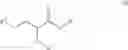


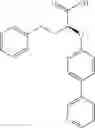


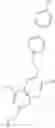


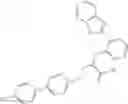


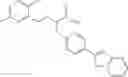


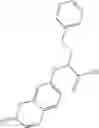


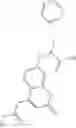
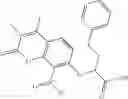


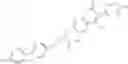


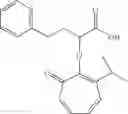


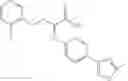


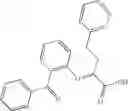


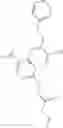

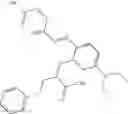


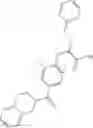


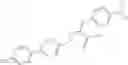


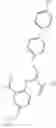


Sources:
- United States Patent and Trademark Office - verify current appl. status at the USPTO↗
Recent applications in this class:
- » 20240166613 2024-05-23
PROXISOME PROLIFERATOR ACTIVATED RECEPTOR (PPAR) COMPOUNDS AND METHODS OF USING THE SAME - » 20230159475 2023-05-25
COMPOUNDS WITH IMMUNOMODULATORY ACTIVITY AND THERAPEUTIC USES THEREOF - » 20220055996 2022-02-24
Method of preparing malononitrile oxime ether compound and intermediate compound - » 20210246109 2021-08-12
POTENT AND SELECTIVE INHIBITORS OF CYTOCHROME P450 - » 20210163431 2021-06-03
Proxisome proliferator activated receptor (PPAR) compounds and methods of using the same - » 20190330166 2019-10-31
Proxisome proliferator activated receptor (PPAR) compounds and methods of using the same - » 20190023671 2019-01-24
Highly selective anti-cancer agents targeting non-small cell lung cancer and other forms of cancer - » 20180009772 2018-01-11
Highly selective anti-cancer agents targeting non-small cell lung cancer and other forms of cancer - » 20170283385 2017-10-05
Proxisome proliferator activated receptor (PPAR) compounds and methods of using the same - » 20170050942 2017-02-23
3-CYCLOALKYLAMINOPYRROLIDINE DERIVATIVES AS MODULATORS OF CHEMOKINE RECEPTORS
Recent applications for this Assignee:
- » 20250292598 2025-09-18
A SEMI-AUTOMATIC SEGMENTATION SYSTEM FOR PARTICLE MEASUREMENTS FROM MICROSCOPY IMAGES - » 20250284151 2025-09-11
Liquid-crystal medium - » 20250282995 2025-09-11
FERROELECTRIC NEMATIC LIQUID CRYSTALLINE MEDIUM - » 20250281633 2025-09-11
HER2 TARGETING FC ANTIGEN BINDING FRAGMENT-DRUG CONJUGATES - » 20250277152 2025-09-04
LIQUID-CRYSTAL MEDIUM - » 20250250486 2025-08-07
LIQUID-CRYSTALLINE MEDIUM - » 20250246949 2025-07-31
ELECTRO-MECHANICAL CONVERTERS USING FERROELECTRIC NEMATIC MATERIAL - » 20250236795 2025-07-24
LIQUID-CRYSTALLINE MEDIUM - » 20250230882 2025-07-17
HOLDER FOR A FLUID CONNECTOR FITTING AND FLUID DISPENSER INCLUDING THE SAME - » 20250230360 2025-07-17
LIQUID-CRYSTALLINE MEDIUM