Peripheral Unit Control System, Particularly to be Employed in a Motor Vehicle
US20080116747A1
2008-05-22
11/663,105
2005-09-02
Abstract:
The invention relates to a peripheral unit control system, (3) on board of a motor vehicle, comprised of an assembly of display, control, actuation and videoshooting instruments, contained within an element shaped as an inner rear view mirror, bigger than the standard mirrors, and providing inside the control logic unit and the display unit. On the inner side faced toward the driver it has the real rear view mirror and on the rear side it can house one or more microcameras for video shooting the scene in front of the motor vehicle. Said control and display unit projects under the housing wherein it is contained by a vertical sliding system (14), making it possible observing and usage all the controls present on its panel, and that can be observed on the liquid crystal display (9). Said actuation unit (3) can rotate with respect to its vertical axis in order to allow its best use and display bith by the driver and the passenger. When the unit is not used, it is retracted, sliding upward, within the housing containing the same. The present invention also concerns a peripheral unit control system (2), particularly to be employed in a motor vehicle, characterised in that it comprises a control unit (2), an actuation unit (3) and supply means for said control unit (2) and said actuation unit (3), said control unit (2) being connected with peripheral units (5) and with said actuation unit (3), and comprising actuation means selecting said peripheral units (5), said actuation unit (3) comprising interaction and/or visualization means (10, 11, 12) for interacting with said selective actuation means by signals to activate and/or deactivate at one of said peripheral units (5).
Interested in similar patents?
Get notified when new applications in this technology area are published.
Classification:
B60R16/0231 » CPC main
Electric or fluid circuits specially adapted for vehicles and not otherwise provided for; Arrangement of elements of electric or fluid circuits specially adapted for vehicles and not otherwise provided for electric constitutive elements for transmission of signals between vehicle parts or subsystems Circuits relating to the driving or the functioning of the vehicle
B60R1/12 » CPC further
Optical viewing arrangements; Real-time viewing arrangements for drivers or passengers using optical image capturing systems, e.g. cameras or video systems specially adapted for use in or on vehicles Mirror assemblies combined with other articles, e.g. clocks
B60R11/02 » CPC further
Arrangements for holding or mounting articles, not otherwise provided for for radio sets, television sets, telephones, or the like; Arrangement of controls thereof
B60L1/00 IPC
Supplying electric power to auxiliary equipment of vehicles
Description
The present invention relates to a peripheral unit control system, particularly to be employed in a motor vehicle.
More specifically, the invention concerns to a system allowing managing a plurality of devices and sensors by a user, such as the driver or the passengers of a car, said system being particularly studied and realised for transportation means of police force and/or vehicles for special operative units (Firemen, Civil Protection, Road Managing Units, Ambulances, Breakdown Lorries, Harbour and Airport Vehicles, Earth Handling Means), but that can be used for each kind of use requiring managing a plurality of electronic devices.
In the following the specification will be addressed to the order police vehicles use, but it is well evident that the same must not be considered limited to this specific use.
As it is well known, motor vehicles are now equipped with a plurality of electronic or mechanic accessories, in order to accomplish different functions and services, such as warning sirens, winking lights, lights, satellitar navigator, display, cameras, proximity sensors, variable message display, badge readers for enabling the on-board services, microphones, etc.
At present, different kinds of controls and remote controls are used in order to control said devices.
For example, said controls can be levers, buttons, video devices and like, often installed on the dashboard of the motor vehicle. This implies the needing of making holes for their fixing. Remote controls are instead very convenient, but they have the problem that are usually lot within the motor vehicle cabin, and in case it is necessary realising a large number of devices, their number growths, thus creating confusion for using the different services.
In order to solve the above technical problems, many controls for the devices implemented in the motor vehicles have been placed on the steering wheel, mainly to avoid the need of moving the hands from the steering wheel when driving. Among the most known devices usually controlled from the steering wheel, it can be mentioned the car radio, the satellitar navigator and like.
Problem of this kind of solution is connected to the limited number of controls that it is possible placing on the steering wheel, limiting the maximum number of device that can be controlled. Furthermore, passengers cannot reach the controls.
In view of the above, it is object of the present invention that of suggesting a single unit wherein all the controls are included and that can be interfaced with electronic of all devices, piloting them exactly with the same operation mode of the original operation. Said solution allows obtaining the double advantage of providing to the operator (driver or passenger) a single control device by which he can operate all the on-board devices and eliminate the huge amount of single controls, remote controls, buttons and like, provided within the cabin without any functional and ergonomic criteria.
Another object of the invention is that of positioning the control of the two devices within a housing that is very convenient to by used by a user within the motor vehicle cabin.
It is therefore specific object of the present invention a peripheral unit control system, particularly to be employed in a motor vehicle, characterised in that it comprises a control unit, an activation unit and supply means for said control unit and said activation unit, said control unit being connected with peripheral units and with said activation unit, and comprising actuation means selecting said peripheral units, said activation unit comprising interaction and/or visualization means for interacting with said selective actuation means by signals to activate and/or deactivate at one of said peripheral units.
Always according to the invention, at least some of said peripheral units can be housed inside or outside said control unit.
Still according to the invention, a cable, e.g. a multi-wire cable, can connect said control unit and said activation unit.
Furthermore, according to the invention, said control unit and said activation unit can be connected by infrared and/or radio frequency devices or by different wireless systems (blue-tooth, WiFi, etc.).
Always according to the invention, cables can connect said control unit and said peripheral units.
Still according to the invention, said peripheral units can be alarm sirens and/or telemetry sensors, and/or a video-recorder, and/or emergency signaller, and/or winking lights, and/or lights, and/or transmitting device, and/or navigator, and/or camera and/or GPS device, and/or microphone, and/or variable message display.
Preferably according to the invention, said selective actuation means can be comprised of at least a relays and/or a solid-state device, such as SCR and/or TRIAC.
Furthermore, according to the invention, said selective actuation means can comprise a control logic unit.
Always according to the invention, said activation unit can comprise a programmable microprocessor for piloting said interaction and/or visualization means and for interfacing with said control unit.
Preferably, according to the invention, said interaction and/or visualization means can comprise at least a camera addressed toward the windscreen, to take outside scenes.
Still according to the invention, said interaction and/or visualization means can comprise a liquid crystal display, preferably active matrix liquid crystal display, a microphone and/or a push-button panel.
Furthermore, according to the invention, said activation unit can be comprised within a housing placed in lieu of the inner rear-vision mirror, housing the activation and visualization unit, with keyboard and monitor. Furthermore, said housing has on its back one or more micro-cameras, the shooting range being directed toward the windscreen, thus outward.
Still according to the invention, said activation and visualization unit projects downward from the housing wherein it is contained through a vertical sliding system, making all the controls present on its panel visible and usable and the images visible on the small liquid crystal display. When the unit is not used, it is retracted, sliding upward, within the housing containing the same.
Advantageously, according to the invention, said activation unit can rotate with respect to its vertical axis, in order to permit its best use and view both by the driver and the passenger.
Preferably, according to the invention, said activation unit can provide a release pawl, in order to slide on said pin, that can be a rectilinear pin or a pantograph.
Furthermore, according another embodiment of the invention, the activation unit can have a case shape comprised of two elements hinged each other along the long side. When the case is closed, it has a surface faced toward the driver having a rear-view mirror, that once rotated downward has inside the activation and visualization unit and on the fix element, which is uncovered when the case is open, another mirror surface, acting as rear view mirror. Also in this embodiment the element of the case open can rotate toward the driver or toward the passenger.
Still according to the invention, said supply means can comprise reserve batteries provided inside said control and/or activation unit.
Always according the invention, said system can provide a consent device for ignition, connected with the ignition lock key.
The present invention will be now described, for illustrative but not limitative purposes, according to its preferred embodiments, with particular reference to the figures of the enclosed drawings, wherein:
FIG. 1 shows a block diagram of the peripheral unit control system according to the present invention;
FIG. 2 shows a block diagram of the possible peripheral units that can be provided inside the control unit;
FIG. 3 is a schematic view of the possible peripheral units that can be connected with the control unit;
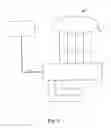
FIG. 4 shows an activation unit of said peripheral unit control system;
FIG. 5 shows a cabin of a car wherein the activation unit of said peripheral unit control system is provided; and
FIG. 6 shows a cabin of a car wherein the activation unit of said peripheral unit control system according to FIG. 5 are installed, in a use configuration.
Making reference to FIG. 1, it is possible noting a block diagram, showing the realisation of the system according to the present invention. Particularly, it is possible noting a control unit 2 connected with an activation unit 3, by the connection 4, connections 6 connect peripheral units 5 with the activation unit 3. It is possible, by the activation unit 3, that can be used by the user, e.g. the motor vehicle driver, actuating, deactivating, piloting, or monitoring the operation of the peripheral units 5.
Control unit 2 is placed far from the actuation unit 3; particularly, it can positioned within a housing inside the vehicle, allowing housing a prism with a side of about 30 cm.
Peripheral units 5 can be provided inside the control unit 2, or outside the same, as it can be noted from the block diagram of FIG. 2. In the present embodiment, five telemetric sensors (not shown in the figures) are provided among the peripheral units 5, used to manage the following functions:
-
- activation/deactivation of the motor vehicle siren alarm;
- partial or total switching on/off of the motor vehicle winking lights;
- activation/training/training of the searching light;
- activation/deactivation of a panel for displaying of variable messages.
Coupling of a specific telemetric sensor for the above-mentioned functions is useful for ensuring the continuity of services in case one of them fails. If, for example, section dedicated to control of the searching light would fail, it is possible activating the siren alarm, the winking lights and the panel for displaying of variable messages.
Further peripheral units can be housed within the control unit 2, e.g.:
-
- activation/deactivation of a device dedicated to the transmission of images shot by possible on-board cameras;
- a activation/deactivation of an analogical video-recorder;
- activation of an emergency signal;
- image and/or audio signal transceiving devices;
- on-board digital video recorder;
- emergency rechargeable accumulator.
Peripheral units that can in case be connected to the control unit, can be of different kind. From FIG. 3 it is possible noting the presence of:
-
- siren alarms;
- winking lights;
- lights;
- emergency and standard message control system;
- image recorder;
- transmitter;
- navigator;
- Telecamera;
- GPS device.
Activation and deactivation of devices mentioned in the above occurs by suitable switches. In the present embodiment, said switches are relays (not shown in the figures). It is possible observing also solid-state power devices, such as SCR or TRIAC.
Control unit 2 shall interface with an assisted navigation system (not shown in the figures). To this end, it is provided a suitable interface circuit able allowing replacement of remote control device of said navigation system with the actuation unit 3.
Supply of the control unit 2 occurs by a single feeder stabilised by battery of the motor vehicle on cables 7 and 7′. Furthermore, a circuit for permitting the ignition is provided, applied to the connection 8. more specifically, it is possible permitting the operation of the control unit 2 by a commutator connected with the ignition key on the dashboard (not shown)of the motor vehicle on which the system is installed.
Cable 4 used for connection of actuation unit with the control unit is of the “twisted pair” kind. It is a multi-wire cable for transmitting serial data.
Said connection 4 between the control 2 unit and the actuation unit 3 can be of the infrared or radio frequency kind, providing suitable transceiving devices (not shown).
FIG. 4 shows the actuation unit 3 that, in the present embodiment, is positioned under the rear vision mirror 9. Said solution is particularly convenient, even not compulsory, since it allows being within reach of all the persons within the motor vehicle cabin.
Actuation unit 3 provides a liquid crystal display 10, a microphone 11 and a button panel 12, for managing all the system control functions. Preferably, display is of the active matrix TFT kind, in order to allow a clear vision also from different angles. Scanning system is of the PAL type, with a 4:£ aspect ratio. Signal entrance is realised with an unbalanced line.
Two colour cameras are provided on said actuation unit, having a CCD sensor (Charge Couple Device). Each one of the cameras has a fixed lens, a zoom lens and a lens with a wider range.
Within the actuation unit 3 a microprocessor device is placed. In the present embodiment an 80386 microprocessor has been employed, but it also possible using programmable microprocessors.
They are further provided other devices for piloting a loud speaker, for keyboard interface, for adjustment of monitor parameters and for commutation of video supply.
Microphone 11 is of the electret kind and provides a pre-amplification circuit.
Actuation unit 3, when not operative, can be placed within a suitable housing 13, behind said rear vision mirror 9. Control unit 3 is shown at rest in FIG. 5. In order to make said unit coming down, a pawl (not shown) is provided, allowing to the unit of sliding along a rectilinear or pantograph-shaped vertical pin 14. Another feature of the invention is that said actuation unit 3 slides downward and can rotate toward the driver or toward the passenger. Furthermore, said actuation unit 3 can rotate with respect to said pin 14, thus allowing a convenient use of the actuation unit both by the driver and the passenger.
On the basis of the previous specification, it can be noted that the basic feature of the present invention is that having realised an on-board centralised control and display unit, comprised of an assembly of display, control, actuation and video shot instruments contained within an element such as a rear view mirror, bigger than the standard one, housing inside the control and display unit. Said element has on its inner side faced toward the driver has the real rear view mirror and at the rear can house one or more miniature cameras for shooting the scene in front of the motor vehicle. Said actuation unit permits controlling a plurality of devices.
An advantage of the present invention is that said system can be installed on motor vehicles having each shape and features of the dashboard, both at the beginning and as retrofitting.
A further advantage is that said device allows abolishing a plurality of control devices, which are usually associated to an own device, and integrating with each kind of motor vehicle.
A further advantage of the present invention is that the device can be easily controlled both by the driver and by the passengers.
The present invention has been described for illustrative but not limitative purposes, according to its preferred embodiments, but it is to be understood that modifications and/or changes can be introduced by those skilled in the art without departing from the relevant scope as defined in the enclosed claims.
Claims
1. Peripheral unit control system, particularly to be employed in a motor vehicle, characterised in that it comprises a control unit, an actuation unit and supply means for said control unit and said actuation unit, said control unit being connected with peripheral units and with said actuation unit, and comprising actuation means selecting said peripheral units, said actuation unit comprising interaction and/or visualization means for interacting with said selective actuation means by signals to activate and/or deactivate at one of said peripheral units.
2. System according to claim 1, characterised in that at least some of said peripheral units are housed inside said control unit.
3. System according to one of the preceding claims, characterised in that said at least some of said peripheral units are housed outside said control unit.
4. System according to one of the preceding claims, characterised in that control unit and said actuation unit are connected by a cable.
5. System according to claim 4, characterised in that said cable is a multi-wire cable.
6. System according to one of the preceding claims 1-3, characterised in that said control unit and said actuation unit are connected by infrared and/or radio frequency devices or by different wireless systems (blue-tooth, WiFi, etc.).
7. System according to one of the preceding claims, characterised in that said control unit and said peripheral units are connected by cables.
8. System according to one of the preceding claims, characterised in that said peripheral units are alarm sirens and/or telemetry sensors, and/or a video-recorder, and/or emergency signaller, and/or winking lights, and/or lights, and/or transmitting device, and/or navigator, and/or camera and/or GPS device, and/or microphone, and/or variable message display.
9. System according to one of the preceding claims, characterised in that said selective actuation means are comprised of at least a relays.
10. System according to one of the preceding claims, characterised in that said selective actuation means are comprised of a solid-state device.
11. System according to claim 10, characterised in that said solid-state device is a SCR and/or TRIAC.
12. System according to one of the preceding claims, characterised in that said selective actuation means comprise a control logic unit.
13. System according to one of the preceding claims, characterised in that said actuation unit comprise a programmable microprocessor for piloting said interaction and/or visualization means and for interfacing with said control unit.
14. System according to one of the preceding claims, characterised in that said interaction and/or visualization means at least a camera addressed toward the windscreen, to take outside scenes.
15. System according to one of the preceding claims, characterised in that said interaction and/or visualization means comprise a liquid crystal display, preferably active matrix liquid crystal display.
16. System according to one of the preceding claims, characterised in that said interaction and/or visualization means comprise a microphone.
17. System according to one of the preceding claims, characterised in that said interaction and/or visualization means comprise a push-button panel.
18. System according to one of the preceding claims, characterised in that said actuation unit is comprised within a housing placed in lieu provided under the rear-vision mirror, when in a use position, and behind said rear-vision mirror when in a rest position.
19. System according to one of the preceding claims 1-17, characterised in that said actuation unit is contained within a housing, which provides with a mirror on the surface faced inside the cabin of the car so as to be used as rear-vision mirror, and with at least a camera in the surface faced toward the windscreen, said camera being connected with said actuation unit, and said housing containing said actuation unit in a rest position.
20. System according to one of the preceding claims 18 or 19, characterised in that said actuation unit provides a vertical pin, along which can slide said actuation unit, in such a way that, when in a rest position, said actuation unit can positionate inside said rear-vision mirror.
21. System according to claim 20, characterised in that said pin is a rectilinear pin or a pantograph.
22. System according to one of the preceding claims 20 or 21, characterised in that said actuation unit can rotate with respect to said vertical pin.
23. System according to one of the preceding claims 20-22, characterised in that said actuation unit comprises a release pawl in order to slide on said pin.
24. System according to one of the preceding claims, characterised in that said supply means comprise reserve batteries provided inside said control and/or actuation unit.
25. System according to one of the preceding claims, characterised in that said system provides a consent device for ignition, connected with the ignition lock key.
26. System according to each one of the preceding claims, substantially as illustrated and described.
Images & Drawings included:



Sources:
- United States Patent and Trademark Office - verify current appl. status at the USPTO↗
Recent applications in this class:
- » 20250121783 2025-04-17
MANAGEMENT DEVICE, NON-TRANSITORY COMPUTER-READABLE STORAGE MEDIUM STORING CONTROL PROGRAM, AND CONTROL METHOD - » 20250115196 2025-04-10
Component Control Method for Device and Related Apparatus - » 20250083624 2025-03-13
DRIVER CONTROLLER CONTROL CIRCUIT WITH MECHANICAL INTERLOCK STRUCTURE OF ELECTROMAGNETIC VALVES - » 20250074339 2025-03-06
SYSTEM AND METHOD FOR CONTROLLING A VEHICLE - » 20250065830 2025-02-27
FLEET VEHICLE WITH MONITORING SYSTEM - » 20250065829 2025-02-27
Energy Supply Management System for a Vehicle, Method for Determining the Coverage of an Energy Requirement of a Load Unit of the Energy Supply Management System, and Computer Program Product - » 20250065828 2025-02-27
INTEGRATED TIRE LONGITUDINAL AND LATERAL FORCE ESTIMATION METHODOLOGY - » 20250050827 2025-02-13
CONNECTION DEVICE FOR A CONTROL UNIT FOR A VEHICLE - » 20250042348 2025-02-06
Vehicle, method and control device for activating a vehicle function of a vehicle - » 20250033585 2025-01-30
VEHICLE-MOUNTED APPARATUS, PROGRAM, AND INFORMATION PROCESSING METHOD