Magnetic system for the unlocking of padlocks and locks
US20080190152A1
2008-08-14
11/909,554
2006-03-23
✅ Patent granted
US 7,621,161 B2
2009-11-24
WO; PCT/IT2006/000180; 20060323
WO; WO2006/100708; 20060928
Lloyd A Gall
2026-03-23
Abstract:
A magnetic system for the unlocking of padlocks and locks (10) characterized by the fact that it includes:
-
- A lock-cover element (11) which together with a component fixed to a fitting, itself patented, allows or disallows access to a keyhole,
- A unlocking-key element (12) which has the function of blocking or unblocking the lock-cover element (11).
Interested in similar patents?
Get notified when new applications in this technology area are published.
Classification:
E05B47/00 IPC
Operation or control of locks by non-mechanical means, e.g. from a distance
E05B47/00 IPC
Operating or controlling locks or other fastening devices by electric or magnetic means
E05B47/0038 » CPC main
Operating or controlling locks or other fastening devices by electric or magnetic means using permanent magnets
E05B17/142 » CPC further
Accessories in connection with locks; Closures or guards for keyholes with key-operated locks, e.g. padlocks
Y10T70/7057 » CPC further
Locks; Operating mechanism; Using a powered device [e.g., motor] Permanent magnet
Y10T70/7904 » CPC further
Locks; Operating mechanism; Key; Operating elements; Keys Magnetic features
Y10T70/796 » CPC further
Locks; Operating mechanism; Key; Tampering prevention or attack defeating; Keyhole guards Portable
Y10T70/7983 » CPC further
Locks; Operating mechanism; Key; Tampering prevention or attack defeating; Keyhole guards; Key-controlled Portable
Y10T70/8649 » CPC further
Locks; Parts, attachments, accessories and adjuncts; For key-operated mechanism Keyhole covers
E05B17/14 IPC
Accessories in connection with locks Closures or guards for keyholes
Description
PRIORITY INFORMATION
This application is a continuation of International Patent Application No. PCT/IT06/000180 filed on Mar. 23, 2006 which claims benefit of Italian Patent Application No. 1M2005A000143, filed on Mar. 24, 2005, all of which are incorporated herein in their entirety.
BACKGROUND OF THE INVENTION
1. Field of the Invention
This industrial invention patent regards a magnetic system which when placed within padlock and lock mechanisms allows these mechanisms to be blocked or unblocked at the discretion of the user.
In particular this device includes a magnetic system which by use of a device protected by a personalized code can either permit or prevent the movement of a mechanism to which it is applied.
2. Brief Description of the Art
This industrial invention patent constitutes an innovation in the field of common unlocking systems for padlocks and locks and in particular for those used for doors. Reference to this type of use will later be made but this will only be done for example purposes since the same principles are applicable for other applications (for example safes and locking devices in general).
With current technology magnetic unlocking systems for padlocks and locks are composed of devices that include magnetic components in the key. These keys can pose a serious health risk to patients with internal medical devices that are sensitive to magnets such as paces makers. Furthermore transporting such keys together with credit cards or cards with magnetic stripes can alter the magnetic properties of both the keys and the cards.
The device being presented for this industrial invention patent develops current systems in that the device only contains magnetic components in the mechanism of the padlock or lock applied to the fitting and not in the keys body.
SUMMARY OF THE INVENTION
Consequently the specific object in question of this industrial invention patent is a magnetic system for the unlocking of padlocks and locks characterized by the fact that it includes:
-
- one or more fixed base elements;
- one or more magnet sensitive plates which are inserted in the fixed base element;
- one or more overlying elements that can be made to move;
- pairs of pins made of magnet material and of varying length which either prevent or permit the movement of the base and overlying elements;
- screws that have the function of keeping the fixed base elements fastened to the overlying elements;
- means for unlocking that are made from material that is either magnet sensitive or magnet insensitive and that according to predetermined and personalized codes either attract or leave the pairs of magnets immobile;
- components that assemble the unlocking means and that maintain the personalized code constant; and
- aesthetic and mechanical trimmings aimed at distinguishing the system and to make it suitable for general use with all commercially available padlocks and locks.
BRIEF DESCRIPTION OF THE DRAWINGS
The invention will now be described in an illustrative but not limited manner as being part of an already generally known device for covering padlocks and locks but it must be understood that this only has the aim of making the clearer the presentation description and enunciation. The design patent will now be illustrated in its preferred but not exhaustive design form with particular attention being paid to the attached drawings in which:
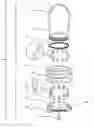
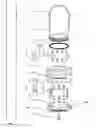
FIG. 1 is a perspective view of the disassembled magnetic system for the unlocking of padlocks and locks;
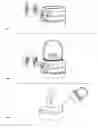
FIG. 2 is a perspective view of the magnetic system for the unlocking of padlocks and locks when in the blocked configuration;
FIG. 3 is a perspective view of the magnetic system for the unlocking of padlocks and locks when in the rotation and unblocking configuration; and
FIG. 4 is a perspective view of the magnetic system for the unlocking of padlocks and locks when in the configuration that favours favors access to the underlying lock.
DETAILED DESCRIPTION OF THE INVENTION
The preferred design form of the industrial invention patent will now be described in detail. As illustrated in FIGS. 1-4, the magnetic system for the unlocking of padlocks and locks (10) is composed of:
-
- 1. A lock-cover element (11). The lock-cover element (11) has several sub-components which are:
- a covering element (13) at the top of which is there exists a depression for the insertion of a key and on the inside of which there are holes into which magnets may be inserted;
- one or more gear tooth elements (13/a) in order to allow the lock-cover element (11) to be either be freed from or to remain blocked with respect to the device to which it is applied this device itself already being patented;
- one or more overlying magnetic pins (14) having either a long measurement (14/a) or a short measurement (14/b) The function of the of magnetic pin measurements is that of whether either being attracted or remaining immobile of bringing their mating surfaces to the same level as those of the surface levels of the covering element (13) and of the plate element (15), so as to allow the rotation of the covering element (13) with respect to the plate element (15) and hence facilitate the rotation and the unblocking of the gear tooth elements (13/a);
- a plate element (15) having a magnet sensitive a base platelet (15/a) fixing-teeth (15/b) and sockets into which can be inserted magnets that have the function of blocking or unblocking the covering element (13); and
- a screw element (16) which has the function of holding together the lock-cover (11).
- An unlocking-key element (12) The unlocking-key element (12) consists of several sub elements which are:
- a clip element (17) for positioning and turning the unlocking-key element (12);
- a key-body element (18) having holes into which the coding-pins (20) are inserted;
- a friction-ring element made from plastic (19);
- one or more coding-pin elements (20) made from either magnet sensitive (20/c) or magnet insensitive (20/d) material such that they can attract or leave immobile the magnetic-pin elements (14) and in so doing align them with the covering (13) and plate (15) element levels so as to allow for the rotation and unblocking of the lock-cover (11) and hence facilitate the insertion of the key into the underlying lock given that when in a state of rest the pairs of magnets are attracted to the base platelet element (15/a) the sequence of events that takes place when the unlocking-key element (12) is brought near the depression situated on the top of the lock-cover element (11) is as follows:
The magnet sensitive (20/c) coding-pins (20) located in the key-body (18) attract the magnet pairs located in the holes on the internal surface of the covering element (13) and the plate element (15) thus moving the mating surface of the magnet pairs to the same level as that of the covering element (13) and of the plate element (15) surfaces while the magnet insensitive (20/d) coding-pins (20) leave immobile the pairs of magnets on the inside of the lock-cover (11), the mating surfaces these already being at the same level as those of the covering element (13) and plate element (15) surfaces.
The sequence of necessary operations for gaining access to the underlying lock is as follows:
-
- place the unlocking-key (12) into the depression on the top of the lock-cover element (11) as illustrated in FIG. 3,
- rotate the lock-cover element (11) anti-clockwise as illustrated in FIG. 3,
- remove the lock-cover element (11) so as to facilitate the insert pin of the subsequent key as illustrated in FIG. 4.
This invention has been described in an illustrative but nevertheless not a limited manner according to its preferred design form but it must be understood that any variations and/or modifications may be made without leaving the relative ambit of protection as defined in the attached claims.
Claims
We claim:1. A magnetic system for the unlocking of padlocks and locks, comprising a lock-cover element, and an unlocking-key element, said lock-cover element, along with another element fixed to the fitting, alternately permitting and preventing access to the lock keyhole, said unlocking-key element alternately blocking or unblocking said lock-cover element, said system being characterised in that said lock-cover element comprises a covering element, providing one or more gear-tooth elements rotation of the same with respect to a plate element, said plate element providing one or more tooth elements for fixing the same to the fitting, said covering element providing a plurality of holes, said plate element providing a plurality of holes, in number corresponding to the number of holes provided in said covering element, one or more magnetic pin elements, of two different length, respectively long and short, inserted in said plurality of holes of said plate element, said magnetic pin elements being attracted toward the fitting by the metal of the same fitting or by a base platelet of said plate element, and in that said unlocking-key element comprises a clip element for its positioning and rotation, a key-body element provided with holes, and one or more coding-pin elements, comprised of magnet sensitive material or magnet insensitive material, in such a way to, depending on the relative position between said unlocking-key element and said lock-cover element, attract or not said magnetic pin elements, the mating surface of said coding-pin elements being at the same level of the surfaces of the covering elements and of the plate element.
2. A magnetic system according to claim 1, wherein said lock-cover element further comprises a screw holding together the parts of said lock-cover.
3. The magnetic system according to claim 1, wherein the lower surface of said covering element and the upper surface of the plate element are provided with one or more holes for the insertion and movement of said magnetic pins.
4. The magnetic system according to claim 1, wherein said magnetic pins when coupled and thus caused to be either attracted or left in a rest condition and with their mating surface at the same level of the surfaces respectively of the covering element and of the plate element permit the rotation of the covering element with respect to the plate element thus promoting the rotation and unlocking of said gear tooth elements with respect to the element fixed to said fitting.
5. The magnetic system according to claim 1, wherein said unlocking-key element comprises a friction-ring element made up of plastic material.
6. The magnetic system according to claim 1, wherein the various components are comprised of base metals alloys plastics or other materials.
7. The magnetic system for the according to claim 1, wherein the system for fastening said covering element to the component fixed to said fitting is comprised of one, two or “n” gear-tooth elements, said elements having shapes, sizes, various arrangements and orientation, symmetries, asymmetries or dissimilarities according to specific use.
8. The magnetic system according to claim 1, wherein the various components are subjected to thermal hardening techniques, such as carbonitring, carburization, tempering.
9. The magnetic system according to claim 1, wherein it is employed for mechanical, electromechanical, electric, electronic, and like door locks, and in that it is provided during the manufacturing of the lock, or it is retrofitted, and in that it is placed over or interposed to them and parts thereof on said locks.
10. The magnetic system for the according to claim 1, wherein it protects a keyhole, or it is used for other applications, or it is used as an independent locking device for separate metallic surfaces, for available door locks or as a new door lock or part thereof.
11. The magnetic system for the according to claim 1, wherein said unlocking-key element has a cylindrical shape or a different shape.
12. (canceled)
13. (canceled)
Images & Drawings included:
Sources:
- United States Patent and Trademark Office - verify current appl. status at the USPTO↗
Recent applications in this class:
- » 20250146328 2025-05-08
Locking Device for Connecting Two Assemblies - » 20230193659 2023-06-22
MAGNETIC CLOSURE SYSTEM FOR A DEVICE - » 20220298828 2022-09-22
Magnet in bolt - » 20220064994 2022-03-03
Anti-theft lock and a server with the anti-theft lock - » 20210079689 2021-03-18
Magnet responsive cabinet lock - » 20200392758 2020-12-17
Actuator comprising electro permanent magnet and method - » 20190234110 2019-08-01
System for detecting the status of a window or door assembly - » 20180298643 2018-10-18
Magnetic lock mechanism - » 20170130483 2017-05-11
Latch with magnetic hold-open and magnetic hold-close - » 20150275551 2015-10-01
Guard door monitoring system