METHOD AND RELATED APPARATUS FOR STOPPING MULTI-INPUT MULTI-OUTPUT OPERATION IN A WIRELESS COMMUNICATIONS SYSTEM
US20080192848A1
2008-08-14
12/027,603
2008-02-07
Abstract:
Stopping a multi-input multi-output (MIMO) operation for a user equipment (UE) of a wireless communications system to ensure that the UE can receive downlink data after the MIMO operation is stopped includes indicating lower layers of the UE to stop the MIMO operation when an ACTIVE SET UPDATE message, a CELL UPDATE CONFIRM message, or a reconfiguration message not including a MIMO parameter information element (IE) is received from a network terminal.
Interested in similar patents?
Get notified when new applications in this technology area are published.
Classification:
H04B7/04 » CPC main
Radio transmission systems, i.e. using radiation field; Diversity systems; Multi-antenna system, i.e. transmission or reception using multiple antennas using two or more spaced independent antennas
H04B7/0689 » CPC further
Radio transmission systems, i.e. using radiation field; Diversity systems; Multi-antenna system, i.e. transmission or reception using multiple antennas using two or more spaced independent antennas at the transmitting station; Hybrid systems, i.e. switching and simultaneous transmission using different transmission schemes, at least one of them being a diversity transmission scheme
H04B7/0871 » CPC further
Radio transmission systems, i.e. using radiation field; Diversity systems; Multi-antenna system, i.e. transmission or reception using multiple antennas using two or more spaced independent antennas at the receiving station; Hybrid systems, i.e. switching and combining using different reception schemes, at least one of them being a diversity reception scheme
H04L27/28 IPC
Modulated-carrier systems; Systems using multi-frequency codes with simultaneous transmission of different frequencies each representing one code element
Description
CROSS REFERENCE TO RELATED APPLICATIONS
This application claims the benefit of U.S. Provisional Application No. 60/888,770 filed on Feb. 08, 2007 and entitled “Method And Apparatus for Stopping MIMO Procedures in a Wireless Communication System”, the contents of which are incorporated herein by reference.
BACKGROUND OF THE INVENTION
1. Field of the Invention
The present invention relates to a method for improving a Multi-Input Multi-Output (MIMO) procedure for a wireless communications system and related communications device, and more particularly to a method for stopping a MIMO operation for a wireless communications system and related communications device.
2. Description of the Prior Art
The third generation (3G) mobile telecommunications system has adopted a Wideband Code Division Multiple Access (WCDMA) wireless air interface access method for a cellular network. WCDMA provides high frequency spectrum utilization, universal coverage, and high quality, high-speed multimedia data transmission. The WCDMA method also meets all kinds of QoS requirements simultaneously, providing diverse, flexible, two-way transmission services and better communication quality to reduce transmission interruption rates. Through the 3G mobile telecommunications system, a user can utilize a wireless communications device, such as a mobile phone, to realize real-time video communications, conference calls, real-time games, online music broadcasts, and email sending/receiving. However, these functions rely on fast, instantaneous transmission. Thus, targeting the third generation mobile telecommunication technology, the 3rd Generation Partnership Project (3GPP) provides High Speed Package Access (HSPA) technology, which includes High Speed Downlink Package Access (HSDPA) and High Speed Uplink Package Access (HSUPA), to increase bandwidth utility rate and package data processing efficiency so as to improve uplink/downlink transmission rates.
To further increase the downlink data rate, 3GPP introduces a Multi-input Multi-output (MIMO) technology, with which a user equipment (UE) and a base station, known as a Node-B, utilize multiple antennas to transmit/receive radio signals. The MIMO technology can be further integrated with spatial multiplexing, beam forming and spatial diversity technologies to reduce signal interference and increase channel capacity. In the prior art, the MIMO operation is mainly employed in the HSDPA system, doubling the peak rate of a high-speed downlink share channel (HS-DSCH). Concerning radio resource control (RRC) states of the UE, the MIMO operation is only applicable for the UE in a CELL_DCH state.
To control the MIMO operation of the UE, a universal terrestrial radio access network (UTRAN) can set configuration of MIMO operation in RRC messages with information elements (IEs) and send the RRC messages to the UE through corresponding RRC procedures. According to an RRC protocol specification of 3GPP, a MIMO parameter IE includes a MIMO operation IE, a MIMO N/M Ratio IE and a MIMO Pilot Configuration IE. The MIMO N/M Ratio IE includes information about antenna numbers of the UE and the Node-B. The MIMO Pilot Configuration IE includes information about diversity, channelization code, etc. The MIMO operation IE is utilized to indicate the UE to activate, continue or stop the MIMO operation, and correspondingly includes three parameter values, which represent “start”, “continue” and “stop”, respectively.
The UTRAN can use an ACTIVE SET UPDATE message, a CELL UPDATE CONFIRM message, or any reconfiguration message to include the MIMO parameter IE and send the messages to the UE. On the other hand, the UE contains a MIMO_STATUS variable in an RRC layer to store the MIMO configuration data included in the received MIMO parameter IE, i.e. parameter values corresponding to MIMO N/M ratio and MIMO pilot configuration.
In the prior art, the UTRAN has two ways to stop the MIMO operation of the UE. The first way is setting the MIMO operation IE to “stop” and then including the MIMO parameter IE in the abovementioned RRC messages. After receiving the RRC message, the UE clears the MIMO_STATUS variable in the RRC layer and triggers the lower layers, such as a media access control (MAC) layer and a physical layer, to stop operation corresponding to MIMO. The second way is not including the MIMO parameter IE in the abovementioned RRC messages most recently sent to the UE. In this situation, if the received RRC message includes no MIMO parameter IE, the UE only has to clear the MIMO_STATUS variable in the RRC layer. After the procedure of stopping the MIMO operation is accomplished, irrespective of whether the procedure is stopped through the first or second way, the UE switches to use a non-MIMO configuration for HS-DSCH reception.
As can be seen from the above, if the UTRAN uses the second way, the UE only clears the MIMO_STATUS variable in the RRC layer, but does not trigger the lower layers to stop related MIMO operation. In this situation, the lower layers still use the MIMO configuration (i.e. channelization code) to receive data, however the UTRAN has adopted the non-MIMO configuration for transmitting data to the UE. Therefore, the UE will incorrectly decode the HS-DSCH data if the UTRAN uses the second way to stop the MIMO operation of the UE.
SUMMARY OF THE INVENTION
The present invention therefore provides a method of stopping a MIMO operation for a UE of a wireless communications system and related communications device that can ensure that the UE can receive downlink data after the MIMO operation is stopped
The present invention discloses a method for stopping a MIMO operation for a UE of a wireless communications system. The method includes indicating lower layers of the UE to stop the MIMO operation when an ACTIVE SET UPDATE message, a CELL UPDATE CONFIRM message, or a reconfiguration message not including a MIMO parameter information element (IE) is received from a network terminal.
The present invention further discloses a communications device of a wireless communications system for stopping a MIMO operation to ensure that the communications device can receive downlink data after the MIMO operation is stopped. The communications device includes a control circuit, a processor and a memory. The control circuit is used for realizing functions of the communications device. The processor is installed in the control circuit and used for executing a program code to command the control circuit. The memory is installed in the control circuit and coupled to the processor, and used for storing the program code. The program code includes indicating lower layers of the communications device to stop the MIMO operation when an ACTIVE SET UPDATE message, a CELL UPDATE CONFIRM message, or a reconfiguration message not including a MIMO parameter IE is received from a network terminal.
These and other objectives of the present invention will no doubt become obvious to those of ordinary skill in the art after reading the following detailed description of the preferred embodiment that is illustrated in the various figures and drawings.
BRIEF DESCRIPTION OF THE DRAWINGS
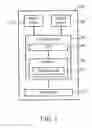
FIG. 1 is a functional block diagram of a communications device.
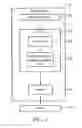
FIG. 2 is a diagram of program code shown in FIG. 1.
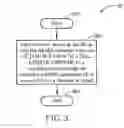
FIG. 3 is a flowchart diagram of a process according to an embodiment of the present invention.
DETAILED DESCRIPTION
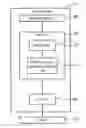
Please refer to FIG. 1, which is a functional block diagram of a communications device 100. For the sake of brevity, FIG. 1 only shows an input device 102, an output device 104, a control circuit 106, a central processing unit (CPU) 108, a memory 110, a program code 112, and a transceiver 114 of the communications device 100. In the communications device 100, the control circuit 106 executes the program code 112 in the memory 110 through the CPU 108, thereby controlling an operation of the communications device 100. The communications device 100 can receive signals input by a user through the input device 102, such as a keyboard, and can output images and sounds through the output device 104, such as a monitor or speakers. The transceiver 114 is used to receive and transmit wireless signals, delivering received signals to the control circuit 106, and outputting signals generated by the control circuit 106 wirelessly. From a perspective of a communications protocol framework, the transceiver 114 can be seen as a portion of Layer 1, and the control circuit 106 can be utilized to realize functions of Layer 2 and Layer 3. Preferably, the communications device 100 is utilized in a High Speed Package Access (HSPA) system of the third generation (3G) mobile communications system, supporting a MIMO operation.
Please continue to refer to FIG. 2. FIG. 2 is a diagram of the program code 112 shown in FIG. 1. The program code 112 includes an application layer 200, a Layer 3 202, and a Layer 2 206, and is coupled to a Layer 1 218. The Layer 3 202 includes a radio resource control (RRC) entity 222, which is used for receiving or generating RRC messages and information elements (IEs) to control the Layer 1 218 and the Layer 2 206 or to exchange the RRC configuration with other communications devices, such as a base station (Node-B) or a UTRAN. The Layer 1 218 and the Layer 2 206 are preferably a media access control (MAC) layer and a physical (PHY) layer, respectively.
Preferably, the communications device 100 includes a MIMO_STATUS variable in an RRC layer for storing MIMO configuration data stored in received RRC messages. To activate the MIMO operation of the communications device 100, the UTRAN sets a MIMO parameter IE to “stop”, and then includes this IE in an ACTIVE SET UPDATE, a CELL UPDATE CONFIRM, or a reconfiguration message to send to the UE. The communications device 100 stores the received MIMO configuration data in the MIMO_STATUS variable in the RRC layer and indicates the Layer 1 218 and the Layer 2 206 to start operation related to MIMO. In this situation, the embodiment of the present invention provides a MIMO operation managing program code 220 to stop the MIMO operation of the communications device 100 accurately in order to ensure that the communications device 100 can receive downlink data in a non-MIMO mode. Please refer to FIG. 3, which illustrates a schematic diagram of a process 30 according to an embodiment of the present invention. The process 30 is utilized for stopping a MIMO operation for a UE of a wireless communications system, and can be compiled into the MIMO operation managing program code 220. The process 30 includes the following steps:
-
- Step 300: Start.
- Step 302: Indicate lower layers of the UE to stop the MIMO operation when an ACTIVE SET UPDATE, a CELL UPDATE CONFIRM, or a reconfiguration message not including a MIMO parameter IE is received from a network terminal.
- Step 304: End.
According to the process 30, if the UE receives any of the abovementioned RRC messages during the MIMO operation and no MIMO parameter IE is included in the received RRC message, the UE indicates the lower layers to stop the MIMO operation. The lower layers preferably include the MAC layer and the PHY layer. In addition, the UE also clears a MIMO variable in the RRC layer if the MIMO variable is set. After the process 30 is accomplished, the lower layers can receive the downlink data (the HS-DSCH data) according to a correct configuration (i.e. channelization code).
In conclusion, the embodiment of the present invention requires the UE to clear the MIMO configuration data associated with the RRC layer and further to stop the MIMO operation of the MAC and PHY layers. Thus, the embodiment of the present invention ensures that the UE can receive data with the correct configuration after switching from the MIMO mode to the non-MIMO mode.
Those skilled in the art will readily observe that numerous modifications and alterations of the device and method may be made while retaining the teachings of the invention. Accordingly, the above disclosure should be construed as limited only by the metes and bounds of the appended claims.
Claims
What is claimed is:1. A method for stopping a multi-input multi-output, hereinafter called MIMO, operation for a user equipment, hereinafter called UE, of a wireless communications system, the method comprising: indicating lower layers of the UE to stop the MIMO operation when an ACTIVE SET UPDATE message, a CELL UPDATE CONFIRM message, or a reconfiguration message not including a MIMO parameter information element, hereinafter called IE, is received from a network terminal.
2. The method of claim 1, wherein the lower layers of the UE comprise a media access control layer and a physical layer.
3. The method of claim 1 further comprising clearing a MIMO_STATUS variable in a radio resource control, hereinafter called RRC, layer for storing configuration data corresponding to the MIMO operation.
4. A communications device used in a wireless communications system for stopping a multi-input multi-output, hereinafter called MIMO, operation to ensure that the communications device can receive downlink data after the MIMO operation is stopped, the communications device comprising:
a control circuit for realizing functions of the communications device;
a central processing unit coupled to the control circuit for executing a program code to operate the control circuit; and
a memory coupled to the central processing unit for storing the program code;
wherein the program code comprises:
indicating lower layers of the communications device to stop the MIMO operation when an ACTIVE SET UPDATE message, a CELL UPDATE CONFIRM message, or a reconfiguration message not including a MIMO parameter information element, hereinafter called IE, is received from a network terminal.
5. The communications device of claim 4, wherein the lower layers of the communications device comprise a media access control layer and a physical layer.
6. The communications device of claim 4, further comprising clearing a MIMO_STATUS variable in a radio resource control, hereinafter called RRC, layer for storing configuration data corresponding to the MIMO operation.
Images & Drawings included:
Sources:
- United States Patent and Trademark Office - verify current appl. status at the USPTO↗
Recent applications in this class:
- » 20250088219 2025-03-13
INTEGRATED SINGLE-CHIP BEAMFORMING SYSTEM - » 20230353195 2023-11-02
Distributed closed-loop power control with VGA gain update - » 20220190881 2022-06-16
System for optimizing routing of communication between devices and resource reallocation in a network - » 20220094395 2022-03-24
Techniques for performing an antenna-switching diversity procedure - » 20220060219 2022-02-24
Code block group configuration with code block segmentation for 5G systems - » 20210111764 2021-04-15
Air To Ground Communication System With Separate Control and Traffic Channels - » 20200336179 2020-10-22
Code block group configuration with code block segmentation for 5G systems - » 20200235788 2020-07-23
Method and apparatus for flexible fronthaul physical layer split for cloud radio access networks - » 20200220580 2020-07-09
Distributed antenna system using reconfigurable frame structure and method of operation thereof - » 20200091968 2020-03-19
Beacon Localization For A Client Device In Wireless Environment Applications