Metallic compound and organic electroluminescence device comprising the same
US20080193795A1
2008-08-14
11/910,161
2007-04-10
✅ Patent granted
US 7,745,020 B2
2010-06-29
WO; PCT/KR2007/000114; 20070410
WO; WO2007/078185; 20070712
Dawn Garrett
2028-03-22
Abstract:
The present invention relates to a light emitting metallic compound of Chemical Formula 1 and an organic electroluminescence device including the compound. In the Chemical Formula 1, M is selected from Ir, Pt, Rh, Re, and Os, m is 2, provided that m is 1 when M is Pt. X is a N or P atom, Y is S, O, or Se, and Z is SiR5R6, CR5R6, PR5, S, SO2, carbonyl, or NR5, and L2 is represented by Chemical Formulae 2, 3, or 4. R1, R2, R3, R4, R5, R6, R7, and R8 are the same or different, and are selected from hydrogen, a C1 to C20 alkyl, an aryl, a cycloalkyl, a halogen, a linear or branched substituent including at least one halogen, a linear or branched substituent including at least one heteroatom, carbonyl, vinyl, and acetylenyl, or may form a cycle, and R9 is hydrogen, a C1 to C20 alkyl excluding an aromatic cyclic substituent, a cycloalkyl, a halogen, a linear or branched substituent including at least one halogen; or a linear or branched substituent including at least one heteroatom.
Inventors:
- Song-Ho KIM 5 🇰🇷 Seoul, South Korea
- Dae-Beom KIM 4 🇰🇷 Seoul, South Korea
- Chi-Hun Kim 3 🇰🇷 Seoul, South Korea
- Dong-Hack Suh 5 🇰🇷 Gyeonggi-do, South Korea
- Chi-Hum Kim 1 🇰🇷 Seoul, South Korea
- Dong-Hack Suh 8 🇰🇷 Seongnam, South Korea
Assignee:
- SAMSUNG ELECTRONICS CO. LTD. 9,847 🇰🇷 Suwon-si, Gyeonggi-do, South Korea
- Industry-University Cooperation Foundation Hanyang University 598 🇰🇷 Seoul, South Korea
- Samsung Electronics Co., Ltd 16,186 🇰🇷 , South Korea
- Industry-University Cooperation Foundation, Hanyang University 37 🇰🇷 , South Korea
Interested in similar patents?
Get notified when new applications in this technology area are published.
Classification:
C07F15/0033 » CPC further
Compounds containing elements of Groups 8, 9, 10 or 18 of the Periodic System compounds of the platinum group Iridium compounds
H05B33/14 » CPC further
Electroluminescent light sources; Light sources with substantially two-dimensional radiating surfaces characterised by the chemical or physical composition or the arrangement of the electroluminescent material, or by the simultaneous addition of the electroluminescent material in or onto the light source
C09K2211/1011 » CPC further
Chemical nature of organic luminescent or tenebrescent compounds; Non-macromolecular compounds; Carbocyclic compounds Condensed systems
C09K2211/1029 » CPC further
Chemical nature of organic luminescent or tenebrescent compounds; Non-macromolecular compounds; Heterocyclic compounds characterised by ligands containing one nitrogen atom as the heteroatom
C09K2211/1033 » CPC further
Chemical nature of organic luminescent or tenebrescent compounds; Non-macromolecular compounds; Heterocyclic compounds characterised by ligands containing one nitrogen atom as the heteroatom with oxygen
C09K2211/1037 » CPC further
Chemical nature of organic luminescent or tenebrescent compounds; Non-macromolecular compounds; Heterocyclic compounds characterised by ligands containing one nitrogen atom as the heteroatom with sulfur
C09K2211/1044 » CPC further
Chemical nature of organic luminescent or tenebrescent compounds; Non-macromolecular compounds; Heterocyclic compounds characterised by ligands containing two nitrogen atoms as heteroatoms
C09K2211/1059 » CPC further
Chemical nature of organic luminescent or tenebrescent compounds; Non-macromolecular compounds; Heterocyclic compounds characterised by ligands containing three nitrogen atoms as heteroatoms
C09K2211/1092 » CPC further
Chemical nature of organic luminescent or tenebrescent compounds; Non-macromolecular compounds; Heterocyclic compounds characterised by ligands containing sulfur as the only heteroatom
C09K2211/185 » CPC further
Chemical nature of organic luminescent or tenebrescent compounds; Metal complexes of the platinum group, i.e. Os, Ir, Pt, Ru, Rh or Pd
Y10S428/917 » CPC further
Stock material or miscellaneous articles Electroluminescent
C07F17/02 IPC
of metals of Groups 8, 9 or 10 of the Periodic System
C09K11/06 » CPC main
Luminescent, e.g. electroluminescent, chemiluminescent materials containing organic luminescent materials
B32B9/00 IPC
Layered products characterised by particular substances used
B32B9/00 IPC
Layered products comprising a layer of a particular substance not covered by groups -
Description
TECHNICAL FIELD
The present invention relates to a metallic compound and an organic electroluminescence device including the same, and more particularly, to a metallic compound that is applicable as a highly efficient phosphor host material and an organic electroluminescence device including the same.
BACKGROUND OF ART
An electroluminescence device (EL device) is a self-light emitting display device having such merits as a wide viewing angle and excellent contrast as well as a quick response time.
EL devices are classified into an inorganic EL device and an organic EL device in accordance with a material used for a light emitting layer. The organic EL device has merits of improved luminance, driving voltage, response speed, and multi-colorfying property compared to an inorganic EL device.
An organic EL device is generally composed of an anode on a substrate, a hole transport layer on the anode, and a light emitting layer, an electron transport layer (ETL), and a cathode sequentially positioned thereon. The hole transport layer, light emitting layer, and electron transport layer (ETL) are organic films that are composed of organic compounds.
The organic EL device having the above structure is operated as follows.
When a voltage is applied to a space between the anode and the cathode, the holes are injected from the anode to the light emitting layer through the hole transport layer. Meanwhile, when the electrons are injected from the cathode into the light emitting layer through the electron transport layer (ETL), carriers are recombined in the region of the light emitting layer to thereby produce excitons. The state of the excitons is changed from an exited state to a base state, and the change in the state of the excitons makes the molecules of the light emitting layer emit light to thereby form an image.
Materials for forming a light emitting layer are divided into fluorescent materials using singlet excitons and phosphorescent materials using triplet excitons according to the light emitting mechanism. Phosphorescent materials generally include organic/inorganic compound structures including transition element atoms. The transition element atoms change triplet excitons, which used to be impossible to transition, into excitons that are possible to transition, causing them to emit phosphorescent light. Since the phosphorescent materials can use triplet excitons having a generation probability of 75%, higher luminous efficiency can be achieved than with fluorescent materials using singlet excitons having a generation probability of 25%.
Among light emitting materials using the triplet excitons are phosphorescent materials including iridium and platinum compounds (Sergey Lamansky et al. Inorg. Chem., 40, 1704-1711, 2001, and Sergey Lamansky et al., J. Am. Chem. Soc., 123, 4304-4312, 2001). For blue light emitting materials, Ir compounds based on (4,6-F2ppy)2Irpic or a fluorinated ppy ligand structure have been developed (Vladimir V. Grushin et al., Chem. Commun., 1494-1495, 2001). The (4,6-F2ppy)2Irpic, however, has shortcomings that it emits light in a sky blue region and its large shoulder peaks increase a y value in color purity coordinates. Researchers are studying red and green light emitting materials, but there still remains great demand to develop highly efficient phosphorescent materials having a long lifespan.
DETAILED DESCRIPTION OF THE INVENTION
[Technical Problem]
In order to solve the problems, the object of the present invention is to provide a phosphor dimeric metallic compound having a new co-ligand structure and an organic electroluminescence device having improved luminous efficiency and color purity.
[Technical Solution]
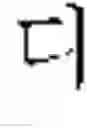
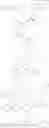
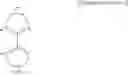
The present invention relates to a light-emitting binuclear transition metal compound represented by the following Chemical Formula 1, and an organic electroluminescence device including the same:
Wherein, in the above Chemical Formula 1, M is Ir, Pt, Rh, Re, Os, and the like, m is 2, provided that the m is 1 when M is Pt,
R1, R2, R3, R4, R5, R6, R7, and R8 are the same or different, and are selected from hydrogen, a C1 to C20 alkyl, an aryl, a cycloalkyl, a halogen, a linear or branched substituent including at least one halogen, a linear or branched substituent including at least one heteroatom, carbonyl, vinyl, and acetylenyl, or form a cycle, and
R9 is hydrogen, a C1 to C20 alkyl excluding an aromatic cyclic substituent, a cycloalkyl, a halogen, a linear or branched substituent including at least one halogen, or a linear or branched substituent including at least one heteroatom.
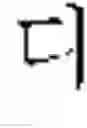
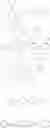
In the above Chemical Formula 1, L1 is represented by the following Chemical Formula 2:
L1 in the above formula 2, is a independent ligand having a covalent bond site with a carbon denoted as * and a coordination bond with nitrogen and forming a complex compound with the transition metal M, and
X is a hetero atom of nitrogen, oxygen, sulfur, phosporus, and so on, and
Z1 and Z2 are atoms for forming a C4 to C7 aromatic hydrocarbon ring or aromatic heterocyclic ring.
In the present invention, a benzo oxazole and benzo thiazole aromatic-based derivative are introduced for a co-ligand that is capable of forming a transition metal compound by a covalent bond with C and by a coordination bond with N.
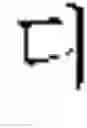
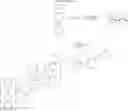
The examples of the co-ligand are represented by the following Chemical Formulae 3:
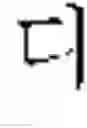
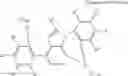
A functional group having a large steric hindrance such as an alkyl, an aryl, a halogen, silyl, and so on can be independently introduced to each L1 ligand. Several nm of light-emission and light wavelength can be easily controlled in accordance with the positions of the substituents and the properties of electron donors. The ligands of the present invention are represented by the following Chemical Formulae 4:
The transition metal compound represented by the above Chemical Formulae can be synthesized as follows. The following Reaction Scheme 1 shows a ligand synthesis, and the Reaction Scheme 2 shows a metalation process.
As shown in Reaction Scheme 2, a main ligand having C—N chelating site and hydrated iridium trichloride are reacted under a nitrogen atmosphere to prepare a dimmer intermediate that includes two iridium metals sharing a Cl ligand, and then the intermediate is reacted with a co-ligand in a solvent including a weak base to prepare the transition metal compound of Chemical Formula 1.
[Best Mode]
The present invention can be specified by the following Examples. The Examples only illustrate the present invention and they do not limit the scope and range of the present invention, which is defined by the accompanying claims.
EXAMPLE 1
Synthesis of compound (PBOZ)2Ir(DPhlPy)Ir(PBOZ)2
Synthesis of 3.7-diphenyl-3H-imidazo[4,5-b]pyridine (DPhlPy): 0.70 mol of N2,4-diphenylpyridine-2,3-diamine and 2.56 mol of ethoxymethylene malononitrile were added in 10 ml of isopropanol, and refluxed for 6 hours. The solution was removed and was purified by using column chromatography to thereby produce a solid crystalline product at a yield of 75%.
Synthesis of (PBOZ)2Ir(Cl)2Ir(PBOZ)2: 5 mmol of 2-phenylbenzo[d]oxazole and 10 mmol of IrCl3xH2O were dissolved in 100 mL of 2-ethoxyethanol, and refluxed for 24 hours under a nitrogen atmosphere. The solution was cooled down to room temperature, and 200 mL of 5% hydrochloric acid aqueous solution was added to the solution for eduction, filtrated, rinsed with water and an ether solvent, and dried to thereby produce (PBOZ)2Ir(Cl)2Ir(PBOZ)2 at a yield of 92%.
Synthesis of (PBOZ)2Ir(DPhlPy)Ir(PBOZ)2: 5 mmol of (PBOZ)2Ir(Cl)2IrPBOZ)2 and 25 mmol of 3.7-diphenyl-3H-imidazo[4,5-b]pyridine, and 50 mmol of potassium carbonate were mixed in 100 mL of 1,2-dichloroethane, and refluxed for 24 hours under a nitrogen atmosphere. After the reaction was complete, the solution was cooled down to about 50° C., and filtrated. The filtrate solution was purified by using column chromatography to thereby produce (PBOZ)2Ir(DPhlPy)Ir(PBOZ)2 at a yield of 89%.
EXAMPLE 2
Synthesis of compound (F2ppy)2Ir(DPhlPy)Ir(F2ppy)2
Synthesis of (F2ppy)2Ir(Cl)2Ir(F2ppy)2: 5 mmol of 2-(2,4-difluorophenyl)pyridine and 10 mmol of IrCl3xH2O were dissolved in 100 mL of 2-ethoxyethanol, and refluxed for 24 hours under a nitrogen atmosphere. The solution was cooled down to room temperature, and 200 mL of 5% hydrochloric acid aqueous solution was added to the solution for eduction, filtrated, rinsed with water and an ether solvent, and dried to thereby produce (F2ppy)2Ir(Cl)2Ir(F2ppy)2 at a yield of 90%.
Synthesis of (F2ppy)2Ir(DPhlPy)Ir(F2ppy)2: 5 mmol of (F2ppy)2Ir(Cl)2Ir(F2ppy)2 and 25 mmol of 3.7-diphenyl-3H-imidazo[4,5-b]pyridine, and 50 mmol of potassium carbonate were mixed in 100 mL of 1,2-dichloroethane, and refluxed for 24 hours under a nitrogen atmosphere. After the reaction was complete, the solution was cooled down to about 50° C., and filtrated. The filtrate solution was purified by using column chromatography to thereby produce (F2ppy)2Ir(DPhlPy)Ir(F2ppy)2 at a yield of 87%.
EXAMPLE 3
Synthesis of compound (SPBOZ)2Ir(DPhlPy)Ir(SPBOZ)2
Synthesis of (SPBOZ)2Ir(Cl)2Ir(SPBOZ)2: 5 mmol of 4-(4-(trimethylsilyl)phenyl)benzo[d]oxazole and 10 mmol of IrCl3xH2O were dissolved in 100 mL of 2-ethoxyethanol, and refluxed for 24 hours under a nitrogen atmosphere. The solution was cooled down to room temperature, and 200 mL of 5% hydrochloric acid aqueous solution was added to the solution for eduction, filtrated, rinsed with water and an ether solvent, and dried to thereby produce (F2ppy)2Ir(Cl)2Ir(F2ppy)2 at a yield of 88%.
Synthesis of (SPBOZ)2Ir(DPhlPy)Ir(SPBOZ)2: 5 mmol of (SPBOZ)2Ir(Cl)2Ir(SPBOZ)2 and 25 mmol of 3.7-diphenyl-3H-imidazo[4,5-b]pyridine, and 50 mmol of potassium carbonate were mixed in 100 mL of 1,2-dichloroethane, and refluxed for 24 hours under a nitrogen atmosphere. After the reaction was complete, the solution was cooled down to about 50° C., and filtrated. The filtrate solution was purified by using column chromatography to thereby produce (SPBOZ)2Ir(DPhlPy)Ir(SPBOZ)2 at a yield of 86%.
EXAMPLE 4
Synthesis of compound (SPBOZ)2Ir(DPhlPy)Ir(SPBOZ)2
Synthesis of (SPBOZ)2Ir(Cl)2Ir(SPBOZ)2: 5 mmol of 4-(4-(trimethylsilyl)phenyl)benzo[d]oxazole(SPBOZ) and 10 mmol of IrCl3xH2O were dissolved in 100 mL of 2-ethoxyethanol, and refluxed for 24 hours under a nitrogen atmosphere. The solution was cooled down to room temperature, and 200 mL of 5% hydrochloric acid aqueous solution was added to the solution for eduction, filtrated, rinsed with water and an ether solvent, and dried to thereby produce (F2ppy)2Ir(Cl)2Ir(F2ppy)2 at a yield of 87%.
Synthesis of (SPBOZ)2Ir(DPhlPy)Ir(SPBOZ)2: 5 mmol of (SPBOZ)2Ir(Cl)2Ir(SPBOZ)2 and 25 mmol of 3.7-diphenyl-3H-imidazo[4,5-b]pyridine, and 50 mmol of potassium carbonate were mixed in 100 mL of 1,2-dichloroethane, and refluxed for 24 hours under a nitrogen atmosphere. After the reaction was complete, the solution was cooled down to about 50° C., and filtrated. The filtrate solution was purified by using column chromatography to thereby produce (SPBOZ)2Ir(DPhlPy)Ir(SPBOZ)2 at a yield of 84%.
EXAMPLE 5
Synthesis of compound (PzDCA)2Ir(DPhlPy)Ir(PzDCA)2
Synthesis of (PzDCA)2Ir(Cl)2Ir(PzDCA)2: 5 mmol of pyrazine-2,5-dicarboxylic acid(PzDCA) and 10 mmol of IrCl3xH2O were dissolved in 100 mL of 2-ethoxyethanol, and refluxed for 24 hours under a nitrogen atmosphere. The solution was cooled down to room temperature, and 200 mL of 5% hydrochloric acid aqueous solution was added to the solution for eduction, filtrated, rinsed with water and an ether solvent, and dried to thereby produce (PzDCA)2Ir(Cl)2Ir(PzDCA)2 at a yield of 90%.
Synthesis of (PzDCA)2Ir(DPhlPy)Ir(PzDCA)2: 5 mmol of (PzDCA)2Ir(Cl)2Ir(PzDCA)2 and 25 mmol of 3.7-diphenyl-3H-imidazo[4,5-b]pyridine, and 50 mmol of potassium carbonate were mixed in 100 mL of 1,2-dichloroethane, and refluxed for 24 hours under a nitrogen atmosphere. After the reaction was complete, the solution was cooled down to about 50° C., and filtrated. The filtrate solution was purified by using column chromatography to thereby produce (PzDCA)2Ir(DPhlPy)Ir(PzDCA)2 at a yield of 88%.
EXAMPLE 6
Synthesis of compound (PBOZ)2Ir(MDPhlPy)Ir(PBOZ)2
Synthesis of 2-methyl-3,7-diphenyl-3H-imidazo[4,5-b]pyridine (MDPhlPy): 0.70 mol of N2,4-diphenylpyridine-2,3-diamine and 2.56 mol of ethoxy ethylene malononitrile was added in 10 ml of isopropanol, and refluxed for 6 hours. The solution was removed and was purified by using column chromatography to thereby produce a solid crystalline product at a yield of 74%.
Synthesis of (PBOZ)2Ir(Cl)2Ir(PBOZ)2: 5 mmol of 2-phenylbenzo[d]oxazole and 10 mmol of IrCl3xH2O were dissolved in 100 mL of 2-ethoxyethanol, and refluxed for 24 hours under a nitrogen atmosphere. The solution was cooled down to room temperature, and 200 mL of 5% hydrochloric acid aqueous solution was added to the solution for eduction, filtrated, rinsed with water and an ether solvent, and dried to thereby produce (PBOZ)2Ir(Cl)2Ir(PBOZ)2 at a yield of 87%.
Synthesis of (PBOZ)2Ir(MDPhlPy)Ir(PBOZ)2: 5 mmol of (PBOZ)2Ir(Cl)2IrPBOZ)2 and 25 mmol of 2-methyl-3,7-diphenyl-3H-imidazo[4,5-b]pyridine, and 50 mmol of potassium carbonate were mixed in 100 mL of 1,2-dichloroethane, and refluxed for 24 hours under a nitrogen atmosphere. After the reaction was complete, the solution was cooled down to about 50° C., and filtrated. The filtrate solution was purified by using column chromatography to thereby produce (PBOZ)2Ir(MDPhlPy)Ir(PBOZ)2 at a yield of 83%.
EXAMPLE 7
Synthesis of compound (PBTZ)2Ir(MDPhlPy)Ir(PBTZ)2
Synthesis of (PBTZ)2Ir(Cl)2Ir(PBTZ)2: 5 mmol of 2-phenylbenzo[d]thiazole and 10 mmol of IrCl3xH2O were dissolved in 100 mL of 2-ethoxyethanol, and refluxed for 24 hours under a nitrogen atmosphere. The solution was cooled down to room temperature, and 200 mL of 5% hydrochloric acid aqueous solution was added to the solution for eduction, filtrated, rinsed with water and an ether solvent, and dried to thereby produce (PBTZ)2Ir(Cl)2Ir(PBTZ)2 at a yield of 84%.
Synthesis of (PBTZ)2Ir(MDPhlPy)Ir(PBTZ)2: 5 mmol of (PBTZ)2Ir(Cl)2Ir(PBTZ)2 and 25 mmol of 2-methyl-3,7-diphenyl-3H-imidazo[4,5-b]pyridine, and 50 mmol of potassium carbonate were mixed in 100 mL of 1,2-dichloroethane, and refluxed for 24 hours under a nitrogen atmosphere. After the reaction was complete, the solution was cooled down to about 50° C., and filtrated. The filtrate solution was purified by using column chromatography to thereby produce (PBTZ)2Ir(MDPhlPy)Ir(PBTZ)2 at a yield of 80%.
EXAMPLE 8
Synthesis of compound (F2ppy)2Ir(MDPhlPy)Ir(F2ppy)2
Synthesis of (F2ppy)2Ir(Cl)2Ir(F2ppy)2: 5 mmol of 2-(2,4-fluorophenyl)pyridine and 10 mmol of IrCl3xH2O were dissolved in 100 mL of 2-ethoxyethanol, and refluxed for 24 hours under a nitrogen atmosphere. The solution was cooled down to room temperature, and 200 mL of 5% hydrochloric acid aqueous solution was added to the solution for eduction, filtrated, rinsed with water and an ether solvent, and dried to thereby produce (F2ppy)2Ir(Cl)2Ir(F2ppy)2 at a yield of 82%.
Synthesis of (F2ppy)2Ir(MDPhlPy)Ir(F2ppy)2: 5 mmol of (F2ppy)2Ir(Cl)2Ir(F2ppy)2 and 25 mmol of 2-methyl-3,7-diphenyl-3H-imidazo[4,5-b]pyridine, and 50 mmol of potassium carbonate were mixed in 100 mL of 1,2-dichloroethane, and refluxed for 24 hours under a nitrogen atmosphere. After the reaction was complete, the solution was cooled down to about 50° C., and filtrated. The filtrate solution was purified by using column chromatography to thereby produce (F2ppy)2Ir(MDPhlPy)Ir(F2ppy)2 at a yield of 79%.
EXAMPLE 9
Synthesis of compound (SPBOZ)2Ir(MDPhlPy)Ir(SPBOZ)2
Synthesis of (SPBOZ)2Ir(Cl)2Ir(SPBOZ)2: 5 mmol of 4-(4-(trimethylsilyl)phenyl)benzo[d]oxazole(SPBOZ) and 10 mmol of IrCl3xH2O were dissolved in 100 mL of 2-ethoxyethanol, and refluxed for 24 hours under a nitrogen atmosphere. The solution was cooled down to room temperature, and 200 mL of 5% hydrochloric acid aqueous solution was added to the solution for eduction, filtrated, rinsed with water and an ether solvent, and dried to thereby produce (SPBOZ)2Ir(Cl)2Ir(SPBOZ)2 at a yield of 80%.
Synthesis of (SPBOZ)2Ir(MDPhlPy)Ir(SPBOZ)2: 5 mmol of (SPBOZ)2Ir(Cl)2Ir(SPBOZ)2 and 25 mmol of 2-methyl-3,7-diphenyl-3H-imidazo[4,5-b]pyridine, and 50 mmol of potassium carbonate were mixed in 100 mL of 1,2-dichloroethane, and refluxed for 24 hours under a nitrogen atmosphere. After the reaction was complete, the solution was cooled down to about 50° C., and filtrated. The filtrate solution was purified by using column chromatography to thereby produce (SPBOZ)2Ir(MDPhlPy)Ir(SPBOZ)2 at a yield of 78%.
EXAMPLE 10
Synthesis of compound (PzDCA)2Ir(MDPhlPy)Ir(PzDCA)2
Synthesis of (PzDCA)2Ir(Cl)2Ir(PzDCA)2: 5 mmol of pyrazine-2,5-dicarboxylic acid(PzDCA) and 10 mmol of IrCl3xH2O were dissolved in 100 mL of 2-ethoxyethanol, and refluxed for 24 hours under a nitrogen atmosphere. The solution was cooled down to room temperature, and 200 mL of 5% hydrochloric acid aqueous solution was added to the solution for eduction, filtrated, rinsed with water and an ether solvent, and dried to thereby produce (PzDCA)2Ir(Cl)2Ir(PzDCA)2 at a yield of 82%.
Synthesis of (PzDCA)2Ir(DPhlPy)Ir(PzDCA)2: 5 mmol of (PzDCA)2Ir(Cl)2Ir(PzDCA)2 and 25 mmol of 2-methyl-3,7-diphenyl-3H-imidazo[4,5-b]pyridine, and 50 mmol of potassium carbonate were mixed in 100 mL of 1,2-dichloroethane, and refluxed for 24 hours under a nitrogen atmosphere. After the reaction was complete, the solution was cooled down to about 50° C., and filtrated. The filtrate solution was purified by using column chromatography to thereby produce (PzDCA)2Ir(MDPhlPy)Ir(PzDCA)2 at a yield of 81%.
EXAMPLE 11
Synthesis of compound (PBOZ)2Ir(FDPhlPy)Ir(PBOZ)2
Synthesis of 2-(trifluoromethyl)-3,7-diphenyl-3H-imidazo[4,5-b]pyridine (FDPhlPy): 0.70 mol of N2 4-diphenylpyridine-2,3-diamine and 2.56 mol of 2-(1-ethoxy-2,2,2-trifluoroethyllidyne)malonnitrile were added in 10 ml of isopropanol, and refluxed for 6 hours. The solution was removed and was purified by using column chromatography to thereby produce a solid crystalline product at a yield of 72%.
Synthesis of (PBOZ)2Ir(Cl)2Ir(PBOZ)2: 5 mmol of 2-phenylbenzo[d]oxazole and 10 mmol of IrCl3xH2O were dissolved in 100 mL of 2-ethoxyethanol, and refluxed for 24 hours under a nitrogen atmosphere. The solution was cooled down to room temperature, and 200 mL of 5% hydrochloric acid aqueous solution was added to the solution for eduction, filtrated, rinsed with water and an ether solvent, and dried to thereby produce (PBOZ)2Ir(Cl)2Ir(PBOZ)2 at a yield of 82%.
Synthesis of (PBOZ)2Ir(FDPhlPy)Ir(PBOZ)2: 5 mmol of (PBOZ)2Ir(Cl)2IrPBOZ)2 and 25 mmol of 2-(trifluoromethyl)-3,7-diphenyl-3H-imidazo[4,5-b]pyridine, and 50 mmol of potassium carbonate were mixed in 100 mL of 1,2-dichloroethane, and refluxed for 24 hours under a nitrogen atmosphere. After the reaction was complete, the solution was cooled down to about 50° C., and filtrated. The filtrate solution was purified by using column chromatography to thereby produce (PBOZ)2Ir(FDPhlPy)Ir(PBOZ)2 at a yield of 80%.
EXAMPLE 12
Synthesis of compound (PBTZ)2Ir(FDPhlPy)Ir(PBTZ)2
Synthesis of (PBTZ)2Ir(Cl)2Ir(PBTZ)2: 5 mmol of 2-phenylbenzo[d]thiazole and 10 mmol of IrCl3xH2O were dissolved in 100 mL of 2-ethoxyethanol, and refluxed for 24 hours under a nitrogen atmosphere. The solution was cooled down to room temperature, and 200 mL of 5% hydrochloric acid aqueous solution was added to the solution for eduction, filtrated, rinsed with water and an ether solvent, and dried to thereby produce (PBTZ)2Ir(Cl)2Ir(PBTZ)2 at a yield of 79%.
Synthesis of (PBTZ)2Ir(FDPhlPy)Ir(PBTZ)2: 5 mmol of (PBTZ)2Ir(Cl)2Ir(PBTZ)2 and 25 mmol of 2-(trifluoromethyl)-3,7-diphenyl-3H-imidazo[4,5-b]pyridine, and 50 mmol of potassium carbonate were mixed in 100 mL of 1,2-dichloroethane, and refluxed for 24 hours under a nitrogen atmosphere. After the reaction was complete, the solution was cooled down to about 50° C., and filtrated. The filtrate solution was purified by using column chromatography to thereby produce (PBTZ)2Ir(FDPhlPy)Ir(PBTZ)2 at a yield of 76%.
EXAMPLE 13
Synthesis of compound (F2ppy)2Ir(FDPhlPy)Ir(F2ppy)2
Synthesis of (F2ppy)2Ir(Cl)2Ir(F2ppy)2: 5 mmol of 2-(2,4-fluorophenyl)pyridine and 10 mmol of IrCl3xH2O were dissolved in 100 mL of 2-ethoxyethanol, and refluxed for 24 hours under a nitrogen atmosphere. The solution was cooled down to room temperature, and 200 mL of 5% hydrochloric acid aqueous solution was added to the solution for eduction, filtrated, rinsed with water and an ether solvent, and dried to thereby produce (F2ppy)2Ir(Cl)2Ir(F2ppy)2 at a yield of 77%.
Synthesis of (F2ppy)2Ir(FDPhlPy)Ir(F2ppy)2: 5 mmol of (F2ppy)2Ir(Cl)2Ir(F2ppy)2 and 25 mmol of 2-(trifluoromethyl)-3,7-diphenyl-3H-imidazo[4,5-b]pyridine, and 50 mmol of potassium carbonate were mixed in 100 mL of 1,2-dichloroethane, and refluxed for 24 hours under a nitrogen atmosphere. After the reaction was complete, the solution was cooled down to about 50° C., and filtrated. The filtrate solution was purified by using column chromatography to thereby produce (F2ppy)2Ir(FDPhlPy)Ir(F2ppy)2 at a yield of 74%.
EXAMPLE 14
Synthesis of compound (SPBOZ)2Ir(FDPhlPy)Ir(SPBOZ)2
Synthesis of (SPBOZ)2Ir(Cl)2Ir(SPBOZ)2: 5 mmol of 4-(4-(trimethylsilyl)phenyl)benzo[d]oxazole(SPBOZ) and 10 mmol of IrCl3xH2O were dissolved in 100 mL of 2-ethoxyethanol, and refluxed for 24 hours under a nitrogen atmosphere. The solution was cooled down to room temperature, and 200 mL of 5% hydrochloric acid aqueous solution was added to the solution for eduction, filtrated, rinsed with water and an ether solvent, and dried to thereby produce (SPBOZ)2Ir(Cl)2Ir(SPBOZ)2 at a yield of 73%.
Synthesis of (SPBOZ)2Ir(FDPhlPy)Ir(SPBOZ)2: 5 mmol of (SPBOZ)2Ir(Cl)2Ir(SPBOZ)2 and 25 mmol of 2-(trifluoromethyl)-3,7-diphenyl-3H-imidazo[4,5-b]pyridine, and 50 mmol of potassium carbonate were mixed in 100 mL of 1,2-dichloroethane, and refluxed for 24 hours under a nitrogen atmosphere. After the reaction was complete, the solution was cooled down to about 50° C., and filtrated. The filtrate solution was purified by using column chromatography to thereby produce (SPBOZ)2Ir(FDPhlPy)Ir(SPBOZ)2 at a yield of 70%.
EXAMPLE 15
Synthesis of compound (PzDCA)2Ir(FDPhlPy)Ir(PzDCA)2
Synthesis of (PZDCA)2Ir(Cl)2Ir(PzDCA)2: 5 mmol of pyrazine-2,5-dicarboxylic acid(PzDCA) and 10 mmol of IrCl3xH2O were dissolved in 100 mL of 2-ethoxyethanol, and refluxed for 24 hours under a nitrogen atmosphere. The solution was cooled down to room temperature, and 200 mL of 5% hydrochloric acid aqueous solution was added to the solution for eduction, filtrated, rinsed with water and an ether solvent, and dried to thereby produce (PzDCA)2Ir(Cl)2Ir(PzDCA)2 at a yield of 76%.
Synthesis of (PzDCA)2Ir(FDPhlPy)Ir(PzDCA)2: 5 mmol of (PzDCA)2Ir(Cl)2Ir(PzDCA)2 and 25 mmol of 2-(trifluoromethyl)-3,7-diphenyl-3H-imidazo[4,5-b]pyridine, and 50 mmol of potassium carbonate were mixed in 100 mL of 1,2-dichloroethane, and refluxed for 24 hours under a nitrogen atmosphere. After the reaction was complete, the solution was cooled down to about 50° C., and filtrated. The filtrate solution was purified by using column chromatography to thereby produce (PzDCA)2Ir(FDPhlPy)Ir(PzDCA)2 at a yield of 75%.
EXAMPLE 16
Synthesis of compound (PBOZ)2Ir(DMDPIZPyA)Ir(PBOZ)2
N,N-dimethyl-3,7-diphenyl-3H-imidazo[4,5-b]pyridine-2-amine (DMDPIZPyA)synthesis: 0.70 mol of N2,4-diphenylpyridine-2,3-diamine and 2.56 mol of 2-((dimethylamino) (ethoxy)methylene)malonnitrile were added in 10 ml of isopropanol, and refluxed for 6 hours. The solution was removed and was purified by using column chromatography to thereby produce a solid crystalline product at a yield of 70%.
Synthesis of (PBOZ)2Ir(Cl)2Ir(PBOZ)2: 5 mmol of 2-phenylbenzo[d]oxazole and 10 mmol of IrCl3xH2O were dissolved in 100 mL of 2-ethoxyethanol, and refluxed for 24 hours under a nitrogen atmosphere. The solution was cooled down to room temperature, and 200 mL of 5% hydrochloric acid aqueous solution was added to the solution for eduction, filtrated, rinsed with water and an ether solvent, and dried to thereby produce (PBOZ)2Ir(Cl)2Ir(PBOZ)2 at a yield of 82%.
Synthesis of (PBOZ)2Ir(DMDPIZPyA)Ir(PBOZ)2: 5 mmol of (PBOZ)2Ir(Cl)2IrPBOZ)2 and 25 mmol of N,N-dimethyl-3,7-diphenyl-3H-imidazo[4,5-b]pyridine-2-amine, and 50 mmol of potassium carbonate were mixed in 100 mL of 1,2-dichloroethane, and refluxed for 24 hours under a nitrogen atmosphere. After the reaction was complete, the solution was cooled down to about 50° C., and filtrated. The filtrate solution was purified by using column chromatography to thereby produce (PBOZ)2Ir(FDPhlPy)Ir(PBOZ)2 at a yield of 81%.
EXAMPLE 17
Synthesis of compound (PBTZ)2Ir(DMDPIZPyA)Ir(PBTZ)2
Synthesis of (PBTZ)2Ir(Cl)2Ir(PBTZ)2: 5 mmol of 2-phenylbenzo[d]thiazole and 10 mmol of IrCl3xH2O were dissolved in 100 mL of 2-ethoxyethanol, and refluxed for 24 hours under a nitrogen atmosphere. The solution was cooled down to room temperature, and 200 mL of 5% hydrochloric acid aqueous solution was added to the solution for eduction, filtrated, rinsed with water and an ether solvent, and dried to thereby produce (PBTZ)2Ir(Cl)2Ir(PBTZ)2 at a yield of 81%.
Synthesis of (PBTZ)2Ir(DMDPIZPyA)Ir(PBTZ)2: 5 mmol of (PBTZ)2Ir(Cl)2Ir(PBTZ)2 and 25 mmol of N,N-dimethyl-3,7-diphenyl-3H-imidazo[4,5-b]pyridine-2-amine, and 50 mmol of potassium carbonate were mixed in 100 mL of 1,2-dichloroethane, and refluxed for 24 hours under a nitrogen atmosphere. After the reaction was complete, the solution was cooled down to about 50° C., and filtrated. The filtrate solution was purified by using column chromatography to thereby produce (PBTZ)2Ir(FDPhlPy)Ir(PBTZ)2 at a yield of 81%.
EXAMPLE 18
Synthesis of compound (F2ppy)2Ir(DMDPIZPyA)Ir(F2ppy)2
Synthesis of (F2ppy)2Ir(Cl)2Ir(F2ppy)2: 5 mmol of 2-(2,4-fluorophenyl)pyridine and 10 mmol of IrCl3xH2O were dissolved in 100 mL of 2-ethoxyethanol, and refluxed for 24 hours under a nitrogen atmosphere. The solution was cooled down to room temperature, and 200 mL of 5% hydrochloric acid aqueous solution was added to the solution for eduction, filtrated, rinsed with water and an ether solvent, and dried to thereby produce (F2ppy)2Ir(Cl)2Ir(F2ppy)2 at a yield of 81%.
Synthesis of (F2ppy)2Ir(DMDPIZPyA)Ir(F2ppy)2: 5 mmol of (F2ppy)2Ir(Cl)2Ir(F2ppy)2 and 25 mmol of N,N-dimethyl-3,7-diphenyl-3H-imidazo[4,5-b]pyridine-2-amine, and 50 mmol of potassium carbonate were mixed in 100 mL of 1,2-dichloroethane, and refluxed for 24 hours under a nitrogen atmosphere. After the reaction was complete, the solution was cooled down to about 50° C., and filtrated. The filtrate solution was purified by using column chromatography to thereby produce (F2ppy)2Ir(DMDPIZPyA)Ir(F2ppy)2 at a yield of 78%.
EXAMPLE 19
Synthesis of compound (SPBOZ)2Ir(DMDPIZPyA)Ir(SPBOZ)2
Synthesis of (SPBOZ)2Ir(Cl)2Ir(SPBOZ)2: 5 mmol of 4-(4-(trimethylsilyl)phenyl)benzo[d]oxazole(SPBOZ) and 10 mmol of IrCl3xH2O were dissolved in 100 mL of 2-ethoxyethanol, and refluxed for 24 hours under a nitrogen atmosphere. The solution was cooled down to room temperature, and 200 mL of 5% hydrochloric acid aqueous solution was added to the solution for eduction, filtrated, rinsed with water and an ether solvent, and dried to thereby produce (SPBOZ)2Ir(Cl)2Ir(SPBOZ)2 at a yield of 77%.
Synthesis of (SPBOZ)2Ir(DMDPIZPyA)Ir(SPBOZ)2: 5 mmol of (SPBOZ)2Ir(Cl)2Ir(SPBOZ)2 and 25 mmol of N,N-dimethyl-3,7-diphenyl-3H-imidazo[4,5-b]pyridine-2-amine, and 50 mmol of potassium carbonate were mixed in 100 mL of 1,2-dichloroethane, and refluxed for 24 hours under a nitrogen atmosphere. After the reaction was complete, the solution was cooled down to about 50° C., and filtrated. The filtrate solution was purified by using column chromatography to thereby produce (SPBOZ)2Ir(DMDPIZPyA)Ir(SPBOZ)2 at a yield of 75%.
EXAMPLE 20
Synthesis of compound (PzDCA)2Ir(DMDPIZPyA)Ir(PzDCA)2
Synthesis of (PzDCA)2Ir(Cl)2Ir(PzDCA)2: 5 mmol of pyrazine-2,5-dicarboxylic acid (PZDCA) and 10 mmol of IrCl3xH2O were dissolved in 100 mL of 2-ethoxyethanol, and refluxed for 24 hours under a nitrogen atmosphere. The solution was cooled down to room temperature, and 200 mL of 5% hydrochloric acid aqueous solution was added to the solution for eduction, filtrated, rinsed with water and an ether solvent, and dried to thereby produce (PzDCA)2Ir(Cl)2Ir(PzDCA)2 at a yield of 82%.
Synthesis of (PzDCA)2Ir(FDPhlPy)Ir(PzDCA)2: 5 mmol of (PzDCA)2Ir(Cl)2Ir(PzDCA)2 and 25 mmol of N,N-dimethyl-3,7-diphenyl-3H-imidazo[4,5-b]pyridine-2-amine, and 50 mmol of potassium carbonate were mixed in 100 mL of 1,2-dichloroethane, and refluxed for 24 hours under a nitrogen atmosphere. After the reaction was complete, the solution was cooled down to about 50° C., and filtrated. The filtrate solution was purified by using column chromatography to thereby produce (PzDCA)2Ir(DMDPIZPyA)Ir(PzDCA)2 at a yield of 79%.
EXAMPLE 21
Synthesis of compound (PBOZ)2Ir(DTylzPy)Ir(PBOZ)2
Synthesis of 3,7-dip-tolyl-3H-imidazo[4,5-b]pyridine (DTylzPy): 0.70 mol of N2,4-dip-tolylpyridine-2,3-diamine and 2.56 mol of 2-(ethoxymethylene)malonnitrile were added in 10 ml of isopropanol, and refluxed for 6 hours. The solution was removed and was purified by using column chromatography to thereby produce a solid crystalline product at a yield of 84%.
Synthesis of (PBOZ)2Ir(Cl)2Ir(PBOZ)2: 5 mmol of 2-phenylbenzo[d]oxazole and 10 mmol of IrCl3xH2O were dissolved in 100 mL of 2-ethoxyethanol, and refluxed for 24 hours under a nitrogen atmosphere. The solution was cooled down to room temperature, and 200 mL of 5% hydrochloric acid aqueous solution was added to the solution for eduction, filtrated, rinsed with water and an ether solvent, and dried to thereby produce (PBOZ)2Ir(Cl)2Ir(PBOZ)2 at a yield of 94%.
Synthesis of (PBOZ)2Ir(DTylzPy)Ir(PBOZ)2: 5 mmol of (PBOZ)2Ir(Cl)2IrPBOZ)2 and 25 mmol of 3,7-dip-tolyl-3H-imidazo[4,5-b]pyridine, and 50 mmol of potassium carbonate were mixed in 100 mL of 1,2-dichloroethane, and refluxed for 24 hours under a nitrogen atmosphere. After the reaction was complete, the solution was cooled down to about 50° C., and filtrated. The filtrate solution was purified by using column chromatography to thereby produce (PBOZ)2Ir(DTylzPy)Ir(PBOZ)2 at a yield of 91%.
EXAMPLE 22
Synthesis of compound (PBTZ)2Ir(DTylzPy)Ir(PBTZ)2
Synthesis of (PBTZ)2Ir(Cl)2Ir(PBTZ)2: 5 mmol of 2-phenylbenzo[d]thiazole and 10 mmol of IrCl3xH2O were dissolved in 100 mL of 2-ethoxyethanol, and refluxed for 24 hours under a nitrogen atmosphere. The solution was cooled down to room temperature, and 200 mL of 5% hydrochloric acid aqueous solution was added to the solution for eduction, filtrated, rinsed with water and an ether solvent, and dried to thereby produce (PBTZ)2Ir(Cl)2Ir(PBTZ)2 at a yield of 92%.
Synthesis of (PBTZ)2Ir(DTylzPy)Ir(PBTZ)2: 5 mmol of (PBTZ)2Ir(Cl)2Ir(PBTZ)2 and 25 mmol of 3,7-dip-tolyl-3H-imidazo[4,5-b]pyridine, and 50 mmol of potassium carbonate were mixed in 100 mL of 1,2-dichloroethane, and refluxed for 24 hours under a nitrogen atmosphere. After the reaction was complete, the solution was cooled down to about 50° C., and filtrated. The filtrate solution was purified by using column chromatography to thereby produce (PBTZ)2Ir(DTylzPy)Ir(PBTZ)2 at a yield of 90%.
EXAMPLE 23
Synthesis of compound (F2ppy)2Ir(DTylzPy)Ir(F2ppy)2
Synthesis of (F2ppy)2Ir(Cl)2Ir(F2ppy)2: 5 mmol of 2-(2,4-difluorophenyl)pyridine and 10 mmol of IrCl3xH2O were dissolved in 100 mL of 2-ethoxyethanol, and refluxed for 24 hours under a nitrogen atmosphere. The solution was cooled down to room temperature, and 200 mL of 5% hydrochloric acid aqueous solution was added to the solution for eduction, filtrated, rinsed with water and an ether solvent, and dried to thereby produce (F2ppy)2Ir(Cl)2Ir(F2ppy)2 at a yield of 90%.
Synthesis of (F2ppy)2Ir(DTylzPy)Ir(F2ppy)2: 5 mmol of (F2ppy)2Ir(Cl)2Ir(F2ppy)2 and 25 mmol of 3,7-dip-tolyl-3H-imidazo[4,5-b]pyridine, and 50 mmol of potassium carbonate were mixed in 100 mL of 1,2-dichloroethane, and refluxed for 24 hours under a nitrogen atmosphere. After the reaction was complete, the solution was cooled down to about 50° C., and filtrated. The filtrate solution was purified by using column chromatography to thereby produce (F2ppy)2Ir(DTylzPy)Ir(F2ppy)2 at a yield of 88%.
EXAMPLE 24
Synthesis of compound (SPBOZ)2Ir(DTylzPy)Ir(SPBOZ)2
Synthesis of (SPBOZ)2Ir(Cl)2Ir(SPBOZ)2: 5 mmol of 4-(4-(trimethylsilyl)phenyl)benzo[d]oxazole(SPBOZ) and 10 mmol of IrCl3xH2O were dissolved in 100 mL of 2-ethoxyethanol, and refluxed for 24 hours under a nitrogen atmosphere. The solution was cooled down to room temperature, and 200 mL of 5% hydrochloric acid aqueous solution was added to the solution for eduction, filtrated, rinsed with water and an ether solvent, and dried to thereby produce (SPBOZ)2Ir(Cl)2Ir(SPBOZ)2 at a yield of 89%.
Synthesis of (SPBOZ)2Ir(DTylzPy)Ir(SPBOZ)2: 5 mmol of (SPBOZ)2Ir(Cl)2Ir(SPBOZ)2 and 25 mmol of 3,7-dip-tolyl-3H-imidazo[4,5-b]pyridine, and 50 mmol of potassium carbonate were mixed in 100 mL of 1,2-dichloroethane, and refluxed for 24 hours under a nitrogen atmosphere. After the reaction was complete, the solution was cooled down to about 50° C., and filtrated. The filtrate solution was purified by using column chromatography to thereby produce (SPBOZ)2Ir(DTylzPy)Ir(SPBOZ)2 at a yield of 86%.
EXAMPLE 25
Synthesis of compound (PzDCA)2Ir(DTylzPy)Ir(PzDCA)2
Synthesis of (PzDCA)2Ir(Cl)2Ir(PzDCA)2: 5 mmol of pyrazine-2,5-dicarboxylic acid(PzDCA) and 10 mmol of IrCl3xH2O were dissolved in 100 mL of 2-ethoxyethanol, and refluxed for 24 hours under a nitrogen atmosphere. The solution was cooled down to room temperature, and 200 mL of 5% hydrochloric acid aqueous solution was added to the solution for eduction, filtrated, rinsed with water and an ether solvent, and dried to thereby produce (PzDCA)2Ir(Cl)2Ir(PzDCA)2 at a yield of 91%.
Synthesis of (PzDCA)2Ir(DTylzPy)Ir(PzDCA)2: 5 mmol of (PzDCA)2Ir(Cl)2Ir(PzDCA)2 and 25 mmol of 3,7-dip-tolyl-3H-imidazo[4,5-b]pyridine, and 50 mmol of potassium carbonate were mixed in 100 mL of 1,2-dichloroethane, and refluxed for 24 hours under a nitrogen atmosphere. After the reaction was complete, the solution was cooled down to about 50° C., and filtrated. The filtrate solution was purified by using column chromatography to thereby produce (PzDCA)2Ir(DTylzPy)Ir(PzDCA)2 at a yield of 88%.
EXAMPLE 26
Synthesis of compound (PBOZ)2Ir(bFPIzPy)Ir(PBOZ)2
Synthesis of 3,7-bis(4-(trifluoromethyl)phenyl)-3H-imidazo[4,5-b]pyridine(bFPIzPy): 0.70 mol of N2,4-bis (4-(trifluoromethyl)phenyl)pyridine-2,3-diamine and 2.56 mol of 2-(ethoxymethylene)malonnitrile were added in 10 ml of isopropanol, and refluxed for 6 hours. The solution was removed and was purified by using column chromatography to thereby produce a solid crystalline product at a yield of 79%.
Synthesis of (PBOZ)2Ir(Cl)2Ir(PBOZ)2: 5 mmol of 2-phenylbenzo[d]oxazole and 10 mmol of IrCl3xH2O were dissolved in 100 mL of 2-ethoxyethanol, and refluxed for 24 hours under a nitrogen atmosphere. The solution was cooled down to room temperature, and 200 mL of 5% hydrochloric acid aqueous solution was added to the solution for eduction, filtrated, rinsed with water and an ether solvent, and dried to thereby produce (PBOZ)2Ir(Cl)2Ir(PBOZ)2 at a yield of 92%.
Synthesis of (PBOZ)2Ir(bFPlzPy)Ir(PBOZ)2: 5 mmol of (PBOZ)2Ir(Cl)2IrPBOZ)2 and 25 mmol of 3,7-bis (4-(trifluoromethyl)phenyl)-3H-imidazo[4,5-b]pyridine, and 50 mmol of potassium carbonate were mixed in 100 mL of 1,2-dichloroethane, and refluxed for 24 hours under a nitrogen atmosphere. After the reaction was complete, the solution was cooled down to about 50° C., and filtrated. The filtrate solution was purified by using column chromatography to thereby produce (PBOZ)2Ir(bFPlzPy)Ir(PBOZ)2 at a yield of 88%.
EXAMPLE 27
Synthesis of compound (PBTZ)2Ir(bFPlzPy)Ir(PBTZ)2
Synthesis of (PBTZ)2Ir(Cl)2Ir(PBTZ)2: 5 mmol of 2-phenylbenzo[d]thiazole and 10 mmol of IrCl3xH2O were dissolved in 100 mL of 2-ethoxyethanol, and refluxed for 24 hours under a nitrogen atmosphere. The solution was cooled down to room temperature, and 200 mL of 5% hydrochloric acid aqueous solution was added to the solution for eduction, filtrated, rinsed with water and an ether solvent, and dried to thereby produce (PBTZ)2Ir(Cl)2Ir(PBTZ)2 at a yield of 89%.
Synthesis of (PBTZ)2Ir(bFPlzPy)Ir(PBTZ)2: 5 mmol of (PBTZ)2Ir(Cl)2Ir(PBTZ)2 and 25 mmol of 3,7-bis(4-(trifluoromethyl)phenyl)-3H-imidazo[4,5-b]pyridine, and 50 mmol of potassium carbonate were mixed in 100 mL of 1,2-dichloroethane, and refluxed for 24 hours under a nitrogen atmosphere. After the reaction was complete, the solution was cooled down to about 50° C., and filtrated. The filtrate solution was purified by using column chromatography to thereby produce (PBTZ)2Ir(bFPlzPy)Ir(PBTZ)2 at a yield of 86%.
EXAMPLE 28
Synthesis of compound (F2ppy)2Ir(bFPlzPy)Ir(F2ppy)2
Synthesis of (F2ppy)2Ir(Cl)2Ir(F2ppy)2: 5 mmol of 2-(2,4-difluorophenyl)pyridine and 10 mmol of IrCl3xH2O were dissolved in 100 mL of 2-ethoxyethanol, and refluxed for 24 hours under a nitrogen atmosphere. The solution was cooled down to room temperature, and 200 mL of 5% hydrochloric acid aqueous solution was added to the solution for eduction, filtrated, rinsed with water and an ether solvent, and dried to thereby produce (F2ppy)2Ir(Cl)2Ir(F2ppy)2 at a yield of 86%.
Synthesis of (F2ppy)2Ir(bFPlzPy)Ir(F2ppy)2: 5 mmol of (F2ppy)2Ir(Cl)2Ir(F2ppy)2 and 25 mmol of 3,7-bis(4-(trifluoromethyl)phenyl)-3H-imidazo[4,5-b]pyridine, and 50 mmol of potassium carbonate were mixed in 100 mL of 1,2-dichloroethane, and refluxed for 24 hours under a nitrogen atmosphere. After the reaction was complete, the solution was cooled down to about 50° C., and filtrated. The filtrate solution was purified by using column chromatography to thereby produce (F2ppy)2Ir(bFPlzPy)Ir(F2ppy)2 at a yield of 85%.
EXAMPLE 29
Synthesis of compound (SPBOZ)2Ir(bFPlzPy)Ir(SPBOZ)2
(SPBOZ)2Ir(Cl)2Ir(SPBOZ)2 synthesis: 5 mmol of 4-(4-(trimethylsilyl)phenyl)benzo[d]oxazole(SPBOZ) and 10 mmol of IrCl3xH2O were dissolved in 100 mL of 2-ethoxyethanol, and refluxed for 24 hours under a nitrogen atmosphere. The solution was cooled down to room temperature, and 200 mL of 5% hydrochloric acid aqueous solution was added to the solution for eduction, filtrated, rinsed with water and an ether solvent, and dried to thereby produce (SPBOZ)2Ir(Cl)2Ir(SPBOZ)2 at a yield of 87%.
Synthesis of (SPBOZ)2Ir(bFPlzPy)Ir(SPBOZ)2: 5 mmol of (SPBOZ)2Ir(Cl)2Ir(SPBOZ)2 and 25 mmol of 3,7-bis(4-(trifluoromethyl)phenyl)-3H-imidazo[4,5-b]pyridine, and 50 mmol of potassium carbonate were mixed in 100 mL of 1,2-dichloroethane, and refluxed for 24 hours under a nitrogen atmosphere. After the reaction was complete, the solution was cooled down to about 50° C., and filtrated. The filtrate solution was purified by using column chromatography to thereby produce (SPBOZ)2Ir(bFPlzPy)Ir(SPBOZ)2 at a yield of 84%.
EXAMPLE 30
Synthesis of compound (PzDCA)2Ir(bFPlzPy)Ir(PzDCA)2
Synthesis of (PzDCA)2Ir(Cl)2Ir(PzDCA)2: 5 mmol of pyrazine-2,5-dicarboxylic acid(PzDCA) and 10 mmol of IrCl3xH2O were dissolved in 100 mL of 2-ethoxyethanol, and refluxed for 24 hours under a nitrogen atmosphere. The solution was cooled down to room temperature, and 200 mL of 5% hydrochloric acid aqueous solution was added to the solution for eduction, filtrated, rinsed with water and an ether solvent, and dried to thereby produce (PzDCA)2Ir(Cl)2Ir(PzDCA)2 at a yield of 92%.
Synthesis of (PzDCA)2Ir(bFPlzPy)Ir(PzDCA)2: 5 mmol of (PzDCA)2Ir(Cl)2Ir(PzDCA)2 and 25 mmol of 3,7-bis(4-(trifluoromethyl)phenyl)-3H-imidazo[4,5-b]pyridine, and 50 mmol of potassium carbonate were mixed in 100 mL of 1,2-dichloroethane, and refluxed for 24 hours under a nitrogen atmosphere. After the reaction was complete, the solution was cooled down to about 50° C., and filtrated. The filtrate solution was purified by using column chromatography to thereby produce (PzDCA)2Ir(bFPlzPy)Ir(PzDCA)2 at a yield of 89%.
EXAMPLE 31
Synthesis of compound (PBOZ)2Ir(bSPlzPy)Ir(PBOZ)2
Synthesis of 3,7-bis(4-(trimethylsilyl)phenyl)-3H-imidazo[4,5-b]pyridine(bSPlzPy): N2 4-bis(4-(trimethylsilyl)phenyl)pyridine-2,3-diamine and 2.56 mol of 2-(ethoxymethylene)malonnitrile were added in 10 ml of isopropanol, and refluxed for 6 hours. The solution was removed and was purified by using column chromatography to thereby produce a solid crystalline product at a yield of 70%.
Synthesis of (PBOZ)2Ir(Cl)2Ir(PBOZ)2: 5 mmol of 2-phenylbenzo[d]oxazole and 10 mmol of IrCl3xH2O were dissolved in 100 mL of 2-ethoxyethanol, and refluxed for 24 hours under a nitrogen atmosphere. The solution was cooled down to room temperature, and 200 mL of 5% hydrochloric acid aqueous solution was added to the solution for eduction, filtrated, rinsed with water and an ether solvent, and dried to thereby produce (PBOZ)2Ir(Cl)2Ir(PBOZ)2 at a yield of 87%.
Synthesis of (PBOZ)2Ir(bSPlzPy)Ir(PBOZ)2: 5 mmol of (PBOZ)2Ir(Cl)2IrPBOZ)2 and 25 mmol of 3,7-bis(4-(trimethylsilyl)phenyl)-3H-imidazo[4,5-b]pyridine, and 50 mmol of potassium carbonate were mixed in 100 mL of 1,2-dichloroethane, and refluxed for 24 hours under a nitrogen atmosphere. After the reaction was complete, the solution was cooled down to about 50° C., and filtrated. The filtrate solution was purified by using column chromatography to thereby produce (PBOZ)2Ir(bSPlzPy)Ir(PBOZ)2 at a yield of 84%.
EXAMPLE 32
Synthesis of compound (PBTZ)2Ir(bSPlzPy)Ir(PBTZ)2
Synthesis of (PBTZ)2Ir(Cl)2Ir(PBTZ)2: 5 mmol of 2-phenylbenzo[d]thiazole and 10 mmol of IrCl3xH2O were dissolved in 100 mL of 2-ethoxyethanol, and refluxed for 24 hours under a nitrogen atmosphere. The solution was cooled down to room temperature, and 200 mL of 5% hydrochloric acid aqueous solution was added to the solution for eduction, filtrated, rinsed with water and an ether solvent, and dried to thereby produce (PBTZ)2Ir(Cl)2Ir(PBTZ)2 at a yield of 85%.
Synthesis of (PBTZ)2Ir(bSPlzPy)Ir(PBTZ)2: 5 mmol of (PBTZ)2Ir(Cl)2Ir(PBTZ)2 and 25 mmol of 3,7-bis(4-(trimethylsilyl)phenyl)-3H-imidazo[4,5-b]pyridine, and 50 mmol of potassium carbonate were mixed in 100 mL of 1,2-dichloroethane, and refluxed for 24 hours under a nitrogen atmosphere. After the reaction was complete, the solution was cooled down to about 50° C., and filtrated. The filtrate solution was purified by using column chromatography to thereby produce (PBTZ)2Ir(bSPlzPy)Ir(PBTZ)2 at a yield of 83%.
EXAMPLE 33
Synthesis of compound (F2ppy)2Ir(bSPlzPy)Ir(F2ppy)2
Synthesis of (F2ppy)2Ir(Cl)2Ir(F2ppy)2: 5 mmol of 2-(2,4-difluorophenyl)pyridine and 10 mmol of IrCl3xH2O were dissolved in 100 mL of 2-ethoxyethanol, and refluxed for 24 hours under a nitrogen atmosphere. The solution was cooled down to room temperature, and 200 mL of 5% hydrochloric acid aqueous solution was added to the solution for eduction, filtrated, rinsed with water and an ether solvent, and dried to thereby produce (F2ppy)2Ir(Cl)2Ir(F2ppy)2 at a yield of 85%.
Synthesis of (F2ppy)2Ir(bSPlzPy)Ir(F2ppy)2: 5 mmol of (F2ppy)2Ir(Cl)2Ir(F2ppy)2 and 25 mmol of 3,7-bis(4-(trimethylsilyl)phenyl)-3H-imidazo[4,5-b]pyridine, and 50 mmol of potassium carbonate were mixed in 100 mL of 1,2-dichloroethane, and refluxed for 24 hours under a nitrogen atmosphere. After the reaction was complete, the solution was cooled down to about 50° C., and filtrated. The filtrate solution was purified by using column chromatography to thereby produce (F2ppy)2Ir(bSPlzPy)Ir(F2ppy)2 at a yield of 81%.
EXAMPLE 34
Synthesis of compound (SPBOZ)2Ir(bSPlzPy)Ir(SPBOZ)2
Synthesis of (SPBOZ)2Ir(Cl)2Ir(SPBOZ)2: 5 mmol of 4-(4-(trimethylsilyl)phenyl)benzo[d]oxazole(SPBOZ) and 10 mmol of IrCl3xH2O were dissolved in 100 mL of 2-ethoxyethanol, and refluxed for 24 hours under a nitrogen atmosphere. The solution was cooled down to room temperature, and 200 mL of 5% hydrochloric acid aqueous solution was added to the solution for eduction, filtrated, rinsed with water and an ether solvent, and dried to thereby produce (SPBOZ)2Ir(Cl)2Ir(SPBOZ)2 at a yield of 82%.
Synthesis of (SPBOZ)2Ir(bSPlzPy)Ir(SPBOZ)2: 5 mmol of (SPBOZ)2Ir(Cl)2Ir(SPBOZ)2 and 25 mmol of 3,7-bis(4-(trimethylsilyl)phenyl)-3H-imidazo[4,5-b]pyridine, and 50 mmol of potassium carbonate were mixed in 100 mL of 1,2-dichloroethane, and refluxed for 24 hours under a nitrogen atmosphere. After the reaction was complete, the solution was cooled down to about 50° C., and filtrated. The filtrate solution was purified by using column chromatography to thereby produce (SPBOZ)2Ir(bSPlzPy)Ir(SPBOZ)2 at a yield of 80%.
EXAMPLE 35
Synthesis of compound (PzDCA)2Ir(bSPlzPy)Ir(PzDCA)2
Synthesis of (PzDCA)2Ir(Cl)2Ir(PzDCA)2: 5 mmol of pyrazine-2,5-dicarboxylic acid(PzDCA) and 10 mmol of IrCl3xH2O were dissolved in 100 mL of 2-ethoxyethanol, and refluxed for 24 hours under a nitrogen atmosphere. The solution was cooled down to room temperature, and 200 mL of 5% hydrochloric acid aqueous solution was added to the solution for eduction, filtrated, rinsed with water and an ether solvent, and dried to thereby produce (PzDCA)2Ir(Cl)2Ir(PzDCA)2 at a yield of 84%.
Synthesis of (PzDCA)2Ir(bSPlzPy)Ir(PzDCA)2: 5 mmol of (PzDCA)2Ir(Cl)2Ir(PzDCA)2 and 25 mmol of 3,7-bis(4-(trimethylsilyl)phenyl)-3H-imidazo[4,5-b]pyridine, and 50 mmol of potassium carbonate were mixed in 100 mL of 1,2-dichloroethane, and refluxed for 24 hours under a nitrogen atmosphere. After the reaction was complete, the solution was cooled down to about 50° C., and filtrated. The filtrate solution was purified by using column chromatography to thereby produce (PzDCA)2Ir(bSPlzPy)Ir(PzDCA)2 at a yield of 82%.
EXAMPLE 36
Synthesis of compound (PBOZ)2Ir(dNplzPy)Ir(PBOZ)2
Synthesis of 3,7-di(naphthalene-2-yl)-3H-imidazo[4,5-b]pyridine(dNplzPy): 0.70 mol of N2,4-di(naphthalene-2-yl)pyridine-2,3-diamine and 2.56 mol of 2-(ethoxymethylene)malonnitrile were added in 10 ml of isopropanol, and refluxed for 6 hours. The solution was removed and was purified by using column chromatography to thereby produce a solid crystalline product at a yield of 74%.
Synthesis of (PBOZ)2Ir(Cl)2Ir(PBOZ)2: 5 mmol of 2-phenylbenzo[d]oxazole and 10 mmol of IrCl3xH2O were dissolved in 100 mL of 2-ethoxyethanol, and refluxed for 24 hours under a nitrogen atmosphere. The solution was cooled down to room temperature, and 200 mL of 5% hydrochloric acid aqueous solution was added to the solution for eduction, filtrated, rinsed with water and an ether solvent, and dried to thereby produce (PBOZ)2Ir(Cl)2Ir(PBOZ)2 at a yield of 90%.
Synthesis of (PBOZ)2Ir(dNplzPy)Ir(PBOZ)2: 5 mmol of (PBOZ)2Ir(Cl)2IrPBOZ)2 and 25 mmol of 3,7-di(naphthalene-2-yl)-3H-imidazo[4,5-b]pyridine, and 50 mmol of potassium carbonate were mixed in 100 mL of 1,2-dichloroethane, and refluxed for 24 hours under a nitrogen atmosphere. After the reaction was complete, the solution was cooled down to about 50° C., and filtrated. The filtrate solution was purified by using column chromatography to thereby produce (PBOZ)2Ir(dNplzPy)Ir(PBOZ)2 at a yield of 86%.
EXAMPLE 37
Synthesis of compound (PBTZ)2Ir(dNplzPy)Ir(PBTZ)2
Synthesis of (PBTZ)2Ir(Cl)2Ir(PBTZ)2: 5 mmol of 2-phenylbenzo[d]thiazole and 10 mmol of IrCl3xH2O were dissolved in 100 mL of 2-ethoxyethanol, and refluxed for 24 hours under a nitrogen atmosphere. The solution was cooled down to room temperature, and 200 mL of 5% hydrochloric acid aqueous solution was added to the solution for eduction, filtrated, rinsed with water and an ether solvent, and dried to thereby produce (PBTZ)2Ir(Cl)2Ir(PBTZ)2 at a yield of 87%.
Synthesis of (PBTZ)2Ir(dNplzPy)Ir(PBTZ)2: 5 mmol of (PBTZ)2Ir(Cl)2Ir(PBTZ)2 and 25 mmol of 3,7-di(naphthalene-2-yl)-3H-imidazo[4,5-b]pyridine, and 50 mmol of potassium carbonate were mixed in 100 mL of 1,2-dichloroethane, and refluxed for 24 hours under a nitrogen atmosphere. After the reaction was complete, the solution was cooled down to about 50° C., and filtrated. The filtrate solution was purified by using column chromatography to thereby produce (PBTZ)2Ir(dNplzPy)Ir(PBTZ)2 at a yield of 83%.
EXAMPLE 38
Synthesis of compound (F2ppy)2Ir(dNlpzPy)Ir(F2ppy)2
Synthesis of (F2ppy)2Ir(Cl)2Ir(F2ppy)2: 5 mmol of 2-(2,4-difluorophenyl)pyridine and 10 mmol of IrCl3xH2O were dissolved in 100 mL of 2-ethoxyethanol, and refluxed for 24 hours under a nitrogen atmosphere. The solution was cooled down to room temperature, and 200 mL of 5% hydrochloric acid aqueous solution was added to the solution for eduction, filtrated, rinsed with water and an ether solvent, and dried to thereby produce (F2ppy)2Ir(Cl)2Ir(F2ppy)2 at a yield of 83%.
Synthesis of (F2ppy)2Ir(dNplzPy)Ir(F2ppy)2: 5 mmol of (F2ppy)2Ir(Cl)2Ir(F2ppy)2 and 25 mmol of 3,7-di(naphthalene-2-yl)-3H-imidazo[4,5-b]pyridine, and 50 mmol of potassium carbonate were mixed in 100 mL of 1,2-dichloroethane, and refluxed for 24 hours under a nitrogen atmosphere. After the reaction was complete, the solution was cooled down to about 50° C., and filtrated. The filtrate solution was purified by using column chromatography to thereby produce (F2ppy)2Ir(dNplzPy)Ir(F2ppy)2 at a yield of 82%.
EXAMPLE 39
Synthesis of compound (SPBOZ)2Ir(dNlzPy)Ir(SPBOZ)2
Synthesis of (SPBOZ)2Ir(Cl)2Ir(SPBOZ)2: 5 mmol of 4-(4-(trimethylsilyl)phenyl)benzo[d]oxazole(SPBOZ) and 10 mmol of IrCl3xH2O were dissolved in 100 mL of 2-ethoxyethanol, and refluxed for 24 hours under a nitrogen atmosphere. The solution was cooled down to room temperature, and 200 mL of 5% hydrochloric acid aqueous solution was added to the solution for eduction, filtrated, rinsed with water and an ether solvent, and dried to thereby produce (SPBOZ)2Ir(Cl)2Ir(SPBOZ)2 at a yield of 82%.
Synthesis of (SPBOZ)2Ir(dNplzPy)Ir(SPBOZ)2: 5 mmol of (SPBOZ)2Ir(Cl)2Ir(SPBOZ)2 and 25 mmol of 3,7-di(naphthalene-2-yl)-3H-imidazo[4,5-b]pyridine, and 50 mmol of potassium carbonate were mixed in 100 mL of 1,2-dichloroethane, and refluxed for 24 hours under a nitrogen atmosphere. After the reaction was complete, the solution was cooled down to about 50° C., and filtrated. The filtrate solution was purified by using column chromatography to thereby produce (SPBOZ)2Ir(dNplzPy)Ir(SPBOZ)2 at a yield of 80%.
EXAMPLE 40
Synthesis of compound (PzDCA)2Ir(dNplzPy)Ir(PzDCA)2
Synthesis of (PzDCA)2Ir(Cl)2Ir(PzDCA)2: 5 mmol of pyrazine-2,5-dicarboxylic acid(PzDCA) and 10 mmol of IrCl3xH2O were dissolved in 100 mL of 2-ethoxyethanol, and refluxed for 24 hours under a nitrogen atmosphere. The solution was cooled down to room temperature, and 200 mL of 5% hydrochloric acid aqueous solution was added to the solution for eduction, filtrated, rinsed with water and an ether solvent, and dried to thereby produce (PzDCA)2Ir(Cl)2Ir(PzDCA)2 at a yield of 87%.
Synthesis of (PzDCA)2Ir(dNplzPy)Ir(PzDCA)2: 5 mmol of (PzDCA)2Ir(Cl)2Ir(PzDCA)2 and 25 mmol of 3,7-(naphthalene-2-yl)-3H-imidazo[4,5-b]pyridine, and 50 mmol of potassium carbonate were mixed in 100 mL of 1,2-dichloroethane, and refluxed for 24 hours under a nitrogen atmosphere. After the reaction was complete, the solution was cooled down to about 50° C., and filtrated. The filtrate solution was purified by using column chromatography to thereby produce (PzDCA)2Ir(dNplzPy)Ir(PzDCA)2 at a yield of 83%.
| TABLE 1 | |||
| compound | Yield (%) | PL (nm) | |
| Compound 1 | 89 | 569 | |
| Compound 2 | 87 | 571 | |
| Compound 3 | 86 | 565 | |
| Compound 4 | 84 | 574 | |
| Compound 5 | 88 | 576 | |
| Compound 6 | 83 | 571 | |
| Compound 7 | 80 | 573 | |
| Compound 8 | 79 | 568 | |
| Compound 9 | 78 | 573 | |
| Compound 10 | 81 | 574 | |
| Compound 11 | 80 | 574 | |
| Compound 12 | 76 | 577 | |
| Compound 13 | 74 | 570 | |
| Compound 14 | 70 | 579 | |
| Compound 15 | 75 | 580 | |
| Compound 16 | 81 | 561 | |
| Compound 17 | 80 | 562 | |
| Compound 18 | 78 | 557 | |
| Compound 19 | 75 | 563 | |
| Compound 20 | 79 | 566 | |
| Compound 21 | 91 | 566 | |
| Compound 22 | 90 | 567 | |
| Compound 23 | 88 | 562 | |
| Compound 24 | 86 | 568 | |
| Compound 25 | 88 | 570 | |
| Compound 26 | 88 | 562 | |
| Compound 27 | 86 | 560 | |
| Compound 28 | 85 | 557 | |
| Compound 29 | 84 | 565 | |
| Compound 30 | 89 | 567 | |
| Compound 31 | 84 | 578 | |
| Compound 32 | 83 | 576 | |
| Compound 33 | 81 | 572 | |
| Compound 34 | 80 | 580 | |
| Compound 35 | 82 | 581 | |
| Compound 36 | 86 | 564 | |
| Compound 37 | 83 | 563 | |
| Compound 38 | 82 | 560 | |
| Compound 39 | 80 | 569 | |
| Compound 40 | 83 | 570 | |
EXAMPLE 41
As for an anode, a 10 Ω/cm2 ITO substrate produced by the Corning Company was used. A hole injection layer was formed in a thickness of 60 nm by depositing IDE406 on top of the substrate in a vacuum condition. Subsequently, a hole transport layer was formed by depositing TPD chemical compound on top of the hole injection layer in a thickness of 30 nm in a vacuum condition. A light emitting layer was formed in a thickness of 20 nm by depositing a transition metal compound on top of the hole transport layer in a vacuum condition.
Subsequently, an HBL layer was formed in a thickness of 5 nm by depositing BCP on top of the light emitting layer in a vacuum condition. An electron transport layer (ETL) was formed in a thickness of 20 nm by depositing Alq3 on top of the light emitting layer in a vacuum condition. An organic electroluminescence device was completed by sequentially depositing LiF 1 nm and Al 300 nm on top of the electron transport layer in a vacuum condition to thereby form a LiF/Al electrode.
Simple modifications and alternations of the present invention can be easily made by the ordinary skilled person in the art within the spirit and scope of the appended claims.
Claims
1. A metallic compound represented by the following Chemical Formula 1:
Wherein M is Ir, Pt, Rh, Re, Os, and the like, m is 2, provided that the m is 1 when M is Pt,
R1, R2, R3, R4, R5, R6, R7, and R8 are the same or different, and are selected from hydrogen, a C1 to C20 alkyl, an aryl, a cycloalkyl, a halogen, a linear or branched substituent including at least one halogen, a linear or branched substituent including at least one heteroatom, carbonyl, vinyl, and acetylenyl, or form a cycle,
R9 is hydrogen, a C1 to C20 alkyl excluding an aromatic cyclic substituent, a cycloalkyl, a halogen, a linear or branched substituent including at least one halogen; or a linear or branched substituent including at least one heteroatom, and
L1 is represented by the following Chemical Formula 2:
Wherein L1 in the above formula 2, is a independent ligand having a covalent bond site with a carbon denoted as * and a coordination bond with nitrogen and forming a complex compound with the transition metal M, and
X is a hetero atom of nitrogen, oxygen, sulfur, phosporus, and so on, and
Z1 and Z2 are atoms for forming a C4 to C7 aromatic hydrocarbon ring or aromatic heterocyclic ring and are represented by the the following Chemical Formulae 4:
2. An organic electroluminescence device comprising the metallic compound of claim 1.
Images & Drawings included:







Sources:
- United States Patent and Trademark Office - verify current appl. status at the USPTO↗
Similar patent applications:
- » 20080200678
Metallic compound and organic electroluminescence device comprising the same - » 20080207905
Metallic compound and organic electroluminescence device comprising the same - » 20080269484
Metallic compound and organic electroluminescence device comprising the same - » 20080275239
Metallic compound and organic electroluminescence device comprising the same - » 20090306395
Metallic compound and organic electroluminescence device comprising the same - » 20090326236
Metallic compound and organic electroluminescence device comprising the same - » 20110184170
Metallic compound and organic electroluminescence device comprising the same - » 20220310933
ORGANIC ELECTROLUMINESCENCE DEVICE COMPRISING AN AZINE COMPOUND AND A RARE EARTH METAL, RARE EARTH METAL COMPOUND, AND/OR RARE EARTH METAL COMPLEX AND AN ELECTRONIC EQUIPMENT COMPRISING SAID ORGANIC ELECTROLUMINESCENCE DEVICE
Recent applications in this class:
- » 20250282992 2025-09-11
LIGHT-EMITTING DEVICE INCLUDING CONDENSED CYCLIC COMPOUND AND ELECTRONIC APPARATUS INCLUDING THE LIGHT-EMITTING DEVICE - » 20250282991 2025-09-11
Light conversion agent, a light conversion adhesive film composition, a light conversion adhesive film, and a photovoltaic module - » 20250277146 2025-09-04
ORGANOMETALLIC COMPOUND, ORGANIC LIGHT-EMITTING DEVICE INCLUDING THE SAME, AND ELECTRONIC APPARATUS INCLUDING THE ORGANIC LIGHT-EMITTING DEVICE - » 20250270445 2025-08-28
COMPOUNDS AND USES THEREOF IN FIELD OF OPTOELECTRONICS - » 20250270444 2025-08-28
Symmetric Charge Transfer Compounds for Organic Photovoltaics - » 20250270443 2025-08-28
ORGANIC METAL COMPLEX SCINTILLATORS AND METHODS OF MAKING THE SAME - » 20250263600 2025-08-21
LIGHT-EMITTING POLYMER FILM AND PROCESS OF ITS FORMATION - » 20250257261 2025-08-14
PLURALITY OF LIGHT-EMITTING MATERIAL AND ORGANIC ELECTROLUMINESCENT DEVICE COMPRISING THE SAME - » 20250257260 2025-08-14
HETEROCYCLIC COMPOUND, AND ORGANIC LIGHT-EMITTING DEVICE AND ELECTRONIC APPARATUS INCLUDING THE SAME - » 20250250484 2025-08-07
LIGHT-EMITTING DEVICE AND ELECTRONIC APPARATUS COMPRISING SAME
Recent applications for this Assignee:
- » 20250288906 2025-09-18
DISPLAY DEVICE AND CONTROL METHOD THEREOF - » 20250287849 2025-09-11
VARIABLE RESISTANCE MEMORY DEVICE - » 20250278760 2025-09-04
ELECTRONIC APPARATUS AND METHOD FOR CONTROLLING THEREOF - » 20250277614 2025-09-04
WATER SUPPLY APPARATUS AND REFRIGERATOR COMPRISING SAME - » 20250266415 2025-08-21
SEMICONDUCTOR PACKAGE - » 20250258936 2025-08-14
ELECTRONIC CIRCUIT FOR ENCRYPTING MEMORY DEVICE AND ENCRYPTION METHOD USING THE SAME - » 20250254856 2025-08-07
CAPACITOR AND ELECTRONIC DEVICE INCLUDING THE SAME - » 20250240061 2025-07-24
MIMO DETECTION CIRCUIT AND METHOD FOR GENERATING LOG-LIKELIHOOD RATIO - » 20250234777 2025-07-17
SENSOR AND ELECTRONIC DEVICE - » 20250234510 2025-07-17
SEMICONDUCTOR DEVICE AND METHOD OF MANUFACTURING THE SAME