Production method for molding plastics on soft cloth
US20080197529A1
2008-08-21
11/905,151
2007-09-27
✅ Patent granted
US 7,695,664 B2
2010-04-13
-
-
Matthew J. Daniels
2027-11-07
Abstract:
A production method for molding includes a. a first molding: depending on a shape to be molded, implementing a die feed-in on soft cloth, with the plastic that is injected in being fused and set with the cloth, for serving as a substrate layer; b. punching and trimming: punching and trimming the plastic that has been set to form a base; c. a second molding: implementing a second die feed-in on the base of a shaped product, with the injected-in plastic being fused and set with a surface of the base, to form the needed shape; d. tailoring and trimming: tailoring and trimming an edge interface between two layers of the assembled plastic to form a shaped product of a double-layer plastic on the soft cloth.
Assignee:
- UNIVERSAL TRIM SUPPLY CO., LTD. 7 🇹🇼 Taipei Hsien, Taiwan
Interested in similar patents?
Get notified when new applications in this technology area are published.
Classification:
B29C45/14 IPC
Injection moulding, i.e. forcing the required volume of moulding material through a nozzle into a closed mould; Apparatus therefor incorporating preformed parts or layers, e.g. injection moulding around inserts or for coating articles
B29C45/14778 » CPC main
Injection moulding, i.e. forcing the required volume of moulding material through a nozzle into a closed mould; Apparatus therefor incorporating preformed parts or layers, e.g. injection moulding around inserts or for coating articles the article consisting of a material with particular properties, e.g. porous, brittle
B29C45/14336 » CPC further
Injection moulding, i.e. forcing the required volume of moulding material through a nozzle into a closed mould; Apparatus therefor incorporating preformed parts or layers, e.g. injection moulding around inserts or for coating articles Coating a portion of the article, e.g. the edge of the article
B29C45/1671 » CPC further
Injection moulding, i.e. forcing the required volume of moulding material through a nozzle into a closed mould; Apparatus therefor; Making multilayered or multicoloured articles with an insert
B29K2713/00 » CPC further
Use of textile products or fabrics for preformed parts, e.g. for inserts
B29C45/16 IPC
Injection moulding, i.e. forcing the required volume of moulding material through a nozzle into a closed mould; Apparatus therefor Making multilayered or multicoloured articles
A42C1/00 IPC
Manufacturing hats
D06C25/00 IPC
Treating selvedges or other edges, e.g. stiffening
Description
BACKGROUND OF THE INVENTION
(a) Field of the Invention
The present invention relates to a production method for molding plastics on soft cloth, and more particularly to a production method which molds plastics on soft cloth, such that the plastics can be stably molded on the soft cloth in an unstable shape.
(b) Description of the Prior Art
Currently, as continuous promotion to commercial trademarks by companies, many vendors have developed new trademark ornaments for advertisement, and three-dimensional graphical ornaments of trademarks made by plastics on soft fabrics have started to show up. When the graphical ornaments fit with the soft fabrics to manifest the trademarks to general public, a soft sense of touch can be prominent, and is getting more and more appreciated by the public.
In molding, how to fit with softness of the soft fabrics, and at a same time, to provide a great stability to the molded plastics is required in a market. At present, a primary way by related industries for assembling the plastics with the fabrics is to use an ultrasonic finishing method to melt and assemble the plastics on the fabrics. As the fabrics are very soft, and their shapes are unstable, the molded plastics on the soft fabrics will be certainly in lack of the sufficient stability. Therefore, if the molded objects can be provided with a good stability, then an improvement and development of this molded plastic product on the cloth can be surely promoted.
SUMMARY OF THE INVENTION
The primary object of the present invention is to provide a production method for molding plastics on soft cloth in an unstable shape, so as to increase a stability of the plastics that are molded on the soft cloth.
Accordingly, the production method provided by the present invention includes following steps:
-
- a. A first molding: Depending on a shape to be molded, a die feed-in is implemented on soft cloth, and after hot melting, a plastic that is injected in is fused and set with the cloth to form the needed shape, for serving as a substrate layer for the molded plastic on the soft cloth;
- b. Punching and trimming: The plastic pattern that has been set is punched and trimmed, to form a base of a shaped product;
- c. A second molding: A die feed-in is implemented again on the shaped product after accomplishing the step b, with the plastic being injected into from the base of the shaped product; after hot melting, the plastic that is injected in is fused and set with a surface of the base to form the needed shape; and
- d. Tailoring and trimming: An interface between two layers of the assembled plastic is tailored and trimmed, so as to form a shaped product of the double-layer plastic on the soft cloth.
The aforementioned cloth, the plastic that is injected in at the first molding, and the plastic that is injected in at the second molding, are the cloth and plastics with a similar molecular structure.
For the first molding in the aforementioned step a, a mold cavity of a mold block is installed according to the shape of the plastic to be molded, and then the plastic is injected on the soft cloth which has been clamped and fixed in the mold block, through feed-in holes at a back of the mold block, so as to mold into the required plastic pattern on the soft cloth.
An edge of the substrate layer for the first molding in the aforementioned step a is molded into a groove facilitating an alignment of a punching die-cut.
A shape of the substrate layer in the aforementioned step a is larger than or equal to that of the base of the shaped product.
For the first molding in the aforementioned step a, a pin-point feed-in method which can stabilize the material is used for the die feed-in, and there is at least one feed-in point.
For the second molding in the aforementioned step c, a pin-point feed-in method which can stabilize the material is used for the die feed-in, and there is at least one feed-in point.
For the second molding in the aforementioned step c, the feed-in holes are located at the edge interface between the first plastic layer and the second plastic layer, to carry out the feed-in.
The production method of the present invention is simple, and the double-layer of plastic molding is implemented on the soft cloth during the finishing process, such that the first plastic layer can be used as the substrate layer, thereby providing the great stability and enabling the produced object to have a soft texture and the stability in assembling. Therefore, an added value of the product can be increased, and the product can be even more appreciated by general public.
To enable a further understanding of the said objectives and the technological methods of the invention herein, the brief description of the drawings below is followed by the detailed description of the preferred embodiments.
BRIEF DESCRIPTION OF THE DRAWINGS
FIG. 1 shows a flow diagram of manufacturing steps of the present invention.
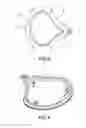
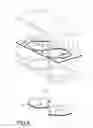
FIG. 2 shows a schematic view of a mold cavity at a front face of a mold block in a first molding of an embodiment of the present invention.
FIG. 3 shows a schematic view of ducts and feed-in holes between the ducts at a back of a mold block in a first molding of an embodiment of the present invention.
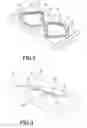
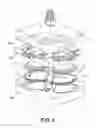
FIG. 4 shows a rear view of a frame of a second plastic layer of an embodiment of the present invention.
FIG. 5 shows a schematic view of a shaped product formed by tailoring feed-in pillars of a second feed-in, after carrying out a second molding, of an embodiment of the present invention.
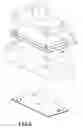
FIG. 6 shows a schematic view of an operation for pressing a double-layer of cloth of an embodiment of the present invention.
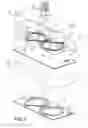
FIG. 7 shows a schematic view of an operation for carrying out a first molding to form a substrate layer on cotton cloth, of an embodiment of the present invention.
FIG. 8 shows a schematic view an operation for punching and trimming a plastic pattern that has been set, to form a shaped product, of an embodiment of the present invention.
FIG. 9 shows a schematic view of an operation for carrying out a second feed-in on a base of a shaped object that has been punched, with the plastic that has been injected in being fused and set with a surface of the base after hot melting, of an embodiment of the present invention.
DETAILED DESCRIPTION OF THE PREFERRED EMBODIMENTS
A specific embodiment of the present invention is to make an ear muff on a piece of double-layer soft cloth, and to mold into a plastic frame on its edge. Related manufacturing steps, including a. a first molding, b. punching a groove and feed-in pillars of a substrate layer, c. a second molding, and d. tailoring feed-in pillars at a side, are shown in FIG. 1. As shown in each drawing, steps for manufacturing a pair of ear muffs comprise:
-
- 1. Pressing a piece of double-layer cotton cloth: Two layers of rectangular cloth, with one layer being a piece of down cloth 1a (as shown in FIG. 6), and the other layer being a piece of nylon cloth 1b, are smoothly overlapped, and paved in between with a layer of glue film 1c, followed by pressing and pasting the double-layer cloth at a periphery of an ear muff 2 shape (as shown in FIG. 5) into a piece of cotton cloth 1, using high temperature of a hot-press machine, according to the shape of the ear muff 2 to be molded;
- 2. Making a die plate: According to the shape of the ear muff 2 (as shown in FIG. 5) to be made, a finishing surface of a mold block 10 is carved into an indent 11 of the ear muff 2, as shown in FIG. 2, with a periphery of the indent 11 being molded into a mold cavity 12 having a substrate layer and a groove of a plastic frame (as shown in FIG. 2);
- 3. Setting up positions for arranging feed-in holes and carrying out the feed-in: The mold cavity 12 at the periphery of each ear muff shape on the mold block 10 is disposed with a plurality of feed-in holes 13 (as shown in FIG. 2), each feed-in position of the feed-in hole 13 is exactly facing to an edge groove in the mold block 10, and ducts 14 are located between each feed-in hole 13 at a back of the mold block 10 to connect the feed-in holes 13 (as shown in FIG. 3), followed by clamping and fixing the cotton cloth 1 that has been pressed in advance in step 1 on a front face of the mold block 10 in step 2, with another plate-type molding tool (as shown in FIG. 7); as shown in FIG. 3 and FIG. 7, through the ducts 14 on the back of the mold block 10 and the feed-in holes 13 in the ducts 14, the plastic is injected in with a pin-point feed-in method using three die plates to stably clamp and press the plastic; the three die plates are an upper mold block 15a, a lower mold block 15b, and the mold block 10, and there is at least one feed-in point, allowing the plastic to be fed in uniformly; a plastic having a similar molecular structure to the cloth is selected as the plastic to be injected in, and the plastic is fused and set with the cloth after hot melting, such that a plastic frame 3 can be molded on the periphery of an ear muff shape to serve as a substrate layer and to be provided with a groove structure 4 (as shown in FIG. 7), with a shape of the substrate layer being larger than or equal to that of a base of a shaped product, for facilitating a punching in a later step;
- 4. Punching off the groove and the feed-in pillars: As the feed-in positions of the feed-in holes 13 on the mold block 10 are all exactly facing the edge groove in the mold block 10, an outer rim of the groove 4 will be formed with excessive feed-in pillars 5 (as shown in FIG. 8) after the die feed-in step, and a punching die-cut 8 will be aligned with the outer rim of the groove 4 to cut off a part of the groove and the feed-in pillars 5 on an edge of the substrate layer of the molded ear muff 2, thereby forming two shaped products of the ear muff 2, and molding into a base of the plastic frame at an edge of the ear muff;
- 5. A second feed-in molding: A mold block 20 (as shown in FIG. 9) and a movable mold block 21 are made to mold into a plastic frame, and a second die feed-in is implemented again on a molded semi-product of the ear muff 2 having a base of the plastic frame 3; the molded plastic frame 3 in the aforementioned step 4 is used as a semi-product of the ear muff 2, is clamped and fixed on the aforementioned mold block 20 that can mold into the plastic frame with other plate-type molding tools 30a, 30b, and is interlined with the movable mold block 21, whereas the feed-in is implemented from the feed-in hole positions at an edge of the frame 3 of the first plastic layer, also using the pin-point feed-in method of three die plates for stably clamping and pressing the plastic, and with at least one feed-in point, allowing the feed-in to be uniformly carried out; a plastic having a similar molecular structure to the cloth is chosen, and the plastic that is injected in is fused with a surface of the base through hot melting, so as to be set into a frame 6 of the second plastic layer (as shown in FIG. 4) in a required shape; whereas in carrying out the second die feed-in, positions of the second feed-in 7 are located at an edge interface between the two plastic layers (as shown in FIG. 4);
- 6. Tailoring the feed-in holes of the second feed-in: As shown in FIG. 5, the feed-in pillars (i.e., the feed-in positions 7) of the second feed-in, at the edge interfaces between the two plastic layers are tailored off, and then the frame 6 of the second plastic layer is molded on the base by assembling with the edge of the ear muff made by soft cloth 1, finally forming the shaped product of the ear muff 2, as shown in FIG. 5.
The aforementioned is only a preferred embodiment of the present invention which can be also applied on the soft fabrics to mold into graphical ornaments of trademarks. The graphical ornaments can fit with the soft fabrics to manifest a three-dimensional visual effect of the trademarks to general public, and to provide a soft sense of touch.
It is of course to be understood that the embodiments described herein is merely illustrative of the principles of the invention and that a wide variety of modifications thereto may be effected by persons skilled in the art without departing from the spirit and scope of the invention as set forth in the following claims.
Claims
What is claimed is:1. A production method for molding plastics on soft cloth, including following steps:
a. a first molding: depending on a shape to be molded, a die feed-in being implemented on soft cloth, and after hot melting, a plastic that is injected in being fused and set with the cloth to form the needed shape, for serving as a substrate layer for the molded plastic on the soft cloth;
b. punching and trimming: the plastic pattern that has been set being punched and trimmed, for forming a base of a shaped product;
c. a second molding: a die feed-in being implemented again on the shaped product after step b, with the plastic being injected in from the base of the shaped product; after hot melting, the plastic that is injected in being fused and set with a surface of the base to form the needed shape;
d. tailoring and trimming: an interface between two layers of the assembled plastic being tailored and trimmed, to form a shaped product of the double-layer plastic on the soft cloth.
2. The production method for molding plastics on soft cloth, according to claim 1, wherein the first molding in step a is to install a mold cavity of a mold block, depending on the shape of the plastic to be molded, and then to inject the plastic on the soft cloth that has been clamped and fixed in the mold block, through feed-in holes at a back of the mold block, thereby molding into the required plastic pattern on the soft cloth.
3. The production method for molding plastics on soft cloth, according to claim 1, wherein an edge of the substrate layer that is formed in the first molding is molded into a groove facilitating an alignment of a punching die-cut.
4. The production method for molding plastics on soft cloth, according to claim 1, wherein a shape of the substrate layer is larger than or equal to that of a base of a shaped product.
5. The production method for molding plastics on soft cloth, according to claim 1, wherein for the second molding in the step c, the feed-in holes are located at an edge interface between the first plastic layer and the second plastic layer for carrying out the feed-in.
Images & Drawings included:


Sources:
- United States Patent and Trademark Office - verify current appl. status at the USPTO↗
Recent applications in this class:
- » 20250065549 2025-02-27
JOINED BODY MANUFACTURING METHOD AND BASE MATERIAL MANUFACTURING METHOD - » 20250033259 2025-01-30
METHOD FOR PRODUCING INTERCONNECTED COMPONENTS OF AN INTERIOR-TRIM PART, AND INTERCONNECTED COMPONENTS OF AN INTERIOR-TRIM PART - » 20230364838 2023-11-16
MOLD INSERT FOR A TOOLING DEVICE FOR PRODUCING AN OPTICAL COMPONENT BY INJECTION MOLDING, AND TOOLING DEVICE HAVING SUCH A MOLD INSERT - » 20230117817 2023-04-20
Thermoplastic encapsulated thermal imaging systems and methods - » 20220266488 2022-08-25
Injection overmolding with heat/cool cycling for making optical lenses using 3D-printed functional wafers - » 20200269480 2020-08-27
Method for producing a shaped plastic part having a decorated surface - » 20160303783 2016-10-20
METHOD AND DEVICE FOR PRODUCING INTEGRALLY MOLDED GLASS-RESIN ARTICLE - » 20160263796 2016-09-15
Method for manufacturing a faucet component - » 20160167270 2016-06-16
CARBON FIBER REINFORCED POLYMER PLATE AND MANUFACTURING METHOD - » 20150111006 2015-04-23
In-mold label forming surfaces for molded articles
Recent applications for this Assignee:
- » 20100282703 2010-11-11
Water jar lid structure which opens a water passage to allow easy consumption of water when subjected to depression - » 20090307820 2009-12-17
Cushion pad and glove thereof - » 20080290248 2008-11-27
Date code marking system - » 20080209689 2008-09-04
METHOD OF ASSEMBLING A PLASTIC LOCKING DEVICE WITH A SURFACE MATERIAL - » 20070178732 2007-08-02
Hermaphroditic connector - » 20070175008 2007-08-02
Shortened buckle system