Hybrid wind generator process
US20080217922A1
2008-09-11
11/714,924
2007-03-08
Abstract:
The present invention includes a process to generate electricity for vehicles by means of harnessing the wind power created with the motion of the vehicle. The motion of the air is transferred to the bottom of the vehicle by an exterior aperture with slanted sides directing the air to a tube. The tube leads the moving air straight to the back of a car right before where the energy sources; batteries and/or fuel tank are located. There is once again another opening for the moving air to shoot out from and spin a mounted turbine blade from the side with a generator which feeds energy to the batteries.
Interested in similar patents?
Get notified when new applications in this technology area are published.
Classification:
B60L8/00 » CPC main
Electric propulsion with power supply from forces of nature, e.g. sun or wind
B60K16/00 » CPC further
Arrangements in connection with power supply of propulsion units in vehicles from forces of nature, e.g. sun or wind
F03D9/11 » CPC further
Adaptations of wind motors for special use; Combinations of wind motors with apparatus driven thereby; Wind motors specially adapted for installation in particular locations; Combinations of wind motors with apparatus storing energy storing electrical energy
F03D9/25 » CPC further
Adaptations of wind motors for special use; Combinations of wind motors with apparatus driven thereby; Wind motors specially adapted for installation in particular locations; Wind motors characterised by the driven apparatus the apparatus being an electrical generator
F03D9/32 » CPC further
Adaptations of wind motors for special use; Combinations of wind motors with apparatus driven thereby; Wind motors specially adapted for installation in particular locations; Wind motors specially adapted for installation in particular locations on moving objects, e.g. vehicles
F03D13/20 » CPC further
Assembly, mounting or commissioning of wind motors; Arrangements specially adapted for transporting wind motor components Arrangements for mounting or supporting wind motors; Masts or towers for wind motors
F05B2240/941 » CPC further
Components; Mounting on supporting structures or systems on a movable wheeled structure which is a land vehicle
Y02E10/72 » CPC further
Energy generation through renewable energy sources; Wind energy Wind turbines with rotation axis in wind direction
Y02E10/72 » CPC further
Energy generation through renewable energy sources; Wind energy Wind turbines with rotation axis in wind direction
Y02E10/728 » CPC further
Energy generation through renewable energy sources; Wind energy Onshore wind turbines
Y02E10/728 » CPC further
Energy generation through renewable energy sources; Wind energy Onshore wind turbines
Y02E70/30 » CPC further
Systems combining energy storage with energy generation of non-fossil origin
Y02E70/30 » CPC further
Systems combining energy storage with energy generation of non-fossil origin
Y02T10/7072 » CPC further
Road transport of goods or passengers; Other road transportation technologies with climate change mitigation effect Electromobility specific charging systems or methods for batteries, ultracapacitors, supercapacitors or double-layer capacitors
Y02T10/7072 » CPC further
Road transport of goods or passengers; Other road transportation technologies with climate change mitigation effect Electromobility specific charging systems or methods for batteries, ultracapacitors, supercapacitors or double-layer capacitors
F03B13/00 IPC
Adaptations of machines or engines for special use; Combinations of machines or engines with driving or driven apparatus ; Power stations or aggregates
H02P9/04 IPC
Arrangements for controlling electric generators for the purpose of obtaining a desired output Control effected upon non-electric prime mover and dependent upon electric output value of the generator
Description
BACKGROUND OF THE INVENTION
The present invention relates to wind power generators for use in generating electricity in a clean and environmentally healthy way and also to hybrid vehicles such as electrical and fuel powered automobiles to harness the wind motion from the movement of the vehicle in order to create electrical power without the use of charging.
Wind generators today all rely on natural wind power, which is a clean dependable source to rely on. However, weaknesses include the visual impact of these wind turbines to higher population density areas, bird mortalities due to the unconcealed turbine blades, and the fluctuation in wind speed which causes variable power output.
Most hybrid vehicles are designed to use both fuel and electricity, in order to save more fuel to increase gas mileage. However, plug in hybrids rely too much on an external charging output while hybrids that use regenerative brakes only generate enough electrical energy to partially assist the gas engine, therefore not being able to improve fuel consumption significantly.
As a result, there is a need for a process that generates enough electricity to power a hybrid car effectively without the use of charging. There is also a need for a process with wind turbines that create a constant power output without having the dangers of open turbine blades.
SUMMARY OF THE INVENTION
Therefore, the aspects of the present invention are to provide a wind generating process that avoid the disadvantages described and to use this wind generating process to charge an electrical battery effectively for a hybrid vehicle. By utilizing the kinetic energy from the motion of the vehicle, the wind turbines will have a constant and significant power output. Also, by being concealed beneath the vehicle, the aesthetics will no longer be a problem as well as the turbine blades to birds. Thus, hybrid vehicles equipped with this wind generator will be able to decrease fuel consumption. The general idea of the process is that when the vehicle is in motion, air will pass along and follow through the bottom of the vehicle to spin a mounted blade rotor from the side which generates the electricity needed for the electrical engine.
DESCRIPTION OF SEVERAL VIEWS OF DRAWINGS
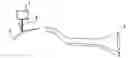
FIG. 1 is an overview of the wind generating process;
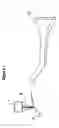
FIG. 2 is the underside of a car depicting the wind rotor, the wide aperture leading the air in, and the tube leading the air out;
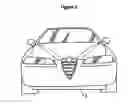
FIG. 3 is the front view of a car depicting the wide aperture of the wind generating process;
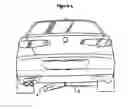
FIG. 4 is the back view of a car depicting the rotor and the tube leading the air out;
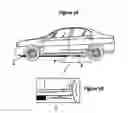
FIG. 5A is the side view of a car depicting the wind rotor, the wide aperture leading the air in, and the tube leading the air out;
FIG. 5B is an exploded view of FIG. 5A compromising the wind rotor and tube leading the air out;
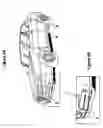
FIG. 6A is the perspective view of a car depicting the wind rotor, the wide aperture leading the air in, and the tube leading the air out;
FIG. 6B is an exploded view of FIG. 6A depicting the wide aperture leading the air in.
DETAILED DESCRIPTION OF THE INVENTION
A detailed description of the hybrid wind generating process will now be described. A wind rotor 3 designed to capture the wind from the side is attached to the underside of a car. Above the wind rotor 3 is a generator 1 that is connected to the rotor by a shaft 5. When the wind rotor 3 is spun, the generator 1 produces electricity in order to help charge the batteries in the hybrid vehicle. The process of obtaining the wind to spin the rotor 3 starts from when the vehicle is moving. The air from the motion of the vehicle is transferred to the underside of the car by a wide aperture 2 near the bumper. Note that the aperture 2 needs to be wide enough so that the most air can be obtained and so that any air on the side will not push the rotor 3 in the opposite direction. Through the aperture 2, the tunnel starts narrowing to avoid contact with the wheels. The air reaches a tube 4, which winds its way to the side of the rotor 3. Another opening leads the air out to spin the rotor 3.
Claims
I claim:1. A process to generate electricity through the motion of a vehicle compromising: a wide aperture in the front of a vehicle; a tube that leads to the side of a vehicle; a wind rotor and shaft attached to the underside of a vehicle; and a generator within a vehicle feeding energy to the batteries.
Images & Drawings included:
Sources:
- United States Patent and Trademark Office - verify current appl. status at the USPTO↗
Recent applications in this class:
- » 20180134162 2018-05-17
Drive for a boat and method for operating a drive for a boat - » 20160280075 2016-09-29
EcoCharge powered planes and drones - » 20150360571 2015-12-17
EcoCharge - » 20120187749 2012-07-26
Generating axle - » 20120004800 2012-01-05
Vehicle and power unit for it - » 20110233990 2011-09-29
Radioisotope powered engineless vehicle - » 20110168459 2011-07-14
Mobile Kinetic Wind Generator System - » 20110100737 2011-05-05
Vehicle and Power Unit For It - » 20100307844 2010-12-09
Electric utility vehicle - » 20100051370 2010-03-04
ELECTRIC DEVICE