Alkali metal battery
US20090053596A1
2009-02-26
11/842,980
2007-08-22
✅ Patent granted
US 7,608,361 B2
2009-10-27
-
-
Dah-Wei D Yuan | Kwang Han
2027-12-07
Abstract:
A storage battery is provided comprising appositive electrode of lead, a negative electrode of mercury, and an electrolyte consisting of an aqueous solution of a salt of an alkali metal. Upon charging the battery, lead is converted to lead dioxide and the alkali metal forms the amalgam with the mercury. During discharge, the lead dioxide is reduced to the plumbous state and the alkali metal is oxidized to the positive ion and goes into solution. The mercury is immobilized in one of several alternative ways.
Interested in similar patents?
Get notified when new applications in this technology area are published.
Classification:
H01M4/88 IPC
Electrodes; Inert electrodes with catalytic activity, e.g. for fuel cells Processes of manufacture
H01M4/38 » CPC main
Electrodes; Electrodes composed of, or comprising, active material; Selection of substances as active materials, active masses, active liquids of elements or alloys
H01M4/24 » CPC further
Electrodes; Electrodes composed of, or comprising, active material Electrodes for alkaline accumulators
H01M4/40 » CPC further
Electrodes; Electrodes composed of, or comprising, active material; Selection of substances as active materials, active masses, active liquids of elements or alloys Alloys based on alkali metals
H01M10/02 » CPC further
Secondary cells; Manufacture thereof Details
H01M10/22 » CPC further
Secondary cells; Manufacture thereof; Semi-lead accumulators, i.e. accumulators in which only one electrode contains lead Selection of materials as electrolytes
H01M10/24 » CPC further
Secondary cells; Manufacture thereof Alkaline accumulators
H01M10/26 » CPC further
Secondary cells; Manufacture thereof; Alkaline accumulators Selection of materials as electrolytes
H01M10/36 » CPC further
Secondary cells; Manufacture thereof Accumulators not provided for in groups -
H01M2300/0002 » CPC further
Electrolytes Aqueous electrolytes
Y02E60/10 » CPC further
Enabling technologies; Technologies with a potential or indirect contribution to GHG emissions mitigation Energy storage using batteries
Y02E60/10 » CPC further
Enabling technologies; Technologies with a potential or indirect contribution to GHG emissions mitigation Energy storage using batteries
H01M4/56 » CPC further
Electrodes; Electrodes composed of, or comprising, active material; Selection of substances as active materials, active masses, active liquids of inorganic oxides or hydroxides of lead
H01M4/58 IPC
Electrodes; Electrodes composed of, or comprising, active material; Selection of substances as active materials, active masses, active liquids of inorganic compounds other than oxides or hydroxides, e.g. sulfides, selenides, tellurides, halogenides or LiCoF; of polyanionic structures, e.g. phosphates, silicates or borates
H01M4/62 IPC
Electrodes; Electrodes composed of, or comprising, active material Selection of inactive substances as ingredients for active masses, e.g. binders, fillers
Description
CROSS-REFERENCES TO RELATED APPLICATIONS
This application is related to U.S. patent application Ser. No. 11/167,535 filed Jun. 27, 2005; which is a continuation-in-part of U.S. patent application Ser. No. 10/756,015 filed Jan. 13, 2004.
FIELD OF THE INVENTION
The present invention relates to a novel type of storage battery that is distinguished by its unique electrochemistry. The positive electrode of the battery is fabricated from a lead-based material; i.e., lead dioxide and lead monoxide or a plumbous salt. The negative electrode consists of mercury. The electrolyte for the battery is an aqueous solution of a salt of an alkali metal, including lithium, sodium, potassium, rubidium and cesium. Upon charging the battery, the lead-based material is converted to lead dioxide, and an amalgam is formed from the mercury and the alkali metal. When the battery is discharged, lead dioxide is reduced to the plumbous form, and alkali metal in the amalgam is oxidized to form a positive ion, which goes into solution.
BACKGROUND
The most common storage battery, found in almost every automotive vehicle, is the lead-acid battery. This battery comprises a lead dioxide positive electrode, a lead metal negative electrode, and sulfuric acid for the electrolyte.
A number of alternatives to the lead-acid battery have been developed over the years for use in other applications. Two of these alternative batteries employ zinc as the negative electrode and caustic potash as the electrolyte. The positive electrode of one battery is nickel oxide, and the other uses silver oxide.
In an effort to combine the best features of the lead-acid battery and the common alkaline batteries, a lead-alkaline battery was developed. Described in the above-identified co-pending patent application, this battery has a appositive electrode of lead, a negative electrode from such proven materials as zinc, cadmium, lead and iron, and an alkaline electrolyte.
It is an object of the present invention to provide a still further improved storage battery. These and other objects, features, and advantages of the invention will be recognized from the following description.
SUMMARY OF THE INVENTION
The invention is a rechargeable battery in which the positive electrode comprises lead-based material, the negative electrode mercury, and the electrolyte an aqueous solution of a salt of an alkali metal. Upon charging the battery, the lead-based material is converted to lead dioxide and an amalgam is formed form the mercury and the alkali metal. When the battery is discharged, lead dioxide is reduced to lead monoxide or a lead (II) salt, and the alkali metal from the amalgam is oxidized to form a positive ion that goes into solution.
The alkali metal may be chosen from the group consisting of lithium, sodium, potassium, rubidium, or cesium. Salts of these metals include sulfates, carbonates, bicarbonates, phosphates, silicates and borates. These salts may be used individually or in combination.
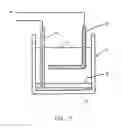
In order to maintain the stability of the liquid mercury, especially in mobile applications, any of several means can be employed. For example a semipermeable membrane may be used to restrict the movement of the mercury. Such a membrane is pervious to the electrolyte but confines the mercury to its compartment. As alternative, the mercury can be coated, plated, adsorbed or otherwise applied to a solid substrate that is electrically conductive. Another alternative is to gimbal the battery to resist acceleration in all or some directions.
BRIEF DESCRIPTION OF THE DRAWING
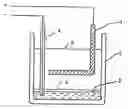
FIG. 1 is a schematic diagram of a prototype of a battery incorporating the key features of the present invention; and
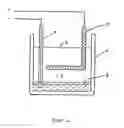
FIG. 2 is a schematic diagram of an alternative embodiment.
WRITTEN DESCRIPTION
The electrochemistry of the alkali metal battery of the present invention can be illustrated by the case where a sodium sulfate solution is used for the electrolyte. Upon discharge, the following reactions are predicted:
-
- At the positive electrode:
PbO2+Na2SO4+2H2O+2e→PbSO4+2NaOH+2OH (1)
-
- and at the negative electrode:
2Na(Hg)→2Na++Hg+2e (2)
During recharging of the cell, the above reactions are reversed.
Any alkali metal can be used in the battery of the present invention. Thus, instead of sodium shown by the above-equations, lithium, potassium, rubidium or cesium might be used. Although the reactions are similar for all of the alkali metals, they are not identical in performance. The single electrode potential for the negative electrode has been found, to depend on the particular alkali metal employed.
The alkali metals differ from each other in another respect; i.e., the solubilities of their salts are different. For example, the solubility of cesium sulfate in water at 0° C. is 167 gm. Per 100 parts of water. This value compares with 7.25 gm. per 100 parts of water for potassium sulfate at the same temperature.
Solubilities of the salts considered for use in the electrolyte also depend on the specific anion. To illustrate, lithium sulfate has a solubility of 35.34 gm. Per 100 parts of water at 0° C. whereas lithium silicate is insoluble. Lithium in particular is quite restricted by the number of available slats that are suitable.
Besides sulfates, the battery of the present invention can use a number of other salts, including carbonates; bicarbonates, phosphates, silicates and borates. These salts can be used singly or as additives to achieve desired results.
When salts other than sulfates are used, the electrochemistry differs from that shown by equation 1. Because these salts tend to be alkaline in solution, a person skilled in electrochemistry will understand that lead dioxide is reduced to lead oxide when the battery is discharged. This result affects the single electrode potential for the positive electrode.
A working battery of the present invention is shown in FIG. 1. The cell casing 1 holds a pool of mercury 2 that covers the bottom of the container. This mercury serves as the negative electrode. The positive electrode is fabricated from a sheet of lead 3. The electrical lead to the pool of mercury runs through a glass tube 4 to insulate it from the electrolyte. Both electrodes, namely, the pool of mercury and the lead sheet are immersed in the aqueous electrolyte 5. A semipermeable membrane 6 holds the mercury 2 in place.
FIG. 2 shows an alternative embodiment of the invention in which the mercury 2 is bonded to a graphite substrate 8 to immobilize it. All of the other components are identical to those of FIG. 1 and are similarly numbered.
EXAMPLES
An experimental cell was made from a glass jar 2½ in. diameter by 2 in. high. The positive electrode was a 2½ in. diameter disk of lead. The negative electrode was a pool of mercury that covered the bottom of the jar. The negative electrical lead was connected to the mercury by means of a copper wire inside a glass tube. The electrolyte was prepared by dissolving 26.0 gm. sodium sulfate in 100 ml. water.
After charging the cell at 3.7v. for three minutes, an open circuit potential of 3.38 v. was obtained. The cell was repeatedly charged and discharged with reproducible results. At the end of the run, the electrodes, were in excellent condition and the electrolyte was water—white.
The experiment described above was repeated using other alkali metals instead of sodium. The results are as follows. A cell with an electrolyte comprising lithium sulfate produced an open circuit potential of 3.33 v. after charging it for three minutes at 3.5 v. With a solution of potassium sulfate as the electrolyte, a cell achieved an open circuit potential of 3.45 v. after charging it for seven minutes at 3.7 v. Finally, an open circuit potential of 3.50 v. was obtained from a cell using cesium sulfate in the electrolyte after charging it at 3.9 v. for 22 minutes.
Claims
What is claimed is:1. A storage batter comprising:
a. A positive electrode of lead-based material,
b. A negative electrode of mercury, and
c. An electrolyte consisting of an aqueous solution of a salt of an alkali metal.
2. A storage battery of claim 1 in which the alkali metal is lithium.
3. A storage battery of claim 1 in which the alkali metal is sodium.
4. A storage battery of claim 1 in which the alkali metal is potassium.
5. A storage battery of claim 1 in which the alkali metal is rubidium.
6. A storage battery of claim 1 in which the alkali metal is cesium.
7. A storage battery of claim 1 in which the alkali metal is sulfate.
8. A storage battery of claim 1 in which the alkali metal is carbonate.
9. A storage battery of claim 1 in which the alkali metal is phosphate.
10. A storage battery of claim 1 in which the alkali metal is silicate.
11. A storage battery of claim 1 in which the alkali metal is borate.
12. A storage battery of claim 1 in which means are provided for immobilizing the mercury.
13. A storage battery of claim 2 in which the immobilizing means includes a solid substrate to which the mercury is bonded.
14. A storage battery of claim 13 in which the solid substrate is graphite.
15. A storage battery of claim 12 in which the immobilizing means is a semipermeable membrane between the mercury and the electrolyte.
Images & Drawings included:
Sources:
- United States Patent and Trademark Office - verify current appl. status at the USPTO↗
Similar patent applications:
- » 20220311050
Alkali metal electrode treatment agent, electrolytic solution for alkali metal secondary battery, alkali metal electrode, alkali metal secondary battery, and module - » 20230042928
ELECTRODE ACTIVE MATERIAL FOR ALKALI METAL BATTERY, AND ELECTRODE AND ALKALI METAL BATTERY INCLUDING SAME - » 20220328879
ELECTROLYTIC SOLUTION FOR ALKALI METAL ION SECONDARY BATTERY, ALKALI METAL ION SECONDARY BATTERY AND MODULE - » 20120235644
Alkali metal ion battery using alkali metal conductive ceramic separator - » 20160240838
Solution for forming layer that contains solid electrolyte for all-solid-state alkali metal secondary batteries, coated active material particles, electrode, all-solid-state alkali metal secondary battery and method for manufacturing same - » 20190386288
Method for making vanadium pentoxide-based active material for a cathode of an alkali metal ion battery, the vanadium pentoxide-based active material, the cathode, and the alkali metal ion battery - » 20230207825
ALKALI-METAL-ION SECONDARY BATTERY INCLUDING ALKALI METAL IONS AT HIGH DENSITY ON BOTH SIDES THEREOF - » 20170352868
Alkali metal battery having an integral 3D graphene-carbon-metal hybrid foam-based electrode - » 20170301922
Alkali-metal batteries with a dendrite-free anode interfacing an organic liquid electrolyte - » 20170352869
Graphene-metal hybrid foam-based electrode for an alkali metal battery
Recent applications in this class:
- » 20250246613 2025-07-31
POSITIVE ELECTRODE ACTIVE MATERIAL, METHOD FOR MANUFACTURING POSITIVE ELECTRODE ACTIVE MATERIAL, AND FLUORIDE ION SECONDARY BATTERY - » 20250239599 2025-07-24
COMPOSITE CATHODE FOR ALL-SOLID-STATE BATTERY, METHODS FOR MAKING, AND AN ALL-SOLID-STATE BATTERY THEREOF - » 20250226401 2025-07-10
IRON POWDER, IRON ELECTRODE, IRON BATTERY, AND METHOD OF MANUFACTURE THEREOF - » 20250201825 2025-06-19
ALUMINUM ANODE AND NONAQUEOUS ELECTROLYTE SECONDARY BATTERY - » 20250132320 2025-04-24
LOW CONCENTRATION ADDITIVES FOR IRON NEGATIVE ELECTRODES - » 20250132319 2025-04-24
ELECTRODE MATERIAL FOR A SECONDARY BATTERY AND METHOD OF MANUFACTURING THE SAME - » 20250096246 2025-03-20
High-Energy-Density Rechargeable Manganese Battery - » 20250054958 2025-02-13
A BATTERY COMPRISING A HIGH-CONCENTRATED ELECTROLYTE AND A NEGATIVE ELECTRODE HAVING A METAL SUBSTRATE AND A PROTECTIVE LAYER - » 20250038185 2025-01-30
Positive Electrode and Secondary Battery Including Same - » 20240396028 2024-11-28
SURFACE CHARACTERIZATION & OPTIMIZATION OF POROUS ZINC ANODES TO IMPROVE CYCLE STABILITY BY MITIGATING DENDRITIC GROWTH