Off-road tire tread having strake and chamfer structure
US20090107599A1
2009-04-30
12/285,845
2008-10-15
✅ Patent granted
US 8,281,829 B2
2012-10-09
-
-
Khanh P Nguyen | Carson Gross
2031-03-31
Abstract:
A pneumatic tire (10) has an inner shoulder (11), an outer shoulder (12) and a tread (13) therebetween. The tread has a central axis (A) and includes a plurality of first grooves (14). Each first groove has a first end (15) disposed near the outer shoulder and a second end (17) disposed near the inner shoulder so that each first groove crosses the central axis. The first end is spaced circumferentially from the second end. A plurality of second grooves (16) is provided with each second groove connecting the second end of a first groove to a first end of another first groove. The first and second grooves define a cascading repetition of tread blocks (18). Chamfers (20) are defined on certain corners of the tread blocks that are adjacent to the first grooves.
Assignee:
- Continental Tire The Americas LLC 3 🇺🇸 Fort Mill, SC, United States
Interested in similar patents?
Get notified when new applications in this technology area are published.
Classification:
B60C11/11 » CPC main
Tyre tread bands; Tread patterns; Anti-skid inserts; Tread patterns in which the raised area of the pattern consists only of isolated elements, e.g. blocks
B60C11/0311 » CPC further
Tyre tread bands; Tread patterns; Anti-skid inserts; Tread patterns Patterns comprising tread lugs arranged parallel or oblique to the axis of rotation
B60C11/1384 » CPC further
Tyre tread bands; Tread patterns; Anti-skid inserts; Tread patterns characterised by the groove cross-section, e.g. for buttressing or preventing stone-trapping; Three dimensional block surfaces departing from the enveloping tread contour with chamfered block corners
B60C2011/0374 » CPC further
Tyre tread bands; Tread patterns; Anti-skid inserts; Tread patterns characterised by particular design features of the pattern; Grooves Slant grooves, i.e. having an angle of about 5 to 35 degrees to the equatorial plane
B60C2200/14 » CPC further
Tyres specially adapted for particular applications for off-road use
B60C11/03 IPC
Tyre tread bands; Tread patterns; Anti-skid inserts Tread patterns
B60C11/00 IPC
Tyre tread bands; Tread patterns; Anti-skid inserts
Description
This application claims the benefit of the earlier filing date of U.S. Provisional Application No. 61/000,432, filed on Oct. 25, 2007, which is incorporated by reference herein in its entirety.
FIELD
The present invention relates to a tire tread and, more particularly, to a tire tread having exceptional traction for off-road surfaces.
BACKGROUND
Tire treads for off road use need to have excellent traction while maintaining lateral vehicle stability during turning maneuvers.
Tires for off-road use require exceptional traction while maintaining lateral stability. A typical, conventional off-road tire tread employs a repeating pattern of long, intermediate length and short tread blocks arranged to provide improved traction. Although this type of tread provides adequate traction, there is a need to provide a tire tread with even better traction while maintaining lateral stability.
SUMMARY
An object of the invention is to fulfill the need referred to above. In accordance with the principles of the disclosed embodiments, this objective is obtained by providing a pneumatic tire having an inner shoulder, an outer shoulder and a tread therebetween. The tread has a central axis and includes a plurality of first grooves. Each first groove has a first end disposed near the outer shoulder and a second end disposed near the inner shoulder so that each first groove crosses the central axis. The first end is spaced circumferentially from the second end. A plurality of second grooves is provided with each second groove connecting the second end of a first groove to a first end of another first groove. The first and second grooves define a cascading repetition of tread blocks. Chamfers are defined on certain corners of the tread blocks that are adjacent to the first grooves.
In accordance with another aspect of the disclosed embodiments, a pneumatic tire has an inner shoulder, an outer shoulder, and a tread therebetween. The tread has a central axis and includes a plurality of first grooves. Each first groove is of trans-toric shape and has a first end disposed near the outer shoulder and a second end disposed near the inner shoulder so that each first groove crosses the central axis. The first end is spaced circumferentially from the second end. A plurality of second grooves is provided with each second groove connecting the second end of a first groove to a first end of another first groove. The first and second grooves define a cascading repetition of tread blocks. Chamfers are defined on certain corners of the tread blocks that are adjacent to the first grooves.
Other objects, features and characteristics of the present invention, as well as the methods of operation and the functions of the related elements of the structure, the combination of parts and economics of manufacture will become more apparent upon consideration of the following detailed description and appended claims with reference to the accompanying drawings, all of which form a part of this specification.
BRIEF DESCRIPTION OF THE DRAWINGS
The invention will be better understood from the following detailed description of the preferred embodiments thereof, taken in conjunction with the accompanying drawings, wherein like reference numerals refer to like parts, in which:
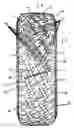
FIG. 1 shows a tire according to an embodiment from a radial direction.
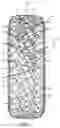
FIG. 2 shows a portion of the tire of FIG. 1.
DETAILED DESCRIPTION OF AN EXAMPLE EMBODIMENT
With reference to FIGS. 1 and 2, pneumatic tire, generally shown at 10, is formed from inner shoulder 11, outer shoulder wall 12, and a tread, generally indicated at 13, extending therebetween. In this context, “inner” and “outer” are used merely for ease of description, it being understood that tire 10 can be mounted on a vehicle so that either inner shoulder 11 or outer shoulder 12 faces the vehicle's interior.
Referring to FIG. 1, the tread 13 is composed of a plurality of “strake” or a first grooves 14. As best seen in FIG. 2, each first groove 14 is generally curved and, more particularly, or of a trans-toric shape. A groove 14 is indicted by dashed line a-b in FIG. 1 and is repeated around the circumference of the tire 10. Thus, each groove 14 crosses central tire axis A, with a first end 15 disposed near outer side wall 12 and a second end 17 disposed near inner side wall 11. The first end 15 being spaced circumferentially (in the direction of arrow B in FIG. 1) from the second end 17. Each first groove 14 is not lateral or circumferential; rather it transits the torus of the tire at an angle that creates repeating rows of tread blocks, as will be explained below.
Each groove 14 is intersected by a lateral, second groove 16 as indicated by line c-d that connects the second end 17 to the first end 15 of the next groove 14. As shown in FIGS. 1 and 2, each second groove 16 passed through two first grooves 14. Thus, a pair of grooves 16 connected with a groove 14 defines a generally backward Z-shape in the tread 13. This repeating groove structure creates a cascading repetition of tread blocks 18.
The tread blocks 18 include chamfers, generally indicated at 20, defined on corners thereof adjacent to the first grooves 14 and on each side of each first groove 14. More particularly, the chamfers 20 are on tread block corners that that expose the following tread block wall to the off-road or contact surface, thereby providing extreme traction from the rotating tire 10 to the vehicle. In other words, the chamfers 20 open the tread block edges and faces to meet the off-road surfaces, thus providing added traction. The generally triangularly shaped chamfers 20 also counteract any drift resulting from the cascading tread block arrangement, thus maintaining a high degree of lateral stability.
The strake and chamfer structure of the tread 13 provides exceptional traction for off-road surfaces and thus can be used for off-road competition, and can be developed for the replacement tire market.
Despite its asymmetrical appearance, a tire 10 with this tread 13 has symmetrical properties so that it is not necessary to provide mirror-image tires on the two sides of the vehicle. The tire tread 13 will maintain lateral stability of a vehicle equipped with identical tires on the right and left side.
The foregoing preferred embodiments have been shown and described for the purposes of illustrating the structural and functional principles of the present invention, as well as illustrating the methods of employing the preferred embodiments and are subject to change without departing from such principles. Therefore, this invention includes all modifications encompassed within the spirit of the following claims.
Claims
What is claimed is:1. A pneumatic tire having an inner shoulder, an outer shoulder and a tread therebetween, the tread having a central axis and comprising:
a plurality of first grooves, each having a first end disposed near the outer shoulder and a second end disposed near the inner shoulder so that each first groove crosses the central axis, the first end being spaced circumferentially from the second end,
a plurality of second grooves, each connecting the second end of a first groove to a first end of another first groove, the first and second grooves defining a cascading repetition of tread blocks, and
chamfers defined on certain corners of the tread blocks that are adjacent to the first grooves.
2. The tire of claim 1, wherein the each second groove passes through two first grooves.
3. The tire of claim 1, wherein the certain corners are corners that expose a following tread block wall to a contact surface.
4. The tire of claim 1, wherein each chamfer is generally triangularly shaped.
5. The tire of claim 1, wherein the tread bocks having the certain corners are on each side of each first groove.
6. The tire of claim 1, wherein each first groove is generally curved.
7. The tire of claim 5, wherein each first groove is of toric shape.
8. A pneumatic tire having an inner shoulder, an outer shoulder and a tread therebetween, the tread having a central axis and comprising:
a plurality of first grooves, each first groove being of trans-toric shape and having a first end disposed near the outer shoulder and a second end disposed near the inner shoulder so that each first groove crosses the central axis, the first end being spaced circumferentially from the second end,
a plurality of second grooves, each connecting the second end of a first groove to a first end of another first groove, the first and second grooves defining a cascading repetition of tread blocks, and
chamfers defined on certain corners of the tread blocks that are adjacent to the first grooves.
9. The tire of claim 8, wherein the each second groove passes through two first grooves.
10. The tire of claim 8, wherein the certain corners are corners that expose a following tread block wall to a contact surface.
11. The tire of claim 8, wherein each chamfer is generally triangularly shaped.
12. The tire of claim 8, wherein the tread bocks having the certain corners are on each side of each first groove.
Images & Drawings included:

Sources:
- United States Patent and Trademark Office - verify current appl. status at the USPTO↗
Similar patent applications:
Recent applications in this class:
- » 20250178379 2025-06-05
TWO-WHEELED VEHICLE TIRE FOR RUNNING ON ROUGH TERRAIN - » 20250026155 2025-01-23
MOTORCYCLE TYRE - » 20240359507 2024-10-31
Mixed-Use Heavy-Duty Vehicle Tire with Low Road Noise - » 20240326517 2024-10-03
ADHESION DEVICES FOR TRANSPORT ASSEMBLIES TO ENGAGE NON-METALLIC SURFACES - » 20240100886 2024-03-28
TIRE FOR MOTORCYCLE FOR RUNNING ON ROUGH TERRAIN - » 20240034097 2024-02-01
MOTORCYCLE TIRE FOR RUNNING ON ROUGH TERRAIN - » 20240001717 2024-01-04
TWO-WHEELED VEHICLE TIRE FOR RUNNING ON ROUGH TERRAIN - » 20230278370 2023-09-07
Tire for motorcycle for running on rough terrain - » 20230104245 2023-04-06
Tire for rough terrain - » 20220371378 2022-11-24
Tire for running on rough terrain
Recent applications for this Assignee:
- » 20120279623 2012-11-08
Off-road tire tread having strake and chamfer structure - » 20090272476 2009-11-05
Sealant material composition, self-sealing pneumatic tire, and preparation thereof