Process For The Manufacture of Lightweight Construction Materials Containing Clay
US20090134545A1
2009-05-28
12/094,750
2006-11-30
Abstract:
Process for the manufacture of lightweight construction materials starting from clay by extrusion molding wherein a source of hydrogen peroxide is used as gas generating agent. The use of hydrogen peroxide in such a process allows to reduce the power of extrusion at constant moisture content, and to reduce the amount of added water at constant extrusion pressure.
Inventors:
- Stefano Signorini 1 🇮🇹 Rosignano Solvay, Italy
- Francesco Nenciati 1 🇮🇹 Vada, Italy
- Nilo Fagiolini 1 🇮🇹 Rosignano Solvay, Italy
- Giorgio Massa 1 🇮🇹 Rosignano Solvay, Italy
Assignee:
- SOLVAY (SOCIETE ANONYME) 182 🇧🇪 Brussels, Belgium
Interested in similar patents?
Get notified when new applications in this technology area are published.
Classification:
C04B14/10 » CPC main
Use of inorganic materials as fillers, e.g. pigments, for mortars, concrete or artificial stone; Treatment of inorganic materials specially adapted to enhance their filling properties in mortars, concrete or artificial stone; Granular materials, e.g. microballoons; Silica-rich materials; Silicates Clay
C04B38/02 » CPC further
Porous mortars, concrete, artificial stone or ceramic ware; Preparation thereof by adding chemical blowing agents
Description
This patent application claims the benefit of the European patent application EP 05111658.0, the text of which is herein incorporated by reference.
The present invention is related to a process for the manufacture of enlightened construction materials starting from clay, especially to a process for the manufacture of bricks.
The possibility of producing porous (or enlightened or light weight) construction materials by addition of a foaming agent (or gas generating agent) is well known. The gas generated forms bubbles which remain in the mass of the construction material during curing and provide for the porosity of the material.
The market for enlightened materials is currently growing. This is partly due to the fact that the density of the material is roughly proportional to heat conductivity. Since the pressure in energy savings by reducing thermal dispersion is increasing, construction materials need to become more and more porous. Furthermore, low material density is important in seismic constructions.
However, the current technologies for material expansion have constraints. Indeed, when combustible materials such as polystyrene and sawdust are incorporated into clay, as described in the publication “Development of extruded, high-thermal insulating bricks”, ZI International, 12, p. 36-41, 2001, it generates pyrolysis gas effluents and unwanted clay coloration. When aluminum powder and caustic soda are used in concrete, as described in the Australian patent application 2149097, special safety equipment is required because of hydrogen generation.
The present invention aims to overcome these drawbacks by providing a new process for the manufacture of enlightened construction materials starting from clay which allows to save energy and which allows material lightening without environmental impact or quality impact. The aim of the invention is especially to provide material expansion while requiring, during extrusion, less energy or power for clay extrusion at constant water content, and while requiring less added water at constant extrusion pressure.
To this end, the present invention is related to a process for the manufacture of enlightened construction materials starting from clay by extrusion molding wherein a source of hydrogen peroxide is used as gas generating agent.
The hydrogen peroxide source is preferably used without adding a catalyst for the decomposition of hydrogen peroxide to oxygen and water. Examples of such catalysts are transition metal compounds such as transition metal oxides (e.g. manganese dioxide, copper oxide) or enzymes (e.g. catalase).
One of the essential characteristics of the invention resides in the use of a hydrogen peroxide source as gas generating agent, preferably without adding a catalyst. This has unexpectedly resulted in a process which allows material expansion (typically from a density of about 1.9 kg/dm3 to a density of about 1.5 kg/dm3 and ultimately down to a density of about 0.8 kg/dm3) without environmental impact since the gas formed is oxygen, and with a possibility to reduce, during extrusion, the required extrusion power (from about 10 to 20%) at constant water content and the amount of water added at constant extrusion pressure.
The expression “enlightened construction material” denotes a material with a high porous volume, which is generally at least 15%, especially at least 20% and in the most advantageous cases at least 55%. The porous volume is measured according to the following method EN ISO 8990 which consists in:
-
- Measuring the weight of a dry material, such as a brick, (obtained by heating during 24 h at 100° C. and cooling afterwards)
- Filling all the porous volume with water (by immersing during 24 h in water)
- Measuring the weight of the wet material, such as a brick.
The construction materials made by the process of the invention can be chosen from bricks, wall tile, ceiling tile, core materials for insulated panels, curtain wall panels, panelized bricks, partition walls and exterior facings. The preferred materials are bricks.
The clay used as one of the starting materials in the process of the invention can be chosen from minerals with alumina (Al2O3) and silica (SiO2) in their composition along with various other trace components. Examples of suitable clays are kaolin, ball clay, shale and montmorillonite.
The construction materials made by the process of the invention can also contain other additives such as sand, barium carbonate and surfactants.
The source of hydrogen peroxide used in the process of the invention can be chosen from hydrogen peroxide itself, sodium percarbonate, sodium perborate, calcium peroxide, magnesium peroxide, zinc peroxide, mixed calcium/magnesium peroxide and their mixtures. Hydrogen peroxide is preferred. In most cases, the hydrogen peroxide is used in the form of an aqueous solution. Such solution generally contains from 20 to 70% wt/wt of hydrogen peroxide, preferably from 40 to 50% wt/wt. The hydrogen peroxide source, when introduced into the process, results in the formation of hydrogen peroxide which itself decomposes and generates gas that forms bubbles and creates porosity into the material.
The process of the invention involves extrusion molding. This is done in an extruder which is fed with a pasty material containing the clay. The pasty material can be prepared in a mixer by mixing clay with water and optionally other additives. Examples of additives are sand, barium carbonate and surfactants. Examples of suitable mixers are of the kneader type or mixing screw type. The pasty material is then sent to the extruder that typically includes a vacuum-de-airing chamber. The pasty material is forced through a die to form the desired shapes. The die may contain internal elements to produce a cored (partially hollow) shape. Die lubricants may be employed. Examples of lubricants are heavy hydrocarbons and exhausted lubricating oils. The shapes are then usually cut into slugs of a convenient length and then further cut into bricks for example using reel or push through cutters. The product is then loaded, for instance by using robots, on kiln cars for drying and firing.
During the process of the invention, water is generally added twice
- 1. before mixing, in an amount of from 1 to 25% by weight based on the weight of the dry clay, especially from 15 to 18% by weight
- 2. during mixing in order to control finely the extrusion pressure, in an amount of from 2 to 10% by weight, preferably from 3 to 5% by weight.
During the process of the invention, the hydrogen peroxide source is usually added in an amount of from 0.1 to 1% by weight based on the weight of the dry clay, in particular from 0.2 to 0.5% by weight, and most preferably from 0.25 to 0.4% by weight.
It is recommended to add the hydrogen peroxide at a point which is sufficiently remote from the die of the extruder so that the hydrogen peroxide added is completely decomposed before it passes through the die. It is indeed advantageous that the entire expansion takes place inside the extruder before the material leaves the extruder through the die. It is to be avoided that gas bubbles are formed after the material has left the extruder through the die. The hydrogen peroxide is preferably added in the mixer. The hydrogen peroxide is most often added diluted in the added water of point 2 above.
Surfactants can also be used in the process of the invention. Examples of suitable surfactants are synthetic or protein based. They are generally used in an amount of from 0.001 to 1% by weight based on the weight of the dry clay.
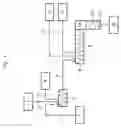
A particularly suitable process is schematized in FIG. 1. Clay located in the tank (1) is introduced in a mixer (2) through (3). Water located in the tank (4) is introduced into the mixer (2) through (5). A hydrogen peroxide source located in the tank (6) is introduced into the mixer (2) through (7). Clay, water and the hydrogen peroxide source are mixed in mixer (2) and the obtained mixture which is in the form of a pasty material is transferred from the mixer (2) into an extruder (8) through (9). Additional water located in the tank (10) or other additives located in the tank (11) can be introduced into the extruder through respectively (12) and (13). The extruder is equipped with a vacuum-de-airing chamber (14) and is composed of a mixing zone (15), an extrusion zone (16) and a die (17). The shaped material leaving the die (17) is transferred into a dryer (18).
The process of the invention allows to reduce the power of extrusion at constant moisture content when a hydrogen peroxide source is used as a gas generating agent in a process for the manufacture of enlightened construction materials starting from clay. Likewise, it allows to reduce the amount of added water at constant extrusion pressure.
The present invention is therefore also related to the use of a hydrogen peroxide source as a gas generating agent in a process for the manufacture of enlightened construction materials starting form clay for the purpose of reducing the power of extrusion at constant moisture content. It is furthermore related to the use of a hydrogen peroxide source as a gas generating agent in a process for the manufacture of enlightened construction materials starting from clay for the purpose of reducing the amount of added water at constant extrusion pressure.
The invention is hereafter illustrated by way of example only.
EXAMPLES
Bricks have been manufactured starting from clay Cecina river valley (Italy) using the equipment shown in FIG. 1 and using an aqueous H2O2 solution containing 50% wt of H2O2 as gas generating agent and the product LEVOCELL® CP 83S as surfactant. The conditions used and the results obtained are summarized in tables 1 and 2. Table 1 shows the obtained extrusion power reduction at constant clay moisture, and table 2 shows the moisture reduction at constant extrusion power. The power requirement in extrusion was calculated using a current recorder and by multiplying current by voltage.
| TABLE 1 | |
| H2O2 addition (ppm H2O2 100% | |
| on dry clay basis) |
| Operating conditions | 0 | 300 | 500 | 800 |
| Test procedure | (1) | The operating conditions were |
| measured without H2O2 and | ||
| surfactants. | ||
| (2) | A given amount of H2O2 | |
| (and surfactants) was added and | ||
| the extrusion power drops were | ||
| measured. | ||
| (3) | The same were repeated with | |
| different H2O2 amounts. |
| Clay flow rate | t/h | 27 | 27 | 27 | 27 |
| Clay moisture | % | 19 | 19 | 19 | 19 |
| Surfactant | ppm | 0 | 170 | 170 | 170 |
| added | |||||
| Measure | Amp | 195 | 180 | 165 | 150 |
| electric current | |||||
| Extrusion | kW | 128 | 118 | 109 | 99 |
| power | |||||
| Extrusion | % | 0 | 80 | 180 | 280 |
| power | kW | 0 | 81 | 157 | 265 |
| reduction (%) | kWh/t | 0 | 0.37 | 0.73 | 1.10 |
| TABLE 2 | |
| H2O2 addition (ppm H2O2 100% | |
| on dry clay basis) |
| Operating conditions | 0 | 300 | 500 | 800 |
| Test procedure | (1) | The operating conditions were |
| measured without H2O2 | ||
| and surfactants. |
| (2) | A given amount of H2O2 | ||
| (and surfactants) was added and | |||
| the extrusion power drops were | |||
| measured. | |||
| (3) | The second water addition was | ||
| reduced until the initial | |||
| power was achieved. | |||
| (4) | The same were repeated with | ||
| different H2O2 amounts |
| Clay flow rate | t/h | 27 | 27 | 27 | 27 |
| Extrusion | kW | 128 | 128 | 128 | 128 |
| power | |||||
| Surfactant | ppm | 0 | 170 | 170 | 170 |
| added | |||||
| Reduction of | Measured | 0 | 80 | 180 | 280 |
| second water | l/h | ||||
| injection | Calculated | 0 | 81 | 157 | 265 |
| from clay | |||||
| moisture | |||||
| content | |||||
| l/h | |||||
Claims
1. A process for the manufacture of lightweight construction materials starting from clay by extrusion molding wherein a source of hydrogen peroxide is used as gas generating agent.
2. The process according to claim 1, wherein the source of hydrogen peroxide is used without adding a catalyst for the decomposition of hydrogen peroxide to oxygen and water.
3. The process according to claim 1 wherein the lightweight construction materials are chosen from bricks, wall tile, ceiling tile, core materials for insulated panels, curtain wall panels, panelized bricks, partition walls and exterior facings.
4. The process according to claim 1 wherein the source of hydrogen peroxide is chosen from hydrogen peroxide itself, sodium percarbonate, sodium perborate, calcium peroxide, magnesium peroxide, zinc peroxide, mixed calcium/magnesium peroxide and their mixtures.
5. The process according to claim 1 wherein the clay is first mixed with water in a mixer into a pasty material which is then introduced into an extruder.
6. The process according to claim 5 wherein the amount of water added is from 1 to 30% by weight based on the weight of the clay.
7. The process according to claim 1 wherein the amount of hydrogen peroxide added is from 0.1 to 1% by weight based on the weight of the clay.
8. The process according to claim 1 wherein the hydrogen peroxide is added at a point which is sufficiently remote from the die of the extruder so that the hydrogen peroxide added is completely decomposed before it passes through the die.
9. The process according to claim 1 wherein a surfactant is used.
10. A method of use of a hydrogen peroxide source as gas generating agent in a process for the manufacture of lightweight construction materials starting from clay for the purpose of reducing the power of extrusion at constant moisture content.
11. A method of use of a hydrogen peroxide source as gas generating agent in a process for the manufacture of lightweight construction materials starting from clay for the purpose of reducing the amount of added water at constant extrusion pressure.
Images & Drawings included:

Sources:
- United States Patent and Trademark Office - verify current appl. status at the USPTO↗
Recent applications in this class:
- » 20240239709 2024-07-18
MIT NANOKOMPOSIT MODIFIZIERTER ASPHALTBINDER UND DESSEN HERSTELLUNG - » 20240228374 2024-07-11
METHOD OF PRODUCING CLAY ACTIVATED/CALCINED WITH CALCIUM ALUMINOFERRITE OR CALCIUM FERRITE AND CLAY COMPOSITION OBTAINED BY THE METHOD - » 20230219843 2023-07-13
METHOD OF PROVIDING A REACTIVE CEMENT CONSTITUENT OR CONCRETE ADDITIVE - » 20220194850 2022-06-23
UTILIZING UNPROCESSED CLAY IN THE THREE DIMENSIONAL ADDITIVE PRINTING OF MORTAR ONTO A BUILDING STRUCTURE - » 20200283336 2020-09-10
Hydrating swellable clays - » 20190225542 2019-07-25
Hydrating swellable clays - » 20190225541 2019-07-25
Surface modification of clay - » 20190144334 2019-05-16
Enhancing calcined clay use with inorganic binders - » 20160052823 2016-02-25
Process using multiple waste streams to manufacture synthetic lightweight aggregate - » 20150232384 2015-08-20
Water-based grouting composition with an insulating material
Recent applications for this Assignee:
- » 20140142329 2014-05-22
Catalyst support and process for the preparation thereof - » 20130327995 2013-12-12
Spirobifluorene compound for light emitting devices - » 20130324741 2013-12-05
Spirobifluorene compounds - » 20130274402 2013-10-17
Method for preparing a latex from a chlorinated vinylic polymer - » 20130032755 2013-02-07
Continuous process for preparing chlorohydrins - » 20130011312 2013-01-10
Process for the joint production of sodium carbonate and sodium bicarbonate - » 20120199786 2012-08-09
Method for making an epoxide - » 20120199493 2012-08-09
AQUEOUS COMPOSITION CONTAINING A SALT, MANUFACTURING PROCESS AND USE - » 20120123138 2012-05-17
Catalyst support and process for the preparation thereof - » 20120010420 2012-01-12
Process for producing an organic compound