Starting circuit for single-phase AC motor
US20090174356A1
2009-07-09
12/141,968
2008-06-19
✅ Patent granted
US 7,948,202 B2
2011-05-24
-
-
Karen Masih
2029-03-14
Abstract:
A starting circuit for a single-phase AC motor, comprising a main winding, a detecting circuit, a rectifying and filtering circuit, a triggering circuit, a switching circuit and a starting winding. The detecting circuit is connected in series to the main winding for transforming current parameters thereof into detecting signals. The switching circuit is connected in series to the starting winding. The rectifying and filtering circuit processes the detecting signals and the processed detecting signals to the triggering circuit. The triggering circuit enables or disables the switching circuit according to the detecting signals, so as to energize or deenergize the starting winding. The starting circuit features high reliability, long lifetime, simple circuit structure, low cost, and small size.
Assignee:
- ZHONGSHAN BROAD-OCEAN MOTOR CO., LTD. 165 🇨🇳 Zhongshan, China
Interested in similar patents?
Get notified when new applications in this technology area are published.
Classification:
H02P1/42 » CPC main
Arrangements for starting electric motors or dynamo-electric converters for starting dynamo-electric motors or dynamo-electric converters for starting an individual single-phase induction motor
H02P1/44 » CPC further
Arrangements for starting electric motors or dynamo-electric converters for starting dynamo-electric motors or dynamo-electric converters for starting an individual single-phase induction motor by phase-splitting with a capacitor
H02P1/46 » CPC further
Arrangements for starting electric motors or dynamo-electric converters for starting dynamo-electric motors or dynamo-electric converters for starting an individual synchronous motor
H02P1/04 IPC
Arrangements for starting electric motors or dynamo-electric converters; Details Means for controlling progress of starting sequence in dependence upon time or upon current, speed, or other motor parameter
H02P1/16 IPC
Arrangements for starting electric motors or dynamo-electric converters for starting dynamo-electric motors or dynamo-electric converters
Description
CROSS-REFERENCE TO RELATED APPLICATIONS
This application claims priority benefits to Chinese Patent Application No. 200820042568.X filed on Jan. 3, 2008, the contents of which are incorporated herein by reference.
BACKGROUND OF THE INVENTION
1. Field of the Invention
The invention relates to a starting circuit for a motor, and particularly to a starting circuit for a single-phase AC motor.
2. Description of the Related Art
Single-phase AC motors are widely used in home appliances and industries such as refrigerators, freezers, washing machines, dryers, fans, pumps, and so on. In a three-phase AC motor, after being powered on, a stator winding generates a rotating magnetic field and induces a rotor to rotate. Conventional single-phase AC motors can only generate magnetic field with alternating polarities and strength instead of a rotating magnetic field. Namely, a single-phase AC motor cannot start itself.
To solve the above problem, a single-phase AC motor with a squirrel-cage rotor and a wound stator having a pair of windings (a main winding as a working winding and an auxiliary winding as a starting winding) is used, and the starting winding is connected to a centrifugal switch.
During startup, AC voltage is supplied to the main winding and the starting winding. After the speed reaches 70-85% of a synchronous speed, the centrifugal switch switches off the starting winding and the main winding continues operating. The phase difference between the current of the starting winding and that of the main winding is approximately 90 degrees, and the stator generates rotating magnetic field in air gaps. However, the mechanical contacts in the centrifugal switch often generate electric sparks, which reduce the lifetime and reliability of the centrifugal switch. Moreover, the centrifugal switch is usually disposed in the motor, and thus increases cost and size of the motor. Accordingly much opportunity for improvement remains.
SUMMARY OF THE INVENTION
In view of the above-described problems, it is one objective of the invention to provide a starting circuit for a single-phase AC motor that features high reliability, long lifetime, simple circuit structure, low cost, and small size.
To achieve the above objectives, in accordance with one embodiment of the invention, provided is a starting circuit for a single-phase AC motor, comprising a main winding, a detecting circuit, a rectifying and filtering circuit, a triggering circuit, a switching circuit, and a starting winding.
In a class of this embodiment, the detecting circuit is connected in series to the main winding for transforming the current parameters thereof into detecting signals.
In another class of this embodiment, the switching circuit is serially connected to the starting winding.
In another class of this embodiment, the rectifying and filtering circuit processes the detecting signals and forwards the processed detected signals to the triggering circuit.
In another class of this embodiment, the triggering circuit enables or disables the switching circuit according to the detecting signals, so as to energize or deenergize the starting winding.
In another class of this embodiment, the triggering circuit comprises a controller comprising a bidirectional photoelectric silicon-controlled rectifier (SCR).
In another class of this embodiment, the detecting circuit comprises a noninducting resistor.
In another class of this embodiment, the resistance range of the noninducting resistor is between 20 mΩ (milliohm) and 100 mΩ.
In another class of this embodiment, the switching circuit comprises a bidirectional triode thyristor.
In another class of this embodiment, the switching circuit further comprises a varistor connected in parallel with the bidirectional triode thyristor.
In another class of this embodiment, a polarity transition device is connected to a power input end of the starting winding.
In another class of this embodiment, the rectifying and filtering circuit (3) comprises a diode D1 and a pair of capacitors C1 and C2.
Advantages of the invention comprise:
-
- The circuit of the invention is simple;
- Since conventional contacts are not used, there is no limitation to the switching frequency;
- Reliable, long lifetime, small size, and low cost solution is provided;
- The varistor and the bidirectional triode thyristor absorb any high voltage applied to the bidirectional triode thyristor BG and thus protect the bidirectional triode thyristor BG;
- The polarity transition device makes it convenient to change polarities of the control voltage applied to the starting winding;
- Forward or reverse rotation of the motor is not controlled by the starting winding, but by polarities of the control voltage; and
- Different resistance values of the detecting circuit can be obtained according to a rated current of the motor and a switching time of the starting winding; this simplifies the circuit and reduces cost.
BRIEF DESCRIPTION OF THE DRAWINGS
Detailed description will be given below with reference to accompanying drawings, wherein
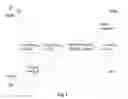
FIG. 1 is a block diagram of a starting circuit for a single-phase AC motor according to one embodiment of the invention; and
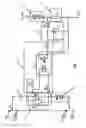
FIG. 2 is a schematic diagram of a starting circuit for a single-phase AC motor according to one embodiment of the invention.
DETAILED DESCRIPTION OF THE EMBODIMENTS
As shown in FIGS. 1 and 2, the starting circuit for a single-phase AC motor comprises a main winding 1, a detecting circuit 2, a rectifying and filtering circuit 3, a triggering circuit 4, a switching circuit 5 and a starting circuit 6.
The detecting circuit 2 is connected in series to the main winding 1 for transforming current parameters thereof into detecting signals. In this embodiment, the detecting circuit 2 is a noninducting resistor R1, and a resistance range of the noninducting resistor R1 is between 20 mΩ and 100 mΩ.
The switching circuit 5 is connected in series to the starting winding 6, and comprises a bidirectional triode thyristor BG and a varistor R5 connected in parallel to the bidirectional triode thyristor BG.
The rectifying and filtering circuit 3 processes the detecting signals and the processed detecting signals to the triggering circuit 4, and comprises a diode D1 and a pair of capacitors C1 and C2.
The triggering circuit 4 enables or disables the switching circuit 5 according to the detecting signals, so as to energize or deenergize the starting winding 6, and comprises a bidirectional photoelectric silicon controlled rectifier (SCR) controller IC1 and a plurality of resistors R2, R3 and R4.
A polarity transition device is connected to a power input end of the starting winding 6. In this embodiment, the polarity transition device is a transfer switch K, and upward and downward movement of the transfer switch K implements polarity transition of the power input end of the starting winding 6.
The operating principle of the starting circuit according to one embodiment of the invention will be described below.
One end of the main winding 1 is connected to a W-Bk end, and the other end thereof is connected to a BU end. After the main winding 1 is started, current flowing through the main winding 1 decreases and voltage drop generated by the noninducting resistor R1 reduces.
At the beginning of the starting process, the voltage drop generated by the noninducting resistor R1 drives the triggering circuit 4 via the rectifying and filtering circuit 3. The triggering circuit 4 switches on a bidirectional triode thyristor BG of the switching circuit 5, the starting winding 6 operates and the rotor rotates.
As the speed of the rotor reaches 70-85% of the synchronous speed, current flowing through the main winding 1 decreases and thus the voltage drop generated by the noninducting resistor R1 reduces so that it cannot drive the triggering circuit 4 via the rectifying and filtering circuit 3. The triggering circuit 4 then switches off the bidirectional triode thyristor BG of the switching circuit 5 and the starting winding 6 stops operating.
If the rotating direction of the motor needs to be changed, it is only required to reverse a polarity of voltage applied by the polarity transition device to the starting winding 6 and there is no need to change a polarity of voltage applied by the main winding 1, which makes the operation simple and convenient.
While particular embodiments of the invention have been shown and described, it will be obvious to those skilled in the art that changes and modifications may be made without departing from the invention in its broader aspects, and therefore, the aim in the appended claims is to cover all such changes and modifications as fall within the true spirit and scope of the invention.
Claims
What claimed is:1. A starting circuit for a single-phase AC motor, comprising
a main winding;
a detecting circuit;
a rectifying and filtering circuit;
a triggering circuit;
a switching circuit; and
a starting winding;
wherein
said detecting circuit is connected in series to said main winding for transforming current parameters into detected signals;
said switching circuit is connected in series to said starting winding;
said rectifying and filtering circuit processes said detected signals and forwards processed detected signals to said triggering circuit; and
said triggering circuit enables or disables said switching circuit according to said detected signals whereby energizing or de-energizing said starting winding.
2. The circuit of claim 1, wherein said triggering circuit comprises essentially a controller comprising bidirectional photoelectric silicon controlled rectifier (SCR).
3. The circuit of claim 1, wherein said detecting circuit comprises a noninducting resistor.
4. The circuit of claim 3, wherein the resistance range of said noninducting resistor is between 20 mΩ and 100 mΩ.
5. The circuit of claim 3, wherein said triggering circuit comprises essentially a controller comprising a bidirectional photoelectric silicon controlled rectifier (SCR).
6. The circuit of claim 3, wherein said switching circuit comprises a bidirectional triode thyristor.
7. The circuit of claim 6, wherein said switching circuit further comprises a varistor connected in parallel to said bidirectional triode thyristor.
8. The circuit of claim 1, wherein said switching circuit comprises a bidirectional triode thyristor.
9. The circuit of claim 8, wherein said switching circuit further comprises a varistor connected in parallel to said bidirectional triode thyristor.
10. The circuit of claim 1, wherein a polarity transition device is connected to a power input end of said starting winding.
11. The circuit of claim 1, wherein said rectifying and filtering circuit comprises a diode and a pair of capacitors.
Images & Drawings included:

Sources:
- United States Patent and Trademark Office - verify current appl. status at the USPTO↗
Similar patent applications:
Recent applications in this class:
- » 20250112564 2025-04-03
Control Circuits for Disposer Motors - » 20220345055 2022-10-27
Control circuits for disposer motors - » 20190222149 2019-07-18
Controller and method for controlling a drive motor of a product conveyor belt at a checkout - » 20180131296 2018-05-10
Device, system and method for starting a single-phase induction motor - » 20170288577 2017-10-05
Device and method for switching in and out a start winding of a single phase ac motor - » 20170141705 2017-05-18
Electronically controlled switch for an electric motor - » 20150145466 2015-05-28
Double wound rotor type motor with constant alternating current or direct current power supply input and control method thereof - » 20150091493 2015-04-02
USING PULSE WIDTH MODULATION IN A SINGLE PHASE DRIVE SYSTEM - » 20140197775 2014-07-17
Single phase motor energy economizer for regulating the use of electricity - » 20130300338 2013-11-14
Single phase motor energy economizer for regulating the use of electricity
Recent applications for this Assignee:
- » 20240178777 2024-05-30
Method for pre-positioning rotor of outdoor fan in high-speed counter-rotation state before operation - » 20240063742 2024-02-22
MOTOR CONTROLLER AND BLDC MOTOR COMPRISING THE SAME - » 20240056009 2024-02-15
METHOD FOR CONTROLLING OPERATION OF PERMANENT-MAGNET SYNCHRONOUS MOTOR THROUGH SENSORLESS VECTOR CONTROL - » 20230412111 2023-12-21
Method for protecting motor from overheating - » 20230327585 2023-10-12
Method for coconstant torque control of EC motor in ventilation system - » 20230043468 2023-02-09
Method for controlling fuel cell - » 20230030515 2023-02-02
DC brushless motor controller comprising lightning protection and surge protection circuit - » 20220416629 2022-12-29
Motor controller and outer rotor motor comprising the same - » 20220307507 2022-09-29
Direct current induced draft fan - » 20220213901 2022-07-07
Air blower and exhaust fan comprising the same