Numbers game and/or code
US20090189347A1
2009-07-30
12/221,575
2008-08-06
Abstract:
The object of the game of this invention is to place a series of numbers in a correct sequence. This is done on a grid by combining the number of a starting position with one of the series and creating a route leg to an intermediate position. A second number of the series is combined with the first selected number to create a second route leg to a second intermediate position. This is repeated until the series of numbers is exhausted. If the route legs end at a predetermined end position, a correct sequence of the number series has been achieved.
Interested in similar patents?
Get notified when new applications in this technology area are published.
Classification:
A63F3/0415 » CPC main
Board games; Raffle games; Geographical or like games ; Educational games Number games
A63F2003/0418 » CPC further
Board games; Raffle games; Geographical or like games ; Educational games; Number games with a grid, e.g. 'Sudoku'-type games
A63F9/06 IPC
Games not otherwise provided for Patience; Other games for self-amusement
Description
This application is based on Provisional Application Ser. No. 61/062,150, filed Jan. 25, 2008, from which priority is claimed.
This invention relates to a numbers game and/or code played or decoded on a grid.
BACKGROUND OF THE INVENTION
There are a wide variety of games, puzzles and the like played by countless numbers of people. Number games, such as Sudoku, have become wildly popular in the recent past. There is accordingly a niche for number games which are more complex for more sophisticated and discerning players.
A game known as Addition Adventure #12 involves a grid and a series of addition problems that, when correctly computed, lead the player from a starting position to a desired end position. Other math game puzzles are found in U.S. Pat. Nos. 984,302; 2,124,136; 4,057,253; 4,511,143; 5,314,190; 5,411,260; 6,199,864; 6,585,585 and Printed Patent Applications 2007/0035,089; 2007/0129,127; 2007/0173,314 and 2007/0187,888.
SUMMARY OF THE INVENTION
This invention is a numbers game that requires some diligence, foresight and perseverance by the player. The overall concept is to arrange a series or set of numbers provided by the game into a correct sequence so movement on an x-y grid provided by the game creates a route from a predetermined starting position to a fixed or approved end position. In some embodiments, the game is played on paper and, in some embodiments, the game is played on an electronic device. In some embodiments, the game acts as an encoding/decoding device.
Preferably, there is only one sequence of the numbers provided that will get the player from the starting position on the grid to the end position. Preferably, in all other sequences, the player will not finish at the designated end position. The player has to use all the numbers from the set. The first number in the set that is selected by the user is combined with the number at the starting position in a predetermined manner to produce a value which directs the player from a starting position to a first intermediate position on the grid. The second number in the set that is selected by the user is combined with the first selected number to produce a value which directs the player from the first intermediate position to a second intermediate position. This process is repeated until the set of numbers is exhausted. If the player ends up at the designated end position, the player will have selected the numbers in a correct sequence and will have won the game.
The difficulty of the game can be increased by providing a longer set of numbers. For example, only three numbers in the set is a relatively easy game. Seven or eight numbers in the set is extremely difficult.
The same basic technique can be used in a grid provided with numbers and/or letters to produce a coded message.
It is an object of this invention to provide an improved numbers game where a route is determined between a starting and ending position by correctly sequencing numbers from a set.
Another object of this invention is to provide an improved numbers game and/or code where a set of numbers must be arranged in an approved order to correctly complete the game or coded message.
This and other objects and advantages of this invention will become more fully apparent as this description proceeds.
BRIEF DESCRIPTION OF THE DRAWINGS
FIG. 1 is a view of a game of this invention illustrating the start of the game;
FIG. 2 is a view similar to FIG. 1 illustrating the first play of the game of this invention;
FIG. 3 is a view similar to FIGS. 1-2 illustrating the second play of the game of this invention;
FIG. 4 is a view similar to FIGS. 1-3 illustrating the third play of the game of this invention;
FIG. 5 is a view similar to FIGS. 1-4 illustrating the fourth play of the game of this invention;
FIG. 6 is a view similar to FIGS. 1-5 illustrating the fifth play of the game of this invention;
FIG. 7 is a view showing all of the moves of FIGS. 2-6 on one grid;
FIG. 8 is a view showing how the series of numbers is created;
FIG. 9 is a sample help grid that may be useful in the creation and/or playing of the game of this invention;
FIG. 10 is a view of an electronic version of the game of this invention; and
FIG. 11 is a partial view of a large grid on which a coded message may be sent and decoded using the principles of the game of this invention.
DETAILED DESCRIPTION OF THE INVENTION
Referring to FIGS. 1-6, an example of a five number set game 10 is illustrated. Simpler games have three or four number sets—more complex games have more than five numbers in the set. FIG. 1 shows a particular game 110 before the start. There are five numbers in the set 112 at the top of a grid 114. The problem is to place the numbers from the set or series 112 in a correct sequence that is the solution to movement along a series of connected route legs from a starting position 116 to an end position 118. In most particular games of this invention, there is a unique sequence of the numbers provided that will get the player from the starting position on the grid to the end position. Occasionally, in all other sequences, the player will finish at the designated end position, i.e. in some particular games, there are multiple successful routes between the starting and end positions. It has been found that the occurrence of successful multiple route games is more common with smaller numbers of route legs, i.e. games of three route legs have more successful multiple route games than games of eight route legs.
It will be appreciated that the grid 114 can be of any desired size above some minimum although it is preferably large enough that no correct move takes one off the grid, which can be an essential clue that the player has done something wrong. When the grid size becomes too small, the game loses much of its appeal to a sophisticated and discerning player. Thus, most embodiments of this invention will have more than five positions 120 on a side. Although the positions 120 in FIG. 1 are illustrated as rectangular, it will be understood these can be square, of some odd shape, dots or can be the intersections of lines. For purposes of convenience, the positions 120 will be termed squares. It will also be seen that the grid 114 can be symmetrical, i.e. having the same number of squares 120 on a side, or asymmetrical, i.e. having different numbers of squares 120 on a side. In most embodiments, the number of squares 120 of the grid 114 will be a compromise between having fewer squares large enough to be comfortably seen by players of poor eyesight, a large number of squares providing more sophisticated games and the size of the playing surface. In embodiments of the game 110 that are played on paper, the size of the playing surface can vary widely so that one game can be printed on one side of a page, or can be much smaller where two or more games are printed on the same side of a page.
There are many ways the numbers from the series 112 can be used or combined. A preferred approach is as follows: (1) whether one moves right/left or up/down on the grid depends on whether the number selected from the set 112 is even or odd and (2) the magnitude of the first move is based on the difference between the starting number (for example, “50” in FIG. 1) and the first number selected. As will become apparent, the number in the starting position 116 can, in effect, the first number of the sequence because it is combined with one of the numbers from the provided series 112 to produce the first movement on the grid 114. As will become more fully apparent hereinafter in the discussion of how to create the series 112, the value of the number at the starting location 116 can be selected by the game designer.
The direction of subsequent moves can be based on whether the next number selected is even or odd although other approaches are equally operable. The magnitude of each subsequent move can be based on the difference between the last number selected and the next number selected. It is easier to give an example of the preferred approach than to explain. Suppose the player decides that the first number chosen from group 112 is “45.” Because “45” is an odd number, it means that movement will be right/left. Because “45” is smaller than the starting number “50” (see the number in the starting position 116), movement is to the left as shown in FIG. 2. From another viewpoint, subtracting “45” from “50” is positive, so movement is to the left. Because the difference between “50” and “45” is five, one moves five squares 120 to the left on the x-axis to the location shown in FIG. 2.
Suppose the player decides the second number chosen from group A is “47.” Because “47” is an odd number, movement is right or left. Because “47” is larger than “45” (or subtracting 47 from 45 is negative), movement is to the right. Because the difference is two, the player moves two squares 120 to the right on the x-axis to the location shown in FIG. 3.
Suppose the player decides the third number chosen from group A is “56.” Because “56” is an even number, movement is up/down. Because “56” is larger than “47” (or if you subtract 56 from 47, you get a negative number), movement on the x-y grid 114 is up. Because the difference is nine, the player moves nine squares 120 up on the y-axis to the location shown in FIG. 4.
Suppose the player decides the fourth number chosen from group A is “59.” Because “59” is an odd number, movement is right/left. Because “59” is larger than “56”, movement on the x-y grid is right. Because the difference is three, one moves three squares 120 to the right on the x axis to the location shown in FIG. 5.
The only remaining number in group A is “52.” Because “52” is an even number, movement is up/down. Because “52” is smaller than “59”, movement is down. Because the difference is seven, the player moves seven squares downward to the ending location 118 as shown in FIG. 6. This is the correct solution to the problem, i.e. the sequence of the series 112 is: 45 47 56 59 52. In most embodiments, numbers in the sequence are not repeated, i.e. using a number in the game eliminates it from later use, although the same number may appear twice in the sequence at the discretion of the game designer.
These moves are shown in solid lines in FIG. 7. As an example of an incorrect sequence, suppose the player thought the sequence went: 56 59 52 47 45. These moves are shown in dashed lines in FIG. 7 while the correct moves are shown in solid lines. With the incorrect sequence, it will be seen that the player does not finish at the end location 118, meaning the sequence is not correct. The challenge of the game is to find a correct sequence. The game becomes easier when the player can imagine steps mentally and becomes easier with increasing practice. Preferably, any other sequence of numbers produces an end position that is not at the designated end position, meaning that the player has lost the game. There are a few series of numbers that, when placed in different sequences, will produce different routes that proceed from the starting position to the end position. Games of this type are also within the scope of this invention.
It will be seen that many variations of the game 110 are feasible. Rather than subtracting the numbers from the series 112, the numbers can be added, multiplied, divided or otherwise combined, or a combination of mathematical computations can be employed.
There are a number of clues or tricks to playing the game 110. In the specific game illustrated in FIGS. 1-7, the starting position 116 is illustrated in the same column as the end position 118, meaning that net movement parallel to the x-axis is zero, that is, left and right movements cancel out. This is an important clue in solving the specific game illustrated in FIGS. 1-7 because it means that net horizontal movement is zero. If the starting position 116 were not in the same column as the end position 118, it means that the net horizontal movement would be the number of squares 120 separating the starting and end positions 116, 118.
As assumed in the example of FIGS. 1-7, horizontal movement is accomplished when selecting an odd number from the series 112. Another important clue is there are three odd numbers in the series 112 and only two even numbers, meaning the first number in the correct sequence is more likely to be odd and meaning that all three odd numbers cannot cause movement in the same direction, i.e. one of the odd numbers has to cause movement in one direction and the other two of the odd numbers have to cause movement in the opposite direction. Because there are only two squares 120 vertically separating the starting position 116 from the end position 118, this means the net vertical movement on the grid 114 is only two squares 120. Because there are only two even numbers in the series 112, it means that one of the even numbers will cause upward movement and the other will cause downward movement and that upward movement will be net two greater than downward movement.
Creating the specifics of the game 110 is easy. All one has to do is take a grid, mark a starting position on the grid, mark an end position on the grid, and draw a series of connected route legs between the starting position, a series of intermediate positions and the end position, subject to adjusting the route legs as discussed hereinafter. The number of intermediate positions determines how many numbers are in the series 112 because there always has to be a starting position and an ending position. Assuming that the game designer wishes to create a game with five numbers in the series, he draws a route having five route legs from the starting position to the end position, each route leg being either horizontal or vertical. The game designer selects, at random or by whim, a value for the number in the starting position. Based on the assumptions in the game shown in FIGS. 1-7, i.e. odd numbers indicate horizontal movement, even numbers indicate vertical movement, and the number of spaces in each route leg is the difference between the two positions, the correct sequence can be readily calculated. For example, using the grid 122 of FIG. 8, a number “35” is assigned to the starting position 124, which is not a totally arbitrary selection as will be apparent hereinafter.
The first number of the series has to be odd to cause horizontal movement and has to be four units less than the number in the starting position 124, meaning that the first number has to be “31.” The second number of the series has to be even to cause vertical movement and has to be thirteen more than the number in the first intermediate position 126, meaning that the number in the second intermediate position 128 has to be “44.”
If the game designer had originally attempted to have the number in the second intermediate position to be fourteen more than the number in the first intermediate position 126, it would mean that the next number in the sequence would be “45” but this is contrary to the rule of the particular embodiment of the game where even numbers cause vertical movement and odd numbers cause horizontal movement. Thus, the game designer would have to adjust the route selected to assure compliance with the rules of the particular embodiment of the game being played.
The number in the third intermediate position 130 has to be “49” because it is five squares to the right of the first intermediate position 126. At first blush, it would appear that the number in the fourth intermediate position 132 would have to be “46” because it is three squares to the left of the third intermediate position 132. However, this violates one of the rules of the particular game where odd numbers mean left and right movement and even numbers mean up and down movement. Thus, the game has to be changed or adjusted to accommodate this. The simplest way is to change the location of the end position from position 134 to position 134′. Thus, the number in the end position 134 has to be “40” because it is seven squares below the third intermediate position. Thus, the correct series in the game of FIG. 8 are: 31 44 49 47 40 and these numbers would be scrambled before being printed on the game or displayed, as in the embodiment of FIG. 10.
A simpler approach to creating a game is to (1) select a starting position on a grid and select the number of the starting position, (2) plot a first route leg on the grid and write down the number necessary to reach the first intermediate position and adjust the first intermediate position if the number is contrary to the assumed rules of the game, (3) repeat step (2) as many times as desired to create as many route legs as desired, and (4) write down the number and location of the last position so it becomes the end position.
Creating games and working on the game 110 makes one realize that the grids have a pattern to them, depending on the number assigned to the starting position. Referring to FIG. 9, a particular help grid 136 is illustrated. If the number in the starting position 138 is selected to be “35” as in the game creating example of FIG. 8, the numbers of the squares are as shown in FIG. 9 because of the rules of the particular game, i.e. decreasing odd numbers cause movement to the left and increasing even numbers cause movement upwardly. In effect, the help grid 138 of FIG. 9 allows a player to visually try a route by selecting one of the numbers from the sequence provided by the game.
This game can be played on paper as shown in FIGS. 1-8 or by use of an electronic device 140 shown in FIG. 10. The game device 140 can provide a grid 142, several selection buttons or actuation devices 144 which provide several functions, a table 146 made of liquid crystal displays or LCD's or the like where the set of numbers can be displayed and a series of indicators 148 designating the degree of difficulty of the selected game. The game 140 can also include an on/off switch 150, a clear switch 152 to restart the game, and a reset switch 154 for selecting a new game can be provide. After turning the switch 150 on, one of the selection switches 144 can be depressed to select the degree of difficulty of the game to be played. In other words, if one wishes to select a “level 4” game, i.e. having four route legs, one can depress the switch 144 immediately below the indicator 148 bearing the title “level 4.” This causes the software in the game 140 to create a four route leg game. The sequence of numbers, which are scrambled, can be displayed on the LCD's 146. To play the selected game, the user can select which number in the sequence displayed on the LCD's 146 to be the first number by depressing the correct switch 144. In other words, if the player wants to use the number in the second LCD 146b as the first number in the sequence, the second switch 144b is depressed. The game continues by the player selecting different ones of the numbers from the set displayed in the LCD's 146 by actuating the switches 144 in the desired sequence.
Many of the aspects of the paper game of FIGS. 1-7 may be incorporated into the electronic game 140 of FIG. 10. The game 140 may be programmed to produce a large number of games of varying complexity.
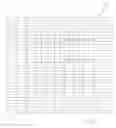
Referring to FIG. 11, there is illustrated part of a grid 156 used in a coding/decoding operation. The grid 156 includes a large number of squares 158, some of which contain letters and some of which contain numbers. Although FIG. 11 is too small to show the entire grid, it can contain many vertical spaces and many horizontal spaces. A convenient size of the grid 156 is seventy two vertical spaces and seventy two horizontal spaces. This accommodates a twenty six letter alphabet plus numbers 0-9 or thirty six total entries. Each vertical column and each horizontal row can contain two complete alphabets and two sets of numbers 0-9.
Each vertical column and each horizontal column of the grid 156 can contain one alphabet in the even numbered spaces and one alphabet in the odd numbered spaces. Similarly, each vertical column and each horizontal row can contain one set of numbers 0-9 in the even numbered spaces and one set of numbers in the odd numbered spaces.
There are clearly a large number of grids that can be composed because, as constrained by the above rules, each row and each column can be started with different letters or numbers and the arrangement of the letters or numbers in each column or row can be randomly varied to produce different grids.
As an example of using the coding grid 156, suppose that a first person desires to send a message to a second person, both of whom have a copy of the grid 156. The first person sends a series of numbers in any suitable format, i.e. by radio, telephone, Internet or other, specifying the starting location, the number at the starting location and then the set of numbers. For example, if the starting position was selected by the first person to be x=26, y=44 and the number of the starting position were selected to be 150, then the first three numbers transmitted might be 26, 44, 150 or any other combination agreed upon by the players.
The next numbers would correspond to the set of numbers used in this invention, i.e. those numbers that when correctly combined with the starting number would produce the desired message. If the first message were “Do you like pizza?”, the numbers would be 135, 100, 141, 142, 166, 164, 182, 151, 102, 128, 152 which produce the following:
| number set | corresponding letter |
| 135 | d (15 spaces left of start) |
| 100 | o (35 spaces down from previous) |
| 141 | y (41 spaces right of previous) |
| 142 | o (1 space up from previous) |
| 166 | u (24 spaces up from previous) |
| 164 | l (2 spaces down from previous) |
| 182 | i (18 spaces up from previous) |
| 151 | k (31 spaces left of previous) |
| 102 | e (49 spaces down from previous) |
| 128 | p (26 spaces up from previous) |
| 152 | i (24 spaces up from previous) |
| 136 | z (16 spaces down from previous) |
| 136 | z (zero down from previous) |
| 130 | a (6 spaces down from previous) |
The second person might answer, again in any suitable format: 147, 146, 182, 195, 154, 164 which translates:
| number set | corresponding letter |
| 147 | y (17 spaces right of previous) |
| 146 | e (1 space down from previous) |
| 182 | s (36 spaces up from previous) |
| 195 | i (9 spaces right of previous) |
| 154 | d (41 spaces down from previous) |
| 164 | o (10 spaces up from previous). |
So, the correct answer is “Yes I do.” Several things will be apparent. First, a simple technique for double letters is to repeat the number, as in the next-to-last two digits of the first message. Second, even though only part of the grid 156 is shown in FIG. 11, messages of substantial length can be sent, meaning that the grid 156 need not be any larger than illustrated in FIG. 11.
It will be noted that the message from the second person started with the same number as the last number from the first person although the starting position could be any location, such as the original starting location or another location dictated by the first or second messenger. It will be apparent that the grid 156 acts much like the classic one time pad used to encrypt messages. For relatively short messages, the process can be made more complicated by scrambling the numbers, i.e. require the reader to sort the numbers in the desired sequence.
Although this invention has been disclosed and described in its preferred,forms with a certain degree of particularity, it is understood that the present disclosure of the preferred forms is only by way of example and that numerous changes in the details of operation and in the combination and arrangement of parts may be resorted to without departing from the spirit and scope of the invention as hereinafter claimed.
Claims
I claim:1. A method of playing a route game on a grid having a starting position and an end position and wherein a series of numbers are provided, the object of the game being to place the numbers in a correct sequence, the method comprising
sequentially combining selected ones of the series of numbers and establishing a series of connected route legs between the starting position, a series of intermediate positions and the end position,
the correct sequence of numbers selected from the series providing a route from the starting position to the end position.
2. The method of claim 1 wherein the combining step comprises determining the difference between the starting position number and a first number selected from the series of numbers.
3. The method of claim 2 wherein the determining step comprises subtracting the first series number from a number associated with the starting position.
4. The method of claim 1 wherein the grid is provided on a medium and the starting position and the end position appear on the medium.
5. The method of claim 4 wherein a number associated with the starting position appears on the medium.
6. The method of claim 4 wherein the medium is paper.
7. The method of claim 4 wherein the medium is an electronic screen.
8. The method of claim 1 wherein the series of numbers provides only one correct sequence providing the route between the starting position and the end position.
9. The method of claim 1 wherein the route is a unique route.
10. The method of claim 1 wherein the grid provides a series of letters in the grid and the letters in the intermediate positions spell a word.
11. A method of playing a route game on a grid having a starting position and an end position and wherein a series of numbers are provided, the object of the game being to place the numbers in a correct sequence, the method comprising
selecting a number for the starting position;
combining the starting position number with one of the series numbers, determining a first intermediate position on the grid from the combined starting position number and the first series number and establishing a route leg between the starting position and the first intermediate position;
combining the first series number with a second of the series numbers and determining a second intermediate position on the grid from the combined first and second series numbers; and
repeatedly combining numbers from the series with the last series number selected, determining intermediate positions on the grid and establishing route legs between the intermediate positions until reaching the end position;
the correct sequence of numbers selected from the series providing a route from the starting position to the end position.
12. The method of claim 11 wherein the combining step comprises determining the difference between the starting position number and the first series number.
13. The method of claim 12 wherein the determining step comprises subtracting the first series number from the starting position number.
14. The method of claim 11 wherein the grid is provided on a medium and the starting position and the end position appear on the medium.
15. The method of claim 14 wherein the number of the starting position appears on the medium.
16. The method of claim 14 wherein the medium is paper.
17. The method of claim 14 wherein the medium is an electronic screen.
18. The method of claim 11 wherein the correct sequence of numbers provides only one route between the starting position and the end position.
19. The method of claim 11 wherein the grid provides a series of letters in the grid and the letters in the intermediate positions spell a word.
Images & Drawings included:






Sources:
- United States Patent and Trademark Office - verify current appl. status at the USPTO↗
Recent applications in this class:
- » 20250018278 2025-01-16
MATHEMATICAL COLORED-NUMBERED PUZZLE BOARD GAME - » 20230302349 2023-09-28
Strategy Multiplication Game - » 20230158396 2023-05-25
Arithmetic Game - » 20230141684 2023-05-11
Method and system for an interactive player board game - » 20220258037 2022-08-18
Apparatus for a board game - » 20220219071 2022-07-14
PRIME BOARD - » 20220203215 2022-06-30
Educational Math Board Game - » 20220176232 2022-06-09
See It Say It Know It Multiplication Tables - » 20220118350 2022-04-21
BOARD GAME - » 20210252376 2021-08-19
PRIMULAM