Method of producing oxidation catalyst for cleaning exhaust gas
US20090192033A1
2009-07-30
12/417,388
2009-04-02
✅ Patent granted
US 8,034,742 B2
2011-10-11
-
-
Stanley Silverman | Diana J Liao
2029-09-27
Abstract:
The present invention provides a method of producing an oxidation catalyst for cleaning exhaust gas, capable of achieving an excellent catalytic activity at a lower temperature for particulates and high boiling point hydrocarbons in exhaust gas from internal-combustion engines. A primary firing is performed after mixing nitrate of a first metal element Ln, manganese nitrate, and oxide of a third metal element A. A resultant material from the primary firing is subjected to grinding and then a secondary firing is performed at the range of to 1200° C. for 1 to 5 hours. By doing so, a catalyst comprising a composite metal oxide represented by the general formula LnyMn1-xAxO3 is obtained.
Inventors:
- Yuji Isogai 14 🇯🇵 Wako-shi, Japan
- Kiyoshi TANAAMI 14 🇯🇵 Wako-shi, Japan
- Yuji Isogai 13 🇯🇵 Wako, Japan
- Kiyoshi Tanaami 6 🇯🇵 Wako, Japan
Assignee:
- HONDA MOTOR CO., LTD. 20,747 🇯🇵 Tokyo, Japan
Interested in similar patents?
Get notified when new applications in this technology area are published.
Classification:
C01G45/1264 » CPC main
Compounds of manganese; Manganates manganites or permanganates; Manganates or manganites with a manganese oxidation state of Mn(III), Mn(IV) or mixtures thereof of the type[MnO3]n-, e.g. Li2MnO3, Li2[MxMn1-xO3], (La,Sr)MnO3 containing rare earth, e.g. La1-xCaxMnO3, LaMnO3
B01D53/944 » CPC further
Separation of gases or vapours; Recovering vapours of volatile solvents from gases; Chemical or biological purification of waste gases, e.g. engine exhaust gases, smoke, fumes, flue gases, aerosols,; Chemical or biological purification of waste gases of engine exhaust gases by catalytic processes Simultaneously removing carbon monoxide, hydrocarbons or carbon making use of oxidation catalysts
B01J23/002 » CPC further
Catalysts comprising metals or metal oxides or hydroxides, not provided for in group Mixed oxides other than spinels, e.g. perovskite
B01J23/6562 » CPC further
Catalysts comprising metals or metal oxides or hydroxides, not provided for in group of noble metals combined with metals, oxides or hydroxides provided for in groups - ; Platinum group metals with arsenic, antimony, bismuth, vanadium, niobium, tantalum, polonium, chromium, molybdenum, tungsten, manganese, technetium or rhenium; Manganese, technetium or rhenium Manganese
C01G55/002 » CPC further
Compounds of ruthenium, rhodium, palladium, osmium, iridium, or platinum Compounds containing, besides ruthenium, rhodium, palladium, osmium, iridium, or platinum, two or more other elements, with the exception of oxygen or hydrogen
F01N3/106 » CPC further
Exhaust or silencing apparatus having means for purifying, rendering innocuous, or otherwise treating exhaust for rendering innocuous by thermal or catalytic conversion of noxious components of exhaust; General auxiliary catalysts, e.g. upstream or downstream of the main catalyst Auxiliary oxidation catalysts
B01D2255/1026 » CPC further
Catalysts; Noble metals or compounds thereof; Platinum group metals Ruthenium
B01D2255/206 » CPC further
Catalysts; Metals or compounds thereof Rare earth metals
B01D2255/20707 » CPC further
Catalysts; Metals or compounds thereof; Transition metals Titanium
B01D2255/2073 » CPC further
Catalysts; Metals or compounds thereof; Transition metals Manganese
B01D2255/402 » CPC further
Catalysts; Mixed oxides Perovskites
B01D2257/702 » CPC further
Components to be removed; Organic compounds not provided for in groups - Hydrocarbons
B01D2258/01 » CPC further
Sources of waste gases Engine exhaust gases
B01J37/0036 » CPC further
Processes, in general, for preparing catalysts; Processes, in general, for activation of catalysts; Use of binding agents; Moulding; Pressing; Powdering; Granulating; Addition of materials ameliorating the mechanical properties of the product catalyst; Powdering Grinding
C01P2002/52 » CPC further
Crystal-structural characteristics; Solid solutions containing elements as dopants
C01P2002/54 » CPC further
Crystal-structural characteristics; Solid solutions containing elements as dopants one element only
C01P2006/12 » CPC further
Physical properties of inorganic compounds Surface area
F01N2370/02 » CPC further
Selection of materials for exhaust purification used in catalytic reactors
B01J2523/57 » CPC further
Constitutive chemical elements of heterogeneous catalysts of Group V (VA or VB) of the Periodic Table Tantalum
B01J2523/72 » CPC further
Constitutive chemical elements of heterogeneous catalysts of Group VII (VIIB) of the Periodic Table Manganese
B01J2523/47 » CPC further
Constitutive chemical elements of heterogeneous catalysts of Group IV (IVA or IVB) of the Periodic Table Titanium
B01J2523/00 » CPC further
Constitutive chemical elements of heterogeneous catalysts
B01J2523/36 » CPC further
Constitutive chemical elements of heterogeneous catalysts of Group III (IIIA or IIIB) of the Periodic Table Yttrium
B01J2523/821 » CPC further
Constitutive chemical elements of heterogeneous catalysts of Group VIII of the Periodic Table; Metals of the platinum group Ruthenium
B01J2523/56 » CPC further
Constitutive chemical elements of heterogeneous catalysts of Group V (VA or VB) of the Periodic Table Niobium
B01J23/34 » CPC further
Catalysts comprising metals or metal oxides or hydroxides, not provided for in group of arsenic, antimony, bismuth, vanadium, niobium, tantalum, polonium, chromium, molybdenum, tungsten, manganese, technetium or rhenium; Manganese, technetium or rhenium Manganese
B01J21/06 IPC
Catalysts comprising the elements, oxides, or hydroxides of magnesium, boron, aluminium, carbon, silicon, titanium, zirconium, or hafnium Silicon, titanium, zirconium or hafnium; Oxides or hydroxides thereof
B01J23/10 IPC
Catalysts comprising metals or metal oxides or hydroxides, not provided for in group of rare earths
B01J37/04 IPC
Processes, in general, for preparing catalysts; Processes, in general, for activation of catalysts Mixing
B01J37/08 IPC
Processes, in general, for preparing catalysts; Processes, in general, for activation of catalysts Heat treatment
Description
BACKGROUND OF THE INVENTION
1. Field of the Invention
The present invention relates to a method of producing an oxidation catalyst for cleaning exhaust gas, oxidizing particulates and hydrocarbons contained in exhaust gas from internal-combustion engines to clean the gas.
2. Description of the Related Art
For oxidizing particulates and hydrocarbons contained in exhaust gas from internal-combustion engines to clean the gas, oxidation catalysts comprising perovskite-type composite metal oxides have been previously known.
As the perovskite-type composite metal oxide used as the above-described oxidation catalyst, there is known, for example, a composite metal oxide represented by the general formula: AB1-xCxO3, wherein A is at least one metal selected from the group consisting of La, Sr, Ce, Ba, and Ca; B is at least one metal selected from the group consisting of Co, Fe, Ni, Cr, Mn, and Mg; and C is one of Pt and Pd (see Japanese Patent Laid-Open No. 07-116519).
As the perovskite-type composite metal oxide used as the above-described oxidation catalyst, there is also known, for example, a composite metal oxide represented by the general formula: CexM1-xZrO3, wherein M is at least one metal selected from the group consisting of La, Sm, Nd, Gd, Sc, and Y; and 0.1≦x≦20 (see, for example, Japanese Patent Laid-Open No. 2003-334443).
However, the above-described conventional perovskite-type composite metal oxides have drawbacks that they have high oxidation temperatures for particulates and high boiling point hydrocarbons and cannot achieve sufficient catalytic activities.
SUMMARY OF THE INVENTION
The object of the present invention is to eliminate such drawbacks and to provide a method of producing an oxidation catalyst for cleaning exhaust gas, capable of achieving an excellent catalytic activity at a lower temperature for particulates and high boiling point hydrocarbons in exhaust gas from internal-combustion engines.
For accomplishing this object, the present invention provides a method of producing an oxidation catalyst for cleaning exhaust gas, which oxidizes contents in exhaust gas from internal-combustion engines to clean the gas, and which comprises a composite metal oxide including a first metal element Ln, Mn as a second metal element, and a third metal element A, represented by the general formula LnyMn1-xAxO3, the method comprising the steps of: selecting one metal element as the first metal element Ln from the group consisting of Sc, Y, Ho, Er, Tm, Yb, and Lu; and selecting one metal element as the third metal element A from the group consisting of Ti, Nb, Ta, and Ru; mixing nitrate of the first metal element Ln, manganese nitrate, and oxide of the third metal element A, so that x falls within the range of 0.005 to 0.2 and y falls within the range of 0.9 to 1.0, and thereafter performing primary firing; and subjecting a resultant material from the primary firing process to grinding and thereafter performing secondary firing at the range of 600 to 1200° C. for 1 to 5 hours.
Further, it is preferable to subject the resultant material from the primary firing process to grinding and thereafter perform secondary firing at 1000° C. for 1 hour.
The oxidation catalyst for cleaning exhaust gas produced according to the method of the present invention is one in which metal A as a third metal component is added to a composite metal oxide represented by the general formula: LnMnO3 to produce a distortion in the crystal lattice thereof, or the metal component A is added thereto to produce a defect in a portion of the crystal lattice as well as the distortion in the crystal lattice, thereby increasing the catalytic activity and reducing the bond energy of oxygen in the crystal lattice. As a result, the above-mentioned oxidation catalyst for cleaning exhaust gas can oxidize contents such as particulates and high boiling point hydrocarbons contained in exhaust gas from internal-combustion engines at a lower temperature and also cause a faster oxidation than an oxidation catalyst comprising a compound represented by the general formula: LnMnO3.
The oxidation catalyst for cleaning exhaust gas produced according to the method of the present invention produces a lower bond energy of oxygen in the crystal lattice of the composite metal oxide represented by the general formula: LnMnO3, first when y=1, by metal A as a third metal component being added to the oxide to cause a distortion in the crystal lattice. As a result, the above-mentioned oxidation catalyst for cleaning exhaust gas can oxidize the particulates, high boiling point hydrocarbons, and the like at a lower temperature than the oxidation catalyst comprising the composite metal oxide represented by the general formula: LnMnO3. Here, x less than 0.005 renders insufficient the effect of producing a distortion in the crystal lattice; x more than 0.2 makes it difficult to maintain the crystal lattice.
Then, the oxidation catalyst for cleaning exhaust gas produced according to the method of the present invention produces a lower bond energy of oxygen in the crystal lattice of the composite metal oxide represented by the general formula: LnMnO3, when 0.9≦y<1, by metal A as a third metal component being added to the oxide to cause a defect in a portion of the Ln site constituting the crystal lattice as well as a distortion in the crystal lattice. As a result, the above-mentioned oxidation catalyst for cleaning exhaust gas can oxidize the particulates, high boiling point hydrocarbons, and the like at a lower temperature and also cause a faster oxidation than the oxidation catalyst comprising the composite metal oxide represented by the general formula: LnMnO3.
Here, y less than 0.9 produces an excessive defect to make it difficult to maintain the crystal lattice; y at 1 cannot produce a defect in the crystal lattice. In addition, x can be in the above-described range to balance the positive and negative electric charges of the constituent atoms in the composite metal oxide.
In the method mentioned above, Ln may be a metal selected from the group consisting of Sc, Y, Ho, Er, Tm, Yb, and Lu, but is preferably Y.
BRIEF DESCRIPTION OF THE DRAWINGS
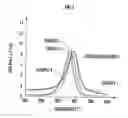
FIG. 1 is a graph showing the effects of catalysts for cleaning exhaust gas produced in accordance with the method of the present invention;
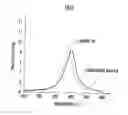
FIG. 2 is a graph showing the effect of a catalyst for cleaning exhaust gas produced in accordance with the method of the present invention;
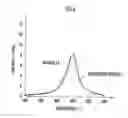
FIG. 3 is a graph showing the effects of catalysts for cleaning exhaust gas produced in accordance with the method of the present invention;
FIG. 4 is a graph showing the effects of catalysts for cleaning exhaust gas produced in accordance with the method of the present invention;
FIG. 5 is a graph showing the effect of a catalyst for cleaning exhaust gas produced in accordance with the method of the present invention;
FIG. 6 is a graph showing the effect of a catalyst for cleaning exhaust gas produced in accordance with the method of the present invention;
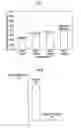
FIG. 7 is a graph indicating the relationship between the secondary firing condition during production procedure of the composite metal oxide and the burning temperature of the carbon black; and
FIG. 8 is a graph indicating the relationship between the secondary firing condition during production procedure of the composite metal oxide and the specific surface area of the composite metal oxide.
DETAILED DESCRIPTION OF THE PREFERRED EMBODIMENTS
An embodiment of the present invention will now be described in further detail with reference to the accompanying drawings.
A catalyst for cleaning exhaust gas according to a first aspect of the present embodiment comprises a composite metal oxide represented by the general formula: YMn1-xAxO3, wherein A is a metal selected from the group consisting of Ti, Nb, Ta, and Ru; and 0.005≦x≦0.2. The composite metal oxide produces a lower bond energy of oxygen in the crystal lattice of YMnO3 by a portion of Mn being the metal A to cause a distortion in the crystal lattice. As a result, the metal oxide can have an increased catalytic activity compared to YMnO3 and can oxidize contents such as particulates and high boiling point hydrocarbons contained in the exhaust gas at a lower temperature.
A catalyst for cleaning exhaust gas according to a second aspect of the present embodiment is a composite metal oxide similar to the catalyst for cleaning exhaust gas according to the first aspect, but different from it only in that the former is represented by the general formula: YyMn1-xAxO3 except with 0.9≦y<1. The composite metal oxide produces a lower bond energy of oxygen in the crystal lattice of YMnO3 by a defect arising in a portion of the Y site constituting the crystal lattice as well as by a portion of Mn being the metal A to cause a distortion in the crystal lattice. As a result, the metal oxide can have an increased catalytic activity compared to YMnO3, can oxidize contents such as particulates and high boiling point hydrocarbons contained in the exhaust gas at a lower temperature, and even can promote the oxidation.
Here, the above-described x and y are set so as to balance the positive and negative electric charges of the constituent atoms in the composite metal oxide.
By way of example, Y and Mn are positive trivalent, and 0 is negative bivalent. Accordingly, when the metal A is one of Ti and Ru and positive tetravalent, setting y=1−x/3 and x=0.15 leads to the general formula: YyMn1-xAxO3 being equal to Y0.95Mn0.85A0.15O3.
Here, the sum of positive charges is:
(3×0.95)+(3×0.85)+(4×0.15)=2.85+2.55+0.60=+6.00; and
the sum of negative charges is:
(−2)×3=−6.
Therefore, it follows that (+6.00)+(−6)=0, the positive and negative charges being balanced.
When the metal A is one of Nb and Ta and positive pentavalent, setting y=1−2x/3 and x=0.075 leads to the general formula: YyMn1-xAxO3 being equal to Y0.95Mn0.925A0.075O3.
Here, the sum of positive charges is:
(3×0.95)+(3×0.925)+(5×0.075)=2.85+2.775+0.375=+6.00; and
the sum of negative charges is:
(−2)×3=−6.
Therefore, it follows that (+6.00)+(−6)=0, the positive and negative charges being balanced.
When the metal A is one of Nb and Ta and positive pentavalent, y=1−2x/3 and x=0.15 may be also set.
This setting leads to the general formula: YyMn1-xAxO3 being equal to Y0.9Mn0.85A0.15O3.
Here, the sum of positive charges is:
(3×0.9)+(3×0.85)+(5×0.075)=2.7+2.55+0.75=+6.00; and
the sum of negative charges is:
(−2)×3=−6.
Therefore, it follows that (+6.00)+(−6)=0, the positive and negative charges being balanced.
Examples and Comparative Example of the present invention will now be given.
Example 1
In this Example, first, yttrium acetate, manganese nitrate, and anatase type titanium oxide were used in such amounts that a molar ratio thereof of 1:0.95:0.05 is obtained, and mixed in a ball mill for 5 hours, followed by primary firing at 250° C. for 30 minutes, at 300° C. for 30 minutes, and at 350° C. for one hour. Ethanol was then added to the resultant material from the primary firing process, which was then subjected to wet grinding using a ball mill before drying, followed by secondary firing at 1,000° C. for one hour to provide a powder of the composite metal oxide represented by YMn0.95Ti0.05O3.
The composite metal oxide powder obtained in this Example was then subjected to differential thermal analysis (DTA) for the activity evaluation thereof. The differential thermal analysis was performed by using the composite metal oxide powder obtained in this Example as a catalyst for cleaning exhaust gas to mix 2.5 mg of carbon black with 50 mg of the catalyst, followed by heating the mixture at a rate of temperature rise of 10° C./minute under an atmosphere of an air stream of 15 ml/minute to determine a relationship between heat flow and temperature.
The above-described carbon black corresponds to particulates or a high boiling point hydrocarbon contained in the exhaust gas. In the heat flow, the peak thereof indicates the burning temperature of the carbon black; a higher peak shows that the burning is more promoted. The result is shown in FIG. 1.
Example 2
In this Example, the composite metal oxide represented by YMn0.95Nb0.05O3 was obtained just as described in Example 1 except for the use of niobium oxide in place of anatase type titanium oxide.
A relationship between heat flow and temperature was then determined just as described in Example 1 except for the use of the composite metal oxide obtained in this Example as a catalyst for cleaning exhaust gas. The result is shown in FIG. 1.
Example 3
In this Example, the composite metal oxide represented by YMn0.95Ta0.05O3 was obtained just as described in Example 1 except for the use of tantalum oxide in place of anatase type titanium oxide.
A relationship between heat flow and temperature was then determined just as described in Example 1 except for the use of the composite metal oxide obtained in this Example as a catalyst for cleaning exhaust gas. The result is shown in FIG. 1.
Example 4
In this Example, the composite metal oxide represented by YMn0.95Ru0.05O3 was obtained just as described in Example 1 except for the use of ruthenium oxide in place of anatase type titanium oxide.
A relationship between heat flow and temperature was then determined just as described in Example 1 except for the use of the composite metal oxide obtained in this Example as a catalyst for cleaning exhaust gas. The result is shown in FIG. 1.
Comparative Example 1
In this Comparative Example, the composite metal oxide represented by YMnO3 was obtained just as described in Example 1 except for no use of anatase type titanium oxide.
A relationship between heat flow and temperature was then determined just as described in Example 1 except for the use of the composite metal oxide obtained in this Comparative Example as a catalyst for cleaning exhaust gas. The result is shown in FIG. 1.
It is apparent from FIG. 1 that the catalysts for cleaning exhaust gas of Examples 1 to 4 can oxidize (burn) the above-described carbon black at low temperature compared to the catalyst for cleaning exhaust gas of Comparative Example 1, which comprises the composite metal oxide represented by YMnO3.
Example 5
In this Example, the composite metal oxide represented by Y0.95Mn0.85Ti0.15O3 was obtained just as described in Example 1 except for the use of yttrium acetate, manganese nitrate, and anatase type titanium oxide in such amounts that a molar ratio thereof of 0.95:0.85:0.15 is obtained.
Example 5-2
In this example, the composite metal oxide represented by Y0.95Mn0.85Ti0.15O3 was obtained just as described in Example 5 except that the secondary firing was conducted at 600° C. for 5 hours.
Example 5-3
In this example, the composite metal oxide represented by Y0.95Mn0.85Ti0.15O3 was obtained just as described in Example 5 except that the secondary firing was conducted at 1200° C. for 1 hour.
A relationship between heat flow and temperature was then determined just as described in Example 1 except for the use of the composite metal oxide obtained in this Example as a catalyst for cleaning exhaust gas. The result is shown together with the result of Comparative Example 1 in FIG. 2.
It is apparent from FIG. 2 that the catalyst for cleaning exhaust gas of Example 5 can oxidize (burn) the above-described carbon black at low temperature and can achieve the effect of further promoting the oxidation, compared to the catalyst for cleaning exhaust gas of Comparative Example 1, which comprises the composite metal oxide represented by YMnO3.
Example 6
In this Example, the composite metal oxide represented by Y0.95Mn0.925Nb0.075O3 was obtained just as described in Example 1 except for the use of yttrium acetate, manganese nitrate, and niobium oxide in such amounts that a molar ratio thereof of 0.95:0.925:0.075 is obtained.
A relationship between heat flow and temperature was then determined just as described in Example 1 except for the use of the composite metal oxide obtained in this Example as a catalyst for cleaning exhaust gas. The result is shown together with the result of Comparative Example 1 in FIG. 3.
Example 7
In this Example, the composite metal oxide represented by Y0.9Mn0.85Nb0.15O3 was obtained just as described in Example 1 except for the use of yttrium acetate, manganese nitrate, and niobium oxide in such amounts that a molar ratio thereof of 0.9:0.85:0.15 is obtained.
A relationship between heat flow and temperature was then determined just as described in Example 1 except for the use of the composite metal oxide obtained in this Example as a catalyst for cleaning exhaust gas. The result is shown together with the result of Comparative Example 1 in FIG. 3.
It is apparent from FIG. 3 that the catalysts for cleaning exhaust gas of Examples 6 and 7 can oxidize (burn) the above-described carbon black at low temperature and can achieve the effect of further promoting the oxidation, compared to the catalyst for cleaning exhaust gas of Comparative Example 1, which comprises the composite metal oxide represented by YMnO3.
Example 8
In this Example, the composite metal oxide represented by Y0.95Mn0.925Ta0.075O3 was obtained just as described in Example 1 except for the use of yttrium acetate, manganese nitrate, and tantalum oxide in such amounts that a molar ratio thereof of 0.95:0.925:0.075 is obtained.
A relationship between heat flow and temperature was then determined just as described in Example 1 except for the use of the composite metal oxide obtained in this Example as a catalyst for cleaning exhaust gas. The result is shown together with the result of Comparative Example 1 in FIG. 4.
Example 9
In this Example, the composite metal oxide represented by Y0.9Mn0.85Ta0.15O3 was obtained just as described in Example 1 except for the use of yttrium acetate, manganese nitrate, and tantalum oxide in such amounts that a molar ratio thereof of 0.9:0.85:0.15 is obtained.
A relationship between heat flow and temperature was then determined just as described in Example 1 except for the use of the composite metal oxide obtained in this Example as a catalyst for cleaning exhaust gas. The result is shown together with the result of Comparative Example 1 in FIG. 4.
It is apparent from FIG. 4 that the catalysts for cleaning exhaust gas of Examples 8 and 9 can oxidize (burn) the above-described carbon black at low temperature and can achieve the effect of further promoting the oxidation, compared to the catalyst for cleaning exhaust gas of Comparative Example 1, which comprises the composite metal oxide represented by YMnO3.
Example 10
In this Example, the composite metal oxide represented by Y0.95Mn0.85Ru0.15O3 was obtained just as described in Example 1 except for the use of yttrium acetate, manganese nitrate, and ruthenium oxide in such amounts that a molar ratio thereof of 0.95:0.85:0.15 is obtained.
A relationship between heat flow and temperature was then determined just as described in Example 1 except for the use of the composite metal oxide obtained in this Example as a catalyst for cleaning exhaust gas. The result is shown together with the result of Comparative Example 1 in FIG. 5.
It is apparent from FIG. 5 that the catalyst for cleaning exhaust gas of Example 10 can oxidize (burn) the above-described carbon black at low temperature and can achieve the effect of further promoting the oxidation, compared to the catalyst for cleaning exhaust gas of Comparative Example 1, which comprises the composite metal oxide represented by YMnO3.
Example 11
In this Example, the composite metal oxide represented by YMn0.995Ru0.005O3 was obtained just as described in Example 1 except for the use of yttrium acetate, manganese nitrate, and ruthenium oxide in such amounts that a molar ratio thereof of 1:0.995:0.005 is obtained.
A relationship between heat flow and temperature was then determined just as described in Example 1 except for the use of the composite metal oxide obtained in this Example as a catalyst for cleaning exhaust gas. The result is shown together with the result of Comparative Example 1 in FIG. 6.
It is apparent from FIG. 6 that the catalyst for cleaning exhaust gas of Example 11 can oxidize (burn) the above-described carbon black at low temperature and can achieve the effect of further promoting the oxidation, compared to the catalyst for cleaning exhaust gas of Comparative Example 1, which comprises the composite metal oxide represented by YMnO3.
Comparative Example 2
In this Comparative Example, the composite metal oxide was obtained under the same conditions as those of the composite metal oxides as described in Example 5, Example 5-2 and Example 5-3, respectively, except for the secondary firing condition in which the composite metal oxide is fired not at 1000° C. for 1 hour but at 1200° C. for 10 hours, after the resultant material from the primary firing process was subjected to grinding.
It is apparent from FIG. 7 that the burning temperatures of the carbon black of the composite metal oxides according to Example 5, Example 5-2 and Example 5-3, respectively, are lower by 30° C. to 100° C. than in the case of the composite metal oxide according to Comparative Example 2. Thus, it is clear that by controlling the secondary firing condition as in the present invention, it is possible to provide excellent oxidation characteristic to the composite metal oxide.
Further, as is apparent from FIG. 8, the composite metal oxide according to Example 5 has larger specific surface area than the composite metal oxide according to Comparative Example 2. Thus, it is clear that by controlling the secondary firing condition as in the present invention, it is possible to provide excellent catalyst activity to the composite metal oxide. Here, the specific surface area may be measured according to know technique such as a BET method and the like.
Claims
What is claimed is:1. A method of producing an oxidation catalyst for cleaning exhaust gas, which oxidizes contents in exhaust gas from internal-combustion engines to clean the gas, and which comprises a composite metal oxide including a first metal element Ln, Mn as a second metal element, and a third metal element A, represented by the general formula LnyMn1-xAxO3, the method comprising the steps of:
selecting one metal element as the first metal element Ln from the group consisting of Sc, Y, Ho, Er, Tm, Yb, and Lu; and selecting one metal element as the third metal element A from the group consisting of Ti, Nb, Ta, and Ru;
mixing nitrate of the first metal element Ln, manganese nitrate, and oxide of the third metal element A, so that x falls within the range of 0.005 to 0.2 and y falls within the range of 0.9 to 1.0, and thereafter performing primary firing; and
subjecting a resultant material from the primary firing process to grinding and thereafter performing secondary firing at the range of 600 to 1200° C. for 1 to 5 hours.
2. The method according to claim 1, wherein the resultant material from the primary firing process is subjected to grinding and thereafter secondary firing is performed at 1000° C. for 1 hour.
3. The method according to claim 1, wherein Y is selected as the first metal element Ln.
Images & Drawings included:


Sources:
- United States Patent and Trademark Office - verify current appl. status at the USPTO↗
Similar patent applications:
Recent applications in this class:
- » 20250066218 2025-02-27
SELF-DECONTAMINATING ANTIMICROBIAL COMPOSITIONS, ARTICLES, AND STRUCTURES, AND METHODS OF MAKING AND USING THE SAME - » 20230357046 2023-11-09
PEROVSKITES FOR REDUCTION-RE-OXIDATION THERMOCHEMICAL WATER AND CARBON DIOXIDE SPLITTING - » 20230192507 2023-06-22
Self-decontaminating antimicrobial compositions, articles, and structures, and methods of making and using the same - » 20210331937 2021-10-28
Self-decontaminating antimicrobial compositions, articles, and structures, and methods of making and using the same - » 20210331936 2021-10-28
Negative thermal expansion material, negative thermal expansion film and preparation method thereof - » 20210317004 2021-10-14
Hydrogen-selective oxygen carrier materials and methods of use - » 20190077677 2019-03-14
Ceramic material and resistive element - » 20120157301 2012-06-21
Method for preparing perovskite oxide-based catalyst particles - » 20070031312 2007-02-08
Manganite perovskite ceramics, their precursors and methods for forming - » 20060018815 2006-01-26
Perovskite complex oxide and catalyst
Recent applications for this Assignee:
- » 20250293548 2025-09-18
POWER TRANSMISSION DEVICE AND POWER RECEPTION DEVICE - » 20250289343 2025-09-18
INFORMATION PROCESSING SYSTEM, MOVING OBJECT DEVICE, AND POWER SUPPLY DEVICE - » 20250289329 2025-09-18
POWER RECEPTION DEVICE - » 20250289328 2025-09-18
POWER TRANSMISSION DEVICE AND POWER RECEPTION DEVICE - » 20250289327 2025-09-18
POWER TRANSMISSION DEVICE - » 20250286234 2025-09-11
BATTERY DEVICE - » 20250284006 2025-09-11
LIDARGRID A 3D OPACITY GRID FROM LIDAR FOR SCENE FORECASTING - » 20250282369 2025-09-11
VEHICLE - » 20250282349 2025-09-11
VEHICLE CONTROL DEVICE - » 20250278165 2025-09-04
Virtual tools for supported tele-operations