Musical caller ID apparatus and method
US20090225966A1
2009-09-10
12/212,610
2008-09-17
✅ Patent granted
US 8,259,916 B2
2012-09-04
-
-
Fan Tsang | Jeffrey Lytle
2031-06-20
Abstract:
An incoming call prompting method is provided. The method receiving an incoming call decoding the phone number of the incoming call so as to obtain a digit set from the phone number stored in the data storage system. The method further includes determining a call number character of the incoming call and assigning musical notes associated with the numbers of the digit set according to the musical note table. Furthermore, the method includes obtaining corresponding audio clip of each note from an audio clip database and outputting the audio clips with the corresponding rhythm of the call number character of the incoming call through a music output apparatus.
Inventors:
- KUAN-HONG HSIEH 196 🇹🇼 Tu-Cheng, Taiwan
- XIAO-GUANG LI 145 🇨🇳 Shenzhen City, China
- LI-ZHANG HUANG 41 🇹🇼 Tu-Cheng, Taiwan
- XIAO-GUANG LI 157 🇨🇳 Shenzhen, China
- CHUAN-HONG WANG 41 🇹🇼 Tu-Cheng, Taiwan
- HSIAO-CHUNG CHOU 29 🇹🇼 Tu-Cheng, Taiwan
- Kuan-Hong Hsieh 52 🇹🇼 Taipei Hsien, Taiwan
- Hsiao-Chung Chou 8 🇹🇼 Taipei Hsien, Taiwan
- Li-Zhang Huang 6 🇹🇼 Taipei Hsien, Taiwan
- Chuan-Hong Wang 9 🇹🇼 Taipei Hsien, Taiwan
Assignee:
- HON HAI PRECISION INDUSTRY CO., LTD. 12,833 🇹🇼 Tu-Cheng, Taiwan
- HONG FU JIN PRECISION INDUSTRY (SHENZHEN) CO., LTD. 4,225 🇨🇳 Shenzhen City, China
- HON HAI PRECISION INDUSTRY CO., LTD. 2,724 🇹🇼 Tu-Cheng, New Taipei, Taiwan
- Hong Fu Jin Precision Industry (Shenzhen) Co., Ltd. 1,915 🇨🇳 Shenzhen, Guangdong Province, China
Interested in similar patents?
Get notified when new applications in this technology area are published.
Classification:
H04M19/04 » CPC main
Current supply arrangements for telephone systems providing ringing current or supervisory tones, e.g. dialling tone or busy tone the ringing-current being generated at the substations
H04M1/56 IPC
Substation equipment, e.g. for use by subscribers Arrangements for indicating or recording the called number at the calling subscriber's set
H04M15/06 IPC
Arrangements for metering, time-control or time indication ; Metering, charging or billing arrangements for voice wireline or wireless communications, e.g. VoIP; Recording calls, or communications in printed, perforated or other permanent form Recording class or number of calling or called party
H04M3/42 IPC
Automatic or semi-automatic exchanges Systems providing special services or facilities to subscribers
Description
BACKGROUND
1. Field of the Disclosure
Embodiments of the present disclosure relate to caller identification (ID), and more particularly to a apparatus and method for generating a music caller ID.
2. Description of THE Related Art
Portable communication apparatus, such as cell phones, have become indispensable tools in our daily lives. Many functions are available now with cell phones, for example, caller ID, among other things. Caller ID allows users to easily screen their calls.
Recently, a caller ID system has been developed that can audibly reveal a phone number and/or other information of a received call by the use of an electronically generated voice so that a user does not even have to look at his/her phone to know who is calling.
One such caller ID system obtains voice clips corresponding to one or more numbers (0-9) of a phone number of an incoming call, from an audio clip database, and sends the proper combination and sequence of voice clips to a voice generating chip to be output to a user.
However, even the caller ID system is convenient, the sound of the voice clips may not be pleasing to the human ears.
Therefore, what is needed is an improved caller ID apparatus for identifying callers.
SUMMARY
A computer-implemented method for identifying a user corresponding to an incoming call is provide. The method includes: providing a data storage system that stores a musical note table, a music parameters table, an audio clip database, the musical note table assigning a musical note for each digit in a received phone number of an incoming call, the music parameters table storing relationships between a call number character and a music parameter, and the audio clip database storing pre-recorded audio clips which is played in different parameters; receiving the incoming call and decoding the phone number of the incoming call; storing the phone number in the data storage system; obtaining a digit set from the phone number stored in the data storage system; determining a call number character of the incoming call and obtaining the music parameters from the music parameter table according to the call number character of the incoming call; assigning the musical notes associated with the numbers of the digit set according to the musical note table; obtaining corresponding audio clip of each musical note from the audio clip database and outputting the audio clips with the corresponding rhythm of the call number character of the incoming call through a music output apparatus.
Other advantages and novel features will be drawn from the following detailed description of the preferred embodiment with reference to the attached drawings.
BRIEF DESCRIPTION OF THE DRAWINGS
The components of the drawings are not necessarily drawn to scale, the emphasis instead being placed upon clearly illustrating the principles of a musical caller ID apparatus. Moreover, in the drawings, like reference numerals designate corresponding parts throughout several views.
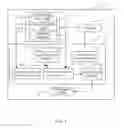
FIG. 1 is a block diagram of an musical caller ID apparatus in accordance with one embodiment of the present disclosure.
FIG. 2 is a flowchart of one embodiment of a method for outputting audio signal corresponding to receiving an incoming call.
DETAILED DESCRIPTION
FIG. 1 is a block diagram of a musical caller ID apparatus 1 (hereinafter “the apparatus”) in accordance with one embodiment of the present disclosure. In one embodiment, the apparatus 1 includes a data storage system 11, a decoder 12, a music output apparatus 13, and a processing unit 14. The data storage system 11 stores a musical note table 111, a music parameters table 112, and an audio clip database 113 as will be further described herein. In one embodiment, the apparatus 1 may be a cellphone, PDA, or other apparatus with a communication and audio function.
The musical note table 111 assigns a musical note for each digit (0-9) in a received phone number (hereinafter, “the call number”), as shown in Table 1.
| TABLE 1 | |
| Digit |
| 1 | 2 | 3 | 4 | 5 | 6 | 7 | 8 | 9 | 0 | |
| Note | do | re | mi | fa | sol | la | ti | do | re | mi |
The relationship between the digits and the musical notes is not limited to that defined in the musical note table 111. The relationship can also be defined by the user. The musical note table 111 is based on the “Just Intonation Music Scale” as an example, but other scales can be used according to manufacturer or user preference.
The music parameters table 112 stores a relationship between a call number character and music parameters, such as rhythm, and an instrumental sound from an instrument. In this embodiment, the call number character has two forms: one form corresponds to digits of the call number, and the other form corresponds to classes of the call number. The call number can be classified according to family, friends, colleagues, classmates, and relatives according to a relationship between the caller and the user, and also can be classified to an unable-recognized call, an international call, a national call, and a local call according to the incoming call number. The relationship between digits and the music parameters are shown in Table 2. The relationship between classes of the call number and the music parameters are shown in Table 3 and Table 4.
| TABLE 2 | |
| Digit |
| 1 | 2 | 3 | 4 | 5 | 6 | 7 | 8 | 9 | 0 | |
| Rhythm | Quick | Slow | Slow | Quick | Quick | Slow | Slow | Quick | Quick | Quick |
| Instrument | Drum | Flute | Piano | Violin | Quitar | Koto | Accordion | Lute | Flute | Saxophone |
| TABLE 3 | |||||
| Class | Family | Friend | Colleague | Classment | Relative |
| Rhythm | Quick | Slow | Slow | Quick | Quick |
| Instrument | Drum | Flute | Piano | Violin | Quitar |
| TABLE 4 | ||||
| Non- | International | Local | ||
| Class | recognized | call | National call | call |
| Rhythm | Quick | Slow | Slow | Quick |
| Instrument | Drum | Flute | Piano | Violin |
Rhythms, in the above Table 2, Table 3, and Table 4, can be set according to a time that each musical note is played. For example, playing three musical notes every second can be set to be played quickly, and playing one musical note every second can be set to be slowly. In practice, the rhythms are not limited to be played quickly and slowly, and can be defined to more kinds of rhythms. The instruments, in the above Table 2, Table 3, and Table 4, are exemplary instrument to play the musical notes.
The audio clip database 113 stores prerecorded audio clips of each musical note played in different instruments. Taking musical note “do” for example, the audio clips of the musical note “do” that is played by different instruments are all stored in the audio clip database. These musical notes may be predetermined as mentioned above.
The processing unit 14 includes an incoming call receiving module 141, a digit obtaining module 142, a music parameter determined module 143, a melody composing module 144, and a music output module 145. The modules 141, 142, 143, 144, 145 may be used to execute one or more operations for the apparatus 1 as will be further described below.
The incoming call receiving module 141 is configured for receiving an incoming call and sending the incoming call to a decoder 12 to obtain a phone Page 5 of 14 number of the incoming call and storing the phone number in the data storage system 11.
The digit obtaining module 142 is configured for selecting one or more digits of the phone number (hereinafter, “the digit set”) stored in the data storage system 11. It may be understood that the digit set may comprise all the digits of the phone number, or may comprise some of the digits of the phone number. For example, if the phone number is “13956123846,” a user, not wanting a long musical note melody, may associate an abbreviated digit pattern with the phone number. The digit pattern may, for example, use only the third, sixth, eighth, tenth, and eleventh digits of the phone number, so the digit set is “91346.” Selective selection of one or more digits of the phone number may be useful for a user to remember who is calling based on the outputted sound.
The music parameter determined module 143 is configured for determining the call number character of the incoming call and obtaining the music parameters from the music parameter table 113 according to the call number character. Taking the above call number “13956123846” for example, if the second digit of the incoming call number is predetermined as a call number character, the music parameter determined module 143 obtains the second digit in the call number “13956123846”, namely the digit “3,” as a call number character, and then obtains the corresponding music parameters of the digit “3,” namely “rhythm is ‘slow,’ instrument is ‘piano’,” in the Table 2.
The melody composing module 144 is for composing a melody according to the digit set from the phone number stored in the data storage system 11. The melody composition process includes receiving a digit set from the digit obtaining module 142, and assigning the musical notes associated with the numbers of the digit set in turn according to the musical note table 111.
The music generating module 144 is for obtaining a corresponding audio clip of each musical note from the audio clip database 113 and outputting the audio clips with the corresponding rhythm of the call number character of the incoming call through the music output apparatus 13.
FIG. 2 is a flowchart of one embodiment of a method for outputting audio signal corresponding to receiving an incoming call. Depending on the embodiment, additional blocks may be added, others deleted, and the ordering of the blocks may be changed. In block S301, the incoming call receiving module 141 receives an incoming call.
In block S302, the incoming call receiving module 141 sends the incoming call to the decoder 12 to decode a phone number of the incoming call and to store the phone number in the data storage system 11.
In block S303, the digit obtaining module 142 obtains a digit set according to the phone number stored in the data storage system 11.
In block S304, the music parameter determined module 143 determines a corresponding call number character of the incoming call for the obtained digit set, and obtains corresponding music parameters from the music parameter table 113 according to the incoming call character.
In block S305, the melody composing module 143 receives the digit set from the digit obtaining module 142 and assigns one or more musical notes associated with the numbers of the digit set in turn according to the musical note table 111.
In block S306, the music generating module 144 obtains corresponding audio clips for each musical note from the audio clip database 113 and outputs the audio clips with the corresponding rhythm of the call number character of the incoming call through the music output apparatus 13.
Although the present disclosure has been specifically described on the basis of various inventive embodiment, the present disclosure is not to be construed as being limited thereto. Various changes or modifications may be made to the embodiments without departing from the scope and spirit of the present disclosure.
Claims
What is claimed is:1. A music caller identification (ID) apparatus, comprising:
a data storage system that stores a musical note table, a music parameters table, an audio clip database, the musical note table assigning a musical note for each digit in a received phone number of an incoming call, the music parameter table storing relationships between a call number character and corresponding music parameters, and the audio clip database storing prerecorded audio clips of each musical note which is played according to different music parameters;
a decoder configured for decoding the phone number;
an incoming call receiving module configured for receiving the incoming call and sending the incoming call to the decoder to decode the phone number of the incoming call and to store the phone number in the data storage system;
a digit obtaining module configured for obtaining a digit set from the phone number stored in the data storage system;
a music parameter determined module for determining a call number character of the incoming call and obtaining the corresponding music parameters from the music parameter table according to the call number character of the incoming call;
a melody composing module for receiving the digit set from the digit obtaining module and assigning the musical notes associated with the numbers of the digit set according to the musical note table;
a music generating module for obtaining a corresponding audio clip for each musical note from the audio clip database and outputting the audio clip(s) through a music output apparatus to form a music.
2. The apparatus as described in claim 1, wherein the digit set consists of all digits of the phone number.
3. The apparatus as described in claim 1, wherein the digit set consists of a subset of digits of the phone number.
4. The apparatus as described in claim 1, wherein the call number character corresponds to classes of the call number.
5. The apparatus as described in claim 4, wherein call number is classified according to family members, friends, colleagues, classmates, and relatives according to a relationship between the caller and the user.
6. The apparatus as described in claim 4, wherein the class of the call number is classified to an unable-recognized call, an international call, a national call, and a local call.
7. The apparatus as described in claim 1, wherein the call number character is a digit of the call number.
8. The apparatus as described in claim 1, wherein the music parameters comprise a rhythm and an instrumental sound, wherein the rhythm is set according to a time that each musical note is played, and the instrumental sound is a sound from an instrument to play the musical notes.
9. A computer-implemented method for identifying a user corresponding to an incoming call, comprising:
providing a data storage system that stores a musical note table, a music parameters table, an audio clip database, the musical note table assigning a musical note for each digit in a received phone number of an incoming call, the music parameters table storing relationships between a call number character and corresponding music parameters, and the audio clip database storing pre-recorded audio clips which is played according to different music parameters;
receiving the incoming call and decoding the phone number of the incoming call; storing the phone number in the data storage system;
obtaining a digit set from the phone number stored in the data storage system;
determining a call number character of the incoming call and obtaining the corresponding music parameters from the music parameter table according to the call number character of the incoming call;
assigning the musical notes associated with the numbers of the digit set according to the musical note table;
obtaining a corresponding audio clip for each musical note from the audio clip database and outputting the audio clip(s) with a corresponding rhythm of the call number character of the incoming call through a music output apparatus.
10. The method as described in claim 9, wherein the music parameters comprise a rhythm and an instrument, the rhythm is set according to a time that each musical note is played, and the instrumental sound is a sound from an instrument to play the musical notes.
Images & Drawings included:


Sources:
- United States Patent and Trademark Office - verify current appl. status at the USPTO↗
Similar patent applications:
- » 20090190733
Musical caller ID apparatus and method - » 20090225963
MUSICAL CALLER ID APPARATUS AND METHOD
Recent applications in this class:
- » 20200195786 2020-06-18
Systems and methods of audio notification upon state change - » 20190373114 2019-12-05
System and method for controlling notifications in an electronic device according to user status - » 20190356786 2019-11-21
Transparent fax call processing in a mobile device - » 20190320074 2019-10-17
Ringtone Setting Method, Electronic Device, and Storage Medium - » 20190116272 2019-04-18
Transparent fax call processing in a mobile device - » 20190014220 2019-01-10
MOBILE DEVICE NOTIFICATION THAT UTILIZES ENVIRONMENTAL INFORMATION - » 20180176392 2018-06-21
METHOD FOR PLAYING INCOMING CALL SOUND, SYSTEM AND BLUETOOTH-BASED SMART WATCH THEREOF - » 20180124256 2018-05-03
Communication terminal device, incoming call control method, and program - » 20180124255 2018-05-03
Communication terminal device, outgoing call control method, and program - » 20170257492 2017-09-07
Systems and Methods for Perceptual Normalization of Haptic Effects
Recent applications for this Assignee:
- » 20140233961 2014-08-21
Optical communication module including optical-electrical signal converters and optical signal generators - » 20140083669 2014-03-27
HEAT SINK - » 20140083669 2014-03-27
HEAT SINK - » 20140063746 2014-03-06
Electronic device with heat dissipation assembly - » 20140061224 2014-03-06
AUTOMATIC VENDING MACHINE - » 20140060914 2014-03-06
Enclosure with shield apparatus - » 20140058727 2014-02-27
MULTIMEDIA RECORDING SYSTEM AND METHOD - » 20140055955 2014-02-27
Fastener - » 20140055322 2014-02-27
DISPLAY SYSTEM AND HEAD-MOUNTED DISPLAY APPARATUS - » 20140054439 2014-02-27
CONTAINER DATA CENTER WITH SUPPORTING APPARATUS