LIQUID CRYSTAL DISPLAY AND OPERATING METHOD THEREOF
US20100039360A1
2010-02-18
12/406,954
2009-03-18
Abstract:
An LCD display system includes a register, a driver, and a processor. The register temporarily stores display parameter data. The driver reads the data. The processor triggers display parameter data and includes a parameter-setting module, a determination module, and a reset module. The parameter-setting module sets display parameter data. The determination module determines whether an interval during which the data of the display parameters changes exceeds a preset value. The reset module resets the display parameter data.
Assignee:
- HON HAI PRECISION INDUSTRY CO., LTD. 12,828 🇹🇼 Tu-Cheng, Taiwan
Interested in similar patents?
Get notified when new applications in this technology area are published.
Classification:
G09G3/20 » CPC main
Control arrangements or circuits, of interest only in connection with visual indicators other than cathode-ray tubes for presentation of an assembly of a number of characters, e.g. a page, by composing the assembly by combination of individual elements arranged in a matrix no fixed position being assigned to or needed to be assigned to the individual characters or partial characters
G09G2330/04 » CPC further
Aspects of power supply; Aspects of display protection and defect management Display protection
G09G2330/06 » CPC further
Aspects of power supply; Aspects of display protection and defect management Handling electromagnetic interferences [EMI], covering emitted as well as received electromagnetic radiation
G09G3/36 IPC
Control arrangements or circuits, of interest only in connection with visual indicators other than cathode-ray tubes for presentation of an assembly of a number of characters, e.g. a page, by composing the assembly by combination of individual elements arranged in a matrix no fixed position being assigned to or needed to be assigned to the individual characters or partial characters by control of light from an independent source using liquid crystals
Description
BACKGROUND
1. Technical Field
The disclosure relates to a liquid crystal display (LCD) and, specifically, to an LCD system and operating method thereof.
2. Description of the Related Art
Current electronic displays such as liquid crystal displays (LCDs) are widely used. The electronic displays are easily affected by external electric or magnetic fields, especially to electrostatic discharge. Data of the display characteristics, such as color, brightness, and/or contrast, is stored in a register and initialized when booting and maintained until reset manually. An electromagnetic spark from an electrostatic discharge may falsify the data of the register, such that the characteristics are altered. Therefore, to maintain these characteristics, manual resetting is required, representing considerable inconvenience.
Therefore, it is desirable to provide an LCD and an operating method thereof which can overcome the described limitations.
BRIEF DESCRIPTION OF THE DRAWINGS
Many aspects of the disclosure can be better understood with reference to the drawings. The components in the drawings are not necessarily drawn to scale, the emphasis instead being placed upon clearly illustrating the principles of the LCD and operating method. Moreover, in the drawings, like reference numerals designate corresponding parts throughout the several views.
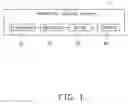
FIG. 1 is a block diagram of an LCD system according to the disclosure.
FIG. 2 is a block diagram of a processor of the LCD system of FIG. 1, according to the disclosure.
FIG. 3 is a flowchart of an operating method for an LCD system, according to the disclosure.
DETAILED DESCRIPTION OF THE EMBODIMENT
Embodiments of the LCD and operating method are described in detail here with reference to the drawings.
As shown in FIG. 1, an LCD system 1 includes a processor 10, a register 20, a driver 30, and a display 40. The display 40 can be a liquid crystal display (LCD) or an organic light-emitting diode (OLED) display. Here, as an example, the display 40 is an LCD.
The register 20 temporarily stores display parameter data, such as color, brightness, and contrast.
The driver 30 reads the display parameter data and renders the image on the display 40 accordingly.
As shown in FIG. 2, the processor 10 includes a parameter-setting module 12, a determination module 13, and a reset module 14.
The parameter-setting module 12 changes the display parameter data stored in the register 20 when the display 40 is initialized.
The determination module 13 determines whether an interval during which the display parameter data in the register 20 exceeds a preset value. Flicker caused by the electrostatic discharge (ESD) can be prevented by the interval being less than average human persistence of vision. The preset value, here as an example, is less than 1/30 second.
The reset module 14 resets the register 20.
The LCD system 1 of the present embodiment, when tested using an ESD gun, maintained stable operation within −5.0˜5.0 kV, a range of tolerance considerably broadened beyond the −2.5˜1.5 kV range tolerated by a currently used display system undergoing the same testing.
FIG. 3 shows a disclosed operating method which may be performed by, for example, the LCD system 1 of FIG. 1.
In step 301, display parameter data is set in the register 20. The data can be color, brightness, and contrast values.
In step 302, it is determined whether an interval during which the display parameter data in the register 20 exceeds a preset value, here, as an example, of less than 1/30 second. If so, step 303 is executed. If not, step 301 is executed.
In step 303, the display parameter data is reset as the current data.
The disclosed LCD display system 1 is reset within an interval compliant with the preset value, allowing the display 40 to recover the original display within the limits of average human persistence of vision. Stable and uninterrupted display is thus provided despite the ESD event.
While the disclosure has been described by way of example and in terms of preferred embodiment, it is to be understood that the disclosure is not limited thereto. To the contrary, it is intended to cover various modifications and similar arrangements (as would be apparent to those skilled in the art). Therefore, the scope of the appended claims should be accorded the broadest interpretation so as to encompass all such modifications and similar arrangements.
It is also to be understood that above description and the claims drawn to a method may include some indication in reference to certain steps. However, the indication used is only to be viewed for identification purposes and not as a suggestion as to an order for the steps.
Claims
What is claimed is:1. A liquid crystal display system, comprising:
a register that stores display parameter data;
a driver capable of reading the display parameter data; and
a processor capable of triggering the display parameter data and comprising:
a parameter-setting module capable of changing the display parameter data;
a determination module capable of determining whether an interval during which the data of the display parameters changes exceeds a preset value; and
a reset module capable of resetting the display parameter data.
2. The LCD system of claim 1, wherein the display parameter data comprise color, brightness, and contrast values.
3. The LCD system of claim 1, wherein the preset value corresponds to the average human persistence of vision.
4. The LCD system of claim 3, wherein the preset value is 1/30 second.
5. An operating method for a liquid crystal display, comprising:
changing display parameter data;
determining if an interval during which the display parameter data changes exceeds a preset value; and
upon the condition the display parameter data changes exceeds the preset value, resetting the display parameter data.
6. The operating method of claim 5, wherein the display parameter data is increased if the interval is less than the preset value.
7. The operating method of claim 5, wherein the display parameter data comprise color, brightness, and contrast conditions.
8. The operating method of claim 5, wherein the preset value is within a time frame of human visual response.
9. The operating method of claim 5, wherein the preset value is 1/30 second.
Images & Drawings included:



Sources:
- United States Patent and Trademark Office - verify current appl. status at the USPTO↗
Similar patent applications:
- » 20100265213
TOUCH LIQUID CRYSTAL DISPLAY AND OPERATING METHOD THEREOF - » 20110037688
Liquid crystal display and operation method thereof - » 20110292310
Liquid crystal display and operation method thereof - » 20130215103
Double-layer switchable stereo liquid crystal display and operation method thereof - » 20110279428
Switch device for source driver of liquid crystal display and operating method thereof - » 20110037741
Liquid crystal display and operation method thereof - » 20090284678
Pixel structure, liquid crystal display and operation method thereof - » 20070153185
System for forming alignment layer of liquid crystal display device and operation method thereof - » 20050162183
Apparatus for automatically displaying the grade of liquid crystal display device and operating method thereof - » 20060208985
Liquid crystal display device and operating method thereof
Recent applications in this class:
- » 20250174166 2025-05-29
DISPLAY DEVICE - » 20250166542 2025-05-22
SHIFT REGISTER AND DRIVING METHOD THEREFOR, GATE DRIVING CIRCUIT, AND DISPLAY DEVICE - » 20250166541 2025-05-22
GATE DRIVING CIRCUIT AND DRIVING METHOD THEREOF, AND DISPLAY DEVICE - » 20250157377 2025-05-15
AMBIENT LIGHT AND PROXIMITY DETECTION METHOD, PHOTOGRAPHING METHOD, AND TERMINAL - » 20250157376 2025-05-15
DISPLAY APPARATUS AND METHOD OF OPERATING THE SAME - » 20250157375 2025-05-15
EMISSION DRIVER, GATE DRIVER, AND DISPLAY DEVICE - » 20250148951 2025-05-08
DRIVER CIRCUIT DRIVING DISPLAY PANEL IN TWO MODES - » 20250148950 2025-05-08
DISPLAY PANEL, DISPLAY DEVICE AND DRIVING METHOD - » 20250140149 2025-05-01
ARRAY SUBSTRATE AND DISPLAY DEVICE - » 20250140148 2025-05-01
DISPLAY DEVICE AND IMAGE DISPLAY METHOD THEREOF
Recent applications for this Assignee:
- » 20140233961 2014-08-21
Optical communication module including optical-electrical signal converters and optical signal generators - » 20140083669 2014-03-27
HEAT SINK - » 20140063746 2014-03-06
Electronic device with heat dissipation assembly - » 20140061224 2014-03-06
AUTOMATIC VENDING MACHINE - » 20140060914 2014-03-06
Enclosure with shield apparatus - » 20140058727 2014-02-27
MULTIMEDIA RECORDING SYSTEM AND METHOD - » 20140055955 2014-02-27
Fastener - » 20140055322 2014-02-27
DISPLAY SYSTEM AND HEAD-MOUNTED DISPLAY APPARATUS - » 20140054439 2014-02-27
CONTAINER DATA CENTER WITH SUPPORTING APPARATUS - » 20140054311 2014-02-27
AUTOMATIC VENDING MACHINE WITH MOVING MEMBER FOR PRODUCTS