Engine exhaust system
US20100229569A1
2010-09-16
12/303,963
2007-06-11
✅ Patent granted
US 8,123,159 B2
2012-02-28
WO; PCT/US2007/013679; 20070611
WO; WO2008/097247; 20080814
Timothy D Collins | Jamie S Stehle
2028-12-18
Abstract:
An exhaust system for an aircraft has a primary exhaust duct for communicating exhaust gas from an engine exhaust exit and is configured for movement with the engine. A secondary exhaust duct is in fluid communication with the primary exhaust duct and is movably mounted to the airframe. The system has means for maintaining a generally consistent relative alignment between the primary duct and the secondary duct.
Inventors:
- Charles Hollimon 2 🇺🇸 North Richland Hills, TX, United States
- John Barber 2 🇺🇸 Arlington, TX, United States
- John Sherrer 2 🇺🇸 Roanoke, TX, United States
- Robert Laramee 2 🇺🇸 Fort Worth, TX, United States
- John Herman Sherrer 2 🇺🇸 Keller, TX, United States
Assignee:
- TEXTRON INNOVATIONS INC. 1,482 🇺🇸 PROVIDENCE, RI, United States
Interested in similar patents?
Get notified when new applications in this technology area are published.
Classification:
F01D25/30 » CPC main
Component parts, details, or accessories, not provided for in, or of interest apart from, other groups Exhaust heads, chambers, or the like
B64D33/04 » CPC further
Arrangements in aircraft of power plant parts or auxiliaries not otherwise provided for of exhaust outlets or jet pipes
F01D25/28 » CPC further
Component parts, details, or accessories, not provided for in, or of interest apart from, other groups Supporting or mounting arrangements, e.g. for turbine casing
F02K1/52 » CPC further
Plants characterised by the form or arrangement of the jet pipe or nozzle; Jet pipes or nozzles peculiar thereto Nozzles specially constructed for positioning adjacent to another nozzle or to a fixed member, e.g. fairing
F02K1/80 » CPC further
Plants characterised by the form or arrangement of the jet pipe or nozzle; Jet pipes or nozzles peculiar thereto; Other construction of jet pipes Couplings or connections
F05D2230/64 » CPC further
Manufacture; Assembly methods using positioning or alignment devices for aligning or centring, e.g. pins
F05D2250/311 » CPC further
Geometry; Arrangement of components according to the direction of their main axis or their axis of rotation the axes being in line
Y02T50/60 » CPC further
Aeronautics or air transport Efficient propulsion technologies, e.g. for aircraft
Y02T50/60 » CPC further
Aeronautics or air transport Efficient propulsion technologies, e.g. for aircraft
F02C7/20 » CPC further
Features, components parts, details or accessories, not provided for in, or of interest apart form groups - ; Air intakes for jet-propulsion plants Mounting or supporting of plant; Accommodating heat expansion or creep
B64C15/12 IPC
Attitude, flight direction, or altitude control by jet reaction the jets being propulsion jets the power plant being tiltable
Description
TECHNICAL FIELD
The technical field is engine exhaust systems.
DESCRIPTION OF THE PRIOR ART
In conventional aircraft exhaust systems, an exhaust ejector has a primary exhaust gas duct attached to an engine flange for receiving exhaust gas from the engine and passing exhaust gas through the primary exhaust gas duct. The conventional exhaust ejector also has a secondary engine exhaust gas duct attached to the airframe and initially concentric with the primary exhaust duct. However, shifting, vibrating, or other relative movement of the engine with respect to the airframe often results in the primary exhaust gas duct becoming non-concentric with the secondary exhaust gas duct.
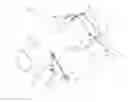
For example, FIG. 1 shows a prior-art engine exhaust system comprising a primary exhaust duct 13, a secondary exhaust duct 15. Primary exhaust duct 13 is attached directly to engine 17 and moves with engine 17, whereas secondary exhaust duct 15 is attached to airframe 19 and remains in a generally fixed position relative to airframe 19. When engine 17 moves relative to airframe 19, primary duct 13 and secondary duct 15 may become non-coaxial and non-concentric. FIG. 1 illustrates this, as axis 21 of primary duct 13 is not coaxial with axis 23 of secondary duct 15.
When primary duct 13 is not concentric with secondary duct 15, the exhaust gas flow in secondary duct 15 may be directionally biased, resulting in poor ejector performance. The misalignment can cause several undesirable conditions, including turbulent exhaust gas flow within secondary duct 15 and/or direct impinging of portions of the flow of hot exhaust gas 25 on inner surface 27 of secondary duct 15. Both of these conditions can result in overheating of portions of secondary duct 15. In addition, less than optimal exhaust gas ejection may include higher engine compartment temperatures, higher exhaust gas temperatures, and these effects may negatively impact other components of the aircraft.
BRIEF DESCRIPTION OF THE DRAWINGS
FIG. 1 is a cross-sectional side view of a prior-art engine exhaust system.
FIG. 2 is an oblique view of an embodiment of an engine exhaust system.
FIG. 3 is a top view of the engine exhaust system of FIG. 1.
FIG. 4 is a side view of the engine exhaust system of FIG. 1.
FIG. 5 is an end view of the engine exhaust system of FIG. 1.
FIG. 6 is a cross-sectional side view of the engine exhaust system of FIG. 1.
DESCRIPTION OF THE PREFERRED EMBODIMENT
To resolve the issue of aircraft exhaust ducts undesirably becoming non-concentric due to relative movement between the engine and the airframe of an aircraft, an engine exhaust system provides a means for linking the two ducts together so that even with engine movement relative to the airframe, the two ducts remain concentric. Therefore, if engine movement occurs for any reason, the airframe mounted secondary duct is pushed or pulled into consistent alignment with the primary duct, maintaining maximum ejector performance.
Referring now to FIGS. 2 through 6 in the drawings, an embodiment of an engine exhaust system 101 is illustrated. Exhaust system 101 comprises a tubular primary exhaust duct 103 (only shown in FIG. 6), a tubular secondary exhaust duct 105, and a slip joint 107 for allowing relative axial movement between ducts 103, 105. Primary exhaust duct 103 and secondary exhaust duct 105 are also held in alignment by a drag link 109. Secondary exhaust duct 105 is connected to an airframe 111 and is supported by vertical struts 113 and a lateral strut 115, which are preferably struts connected at each end with uni-ball connectors. Vertical struts 113 carry vertical loads, and lateral strut 115 carries side loads. Preferably, the strut attachments are located on or very close to the center of gravity to avoid any undesired moments.
Primary exhaust duct 103 is attached directly to engine 117 for allowing exhaust gas to flow from engine 117 through primary exhaust duct 103 and into secondary duct 105. A forward end of secondary exhaust duct 105 is slipped concentrically into and sealably joined to an engine flange 119 through the use of o-ring type seal 121 in slip joint 107, and use of o-ring seal 121 allows for thermal expansion of ducts 103, 105. O-ring seal 107 is preferably a high-temperature o-ring type seal. Slip joint 107 also supports duct 105 in both vertical and horizontal directions, but not in an axial direction. Axial control of duct 105 is accomplished with drag link 109, which connects flange 119 to secondary duct 105. The mounts of drag link 109 are preferably uni-ball connectors, and this configuration allows for relative axial movement between engine 117 and secondary duct 105, but this does not allow for vertical or lateral movement. The single degree of freedom associated with drag link 109 allows engine movement to push or pull secondary exhaust duct 105 consistently with primary duct 103 and keeps the system in the desired alignment.
The exhaust system provides for several advantages, including: (1) the ability to maintain primary and secondary exhaust ducts in a desired orientation; (2) low weight; (3) increased reliability and durability; and (4) easy installation.
This description includes reference to illustrative embodiments, but it is not intended to be construed in a limiting sense. Various modifications and combinations of the illustrative embodiments, as well as other embodiments, will be apparent to persons skilled in the art upon reference to the description.
Claims
1. An exhaust system for an aircraft having an airframe and an engine with an exhaust exit, the exhaust system comprising:
a primary exhaust duct adapted to communicate exhaust gas from the engine exhaust exit and configured for movement with the engine;
a secondary exhaust duct in fluid communication with the primary exhaust duct and adapted to be movably mounted to the airframe; and
means for maintaining a generally consistent relative alignment between the primary duct and the secondary duct.
2. The exhaust system according to claim 1, wherein the relative alignment is generally coaxial.
3. The exhaust system according to claim 1, wherein the means for maintaining a generally consistent relative alignment comprises a drag link adapted to connect an end portion of the secondary duct to the exhaust exit.
4. The exhaust system according to claim 1, wherein the means for maintaining a generally consistent relative alignment comprises:
a drag link adapted to connect an end portion of the secondary duct to the exhaust exit; and
at least one strut adapted to connect the secondary duct to an airframe.
5. An aircraft engine system, comprising:
an engine having an exhaust exit;
a primary exhaust duct in fluid communication with the exhaust exit and configured for movement with the engine;
a secondary exhaust duct in fluid communication with the primary exhaust duct and adapted to be movably mounted to the airframe; and
means for maintaining a generally consistent relative alignment between the primary duct and the secondary duct.
6. The engine system according to claim 5, wherein the relative alignment is generally coaxial.
7. The engine system according to claim 5, wherein the means for maintaining a generally consistent relative alignment comprises a drag link connecting the secondary duct to the exhaust exit.
8. The engine system according to claim 5, wherein the means for maintaining a generally consistent relative alignment comprises:
a drag link connecting the secondary duct to the engine exhaust exit; and
at least one strut adapted to connect the secondary duct to an airframe.
9. An aircraft, comprising:
an airframe;
an engine having an exhaust exit;
a primary exhaust duct in fluid communication with the exhaust exit and configured for movement with the engine;
a secondary exhaust duct in fluid communication with the primary exhaust duct and movably mounted to the airframe; and
means for maintaining a generally consistent relative alignment between the primary duct and the secondary duct.
10. The aircraft according to claim 9, wherein the relative alignment is generally coaxial.
11. The aircraft according to claim 9, wherein the means for maintaining a generally consistent relative alignment comprises a link connecting the secondary duct to the exhaust exit.
12. The aircraft according to claim 9, wherein the means for maintaining a generally consistent relative alignment comprises:
a link connecting the secondary duct to the engine exhaust exit; and
at least one strut connecting the secondary duct to the airframe.
13. An aircraft, comprising:
an airframe;
an engine having an exhaust exit;
a primary exhaust duct in fluid communication with the exhaust exit and configured for movement with the engine;
a secondary exhaust duct in fluid communication with the primary exhaust duct and movably mounted to the airframe;
a link connecting the secondary duct to the engine exhaust exit; and
at least one strut connecting the secondary duct to the airframe;
wherein the link and at least one strut cooperate to maintain a generally consistent relative alignment between the primary duct and the secondary duct.
Images & Drawings included:


Sources:
- United States Patent and Trademark Office - verify current appl. status at the USPTO↗
Similar patent applications:
- » 20170167339
Engine exhaust system and control system for an engine exhaust system - » 20150301009
Abnormality detection system of engine exhaust system - » 20230184146
A MUFFLER HEAT-EXCHANGER FOR AN ENGINE EXHAUST, AND ENGINE EXHAUST SYSTEM, AND AN ENGINE SYSTEM - » 20130064744
HEATED INJECTION SYSTEM FOR DIESEL ENGINE EXHAUST SYSTEMS - » 20090158712
Method for controlling injection in a diesel engine exhaust aftertreatment system and diesel engine with exhaust aftertreatment system - » 20200386141
Methods and systems for estimating a flow of gases in a scavenge exhaust gas recirculation system of a split exhaust engine system - » 20200386127
Methods and systems for estimating a composition of flow through a scavenge exhaust gas recirculation system of a split exhaust engine system - » 20190063285
EMISSIONS CONTROL SYSTEM OF A COMBUSTION ENGINE EXHAUST SYSTEM - » 20200400106
Methods and systems for adjusting a flow of gases in a scavenge exhaust gas recirculation system of a split exhaust engine system - » 20170356397
Engine system having exhaust gas recirculation apparatus and method of controlling the engine system having exhaust gas recirculation apparatus
Recent applications in this class:
- » 20250250915 2025-08-07
MODULAR EXHAUST DEVICE - » 20250207515 2025-06-26
TURBINE AND TURBOCHARGER - » 20250198312 2025-06-19
SOUND ATTENUATED ANGLED LOUVER WITH DRIP TRAY FOR TURBINE POWER GENERATOR ENCLOSURES - » 20250179939 2025-06-05
DESIGN OF A REAR-CONE EXHAUST DUCT FOR ADDITIVE MANUFACTURING - » 20250109696 2025-04-03
Gas Turbine Exhaust Diffuser Horizontal Split Configuration - » 20240360774 2024-10-31
System having axial-radial exhaust diffuser and method of use - » 20240175378 2024-05-30
Ejection tube incorporated in a central ventilation tube - » 20240167396 2024-05-23
TURBINE ENGINE EXHAUST DUCT SYSTEM AND METHODS FOR NOISE DAMPENING AND ATTENUATION - » 20240052760 2024-02-15
Turbine - » 20230374916 2023-11-23
Fracturing Device, Engine and Exhaust Apparatus Thereof
Recent applications for this Assignee:
- » 20250289588 2025-09-18
ROTARY AIRCRAFT TIE-DOWN FIXTURE - » 20250289558 2025-09-18
TURBULENT AIRFLOW DEFLECTOR FOR ROTORCRAFT SLIDING DOOR - » 20250281965 2025-09-11
HAND-HELD IMPACT TOOL FOR CREATING DENT FLAWS - » 20250276785 2025-09-04
Dynamically Tuned Tail Assemblies for Rotorcraft - » 20250276784 2025-09-04
Dynamically Tuned Tail Assemblies for Rotorcraft - » 20250264874 2025-08-21
NAVIGATION SYSTEM WITH CAMERA ASSIST - » 20250263167 2025-08-21
Tilting Hexrotor Aircraft - » 20250250005 2025-08-07
Proprotor Lockout Systems for Tiltrotor Aircraft - » 20250250001 2025-08-07
HYDRAULIC ENERGY RETENTION - » 20250242929 2025-07-31
HYBRID PROPULSION DRIVE TRAIN SYSTEM FOR TILTROTOR AIRCRAFT