Coated tablet
US20100233262A1
2010-09-16
12/304,015
2007-06-12
✅ Patent granted
US 8,282,956 B2
2012-10-09
WO; PCT/JP2007/061777; 20070612
WO; WO2007/145191; 20071221
Susan Tran
2029-04-17
Abstract:
A main object of the present invention is to provide a novel coated tablet which contains a drug having a guanidino group and does not suffer an obvious color change even when packed in a one-dose pack together with a drug having a (5-methyl-2-oxo-1,3-dioxol-4-yl)methyl (DMDO) group. The present invention provides a coated tablet characterized in that an uncoated tablet containing a drug having a guanidino group has been coated with a polyvinyl alcohol for film coating which comprises polyvinyl alcohol, acrylic acid, and methyl methacrylate.
Inventors:
- Hironobu KATO 2 🇯🇵 Odawara, Japan
- Hirokazu SAKAMOTO 2 🇯🇵 Ichinomiya-shi, Japan
- Hironobu Kato 1 🇯🇵 Odawara-shi, Japan
- Hirokazu Sakamoto 2 🇯🇵 Ichinomiya, Japan
Assignee:
- NIPPON SHINYAKU CO., LTD. 73 🇯🇵 Kyoto, Japan
- Nippon Shinyaku Co. Ltd. 1 🇯🇵 Kisshoin Nishinosho Monguchicho Minami-Ku Kyoto-Shi Kyoto, Japan
Interested in similar patents?
Get notified when new applications in this technology area are published.
Classification:
A61K31/4178 » CPC further
Medicinal preparations containing organic active ingredients; Heterocyclic compounds having nitrogen as a ring hetero atom, e.g. guanethidine or rifamycins having five-membered rings with two or more ring hetero atoms, at least one of which being nitrogen, e.g. tetrazole 1,3-Diazoles not condensed 1,3-diazoles and containing further heterocyclic rings, e.g. pilocarpine, nitrofurantoin
A61K9/284 » CPC main
Medicinal preparations characterised by special physical form; Pills, tablets, discs, rods; Dragees; Coated pills or tablets, e.g. with film or compression coating; Coating materials; Organic macromolecular compounds obtained by reactions only involving carbon-to-carbon unsaturated bonds, e.g. polyvinyl pyrrolidone
A61K9/2846 » CPC further
Medicinal preparations characterised by special physical form; Pills, tablets, discs, rods; Dragees; Coated pills or tablets, e.g. with film or compression coating; Coating materials; Organic macromolecular compounds obtained by reactions only involving carbon-to-carbon unsaturated bonds, e.g. polyvinyl pyrrolidone Poly(meth)acrylates
A61K31/164 » CPC further
Medicinal preparations containing organic active ingredients; Amides, e.g. hydroxamic acids of a carboxylic acid with an aminoalcohol, e.g. ceramides
A61K31/24 » CPC further
Medicinal preparations containing organic active ingredients; Esters, e.g. nitroglycerine, selenocyanates of carboxylic acids having an aromatic ring attached to a carboxyl group having an amino or nitro group
A61K31/5383 » CPC further
Medicinal preparations containing organic active ingredients; Heterocyclic compounds having nitrogen as a ring hetero atom, e.g. guanethidine or rifamycins having six-membered rings with at least one nitrogen and one oxygen as the ring hetero atoms, e.g. 1,2-oxazines 1,4-Oxazines, e.g. morpholine ortho- or peri-condensed with heterocyclic ring systems
A61P3/10 » CPC further
Drugs for disorders of the metabolism for glucose homeostasis for hyperglycaemia, e.g. antidiabetics
A61P9/12 » CPC further
Drugs for disorders of the cardiovascular system Antihypertensives
A61P31/04 » CPC further
Antiinfectives, i.e. antibiotics, antiseptics, chemotherapeutics Antibacterial agents
A61K38/12 IPC
Medicinal preparations containing peptides; Peptides having up to 20 amino acids in a fully defined sequence; Derivatives thereof Cyclic peptides, e.g. bacitracins; Polymyxins; Gramicidins S, C; Tyrocidins A, B or C
A61K38/10 IPC
Medicinal preparations containing peptides; Peptides having up to 20 amino acids in a fully defined sequence; Derivatives thereof Peptides having 12 to 20 amino acids
A61K38/09 IPC
Medicinal preparations containing peptides; Peptides having up to 20 amino acids in a fully defined sequence; Derivatives thereof; Peptides having 5 to 11 amino acids Luteinising hormone-releasing hormone [LHRH], i.e. Gonadotropin-releasing hormone [GnRH] ; Related peptides
A61K38/08 IPC
Medicinal preparations containing peptides; Peptides having up to 20 amino acids in a fully defined sequence; Derivatives thereof Peptides having 5 to 11 amino acids
A61K31/496 IPC
Medicinal preparations containing organic active ingredients; Heterocyclic compounds having nitrogen as a ring hetero atom, e.g. guanethidine or rifamycins having six-membered rings with two nitrogen atoms as the only ring heteroatoms, e.g. piperazine Non-condensed piperazines containing further heterocyclic rings, e.g. rifampin, thiothixene
A61K31/351 IPC
Medicinal preparations containing organic active ingredients; Heterocyclic compounds having oxygen as the only ring hetero atom, e.g. fungichromin having six-membered rings with one oxygen as the only ring hetero atom not condensed with another ring
A61K31/245 » CPC further
Medicinal preparations containing organic active ingredients; Esters, e.g. nitroglycerine, selenocyanates of carboxylic acids having an aromatic ring attached to a carboxyl group having an amino or nitro group Amino benzoic acid types, e.g. procaine, novocaine
A61K31/155 » CPC further
Medicinal preparations containing organic active ingredients; Amines Amidines (), e.g. guanidine (HN—C(=NH)—NH), isourea (N=C(OH)—NH), isothiourea (—N=C(SH)—NH)
A61K9/20 IPC
Medicinal preparations characterised by special physical form Pills, tablets, discs, rods
A61K9/28 IPC
Medicinal preparations characterised by special physical form; Pills, tablets, discs, rods Dragees; Coated pills or tablets, e.g. with film or compression coating
Description
This is a U.S. national phase application under 35 U.S.C. §371 of International Patent Application No. PCT/JP2007/061777, filed Jun. 12, 2007, and claims the benefit of Japanese Patent Application No. 2006-162972, filed Jun. 13, 2006. The International Application was published in Japanese on Dec. 21, 2007 as WO 2007/145191. The disclosures of all the prior applications are hereby incorporated by reference in their entireties.
FIELD OF THE INVENTION
The present invention relates to a coated tablet which is coated with a polyvinyl alcohol copolymer for film coating.
BACKGROUND
For example, it is reported that, when a commercial metformin hydrochloride-containing tablet and a commercial olmesartan medoxomil-containing tablet are packed together in a one-dose pack, then the metformin hydrochloride-containing tablet turns reddish. This phenomenon is assumed to be caused by the event that the (5-methyl-2-oxo-1,3-dioxol-4-yl)methyl (hereinafter referred to as “DOMDO”) group released from olmesartan medoxomil in the olmesartan medoxomil-containing tablet is hydrolyzed and converted into diacetyl and acetoin, and then these react with the guanidino group of metformin hydrochloride in the metformin hydrochloride-containing tablet. This reaction is known as Voges-Proskauel (VP) reaction. As a matter of course, however, the discoloration of drugs is unfavorable and it is considered necessary to prevent the discoloration by means of some devices in drug preparation methods.
In general, for the purpose of preventing or masking discoloration or coloration of medical and pharmaceutical tablets, uncoated tablets are coated. Depending on the properties of the compounds in uncoated tablets, the coating methods and coating agents are selected.
Recently, a polyvinyl alcohol copolymer for film-coating comprising polyvinyl alcohol (referred to hereinafter as “PVA”), acrylic acid and methyl methacrylate has been developed. This was first developed as a agent of capsules shell for solution-filling (see, for example, International Publication WO 02/17848); but owing to its excellent film formability, physical strength, adhesiveness, oxygen shieldability and the like, it has come to be applied as a film coating agent (POVACOAT (trade name)) (see, for example, PHARM TECH JAPAN (2005) vol. 21, no. 2, pp. 257-261; Proceedings of the 22th Synposium for Drug Formulation and Particle Design, pp. 77-80 (2005 in Hamamatsu).
SUMMARY OF THE INVENTION
A main object of the present invention is to provide a novel coated tablet comprising a guanidino group-having drug, which does not exhibit obvious discoloration when packed together with a DMDO group-having drug in a one-dose pack.
The present inventors have intensively studied and found that the above object is achieved by a coated tablet in which an uncoated tablet containing guanidino group-having drug is coated with a PVA copolymer for film-coating (hereinafter simply referred to as “PVA copolymer”) comprising PVA, acrylic acid and methyl methacrylate.
The present invention includes, for example:
- (1) A coated tablet characterized in that an uncoated tablet containing a guanidino group-having drug is coated with a PVA copolymer comprising PVA, acrylic acid and methyl methacrylate.
- (2) The coated tablet of the above (1), wherein the PVA, one constituent of the PVA copolymer has a degree of polymerization ranging from 400 to 600 and a degree of saponification ranging from 85 to 90 mol %.
- (3) The coated tablet of the above (1) or (2), wherein the polymerization ratio of the constituents of the PVA copolymer is such that PVA is within a range of from 70 to 85% by weight; acrylic acid is within a range of from 2.0 to 8.0% by weight; and methyl methacrylate is within a range of from 17 to 21% by weight.
- (4) The coated tablet of any one of the above (1) to (3), which is coated with the PVA copolymer within a range of from 0.5 to 20.0% by weight relative to the weight of the uncoated tablet.
- (5) The coated tablet of any one of the above (1) to (4), wherein the guanidino group-having drug is metformin hydrochloride, camostat mesilate, zanamivir hydrate, cetrorelix acetate, tegaserodmaleate, desmopressin acetate, eptifibatide, bivalirudin, ganirelix acetate, buserelin acetate, famotidine, triptorelin pamoate, pinacidil, histrelin, thymopentin, adrenochrome guanylhydrazone mesilate, cimetidine, benexate hydrochloride betadex, gusperimus hydrochloride, nafamostat mesilate, guanabenz acetate, or argatroban.
- (6) A one-dose pack comprising at least the coated tablet of any one of the above (1) to (5) and a tablet that contains a drug having a (5-methyl-2-oxo-1,3-dioxol-4-yl)methyl (DMDO) group.
- (7) The pack of the above (6), wherein the DMDO group-having drug is olmesartan medoxomil, prulifloxacin, or lenampicillin hydrochloride.
BRIEF DESCRIPTION OF DRAWINGS
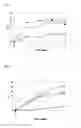
FIG. 1 Color change profile of tablets is shown. The vertical axis indicates color difference (ΔE), and the horizontal axis indicates time (week). In the drawing, -□- indicates the result of coated tablets of the present invention of Example 1; -□- indicates the result of hydroxypropylmethyl cellulose 2910-coated tablets of Comparative Example 1; and -- indicates the result of Glycoran tablets (uncoated tablets).
FIG. 2 Color change profile of tablets is shown. The vertical axis indicates color difference (ΔE), and the horizontal axis indicates time (week). In the drawing, -□- indicates the result of coated tablets of the invention of Example 1; -⋄- indicates the result of PULLULAN (★)-coated tablets of Comparative Example 2; and -- indicates the result of Glycoran tablets (uncoated tablets).
DETAILED DESCRIPTION OF THE INVENTION
The “PVA copolymer” used in the present invention is composed of PVA, acrylic acid and methyl methacrylic acid. The polymerization ratio of each constituent of the PVA copolymer is not particularly limited insofar as it can form a film as the PVA copolymer, and, for example, PVA is preferably within a range of from 70 to 85% by weight, acrylic acid is preferably within a range of from 2.0 to 8.0% by weight; and methyl methacrylate is preferably within a range of from 17 to 21% by weight. More preferably, PVA is within a range of from 75 to 80% by weight; acrylic acid is within a range of from 2.5 to 7.5% by weight; and methyl methacrylate is within a range of from 17.5 to 20% by weight.
The suitable “PVA” as one of the constituents of the PVA copolymer is such that the polymerization ratio is, for example, within the range of from 400 to 600, preferably within the range of from 450 to 550, and the degree of saponification is, for example, within the range of from 85 to 90 mol %, preferably within the range of from 86 to 89 mol %.
The PVA copolymer may be a commercial POVACOAT (registered mark, Nisshin-Kasei) in which PVA, acrylic acid and methyl methacrylate are copolymerised at a ratio of 80.0% by weight, 2.5% by weight and 17.5% by weight, respectively, and polymerization degree of the said PVA is 500 and saponification degree of the said PVA is within a range of from 86.5 to 89.0 mol % by weight.
The “guanidino group-having drug” contained in the coated tablet of the present invention refers to a drug having a guanidino group or a substituted guanidino group in the chemical structure of the drug. Herein, the substituted guanidino group refers to the guanidino group having the same or different 1 to 4 substituents at a substitutable position.
Examples of the substituents may include, for example, straight or branched alkyl, cyano, nitro, and pyridyl (e.g., 2-pyridyl, 3-pyridyl, 4-pyridyl).
Specific examples of the “guanidino group-having drug” may include metformin hydrocloride, camostat mesilate, zanamivir hydrate, cetrorelix acetate, tegaserod maleate, desmopressin acetate,eptifibatide, bivalirudin, ganirelix acetate, buserelin acetate, famotidine, triptorelin pamoate, pinacidil, histrelin, thymopentin, adrenochrome guanylhydrazone mesilate, cimetidine, benexate hydrochloride betadex, gusperimus hydrochloride, nafamostat mesilate, guanabenz acetate or argatroban.
The “DMDO group-having drug” refers to a drug having a DOMDO group in the chemical structure of the drug. Specific examples of the “DMDO group-having drug” may include olmesartan medoxomil, prulifloxacin or lenampicillin hydrochloride.
In the present invention, an uncoated tablet before being coated may be obtained by granulating an active ingredient such as guanidino group-having drug with an excipient, a disintegrant, a binder and so on and milling, followed by mixing the milled powder with a lubricant, and then compacting into a tablet. As for the excipient, the disintegrant, the binder and the lubricant, those materials which are commonly used for preparing tablets may be utilized.
The coated tablet of the present invention may be obtained by coating an uncoated tablet comprising a guanidino group-having drug with a coating solution containing a PVA copolymer by an ordinary method.
The content of the PVA copolymer in the coated tablet of the present invention is usually within a range of from 0.5 to 20% by weight relative to uncoated tablet weight, preferably within a range of from 1.0 to 10% by weight and more preferably within a range of from 1.5 to 5.0% by weight.
In addition, the content of the PVA copolymer in the coating layer may be usually within a range of from 40 to 80% by weight, preferably within a range of from 45 to 75% by weight and more preferably within a range of from 50 to 70% by weight.
An additive commonly used in the coating layer can be contained if necessary. The additive is not particularly limited insofar as it is a pharmaceutically acceptable additive, and, for example, coating agent (e. g., titanium dioxides, precipitated calcium carbonate), lubricant (e. g., talc), adsorbent (e. g., light anhydrous silicic acid, a hydrous silicon dioxide, magnesium silicate), colorant (e. g., red iron oxide, yellow iron oxide, titanium dioxide, tar dye) can be included. Among them, titanium dioxide is more preferable. For example, these additives can be included in an amount of less than 5% by weight in a coating solution together with a PVA copolymer, and can be involved in a coating layer through coating an uncoated tablet with the coating solution.
Hereinafter, the present invention is described in more detail by reference to the Examples, Comparative Examples and Test Examples. As a matter of course, the present invention is not limited to the following examples.
Example 1
Commercial Glycoran tablets (250 mg, uncoated tablets, by Nippon-Shinyaku) of a guanidino group-having drug were obtained; 10,800 g of the Glycoran tablets were put into an aeration drying-type coating machine (DRC-650 type, by Powrex); using a coating solution prepared by dissolving or suspending 400 g of a PVA copolymer (POVACOAT (registered trademark), by Nisshin Kasei), 264 g of titanium dioxide (TIPAQUE A-100, by Ishihara Sangyo) and 136 g of talc (Talc PKP-81, by Fuji Talc Industrial Co.) in 7,200 g of purified water, coated tablets of the present invention coated with the PVA copolymer in a ratio of 3.7% (w/w) relative to the weight of the uncoated tablet were obtained.
Comparative Example 1
Commercial Glycoran tablets (250 mg, uncoated tablets, by Nippon-Shinyaku) were obtained; 10,800 g of the Glycoran tablets were put into an aeration drying-type coating machine (DRC-650 type, by Powrex); using a coating solution prepared by dissolving or suspending 435.2 g of hydroxy propylmethyl cellulose 2910, 89.6 g of propylene glycol and 115.2 g of titanium dioxide (TIPAQUE A-100, by Ishihara Sangyo) in 5,760 g of purified water, comparative coated tablets coated with the hydroxy propylmethyl cellulose 2910 in a ratio of 4.0% (w/w) relative to the weight of the uncoated tablet, were obtained.
Comparative Example 2
Using a coating agent characterized by oxygen permeation shieldability like POVACOAT, pullulan (by Hayashibara), comparative coated tablets were produced.
Commercial Glycoran tablets (250 mg, uncoated tablets; by Nippon-Shinyaku) were obtained; 10,800 g of the Glycoran tablets were put into an aeration drying-type coating machine (DRC-650 type, by Powrex); using a coating solution prepared by dissolving 400 g of pullulan (by Hayashibara) in 4,600 g of pure water, comparative coated tablets coated with the pullulan in a ratio of 3.7% (w/w) relative to the weight of the uncoated tablet were obtained.
Test Example 1
Commercial Glycoran tablets (uncoated tablets), coated tablets produced in Example 1 and Comparative Example 1, three tablets, each were respectively put into a recloseable polyethylene bag (Unipack A-4, by Seisannippon) together with three tablets of a DMDO group-having drug Olmetec (20 mg, by Daiichi-Sankyo), and stored under the conditions of 40° C. and 75% RH. After 1, 2, 3 and 4 weeks, the tablets were checked for discoloration with a color difference meter (spectral color difference meter SE2000, by Nippon Denshoku Kogyo).
The results are shown in FIG. 1. When the color difference (ΔE) is 3 or above, the reddish discoloration of the tablet is recognized with the naked eye; but significant color change could not be discernible with the naked eye when the value is not more than 2.5. The color difference (ΔE) means the numerical value converted from the data of color difference between the aged tablets and the original tablets before the test.
As is obvious from FIG. 1, the coated tablets of the present invention produced in Example 1 were remarkably prevented from being discolored, as compared with the Glycoran tablets and the hydroxypropylmethyl cellulose 2910-coated tablets produced in Comparative Example 1.
Test Example 2
Commercial Glycoran tablets (uncoated tablets), coated tablets produced in Example 1 and Comparative Example 2, three tablets, each were respectively packed with cellophanpoly (by Nihonshokai) together with three tablets of a DMDO group-having drug Olmetec (20 mg, by Daiichi-Sankyo), and stored under the conditions of 40° C. and 75% RH. After 1 and 2 weeks, the tablets were checked for discoloration with a color difference meter (spectral color difference meter, SE2000, by Nippon Denshoku Kogyo).
The results are shown in FIG. 2. When the color difference (ΔE) is 3 or above, the reddish discoloration of the tablet is recognized with the naked eye; but any clear color change could not be discernible with the naked eye when the value is not more than 2.5.
As is obvious from FIG. 2, the coated tablets of the present invention produced in Example 1 were remarkably prevented from being discolored, as compared with the Glycoran tablets produced in Comparative Example 2.
INDUSTRIAL APPLICABILITY
As described above, the coated tablet of the present invention can markedly prevent reddish discoloration reaction that could occur when the tablet was kept in contact with or in close contact with a DMDO group-having drug. Accordingly, the coated tablet of the present invention is useful since the color change of the tablet can be prevented even when packed in a one-dose pack together with a DMDO group-having drug.
Claims
1. A coated tablet prepared by coating an uncoated tablet containing a guanidino group-having drug, with a polyvinyl alcohol copolymer for film-coating comprising polyvinyl alcohol, acrylic acid and methyl methacrylate.
2. The coated tablet as claimed in claim 1, wherein the polyvinyl alcohol, one constituent of the polyvinyl alcohol copolymer for film-coating has a polymerization degree of from 400 to 600 and a saponification degree of from 85 to 90 mol %.
3. The coated tablet as claimed in claim 1, wherein the polymerization ratio of the constituents of the polyvinyl alcohol copolymer for film-coating is such that polyvinyl alcohol is within a range of from 70 to 85% by weight; acrylic acid is within a range of from 2.0 to 8.0% by weight; and methyl methacrylate is within a range of from 17 to 21% by weight.
4. The coated tablet as claimed in claim 1, which is coated with the polyvinyl alcohol copolymer for film-coating within a range of from 0.5 to 20.0% by weight relative to the weight of the uncoated tablet.
5. The coated tablet as claimed in claim 1, wherein the guanidino group-having drug is metformin hydrochloride, camostat mesilate, zanamivir hydrate, cetrorelix acetate, tegaserod maleate, desmopressin acetate, eptifibatide, bivalirudin, ganirelix acetate, buserelin acetate, famotidine, triptorelin pamoate, pinacidil, histrelin, thymopentin, adrenochrome guanylhydrazone mesilate, cimetidine, benexate hydrochloride betadex, gusperimus hydrochloride, nafamostat mesilate, guanabenz acetate, or argatroban.
6. A one-dose pack comprising the coated tablet of claim 1 and a tablet comprising a drug having a (5-methyl-2-oxo-1,3-dioxol-4-yl)methyl (DMDO) group.
7. The pack as claimed in claim 6, wherein the DMDO group-having drug is olmesartan medoxomil, prulifloxacin, or lenampicillin hydrochloride.
Images & Drawings included:
Sources:
- United States Patent and Trademark Office - verify current appl. status at the USPTO↗
Similar patent applications:
- » 20120195992
Method and apparatus for test pressing multi-layer tablets or coated tablets - » 20060186568
Method and apparatus for test pressing multi-layer tablets or coated tablets - » 20060100786
Pan coating simulation for determining tablet coating uniformity - » 20100221338
Coated Tablets Of 6-(5-Chloro-2-Pyridyl)-5-[(4-Methyl-1-Piperazinyl)Carbonyloxy]-7-Oxo-6,7-Dihydro-5H-Pyrrolo[3,4-b]Pyrazine And Methods For Measuring Effectiveness Of Coating - » 10428557
Product discharge and cleaning assembly for an apparatus for coating tablets - » 10429634
Oxacarbazepine film-coated tablets - » 20050123612
Ribavirin granulate for producing coated tablets - » 10428007
Coated tablets - » 20050152217
Rotary drum for tablet coating with reverse-direction unloading - » 10687064
Tablet coating
Recent applications in this class:
- » 20250177311 2025-06-05
PHARMACEUTICAL COMPOSITION FOR ORAL ADMINISTRATION COMPRISING AMINOPYRIMIDINE DERIVATIVE OR PHARMACEUTICALLY ACCEPTABLE SALT, HYDRATE, OR SOLVATE THEREOF - » 20240226020 2024-07-11
SOTORASIB FORMULATION - » 20230190662 2023-06-22
Efficacy of a Gastro-Retentive Bile Acid Sequestrant Dosage Form - » 20230157962 2023-05-25
NOVEL EXTENDED RELEASE COMPOSITION OF 2-(2- AMINOTHIAZOL-4-YL)-N-[4-(2{[(2R)-2-HYDROXY-2-PHENYLETHYL] AMINO} ETHYL) PHENYL] ACETAMIDE - » 20230112800 2023-04-13
DELAYED RELEASE NICLOSAMIDE FORMULATION - » 20230098948 2023-03-30
BIOERODIBLE DRUG DELIVERY DEVICES - » 20220378709 2022-12-01
NOVEL FILM COATING COMPOSITION - » 20220202724 2022-06-30
BIOERODIBLE DRUG DELIVERY DEVICES - » 20220062184 2022-03-03
Pharmaceutical Composition for Oral GLP-1 Administration Comprising a Tablet Core and Immediate Release Coating - » 20210322323 2021-10-21
Pharmaceutical composition for oral administration comprising aminopyrimidine derivative or pharmaceutically acceptable salt, hydrate, or solvate thereof
Recent applications for this Assignee:
- » 20250042933 2025-02-06
ANTISENSE NUCLEIC ACIDS - » 20240318181 2024-09-26
Antisense oligonucleotide targeting ATN1 mRNA or pre-mRNA - » 20230303500 2023-09-28
Crystalline substituted pyrazines as PGI2 receptor agonists - » 20230097387 2023-03-30
Antisense nucleic acid inducing skipping of exon 51 - » 20220333112 2022-10-20
Antisense nucleic acid that induces skipping of exon 50 - » 20220227567 2022-07-21
Loading tool and measuring container kit - » 20220049257 2022-02-17
Antisense nucleic acids - » 20210371412 2021-12-02
Azabenzimidazole compounds and pharmaceutical - » 20210261596 2021-08-26
Method for preparing oligonucleic acid compound - » 20210198306 2021-07-01
Antisense nucleic acids