VIDEO MONITORING SYSTEM, IMAGE ENCODER AND ENCODING METHOD THEREOF
US20100253777A1
2010-10-07
12/435,365
2009-05-04
Abstract:
A video monitoring system includes a camera, an image encoder, and a recording unit. The camera captures a plurality of images of an object to be watched. The image encoder detects the plurality of images to determine key portions of each image, compresses data of portions of each image other than the key portions. The recording unit records the plurality of images from the compressing module to make sure the images displayed have high definition of the key portions.
Inventors:
- Hou-Hsien LEE 192 🇹🇼 Tu-Cheng, Taiwan
- Chang-Jung LEE 193 🇹🇼 Tu-Cheng, Taiwan
- Chih-Ping LO 193 🇹🇼 Tu-Cheng, Taiwan
Assignee:
- HON HAI PRECISION INDUSTRY CO., LTD. 12,828 🇹🇼 Tu-Cheng, Taiwan
Interested in similar patents?
Get notified when new applications in this technology area are published.
Classification:
H04N5/76 » CPC main
Details of television systems Television signal recording
H04N19/103 » CPC further
Methods or arrangements for coding, decoding, compressing or decompressing digital video signals using adaptive coding characterised by the element, parameter or selection affected or controlled by the adaptive coding Selection of coding mode or of prediction mode
H04N19/136 » CPC further
Methods or arrangements for coding, decoding, compressing or decompressing digital video signals using adaptive coding characterised by the element, parameter or criterion affecting or controlling the adaptive coding Incoming video signal characteristics or properties
H04N19/17 » CPC further
Methods or arrangements for coding, decoding, compressing or decompressing digital video signals using adaptive coding characterised by the coding unit, i.e. the structural portion or semantic portion of the video signal being the object or the subject of the adaptive coding the unit being an image region, e.g. an object
G08G1/0175 » CPC further
Traffic control systems for road vehicles; Detecting movement of traffic to be counted or controlled identifying vehicles by photographing vehicles, e.g. when violating traffic rules
H04N9/8042 » CPC further
Details of colour television systems; Processing of colour television signals in connection with recording; Transformation of the television signal for recording, e.g. modulation, frequency changing; Inverse transformation for playback involving pulse code modulation of the colour picture signal components involving data reduction
H04N9/8205 » CPC further
Details of colour television systems; Processing of colour television signals in connection with recording; Transformation of the television signal for recording, e.g. modulation, frequency changing; Inverse transformation for playback the individual colour picture signal components being recorded simultaneously only involving the multiplexing of an additional signal and the colour video signal
H04N7/18 IPC
Television systems Closed circuit television systems, i.e. systems in which the signal is not broadcast
Description
BACKGROUND
1. Technical Field
The present disclosure relates to a video monitoring system, an image encoder of the video monitoring system, and an encoding method of the image encoder.
2. Description of Related Art
Video monitoring (or surveillance) systems have been used in many fields, such as traffic control, security. Currently, before the video monitoring systems record the video, an image encoder compressed data of the video from a camera. As a result, after the data of the video is compressed, the video displayed on a monitor may have low definition, and key portions of an object to be watched blurry.
BRIEF DESCRIPTION OF THE DRAWINGS
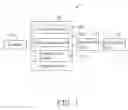
FIG. 1 is a schematic diagram of an exemplary embodiment of a video monitoring system.
FIG. 2 is a flowchart of an exemplary embodiment of a encoding method used for the video monitoring system.
DETAILED DESCRIPTION
Referring to FIG. 1, an exemplary embodiment of a video monitoring system 1 includes a camera 10, an image encoder 12, a recording unit 14, and a displaying unit 16. The image encoder 12 includes a storing module 120, a detecting module 122, and a compressing module 124.
A plurality of images of an object to be watched which are captured by the camera 10 are transmitted to the storing module 120 of the image encoder 12. The detecting module 122 detects the plurality of images stored in the storing module 120 to get key portions of each image, and coordinates of the key portions in each image. In the embodiment, the object to be watched is a car, and the key portion of the car is a license plate. The coordinates of the key portions of the images are transmitted to the compressing module 124 of the image encoder 12. It can be understood that the detecting module 122 gets key portions of each image with a well known technology.
The compressing module 124 compresses data of the portions of each image other than the key portions. In other words, the compressing module 124 compresses data of portions of each image except that with the coordinates from the detecting module 122.
The compressing module 124 transmits the data of the key portions and the other portions of each image to the recording unit 14. The recording unit 14 records the data. The displaying unit 16 displays the recorded video from the recording unit 14. In the embodiment, the recording unit 14 is a videocassette recorder (VCR), the displaying unit 16 is a monitor, and the storing module 120 is a hard disk.
Referring to FIG. 2, an exemplary embodiment of an encoding method using the above-mentioned image encoder 12 includes the following steps.
In step S1, the storing module 120 receives and stores the plurality of images from the camera 10.
In step S2, the detecting module 122 detects the plurality of images stored in the storing module 120 to get key portions of each image and coordinates of the key portions.
In step S3, the compressing module 124 compresses data of the portions of each image except that with the coordinates from the detecting module 122
The image encoder 12 detects images of the object to get key portions of each image by the detecting module 122. Data of the key portions of each image is not compressed by the compressing module 124. As a result, the displaying unit 16 can display the key portions of each image of the object with high definition.
The foregoing description of the exemplary embodiments of the disclosure has been presented only for the purposes of illustration and description and is not intended to be exhaustive or to limit the disclosure to the precise forms disclosed. Many modifications and variations are possible in light of the above everything. The embodiments were chosen and described in order to explain the principles of the disclosure and their practical application so as to enable others of ordinary skill in the art to utilize the disclosure and various embodiments and with various modifications as are suited to the particular use contemplated. Alternative embodiments will become apparent to those of ordinary skills in the art to which the present disclosure pertains without departing from its spirit and scope. Accordingly, the scope of the present disclosure is defined by the appended claims rather than the foregoing description and the exemplary embodiments described therein.
Claims
What is claimed is:1. A video monitoring system comprising:
a camera to capture a plurality of images of an object to be watched;
an image encoder comprising:
a storing module to store the plurality of images of the object from the camera;
a detecting module to detect the plurality of images stored in the storing module to determine key portions of each image; and
a compressing module to compress data of the portions of each image other than the key portions; and
a recording unit to record the plurality of images from the compressing module.
2. The video monitoring system of claim 1, wherein the detecting module is further operable to determine coordinates of the key portions of each image, the compressing module is operable to compress data of images except that with the coordinates.
3. An image encoder, comprising:
a storing module to store a plurality of images;
a detecting module to detect the plurality of images to determine key portions of each image; and
a compressing module to compress data of the portions of each image other than the key portions.
4. The image encoder of claim 3, wherein the detecting module is further operable to determine coordinates of the key portions of each image, the compressing module is operable to compress data of portions except that with the coordinates.
5. An image encoding method comprising:
storing a plurality of images;
detecting the plurality of images to determine key portions of each image; and
compressing data of each image except that of the key portions.
Images & Drawings included:


Sources:
- United States Patent and Trademark Office - verify current appl. status at the USPTO↗
Recent applications in this class:
- » 20250097378 2025-03-20
CONTROLLING METHOD OF A VIDEO RECORD SYSTEM AND THE VIDEO RECORD SYSTEM - » 20240348742 2024-10-17
VIDEO SURVEILLANCE SYSTEM, VIDEO PROCESSING APPARATUS, VIDEO PROCESSING METHOD, AND VIDEO PROCESSING PROGRAM - » 20240340388 2024-10-10
CREATING AND DISSEMINATING OF USER GENERATED CONTENT OVER A NETWORK - » 20240267486 2024-08-08
ANTI-CHEATING METHODS IN AN EXTENDED REALITY ENVIRONMENT - » 20240205363 2024-06-20
Sliding Window for Image Keypoint Detection and Descriptor Generation - » 20240195932 2024-06-13
Data Segment Service - » 20230403368 2023-12-14
System and method for modifying media streams using metadata - » 20230362326 2023-11-09
VIDEO SURVEILLANCE SYSTEM, VIDEO PROCESSING APPARATUS, VIDEO PROCESSING METHOD, AND VIDEO PROCESSING PROGRAM - » 20230362325 2023-11-09
VIDEO SURVEILLANCE SYSTEM, VIDEO PROCESSING APPARATUS, VIDEO PROCESSING METHOD, AND VIDEO PROCESSING PROGRAM - » 20230362324 2023-11-09
VIDEO SURVEILLANCE SYSTEM, VIDEO PROCESSING APPARATUS, VIDEO PROCESSING METHOD, AND VIDEO PROCESSING PROGRAM
Recent applications for this Assignee:
- » 20140233961 2014-08-21
Optical communication module including optical-electrical signal converters and optical signal generators - » 20140083669 2014-03-27
HEAT SINK - » 20140063746 2014-03-06
Electronic device with heat dissipation assembly - » 20140061224 2014-03-06
AUTOMATIC VENDING MACHINE - » 20140060914 2014-03-06
Enclosure with shield apparatus - » 20140058727 2014-02-27
MULTIMEDIA RECORDING SYSTEM AND METHOD - » 20140055955 2014-02-27
Fastener - » 20140055322 2014-02-27
DISPLAY SYSTEM AND HEAD-MOUNTED DISPLAY APPARATUS - » 20140054439 2014-02-27
CONTAINER DATA CENTER WITH SUPPORTING APPARATUS - » 20140054311 2014-02-27
AUTOMATIC VENDING MACHINE WITH MOVING MEMBER FOR PRODUCTS