ELECTROMAGNETIC SHIELDING MATERIAL AND METHOD FOR MANUFACTURING THE SAME
US20100288979A1
2010-11-18
12/511,081
2009-07-29
Abstract:
An electromagnetic shielding material includes conductive particles, an antioxidant, and conductive adhesive bonding the conductive particles and the antioxidant together. Volume of the conductive particles accounts for total volume of the electromagnetic shielding material in a range from about 85% to about 92%, volume of the antioxidant accounts for the total volume of the electromagnetic shielding material in a range from about 3% to about 5%, and volume of the conductive adhesive accounts for the total volume of the electromagnetic shielding material in a range from about 5% to about 10%.
Assignee:
- HON HAI PRECISION INDUSTRY CO., LTD. 12,828 🇹🇼 Tu-Cheng, Taiwan
Interested in similar patents?
Get notified when new applications in this technology area are published.
Classification:
H05K9/0081 » CPC main
Screening of apparatus or components against electric or magnetic fields; Shielding materials Electromagnetic shielding materials, e.g. EMI, RFI shielding
H05K9/0081 » CPC main
Screening of apparatus or components against electric or magnetic fields; Shielding materials Electromagnetic shielding materials, e.g. EMI, RFI shielding
H01B1/22 IPC
Conductors or conductive bodies characterised by the conductive materials; Selection of materials as conductors; Conductive material dispersed in non-conductive organic material the conductive material comprising metals or alloys
H01B1/00 IPC
Conductors or conductive bodies characterised by the conductive materials; Selection of materials as conductors
H01B1/04 IPC
Conductors or conductive bodies characterised by the conductive materials; Selection of materials as conductors mainly consisting of carbon-silicon compounds, carbon or silicon
Description
BACKGROUND
1. Technical Field
The present disclosure relates to electromagnetic shielding materials and manufacturing methods, and in particular, to an electromagnetic shielding material and a method for manufacturing the electromagnetic shielding material.
2. Description of Related Art
Electronic devices are increasingly prone to electromagnetic interference. To reduce electromagnetic interference, many electronic components in an electronic devices, should maintain a good connection to ground. However, due to imperfect manufacturing techniques, minor defects, such as a functional hole in a shell of an electronic component may release electromagnetic waves. Furthermore, a gap in the shell of the electronic component may prevent the electronic component from connecting to ground, which may severely affect electromagnetic testing.
BRIEF DESCRIPTION OF THE DRAWINGS
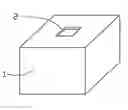
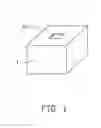
FIG. 1 is a schematic diagram of an embodiment of an electronic device with a gap.
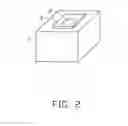
FIG. 2 is a schematic diagram of an embodiment of an electromagnetic shielding element made of electromagnetic shielding material, the electromagnetic shielding element covering the gap of the electronic device of FIG. 1.
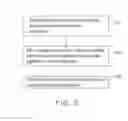
FIG. 3 is a flowchart of an embodiment of a method for manufacturing the electromagnetic shielding material of FIG. 2.
DETAILED DESCRIPTION
Referring to FIGS. 1 and 2, an exemplary embodiment of an electromagnetic shielding element 3 is made of an electromagnetic shielding material. The electromagnetic shielding material includes conductive particles, an antioxidant protecting the conductive particles from being oxidated, and conductive adhesive bonding the conductive particles and the antioxidant together. In one embodiment, volume of the conductive particles accounts for total volume of the electromagnetic shielding material in a range from about 85% to about 92%. Volume of the antioxidant accounts for the total volume of the electromagnetic shielding material in a range from about 3% to about 5%. Volume of the conductive adhesive accounts for the total volume of the electromagnetic shielding material in a range from about 5% to about 10%.
The conductive particles may be made of at least one conductive powder selected from the group consisting of copper, silver, aluminum, nickel, steel, and graphite powders. Any of these conductive powders may be used alone or in combination of two or more. In other embodiments, the conductive particles may be made of other conductive powders or their mixtures having excellent conductivity and high stabilization under standard conditions for temperature and pressure (STP).
The antioxidant protects the conductive particles from being oxidated by air, to keep excellent conductivity property of the conductive particles. The antioxidant is made of at least one compound selected from the group consisting of benzotriazole, hindered phenol, polyolefin in hindered phenol series, and methyl benzotriazole. Any of these compounds may be used alone or combination of two or more.
The conductive adhesive bonds the conductive particles and the antioxidant together to form a mixture having excellent conductivity and plasticity properties and low viscosity. In one embodiment, the conductive adhesive is made of at least one compound selected from the group consisting of silver epoxy resin, epoxy resin, conductive silver colloid, polyacetylene, polyaniline, polythiophene, polystyrene, and polypyrrole. Any of these compounds may be used alone or combination of two or more.
Referring to FIG. 3, a method for manufacturing the electromagnetic shielding material includes the following steps, in accordance with an embodiment.
In step S1, the conductive particles, the antioxidant, and the conductive adhesive are provided at a certain rate complying with the above mentioned ranges. In one embodiment, the volume proportion of the conductive particles may be 90%, the volume proportion of the antioxidant may be 4%, and the volume proportion of the conductive adhesive may be 6%.
In step S2, the conductive particles, the antioxidant, and the conductive adhesive are mixed together to form a mixture.
In step S3, the mixture is stirred until a substantially uniform mixture is obtained.
Referring to FIG. 1 again, when an electromagnetic compatibility test is performed on an electronic device 1 with a gap 2, electromagnetic waves generated by the electronic device 1 could escape through the gap 2 causing test failure.
Referring to FIG. 2, due to the conductive particles and the conductive adhesive having excellent conductive property, the electronic shielding element 3 made of the electromagnetic shielding material has a good conductive property. Because of the conductive adhesive has a low viscosity, the electronic shielding element 3 has good plasticity, and can be shaped into many different ways. Additionally, the conductive particles in the electronic shielding element 3 are protected from oxidation. When the electromagnetic shielding material is made into the electromagnetic shielding element 3 having a shape matching the gap 2 and covers the gap 2 properly, the electromagnetic waves cannot escape through the gap 2, and the electromagnetic compatibility test can be properly performed. After testing of the electronic device 1 is completed, the electromagnetic shielding element 3 can be easily taken away from the gap 2, and shaped to cover or block other gaps. In summary, the electromagnetic shielding material with changeable shape and excellent conductivity can be repeatedly used to assist in electromagnetic compatibility tests.
It is to be understood, however, that even though numerous characteristics and advantages of the present disclosure have been set forth in the foregoing description, together with details of the structure and function of the disclosure, the disclosure is illustrative only, and changes may be made in details, especially in matters of shape, size, and arrangement of parts within the principles of the disclosure to the full extent indicated by the broad general meaning of the terms in which the appended claims are expressed.
Claims
What is claimed is:1. An electromagnetic shielding material, comprising:
conductive particles;
an antioxidant protecting the conductive particles from being oxidated by air; and
conductive adhesive bonding the conductive particles and the antioxidant together;
wherein volume of the conductive particles accounts for total volume of the electromagnetic shielding material in a range from about 85% to about 92%, volume of the antioxidant accounts for the total volume of the electromagnetic shielding material in a range from about 3% to about 5%, and volume of the conductive adhesive accounts for the total volume of the electromagnetic shielding material in a range from about 5% to about 10%.
2. The material of claim 1, wherein the conductive particles are made of at least one conductive powder selected from the group consisting of copper, silver, aluminum, nickel, steel, and graphite powders.
3. The material of claim 1, wherein the antioxidant is made of at least one compound selected from the group consisting of benzotriazole, hindered phenol, polyolefin in hindered phenol series, and methyl benzotriazole.
4. The material of claim 1, wherein the conductive adhesive is made of at least one compound selected from the group consisting of silver epoxy resin, epoxy resin, conductive silver colloid, polyacetylene, polyaniline, polythiophene, polystyrene, and polypyrrole.
5. A method for manufacturing an electromagnetic shielding material, comprising:
providing conductive particles, an antioxidant, and conductive adhesive;
mixing the conductive particles, the antioxidant, and the conductive adhesive together to form a mixture; and
stirring the mixture to obtain a substantially uniform mixture;
wherein the antioxidant protects the conductive particles from being oxidated by air, the conductive adhesive bonds the conductive particles and the antioxidant together; and
wherein volume of the conductive particles accounts for total volume of the electromagnetic shielding material in a range from about 85% to about 92%, volume of the antioxidant accounts for the total volume of the electromagnetic shielding material in a range from about 3% to about 5%, and volume of the conductive adhesive accounts for the total volume of the electromagnetic shielding material in a range from about 5% to about 10%.
6. The method of claim 5, wherein the conductive particles are made of at least one conductive powder selected from the group consisting of copper, silver, aluminum, nickel, steel, and graphite powders.
7. The method of claim 5, wherein the antioxidant is made of at least one compound selected from the group consisting of benzotriazole, hindered phenol, polyolefin in hindered phenol series, and methyl benzotriazole.
8. The method of claim 5, wherein the conductive adhesive is made of at least one compound selected from the group consisting of silver epoxy resin, epoxy resin, conductive silver colloid, polyacetylene, polyaniline, polythiophene, polystyrene, and polypyrrole.
Images & Drawings included:
Sources:
- United States Patent and Trademark Office - verify current appl. status at the USPTO↗
Similar patent applications:
- » 20100230154
Printed matter and its manufacturing method, and electromagnetic shielding material and its manufacturing method - » 20070138441
Electromagnetic wave shielding material, method of manufacturing the same and electromagnetic wave shielding material for plasma display panel - » 20070015094
ELECTROMAGNETIC WAVE SHIELDING MATERIAL, METHOD FOR MANUFACTURING THE SAME AND ELECTROMAGNETIC WAVE SHIELDING MATERIAL FOR PLASMA DISPLAY PANEL - » 20060029741
Magnetic particle-coated material, magnetic recording medium, electromagnetic shield material, and methods of manufacturing same - » 20150156930
Clad type electromagnetic shielding material and method for manufacturing the same - » 20190320562
Flexible electromagnetic wave shielding material and manufacturing method therefor - » 20130299732
Hybrid filler for electromagnetic shielding composite material and method of manufacturing the hybrid filler - » 20110122596
Electromagnetic wave shielding material, and method for manufacturing same - » 20130202865
ELECTROMAGNETIC SHIELDING COMPOSITE MATERIAL AND METHOD FOR MANUFACTURING THE SAME - » 20240090188
ELECTROMAGNETIC WAVE SHIELDING MATERIAL AND METHOD FOR MANUFACTURING SAME
Recent applications in this class:
- » 20250113475 2025-04-03
ELECTROMAGNETIC WAVE ATTENUATION FILM AND MANUFACTURING METHOD OF SAME - » 20250016969 2025-01-09
DISPLAY DEVICE - » 20240414903 2024-12-12
ELECTRONIC CONTROL DEVICE - » 20240414902 2024-12-12
DISPLAY DEVICE - » 20240381600 2024-11-14
ELECTRONIC APPARATUS AND ELECTRO-MAGNETIC INTERFERENCE REDUCTION METHOD - » 20240324158 2024-09-26
MODULE - » 20240314991 2024-09-19
ELECTROMAGNETIC CONTROL ARTICLES - » 20240179883 2024-05-30
Slotted absorber - » 20240164076 2024-05-16
Display panel, display module and communication device - » 20240098951 2024-03-21
ELECTROMAGNETIC SHIELD
Recent applications for this Assignee:
- » 20140233961 2014-08-21
Optical communication module including optical-electrical signal converters and optical signal generators - » 20140083669 2014-03-27
HEAT SINK - » 20140063746 2014-03-06
Electronic device with heat dissipation assembly - » 20140061224 2014-03-06
AUTOMATIC VENDING MACHINE - » 20140060914 2014-03-06
Enclosure with shield apparatus - » 20140058727 2014-02-27
MULTIMEDIA RECORDING SYSTEM AND METHOD - » 20140055955 2014-02-27
Fastener - » 20140055322 2014-02-27
DISPLAY SYSTEM AND HEAD-MOUNTED DISPLAY APPARATUS - » 20140054439 2014-02-27
CONTAINER DATA CENTER WITH SUPPORTING APPARATUS - » 20140054311 2014-02-27
AUTOMATIC VENDING MACHINE WITH MOVING MEMBER FOR PRODUCTS