Satellite antenna device
US20100315310A1
2010-12-16
12/555,685
2009-09-08
✅ Patent granted
US 8,395,560 B2
2013-03-12
-
-
Robert Karacsony
2031-07-24
Abstract:
A satellite antenna device is provided. The satellite antenna device includes a body, a wave guide, and a dielectric member. The wave guide is connected to the body. The dielectric member is connected to the wave guide, wherein the dielectric member comprises a first portion and a second portion, the first portion has a protruding structure, the protruding structure is formed surrounding a central axis of the wave guide, the second portion has a concave structure, and the concave structure corresponds to the protruding structure, and is matched therewith.
Inventors:
- San-Yi Kuo 6 🇹🇼 Taipei Hsien, Taiwan
- Hung-Yuan Lin 8 🇹🇼 Taipei Hsien, Taiwan
- Yi-Chieh Lin 1 🇹🇼 Taipei Hsien, Taiwan
Assignee:
- WISTRON NEWEB CORP 240 🇹🇼 HSINCHU, Taiwan
- Wistron NeWeb Corp. 107 🇹🇼 Taipei Hsien, Taiwan
Applicant:
Interested in similar patents?
Get notified when new applications in this technology area are published.
Classification:
H01Q19/08 » CPC main
Combinations of primary active antenna elements and units with secondary devices, e.g. with quasi-optical devices, for giving the antenna a desired directional characteristic using refracting or diffracting devices, e.g. lens for modifying the radiation pattern of a radiating horn in which it is located
H01Q1/288 » CPC further
Details of, or arrangements associated with, antennas; Adaptation for use in or on movable bodies; Adaptation for use in or on aircraft, missiles, satellites, or balloons Satellite antennas
H01Q1/40 » CPC further
Details of, or arrangements associated with, antennas Radiating elements coated with or embedded in protective material
H01Q13/06 » CPC further
Waveguide horns or mouths; Slot antennas; Leaky-waveguide antennas; Equivalent structures causing radiation along the transmission path of a guided wave Waveguide mouths
H01Q1/38 IPC
Details of, or arrangements associated with, antennas; Structural form of radiating elements, e.g. cone, spiral, umbrella; Particular materials used therewith formed by a conductive layer on an insulating support
H01Q1/42 » CPC further
Details of, or arrangements associated with, antennas Housings not intimately mechanically associated with radiating elements, e.g. radome
H01P3/00 IPC
Waveguides; Transmission lines of the waveguide type
H01Q13/00 IPC
Waveguide horns or mouths; Slot antennas; Leaky-waveguide antennas; Equivalent structures causing radiation along the transmission path of a guided wave
Description
CROSS REFERENCE TO RELATED APPLICATIONS
This Application claims priority of Taiwan Patent Application No. 98119676, filed on Jun. 12, 2009, the entirety of which is incorporated by reference herein.
BACKGROUND OF THE INVENTION
1. Field of the Invention
The present invention relates to a satellite antenna device, and in particular relates to a satellite antenna device for receiving satellite signals.
2. Description of the Related Art
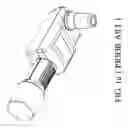
FIG. 1a is a perspective view of a conventional satellite antenna device 1, and FIG. 1b is an exploded view of the conventional satellite antenna device 1. With reference to FIG. 1b, the conventional satellite antenna device 1 includes a body 10, a wave guide 20 and a dielectric member 30. The wave guide 20 is connected to the body 10. The dielectric member 30 is connected to the wave guide 20.
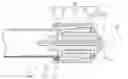
FIG. 1c is a cross-sectional view of conventional wave guide 20 and dielectric member 30. A conventional dielectric member 30 comprises a radiator body 31 and a waterproof cover 32. The waterproof cove 32 wedges an end of the wave guide 20. The radiator body 31 is received in the waterproof cover 32 and the wave guide 20. The radiator body 31 is formed by injection molding. However, air trap 33 is often formed in the radiator body 31, and deteriorates the performance of the dielectric member 30.
BRIEF SUMMARY OF THE INVENTION
A detailed description is given in the following embodiments with reference to the accompanying drawings.
A satellite antenna device is provided. The satellite antenna device includes a body, a wave guide, and a dielectric member. The wave guide is connected to the body. The dielectric member is connected to the wave guide, wherein the dielectric member comprises a first portion and a second portion, the first portion has a protruding structure, the protruding structure is formed surrounding a central axis of the wave guide, the second portion has a concave structure, and the concave structure corresponds to the protruding structure, and is matched therewith.
In the embodiment of the invention, the protruding structure matches the concave structure. Therefore, the material thickness of each portions of the dielectric member is substantially the same during injection molding. Accordingly the substantially same material thickness of each portion of the dielectric member prevents air trap from forming, and the performance of the dielectric member is improved.
BRIEF DESCRIPTION OF THE DRAWINGS
The present invention can be more fully understood by reading the subsequent detailed description and examples with references made to the accompanying drawings, wherein:
FIG. 1a is a perspective view of a conventional satellite antenna device;
FIG. 1b is an exploded view of the conventional satellite antenna device;
FIG. 1c is a cross-sectional view of conventional wave guide and dielectric member;
FIG. 2a shows a satellite antenna device of a first embodiment of the invention;
FIG. 2b is a cross-sectional view of the dielectric member and the wave guide;
FIGS. 3a and 3b show a satellite antenna device of a second embodiment of the invention;
FIG. 4a shows a detailed structure of the first portion and the second portion of the second embodiment of the invention;
FIG. 4b is a side view of the dielectric member of the second embodiment of the invention;
FIG. 4c is a cross-sectional view of the dielectric member of the second embodiment of the invention;
FIG. 5a shows a dielectric member of a modified example of the second embodiment of the invention;
FIG. 5b is a cross-sectional view of the dielectric member of FIG. 5a;
FIG. 6a shows a dielectric member of a third embodiment of the invention;
FIG. 6b is a cross-sectional view of the dielectric member of FIG. 6a;
FIG. 7a shows a dielectric member of a fourth embodiment of the invention;
FIG. 7b is a cross-sectional view of the dielectric member of FIG. 7a;
FIG. 8a shows a dielectric member of a fifth embodiment of the invention;
FIG. 8b is a cross-sectional view of the dielectric member of FIG. 8a;
FIG. 9a shows a dielectric member of a sixth embodiment of the invention;
FIG. 9b is a cross-sectional view of the dielectric member of FIG. 9a;
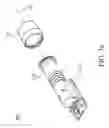
FIG. 10a is an exploded view of the seventh embodiment of the invention;
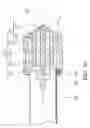
FIG. 10b is a side view of the seventh embodiment of the invention; and
FIG. 10c is a front view of the seventh embodiment of the invention.
DETAILED DESCRIPTION OF THE INVENTION
The following description is of the best-contemplated mode of carrying out the invention. This description is made for the purpose of illustrating the general principles of the invention and should not be taken in a limiting sense. The scope of the invention is best determined by reference to the appended claims.
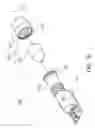
FIG. 2a shows a satellite antenna device 100 of a first embodiment of the invention, including a body 110, a wave guide 120 and a dielectric member 130. The wave guide 120 is connected to the body 110. The dielectric member 130 is connected to the wave guide 120.
FIG. 2b is a cross-sectional view of the dielectric member 130 and the wave guide 120. With reference to FIGS. 2a and 2b, the dielectric member 130 is substantially a pillar, including a first portion 131 and a second portion 132. The first portion 131 has a first protruding structure 133. The first protruding structure 133 is formed surrounding a central axis 101 of the wave guide 120. The second portion 132 has a concave structure 134. The concave structure 134 corresponds to the protruding structure 133, and is matched therewith.
In this embodiment, the protruding structure 133 includes a pillar 1331 and an annular structure 1332. The pillar 1331 is located on the central axis 101. The annular structure 1332 surrounds the pillar 1331.
In the embodiment of the invention, the protruding structure 133 matches the concave structure 134. Therefore, the material thickness of each portion of the dielectric member 130 is substantially the same during injection molding. Accordingly the substantially same material thickness of each portion of the dielectric member 130 prevents air trap from forming, and the performance of the dielectric member 130 is improved.
With reference to FIG. 2b, gaps 135 are formed between a front end of the second portion 132 and the first portion 131. When the gaps 135 are formed symmetric to the central axis 101, the performance of the dielectric member is not influenced. In other embodiment, the gaps 135 are infilled by sealant material.
The first portion 131 further includes a first wedging structure 136, and the first wedging structure 136 is formed on an inner wall of the first portion 131. The wave guide 120 further includes a second wedging structure 121, and the second wedging structure 121 is formed on an end of the wave guide 120. The first wedging structure 136 wedges the second wedging structure 121. In this embodiment, the dielectric member 130 does not need an additional waterproof cover to repel water.
With reference to FIG. 2a, the first portion 131 further has positioning structures 137, the wave guide 120 further has positioning structures 122, the positioning structures 137 match the positioning structures 122 to prevent the dielectric member 130 from being twisted relative to the wave guide 120 and separated therefrom.
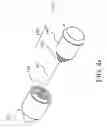
FIGS. 3a and 3b show a satellite antenna device 100′ of a second embodiment of the invention, including a body 110, a wave guide 120 and a dielectric member 130′. The wave guide 120 is connected to the body 110. The dielectric member 130′ is connected to the wave guide 120.
The dielectric member 130′ is substantially a pillar, including a first portion 131′, a second portion 132′ and a cover 133′. The first portion 131′ has a first protruding structure. The first protruding structure is formed surrounding a central axis 101 of the wave guide 120. The second portion 132′ has a concave structure. The concave structure corresponds to the protruding structure, and is matched therewith. The first portion 131′ and the second portion 132′ are received in the cover 133′. The cover 133′ has a first wedging structure 134′, and the first wedging structure 134′ is formed on an inner wall of the cover 133′. The wave guide 120 further includes a second wedging structure 121, and the second wedging structure 121 is formed on an end of the wave guide 120. The first wedging structure 134′ wedges the second wedging structure 121.
FIG. 4a shows a detailed structure of the first portion 131′ and the second portion 132′, wherein a protruding structure 140 of the first portion 131′ has a first annular structure 141 and a second annular structure 142, the first annular structure 141 and the second annular structure 142 surround the central axis 101, and the second annular structure 142 is located between the first annular structure 141 and a central axis 101. The protruding structure 140 of the first portion 131′ matches the concave structure 150 of the second portion 132′. The cross-sections of the first annular structure 141 and the second annular structure 142 are circular.
FIG. 4b is a side view of the dielectric member 130′, and FIG. 4c is a cross-sectional view of the dielectric member 130′.
FIG. 5a shows a dielectric member 210 of a modified example of the second embodiment of the invention. Compared with the second embodiment, the cross-sections of the first annular structure 211 and the second annular structure 212 of the dielectric member 210 are rectangular. FIG. 5b is a cross-sectional view of the dielectric member of FIG. 5a.
In the embodiments of the invention, the design of the dielectric member can be modified, and several examples are shown as follows.
FIGS. 6a and 6b show a dielectric member 220 of a third embodiment of the invention. FIG. 6b is a cross-sectional view of the dielectric member of FIG. 6a. In this embodiment the protruding structure of the dielectric member 220 includes a plurality of ribs 221. The ribs 221 surround the central axis 101, and extend in radial directions from the central axis 101. A plurality of slots are formed on a side wall of the protruding structure.
FIGS. 7a and 7b show a dielectric member 230 of a fourth embodiment of the invention. FIG. 7b is a cross-sectional view of the dielectric member of FIG. 7a. In this embodiment, a first portion 231, a second portion 232 and a third portion 233 is included in the dielectric member 230. The first portion 231 is sandwiched between the second portion 232 and the third portion 233. A protruding structure is formed on the first portion 231, and concave structures are formed on the second portion 232 and the third portion 233. The protruding structure has a first disk 234 and a second disk 235. The central axis 101 passes through the center of the first disk 234 and the second disk 235, and the first disk 234 and the second disk 235 are aligned along the central axis.
FIGS. 8a and 8b show a dielectric member 240 of a fifth embodiment of the invention. FIG. 8b is a cross-sectional view of the dielectric member of FIG. 8a. In this embodiment, the protruding structure (241) of the dielectric member 240 is formed symmetric to a central plane (first plane) 102 of the wave guide. The protruding structure (241) has a plurality of planner structures 241, and the planner structures 241 are parallel to the central plane 102, and are arranged symmetric to the central plane 102.
FIGS. 9a and 9b show a dielectric member 250 of a sixth embodiment of the invention. FIG. 9b is a cross-sectional view of the dielectric member of FIG. 9a. In this embodiment, the protruding structure (251) of the dielectric member 250 is formed symmetric to a central plane 102 of the wave guide. The protruding structure (251) has a plurality of pillars 251, and the pillars 251 are parallel to the central plane 102, and are arranged in matrix symmetric to the central plane 102.
FIGS. 10a, 10b and 10c show a dielectric member 260 of a seventh embodiment of the invention. FIG. 10a is an exploded view of the seventh embodiment, FIG. 10b is a side view of the seventh embodiment, and FIG. 10c is a front view of the seventh embodiment of the invention. The dielectric member 260 is substantially a pillar, having a first portion 261 and a second portion 262, the first portion 261 is located on a central axis 101 of the wave guide, and the second portion 262 is telescoped on the first portion 261. In this embodiment, the dielectric member is formed by a plurality of telescoping annular structures.
While the invention has been described by way of example and in terms of the preferred embodiments, it is to be understood that the invention is not limited to the disclosed embodiments. To the contrary, it is intended to cover various modifications and similar arrangements (as would be apparent to those skilled in the art). Therefore, the scope of the appended claims should be accorded the broadest interpretation so as to encompass all such modifications and similar arrangements.
Claims
What is claimed is:1. A satellite antenna device, comprising:
a wave guide; and
a dielectric member, connected to the wave guide, wherein the dielectric member comprises a first portion and a second portion, the first portion has a protruding structure, the protruding structure, the second portion has a concave structure, and the concave structure corresponds to the protruding structure, and is matched therewith.
2. The satellite antenna device as claimed in claim 1, wherein the protruding structure is formed surrounding a central axis of the wave guide.
3. The satellite antenna device as claimed in claim 1, wherein the protruding structure has a plurality of annular walls.
4. The satellite antenna device as claimed in claim 3, wherein the plurality of the annular walls are concentric.
5. The satellite antenna device as claimed in claim 4, wherein cross-sections of the annular walls are circular.
6. The satellite antenna device as claimed in claim 2, wherein cross-sections of the annular walls are rectangular.
7. The satellite antenna device as claimed in claim 1, wherein the protruding structure has a pillar and an annular structure, the pillar is located on the central axis, and the annular structure surrounds the pillar.
8. The satellite antenna device as claimed in claim 1, wherein a plurality of slots are formed on a side wall of the protruding structure.
9. The satellite antenna device as claimed in claim 1, wherein the protruding structure has a first disk and a second disk, the central axis passes through the center of the first disk and the second disk, and the first disk and the second disk are aligned along the central axis.
10. The satellite antenna device as claimed in claim 9, further comprising a third portion, and the first portion is sandwiched between the second portion and the third portion.
11. The satellite antenna device as claimed in claim 1, wherein the first portion further has a first wedging structure formed on an inner wall of the first portion, the wave guide has a second wedging structure formed on an end of the wave guide, and the first wedging structure wedges the second wedging structure.
12. The satellite antenna device as claimed in claim 11, wherein the second portion is covered in the first portion and the wave guide.
13. The satellite antenna device as claimed in claim 1, wherein the dielectric member further comprises a cover, the first portion and the second portion are received in the cover, the cover has a first wedging structure formed on an inner wall of the cover, the wave guide has a second wedging structure formed on an end of the wave guide, and the first wedging structure wedges the second wedging structure.
14. A satellite antenna device, comprising:
a wave guide, connected to the body; and
a dielectric member, connected to the wave guide, wherein the dielectric member comprises a first portion and a second portion, the first portion has a protruding structure, the protruding structure is defined with a first plane, the second portion has a concave structure, and the concave structure corresponds to the protruding structure, and is matched therewith, wherein the protruding structure has a plurality of planner structures, and the planner structures are parallel to the first plane, and are arranged symmetric to the first plane.
15. A satellite antenna device, comprising:
a wave guide, connected to the body; and
a dielectric member, connected to the wave guide, wherein the dielectric member comprises a first portion and a second portion, the first portion has a protruding structure, the protruding structure is defined with a first plane, the second portion has a concave structure, and the concave structure corresponds to the protruding structure, and is matched therewith, wherein the protruding structure has a plurality of pillars, the pillars are parallel to the first plane, and are arranged symmetric to the first plane.
16. A satellite antenna device, comprising:
a wave guide, connected to the body; and
a dielectric member, connected to the wave guide, wherein the dielectric member comprises a first portion and a second portion, the first portion has a protruding structure, the protruding structure is defined with a first plane, the second portion has a concave structure, and the concave structure corresponds to the protruding structure, and is matched therewith, wherein the dielectric member further comprises a cover, the first portion and the second portion are received in the cover, the cover has a first wedging structure formed on an inner wall of the cover, the wave guide has a second wedging structure formed on an end of the wave guide, and the first wedging structure wedges the second wedging structure.
17. A satellite antenna device, comprising:
a wave guide, connected to the body; and
a dielectric member, connected to the wave guide, wherein the dielectric member comprises a first portion and a second portion, the first portion is located on a central axis of the wave guide, and the first portion is partially embedded in the second portion.
18. The satellite antenna device as claimed in claim 17, wherein the dielectric member further comprises a cover, the first portion and the second portion are received in the cover, the cover has a first wedging structure formed on an inner wall of the cover, the wave guide has a second wedging structure formed on an end of the wave guide, and the first wedging structure and the second wedging structure are engaged.
Images & Drawings included:




Sources:
- United States Patent and Trademark Office - verify current appl. status at the USPTO↗
Similar patent applications:
- » 20050190113
Polarized wave separator, converter for satellite broadcast reception, and antenna device for satellite broadcast reception - » 20080036656
Two-sectional controlling method and device for satellite antenna - » 20100156751
Adjustment device and satellite antenna with same - » 20070157482
Satellite antenna alignment device and method - » 20120081263
Position adjustment device and satellite antenna thereof - » 20050248486
Dynamic orientation adjusting device for satellite antenna installed in movable carrier - » 20060181477
Orientation adjusting device for a satellite antenna - » 20060231693
Orientation adjusting device for a satellite antenna - » 20090027290
Radio wave receiving converter and satellite broadcast receiving antenna device - » 20140253379
Mode generator device for a satellite antenna system and method for producing the same
Recent applications in this class:
- » 20240097345 2024-03-21
Horn antenna and lens for horn antenna - » 20230223704 2023-07-13
Antenna system for a topology-capturing radar meter - » 20220278459 2022-09-01
Flat lens antenna - » 20220077592 2022-03-10
Millimeter-wave circuit with dielectric lens - » 20180166792 2018-06-14
Method for designing gradient index lens and antenna device using same - » 20170062948 2017-03-02
Beam steerable communication apparatus - » 20120206312 2012-08-16
Horn antenna for a radar device - » 20120086618 2012-04-12
Beamwidth adjustment device - » 20100123615 2010-05-20
Potential separation for filling level radar - » 20050140560 2005-06-30
Feedhorn, radio wave receiving converter and antenna
Recent applications for this Assignee:
- » 20240328605 2024-10-03
Electronic device and light-indicating module thereof - » 20240291150 2024-08-29
ANTENNA STRUCTURE AND MOBILE DEVICE - » 20240283169 2024-08-22
ANTENNA STRUCTURE AND MOBILE DEVICE - » 20240162618 2024-05-16
ANTENNA STRUCTURE - » 20240072445 2024-02-29
ANTENNA STRUCTURE - » 20240047873 2024-02-08
ANTENNA STRUCTURE - » 20240039172 2024-02-01
ANTENNA SYSTEM - » 20230420845 2023-12-28
Antenna system with switchable radiation gain - » 20230411853 2023-12-21
Antenna structure - » 20230411837 2023-12-21
Antenna structure