Composite interlocking stopper and method of manufacture
US20110017698A1
2011-01-27
12/842,091
2010-07-23
✅ Patent granted
US 8,672,160 B2
2014-03-18
-
-
Mickey Yu | Niki Eloshway
Cantor Colburn LLP
2030-11-03
Abstract:
A composite synthetic cork is provided, wherein the synthetic cork is operatively coupled with a cap via an interlocking contour. In an exemplary embodiment, the interlocking contour(s) is molded on an otherwise flat bottom portion of the cap. In other exemplary embodiments, the cap and the cork are assembled via co-injection molding.
Inventors:
- Miguel F. Escobar 5 🇲🇽 Mexico D.F., Mexico
- Ricardo Escobar 2 🇲🇽 Mexico D.F., Mexico
- Miguel F. Escobar 1 🇲🇽 Mexico City, Mexico
- Ricardo Escobar 1 🇲🇽 Mexico City, Mexico
Assignee:
- TAPONES ESCOBAR, S.A. 3 🇲🇽 Mexico D.F., Mexico
- Tapones Escobar, S.A. 2 🇲🇽 , Mexico
Applicant:
Interested in similar patents?
Get notified when new applications in this technology area are published.
Classification:
B65D39/16 » CPC further
Closures arranged within necks or pouring openings or in discharge apertures, e.g. stoppers with handles or other special means facilitating manual actuation
B65D39/0076 » CPC main
Closures arranged within necks or pouring openings or in discharge apertures, e.g. stoppers made in more than one piece Plastic closures other than those covered by groups -
B65D41/58 » CPC further
Caps, e.g. crown caps or crown seals, i.e. members having parts arranged for engagement with the external periphery of a neck or wall defining a pouring opening or discharge aperture; Protective cap-like covers for closure members, e.g. decorative covers of metal foil or paper; Caps or cap-like covers with lines of weakness, tearing-strips, tags, or like opening or removal devices, e.g. to facilitate formation of pouring openings Caps or cap-like covers combined with stoppers
B29C45/14 IPC
Injection moulding, i.e. forcing the required volume of moulding material through a nozzle into a closed mould; Apparatus therefor incorporating preformed parts or layers, e.g. injection moulding around inserts or for coating articles
B65D39/00 IPC
Closure members for rigid or semi-rigid containers or for flexible containers presenting similar closing problems ; Parts of containers co-operating with closure members or characterised by the form of closure member
B65D39/00 IPC
Closures arranged within necks or pouring openings or in discharge apertures, e.g. stoppers
Description
CROSS REFERENCE TO RELATED APPLICATION
The present application claims priority to U.S. Provisional Patent Application Ser. No. 61/228,324 filed Jul. 24, 2009, the entire contents of which are specifically incorporated by reference herein.
BACKGROUND
The present disclosure relates to container closures including a cork material interlocked with a handle or cap (hereinafter referred to as a cap).
Producers of liquid consumable products, such as wine, liquor and other products, that are sold in bottles or other containers that are traditionally closed and sealed with cork stoppers have long been concerned about the reliability and structural integrity of the cork and cap, particularly along the interface of the two. Traditional models use glue to bond the cork to the cap. However, breakage of the bond remains a significant concern in the industry.
Accordingly, there is a need in the industry for a more reliable bond between the cork and the cap.
SUMMARY
The present stopper comprises a cork portion that is bonded to a cap portion via an interlocking interface. In an exemplary embodiment, the cork material is a synthetic cork material. In another exemplary embodiment, the cork material is injection molded over a portion of the cap, which portion includes surface contouring that provides more surface area for the cork to cap bond.
In another exemplary embodiment, a first cap portion contour creates a mechanical interlock that resists relative movement of the cork and the cap in a first direction. In another exemplary embodiment, a second cap portion contour creates a mechanical interlock that resists relative movement of the cork and the cap in a second direction.
In other exemplary embodiments, a first cap portion contour creates a mechanical interlock that resists separation of the cork and the cap. In other exemplary embodiments, a first cap portion contour creates a mechanical interlock that resists rotation of the cork relative to the cap. In other exemplary embodiments, a first cap portion contour creates a mechanical interlock that resists separation of the cork and the cap and rotation of the cork relative to the cap.
BRIEF DESCRIPTION OF THE DRAWINGS
Referring now to the drawings, wherein like elements are numbered alike in the following FIGURES:
FIG. 1 is perspective view of an exemplary cap;
FIG. 2 is a side elevation view of the exemplary cap of FIG. 1;
FIG. 3 is a perspective view of an exemplary stopper; and
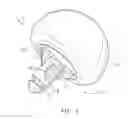
FIG. 4 is a side elevation view of the exemplary stopper of FIG. 3.
DETAILED DESCRIPTION
As was noted above, the present disclosure relates to a stopper, comprising a cork portion that is bonded to a cap portion via an interlocking interface.
Referring now to FIGS. 1 and 2, an exemplary cap is shown generally at 12. The cap includes a handle portion 14 and a cork interface portion, shown generally at 16. As is illustrated in FIGS. 1 and 2, the cork interface portion includes at least one contour that provides more surface area for the cork to cap bond. The illustrated exemplary cork interface portion includes a pin contour 18, a groove contour 20 on the pin contour 18, a hole contour 22 within the pin contour 18, and a first and a second fin contour 24 between the pin contour 18 and the otherwise bottom flat surface 26 of the handle portion 14.
Referring now to FIGS. 3 and 4, an exemplary stopper is illustrated generally at 10. The exemplary stopper includes the exemplary elements of FIGS. 3 and 4 with a cork material 30 bonded thereto. In an exemplary embodiment, the cork material is a synthetic cork material. In another exemplary embodiment, the cork material is injection molded over the cork interface portion. In another exemplary embodiment, the cap and cork material are co-injected during assembly. In molding certain contours of the cap portion (e.g., grooves, holes or fins), sliders may be used in the mold to release such contours.
In another exemplary embodiment, a first cap portion contour creates a mechanical interlock that resists relative movement of the cork and the cap in a first direction. It is noted that each of the described contours resists relative movement of the cork and the cap in at least one direction. For example, the pin contour 18 resists bending of the cork material 30 off of its longitudinal axis. The groove 20 contour resists pulling of the cork 30 away from the bottom 26 of the cap 12. The hole contour 22 resists both pulling of the cork 30 away from the bottom 26 of the cap 12 and rotation of the cork 30 about the pin contour 18. The fin contour(s) 24resist rotation of the cork 30 about the pin contour 18. Thus, various cap portion contours create a mechanical interlock that resist relative movement of the cork and the cap in at least one direction.
It will be apparent to those skilled in the art that, while exemplary embodiments have been shown and described, various modifications and variations can be made to the synthetic cork and method of making disclosed herein without departing from the spirit or scope of the invention. For example, recitations of contours, including projections and recesses, are non-limiting. The cap interface portion may include a single or a combination of contours providing a mechanical interlock. Additionally, various amounts of cork (e.g., widths) may be used such that the cork covers only a portion or, e.g., all of the bottom surface of the cap handle. Accordingly, it is to be understood that the various embodiments have been described by way of illustration and not limitation.
Claims
What is claimed is:1. A stopper, comprising:
a cap, including a handle portion, a bottom portion and at least contour dependent from said bottom portion, the contour providing increased surface area relative to said bottom portion; and
a cork portion that is bonded to a cap portion via an interlocking interface provided by said contour, the interlocking interface resisting relative movement of the assembled cap and cork in at least one direction.
2. A stopper in accordance with claim 1, further comprising, a second cap portion contour configured to create a second mechanical interlock that resists relative movement of the cork and the cap in a second direction.
3. A stopper in accordance with claim 1, wherein said mechanical interlock resists separation of the cork and the cap.
4. A stopper in accordance with claim 1, wherein said mechanical interlock resists rotation of the cork relative to the cap.
5. A stopper in accordance with claim 1, wherein said mechanical interlock resists separation of the cork and the cap and rotation of the cork relative to the cap.
6. A stopper in accordance with claim 1, wherein said cork material is a synthetic cork material.
7. A method of manufacturing a stopper, comprising:
injection molding a cap, including a handle portion, a bottom portion and at least contour dependent from said bottom portion, the contour providing increased surface area relative to said bottom portion; and
injection molding a cork portion around said a cork interface portion of said cap to bond said cork to the cap portion via an interlocking interface provided by said contour, the interlocking interface resisting relative movement of the assembled cap and cork in at least one direction.
Images & Drawings included:




Sources:
- United States Patent and Trademark Office - verify current appl. status at the USPTO↗
Similar patent applications:
Recent applications in this class:
- » 20240059459 2024-02-22
Beverage container - » 20190389630 2019-12-26
Stopper for a container for use in freeze-drying processes, and assembly of a stopper and a container - » 20190344932 2019-11-14
Container with tapered connector - » 20160075485 2016-03-17
Method for manufacturing a medical rubber closure - » 20150021326 2015-01-22
Flat pack containers - » 20110147336 2011-06-23
Closure/stopper with multi-layer film affixed thereto - » 20110079571 2011-04-07
Tamper-resistant microchip assembly - » 20110036805 2011-02-17
Composite interlocking stopper and method of manufacture - » 20100258522 2010-10-14
GLUED SYNTHETIC CORK AND METHOD OF MANUFACTURE - » 20090152232 2009-06-18
COMPLEX CAP AND CULTURE CONTAINER ASSEMBLY USING SAME
Recent applications for this Assignee:
- » 20110036805 2011-02-17
Composite interlocking stopper and method of manufacture - » 20110036805 2011-02-17
Composite interlocking stopper and method of manufacture - » 20100163512 2010-07-01
COMPOSITE SYNTHETIC CORK UTILIZING AN INTERLOCKING COMPONENT AND METHOD OF MANUFACTURE