Reciprocating compressor
US20110020158A1
2011-01-27
12/935,245
2009-03-11
✅ Patent granted
US 8,684,703 B2
2014-04-01
WO; PCT/JP2009/054650; 20090311
WO; WO2009/119316; 20091001
Devon Kramer | Lilya Pekarskaya
Baker Botts L.L.P.
2030-10-14
Abstract:
A compressor includes a cylinder block including cylinder bores and pistons within the cylinder bores. A front housing opposes a first cylinder block end face to form a crank chamber accommodating a piston driving mechanism. A valve plate opposes a second cylinder block end face and includes suction and discharge holes. A rear housing includes suction and discharge chambers and opposes the second cylinder block end face with the valve plate there between. Strap-shaped suction valves on the valve plate end face oppose the cylinder block, thereby opening and closing the suction holes at tip portions. Discharge valves on the valve plate end face oppose the rear housing to open and close the discharge holes. Through-bolts join the front housing, the crank chamber, the cylinder block, the valve plate, and the rear housing. The valve plate includes grooves extending from holes accommodating the through-bolts to portions abutting the suction valves.
Inventors:
- Hiroshi Ikeda 2 🇯🇵 Gunma, Japan
- Tsutomu Ishikawa 3 🇯🇵 Gunma, Japan
- Hiroshi Ikeda 1 🇯🇵 Isesaki, Japan
- Tsutomu Ishikawa 3 🇯🇵 Isesaki, Japan
Assignee:
- Sanden Corporation 105 🇯🇵 Isesaki-shi, Gunma, Japan
Applicant:
Interested in similar patents?
Get notified when new applications in this technology area are published.
Classification:
F04B39/1066 » CPC further
Component parts, details, or accessories, of pumps or pumping systems specially adapted for elastic fluids, not otherwise provided for in, or of interest apart from, groups -; Adaptations or arrangements of distribution members Valve plates
F04B39/1073 » CPC further
Component parts, details, or accessories, of pumps or pumping systems specially adapted for elastic fluids, not otherwise provided for in, or of interest apart from, groups -; Adaptations or arrangements of distribution members the members being reed valves
Y10T137/7843 » CPC further
Fluid handling; Line condition change responsive valves; Direct response valves [i.e., check valve type]; Plural Integral resilient member forms plural valves
A61M1/00 IPC
Suction or pumping devices for medical purposes; Devices for carrying-off, for treatment of, or for carrying-over, body-liquids; Drainage systems
F04B27/1009 » CPC main
Multi-cylinder pumps specially adapted for elastic fluids and characterised by number or arrangement of cylinders having cylinders coaxial with, or parallel or inclined to, main shaft axis having stationary cylinders Distribution members
F04B1/12 IPC
Multi-cylinder machines or pumps characterised by number or arrangement of cylinders having cylinder axes coaxial with, or parallel or inclined to, main shaft axis
F04B27/08 IPC
Multi-cylinder pumps specially adapted for elastic fluids and characterised by number or arrangement of cylinders having cylinders coaxial with, or parallel or inclined to, main shaft axis
F04B39/10 IPC
Component parts, details, or accessories, of pumps or pumping systems specially adapted for elastic fluids, not otherwise provided for in, or of interest apart from, groups - Adaptations or arrangements of distribution members
F04B53/10 IPC
Component parts, details or accessories not provided for in, or of interest apart from, groups - or - Valves; Arrangement of valves
F16K15/00 IPC
Functional types
F16K15/00 IPC
Check valves
F16K17/00 IPC
Safety valves; Equalising valves, e.g. pressure relief valves
F16K21/04 IPC
Fluid-delivery valves, e.g. self-closing valves Self-closing valves, i.e. closing automatically after operation
Description
TECHNICAL FIELD
The present invention relates to a reciprocating compressor.
BACKGROUND ART
Patent Document No. 1 teaches a reciprocating compressor comprising a cylinder block provided with cylinder bores, pistons fitted in the cylinder bores, a front housing opposing one of the end faces of the cylinder block to cooperate with the cylinder block and thereby form a crank chamber accommodating a piston driving mechanism, a valve plate opposing the other one of the end faces of the cylinder block and provided with suction holes and discharge holes communicating with the cylinder bores, a rear housing provided with a suction chamber and a discharge chamber and opposing the other one of the end faces of the cylinder block with the valve plate inserted between them, strap-shaped suction valves fitted on the end face of the valve plate opposing the cylinder block to abut the valve plate, thereby opening and closing the suction holes at tip portions, discharge valves fitted on the end face of the valve plate opposing the rear housing to open and close the discharge holes, and through-bolts passed through the front housing, the crank chamber, the cylinder block, the valve plate and the rear housing to assemble them as a unitary body, wherein the valve plate is roughened at the portions around the suction holes to be abutted by the suction valves to decrease adhesion of lubrication oil existing between the suction valves and the valve plate, thereby preventing the adhesion of the suction valves to the valve plate to prevent delayed opening of the suction valves, enhance the performance of the compressor, and prevent self-excited vibration of the suction valves.
Patent Document No. 1: Japanese Patent Laid-Open Publication No. 2007-064196
DISCLOSURE OF INVENTION
Problem to be Solved
The technology of the Patent Document No. 1 is aimed at decreasing adhesion of lubrication oil existing between the suction valves and the valve plate, thereby decreasing the resistance force against the opening of the suction valves.
The present invention takes a different viewpoint from that of the conventional technology in that delayed opening of the suction valves is prevented by decreasing the resistance force against the opening of the suction valves. An object of the present invention is to provide a technology for increasing force for promoting the opening of the suction valves to prevent delayed opening of suction valves.
Means for Achieving the Object
In accordance with the present invention, there is provided a reciprocating compressor comprising a cylinder block provided with cylinder bores, pistons fitted in the cylinder bores, a front housing opposing one of the end faces of the cylinder block to cooperate with the cylinder block and thereby form a crank chamber accommodating a piston driving mechanism, a valve plate opposing the other one of the end faces of the cylinder block and provided with suction holes and discharge holes communicating with the cylinder bores, a rear housing provided with a suction chamber and a discharge chamber and opposing the other one of the end faces of the cylinder block with the valve plate inserted between them, strap-shaped suction valves fitted on the end face of the valve plate opposing the cylinder block to abut the valve plate, thereby opening and closing the suction holes at tip portions, discharge valves fitted on the end face of the valve plate opposing the rear housing to open and close the discharge holes, and through-bolts passed through the front housing, the crank chamber, the cylinder block, the valve plate and the rear housing to assemble them as a unitary body, wherein the valve plate is provided with grooves extending from holes for accommodating the through-bolts to portions abutting the suction valves on the end face opposing the cylinder block.
In the reciprocating compressor in accordance with the present invention, crank chamber pressure is applied to the surfaces of the suction valves abutting the valve plate through holes for accommodating the through-bolts and the grooves formed in the valve plate to force the suction valves in the direction of opening. Thus, force for promoting the opening of the suction valves increases, delayed opening of the suction valves is prevented, the performance of the compressor is enhanced, and self-excited vibration of the suction valves is prevented.
In accordance with a preferred embodiment of the present invention, the grooves extend beyond the portions opposing the roots of the suction valves to the portions near the suction holes.
When the grooves extend beyond the portions opposing the roots of the suction valves to the portions near the suction holes, the area of the suction valves receiving the crank chamber pressure increases to increase the force for promoting the opening of the suction valves.
EFFECT OF THE INVENTION
In accordance with the present invention, there is provided a reciprocating compressor wherein force for promoting the opening of the suction valves is increased to prevent delayed opening of suction valves.
BEST MODE FOR CARRYING OUT THE INVENTION
A reciprocating compressor in accordance with a preferred embodiment of the present invention will be described.
Preferred Embodiment No. 1
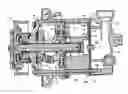
As shown in FIG. 1, a variable displacement swash plate compressor 1 comprises a circular-column-shaped cylinder block 2 provided with a plurality of cylinder bores 2a, a front housing 4 given a cylindrical shape closed at one end and opposing one of the end faces of the cylinder block 2 to cooperate with the cylinder block 2 and thereby form a crank chamber 3, a rotation shaft 5 disposed in the crank chamber 3, rotatably supported by the cylinder block 2 and the front housing 4, and extending out of the crank chamber 3 through the front housing 4 at one end, a rotor 6 disposed in the crank chamber 3 and fixed to the rotation shaft 5, a swash plate 8 disposed in the crank chamber 3, connected to the rotor 6 through a link member 7, engaging the rotation shaft 5 at a variable inclination, and rotated by the rotation shaft 5, pairs of shoes 9 disposed in the crank chamber 3 and slidably engaging the outer peripheral portion of the swash plate 8, pistons 10 fitted in the cylinder bores 2a and slidably engaging the outer peripheral portion of the swash plate 8 through the shoes 9 to reciprocate synchronously with the rotation of the swash plate 8, a circular-disk-shaped valve plate 11 provided with suction holes 11a and discharge holes 11b communicating with the cylinder bores 2a and opposing the other of the end faces of the cylinder block 2, a rear housing 12 given a cylindrical shape closed at one end, provided with a suction chamber 12a at the radial center and a discharge chamber 12b surrounding the suction chamber 12a at radial periphery, and opposing the other one of the end faces of the cylinder block 2 with the valve plate 11 inserted between them, strap-shaped suction valves 13 fitted on the end face of the valve plate 11 opposing the cylinder block 2 to abut the valve plate 11, thereby opening and closing the suction holes 11a at tip portions, discharge valves 14 fitted on the end face of the valve plate opposing the rear housing 12 to open and close the discharge holes 11b, and through-bolts 15 passed through the front housing 4, the crank chamber 3, the cylinder block 2, the valve plate 11 and the rear housing 12 to assemble them as a unitary body.
The rotation shaft 5, the rotor 6, the link member 7, the swash plate 8 and the shoes 9 constitute a piston driving mechanism.
The cylinder bores 2a, the pistons 10, the suction holes 11a, the discharge holes 11b, the suction valves 13, the discharge valves 14 and pairs of shoes 9 are distanced from each other in the circumferential direction.
The suction chamber 12a communicates with the evaporator of a car air conditioner through a suction port 16. The discharge chamber 12b communicates with the condenser of the car air conditioner through a discharge port. The evaporator, the condenser, the car air conditioner and the discharge port are not shown in FIG. 1.
The rotation shaft 5 is directly connected to a car engine through a power transmission device 17 at one end protruding out of the crank chamber 3. The car engine is not shown in FIG. 1.
As shown in FIGS. 2 and 3, the suction valves 13 are made by punching U-shaped holes 18a through a circular thin plate 18. The circular thin plate 18 is provided with holes 18b for accommodating the through-bolts 15, in addition to the U-shaped holes 18a. The valve plate 11 cooperates with the cylinder block 2 to clamp the circular thin plate 18, thereby making the circular thin plate 18 abut on the valve plate 11. Thus, the suction valves 13 are fitted on the valve plate 11. The U-shaped holes 18a oppose the discharge holes 11b formed in the valve plate 11 when the circular thin plate 18 is clamped by the valve plate 11 and the cylinder block 2 to abut on the valve plate 11.
As shown in FIGS. 2 and 3, the valve plate 11 is provided with holes 11c for accommodating the through-bolts 15, in addition to the suction holes 11a and the discharge holes 11b. The valve plate 11 is provided with grooves 11d in the end face opposing the cylinder block 2 through the circular thin plate 18. The grooves 11d extend from the holes 11c to the portions abutting the suction valves 13 without interfering with the adjacent discharge holes 11b or opposing the U-shaped holes 18a of the circular thin plate 18 abutting the valve plate 11. The grooves 11d extend beyond the portions opposing the roots of the suction valves 13 to the portions near the suction holes 11a. The grooves 11d communicate with the crank chamber 3 through the holes 11c formed in the valve plate 11 and accommodating the-through bolts, the holes 18b formed in the circular thin plate 18 and accommodating the through-bolts, and holes 2b formed in the cylinder block 2 and accommodating the through-bolts.
In the variable displacement swash plate compressor 1, the rotation shaft 5 is rotated by the car engine, the swash plate 8 rotates synchronously with the rotation of the rotation shaft 5, and the pistons 10 reciprocally move. Synchronously with the reciprocal movement of the pistons 10, coolant gas returns to the compressor from the evaporator of the car air conditioner, flows into the cylinder bores 2a through the suction port 16, the suction chamber 12a, the suction holes 11a and the suction valves 13, becomes compressed in the cylinder bores 2a, and flows out of the compressor 1 to the condenser of the car air conditioner through the discharge holes 11b, the discharge valves 14, the discharge chamber 12b and the discharge port.
In the variable displacement swash plate compressor 1, crank chamber pressure is applied on the surfaces of the suction valves 13 abutting the valve plate 11 through the holes 2b formed in the cylinder block 2 and accommodating the through-bolts, holes 18b formed in the circular thin plate 18 and accommodating the through-bolts, holes 11c formed in the valve plate 11 and accommodating the through-bolts, and pressure induction passages formed by the grooves 11d formed in the end face of the valve plate 11 opposing the cylinder block 2 and the circular thin plate 18 abutting the valve plate 11. The crank chamber pressure applied on the suction valves 13 forces the suction valves 13 in the opening direction. In the conventional reciprocating compressor, only the forces due to the differential pressure between the suction chamber pressure and the cylinder bore pressure applied on the portions of the suction valves 13 opposing the suction holes 11a operate on the suction valves 13 to push them open. In the variable displacement swash plate compressor 1, in addition to the forces due to the aforementioned differential pressure, forces due to the differential pressure between the crank chamber pressure and the cylinder bore pressure applied on the portions of the suction valves 13 opposing the grooves 11d are also applied on the suction valves 13 to push the suction valves 13 open. Thus, force for promoting the opening of the suction valves becomes larger than that in the conventional reciprocating compressor, delayed opening of the suction valves 13 is prevented, the performance of the compressor is enhanced, and the self-excited vibration of the suction valves 13 is prevented.
When the grooves 11d extend beyond the portions opposing the roots of the suction valves 13 to the portions near the suction holes 11a, the area of the portions of the suction valves 13 receiving the crank chamber pressure increases to increase the forces for pushing the suction valves 13 open.
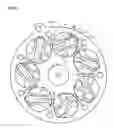
When the discharge chamber 12b is disposed at the radial center and the suction chamber 12a is disposed at radial periphery to surround the discharge chamber 12b, it is possible, as shown in FIGS. 4 and 5, to form on the end face of the valve plate 11 opposing the cylinder block 2 through the circular thin plate 18 grooves 11d extending from the holes 11c accommodating the through-bolts to the portions abutting the suction valves 13 without interfering with the discharge holes 11b and make the grooves 11d extend beyond the portions opposing the roots of the suction valves 13 to the portions near the suction holes 11a, thereby applying the crank chamber pressure on the surfaces of the suction valves 13 abutting the valve plate 11 through the holes 2b formed in the cylinder block 2 and accommodating the through-bolts, holes 18b formed in the circular thin plate 18 and accommodating the through-bolts, holes 11c formed in the valve plate 11 and accommodating the through bolts, and the grooves 11d formed in the end face of the valve plate 11 opposing the cylinder block 2. The pressure forces the suction valves 13 in the opening direction. Thus, the forces for pushing the suction valves 13 open become larger than that by the conventional technology, the delayed opening of the suction valves 13 is prevented more effectively than by the conventional technology, and the self-excited vibration of the suction valves is prevented more effectively than by the conventional technology.
INDUSTRIAL APPLICABILITY
The present invention can be widely used in various kinds of reciprocating compressors including swash plate compressors, wobble plate compressors, etc.
BRIEF DESCRIPTION OF THE DRAWINGS
FIG. 1 is a sectional view of a variable displacement swash plate compressor in accordance with a preferred embodiment of the present invention.
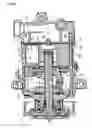
FIG. 2 is a set of perspective views of the suction valves and the valve plate provided for the variable displacement swash plate compressor in accordance with a preferred embodiment of the present invention.
FIG. 3 is a set of perspective views of the suction valves and the valve plate of FIG. 2 wherein the suction valves are fitted on the valve plate.
FIG. 4 is a set of perspective views of the suction valves and the valve plate provided for the variable displacement swash plate compressor in accordance with another preferred embodiment of the present invention.
FIG. 5 is a set of perspective views of the suction valves and the valve plate of FIG. 4 wherein the suction valves are fitted on the valve plate.
BRIEF DESCRIPTION OF THE REFERENCE NUMERALS
-
- 1 Variable displacement swash plate compressor
- 2 Cylinder block
- 2a Cylinder bore
- 2b Hole for accommodating through-bolt
- 3 Crank chamber
- 4 Front housing
- 5 Rotation shaft
- 8 Swash plate
- 10 Piston
- 11 Valve plate
- 11a Suction hole
- 11b Discharge hole
- 11c Hole for accommodating through-bolt
- 11d Groove
- 12a Suction chamber
- 12b Discharge chamber
- 13 Suction valve
- 15 Through-bolt
Claims
1. A reciprocating compressor comprising a cylinder block provided with cylinder bores, pistons fitted in the cylinder bores, a front housing opposing one of the end faces of the cylinder block to cooperate with the cylinder block and thereby form a crank chamber accommodating a piston driving mechanism, a valve plate opposing the other one of the end faces of the cylinder block and provided with suction holes and discharge holes communicating with the cylinder bores, a rear housing provided with a suction chamber and a discharge chamber and opposing the other one of the end faces of the cylinder block with the valve plate inserted between them, strap-shaped suction valves fitted on the end face of the valve plate opposing the cylinder block to abut the valve plate, thereby opening and closing the suction holes at tip portions, discharge valves fitted on the end face of the valve plate opposing the rear housing to open and close the discharge holes, and through-bolts passed through the front housing, the crank chamber, the cylinder block, the valve plate and the rear housing to assemble them as a unitary body, wherein the valve plate is provided with grooves extending from holes for accommodating the through-bolts to portions abutting the suction valves in the end face opposing the cylinder block.
2. A reciprocating compressor of claim 1, wherein the grooves extend beyond the portions opposing the roots of the suction valves to the portions near the suction holes.
Images & Drawings included:


Sources:
- United States Patent and Trademark Office - verify current appl. status at the USPTO↗
Similar patent applications:
- » 20110300009
Method of Processing Contact Portions between Valve Plate and Suction Valve and/or Discharge Valve of Reciprocating Compressor, and Reciprocating Compressor - » 20120267075
COOLING SYSTEM FOR RECIPROCATING COMPRESSORS AND A RECIPROCATING COMPRESSOR - » 20190120221
Reciprocating compressor and method for manufacturing a reciprocating compressor - » 20180223825
RECIPROCATING COMPRESSOR AND METHOD OF MANUFACTURING A RECIPROCATING COMPRESSOR - » 20160245274
Reciprocating compressor, compression section unit, and maintenance method of reciprocating compressor - » 20170356442
Reciprocating Compressor and Process for Mounting Hermetically Sealed Housing of Reciprocating Compressor - » 20140341758
Reciprocating compressor or pump and a portable tool powering system including a reciprocating compressor - » 20130177454
Reciprocating compressor or pump and a portable tool powering system including a reciprocating compressor - » 20070292282
RECIPROCATING COMPRESSOR OR PUMP AND A PORTABLE TOOL POWERING SYSTEM INCLUDING A RECIPROCATING COMPRESSOR - » 20160186738
Reciprocating Compressor or Pump and a Portable Tool Powering System Including a Reciprocating Compressor
Recent applications in this class:
- » 20220178358 2022-06-09
Capacity control valve - » 20150226193 2015-08-13
Reciprocating refrigeration compressor suction valve seating - » 20120195784 2012-08-02
COMPRESSOR - » 20120128509 2012-05-24
Reciprocating compressor - » 20110197751 2011-08-18
RECIPROCATING PISTON MACHINE - » 20110139273 2011-06-16
Exhaust check valve of swash plate compressor - » 20110126701 2011-06-02
RECIPROCATING PISTON ENGINE - » 20100329897 2010-12-30
METHOD FOR PROCESSING THE VALVE PLATE OF A RECIPROCATING COMPRESSOR TO PREVENT THE SUCTION VALVES AND/OR THE DISCHARGE VALVE OF THE COMPRESSOR FROM STICKING ON THE VALVE PLATE AT THE PORTIONS ABUTTING THE VALVE PLATE, AND RECIPROCATING COMPRESSOR - » 20100209262 2010-08-19
PISTON COMPRESSOR - » 20100143162 2010-06-10
SUCTION SHUTOFF VALVE
Recent applications for this Assignee:
- » 20240159421 2024-05-16
AIR CONDITIONING APPARATUS - » 20240157761 2024-05-16
VEHICLE AIR CONDITIONING APPARATUS - » 20240072645 2024-02-29
INVERTER DEVICE - » 20240060494 2024-02-22
Scroll compressor with a thrust plate and a flexible thrust sheet member - » 20240026882 2024-01-25
Scroll compressor with suppressed reduction of rotational moment - » 20240026881 2024-01-25
Scroll compressor - » 20240025231 2024-01-25
VEHICLE AIR CONDITIONING APPARATUS - » 20240014758 2024-01-11
POWER CONVERSION DEVICE - » 20240011488 2024-01-11
SCROLL COMPRESSOR - » 20240011487 2024-01-11
SCROLL FLUID MACHINE