PLASTIC LAMINATE AND METHOD FOR MAKING THE PLASTIC LAMINATE
US20110020639A1
2011-01-27
12/749,641
2010-03-30
Abstract:
A plastic laminate comprises a main layer and an abrasion resistant layer formed on the main layer. The main layer is made of polystyrene. The abrasion resistant layer is made of polypropylene and additives. A method for making the plastic laminate is also described there.
Inventors:
- Bo LIU 7 🇨🇳 Shenzhen city, China
- SHU-HAI PENG 2 🇨🇳 Shenzhen City, China
- JIAN-BIN DENG 4 🇨🇳 Shenzhen City, China
- QING-MING YUAN 4 🇨🇳 Shenzhen City, China
Assignee:
- FIH (HONG KONG) LIMITED 1,461 🇭🇰 Kowloon, Hong Kong
- SHENZHEN FUTAIHONG PRECISION INDUSTRY CO., LTD. 1,108 🇨🇳 ShenZhen City, China
Interested in similar patents?
Get notified when new applications in this technology area are published.
Classification:
B32B2307/554 » CPC further
Properties of the layers or laminate having particular mechanical properties Wear resistance
B32B2325/00 » CPC further
Polymers of vinyl-aromatic compounds, e.g. polystyrene
B32B27/20 » CPC further
Layered products comprising synthetic resin characterised by the use of special additives using fillers, pigments, thixotroping agents
B32B7/02 » CPC main
Layered products characterised by the relation between layers; Layered products characterised by the relative orientation of features between layers, or by the relative values of a measurable parameter between layers, i.e. products comprising layers having different physical, chemical or physicochemical properties; Layered products characterised by the interconnection of layers Physical, chemical or physicochemical properties
B32B5/00 IPC
Layered products characterised by the non- homogeneity or physical structure, i.e. comprising a fibrous, filamentary, particulate or foam layer; Layered products characterised by having a layer differing constitutionally or physically in different parts
B32B27/30 » CPC further
Layered products comprising synthetic resin comprising vinyl (co)polymers; comprising acrylic (co)polymers
B32B27/32 » CPC further
Layered products comprising synthetic resin comprising polyolefins
B32B27/08 » CPC further
Layered products comprising synthetic resin as the main or only constituent of a layer, next to another layer of a of synthetic resin
B32B2553/00 » CPC further
Packaging equipment or accessories not otherwise provided for
Y10T428/266 » CPC further
Stock material or miscellaneous articles; Web or sheet containing structurally defined element or component, the element or component having a specified physical dimension of base or substrate
Y10T428/269 » CPC further
Stock material or miscellaneous articles; Web or sheet containing structurally defined element or component, the element or component having a specified physical dimension including synthetic resin or polymer layer or component
Y10T428/31913 » CPC further
Stock material or miscellaneous articles; Composite [nonstructural laminate]; Of addition polymer from unsaturated monomers; Next to second addition polymer from unsaturated monomers Monoolefin polymer
B32B2323/10 » CPC further
Polyalkenes Polypropylene
B32B37/24 IPC
Methods or apparatus for laminating, e.g. by curing or by ultrasonic bonding characterised by the properties of the layers with at least one layer not being coherent before laminating, e.g. made up from granular material sprinkled onto a substrate
B32B2305/30 » CPC further
Condition, form or state of the layers or laminate Fillers, e.g. particles, powders, beads, flakes, spheres, chips
Description
BACKGROUND
1. Technical Field
The present disclosure relates to plastic laminates, especially to a plastic laminate having high abrasion resistance and a method for making the plastic laminate.
2. Description of Related Art
Polystyrene is now widely used to manufacture packing laminates for packing electronic devices. However, polystyrene laminates have low abrasion resistance, and if damaged during transport of electronic devices may allow contamination of the electronic devices.
Therefore, there is room for improvement within the art.
BRIEF DESCRIPTION OF THE FIGURES
Many aspects of the plastic laminate can be better understood with reference to the following figures. The components in the figures are not necessarily drawn to scale, the emphasis instead being placed upon clearly illustrating the principles of the plastic laminate.
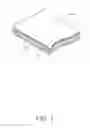
FIG. 1 is a cross-sectional view of an exemplary embodiment of a plastic laminate.
FIG. 2 is a flowchart of an exemplary embodiment of making the plastic laminate shown in FIG. 1.
DETAILED DESCRIPTION
Referring to FIG. 1, in this exemplary embodiment, a plastic laminate 10 includes a main layer 11 and an abrasion resistant layer 13 formed on the main layer 11.
The main layer 11 may be made primarily of polystyrene resin, with other common laminate additives, such as talc. The main layer 11 may have a thickness of about 0.8-0.9 mm. The polystyrene resin may have a 55-65% percent by weight in the plastic laminate 10.
The abrasion resistant layer 13 may be made primarily of polypropylene resin, with other additives, such as stearic acid, zinc stearate, and colorant. The mass ratio of the polypropylene resin, the stearic acid, the zinc stearate and the colorant may be about 25˜30:3˜8:0.01˜0.2:0.01˜0.5. The polypropylene resin with its high abrasion resistance, together with the added stearic acid and the zinc stearate give the plastic laminate 10 even better abrasion resistance and durability. The abrasion resistant layer 13 may have a thickness of about 0.05-0.1 mm. Commonly, the thickness of the abrasion resistant layer 13 is less than the thickness of the main layer 11.
A main advantage of the plastic laminate 10 is that, due to the excellent abrasion resistance and durability of the abrasion resistant layer 13, the plastic laminate 10 has excellent surface abrasion resistance, and the presence of the abrasion resistant layer 13 can prevent particles in the plastic laminate 10 from being excessively scraped off.
A method for manufacturing a plastic laminate, in this exemplary embodiment, may include: heating a predetermined quantity of polystyrene until melted; forming the melted polystyrene into a main layer; heating a predetermined quantity of a mixture of polypropylene and additives until melted; forming the melted mixture into an abrasion resistant layer; and rolling the main layer and the abrasion resistant layer into an integrated unit to form the plastic laminate.
Referring to FIG. 2, a method for manufacturing the plastic laminate 10, in this exemplary embodiment, may include steps S1-S5.
In step S1, a predetermined quantity of polystyrene is provided and then heated until melted. Commonly, talc can be added into the polystyrene to allow the polystyrene to be more easily shaped.
In step S2, a thermal forming container is provided. The thermal forming container may have a level bottom surface. The melted polystyrene and talc is then infused into the thermal forming container and subsequently cooled to form the main layer 11.
In step S3, a predetermined quantity of a mixture of polypropylene and additives is heated until melted. The additives can be stearic acid, zinc stearate, and colorant. The mass ratio of the polypropylene resin, the stearic acid, the zinc stearate and the colorant may be about 25˜30:3˜8:0.01˜0.2:0.01˜0.5.
In step S4, another thermal forming container is provided. The melted mixture from step S3 is then infused into this thermal forming container and subsequently cooled to form the abrasion resistant layer 13.
In step S5, a rolling machine is provided. The main layer 11 and the abrasion resistant layer 13 are then rolled together by the rolling machine to form the plastic laminate 10.
It should be understood, the step S1 and the step S3 can be carried out at the same time; and step S2 and step S4 can be carried out at the same time
The plastic laminate 10 can be used to form, for example, a packing laminate, such as a packet, a cushion, or a pallet.
An abrasion resistance test was performed on the plastic laminate 10. The test was carried out by rotating a grinding wheel 1000 times against the surface of the abrasion resistant layer 13 under a load of 1000 grams. The test resulted in about 6-8 mg of scrap of the abrasion resistant layer 13, which is substantially less than the 50-65 mg of scrap of conventional polystyrene laminate using the same testing conditions.
It should be understood, however, that even though numerous characteristics and advantages of the present embodiments have been set forth in the foregoing description, together with details of the structures and functions of the embodiments, the disclosure is illustrative only, and changes may be made in detail, especially in matters of shape, size, and arrangement of parts within the principles of the invention to the full extent indicated by the broad general meaning of the terms in which the appended claims are expressed.
Claims
What is claimed is:1. A plastic laminate, comprising:
a main layer made of polystyrene; and
an abrasion resistant layer formed on the main layer, the abrasion resistant layer being made of polypropylene and additives.
2. The plastic laminate as claimed in claim 1, wherein the additives include stearic acid, zinc stearate, and colorant.
3. The plastic laminate as claimed in claim 2, wherein the mass ratio of the polypropylene resin, the stearic acid, the zinc stearate and the colorant is about 25˜30:3˜8:0.01˜0.2:0.01˜0.5.
4. The plastic laminate as claimed in claim 1, wherein the polystyrene has about 55-65% percent by weight in the plastic laminate.
5. The plastic laminate as claimed in claim 1, wherein the main layer has a thickness of about 0.8-0.9 mm.
6. The plastic laminate as claimed in claim 1, wherein the abrasion resistant layer has a thickness of about 0.05-0.1 mm.
7. The plastic laminate as claimed in claim 1, wherein the main layer further includes talc.
8. A method for making a plastic laminate, comprising:
heating a predetermined quantity of polystyrene until melted;
forming the melted polystyrene into a main layer;
heating a predetermined quantity of a mixture of polypropylene and additives until melted;
forming the melted mixture into an abrasion resistant layer; and
rolling the main layer and the abrasion resistant layer into an integrated unit to form the plastic laminate.
9. The method as claimed in claim 8, wherein the additives include stearic acid, zinc stearate, and colorant.
10. The method as claimed in claim 9, wherein the mass ratio of the polypropylene resin, the stearic acid, the zinc stearate and the colorant is about 25˜30:3˜8:0.01˜0.2:0.01˜0.5.
11. The method as claimed in claim 8, wherein the polystyrene has about 55-65% percent by weight in the plastic laminate.
12. The method as claimed in claim 8, wherein the main layer has a thickness of about 0.8-0.9 mm.
13. The method as claimed in claim 8, wherein the abrasion resistant layer has a thickness of about 0.05-0.1 mm.
14. A method for making a plastic laminate, comprising:
heating a predetermined quantity of polystyrene until melted;
heating a predetermined quantity of a mixture of polypropylene and additives until melted;
forming the melted polystyrene into a main layer;
forming the melted mixture into an abrasion resistant layer; and
rolling the main layer and the abrasion resistant layer into an integrated unit to form the plastic laminate.
Images & Drawings included:


Sources:
- United States Patent and Trademark Office - verify current appl. status at the USPTO↗
Similar patent applications:
- » 20080318053
Plastic Laminates and Methods for Making the Same - » 20080216940
Plastic laminates and methods for making the same - » 20080318039
Plastic laminates and methods for making the same - » 20060222823
Hinged laminated plastic product and method of making - » 20200050019
HYBRID GLASS AND PLASTIC LAMINATED LENSES AND METHOD OF MAKING SAME - » 20190017723
Stainless steel foil laminated plastic HVAC duct and method of making same - » 20200011564
STAINLESS STEEL FOIL LAMINATED PLASTIC HVAC DUCT AND METHOD OF MAKING SAME - » 20100260993
Metallized laminated structure and method of making a plastic article - » 20180079028
PLASTIC WOVEN LAMINATE, BAG MADE THEREFROM, METHOD OF MAKING SAME
Recent applications in this class:
- » 20240359424 2024-10-31
COMPOSITE GYPSUM BOARD AND METHODS RELATED THERETO - » 20240149556 2024-05-09
CAP SHEETS USEFUL FOR FUNCTIONAL FILMS - » 20230373188 2023-11-23
Fabric with Moisture Management Function - » 20230202136 2023-06-29
PLASTER BOARDS AND METHODS FOR MAKING THEM - » 20230173787 2023-06-08
BOPP Film and Method of Making the Same - » 20230166480 2023-06-01
LAMINATED GLAZING - » 20230150236 2023-05-18
Multilayer Structure, and Packaging Material for Retort Using Same - » 20230150235 2023-05-18
Multilayer Film Having Excellent Recoverability - » 20230150234 2023-05-18
METALLIZED PACKAGING FILMS FROM RECYCLED PLASTICS - » 20230138250 2023-05-04
Flexible display module and electronic device
Recent applications for this Assignee:
- » 20220140846 2022-05-05
Antenna structure and wireless communication device using same - » 20220094077 2022-03-24
Antenna structure and wireless communication device using same - » 20220059931 2022-02-24
Antenna structure and wireless communication device - » 20220021116 2022-01-20
Single antenna structure capable of operating in multiple band widths - » 20220010948 2022-01-13
Anti-loosing structure and backlight module - » 20200170133 2020-05-28
Housing, electronic device, and method for manufacturing same - » 20200122194 2020-04-23
Frame and surface treatment method for the frame - » 20200060034 2020-02-20
Housing, method for manufacturing the same, and electronic device having the same - » 20200016805 2020-01-16
Housing, electronic device, and method for manufacturing the same - » 20190368052 2019-12-05
COMPOSITE AND METHOD FOR MAKING SAME