System and method for testing graphics card
US20110098978A1
2011-04-28
12/695,682
2010-01-28
✅ Patent granted
US 8,301,415 B2
2012-10-30
-
-
Cindy H Khuu
2031-03-28
Abstract:
A system is used to test a 3D image processing capability of a video card. The system includes a 3D model engine module, a 3D model module, a test parameter module, and a check module. The 3D model module is capable of building a 3D model engine. The test parameter module is capable of setting test parameters. The check module is capable of checking a test result. The 3D model is processed by the video card within the test parameters and a running environment which is set by the 3D model engine under the test parameters, and the check module checks if the video card processes the 3D model properly.
Assignee:
- HON HAI PRECISION INDUSTRY CO., LTD. 12,833 🇹🇼 Tu-Cheng, Taiwan
- HONG FU JIN PRECISION INDUSTRY (SHENZHEN) CO., LTD. 4,225 🇨🇳 Shenzhen City, China
- HON HAI PRECISION INDUSTRY CO., LTD. 2,724 🇹🇼 Tu-Cheng, New Taipei, Taiwan
- Hong Fu Jin Precision Industry (Shenzhen) Co., Ltd. 1,915 🇨🇳 Shenzhen, Guangdong Province, China
Interested in similar patents?
Get notified when new applications in this technology area are published.
Classification:
G06T15/005 » CPC main
3D [Three Dimensional] image rendering General purpose rendering architectures
G09G5/363 » CPC further
Control arrangements or circuits for visual indicators common to cathode-ray tube indicators and other visual indicators characterised by the display of a graphic pattern, e.g. using an all-points-addressable [APA] memory Graphics controllers
G09G2320/0693 » CPC further
Control of display operating conditions; Adjustment of display parameters Calibration of display systems
G09G2320/08 » CPC further
Control of display operating conditions Arrangements within a display terminal for setting, manually or automatically, display parameters of the display terminal
G09G2340/0407 » CPC further
Aspects of display data processing; Changes in size, position or resolution of an image Resolution change, inclusive of the use of different resolutions for different screen areas
G09G2340/0435 » CPC further
Aspects of display data processing; Changes in size, position or resolution of an image; Resolution change, inclusive of the use of different resolutions for different screen areas Change or adaptation of the frame rate of the video stream
G06F15/00 IPC
Digital computers in general ; Data processing equipment in general
G06F11/30 IPC
Error detection; Error correction; Monitoring Monitoring
Description
BACKGROUND
1. Technical Field
The present disclosure relates to systems and methods for testing add-on cards of computers, and more particularly to a graphics card test system and method.
2. Description of Related Art
At present, real-time three-dimensional (3D) graphics are common in computer games, which lead to an increasing demand for 3D graphics cards. During manufacture, the graphics cards need to be tested for checking their operability. One important step of testing the graphics cards is to test a 3D image processing capability of the graphics cards. The graphics cards process the 3D image according to perspective collineation and matrix calculation to show the 3D image on a screen. However, the conventional testing method for the 3D image processing capability is often complex.
Therefore, there is room for improvement within the art.
BRIEF DESCRIPTION OF THE DRAWINGS
Many aspects of the embodiments can be better understood with references to the following drawings. The components in the drawings are not necessarily drawn to scale, the emphasis instead being placed upon clearly illustrating the principles of the embodiments. Moreover, in the drawings, like reference numerals designate corresponding parts throughout the several views.
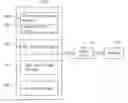
FIG. 1 is a block view of a system for testing the 3D image processing capability of a video card.
FIG. 2 is a sketch view of a test parameter input interface.
FIG. 3 is a flow view of a method for testing a 3D image processing capability of a video card.
DETAILED DESCRIPTION
The disclosure is illustrated by way of example and not by way of limitation in the figures of the accompanying drawings in which like references indicate similar elements. It should be noted that references to “an” or “one” embodiment in this disclosure are not necessarily to the same embodiment, and such references mean at least one.
In general, the word “module,” as used herein, refers to logic embodied in hardware or firmware, or to a collection of software instructions, written in a programming language, such as, for example, Java, C, or assembly. One or more software instructions in the modules may be embedded in firmware, such as an EPROM. It will be appreciated that modules may comprise connected logic units, such as gates and flip-flops, and may comprise programmable units, such as programmable gate arrays or processors. The modules described herein may be implemented as either software and/or hardware modules and may be stored in any type of computer-readable medium or other computer storage device.
Referring to FIG. 1, a system for testing a 3D image processing capability of a video card 10 includes a test apparatus 30. The test apparatus 30 includes a 3D model engine module 32, a 3D model module 34, a test parameter module 36, and a check module 38. The test apparatus 30 is connected to the video card 10 which is further connected to the display 50.
The 3D model engine module 32 is used to build a 3D model engine. The 3D model engine module 32 includes an environment unit 321 for setting a running environment of a 3D model, such as building a 3D coordinate system, a viewpoint, and a light source.
The 3D model module 34 is used to build a 3D model. The 3D model module 34 sets shapes, dimensions, materials, positions, and so on, of the 3D model.
Referring to FIGS. 1 and 2, the test parameter module 36 is used to set test parameters, which includes a refresh rate, a display resolution rate, a mode of processing the 3D model, a shading mode, test duration time, and so on. The video card 10 is tested under the condition of that the display 50 shows the 3D model under the refresh rate and the display resolution rate. The mode of processing the 3D mode sets a manner of the video card 10 processing the 3D model. There are different modes that can be chosen to process the 3D model, such as rotating a 3D image of the 3D model in the display 50, the 3D image fading in or out, and so on. The test parameter module 36 presets a plurality of shading modes that can be chosen to shading the 3D image when testing the video card 10. The plurality of shading modes includes flat shading, Gouraud shading, phone shading, scan line renderer, ray-traced, and so on.
The check module 38 is used to test the capability of the video card to process the 3D model. If it is capable, the video card 10 passes the test, and if it is incapable, the video card 10 fails the test.
Referring to FIG. 3, a method for testing the 3D image processing capability of the video card 10 includes following steps.
In step 301, the 3D model engine module 32 builds a 3D model engine, and the test environment unit 321 sets a running environment in the 3D model engine.
In step 302, the 3D model module 34 builds a 3D model.
In step 303, the test parameter module 36 sets a plurality of test parameters.
In step 304, the 3D model engine is started. The video card 10 processes the 3D model under the running environment of the 3D model engine complying with the test parameters. A 3D image corresponding to the 3D model is shown on the display 50.
In step 305, the check module 38 checks if the video card 10 processes the 3D model properly. If it is proper, the video card 10 passes the test, and if it is improper, the video card 10 fails the test.
It is to be understood, however, that even though numerous characteristics and advantages of the embodiments have been set forth in the foregoing description, together with details of the structure and function of the embodiments, the disclosure is illustrative only, and changes may be made in detail, especially in matters of shape, size, and arrangement of parts within the principles of the present disclosure to the full extent indicated by the broad general meaning of the terms in which the appended claims are expressed.
It is also to be understood that the above description and the claims drawn to a method may include some indication in reference to certain steps. However, the indication used is only to be viewed for identification purposes and not as a suggestion as to an order for the steps.
Claims
What is claimed is:1. A system for testing a 3D image processing capability of a video card, comprising:
a 3D model engine module capable of building a 3D model engine;
a 3D model module capable of creating a 3D model;
a test parameter module capable of setting test parameters;
a check module capable of checking a test result;
wherein when the 3D model is processed by the video card within the test parameters and a running environment which is set by the 3D model engine, the check module is capable of checking if the video card processes the 3D model properly.
2. The system of claim 1, further comprising a display connected to the video card, and the display capable of showing a 3D image corresponding to the video card processing the 3D model.
3. The system of claim 2, wherein the test parameters comprises at least one of the refresh rate of the display, resolution rate of the display, mode of processing the 3D model, shading mode, and test duration time.
4. The system of claim 3, wherein the mode of processing the 3D model can be chosen from rotating the 3D image, the 3D image fading in, or the 3D image fading out.
5. The system of claim 3, wherein the shading mode can be chosen form flat shading, Gouraud shading, phone shading, scan line renderer, or ray-traced.
6. The system of claim 1, wherein the 3D model engine module comprises an environment unit for setting a running environment of the 3D model.
7. The system of claim 6, wherein the running environment of the 3D model comprises at least one of a coordinate system, a viewpoint, and a light source.
8. A method for testing a 3D image processing capability of a video card, comprising following steps:
building a 3D model engine by a 3D model engine module;
creating a 3D model by a 3D model module;
setting a plurality of test parameters by a test parameter module; and
processing the 3D model by the video card within the test parameters and a running environment which is set by the 3D model engine.
9. The method of claim 8, further comprising a step of determining if the video card processes the 3D model properly; if it is proper, the video card passes the test, and if it is improper, the video card fails the test.
10. The method of claim 9, wherein the plurality of test parameters comprises at least one of the refresh rate of a display connected to the video card, resolution rate of the display, mode of processing the 3D model, shading mode, and test duration time.
11. The method of claim 10, wherein the mode of processing the 3D model can be chosen from rotating the 3D image, the 3D image fading in, or the 3D image fading out.
12. The method of claim 10, wherein the shading mode can be chosen form flat shading, Gouraud shading, phone shading, scan line renderer, or ray-traced.
13. The method of claim 8, wherein the running environment comprises at least one of the a coordinate system, a viewpoint, and a light source.
Images & Drawings included:



Sources:
- United States Patent and Trademark Office - verify current appl. status at the USPTO↗
Similar patent applications:
- » 20110099425
System and method for testing graphics card
Recent applications in this class:
- » 20250292481 2025-09-18
Geometry to Tiling Arbiter for Tile-Based Rendering System - » 20250292480 2025-09-18
DYNAMICALLY NEGOTIATED CLIENT-SERVER RENDERING FOR A SCIENTIFIC VISUALIZATION SYSTEM - » 20250278884 2025-09-04
GRID-BASED LIGHT SAMPLING FOR RAY TRACING APPLICATIONS - » 20250265764 2025-08-21
Graphics Processing Method and System for Rendering Items of Geometry Based on Their Size - » 20250265763 2025-08-21
METHODS AND DEVICES FOR PERFORMING SHADER OPERATIONS - » 20250265762 2025-08-21
ALLOCATION AND SYNCHRONIZATION OF MULTIPLE QUEUES BY A GRAPHICS PROCESSING UNIT - » 20250259371 2025-08-14
DYNAMIC ROUTING OF TEXTURE LOADS IN GRAPHICS PROCESSING - » 20250259370 2025-08-14
LEARNING NEURAL REFLECTANCE SHADERS FROM IMAGES - » 20250252650 2025-08-07
GRAPHICS ARCHITECTURE INCLUDING A NEURAL NETWORK PIPELINE - » 20250252649 2025-08-07
IMAGE RENDERING METHOD AND APPARATUS, DEVICE, AND STORAGE MEDIUM
Recent applications for this Assignee:
- » 20140233961 2014-08-21
Optical communication module including optical-electrical signal converters and optical signal generators - » 20140083669 2014-03-27
HEAT SINK - » 20140083669 2014-03-27
HEAT SINK - » 20140063746 2014-03-06
Electronic device with heat dissipation assembly - » 20140061224 2014-03-06
AUTOMATIC VENDING MACHINE - » 20140060914 2014-03-06
Enclosure with shield apparatus - » 20140058727 2014-02-27
MULTIMEDIA RECORDING SYSTEM AND METHOD - » 20140055955 2014-02-27
Fastener - » 20140055322 2014-02-27
DISPLAY SYSTEM AND HEAD-MOUNTED DISPLAY APPARATUS - » 20140054439 2014-02-27
CONTAINER DATA CENTER WITH SUPPORTING APPARATUS