Mobile device and control method thereof
US20110130173A1
2011-06-02
12/957,959
2010-12-01
✅ Patent granted
US 8,649,826 B2
2014-02-11
-
-
Mahendra Patel
Sughrue Mion, PLLC
2030-12-01
Abstract:
The mobile device for providing a haptic function includes a vibration unit which generates vibration for a tactile effect as the haptic function; and a control unit which includes a platform providing an application programming interface (API) corresponding to the haptic function and having a plurality of parameters, executes an application prepared by the API, determines a characteristic of the vibration based on the plurality of parameters set up in the application, and controls the vibration unit to generate the vibration having the determined characteristic.
Inventors:
- Hyun-Gyoo YOOK 30 🇰🇷 Seoul, South Korea
- Ki-Hong IM 4 🇰🇷 Suwon-si, South Korea
- Jeong-yun KIM 3 🇰🇷 Suwon-si, South Korea
Assignee:
- SAMSUNG ELECTRONICS CO., LTD. 90,318 🇰🇷 Suwon-si, South Korea
- SAMSUNG ELECTRONICS CO., LTD. 1,284 🇰🇷 Suwon City, South Korea
Applicant:
Interested in similar patents?
Get notified when new applications in this technology area are published.
Classification:
H04W76/10 » CPC main
Connection management Connection setup
G06F3/016 » CPC further
Input arrangements for transferring data to be processed into a form capable of being handled by the computer; Output arrangements for transferring data from processing unit to output unit, e.g. interface arrangements; Input arrangements or combined input and output arrangements for interaction between user and computer Input arrangements with force or tactile feedback as computer generated output to the user
G06F3/017 » CPC further
Input arrangements for transferring data to be processed into a form capable of being handled by the computer; Output arrangements for transferring data from processing unit to output unit, e.g. interface arrangements; Input arrangements or combined input and output arrangements for interaction between user and computer Gesture based interaction, e.g. based on a set of recognized hand gestures
G06F3/0481 » CPC further
Input arrangements for transferring data to be processed into a form capable of being handled by the computer; Output arrangements for transferring data from processing unit to output unit, e.g. interface arrangements; Input arrangements or combined input and output arrangements for interaction between user and computer; Interaction techniques based on graphical user interfaces [GUI] based on specific properties of the displayed interaction object or a metaphor-based environment, e.g. interaction with desktop elements like windows or icons, or assisted by a cursor's changing behaviour or appearance
G06F3/0482 » CPC further
Input arrangements for transferring data to be processed into a form capable of being handled by the computer; Output arrangements for transferring data from processing unit to output unit, e.g. interface arrangements; Input arrangements or combined input and output arrangements for interaction between user and computer; Interaction techniques based on graphical user interfaces [GUI] based on specific properties of the displayed interaction object or a metaphor-based environment, e.g. interaction with desktop elements like windows or icons, or assisted by a cursor's changing behaviour or appearance Interaction with lists of selectable items, e.g. menus
G06F3/0483 » CPC further
Input arrangements for transferring data to be processed into a form capable of being handled by the computer; Output arrangements for transferring data from processing unit to output unit, e.g. interface arrangements; Input arrangements or combined input and output arrangements for interaction between user and computer; Interaction techniques based on graphical user interfaces [GUI] based on specific properties of the displayed interaction object or a metaphor-based environment, e.g. interaction with desktop elements like windows or icons, or assisted by a cursor's changing behaviour or appearance Interaction with page-structured environments, e.g. book metaphor
G06F3/0488 » CPC further
Input arrangements for transferring data to be processed into a form capable of being handled by the computer; Output arrangements for transferring data from processing unit to output unit, e.g. interface arrangements; Input arrangements or combined input and output arrangements for interaction between user and computer; Interaction techniques based on graphical user interfaces [GUI] using specific features provided by the input device, e.g. functions controlled by the rotation of a mouse with dual sensing arrangements, or of the nature of the input device, e.g. tap gestures based on pressure sensed by a digitiser using a touch-screen or digitiser, e.g. input of commands through traced gestures
G06F3/04883 » CPC further
Input arrangements for transferring data to be processed into a form capable of being handled by the computer; Output arrangements for transferring data from processing unit to output unit, e.g. interface arrangements; Input arrangements or combined input and output arrangements for interaction between user and computer; Interaction techniques based on graphical user interfaces [GUI] using specific features provided by the input device, e.g. functions controlled by the rotation of a mouse with dual sensing arrangements, or of the nature of the input device, e.g. tap gestures based on pressure sensed by a digitiser using a touch-screen or digitiser, e.g. input of commands through traced gestures for inputting data by handwriting, e.g. gesture or text
G06F3/04886 » CPC further
Input arrangements for transferring data to be processed into a form capable of being handled by the computer; Output arrangements for transferring data from processing unit to output unit, e.g. interface arrangements; Input arrangements or combined input and output arrangements for interaction between user and computer; Interaction techniques based on graphical user interfaces [GUI] using specific features provided by the input device, e.g. functions controlled by the rotation of a mouse with dual sensing arrangements, or of the nature of the input device, e.g. tap gestures based on pressure sensed by a digitiser using a touch-screen or digitiser, e.g. input of commands through traced gestures by partitioning the display area of the touch-screen or the surface of the digitising tablet into independently controllable areas, e.g. virtual keyboards or menus
G06F9/451 » CPC further
Arrangements for program control, e.g. control units using stored programs, i.e. using an internal store of processing equipment to receive or retain programs; Arrangements for executing specific programs Execution arrangements for user interfaces
H04M1/72469 » CPC further
Substation equipment, e.g. for use by subscribers; Mobile telephones; Cordless telephones, i.e. devices for establishing wireless links to base stations without route selection; User interfaces specially adapted for cordless or mobile telephones for operating the device by selecting functions from two or more displayed items, e.g. menus or icons
H04W8/18 » CPC further
Network data management Processing of user or subscriber data, e.g. subscribed services, user preferences or user profiles; Transfer of user or subscriber data
G07F17/32 » CPC further
Coin-freed apparatus for hiring articles; Coin-freed facilities or services for games, toys, sports, or amusements
H04M1/2747 » CPC further
Substation equipment, e.g. for use by subscribers; Devices for calling a subscriber; Devices whereby a plurality of signals may be stored simultaneously with provision for storing more than one subscriber number at a time, e.g. using toothed disc using static electronic memories, e.g. chips; Methods of retrieving data Scrolling on a display
H04M1/72406 » CPC further
Substation equipment, e.g. for use by subscribers; Mobile telephones; Cordless telephones, i.e. devices for establishing wireless links to base stations without route selection; User interfaces specially adapted for cordless or mobile telephones with means for local support of applications that increase the functionality by software upgrading or downloading
H04M1/72445 » CPC further
Substation equipment, e.g. for use by subscribers; Mobile telephones; Cordless telephones, i.e. devices for establishing wireless links to base stations without route selection; User interfaces specially adapted for cordless or mobile telephones with means for local support of applications that increase the functionality for supporting Internet browser applications
H04M19/047 » CPC further
Current supply arrangements for telephone systems providing ringing current or supervisory tones, e.g. dialling tone or busy tone the ringing-current being generated at the substations Vibrating means for incoming calls
H04M2250/22 » CPC further
Details of telephonic subscriber devices including a touch pad, a touch sensor or a touch detector
H04W84/12 » CPC further
Network topologies; Hierarchically pre-organised networks, e.g. paging networks, cellular networks, WLAN [Wireless Local Area Network] or WLL [Wireless Local Loop]; Small scale networks; Flat hierarchical networks WLAN [Wireless Local Area Networks]
H04W88/02 » CPC further
Devices specially adapted for wireless communication networks, e.g. terminals, base stations or access point devices Terminal devices
Description
CROSS-REFERENCE TO RELATED APPLICATIONS
This application claims priority from U.S. Provisional Application Nos. 61/265,923 and 61/265,939, filed Dec. 2, 2009, and Korean Patent Application No. 10-2010-0114478 filed Nov. 17, 2010, in the Korean Intellectual Property Office, the disclosures of which are incorporated herein by reference in their entireties.
BACKGROUND
1. Field
Apparatuses and methods consistent with exemplary embodiments relate to a mobile device and a control method thereof, and more particularly, to a mobile device capable of providing a haptic function and a control method thereof.
2. Description of the Related Art
A mobile device such as a cellular phone, a smart phone, a tablet personal computer (PC), etc. interfaces with a user through various methods such as a visual method, an auditory method, etc. Such an interface method includes a tactile method. For example, the mobile device reacts to a user's manipulation or operation and vibrates so that the user can feel tactile feedback which is referred to as haptic or haptic function.
A related art mobile device provides the haptic function in only a simple form where the mobile device vibrates when a user touches a screen or when there is a phone call. Accordingly, it is desirable to provide the haptic function in more various forms to satisfy a demand of a user who wants more sensitive functions.
Meanwhile, various functions provided by a mobile device are achieved by software applications. For example, a user may download an application related to a desired function from a network or the like and install it on the mobile device to use the function. However, an operating system (OS), a platform, etc. of the related art mobile device does not support various haptic functions needed for such an application.
SUMMARY
Exemplary embodiments address at least the above problems and/or disadvantages and other disadvantages not described above. Also, an exemplary embodiment is not required to overcome the disadvantages described above, and an exemplary embodiment may not overcome any of the problems described above.
One or more exemplary embodiments provide a mobile device capable of providing a haptic function to satisfy a demand of a user who wants a more sensitive function, and a control method thereof.
Exemplary embodiments also provide a mobile device capable of supporting a function needed for an application to achieve a haptic function satisfying a user's demand, and a control method thereof.
According to an aspect of an exemplary embodiment, there is provided a mobile device providing a haptic function, the mobile device including a display unit which displays an image; a user input unit which receives an input of a user; a vibration unit which generates vibration for a tactile effect as the haptic function; and a control unit which includes a platform providing an application programming interface (API) corresponding to the haptic function and having a plurality of parameters, executes an application prepared by the API, determines a characteristic of the vibration on the basis of the plurality of parameters set up in the application, and controls the vibration unit to generate vibration having the determined characteristics.
The characteristic of the vibration may include at least one of a state, style and type of the vibration.
Each of the plurality of parameters may include a value for determining at least one of strength, time and frequency characteristics of the vibration.
The application may be downloaded from an exterior and installed.
According to another aspect of an exemplary embodiment, there is provided a control method of a mobile device providing a haptic function, the control method including executing an application prepared by an API that is provided by a platform of the mobile device, has a plurality of parameters, and corresponds to the haptic function; determining a characteristic of vibration for a tactile effect as the haptic function on the basis of the plurality of parameters set up in the application; and generating vibration having the determined characteristic.
The characteristic of the vibration may include at least one of a state, style and type of the vibration.
Each of the plurality of parameters may include a value for determining at least one of strength, time and frequency characteristics of the vibration.
The application may be downloaded from an exterior and installed.
BRIEF DESCRIPTION OF THE DRAWINGS
The above and/or other aspects will become more apparent from the following description of exemplary embodiments, taken in conjunction with the accompanying drawings, in which:
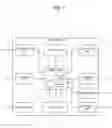
FIG. 1 is a block diagram showing a configuration of a mobile device according to an exemplary embodiment;
FIG. 2 is a block diagram showing a configuration of software of the mobile device of FIG. 1; and
FIG. 3 is a flowchart showing operation of the mobile device according to an exemplary embodiment.
DETAILED DESCRIPTION OF EXEMPLARY EMBODIMENTS
Certain exemplary embodiments are described in greater detail below with reference to accompanying drawings.
In the following description, like drawing reference numerals are used for like elements, even in different drawings. The matters defined in the description, such as detailed construction and elements, are provided to assist in a comprehensive understanding of exemplary embodiments. However, exemplary embodiments can be practiced without those specifically defined matters.
FIG. 1 is a block diagram showing a configuration of a mobile device according to an exemplary embodiment. The mobile device 1 shown in FIG. 1 may include, for example, a cellular phone, a smart phone, a tablet personal computer (PC), etc. The mobile device 1 may include a communication unit 11, a display unit 12, an audio output unit 13, a user input unit 14, a vibration unit 15, a storage unit 16, a control unit 17, a power unit 18, a camera unit 191 and an audio input unit 192.
The communication unit 11 performs communication through a network. The contents and type of the communication performed by the communication unit 11 may vary depending on use and function of the mobile device 1. For example, in the case of a telephone function, the communication unit 11 calls the other device (not shown) for telephone conversation. In the case of an Internet function, the communication unit 11 performs Internet connection with a predetermined server (not shown) for transmitting/receiving data. Further, the communication unit 11 may perform communication with a peripheral device (not shown) through local communication such as Bluetooth, WiFi, etc.
The display unit 12 displays an image representing the operation or state of the mobile device 1. The display unit 12 may display an image by using various display devices including, for example, a liquid crystal display (LCD), an organic light emitting device (OLED), etc. The audio output unit 13 outputs an audio representing the operation or state of the mobile device 1. The audio output unit 13 may include an audio processor (not shown) that processes an audio signal, and a loudspeaker (not shown) that outputs an audio based on an audio signal.
The user input unit 14 receives a user's command. The user input unit 14 may receive a user's command in various forms, which may include a key input unit (not shown) that receives a user's command by a key input, and a touch input unit (not shown) that receives a user's command by a touch input. A touch input unit may include a touch screen provided in the display unit 12.
The vibration unit 15 generates vibration for a tactile effect to achieve a haptic function. The vibration generated by the vibration unit 15 may have various characteristics. The characteristics of the vibration may be controlled by the control unit 17.
The storage unit 16 is a non-volatile memory including, for example, a flash memory, a hard disk drive, etc., which stores data or programs needed for operating the mobile device 1. The power unit 18 supplies power for operating the mobile device 1. The camera unit 191 takes an image, and the audio input unit 192 may include a microphone or the like and receives an audio. Some of the above-described elements, such as for example, the camera unit 191, may be omitted from the mobile device 1 in consideration of its function or use.
The control unit 17 controls the operation of the elements in the mobile device 1. The control unit 17 may include a read only memory (ROM) 171 where a control program for performing various operations may be stored, a random access memory (RAM) 172 where the control program is at least partially loaded, and a central processing unit (CPU) 173 which executes the loaded control program. The control program of the control unit 17 may be stored in the storage unit 16 as well as in the ROM 171. The control program of the control unit 17 may include a plurality of programs. FIG. 2 is a block diagram showing an exemplary configuration of the control program in the control unit 17.
As shown in FIG. 2, the control program of the control unit 17 may include an OS 21, a device driver 22, a platform 23, and an application 24. The OS 21 manages and controls overall operations of the mobile device 1. The device driver 22 performs an interface between a hardware device such as the vibration unit 15 or the like and the OS 21. The platform 23 performs an interface between the OS 21 and the application 24, and includes an API 231 for supporting the application 24. The application 24 performs at least one function, and may be prepared using the API 231 of the platform 23. The function performed by the application 24 includes the haptic function. The application 24 may be transmitted from the external device through the communication unit 11 and installed on the mobile device 1. That is, a user can download the application 24 via the Internet or the like and install it on the mobile device 1.
The API 231 of the platform 23 includes an API for the haptic function. In this exemplary embodiment, the API for the haptic function includes a plurality of parameters. The plurality of parameters corresponds to the vibration characteristics for the haptic function. In the application 24, the plurality of API parameters is set up for the haptic function. When the application 24 is executed, the control unit 17 analyzes the plurality of parameters set up in the application 24 and determines the characteristics of the vibration, thereby controlling the vibration unit 15 to generate vibration corresponding to the determined characteristics.
According to an exemplary embodiment, the characteristics of the vibration may include at least one of the state, style, and type of the vibration for the haptic function. Below, Table 1 shows an example of the vibration characteristics.
| TABLE 1 | |||
| Vibration State | Vibration Style | Vibration Type | |
| Not Playing | Smooth | Periodic | |
| Playing | Strong | Magsweep | |
| Paused | Sharp | Timeline | |
| Streaming | |||
As shown in Table 1, the plurality of parameters may be used in determining the state, style, and type of the vibration. In this exemplary embodiment, the plurality of parameters may include information about strength, time and frequency characteristics of the vibration. Table 2 shows an example of various parameters for determining the strength, time, and frequency characteristics of the vibration variously.
| TABLE 2 |
| Parameters |
| AttackLevel | |
| AttackTime | |
| Duration | |
| Fadelevel | |
| FadeTime | |
| Magnitude | |
| Period | |
| Speed | |
| Style | |
It is possible to achieve the state, style and type of the vibration in various forms as shown in Table 1 by setting up values of many parameters shown in Table 2 variously and combining all or some of them.
In accordance with this exemplary embodiment, the values of at least some of the parameters shown in Table 2 are set up in the application 24, and thus vibration having a characteristic determined on the basis of the setup parameters is generated when the application 24 is executed. Accordingly, it is possible to achieve various types of vibration as the haptic function, so that a user who wants more sensitive effects can be further satisfied. Also, it is possible to provide the haptic function in various forms by the API 231 of the platform 23, so that the application 24 for achieving an enhanced haptic function can be more actively developed.
FIG. 3 is a flowchart showing operation of the mobile device 1 according to an exemplary embodiment. At operation 301, the application 24 prepared by the API 231 of the platform 23 is executed. At operation 302, the characteristic of the vibration is determined by analyzing the plurality of parameters corresponding to the haptic function while the application 24 is executed. At operation 303, the vibration having the determined characteristic is generated.
As described above, in accordance with an exemplary embodiment, it is possible to provide a haptic function which can satisfy a demand of a user who wants a more sensitive function.
It is also possible to support a function needed for an application to achieve a haptic function satisfying a user's demand.
The foregoing exemplary embodiments and advantages are merely exemplary and are not to be construed as limiting. The present teaching can be readily applied to other types of apparatuses. Also, the description of the exemplary embodiments is intended to be illustrative, and not to limit the scope of the claims, and many alternatives, modifications, and variations will be apparent to those skilled in the art.
Claims
What is claimed is:1. A mobile device for providing a haptic function, the mobile device comprising:
a vibration unit which generates vibration for a tactile effect as the haptic function; and
a control unit which comprises a platform providing an application programming interface (API) corresponding to the haptic function and having a plurality of parameters, executes an application prepared by the API, determines a characteristic of the vibration based on the plurality of parameters set up in the application, and controls the vibration unit to generate the vibration having the determined characteristic.
2. The mobile device according to claim 1, wherein the characteristic of the vibration comprises at least one of a state, a style, and a type of the vibration.
3. The mobile device according to claim 1, wherein each of the plurality of parameters comprises a value for determining at least one of a strength, a time period, and a frequency characteristic of the vibration.
4. The mobile device according to claim 1, wherein the application is downloaded from an external device and installed on the mobile device.
5. A control method for a mobile device which provides a haptic function, the control method comprising:
executing an application prepared by an application programming interface (API) that is provided by a platform of the mobile device, has a plurality of parameters, and corresponds to the haptic function;
determining a characteristic of vibration for a tactile effect as the haptic function based on the plurality of parameters set up in the application; and
generating the vibration having the determined characteristic.
6. The control method according to claim 5, wherein the characteristic of the vibration comprises at least one of a state, a style, and a type of the vibration.
7. The control method according to claim 5, wherein each of the plurality of parameters comprises a value for determining at least one of a strength, a time period, and a frequency characteristic of the vibration.
8. The control method according to claim 5, further comprising:
downloading the application from an external device; and
installing the application.
9. The mobile device according to claim 1, further comprising:
a display unit which displays an image; and
a user input unit which receives an input of a user.
10. A method comprising:
installing an application, which provides a haptic function, on a mobile device;
providing, on the mobile device, an application programming interface (API) comprising parameters corresponding to vibration characteristics of the haptic function;
executing the application by the API;
analyzing the plurality of parameters set up in the application and determining a characteristic of vibration for a tactile effect as the haptic function based on the plurality of parameters; and
generating the vibration having the determined characteristic.
11. The control method according to claim 10, wherein the characteristic of the vibration comprises at least one of a state, a style, and a type of the vibration.
12. The control method according to claim 10, wherein each of the plurality of parameters comprises a value for determining at least one of a strength, a time period, and a frequency characteristic of the vibration.
Images & Drawings included:



Sources:
- United States Patent and Trademark Office - verify current appl. status at the USPTO↗
Similar patent applications:
- » 20150326707
Terminal device and remote control method thereof, mobile device and remote control method thereof - » 20150341417
Mobile device, control method thereof, message sending apparatus and message sending method - » 20200252446
Mobile device, control method thereof, message sending apparatus and message sending method - » 20110105088
Mobile device, control method thereof, message sending apparatus and message sending method - » 20120062494
MOBILE ELECTRONIC DEVICE, CONTROLLING METHOD THEREOF AND NON-TRANSITORY RECORDING MEDIUM THEREOF - » 20090029695
Mobile telephone device, control method thereof and non-transitory computer-readable medium - » 20130024794
MOBILE DEVICE AND CONTROL METHOD THEREOF - » 20110131337
Mobile device and control method thereof - » 20090064233
Mobile terminal device, control method thereof, program, and semiconductor device - » 20120040686
MOBILE DEVICE AND CONTROL METHOD THEREOF
Recent applications in this class:
- » 20250294625 2025-09-18
CONNECTION MANAGEMENT AND RECOVERY ASSOCIATED WITH MULTIPATH SIDELINK RELAYS - » 20250294624 2025-09-18
Automatic Device Pairing Using a Docking Station - » 20250287437 2025-09-11
ON-DEMAND USER EQUIPMENT ORIGINATED RADIO NETWORK ACCESS - » 20250287436 2025-09-11
ENERGY-EFFICIENT BEAM-GROUP RANDOM ACCESS - » 20250287435 2025-09-11
NON-TERRESTRIAL UPLINK TRAFFIC RELAYING - » 20250287434 2025-09-11
MANAGING LOST CONNECTION WITH USER PLANE FUNCTION (UPF) NODE IN CELLULAR NETWORK - » 20250274992 2025-08-28
COMMUNICATION APPARATUS, CONTROL METHOD, AND PROGRAM - » 20250274991 2025-08-28
IMPROVING CLASSIFICATION ACCURACY IN USER PLANE FUNCTION RE-SELECTION SCENARIOS - » 20250267732 2025-08-21
COMMUNICATION METHOD, AND DEVICE - » 20250261255 2025-08-14
IDENTIFICATION OF FRAUDULENT NETWORK DATA SESSIONS
Recent applications for this Assignee:
- » 20250294923 2025-09-18
BACKLIGHT UNIT INCLUDING A PLURALITY OF LEDS AND ASSOCIATED DISTRIBUTED BRAGG REFLECTORS - » 20250294902 2025-09-18
IMAGE SENSOR - » 20250294901 2025-09-18
IMAGE SENSOR AND METHOD FOR FABRICATING THE SAME - » 20250294900 2025-09-18
SEMICONDUCTOR DEVICE, IMAGE SENSOR, AND LAYOUT DESIGN METHOD - » 20250294816 2025-09-18
SEMICONDUCTOR DEVICES AND METHODS OF FABRICATING THE SAME - » 20250294784 2025-09-18
CAPACITOR, MEMORY DEVICE INCLUDING THE CAPACITOR, AND METHOD OF MANUFACTURING THE CAPACITOR - » 20250294730 2025-09-18
SEMICONDUCTOR DEVICE - » 20250294726 2025-09-18
SEMICONDUCTOR DEVICE - » 20250294721 2025-09-18
SEMICONDUCTOR DEVICE - » 20250294720 2025-09-18
SEMICONDUCTOR DEVICES