Techniques using differential precoding for highly correlated channels in wireless networks
US20110249655A1
2011-10-13
12/757,109
2010-04-09
✅ Patent granted
US 8,737,199 B2
2014-05-27
-
-
Ricky Ngo | Iqbal Zaidi
Thorpe North & Western, LLP
2031-12-02
Abstract:
An embodiment of the present invention provides a method of using differential precoding for highly correlated channels in a wireless network, comprising, using a differential codebook optimized for highly correlated antennas.
Inventors:
- Yang-Seok Choi 91 🇺🇸 Portland, OR, United States
- Yuan Zhu 361 🇨🇳 Beijing, China
- Qinghua Li 530 🇺🇸 San Ramon, CA, United States
- Xiaogang Chen 148 🇨🇳 Beijing, China
- Xintian E. Lin 75 🇺🇸 Palo Alto, CA, United States
Assignee:
- INTEL CORPORATION 47,158 🇺🇸 Santa Clara, CA, United States
Applicant:
Interested in similar patents?
Get notified when new applications in this technology area are published.
Classification:
H04B7/0478 » CPC main
Radio transmission systems, i.e. using radiation field; Diversity systems; Multi-antenna system, i.e. transmission or reception using multiple antennas using two or more spaced independent antennas; MIMO systems; Selection of precoding matrices or codebooks, e.g. using matrices antenna weighting Special codebook structures directed to feedback optimization
H04B7/0465 » CPC further
Radio transmission systems, i.e. using radiation field; Diversity systems; Multi-antenna system, i.e. transmission or reception using multiple antennas using two or more spaced independent antennas; MIMO systems; Selection of precoding matrices or codebooks, e.g. using matrices antenna weighting taking physical layer constraints into account taking power constraints at power amplifier or emission constraints, e.g. constant modulus, into account
H04B7/0617 » CPC further
Radio transmission systems, i.e. using radiation field; Diversity systems; Multi-antenna system, i.e. transmission or reception using multiple antennas using two or more spaced independent antennas at the transmitting station using simultaneous transmission of weighted versions of same signal for beam forming
H04B7/216 IPC
Radio transmission systems, i.e. using radiation field; Relay systems; Active relay systems; Multiple access Code division or spread-spectrum multiple access [CDMA, SSMA]
G01R31/08 IPC
Arrangements for testing electric properties; Arrangements for locating electric faults; Arrangements for electrical testing characterised by what is being tested not provided for elsewhere Locating faults in cables, transmission lines, or networks
Description
BACKGROUND
In orthogonal frequency multiple access-multiple input multiple output (OFDMA-MIMO) based broadband radio systems such as, but not limited to, those that conform to the institute for electronic and electrical engineers (IEEE) 802.16m or LTE (Long Term Evolution—3GPP 4G technology) systems, beamforming is an effective method to improve the receiving signal to noise ratio (SNR). When the base station's (BS's) transmit antennas are closely mounted, the antenna beam pattern usually has low spatial selectivity, and thus the principle Eigen mode dominates the capacity. In addition, the elements of the ideal precoding vectors are usually constant modulus for highly correlated antennas.
Thus, a strong need exists for techniques using differential precoding for highly correlated channels in wireless networks.
BRIEF DESCRIPTION OF THE DRAWINGS
The subject matter regarded as the invention is particularly pointed out and distinctly claimed in the concluding portion of the specification. The invention, however, both as to organization and method of operation, together with objects, features, and advantages thereof, may best be understood by reference to the following detailed description when read with the accompanying drawings in which:
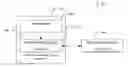
FIG. 1 provides an antenna array response of base codeword and the differential codewords according to embodiments of the present invention; and
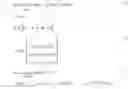
FIG. 2 illustrates a system according to embodiments of the present invention.
It will be appreciated that for simplicity and clarity of illustration, elements illustrated in the figures have not necessarily been drawn to scale. For example, the dimensions of some of the elements are exaggerated relative to other elements for clarity. Further, where considered appropriate, reference numerals have been repeated among the figures to indicate corresponding or analogous elements.
DETAILED DESCRIPTION
In the following detailed description, numerous specific details are set forth in order to provide a thorough understanding of the invention. However, it will be understood by those skilled in the art that the preset invention may be practiced without these specific details. In other instances, well-known methods, procedures, components and circuits have not been described in detail so as not to obscure the present invention.
Although embodiments of the invention are not limited in this regard, discussions utilizing terms such as, for example, “processing,” “computing,” “calculating,” “determining,” “establishing”, “analyzing”, “checking”, or the like, may refer to operation(s) and/or process(es) of a computer, a computing platform, a computing system, or other electronic computing device, that manipulate and/or transform data represented as physical (e.g., electronic) quantities within the computer's registers and/or memories into other data similarly represented as physical quantities within the computer's registers and/or memories or other information storage medium that may store instructions to perform operations and/or processes.
Although embodiments of the invention are not limited in this regard, the terms “plurality” and “a plurality” as used herein may include, for example, “multiple” or “two or more”. The terms “plurality” or “a plurality” may be used throughout the specification to describe two or more components, devices, elements, units, parameters, or the like. For example, “a plurality of stations” may include two or more stations.
Embodiments of the present invention provide a differential codebook optimized for highly correlated antennas and may be adapted to the “downloadable” codebook in LTE. Compared with existing differential precoding schemes, the proposed codebook of the present invention has better performance, especially for a high speed environment and lower complexity at a mobile station (MS).
θ ^ = arg max θ ^ ∈ θ s det ( I + γ N s Q ( θ ^ ) H RQ ( θ ^ ) ) . Where ( 2 ) θ s ∈ [ θ b - α : 2 α 15 : θ b + α ] ( 3 ) Q ( θ ^ ) = [ 1 exp ( - jπcos ( θ ^ ) ) exp ( - j2πcos ( θ ^ ) ) exp ( - j3πcos ( θ ^ ) ) ] ( 4 ) θ b = arg max θ ∈ [ 0 , π ) a ( θ ) H V ( 0 ) 2 , a ( θ ) = [ 1 - j2π d λ cos ( θ ) - j2π 2 d λ cos ( θ ) … - j2π ( N t - 1 ) d λ cos ( θ ) ] . ( 5 )
Table I below compares the performance of the existing differential precoding scheme and the differential precoding scheme according to embodiments of the present invention. The performance when only a base codebook is used is also listed for comparison. For a base codebook only scheme, 6 bits is fed back every frame by MS; for the two differential schemes, 4 bits is feedback from MS at the first frame in each reset period (4 frames) to select the 16 DFT codeword in base codebook, and 4 bits is feedback for differential codebook selection in the succeed frames. It can be seen that embodiments of the present invention outperforms a 16 m differential scheme except when the 5 degree 16 m differential codebook is used and MS speed is low. Moreover, the 20 degree 16 m differential codebook cannot track the changes of a channel when an MS moves with a high speed.
| TABLE I |
| Performance comparisons of differential precoding schemes |
| 3 km/h 20 degree | 30 km/h 20 degree | 120 km/h 20 degree |
| SNR(dB) | 0 | 4 | 8 | 12 | 0 | 4 | 8 | 12 | 0 | 4 | 8 | 12 |
| Base_only | 2.8553 | 4.0224 | 5.2765 | 6.5729 | 2.8099 | 3.971 | 5.2217 | 6.5165 | 2.807 | 3.9688 | 5.22 | 6.5151 |
| Diff_16m | 2.8556 | 4.0227 | 5.2768 | 6.5732 | 2.8042 | 3.9646 | 5.2149 | 6.5094 | 2.8003 | 3.9613 | 5.2121 | 6.507 |
| Diff_new | 2.8657 | 4.0341 | 5.2888 | 6.5855 | 2.8182 | 3.9803 | 5.2316 | 6.5265 | 2.8173 | 3.9802 | 5.232 | 6.5274 |
| 3 km/h 5 degree | 30 km/h 5 degree | 120 km/h 5 degree |
| SNR(dB) | 0 | 4 | 8 | 12 | 0 | 4 | 8 | 12 | 0 | 4 | 8 | 12 |
| Base_only | 2.8553 | 4.0224 | 5.2765 | 6.5729 | 2.8099 | 3.971 | 5.2217 | 6.5165 | 2.807 | 3.9688 | 5.22 | 6.5151 |
| Diff_16m | 2.8665 | 4.0349 | 5.2898 | 6.5865 | 2.8137 | 3.9753 | 5.2263 | 6.5211 | 2.8112 | 3.9734 | 5.2249 | 6.5201 |
| Diff_new | 2.8657 | 4.0341 | 5.2888 | 6.5855 | 2.8182 | 3.9803 | 5.2316 | 6.5265 | 2.8173 | 3.9802 | 5.232 | 6.5274 |
The principle of the present invention may be similar to the existing 802.16m precoding scheme. However, embodiments of the present invention provide a difference in equation (2) set forth above, where in the existing 16 m scheme U=[V(t−1)V(t−1)⊥]H, and Q is the predefined differential codebook where the differential codeword around the center codeword with a fixed degree, e.g. 20 degree.
For highly correlated antennas, the elements of precoding codeword are constant modulus in most case. The proposed differential codebook realizes this property by rotating the elements of the DFT codeword in a base codebook with some corresponding angles. This will keep the constant modulus property of DFT codeword after differential operation. This is preferred for power amplifier at the radio chains.
With a properly designed differential codebook, the dominate beam of an antenna array response of differential codeword may shift within a predefined angle compared with the beam of the corresponding base codeword. This property will guarantee a maximum gain in the principle Eigen mode of the channel in the viewpoint of an antenna array response.
Looking now at FIG. 1, shown generally as 100, shows this property clearly as Gain vs. AoD. Line 110 shows the antenna array response of a base codeword and lines 120 are the antenna array response after the proposed differential scheme. Lines 130 are the antenna array response after the 16 m differential scheme.
In addition, the Q operation is only needed to be performed one time in a reset period at the MS instead of being calculated every frame if the shifting angle range is designed properly (for example, but not limited to [−20 20] degrees may be recommended). Thus the complexity is reduced at MS.
Turning to FIG. 2 at 200 provides a system diagram according to embodiments of the present invention, in which an 802.16 MS 220 and applications 230 are collocated in a mobile user terminal 210, such as, but not limited to mobile phone, laptop, PDA etc. MS and a base station (BS) 240 may communicate wirelessly. Both MS and BS may utilize transceivers that operate according to the embodiments set forth herein.
A further embodiment of the present invention may provide a computer readable medium encoded with computer executable instructions, which when accessed, cause a machine to perform operations comprising using differential precoding for highly correlated channels in a wireless network, comprising by using a differential codebook optimized for highly correlated antennas.
While certain features of the invention have been illustrated and described herein, many modifications, substitutions, changes, and equivalents may occur to those skilled in the art. It is, therefore, to be understood that the appended claims are intended to cover all such modifications and changes as fall within the true spirit of the invention.
Claims
1. A method of using differential precoding for highly correlated channels in a wireless network, comprising:
using a differential codebook optimized for highly correlated antennas.
2. The method of claim 1, wherein said differential codebook optimized for highly correlated antennas is adaptable to a downloadable codebook used in a wireless network that conforms to an Institute for Electronic and Electrical Engineering (IEEE) 802.16m or LTE standard.
3. The method of claim 1, wherein using a differential codebook optimized for highly correlated antennas comprises:
measuring the short term channel covariance matrix by a mobile station (MS) operable in said wireless network and determining feedback based on the following criteria:
measuring by said MS a short term channel covariance matrix R=HHH(1);
determining by said MS the feedback with the following criteria:
θ ^ = arg max θ ^ ∈ θ s det ( I + γ N s Q ( θ ^ ) H RQ ( θ ^ ) ) . ( 1 ) Where θ s ∈ [ θ b - α : 2 α 15 : θ b + α ] ( 2 ) Q ( θ ^ ) = [ 1 exp ( - jπcos ( θ ^ ) ) exp ( - j2πcos ( θ ^ ) ) exp ( - j3πcos ( θ ^ ) ) ] ( 3 ) θ b = arg max θ ∈ [ 0 , π ) a ( θ ) H V ( 0 ) 2 , a ( θ ) = [ 1 - j2π d λ cos ( θ ) - j2π 2 d λ cos ( θ ) … - j2π ( N t - 1 ) d λ cos ( θ ) ] . ( 4 ) ;
θs is a set of predefined angles in a range of [−α, α] degrees; and
wherein the index of {circumflex over (θ)} is then fed back to a base station (BS) and based on said {circumflex over (θ)} that is fed back from said MS, said BS reconstruct a precoding vector V(t)=Q({circumflex over (θ)}).
4. The method of claim 3, wherein U=[V(t−1)V(t−1)⊥]H and Q is a predefined differential codebook where the differential is a codeword around a center codeword with a fixed degree.
5. The method of claim 4, wherein said fixed degree is 20 degrees.
6. The method of claim 1, wherein said differential codebook rotates elements of a DFT codeword in a base codebook with some corresponding angles to keep a constant modulus property of said DFT codeword after differential operation.
7. A mobile station (MS), comprising:
a transceiver adapted for communication with a base station (BS) in a wireless network, said transceiver further adapted to use differential precoding for highly correlated channels in a wireless network that uses a differential codebook optimized for highly correlated antennas.
8. The MS of claim 7, wherein said differential codebook optimized for highly correlated antennas is adaptable to a downloadable codebook used in a wireless network that conforms to an Institute for Electronic and Electrical Engineering (IEEE) 802.16m or LTE standard.
9. The MS of claim 7, wherein using a differential codebook optimized for highly correlated antennas comprises:
measuring the short term channel covariance matrix by a mobile station (MS) operable in said wireless network and determining feedback based on the following criteria:
measuring by said MS a short term channel covariance matrix R=HHH(1);
determining by said MS the feedback with the following criteria:
θ ^ = arg max θ ^ ∈ θ s det ( I + γ N s Q ( θ ^ ) H RQ ( θ ^ ) ) . ( 5 ) Where θ s ∈ [ θ b - α : 2 α 15 : θ b + α ] ( 6 ) Q ( θ ^ ) = [ 1 exp ( - jπcos ( θ ^ ) ) exp ( - j2πcos ( θ ^ ) ) exp ( - j3πcos ( θ ^ ) ) ] ( 7 ) θ b = arg max θ ∈ [ 0 , π ) a ( θ ) H V ( 0 ) 2 , a ( θ ) = [ 1 - j2π d λ cos ( θ ) - j2π 2 d λ cos ( θ ) … - j2π ( N t - 1 ) d λ cos ( θ ) ] . ( 8 ) ;
θs is a set of predefined angles in a range of [−α, α] degrees; and
wherein the index of {circumflex over (θ)} is then fed back to a base station (BS) and based on said {circumflex over (θ)} that is fed back from said MS, said BS reconstruct a precoding vector V(t)=Q({circumflex over (θ)}).
10. The MS of claim 7, wherein U=[V(t−1)V(t−1)⊥]H and Q is a predefined differential codebook where the differential is a codeword around a center codeword with a fixed degree.
11. The MS of claim 10, wherein said fixed degree is 20 degrees.
12. The MS of claim 5, wherein said differential codebook rotates elements of a DFT codeword in a base codebook with some corresponding angles to keep a constant modulus property of said DFT codeword after differential operation.
13-24. (canceled)
25. A method for execution by one or more processors in a mobile station of using differential precoding for correlated antennas in a wireless network, comprising:
measuring channels to obtain channel information;
selecting a set of rotation angles from an angle codebook based on the channel information; and
feeding back an index of the selected set of rotation angles via the correlated antennas for a base station to generate a rotated precoding matrix by rotating a phase of each row of a base precoding matrix by a respective one of the selected set of rotation angles.
26. The method of claim 25, wherein said angle codebook has a range of about 20 degrees.
27. The method of claim 25, wherein said channel information is a covariance matrix.
28. The method of claim 25, wherein said rotated precoding matrix generated by the base station has a constant modulus.
29. The method of claim 25, wherein said set of rotation angles is selected to maximize gain in a principal Eigen mode of the channels.
30. A base station to use differential precoding for correlated antennas in a wireless network, the base station comprising:
one or more processors and a transceiver to:
receive an index to a set of rotation angles from a mobile station;
retrieve the set of rotation angles based on the received index;
generate a rotated precoding matrix by rotating a phase of each row of a base precoding matrix by a respective one of the set of rotation angles; and
transmit data to the mobile station using the rotated precoding matrix.
31. The base station of claim 30, wherein said set of rotation angles spans a range of about 20 degrees.
32. The base station of claim 30, wherein said rotated precoding matrix has a constant modulus.
33. The base station of claim 30, wherein said set of rotation angles maximizes gain in a principal Eigen mode in the data transmitted using the rotated precoding matrix.
Images & Drawings included:
Sources:
- United States Patent and Trademark Office - verify current appl. status at the USPTO↗
Similar patent applications:
Recent applications in this class:
- » 20250274173 2025-08-28
CSI REPORTING FOR ENHANCED TYPE-I CODEBOOK - » 20250150126 2025-05-08
CODEBOOK SUBSET RESTRICTION FOR BEAMFORMED COMMUNICATIONS - » 20250132795 2025-04-24
CODEBOOK GENERATION METHOD AND ELECTRONIC APPARATUS - » 20250125842 2025-04-17
SYSTEMS AND METHODS FOR IMPROVING MIMO EFFICIENCY - » 20250070832 2025-02-27
SYSTEM AND METHOD FOR GROUP PROBABILITY-BASED PREFIX MODIFICATION OF KNOWN SYMBOL PROBABILITY DISTRIBUTIONS - » 20250055518 2025-02-13
BI-DIMENSIONAL STEERING MATRIX ALIGNMENT AT BEAMFORMER - » 20250015850 2025-01-09
METHODS AND APPARATUSES FOR FEEDBACK REPORTING IN A WIRELESS COMMUNICATIONS NETWORK - » 20250015849 2025-01-09
BEAM CONTROL METHOD AND ELECTRONIC DEVICE - » 20250007577 2025-01-02
Method for realizing splitting-rate multi-access of mobile cell-free massive MIMO system - » 20240429977 2024-12-26
JOINT MULTIPLE-INPUT MULTIPLE-OUTPUT (MIMO) COMMUNICATIONS AND MIMO SENSING
Recent applications for this Assignee:
- » 20250294866 2025-09-18
GATE CUT CONFINED WITHIN GATE TRENCH - » 20250294846 2025-09-18
BACKSIDE CROSS-COUPLE INTERCONNECTS - » 20250294835 2025-09-18
ELONGATED VERTICAL STRUCTURES OF CHANNEL MATERIALS - » 20250294827 2025-09-18
CO-INTEGRATION OF GATE-ALL-AROUND DEVICES WITH DIFFERENT NUMBERS OF NANORIBBONS - » 20250294818 2025-09-18
TRANSISTOR DESIGNS FOR FLOATING BODY MEMORY - » 20250294781 2025-09-18
MAGNETIC CORE INDUCTORS ON PACKAGE SUBSTRATES - » 20250294777 2025-09-18
INTEGRATED CIRCUIT DEVICE WITH MEMORY ARRAY AND SHARED GAIN ELEMENT - » 20250293985 2025-09-18
RECEIVER-BASED PRECISION CONGESTION CONTROL - » 20250293860 2025-09-18
PRESERVATION OF CONFIDENTIALITY AND INTEGRITY OF MODELS DURING EXECUTION - » 20250293706 2025-09-18
LOW-RANK DECOMPOSITION-BASED HARDWARE COMPRESSION OF MATRICES AND TENSORS