Method of producing molybdenum-99
US20110272272A1
2011-11-10
13/104,698
2011-05-10
✅ Patent granted
US 8,450,629 B2
2013-05-28
-
-
Keith Hendricks | Colleen M Raphael
Juliet Ann Jones | Samuel L. Borkowsky
2031-08-09
Abstract:
Method of producing molybdenum-99, comprising accelerating ions by means of an accelerator; directing the ions onto a metal target so as to generate neutrons having an energy of greater than 10 MeV; directing the neutrons through a converter material comprising technecium-99 to produce a mixture comprising molybdenum-99; and, chemically extracting the molybdenum-99 from the mixture.
Assignee:
- LOS ALAMOS NATIONAL SECURITY, LLC 669 🇺🇸 LOS ALAMOS, NM, United States
Applicant:
Interested in similar patents?
Get notified when new applications in this technology area are published.
Classification:
B01J47/14 IPC
Ion-exchange processes in general; Apparatus therefor Controlling or regulating
G21G1/06 » CPC main
Arrangements for converting chemical elements by electromagnetic radiation, corpuscular radiation or particle bombardment, e.g. producing radioactive isotopes outside nuclear reactors or particle accelerators by neutron irradiation
C22B34/34 IPC
Obtaining refractory metals; Obtaining chromium, molybdenum or tungsten Obtaining molybdenum
B01J19/08 IPC
Chemical, physical or physico-chemical processes in general; Their relevant apparatus Processes employing the direct application of electric or wave energy, or particle radiation; Apparatus therefor
C01G39/00 IPC
Compounds of molybdenum
A61K33/40 IPC
Medicinal preparations containing inorganic active ingredients Peroxides
B01J41/00 IPC
Anion exchange; Use of material as anion exchangers; Treatment of material for improving the anion exchange properties
Description
CROSS REFERENCE TO RELATED APPLICATION
This application claims the benefit of priority of U.S. Provisional Patent Application 61/333,128, filed May 10, 2010, and is incorporated by reference herein in its entirety.
STATEMENT OF FEDERAL RIGHTS
The United States government has rights in this invention pursuant to Contract No. DE-AC52-06NA25396 between the United States Department of Energy and Los Alamos National Security, LLC for the operation of Los Alamos National Laboratory.
FIELD OF THE INVENTION
The present invention relates to economically efficient methods of producing molybdenum-99, using as a starting material technecium-99.
BACKGROUND OF THE INVENTION
Molybdenum-99 (Mo-99) is the radioactive parent of Technecium-99m (Tc-99m), a metastable radioisotope commonly used in medical procedures. Currently, the predominant production mechanism of molybdenum-99 is by fission of U-235, which produces a high-level waste (HLW) stream. Alternative, HLW-free mechanisms have been proposed, but most of these involve targets of isotopically-enriched molybdenum isotopes (e.g., 98Mo(n,g)99Mo or 100Mo(g,n)99Mo), and have two drawbacks. First, production of the isotopically enriched targets is expensive. Second, the Mo-99 material has very low specific activity, which complicates chemical extraction of the Tc-99m from the molybdenum parent material.
The only reactor in North America which produces Mo-99 is nearing the end of its life, and the United States finds itself relying more heavily on overseas suppliers for this important medical isotope. Technecium-99m is utilized in approximately 70% of all medical procedures in the US that involve medical isotopes. Thus, a critical need has arisen for economical Mo-99 production sources within North America, which preferably do not create a high-level waste stream.
SUMMARY OF THE INVENTION
The method of the present invention utilizes the ground state of technecium, Tc-99, as a converter material that undergoes nuclear reactions to produce Mo-99. Technecium-99 does not exist in nature, but abundant supplies exist in spent nuclear fuel. When bombarded by high-energy neutrons, a tiny fraction of the Tc-99 converter material is transformed to Mo-99 via the nuclear reaction 99Tc(n,p)99Mo. The resulting Mo-99 can be chemically extracted from the Tc-99 target material. Because the Mo-99 can be chemically separated from the target material, the extracted Mo-99 will have much higher specific activity as compared to proposed methods that use stable isotopes of molybdenum as the target material.
The method of the present invention has the advantage of not only avoiding the generation of additional high-level waste, but uses as a source of Tc-99 existing high-level waste which is in storage and for which no approved disposal methods exist. Thus, isotopically pure Tc-99 is readily available in sufficient quantity, and can also be recycled as converter material multiple times.
The following describes one non-limiting embodiment of the present invention.
According to one embodiment of the present invention, a method of producing molybdenum-99 is provided, comprising accelerating ions by means of an accelerator; directing the ions onto a metal target so as to generate neutrons having an energy of greater than 10 MeV; directing the neutrons through a converter comprising technecium-99 to produce a mixture comprising molybdenum-99; and, chemically extracting the molybdenum-99 from the mixture.
BRIEF DESCRIPTION OF THE DRAWINGS
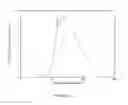
FIG. 1 depicts the predicted cross section for the 99Tc(n,p)99Mo reaction, with the y-axis representing the probability of nuclear interaction in units of millibarns (mb) and the x-axis representing the incident neutron energy in megaelectron-volts (MeV).
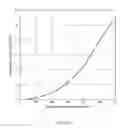
FIG. 2 shows the Mo-99 instantaneous production rate in curies per day per milliamp of deuteron beam current (Ci/day/mA) (y-axis) vs. deuteron beam energy in MeV (x-axis) (decay during production not accounted for).
DETAILED DESCRIPTION OF THE INVENTION
The present invention describes a novel method for producing Mo-99 whereby high-energy neutrons irradiate a technetium-99 converter material, which in turn excites the 99Tc(n,p)99Mo reaction. Traditionally, the production of neutrons has been achieved using a nuclear reactor. However, neutrons produced in a nuclear reactor have energies below the threshold energy needed to excite the 99Tc(n,p)99Mo reaction and are therefore unsuitable sources of neutrons for this application. However, accelerated ions hitting a metallic target can produce neutrons having sufficient energy to excite the 99Tc(n,p)99Mo reaction. The neutrons created in this way exit the metallic target and pass into a converter comprising Tc-99. Thus, by using a converter comprising Tc-99, in combination with an accelerator-driven neutron source, this limitation may be successfully overcome.
According to one embodiment of the method of the present invention, ions are accelerated by means of an accelerator, and directed onto a metal target. The ions may be accelerated by a linear accelerator, or alternatively by a cyclotron. The accelerator may use warm (room temperature) accelerating structures, or superconducting (very low temperature) structures. The ions should have an energy greater than 10 MeV, alternatively of from about 10 MeV to about 300 MeV, and alternatively from about 20 MeV to about 100 MeV (see FIG. 1). In theory, any ion having sufficient energy may be used, and in one embodiment, the ions are deuterons.
The ions are then directed toward a metal target, which is capable, upon impact of the ions, of generating neutrons having an energy greater than 10 MeV. The material used for the metal target depends on the accelerated ion and its energy. In one embodiment, where the accelerator accelerates deuterons to an energy in the range of 20 to 100 MeV, the metal target is solid beryllium. In another embodiment, the metal target is lithium.
The generated neutrons are then directed onto a converter material comprising Tc-99, which then induces nuclear reactions, some of which produce Mo-99. In one embodiment, the neutrons are directed through the converter for a period of time comprising from about 1 day to about 5 days. The Tc-99 in the target may be in the form of solid technecium metal, pertechnetate (HTcO4), a pertechnetate salt, or combinations thereof. Typically, in order to use a pertechnetate salt (e.g., sodium or ammonium pertechnetate), the temperature of the target should be maintained below about 100° C. The Tc-99 is situated immediately behind the metal target, and is in the form of either a solid chunk of metal or in a container filled with Tc metal powder, or a powder comprising pertechnetate or pertechnetate salt. Virtually all Tc-99 on earth is the product of the nuclear fission; thus, in one embodiment, the Tc-99 is derived from spent nuclear fuel from a nuclear reactor.
The Mo-99 is then extracted from the mixture. In one embodiment, the extraction is a chemical extraction. In one embodiment, extraction results in substantially isotopically pure Mo-99, where “substantially” is understood to mean greater than about 90%. FIG. 2 shows the dependence of Mo-99 yield on deuteron beam energy.
In one embodiment, the chemical extraction may be performed as follows. After irradiation, the converter material comprising a mixture of Tc-99 with a trace amount of Mo-99 may be dissolved in a basic solution of sodium or ammonium hydroxide having a pH of from about 10 to about 11. The solution is passed through a strong-base anion exchange resin, where the molybdate anion, MoO42−, is captured selectively and the pertechnetate anion (TcO4−), which is not held as strongly, passes through the column and is recycled to make a new target. Optionally, an additional cycle of elution from the first column and sorption on another anion exchange column may be performed. The molybdate captured on the final column becomes a source for producing Tc-99m as the pertechnetate, which can be eluted from the column for use in medical procedures.
In all embodiments of the present invention, all percentages are by weight of the total composition, unless specifically stated otherwise. All ratios are weight ratios, unless specifically stated otherwise. All ranges are inclusive and combinable. All numerical amounts are understood to be modified by the word “about” unless otherwise specifically indicated. All documents cited in the Detailed Description of the Invention are, in relevant part, incorporated herein by reference; the citation of any document is not to be construed as an admission that it is prior art with respect to the present invention. To the extent that any meaning or definition of a term in this document conflicts with any meaning or definition of the same term in a document incorporated by reference, the meaning or definition assigned to that term in this document shall govern.
Whereas particular embodiments of the present invention have been illustrated and described, it would be obvious to those skilled in the art that various other changes and modifications can be made without departing from the spirit and scope of the invention. It is therefore intended to cover in the appended claims all such changes and modifications that are within the scope of this invention.
Claims
What is claimed is:1. A method of producing molybdenum-99, comprising:
a) accelerating ions by means of an accelerator;
b) directing the ions onto a metal target so as to generate neutrons having an energy of greater than 10 MeV;
c) directing the neutrons through a converter material comprising technecium-99 to produce a mixture comprising molybdenum-99; and,
d) chemically extracting the molybdenum-99 from the mixture.
2. The method of claim 1, wherein the metal target comprises metallic beryllium, lithium, or combinations thereof.
3. The method of claim 1, wherein the technecium-99 is in the form of solid technecium metal, pertechnetate, a pertechnetate salt, or combinations thereof.
4. The method of claim 1, wherein the accelerator is a cyclotron or a linear accelerator.
5. The method of claim 4, wherein the accelerator is a superconducting or a warm cyclotron.
6. The method of claim 4, wherein the accelerator is a superconducting or a warm linear accelerator.
7. The method of claim 1, wherein the accelerated ions are deuterons.
8. The method of claim 1, wherein the technecium-99 is derived from spent nuclear fuel.
9. The method of claim 1, wherein the molybdenum-99 is substantially isotopically pure.
Images & Drawings included:
Sources:
- United States Patent and Trademark Office - verify current appl. status at the USPTO↗
Similar patent applications:
Recent applications in this class:
- » 20250246333 2025-07-31
PREPARATION OF HIGH SPECIFIC ACTIVITY PT ISOTOPES FROM IR ALLOYS - » 20250046486 2025-02-06
NEUTRON ACTIVATOR, NEUTRON ACTIVATION SYSTEM COMPRISING SUCH NEUTRON ACTIVATOR AND METHOD FOR NEUTRON ACTIVATION IMPLEMENTING SUCH NEUTRON ACTIVATOR - » 20250037895 2025-01-30
ACCELERATOR-DRIVENNEUTRON ACTIVATOR FOR BACHYTHERAPY - » 20240233974 2024-07-11
PRODUCTION OF RADIOISOTOPES WITH HIGHLY ENRICHED TARGET ENCLOSURE MATERIAL - » 20240136083 2024-04-25
PRODUCTION OF RADIOISOTOPES WITH HIGHLY ENRICHED TARGET ENCLOSURE MATERIAL - » 20240079158 2024-03-07
NEUTRON ACTIVATOR, NEUTRON ACTIVATION SYSTEM COMPRISING SUCH NEUTRON ACTIVATOR AND METHOD FOR NEUTRON ACTIVATION IMPLEMENTING SUCH NEUTRON ACTIVATOR - » 20230411034 2023-12-21
USE OF SUB-CRITICAL NEUTRON MULTIPLICATION DRIVEN BY ELECTRONIC NEUTRON GENERATORS TO PRODUCE RADIOISOTOPES - » 20230326621 2023-10-12
ACCELERATOR-DRIVEN NEUTRON ACTIVATOR FOR BRACHYTHERAPY - » 20220344068 2022-10-27
NEUTRON ACTIVATOR, NEUTRON ACTIVATION SYSTEM COMPRISING SUCH NEUTRON ACTIVATOR AND METHOD FOR NEUTRON ACTIVATION IMPLEMENTING SUCH NEUTRON ACTIVATOR - » 20220199276 2022-06-23
SYSTEMS AND METHODS FOR PRODUCING ACTINIUM-225
Recent applications for this Assignee:
- » 20210139544 2021-05-13
Mosaic HIV-1 envelopes to induce ADCC responses - » 20190151440 2019-05-23
Nucleic acids encoding mosaic conserved region HIV immunogenic polypeptides - » 20190051779 2019-02-14
Colorless luminescent solar concentrators using colloidal semiconductor nanocrystals - » 20180343116 2018-11-29
Long-haul high rate quantum key distribution - » 20180278641 2018-09-27
Using new edges for anomaly detection in computer networks - » 20180239592 2018-08-23
Quantum random number generators - » 20180237464 2018-08-23
Photoactive energetic materials - » 20180231501 2018-08-16
Detection and monitoring of changes in metallic structures using multimode acoustic signals - » 20180198608 2018-07-12
Long-haul high rate quantum key distribution - » 20180187170 2018-07-05
Productivity and bioproduct formation in phototropin knock/out mutants in microalgae