INSPECTION VIDEO RADIATION FILTER
US20110273555A1
2011-11-10
12/773,616
2010-05-04
Abstract:
A method for filtering radiation on a CCD based camera inspection video, the method including: capturing video signals via the camera; converting the video signals to a plurality of digital video frames; identifying radiation bright spots, defined as xnoids, in a pixel of at least one of the frames, replacing the xnoids and surrounding pixels with corresponding pixels of another of the frames to create a filtered frame. A system for the inspection of a nuclear power plant comprising: a camera; and a computer, the computer configured to execute identifying xnoids in a pixel of at least one digitized video frame and replacing the xnoids and surrounding pixels with corresponding pixels of another of the frames to create a filtered frame.
Assignee:
- AREVA Inc. 28 🇺🇸 Lynchburg, VA, United States
Interested in similar patents?
Get notified when new applications in this technology area are published.
Classification:
G06T7/0004 » CPC main
Image analysis; Inspection of images, e.g. flaw detection Industrial image inspection
G01T7/00 » CPC further
Details of radiation-measuring instruments
G06T5/005 » CPC further
Image enhancement or restoration; Image restoration Retouching; Inpainting; Scratch removal
G06T5/20 » CPC further
Image enhancement or restoration by the use of local operators
G06T5/50 » CPC further
Image enhancement or restoration by the use of more than one image, e.g. averaging, subtraction
H04N5/3675 » CPC further
Details of television systems; Transforming light or analogous information into electric information using solid-state image sensors [SSIS]; Noise processing, e.g. detecting, correcting, reducing or removing noise applied to fixed-pattern noise, e.g. non-uniformity of response applied to defects, e.g. non-responsive pixels by defect estimation performed on the scene signal, e.g. real time or on the fly detection
H04N5/372 » CPC further
Details of television systems; Transforming light or analogous information into electric information using solid-state image sensors [SSIS]; SSIS architecture; Circuitry associated therewith Charge-coupled device [CCD] sensors; Time delay and integration [TDI] registers or shift registers specially adapted for SSIS
G06T2207/10016 » CPC further
Indexing scheme for image analysis or image enhancement; Image acquisition modality Video; Image sequence
G06T2207/20221 » CPC further
Indexing scheme for image analysis or image enhancement; Special algorithmic details; Image combination Image fusion; Image merging
G06T2207/30164 » CPC further
Indexing scheme for image analysis or image enhancement; Subject of image; Context of image processing; Industrial image inspection Workpiece; Machine component
H04N17/002 » CPC further
Diagnosis, testing or measuring for television systems or their details for television cameras
H04N2005/2255 » CPC further
Details of television systems; Studio circuitry; Studio devices; Studio equipment ; Cameras comprising an electronic image sensor, e.g. digital cameras, video cameras, TV cameras, video cameras, camcorders, webcams, camera modules for embedding in other devices, e.g. mobile phones, computers or vehicles; Television cameras ; Cameras comprising an electronic image sensor, e.g. digital cameras, video cameras, camcorders, webcams, camera modules specially adapted for being embedded in other devices, e.g. mobile phones, computers or vehicles for picking-up images in sites, inaccessible due to their dimensions or hazardous conditions, e.g. endoscope, borescope
H04N17/00 IPC
Diagnosis, testing or measuring for television systems or their details
H04N7/18 IPC
Television systems Closed circuit television systems, i.e. systems in which the signal is not broadcast
H04N5/217 IPC
Details of television systems; Picture signal circuitry for video frequency region; Circuitry for suppressing or minimising disturbance, e.g. moiré or halo in picture signal generation in cameras comprising an electronic image sensor, e.g. in digital cameras, TV cameras, video cameras, camcorders, webcams, or to be embedded in other devices, e.g. in mobile phones, computers or vehicles
Description
The present invention relates generally to nuclear power plants, and more particularly to the visual inspections of nuclear power plants.
BACKGROUND
Video cameras are known to be used as inspection devices in nuclear power plants. Videos taken during visual inspection of nuclear power plants are susceptible to interference from high levels of radiation reaching the camera. Such interference slows visual inspections and may limit coverage in high radiation areas.
High cost radiation tolerant tube base cameras are typically used to capture video in high radiation areas. Lower cost CCD (charge coupled device) based cameras are also used however, these cameras provide a more impaired image and are more prone to failure from the effects of radiation.
SUMMARY OF THE INVENTION
An object of the present invention is to increase the speed, quality and coverage of nuclear power plant visual inspections, as well as using a lower cost camera and reducing the camera failure rate during inspection.
The present invention provides a method for filtering radiation effects on a CCD based camera inspection video, the method including: capturing video signals via the camera; converting the video signals to a plurality of digital video frames; identifying radiation bright spots, defined as xnoids, in pixels of at least one of the frames, replacing the corrupted pixels with corresponding pixels of another of the frames to create a filtered frame.
The present invention also provides a system for the inspection of a nuclear power plant comprising: a camera; and a computer, the computer configured to execute identifying radiation bright spots, defined as xnoids, in a pixel of at least one digitized video frame and replacing corrupted pixels with corresponding pixels of another of the frame to create a filtered frame.
The present invention also provides a method for calculating estimated relative absorbed dose of the video camera by counting the total number of xnoids detected. The estimated relative dose can be used to predict camera failure due to radiation exposure.
BRIEF DESCRIPTION OF THE DRAWINGS
An embodiment of the present invention is shown with respect to the drawings in which:
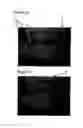
FIG. 1a shows a video frame with radiation interference;
FIG. 1b shows a video frame similar to 1a without radiation interference;
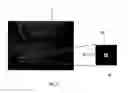
FIG. 2 shows an exemplary video frame and pixel matrix with a bright spot;
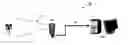
FIG. 3 shows an inspection system of the present invention; and
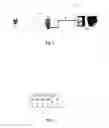
FIG. 4 shows exemplary video frames from a video capture card.
DETAILED DESCRIPTION
A method is provided for dynamically filtering the effects of radiation on inspection videos when using CCD based cameras. The interference caused by radiation during the video inspection of a nuclear power plant manifests itself as “bright” spots, called xnoids, within the video frames. FIG. 1a shows xnoids 2 in video frame 4.
Radiation filtering is accomplished by checking each pixel in each frame of video for xnoids. Once a xnoid is detected, the xnoid and surrounding pixels are replaced with corresponding pixels from other frames. For example, FIG. 2 shows video frame 40 with pixels 38. Xnoid 34 and surrounding pixels 36 would be replaced with corresponding pixels from other frames. FIG. 1b shows a video frame 6 in which the xnoids 2 have been filtered and replaced. With use of a computer equipped with a video capture card, the video can be captured, filtered and displayed in real-time with a delay of only a few frame times. Alternately, the video can be stored and then replayed from the captured digital file with a similar delay of zero to a few frame times.
FIG. 3 shows an inspection system 32 which comprises a CCD based camera 16 and a computer 10. Camera 16 captures an image which includes a radiation source 12 when it is in the field of view 14 of camera 16. Video signal 8 of camera 16 is transferred from camera 16 to computer 10. Computer 10, may for example, include a video capture card, a multi core CPU, a hard drive and a display. Video capture card in computer 10 converts video signal 8 to digital video frames 22, 24, 26, 28, 30 (FIG. 4) at a specified frame rate. Each digitized video frame 4 contains a matrix of pixels. Each pixel contains an intensity level for each color—red, green, blue, or just a single grey level for black and white frames. These video frames 22, 24, 26, 28, 30 are passed to a radiation filter module 18. Module 18 is preferably a software executed on computer 10. The intensity level for each pixel is compared by module 18 against a threshold to a plurality of surrounding pixel intensity levels, for example 4 pixels, 8 pixels, 24 pixels, etc. If the pixel is brighter than the surrounding pixels, it is identified as a xnoid. Radiation filter module 18 checks each pixel in each frame of video for a xnoid. Once a xnoid is detected, the xnoid and surrounding pixels are replaced with corresponding pixels in the same location from other frames. For each pixel marked as a xnoid in video frame 26, the pixel xnoid, and the surrounding pixel values are replaced with pixel intensity values in the same locations as frame 28. If replacement pixel of frame 28 has already been marked as a xnoid (or is a surrounding pixel of a xnoid) then the xnoid pixel and surrounding pixels of frame 26 are replaced with the pixels of frame 24, frame 30 or frame 22, respectively. If no replacement pixel is available, then no pixel replacement takes place. Radiation filter module 18 filters the effects of the radiation and passes filtered video frames to the display. In addition, radiation filter module 18 can write the xnoid location information along with the unfiltered video frame to a video file stored on the hard drive of computer 10.
Computer 10 may be used both to view live video and/or to store the video for later review. To review a video, only computer 10 is necessary.
The number of xnoids per video frame can be correlated to the absorbed dose of radiation of the camera CCD. By counting the total xnoids per video frame, an estimate of absorbed dose can be recorded for a specific camera. Using historical data for specific camera types, camera failure can be predicted by comparing previous camera life time estimated absorbed dose against current estimated absorbed dose. Dynamically filtering the effects of radiation on CCD based camera video can increase the speed, quality and coverage of nuclear power plant visual inspections and allows lower cost CCD cameras to be used for nuclear power plant visual inspections. Using estimated camera absorbed dose and projected camera life, camera failure during inspection can be reduced.
In the preceding specification, the invention has been described with reference to specific exemplary embodiments and examples thereof. It will, however, be evident that various modifications and changes may be made thereto without departing from the broader spirit and scope of the invention as set forth in the claims that follow. The specification and drawings are accordingly to be regarded in an illustrative manner rather than a restrictive sense.
Claims
What is claimed is:1. A method for filtering radiation on a CCD based camera inspection video, the method comprising:
capturing video signals via the camera;
converting the video signals to a plurality of digital video frames;
identifying xnoids in a pixel of at least one of the frames,
replacing the xnoids and surrounding pixels with corresponding pixels of another of the frames to create a filtered frame.
2. The method as recited in claim 1 wherein the video signals are converted to digital video frames by a video capture card.
3. The method as recited in claim 1 wherein the filtered frame is shown in real time via a computer display.
4. The method as recited in claim 1 wherein data of the filtered frame is stored on a computer component and replayed at a later timer.
5. The method as recited in claim 5 wherein the another frame is N+1.
6. The method as recited in claim 6 wherein the another frame is N−1, N+2 or N−2, respectively, when the digital video frame N+1 has already been marked as a xnoid.
7. A system for the inspection of a nuclear power plant comprising:
a camera; and
a computer, the computer configured with software to execute identifying xnoids in a pixel of at least one digitized video frame and replacing the xnoids and surrounding pixels with corresponding pixels of another of the frames to create a filtered frame.
8. The system as recited in claim 8 wherein the camera is a CCD based camera.
9. The method as recited in claim 1 wherein identifying xnoids includes determining an intensity level for the pixel and comparing the intensity level of the pixel to an intensity level of a plurality of surrounding pixels, identifying the pixel as a xnoid when the intensity level of the pixel is brighter then the intensity level of the plurality of surrounding pixels.
10. The method as recited in claim 1 wherein identifying the xnoid includes comparing an intensity level of the pixel to an intensity level of twenty four surrounding pixels, wherein the bright spot exists when the intensity level of the pixel is greater then the intensity level of the twenty four surrounding pixels.
11. A method for predicting camera failure due to radiation exposure, the method comprising:
calculating a current estimated relative absorbed dose of the video camera;
recording the current estimated absorbed dose of the video camera; and
comparing the current estimated relative absorbed dose to a previously recorded estimated relative absorbed dose.
12. The method as recited in claim 11 wherein calculating the current estimated relative absorbed dose includes detecting xnoids in a filtered video frame and counting the total number of xnoids detected.
Images & Drawings included:
Sources:
- United States Patent and Trademark Office - verify current appl. status at the USPTO↗
Similar patent applications:
- » 20170024878
Inspection video radiation filter
Recent applications in this class:
- » 20250173853 2025-05-29
METHOD AND DEVICE FOR OPTICALLY INSPECTING OBJECTS - » 20250173852 2025-05-29
Systems and Methods for Detection of Defects in Electrodes - » 20250166158 2025-05-22
SYSTEM AND METHOD FOR EXTRACTING AND MEASURING SHAPES OF OBJECTS HAVING CURVED SURFACES WITH A VISION SYSTEM - » 20250166157 2025-05-22
COMPUTER-IMPLEMENTED METHOD TO PROVIDE A CUTTING PATTERN FOR A TREE LOG TO OBTAIN WOODEN BOARDS - » 20250166156 2025-05-22
ALIGNMENT SYSTEM, ALIGNMENT METHOD, AND RECORDING MEDIUM - » 20250166155 2025-05-22
COMPUTER VISION METHODS FOR LOSS PREDICTION AND ASSET EVALUATION BASED ON AERIAL IMAGES - » 20250166154 2025-05-22
DEFECT DETECTION USING A MACHINE LEARNING ALGORITHM - » 20250166153 2025-05-22
NEURAL NETWORK FOR TABULAR DATA - » 20250157023 2025-05-15
Navigation accuracy using imaging assembly coupled with detector assemblies - » 20250157022 2025-05-15
UNSUPERVISED 3D MODELING AND GEOMETRIC MEASUREMENT OF PARTS BUILT WITH POWDER BED FUSION-BASED ADDITIVE MANUFACTURING
Recent applications for this Assignee:
- » 20170372807 2017-12-28
Packaging for decommissioned and dismantled nuclear reactors and reactor components - » 20170098484 2017-04-06
Packaging for decommissioned and dismantled nuclear reactors and reactor components - » 20160268010 2016-09-15
Method for prediction of light water reactor fuel defects using a fuel condition index - » 20150340107 2015-11-26
Boiling water reactor core shroud head bolt retainer tool - » 20150298266 2015-10-22
Two-piece replacement nozzle - » 20150287482 2015-10-08
BWR feedwater sparger end bracket pin clamp - » 20150243390 2015-08-27
System for storage and transportation of spent nuclear fuel - » 20150092901 2015-04-02
Operating a nuclear reactor using a deposit model of a nuclear reactor heat transfer surface - » 20140376680 2014-12-25
Containment Sump Ceramic Drain Plug - » 20140257718 2014-09-11
EDDY CURRENT METHOD FOR THE CHARACTERIZATION OF BROACHED TUBE SUPPORT PLATE BLOCKAGE