Cysteine protease inhibitors
US20110312964A1
2011-12-22
13/139,962
2009-12-18
✅ Patent granted
US 8,853,281 B2
2014-10-07
WO; PCT/IB2009/055839; 20091218
WO; WO2010/070615; 20100624
James H Alstrum Acevedo | Thea D'Ambrosio
Gorman IP Law
2031-03-02
Abstract:
Compounds of the formula I
wherein
R1a is H; and R1b is C1-C6 alkyl, Carbocyclyl or Het; or
R1a and R1b together define a saturated cyclic amine with 3-6 ring atoms;
R2a and R2b are H, halo, C1-C4alkyl, C1-C4haloalkyl, C1-C4alkoxy; or
R2a and R2b together with the carbon atom to which they are attached form a C3-C6cycloalkyl;
R3 is a branched C5-C10alkyl chain, C2-C4haloalkyl or C3-C7cycloalkylmethyl,
R4 is Het, Carbocyclyl,
optionally substituted as defined in the specification and pharmaceutically acceptable salts,
hydrates and N-oxides thereof; are inhibitors of cathepsin S and have utility in the treatment of psoriasis, autoimmune disorders and other disorders such as asthma, arteriosclerosis, COPD and chronic pain
Inventors:
- Magnus NILSSON 19 🇸🇪 Huddinge, Sweden
- Susana Ayesa 8 🇸🇪 Huddinge, Sweden
- Daniel Jonsson 6 🇸🇪 Huddinge, Sweden
- Pia Kahnberg 19 🇸🇪 Huddinge, Sweden
- Horst WAHLING 9 🇸🇪 Huddinge, Sweden
- Urszula GRABOWSKA 8 🇬🇧 Essex, United Kingdom
- Lourdes Oden 8 🇸🇪 Huddinge, Sweden
- Peter Lind 3 🇸🇪 Huddinge, Sweden
- Bjorn CLASSON 5 🇸🇪 Huddinge, Sweden
- Anna Karin Belfrage 1 🇸🇪 Huddinge, Sweden
- Ellen Hewitt 1 🇬🇧 Essex, United Kingdom
- Vladimir Ivanov 2 🇸🇪 Huddinge, Sweden
- Mikael Pelcman 1 🇸🇪 Huddinge, Sweden
Assignee:
- MEDIVIR UK LTD 4 🇬🇧 Essex, United Kingdom
- Medivir UK Ltd 4 🇬🇧 Little Chesterford, Essex, United Kingdom
Applicant:
Interested in similar patents?
Get notified when new applications in this technology area are published.
Classification:
A61K31/02 IPC
Medicinal preparations containing organic active ingredients Halogenated hydrocarbons
C07C269/00 IPC
Preparation of derivatives of carbamic acid, i.e. compounds containing any of the groups , the nitrogen atom not being part of nitro or nitroso groups
A61P11/00 » CPC further
Drugs for disorders of the respiratory system
A61P21/04 » CPC further
Drugs for disorders of the muscular or neuromuscular system for myasthenia gravis
A61P15/00 » CPC further
Drugs for genital or sexual disorders ; Contraceptives
A61P17/06 » CPC further
Drugs for dermatological disorders Antipsoriatics
A61P37/00 » CPC further
Drugs for immunological or allergic disorders
A61P11/02 » CPC further
Drugs for disorders of the respiratory system Nasal agents, e.g. decongestants
A61P11/06 » CPC further
Drugs for disorders of the respiratory system Antiasthmatics
A61P7/04 » CPC further
Drugs for disorders of the blood or the extracellular fluid Antihaemorrhagics; Procoagulants; Haemostatic agents; Antifibrinolytic agents
A61P9/10 » CPC further
Drugs for disorders of the cardiovascular system for treating ischaemic or atherosclerotic diseases, e.g. antianginal drugs, coronary vasodilators, drugs for myocardial infarction, retinopathy, cerebrovascula insufficiency, renal arteriosclerosis
A61P17/00 » CPC further
Drugs for dermatological disorders
A61P19/02 » CPC further
Drugs for skeletal disorders for joint disorders, e.g. arthritis, arthrosis
A61P37/02 » CPC further
Drugs for immunological or allergic disorders Immunomodulators
A61P37/06 » CPC further
Drugs for immunological or allergic disorders; Immunomodulators Immunosuppressants, e.g. drugs for graft rejection
A61P25/00 » CPC further
Drugs for disorders of the nervous system
C07C311/21 » CPC main
Amides of sulfonic acids, i.e. compounds having singly-bound oxygen atoms of sulfo groups replaced by nitrogen atoms, not being part of nitro or nitroso groups; Sulfonamides having sulfur atoms of sulfonamide groups bound to carbon atoms of six-membered aromatic rings having the nitrogen atom of at least one of the sulfonamide groups bound to a carbon atom of a six-membered aromatic ring
A61P37/08 » CPC further
Drugs for immunological or allergic disorders Antiallergic agents
A61P43/00 » CPC further
Drugs for specific purposes, not provided for in groups -
A61K31/415 IPC
Medicinal preparations containing organic active ingredients; Heterocyclic compounds having nitrogen as a ring hetero atom, e.g. guanethidine or rifamycins having five-membered rings with two or more ring hetero atoms, at least one of which being nitrogen, e.g. tetrazole 1,2-Diazoles
C07C237/52 IPC
Carboxylic acid amides, the carbon skeleton of the acid part being further substituted by amino groups having the nitrogen atom of at least one of the carboxamide groups further acylated
C07C2601/02 » CPC further
Systems containing only non-condensed rings with a three-membered ring
C07C2601/04 » CPC further
Systems containing only non-condensed rings with a four-membered ring
C07C2601/06 » CPC further
Systems containing only non-condensed rings with a five-membered ring
C07C2601/08 » CPC further
Systems containing only non-condensed rings with a five-membered ring the ring being saturated
A61K31/5377 IPC
Medicinal preparations containing organic active ingredients; Heterocyclic compounds having nitrogen as a ring hetero atom, e.g. guanethidine or rifamycins having six-membered rings with at least one nitrogen and one oxygen as the ring hetero atoms, e.g. 1,2-oxazines 1,4-Oxazines, e.g. morpholine not condensed and containing further heterocyclic rings, e.g. timolol
C07D265/30 IPC
Heterocyclic compounds containing six-membered rings having one nitrogen atom and one oxygen atom as the only ring hetero atoms 1,4-Oxazines; Hydrogenated 1,4-oxazines not condensed with other rings
C07C311/46 IPC
Amides of sulfonic acids, i.e. compounds having singly-bound oxygen atoms of sulfo groups replaced by nitrogen atoms, not being part of nitro or nitroso groups; Sulfonamides, the carbon skeleton of the acid part being further substituted by singly-bound nitrogen atoms, not being part of nitro or nitroso groups at least one of the singly-bound nitrogen atoms being part of any of the groups , X being a hetero atom, Y being any atom, e.g. N-acylaminosulfonamides Y being a hydrogen or a carbon atom
A61K31/5375 IPC
Medicinal preparations containing organic active ingredients; Heterocyclic compounds having nitrogen as a ring hetero atom, e.g. guanethidine or rifamycins having six-membered rings with at least one nitrogen and one oxygen as the ring hetero atoms, e.g. 1,2-oxazines 1,4-Oxazines, e.g. morpholine
A61K31/341 IPC
Medicinal preparations containing organic active ingredients; Heterocyclic compounds having oxygen as the only ring hetero atom, e.g. fungichromin having five-membered rings with one oxygen as the only ring hetero atom, e.g. isosorbide not condensed with another ring, e.g. ranitidine, furosemide, bufetolol, muscarine
A61K31/18 IPC
Medicinal preparations containing organic active ingredients; Amides, e.g. hydroxamic acids Sulfonamides
A61K31/166 IPC
Medicinal preparations containing organic active ingredients; Amides, e.g. hydroxamic acids having aromatic rings, e.g. colchicine, atenolol, progabide having the carbon of a carboxamide group directly attached to the aromatic ring, e.g. procainamide, procarbazine, metoclopramide, labetalol
A61K31/4965 IPC
Medicinal preparations containing organic active ingredients; Heterocyclic compounds having nitrogen as a ring hetero atom, e.g. guanethidine or rifamycins having six-membered rings with two nitrogen atoms as the only ring heteroatoms, e.g. piperazine Non-condensed pyrazines
C07D413/12 IPC
Heterocyclic compounds containing two or more hetero rings, at least one ring having nitrogen and oxygen atoms as the only ring hetero atoms containing two hetero rings linked by a chain containing hetero atoms as chain links
C07D231/40 » CPC further
Heterocyclic compounds containing 1,2-diazole or hydrogenated 1,2-diazole rings not condensed with other rings having two or three double bonds between ring members or between ring members and non-ring members with hetero atoms or with carbon atoms having three bonds to hetero atoms with at the most one bond to halogen, e.g. ester or nitrile radicals, directly attached to ring carbon atoms; Nitrogen atoms Acylated on said nitrogen atom
C07D277/36 » CPC further
Heterocyclic compounds containing 1,3-thiazole or hydrogenated 1,3-thiazole rings not condensed with other rings having two or three double bonds between ring members or between ring members and non-ring members with hetero atoms or with carbon atoms having three bonds to hetero atoms with at the most one bond to halogen, e.g. ester or nitrile radicals, directly attached to ring carbon atoms Sulfur atoms
C07D307/85 » CPC further
Heterocyclic compounds containing five-membered rings having one oxygen atom as the only ring hetero atom ortho- or peri-condensed with carbocyclic rings or ring systems; Benzo [b] furans; Hydrogenated benzo [b] furans with hetero atoms or with carbon atoms having three bonds to hetero atoms with at the most one bond to halogen, e.g. ester or nitrile radicals, directly attached to carbon atoms of the hetero ring; Carbon atoms having three bonds to hetero atoms with at the most one bond to halogen attached in position 2
C07D307/68 » CPC further
Heterocyclic compounds containing five-membered rings having one oxygen atom as the only ring hetero atom not condensed with other rings having two or three double bonds between ring members or between ring members and non-ring members with hetero atoms or with carbon atoms having three bonds to hetero atoms with at the most one bond to halogen, e.g. ester or nitrile radicals, directly attached to ring carbon atoms Carbon atoms having three bonds to hetero atoms with at the most one bond to halogen
C07D277/56 » CPC further
Heterocyclic compounds containing 1,3-thiazole or hydrogenated 1,3-thiazole rings not condensed with other rings having two or three double bonds between ring members or between ring members and non-ring members with hetero atoms or with carbon atoms having three bonds to hetero atoms with at the most one bond to halogen, e.g. ester or nitrile radicals, directly attached to ring carbon atoms Carbon atoms having three bonds to hetero atoms with at the most one bond to halogen
C07D295/215 » CPC further
Heterocyclic compounds containing polymethylene-imine rings with at least five ring members, 3-azabicyclo [3.2.2] nonane, piperazine, morpholine or thiomorpholine rings, having only hydrogen atoms directly attached to the ring carbon atoms acylated on ring nitrogen atoms by radicals derived from carbonic acid, or sulfur or nitrogen analogues thereof Radicals derived from nitrogen analogues of carbonic acid
C07C237/24 » CPC further
Carboxylic acid amides, the carbon skeleton of the acid part being further substituted by amino groups having the carbon atom of at least one of the carboxamide groups bound to a carbon atom of a ring other than a six-membered aromatic ring of the carbon skeleton
C07D207/34 » CPC further
Heterocyclic compounds containing five-membered rings not condensed with other rings, with one nitrogen atom as the only ring hetero atom with only hydrogen or carbon atoms directly attached to the ring nitrogen atom having two double bonds between ring members or between ring members and non-ring members with hetero atoms or with carbon atoms having three bonds to hetero atoms with at the most one bond to halogen, e.g. ester or nitrile radicals, directly attached to ring carbon atoms
C07D213/71 » CPC further
Heterocyclic compounds containing six-membered rings, not condensed with other rings, with one nitrogen atom as the only ring hetero atom and three or more double bonds between ring members or between ring members and non-ring members having three double bonds between ring members or between ring members and non-ring members having no bond between the ring nitrogen atom and a non-ring member or having only hydrogen or carbon atoms directly attached to the ring nitrogen atom with hetero atoms or with carbon atoms having three bonds to hetero atoms with at the most one bond to halogen, e.g. ester or nitrile radicals, directly attached to ring carbon atoms; Oxygen or sulfur atoms; Sulfur atoms to which a second hetero atom is attached
C07D231/14 » CPC further
Heterocyclic compounds containing 1,2-diazole or hydrogenated 1,2-diazole rings not condensed with other rings having two or three double bonds between ring members or between ring members and non-ring members with hetero atoms or with carbon atoms having three bonds to hetero atoms with at the most one bond to halogen, e.g. ester or nitrile radicals, directly attached to ring carbon atoms
C07D239/80 » CPC further
Heterocyclic compounds containing 1,3-diazine or hydrogenated 1,3-diazine rings condensed with carbocyclic rings or ring systems; Quinazolines; Hydrogenated quinazolines with hetero atoms directly attached in position 2 Oxygen atoms
C07D213/40 » CPC further
Heterocyclic compounds containing six-membered rings, not condensed with other rings, with one nitrogen atom as the only ring hetero atom and three or more double bonds between ring members or between ring members and non-ring members having three double bonds between ring members or between ring members and non-ring members having no bond between the ring nitrogen atom and a non-ring member or having only hydrogen or carbon atoms directly attached to the ring nitrogen atom with substituted hydrocarbon radicals attached to ring carbon atoms; Radicals substituted by singly-bound nitrogen atoms Acylated substituent nitrogen atom
A01N33/02 IPC
Biocides, pest repellants or attractants, or plant growth regulators containing organic nitrogen compounds Amines; Quaternary ammonium compounds
A61K31/13 IPC
Medicinal preparations containing organic active ingredients Amines
A01N37/00 IPC
Biocides, pest repellants or attractants, or plant growth regulators containing organic compounds containing a carbon atom having three bonds to hetero atoms with at the most two bonds to halogen, e.g. carboxylic acids
A61K31/21 IPC
Medicinal preparations containing organic active ingredients Esters, e.g. nitroglycerine, selenocyanates
A01N33/00 IPC
Biocides, pest repellants or attractants, or plant growth regulators containing organic nitrogen compounds
A61K31/16 IPC
Medicinal preparations containing organic active ingredients Amides, e.g. hydroxamic acids
A01N37/18 IPC
Biocides, pest repellants or attractants, or plant growth regulators containing organic compounds containing a carbon atom having three bonds to hetero atoms with at the most two bonds to halogen, e.g. carboxylic acids containing the group —CO—N<, e.g. carboxylic acid amides or imides; Thio analogues thereof
A61K31/165 IPC
Medicinal preparations containing organic active ingredients; Amides, e.g. hydroxamic acids having aromatic rings, e.g. colchicine, atenolol, progabide
A01N35/00 IPC
Biocides, pest repellants or attractants, or plant growth regulators containing organic compounds containing a carbon atom having two bonds to hetero atoms with at the most one bond to halogen, e.g. aldehyde radical
A61K31/12 IPC
Medicinal preparations containing organic active ingredients Ketones
A01N33/18 IPC
Biocides, pest repellants or attractants, or plant growth regulators containing organic nitrogen compounds containing nitrogen-to-oxygen bonds Nitro compounds
A01N33/24 IPC
Biocides, pest repellants or attractants, or plant growth regulators containing organic nitrogen compounds containing nitrogen-to-oxygen bonds only one oxygen atom attached to the nitrogen atom
A61K31/04 IPC
Medicinal preparations containing organic active ingredients Nitro compounds
A01N29/00 IPC
Biocides, pest repellants or attractants, or plant growth regulators containing halogenated hydrocarbons
A01N29/02 IPC
Biocides, pest repellants or attractants, or plant growth regulators containing halogenated hydrocarbons Acyclic compounds or compounds containing halogen attached to an aliphatic side-chain of a cycloaliphatic ring system
C07D231/00 IPC
Heterocyclic compounds containing 1,2-diazole or hydrogenated 1,2-diazole rings
C07D413/00 IPC
Heterocyclic compounds containing two or more hetero rings, at least one ring having nitrogen and oxygen atoms as the only ring hetero atoms
C07D295/22 IPC
Heterocyclic compounds containing polymethylene-imine rings with at least five ring members, 3-azabicyclo [3.2.2] nonane, piperazine, morpholine or thiomorpholine rings, having only hydrogen atoms directly attached to the ring carbon atoms with hetero atoms directly attached to ring nitrogen atoms
C07D307/02 IPC
Heterocyclic compounds containing five-membered rings having one oxygen atom as the only ring hetero atom not condensed with other rings
C07C303/00 IPC
Preparation of esters or amides of sulfuric acids; Preparation of sulfonic acids or of their esters, halides, anhydrides or amides
C07C307/00 IPC
Amides of sulfuric acids, i.e. compounds having singly-bound oxygen atoms of sulfate groups replaced by nitrogen atoms, not being part of nitro or nitroso groups
C07C309/00 IPC
Sulfonic acids; Halides, esters, or anhydrides thereof
C07C311/00 IPC
Amides of sulfonic acids, i.e. compounds having singly-bound oxygen atoms of sulfo groups replaced by nitrogen atoms, not being part of nitro or nitroso groups
C07C233/00 IPC
Carboxylic acid amides
C07C235/00 IPC
Carboxylic acid amides, the carbon skeleton of the acid part being further substituted by oxygen atoms
C07C237/00 IPC
Carboxylic acid amides, the carbon skeleton of the acid part being further substituted by amino groups
C07C239/00 IPC
Compounds containing nitrogen-to-halogen bonds; Hydroxylamino compounds or ethers or esters thereof
C07C261/00 IPC
Derivatives of cyanic acid
C07C271/00 IPC
Derivatives of carbamic acids, i.e. compounds containing any of the groups , the nitrogen atom not being part of nitro or nitroso groups
C07D405/12 » CPC further
Heterocyclic compounds containing both one or more hetero rings having oxygen atoms as the only ring hetero atoms, and one or more rings having nitrogen as the only ring hetero atom containing two hetero rings linked by a chain containing hetero atoms as chain links
C07D403/12 » CPC further
Heterocyclic compounds containing two or more hetero rings, having nitrogen atoms as the only ring hetero atoms, not provided for by group containing two hetero rings linked by a chain containing hetero atoms as chain links
C07C271/24 » CPC further
Derivatives of carbamic acids, i.e. compounds containing any of the groups , the nitrogen atom not being part of nitro or nitroso groups; Esters of carbamic acids having oxygen atoms of carbamate groups bound to acyclic carbon atoms with the nitrogen atom of at least one of the carbamate groups bound to a carbon atom of a ring other than a six-membered aromatic ring
C07D417/12 » CPC further
Heterocyclic compounds containing two or more hetero rings, at least one ring having nitrogen and sulfur atoms as the only ring hetero atoms, not provided for by group containing two hetero rings linked by a chain containing hetero atoms as chain links
C07D241/24 » CPC further
Heterocyclic compounds containing 1,4-diazine or hydrogenated 1,4-diazine rings not condensed with other rings having three double bonds between ring members or between ring members and non-ring members with hetero atoms or with carbon atoms having three bonds to hetero atoms with at the most one bond to halogen, e.g. ester or nitrile radicals, directly attached to ring carbon atoms Carbon atoms having three bonds to hetero atoms with at the most one bond to halogen, e.g. ester or nitrile radicals
C07D401/12 » CPC further
Heterocyclic compounds containing two or more hetero rings, having nitrogen atoms as the only ring hetero atoms, at least one ring being a six-membered ring with only one nitrogen atom containing two hetero rings linked by a chain containing hetero atoms as chain links
Description
TECHNICAL FIELD
This invention relates to inhibitors of cathepsin S, and their use in methods of treatment for disorders involving cathepsin S such as autoimmune disorders, allergy and chronic pain conditions.
BACKGROUND TO THE INVENTION
The papain superfamily of cysteine proteases are widely distributed in diverse species including mammals, invertebrates, protozoa, plants and bacteria. A number of mammalian cathepsin enzymes, including cathepsins B, F, H, K, L, O, S, and W, have been ascribed to this superfamily, and inappropriate regulation of their activity has been implicated in a number of metabolic disorders including arthritis, muscular dystrophy, inflammation, glomerulonephritis and tumour invasion. Pathogenic cathepsin like enzymes include the bacterial gingipains, the malarial falcipains I, II, III et seq. and cysteine proteases from Pneumocystis carinii, Trypanosoma cruzei and brucei, Crithidia fusiculata, Schistosoma spp.
In WO 97/40066, the use of inhibitors against Cathepsin S is described. The inhibition of this enzyme is suggested to prevent or treat disease caused by protease activity. Cathepsin S is a highly active cysteine protease belonging to the papain superfamily. Its primary structure is 57%, 41% and 45% homologous with the human cathepsin L and H, and the plant cysteine protease papain respectively, although only 31% homologous with cathepsin B. It is found mainly in B cells, dendritic cells and macrophages and this limited occurrence suggests the potential involvement of this enzyme in the pathogenesis of degenerative disease. Moreover, it has been found that destruction of Ii by proteolysis is required for MHC class II molecules to bind antigenic peptides, and for transport of the resulting complex to the cell surface. Furthermore, it has been found that Cathepsin S is essential in B cells for effective Ii proteolysis necessary to render class II molecules competent for binding peptides. Therefore, the inhibition of this enzyme may be useful in modulating class II-restricted immune response (WO 97/40066). Other disorders in which cathepsin S is implicated are asthma, chronic obstructive pulmonary disease, endometriosis and chronic pain.
BRIEF DESCRIPTION OF THE INVENTION
According to a first aspect of the invention there is provided a compound of the formula I:
wherein
- R1a is H; and
- R1b is C1-C6 alkyl, optionally substituted with 1-3 substituents independently selected from: halo, hydroxy, cyano, azido, C1-C4haloalkyl, C1-C4alkoxy, C1-C4haloalkoxy, C1-C4alkoxycarbonyl, C1-C4alkylcarbonyl, amine, C1-C4alkylamine, C1-C4-dialkylamine, C1-C4alkylsulfonyl, C1-C4alkylsulfonylamino, aminocarbonyl, aminosulphonyl, Carbocyclyl and Het; or
- R1b is Carbocyclyl or Het; or
- R1a and R1b together with the N atom to which they are attached define a saturated cyclic amine with 3-6 ring atoms;
- wherein the Carbocyclyl, Het or cyclic amine is optionally substituted with 1-3 substituents independently selected from halo, hydroxy, cyano, azido, C1-C4alkyl, C1-C4haloalkyl, C1-C4alkoxy, C1-C4haloalkoxy, C1-C4alkoxycarbonyl, C1-C4alkylcarbonyl, amino, C1-C4alkylamino, C1-C4dialkylamino, C1-C4alkylsulfonyl, C1-C4alkylsulfonylamino, aminocarbonyl, aminosulphonyl, RxOC(═O)-C0-C2alkylenyl (where Rx is H, C1-C4alkyl or C1-C4haloalkyl), phenyl, benzyl or C3-C6cycloalkyl-C0-C2alkylenyl;
- wherein the phenyl, benzyl or cycloalkyl moiety is optionally substituted with 1-3 substituents independently selected from halo, C1-C4alkyl, C1-C4haloalkyl or C1-C4alkoxy;
- R2a and R2b are independently selected from H, halo, C1-C4alkyl, C1-C4haloalkyl, C1-C4alkoxy; or
- R2a and R2b together with the carbon atom to which they are attached form a C3-C6cycloalkyl;
- R3 is a C5-C10alkyl, optionally substituted with 1-3 substituents independently selected from halo, C1-C4haloalkyl, C1-C4alkoxy, C1-C4haloalkoxy; or
- R3 is a C2-C4alkyl chain with at least 2 chloro or 3 fluoro substituents; or
- R3 is C3-C7cycloalkylmethyl, optionally substituted with 1-3 substituents selected from C1-C4alkyl, halo, C1-C4haloalkyl, C1-C4alkoxy or C1-C4haloalkoxy;
- R4 is Het or Carbocyclyl, either of which is optionally substituted with 1-3 substituents independently selected from:
- halo, azido, cyano, hydroxy, oxo, C1-C4alkyl, C1-C4haloalkyl, C1-C4alkoxy, C1-C4haloalkoxy, C1-C4alkoxycarbonyl, C1-C4alkylcarbonyl, C1-C4alkylsulfonyl, C1-C4alkylsulfonylamino, aminosulphonyl, —NRkRl, —C(═O)NRkRl, —NRkC(═O)Rl, NRkC(═O)ORl, —NRk(C═O)NRkRl, wherein oxo as substituent may be present only where valence so permits,
- where Rk and Rl are independently H, C1-C4 alkyl, or one is H and the other is —C(═O)C1-C4alkyl;
- and/or wherein in the Het or Carbocyclyl group is optionally substituted with a group of the formula —X—R5;
- wherein X is C1-C4alkylene or a 1-4 membered linkage comprising 0-3 methylene groups disposed adjacent to, or on either side of a CH(CH3), C(CH3)2, CF2, ethene, ethyne, C0-C4alkylamino, C0-C4alkylamido, sulphonamido, aminosulphonyl, ester, ether, urea or carbamate function; R5 is H, C1-C4alkyl or a monocyclic ring selected from C3-C6cycloalkyl, C3-C6cycloalkenyl, phenyl, pyrrolidinyl, piperidinyl, morpholinyl, thiomorpholinyl, piperazinyl, indolinyl, pyranyl, tetrahydropyranyl, tetrahydrothiopyranyl, thiopyranyl, furanyl, tetrahydrofuranyl, thienyl, pyrrolyl, oxazolyl, isoxazolyl, thiazolyl, imidazolyl, pyridinyl, pyrimidinyl, pyrazinyl, pyridazinyl, tetrazolyl, pyrazolyl, indolyl, the C1-C4alkyl or monocyclic ring being optionally substituted with one to three substituents selected from:
- halo, azido, cyano, hydroxy, C1-C4alkyl, C1-C4haloalkyl, C1-C4alkoxy, C1-C4haloalkoxy, C1-C4alkoxycarbonyl, C1-C4alkylcarbonyl, amino, C1-C4alkylamino, C1-C4-dialkylamino, C1-C4alkylsulfonyl, C1-C4alkylsulfonylamino, aminocarbonyl, aminosulphonyl;
- wherein X is C1-C4alkylene or a 1-4 membered linkage comprising 0-3 methylene groups disposed adjacent to, or on either side of a CH(CH3), C(CH3)2, CF2, ethene, ethyne, C0-C4alkylamino, C0-C4alkylamido, sulphonamido, aminosulphonyl, ester, ether, urea or carbamate function; R5 is H, C1-C4alkyl or a monocyclic ring selected from C3-C6cycloalkyl, C3-C6cycloalkenyl, phenyl, pyrrolidinyl, piperidinyl, morpholinyl, thiomorpholinyl, piperazinyl, indolinyl, pyranyl, tetrahydropyranyl, tetrahydrothiopyranyl, thiopyranyl, furanyl, tetrahydrofuranyl, thienyl, pyrrolyl, oxazolyl, isoxazolyl, thiazolyl, imidazolyl, pyridinyl, pyrimidinyl, pyrazinyl, pyridazinyl, tetrazolyl, pyrazolyl, indolyl, the C1-C4alkyl or monocyclic ring being optionally substituted with one to three substituents selected from:
Het is a stable, monocyclic or bicyclic, saturated, partially saturated or aromatic ring system, containing 1-4 hetero atoms independently selected from O, S and N, and each ring having 5 or 6 ring atoms;
Carbocyclyl is C3-C6cycloalkyl, C5-C6cycloalkenyl or phenyl;
or a pharmaceutically acceptable salt, hydrate or N-oxide thereof.
In some embodiments, R1a is H and R1b is C1-C4alkyl, such as ethyl, isopropyl, t-butyl or preferably methyl, optionally substituted with one or more substituents as defined above, preferably 1-3 halo (e.g. F) or a C1-C4alkyloxy (e.g. methoxy) group.
In other embodiments R1b is methyl, cyclopropyl, 1-phenylethyl, or a 5 or 6 membered heterocyclic ring containing 1-3 nitrogen atoms and 0 or 1 sulphur atoms, the cyclopropyl, phenyl or heterocyclic ring being optionally substituted with up to three substituents independently selected from:
-
- C1-C4alkyl, halo, C1-C4haloalkyl, C1-C4alkoxy, C1-C4haloalkoxy, C1-C4alkoxycarbonyl, C1-C4alkylcarbonyl, amine, C1-C4alkylamine, C1-C4-dialkylamine, C1-C4alkylsulfonyl, C1-C4alkylsulfonylamino, aminocarbonyl, aminosulphonyl, RxOOC-C0-C2alkylene (where Rx is H or C1-C4alkyl) or C3-C6cycloalkylC0-C2alkylene or benzyl (the cycloalkyl, or the phenyl ring of the benzyl being optionally substituted with 1-3 substituents selected from C1-C4alkyl, halo, C1-C4haloalkyl, C1-C4alkoxy, C1-C4haloalkoxy).
Examples of the 5 or 6 membered aromatic heterocyclyl for R1b include pyridyl or pyrimidyl and especially pyrrolyl, pyrazolyl, imidazolyl, thiazolyl, thiadiazolyl, triazolyl or tetrazolyl, optionally substituted with any of which is optionally substituted with C1-C4alkyl (e.g. Me), halo (e.g. F), C1-C4haloalkyl (e.g. CF3), C1-C4alkoxy (e.g. MeO), C3-C6cycloalkylC0-C1alkylene (e.g. cyclopropyl or cyclopropylmethyl, benzyl or C0-C2alkyleneCOOH and its C1-C4alkyl esters. An exemplary species is 1-methyl-pyrazol-5-yl.
Typically according to this embodiment, the heterocyclic ring is pyrrolyl, pyrazolyl, imidazolyl, triazolyl, thiazolyl, or thiadiazolyl, any of which is optionally substituted with C1-C4alkyl, halo, C1-C4haloalkyl, C1-C4alkoxy, C3-C6cycloalkyl or C3-C6cycloalkylmethyl.
Typically according to this embodiment, the heterocyclic ring is pyrazol-1-yl, optionally substituted with C1-C4alkyl, halo, C1-C4haloalkyl or cyclopropyl.
A further typical value for R1b according to this embodiment, is methyl or cyclopropyl.
In other embodiments R1a is H and R1b is methyl or ethyl which is substituted in the 1-position with a cyclic group such as phenyl, or R1b is a monocyclic heterocyclyl such as pyrrolidinyl, piperidinyl, morpholinyl, thiomorpholinyl, piperazinyl, indolinyl, pyranyl, tetrahydropyranyl, tetrahydrothiopyranyl, thiopyranyl, furanyl, tetrahydrofuranyl, thienyl, pyrrolyl, oxazolyl, isoxazolyl, thiazolyl, imidazolyl, pyridinyl, pyrimidinyl, pyrazinyl, pyridazinyl, tetrazolyl, pyrazolyl, indolyl and the like. The phenyl or heterocyclyl is optionally substituted, for example with 1-3 substituents independently selected from hydroxy, amino, C1-C4alkyl, halo, C1-C4haloalkyl, C1-C4alkoxy, amino, C1-C4alkylamine, C1-C4dialkylamine and the like. An exemplary species is 1-phenylethyl.
In other embodiments R1a is H and R1b is C3-C6cycloalkyl, preferably cyclobutyl or cyclopropyl, optionally substituted as defined above. Preferably the cycloalkyl is unsubstituted or substituted with 1-3 substituents selected from halo (e.g. 1 or 2 fluoro), hydroxy, C1-C4 alkyl (e.g. 1 or 2 methyl), C1-C4haloalkyl (e.g. a CF3 group) C1-C4alkoxy (e.g. an MeO group), C1-C4alkylamine (e.g. an —NHMe group)), C1-C4-dialkylamine (e.g. an —N(Me)2 group) and the like. An exemplary species is cyclopropyl, or mono- or gem fluorocyclopropyl.
In some embodiments, R1a is H and R1b is a 6 or preferably 5 membered aromatic, heterocyclic ring containing 1-3 nitrogen atoms and 0 or 1 sulphur atoms, optionally substituted as defined above. Preferably the heterocyclic ring is linked to the adjacent nitrogen of the alpha keto amide group through a carbon atom of the heterocyclic ring. Exemplary substituents include C1-C4 alkyl, halo, C1-C4 haloalkyl, C1-C4alkoxy, C1-C4 haloalkoxy, C1-C4alkoxycarbonyl, C1-C4alkylcarbonyl, amine, C1-C4alkylamine, C1-C4-dialkylamine, C1-C4alkylsulfonyl, C1-C4alkylsulfonylamino, aminocarbonyl, aminosulphonyl, RxOOC-C0-C2alkylene (where Rx is H or C1-C4alkyl) or C3-C6 cycloalkylC0-C2alkylene or benzyl (the cycloalkyl or phenyl ring of the benzyl group being optionally substituted with 1-3 substituents selected from C1-C4 alkyl, halo, C1-C4 haloalkyl, C1-C4alkoxy, C1-C4haloalkoxy)
In some embodiments, R1a and R1b and the N atom to which they are attached form a 3-6 membered cyclic amine, such as aziridine, azetidine, pyrrolidine, and preferably morpholine, piperazine or piperidine. These cyclic amines may be unsubstituted or substituted as described above, preferably with 1-3 substituents selected from halo (e.g. 1 or 2 fluoro), hydroxy, C1-C4 alkyl (e.g. 1 or 2 methyl), C1-C4haloalkyl (e.g. a CF3 group) C1-C4alkoxy (e.g. an MeO group), C1-C4alkylamine (e.g. an —NHMe group), C1-C4-dialkylamine (e.g. an —N(Me)2 group) and the like.
In certain embodiments R2a and R2b are both hydrogen. At present, however, it is preferred that at least one of R2a and R2b are substituted as defined above.
Further preferred embodiments include compounds wherein one of R2a and R2b is H, and the other is Cl, F, CF3 or MeO.
In other embodiments one of R2a and R2b is H, and the other is F. Specially preferred according to this embodiment are compounds having the stereochemistry shown in the formula:
In some embodiments, R2a and R2b are both F. Compounds of this aspect have the formula:
In other embodiments one of R2a is and R2b is H, and the other is chloro, fluoro, trifluoromethyl or methoxy.
In other embodiments R2a and R2b together with the carbon atom to which they are attached form a C3-C6cycloalkyl;
Some embodiments have R3 as cycloalkylalkyl, optionally substituted, for example with halo, (such as F) or alkoxy (such as MeO). Exemplary species include 1-methylcyclopentylmethyl, 1-methylcyclohexylmethyl, 1-methylcyclobutylmethyl, 1-methyl-3,3-difluorocyclobutylmethyl, 1-methyl-4,4- difluorocyclohexylmethyl, cyclopropylmethyl, or 1-methyl-3,3-difluorocyclopentylmethyl.
Preferred R3 species include t-butylmethyl or cyclobutylmethyl, or 1-methylcyclobutylmethyl or 1-methylcyclopentylmethyl, any of which is optionally substituted with one or two F or OMe. Representative species are 1-fluorocyclobutylmethyl and 1-fluorocyclopentylmethyl.
Other embodiments have R3 as a straight or branched chain alkyl of 5-10 carbon atoms, optionally substituted with 1-4 halo, (e.g. Cl or F), or a C1-C4alkoxy (e.g. MeO). Exemplary species include 2,2-dimethylpropyl, 3,3-dimethylpentyl, 2,2,3,3- tetramethylbutyl. Exemplary species of halogenated alkyl include 2,2-dichioroethyl, 3,3,3-trifluoropropyl, 2,2-trifluoromethylethyl and 2,2,2-trifluoroethyl.
In some embodiments, R4 is morpholinyl, piperidinyl, piperazinyl, cyclopentyl, cyclohexyl or pyridinyl, any of which is optionally substituted with halo, hydroxy, C1-C4alkyl, C1-C4haloalkyl, C1-C4alkoxy, C1-C4haloalkoxy, amino, C1-C4alkylamino, di(C1-C4-alkyl)amino or NRkS(═O)mRq;
-
- where Rk is H or C1-C4alkyl;
- Rq is C1-C4alkyl, Het or Carbocyclyl, any of which is optionally substituted with C1-C4alkyl, halo, C1-C4haloalkyl, C1-C4 alkoxy; and
- m is 0, 1 or 2.
In other embodiments R4 is an optionally substituted thiazolyl, such as thiazol-5-yl, optionally substituted with C1-C4 alkyl (e.g. Me) halo (e.g. F) or C1-C4alkoxy (e.g. MeO).
In other embodiments R4 is morpholi-4-yl.
In some embodiments, R4 is linked to the adjacent backbone amide through a ring nitrogen, thereby defining a urea function. A representative species is morpholin-4-yl. A further representative species has the partial structure:
where X is C and Rt is hydroxy, fluoro, C1-C4alkyl, e.g. gem-methyl, C1-C4alkoxy (e.g. MeO) C1-C4haloalkyl (e.g. CF3) or an NRk-S(═O)2Rs function where Rs is C1-C4 alkyl, Het or Carbocyclyl, any of which is optionally substituted with 1-3 C1-C4alkyl (e.g. Me), halo (e.g. F), C1-C4haloalkyl (e.g. CF3), or C1-C4 alkoxy (e.g. MeO). Alternatively X is N and Rt is C1-C4alkyl (e.g. Me) or an —NRk-S(═O)2Rs function where Rs is C1-C4alkyl, Het or Carbocyclyl, any of which is optionally substituted with 1-3 C1-C4alkyl (e.g. Me), halo (e.g. F), C1-C4haloalkyl (e.g. CF3), or C1-C4alkoxy (e.g. MeO).
In some embodiments R4 is piperazin-1-yl or piperidin-1-yl, either of which is substituted at the 4 position or piperidin-4-yl substituted at the 1 position; in each case the substituent is selected from NHS(═O)2Carbocyclyl or NHS(═O))Het, wherein the carbocyclyl or Het is optionally substituted with halo, C1-C4alkyl, C1-C4haloalkyl or C1-C4alkyoxy.
In other embodiments, R4 is cyclohexyl or piperazin-1-yl substituted at the 4 position with halo, amino, C1-C4alkylamino di-(C1-C4alkyl)amino or hydroxy.
In some embodiments R4 phenyl which is substituted with 1-3 substituents independently selected from halo, hydroxy, C1-C4alkyl, C1-C4haloalkyl, cyano, C1-C4alkylC(═O)NH— and C1-C4alkoxy.
Representative species include phenyl substituted with m-fluoro, p-fluoro, p-hydroxy, p-hydroxy-m-chloro, p-hydroxy-m-fluoro, p-hydroxy-m-methoxy, p-hydroxy-m-methyl, bis-p-chloro-p-hydroxy, m-cyano, p-acetamido or o-fluoro-p-hydroxy.
As defined above, R4 may be substituted with a group of the formula X—R5, where R5 is H, optionally substituted C1-C4alkyl or an optionally substituted monocyclic ring which is spaced from the R4 ring by the divalent X linker.
Linker X may comprise a straight chain C1-C4alkylene, such as ethylene or methylene. Alternatively, the linker may comprise a divalent function selected from CH(CH3), C(CH3)2, CF2, ethene, ethyne, C0-C4alkylamine, C0-C4alkylamide, sulphonamide, ester, ether, urea or carbamate, which may be bonded direct to R4 and/or R5 or may have one or more methylene groups between the function and R4 and/or between the function and R5. The total length of the linker (including any methylene groups between the function and R4 and/or R5 is 1-4 chain atoms, preferably one to three.
Divalent functions in the X-linker containing multiple hetero atoms, such as amide, sulphonamide, ester or carbamate may be disposed in either orientation, for example —O(C═O)NH— or —NH(═O)O— in the case of a carbamate. The expressions C0-C4alkylamine and C0-C4alkylamide in the context of the X-linker mean that an alkyl group (or H in the case of C0) branches from the nitrogen atom, for example —NH—, —N(CH3)—, —NHC(═O)—, —N(CH3)C(═O), —C(═O)N(CH3)— etc.
Still further R4 groups include those described in WO0664206 the contents of which are incorporated by reference. Notable R4 groups from this reference include those with the partial structures:
wherein
R4′ is H, halo, OC1-C4alkyl, C(═O)NRkRl, NRkC(═O)C1-C4alkyl, NRkC(═O)NRkRl or —NRkC(═O)OC1-C4alkyl, or NHC(═O)OMe,
Rk and Rl are independently H, C1-C4alkyl or C(═O)C1-C4alkyl or Rk, Rl and an adjacent N atom to which they are both attached defines a cyclic amine selected from pyrrolidinyl, piperidinyl, morpholinyl, piperazinyl or N-methylpiperazinyl.
Favoured subsets include those wherein R4′ is fluoro, methoxy, dimethylcarbamoyl, NHC(═O)Me, —NHC(═O)NHCH3, NHC(═O)N(CH3)2, NHC(═O)OMe or a cyclic amine.
Other R4 embodiments within WO0664206 have the partial structures:
where Rm is —NRaSOmR5 or —NHC(═O)NRkRl;
Rk, Rl and the N atom to which they are both attached defines a cyclic amine selected from pyrrolidinyl, piperidinyl, morpholinyl, piperazinyl or N-methylpiperazinyl;
and R4″ is H, C1-C4alkyl, C1-C4haloalkyl, halo, cyano, hydroxyl or C1-C4alkoxy.
Favoured subsets include those wherein R5 is C1-C4alkyl, such as methyl, ethyl or i-propyl or t-butyl; halogenated C1-C4alkyl such as trifluoromethyl; C3-C6cycloalkyl, such as cyclopropyl or cyclohexyl; or phenyl or benzyl, any of which is optionally substituted with C1-C4alkyl, C1-C4haloalkyl, halo, cyano, C1-C4alkoxy.
Other R4 embodiments within WO0664206 have the partial structures:
where Rx is independently selected from Me, F, Cl, CF3 and OMe, and n is independently 0, 1 or 2.
A favoured subset has the partial structure:
Ra is H or methyl,
Rp is H, Me, F,
Rx is independently selected from Me, F, Cl, CF3 and OMe, and n is 0, 1 or 2;
especially with the partial structure:
where Rx is H, F, Me.
Still further R4 groups described in WO06/64206 include:
where Rx is H, F, Cl, CF3, Me, OMe, Rz is CH, NH, NMe or O and the S atom is optionally oxidised to >S═O or preferably >S(═O)2.
Still further R4 groups described in WO06/64206 include:
where Ry is H, C1-C4alkyl, amino, NHC1-C4alkyl (such as methylamino), N(C1-C4alkyl)2 such as dimethylamino), NHC(═O)C1-C4alkyl (such as acetamido);
ring nitrogens are optionally substituted with C1-C4alkyl (such as methyl, ethyl or t-butyl), or C(═O)C1-C4alkyl (such as acetyl); and
Rx is H, F, Cl, CF3, Me, OMe.
Still further R4 groups described in WO06/64206 include:
where Rx is independently H, F, Cl CF3 or OMe;
one or both ring nitrogens are optionally substituted with C1-C4alkyl (such as methyl, ethyl or t-butyl), or C(═O)C1-C4 alkyl (such as acetyl);
O′ is absent (i.e. 2 hydrogen atoms) or O.
Further typical R4 group include:
wherein Het* is a 5 or 6-membered, saturated, partially unsaturated or aromatic heterocycle containing 1-3 heteroatoms independently selected from S, O and N
The compounds of formula I are characterised by various advantageous pharmaceutical properties and exhibit at least one improved property in view of the compounds of the prior art. In particular, the inhibitors of the present invention are superior in one or more of the following pharmacological related properties, i.e. potency, decreased cytotoxicity, improved pharmacokinetics, acceptable dosage and pill burden.
Without in any way wishing to be bound by theory, or the ascription of tentative binding modes for specific variables, P1, P2 and P3 as used herein are provided for convenience only and have their conventional meanings and denote those portions of the inhibitor believed to fill the S1, S2 and S3 subsites respectively of the enzyme, where S1 is adjacent the cleavage site and S3 remote from the cleavage site.
A further aspect of the invention comprises a method employing the compounds of formula I for the prophylaxis or treatment of diseases caused by aberrant expression or activation of cathepsin, i.e. diseases or conditions alleviated or modified by inhibition of cathepsin S, preferably without substantial concomitant inhibition of other members of the papain superfamily.
A further aspect of the invention provides the use of the compounds of formula I prophylaxis or treatment of diseases caused by aberrant expression or activation of cathepsin, ie diseases or conditions alleviated or modified by inhibition of cathepsin S, preferably without substantial concomitant inhibition of other members of the papain superfamily.
A further aspect of the invention provides the use of the compounds of formula I for the manufacture of a medicament for the prophylaxis or treatment of diseases caused by aberrant expression or activation of cathepsin S, i.e. diseases or conditions alleviated or modified by inhibition of cathepsin S, preferably without substantial concomitant inhibition of other members of the papain superfamily.
Examples of such diseases or conditions defined in the immediately preceding three paragraphs include those enumerated in WO 97/40066, such as autoimmune diseases, allergies, such as asthma and hayfever, multiple sclerosis, rheumatoid arthritis and the like. A further example is the treatment of endometriasis, and especially chronic pain, as disclosed in WO03/20287. The invention further provides the use of the compounds of formula IV in therapy and in the manufacture of a medicament for the treatment of diseases or conditions alleviated or moderated by inhibition of cathepsin S.
In one series of embodiments, the methods are employed to treat mammals, particularly humans at risk of, or afflicted with, autoimmune disease. By autoimmunity is meant the phenomenon in which the host's immune response is turned against its own constituent parts, resulting in pathology. Many human autoimmune diseases are associated with certain class II MHC-complexes. This association occurs because the structures recognized by T cells, the cells that cause autoimmunity, are complexes comprised of class II MHC molecules and antigenic peptides. Autoimmune disease can result when T cells react with the host's class II MHC molecules when complexed with peptides derived from the host's own gene products. If these class II MHC/antigenic peptide complexes are inhibited from being formed, the autoimmune response is reduced or suppressed. Any autoimmune disease in which class II MHC/antigenic complexes play a role may be treated according to the methods of the present invention.
Such autoimmune diseases include, e.g., juvenile onset diabetes (insulin dependent), multiple sclerosis, pemphigus vulgaris, Graves' disease, myasthenia gravis, systemic lupus erythematosus, rheumatoid arthritis and Hashimoto's thyroiditis.
In another series of embodiments, the methods are employed to treat mammals, particularly humans, at risk of, or afflicted with, allergic responses. By “allergic response” is meant the phenomenon in which the host's immune response to a particular antigen is unnecessary or disproportionate, resulting in pathology. Allergies are well known in the art, and the term “allergic response” is used herein in accordance with standard usage in the medical field.
Examples of allergies include, but are not limited to, allergies to pollen, “ragweed,” shellfish, domestic animals (e.g., cats and dogs), bee venom, house dust mite allergens and the like. Another particularly contemplated allergic response is that which causes asthma. Allergic responses may occur, in man, because T cells recognize particular class II MHC/antigenic peptide complexes. If these class II MHC/antigenic peptide complexes are inhibited from being formed, the allergic response is reduced or suppressed. Any allergic response in which class II MHC/antigenic peptide complexes play a role may be treated according to the methods of the present invention Immunosuppression by the methods of the present invention will typically be a prophylactic or therapeutic treatment for severe or life-threatening allergic responses, as may arise during asthmatic attacks or anaphylactic shock.
In another series of embodiments, the methods are employed to treat mammals, particularly humans, which have undergone, or are about to undergo, an organ transplant or tissue graft. In tissue transplantation (e.g., kidney, lung, liver, heart) or skin grafting, when there is a mismatch between the class II MHC genotypes (HLA types) of the donor and recipient, there may be a severe “allogeneic” immune response against the donor tissues which results from the presence of non-self or allogeneic class II MHC molecules presenting antigenic peptides on the surface of donor cells. To the extent that this response is dependent upon the formation of class II MHC/antigenic peptide complexes, inhibition of cathepsin S may suppress this response and mitigate the tissue rejection. An inhibitor of cathepsin S can be used alone or in conjunction with other therapeutic agents, e.g., as an adjunct to cyclosporin A and/or antilymphocyte gamma globulin, to achieve immunosuppression and promote graft survival. Preferably, administration is accomplished by systemic application to the host before and/or after surgery. Alternatively or in addition, perfusion of the donor organ or tissue, either prior or subsequent to transplantation or grafting, may be effective.
The above embodiments have been illustrated with an MHC class II mechanism but the invention is not limited to this mechanism of action. Suppression of cathepsin S as a treatment of COPD or chronic pain may not, for example, involve MHC class II at all.
A related aspect of the invention is directed to a method of treating a patient undergoing a therapy wherein the therapy causes an immune response, preferably a deleterious immune response, in the patient comprising administering to the patient a compound of Formula I or a pharmaceutically acceptable salt, n-oxide or hydrate thereof. Typically, the immune response is mediated by MHC class II molecules. The compound of this invention can be administered prior to, simultaneously, or after the therapy. Typically, the therapy involves treatment with a biologic, such as a protein, preferably an antibody, more preferably a monoclonal antibody. More preferrably, the biologic is Remicade®, Refacto®, ReferonA®, Factor VIII, Factor VII, Betaseron®, Epogen®, Enbrel®, Interferon beta, Botox®, Fabrazyme®, Elspar®, Cerezyme®, Myobloc®, Aldurazyrne®, Verluma®, Interferon alpha, Humira®, Aranesp®, Zevalin® or OKT3. Alternatively the treatment involves use of heparin, low molecular weight heparin, procainamide or hydralazine.
Assays for the assessment of cathepsin S inhibitors in the treatment of chronic pain, including neuropathic or inflammatory pain are as described in WO 03/20287.
Currently preferred indications treatable in accordance with the present invention include:
Psoriasis;
Autoimmune indications, including idiopathic thrombocytopenic purpura (ITP), rheumatoid arthritis (RA), multiple schlerosis (MS), myasthenia gravis (MG), Sjögrens syndrome, Grave's disease and systemic lupus erythematosis (SLE);
Non-automimmune indications include allergic rhinitis, asthma, artherosclerosis, chronic obstructive pulmonary disease (COPD) and chronic pain.
The compounds of the invention can form salts which form an additional aspect of the invention. Appropriate pharmaceutically acceptable salts of the compounds of the invention include salts of organic acids, especially carboxylic acids, including but not limited to acetate, trifluoroacetate, lactate, gluconate, citrate, tartrate, maleate, malate, pantothenate, isethionate, adipate, alginate, aspartate, benzoate, butyrate, digluconate, cyclopentanate, glucoheptanate, glycerophosphate, oxalate, heptanoate, hexanoate, fumarate, nicotinate, palmoate, pectinate, 3-phenylpropionate, picrate, pivalate, propionate, tartrate, lactobionate, pivolate, camphorate, undecanoate and succinate, organic sulphonic acids such as methanesulphonate, ethanesulphonate, 2-hydroxyethane sulphonate, camphorsulphonate, 2-naphthalenesulphonate, benzenesulphonate, p-chlorobenzenesulphonate and p-toluenesulphonate; and inorganic acids such as hydrochloride, hydrobromide, hydroiodide, sulphate, bisulphate, hemisulphate, thiocyanate, persulphate, phosphoric and sulphonic acids.
The compounds of the invention may in some cases be isolated as the hydrate. Hydrates are typically prepared by recrystallisation from an aqueous/organic solvent mixture using organic solvents such as dioxin, tetrahydrofuran or methanol. Hydrates can also be generated in situ by administration of the corresponding keton to a patient.
The N-oxides of compounds of the invention can be prepared by methods known to those of ordinary skill in the art. For example, N-oxides can be prepared by treating an unoxidized form of the compound of the invention with an oxidizing agent (e.g., trifluoroperacetic acid, permaleic acid, perbenzoic acid, peracetic acid, meta-chloroperoxybenzoic acid, or the like) in a suitable inert organic solvent (e.g., a halogenated hydrocarbon such as dichloromethane) at approximately 0° C. Alternatively, the N-oxides of the compounds of the invention can be prepared from the N-oxide of an appropriate starting material.
Compounds of the invention in unoxidized form can be prepared from N-oxides of the corresponding compounds of the invention by treating with a reducing agent (e.g., sulphur, sulphur dioxide, triphenyl phosphine, lithium borohydride, sodium borohydride, phosphorus bichloride, tribromide, or the like) in an suitable inert organic solvent (e.g., acetonitrile, ethanol, aqueous dioxane, or the like) at 0 to 80° C.
The present invention also includes isotope-labelled compounds of formula I or any subgroup of formula I, wherein one or more of the atoms is replaced by an isotope of that atom, i.e. an atom having the same atomic number as, but an atomic mass different from, the one(s) typically found in nature. Examples of isotopes that may be incorporated into the compounds of formula I or any subgroup of formula I, include but are not limited to isotopes of hydrogen, such as 2H and 3H (also denoted D for deuterium and T for tritium respectively), carbon, such as 11C, 13C and 14C, nitrogen, such as 13N and 15N, oxygen, such as 15O, 17O and 18O, phosphorus, such as 31P and 32P, sulphur, such as 35S, fluorine, such as 18F, chlorine, such as 36Cl, bromine such as 75Br, 76Br, 77Br and 82Br, and iodine, such as 123I, 124I, 125I and 131I.
The choice of isotope included in an isotope-labelled compound will depend on the specific application of that compound. For example, for drug or substrate tissue distribution assays, compounds wherein a radioactive isotope such as 3H or 14C is incorporated will generally be most useful. For radio-imaging applications, for example positron emission tomography (PET) a positron emitting isotope such as 11C, 18F, 13N or 15O will be useful. The incorporation of a heavier isotope, such as deuterium, i.e. 2H, may provide greater metabolic stability to a compound of formula I or any subgroup of formula I, which may result in, for example, an increased in vivo half life of the compound or reduced dosage requirements.
Isotopically labelled compounds of formula I or any subgroup of formula I can be prepared by processes analogous to those described in the Schemes and/or Examples herein below by using the appropriate isotopically labelled reagent or starting material instead of the corresponding non-isotopically labelled reagent or starting material, or by conventional techniques known to those skilled in the art.
It should be noted that the radical positions on any molecular moiety used in the definitions may be anywhere on such moiety as long as it is chemically stable.
As used herein, the following terms have the meanings as defined below:
Cm-Cnalkyl used on its own or in composite expressions such as Cm-Cnhaloalkyl, Cm-Cnalkylcarbonyl, Cm-Cnalkylamine, Cm-Cnalkylsulphonyl, Cm-Cnalkylsufonylamino etc. represents a straight or branched alkyl radical having the number of carbon atoms designated, e.g. C1-C4alkyl means an alkyl radical having from 1 to 4 carbon atoms. Preferred alkyl radicals for use in the present invention are C1-C4alkyl and includes methyl, ethyl, n-propyl, isopropyl, t-butyl, n-butyl and isobutyl. Methyl and t-butyl are typically preferred. C1-C6alkyl has a corresponding meaning, including also all straight and branched chain isomers of pentyl and hexyl. Other recitals of Cm-Cnalkyl, such as C5-C10 alkyl have the corresponding meaning.
The term Me means methyl, MeO means methoxy, Et means ethyl and Ac means acetyl.
C0-C2alkylene used in composite expressions such as C3-C6cycloalkylC0-C2alkylene refers to a divalent radical derived from a methyl or ethyl group, or in the case of C0 the term C0-C2alkylene means a bond.
C1-C4haloalkyl refers to C1-C4 alkyl, wherein at least one C atom is substituted with a halogen, preferably chloro or fluoro. Trifluoromethyl is typically preferred.
C1-C4alkoxy represents a radical C1-C4alkyl-O wherein C1-C4alkyl is as defined above, and includes methoxy, ethoxy, n-propoxy, isopropoxy, t-butoxy, n-butoxy and isobutoxy. Methoxy and isopropoxy are typically preferred. C1-C6alkoxy has a corresponding meaning, expanded to include all straight and branched chain isomers of pentoxy and hexoxy. Other recitals of Cm-Cnalkoxy, such as C5-C10alkoxy have the corresponding meaning.
C1-C4haloalkoxy as used herein is meant to include C1-C4alkoxy wherein at least one C-atom is substituted with one or more halogen atom(s), typically chloro or fluoro. In many cases trifluoromethyl is preferred.
C1-C4alkoxycarbonyl means a radical C1-C4alkyl-O—C(═O).
The term “oxo” represents ═O, i.e. a carbonyl group is formed when attached to a carbon atom.
Carbocyclyl includes cyclopentyl, cyclohexyl and especially cyclopropyl and cyclobutyl. Carbocyclyl further includes cyclopentenyl and cyclohexenyl, in each case with a single double bond. A frequently preferred value for Carbocyclyl is phenyl.
Cyclic amine includes aziridine, azetidine, pyrrolidine, piperidine, piperazine and morpholinyl.
Het is a stable, monocyclic or bicyclic, saturated, partially saturated or aromatic ring system, containing 1-4 hetero atoms independently selected from O, S and N, and each ring having 5 or 6 ring atoms; Exemplary aromatic Het include furan, thiophene, pyrrole, imidazole, pyrazole, triazole, tetrazole, thiazole, oxazole, isoxazole, oxadiazole, thiadiazole, isothiazole, pyridine, pyridazine, pyrazine, pyrimidine, quinoline, isoquinoline, benzofuran, benzothiophene, indole, indazole and the like. Exemplary unsaturated Het include tetrahydrofuran, pyran, dihydropyran, 1,4-dioxane, 1,3-dioxane, piperidine, pyrrolidine, morpholine, tetrahydrothiopyran, tetrahydrothiophene, 2-H-pyrrole, pyrroline, pyrazoline, imidazoline, thiazolidine, isoxazolidine and the like.
The compounds of the invention include a number of handles such as OH, NH or COOH groups to which conventional prodrug moieties can be applied. Prodrugs are typically hydrolysed in vivo to release the parent compound in the plasma, liver or intestinal wall. Favoured prodrugs are esters of hydroxyl groups such as a phenolic hydroxyl group at R4, or amine functions such as a sulphonamide amine function. Preferred pharmaceutically acceptable esters include those derived from C1-C6 carboxylic acids such as acetyl or pivaloyl or optionally substituted benzoic acid esters, preferably unsubstituted or substituted with substituents broadly as described for R1a, typically 1-3 halo (e.g. F), C1-C4alkyl (e.g. Me), C1-C4haloalkyl (e.g. CF3) or C1-C4alkyloxy (e.g. MeO) groups. Favoured sulphonamide prodrugs include aminoacyls derived from C1-C6 carboxylic acids such as acetyl or pivaloyl or optionally substituted benzoic acid esters, preferably unsubstituted or substituted with substituents broadly as described for variable R1a, typically 1-3 halo (e.g. F), C1-C4alkyl (e.g. Me), C1-C4haloalkyl (e.g. CF3) or C1-C4alkyloxy (e.g. MeO) groups.
Unless otherwise mentioned or indicated, the chemical designation of a compound encompasses the mixture of all possible stereochemically isomeric forms, which said compound may possess. Said mixture may contain all diastereomers and/or enantiomers of the basic molecular structure of said compound. All stereochemically isomeric forms of the compounds of the present invention both in pure form or mixed with each other are intended to be embraced within the scope of the present invention.
Pure stereoisomeric forms of the compounds and intermediates as mentioned herein are defined as isomers substantially free of other enantiomeric or diastereomeric forms of the same basic molecular structure of said compounds or intermediates. In particular, the term “stereoisomerically pure” concerns compounds or intermediates having a stereoisomeric excess of at least 80% (i e minimum 90% of one isomer and maximum 10% of the other possible isomers) up to a stereoisomeric excess of 100% (i.e. 100% of one isomer and none of the other), more in particular, compounds or intermediates having a stereoisomeric excess of 90% up to 100%, even more in particular having a stereoisomeric excess of 94% up to 100% and most in particular having a stereoisomeric excess of 97% up to 100%. The terms “enantiomerically pure” and “diastereomerically pure” should be understood in a similar way, but then having regard to the enantiomeric excess, and the diastereomeric excess, respectively, of the mixture in question.
Compounds of the invention can be prepared as their individual stereoisomers by reacting a racemic mixture of the compound with an optically active resolving agent to form a pair of diastereoisomeric compounds, separating the diastereomers and recovering the optically pure enantiomer. While resolution of enantiomers can be carried out using covalent diasteromeric derivatives of compounds of Formula I, dissociable complexes are preferred (e.g., crystalline; diastereoisomeric salts). Diastereomers have distinct physical properties (e.g., melting points, boiling points, solubilities, reactivity, etc.) and can be readily separated by taking advantage of these dissimilarities. The diastereomers can be separated by chromatography, for example HPLC or, preferably, by separation/resolution techniques based upon differences in solubility. The optically pure enantiomer is then recovered, along with the resolving agent, by any practical means that would not result in racemization. A more detailed description of the techniques applicable to the resolution of stereoisomers of compounds from their racemic mixture can be found in Jean Jacques Andre Collet, Samuel H. Wilen, Enantiomers, Racemates and Resolutions, John Wiley & Sons, Inc. (1981).
While it is possible for the active agent to be administered alone, it is preferable to present it as part of a pharmaceutical formulation. Such a formulation will comprise the above defined active agent together with one or more acceptable carriers/excipients and optionally other therapeutic ingredients. The carrier(s) must be acceptable in the sense of being compatible with the other ingredients of the formulation and not deleterious to the recipient.
The formulations include those suitable for rectal, nasal, topical (including buccal and sublingual), vaginal or parenteral (including subcutaneous, intramuscular, intravenous and intradermal) administration, but preferably the formulation is an orally administered formulation. The formulations may conveniently be presented in unit dosage form, e.g. tablets and sustained release capsules, and may be prepared by any methods well known in the art of pharmacy. Such methods include the step of bringing into association the above defined active agent with the carrier. In general, the formulations are prepared by uniformly and intimately bringing into association the active agent with liquid carriers or finely divided solid carriers or both, and then if necessary shaping the product. The invention extends to methods for preparing a pharmaceutical composition comprising bringing a compound of Formula I or its pharmaceutically acceptable salt in conjunction or association with a pharmaceutically acceptable carrier or vehicle. If the manufacture of pharmaceutical formulations involves intimate mixing of pharmaceutical excipients and the active ingredient in salt form, then it is often preferred to use excipients which are non-basic in nature, i.e. either acidic or neutral.
Formulations for oral administration in the present invention may be presented as discrete units such as capsules, cachets or tablets each containing a predetermined amount of the active agent; as a powder or granules; as a solution or a suspension of the active agent in an aqueous liquid or a non-aqueous liquid; or as an oil-in-water liquid emulsion or a water in oil liquid emulsion and as a bolus etc.
With regard to compositions for oral administration (e.g. tablets and capsules), the term suitable carrier includes vehicles such as common excipients e.g. binding agents, for example syrup, acacia, gelatin, sorbitol, tragacanth, polyvinylpyrrolidone (Povidone), methylcellulose, ethylcellulose, sodium carboxymethylcellulose, hydroxypropylmethylcellulose, sucrose and starch; fillers and carriers, for example corn starch, gelatin, lactose, sucrose, microcrystalline cellulose, kaolin, mannitol, dicalcium phosphate, sodium chloride and alginic acid; and lubricants such as magnesium stearate, sodium stearate and other metallic stearates, glycerol stearate stearic acid, silicone fluid, talc waxes, oils and colloidal silica. Flavouring agents such as peppermint, oil of wintergreen, cherry flavouring or the like can also be used. It may be desirable to add a colouring agent to make the dosage form readily identifiable. Tablets may also be coated by methods well known in the art.
A tablet may be made by compression or moulding, optionally with one or more accessory ingredients. Compressed tablets may be prepared by compressing in a suitable machine the active agent in a free flowing form such as a powder or granules, optionally mixed with a binder, lubricant, inert diluent, preservative, surface-active or dispersing agent. Moulded tablets may be made by moulding in a suitable machine a mixture of the powdered compound moistened with an inert liquid diluent. The tablets may be optionally be coated or scored and may be formulated so as to provide slow or controlled release of the active agent.
Other formulations suitable for oral administration include lozenges comprising the active agent in a flavoured base, usually sucrose and acacia or tragacanth; pastilles comprising the active agent in an inert base such as gelatin and glycerin, or sucrose and acacia; and mouthwashes comprising the active agent in a suitable liquid carrier.
As with all pharmaceuticals, the appropriate dosage for the compounds or formulations of the invention will depend upon the indication, the severity of the disease, the size and metabolic vigour and the patient, the mode of administration and is readily determined by conventional animal trials. Dosages providing intracellular (for inhibition of physiological proteases of the papain superfamily) concentrations of the order 0.01-100 μM, more preferably 0.01-10 μM, such as 0.1-5 μM are typically desirable and achievable.
Compounds of the invention are prepared by a variety of solution and solid phase chemistries.
A typical first step is the preparation of a P1 building block of the formula II
where R2a and R2b are as defined above, PG is a conventional N protecting group such as Boc, CBz or Fmoc and PG* is H or a conventional carboxy protecting group, such as a C1-C4alkyl or benzyl ester. These building blocks are novel and constitute a further aspect of the invention.
Building blocks of formula II are typically prepared as described in scheme 1 below.
A suitable starting material is an N-protected cyclobutyl amino acid, of which several are available commercially or can be prepared as shown in the following Examples or as described by Allan et al. in J. Med. Chem., 1990 33(10) 2905-2915.
The carboxylic acid (1a) is transformed via a Weinreb synthesis to a N,O-dimethylhydroxamic acid (1b) which provides the corresponding aldehyde (1c). The aldehyde may also be accessed by reduction of the carboxylic function of a cyclobutyl amino acid and oxidation under Dess Martin conditions. The aldehyde (1c) can be subsequently reacted with the appropriate isocyanide in a Passerini reaction to afford the required α-hydroxy R1aR1b amide where R1a is H (1d). However, in the case where the appropriate isocyanide is not readily available, t-butylisocyanide can alternatively be used, thus affording the t-butyl amide. Subsequent hydrolysis of the amide, then provides the required a-hydroxycarboxylic acid P1 building block (1e). Generally the strongly acidic conditions required to hydrolyse the amide also lead to loss of the NBoc protection, if used. Hence, the amine can be used directly to couple to a P2 building block or else if it needs to be stored, the amine can be reprotected.
The P1 building block thus afforded is then extended at the C and N termini as shown in scheme 2 below.
Typically the C terminus is extended first by reaction of the building block of formula II with the R1a* R1b* amine, where R1a* and R1b* are R1a and R1b respectively or synthons therefor (selected in view of the sensitivity of the R1b function for the P3 elongation conditions outlined below). The reaction proceeds with conventional peptide chemistries as discussed below. The thus prepared P1-prime side unit is thereafter deprotected at the N terminus and elongated with the P2 and subsequently P3 building blocks using conventional peptide chemistries. For example a P2 residue can be introduced via BocP2-OH using standard coupling conditions such as HATU, DIPEA in DMF. The terminal Boc protection is again removed with acetyl chloride in methanol and the P3 residue introduced via P3-OH using standard coupling conditions such as HATU, DIPEA in DMF.
An extensive range of appropriately protected L-amino acids suitable for P2 building blocks or carbocyclic or heterocyclic carboxylic acids suitable for P3 building blocks are commercially available or accessed by simple chemistries or as shown in WO06/064286. The P3 and P2 building blocks may alternatively be coupled first and then reacted with the P1-prime side unit.
The final steps will generally comprise conversion of the R4*/R1a*/R1b* synthons (if present) to their final form and finally oxidation of the alpha hydroxy amide function using Dess Martin conditions to provide the desired alpha keto amide compound of formula I.
Elongation is typically carried out in the presence of a suitable coupling agent e.g., benzotriazole-1-yloxytrispyrrolidinophosphonium hexafluorophosphate (PyBOP), O-benzotriazol-1-yl-N,N,N′,N′-tetramethyl-uronium hexafluorophosphate (HBTU), O-(7-azabenzotriazol-1-yl)-1,1,3,3-tetramethyl-uronium hexafluorophosphate (HATU), 1-(3-dimethylaminopropyl)-3-ethylcarbodiimide hydrochloride (EDC), or 1,3-dicyclohexyl carbodiimide (DCC), optionally in the presence of 1-hydroxybenzotriazole (HOBT), and a base such as N,N-diisopropylethylamine, triethylamine, N-methylmorpholine, and the like. The reaction is typically carried out at 20 to 30° C., preferably at about 25° C., and requires 2 to 24 h to complete. Suitable reaction solvents are inert organic solvents such as halogenated organic solvents (e.g., methylene chloride, chloroform, and the like), acetonitrile, N,N-dimethylformamide, ethereal solvents such as tetrahydrofuran, dioxane, and the like.
Alternatively, the above elongation coupling step can be carried out by first converting the P3/P2 building block into an active acid derivative such as succinimide ester and then reacting it with the P1 amine. The reaction typically requires 2 to 3 h to complete. The conditions utilized in this reaction depend on the nature of the active acid derivative. For example, if it is an acid chloride derivative, the reaction is carried out in the presence of a suitable base (e.g. triethylamine, diisopropylethylamine, pyridine, and the like). Suitable reaction solvents are polar organic solvents such as acetonitrile, N,N-dimethylformamide, dichloromethane, or any suitable mixtures thereof.
The term “N-protecting group” or “N-protected” as used herein refers to those groups intended to protect the N-terminus of an amino acid or peptide or to protect an amino group against undesirable reactions during synthetic procedures. Commonly used N-protecting groups are disclosed in Greene, “Protective Groups in Organic Synthesis” (John Wiley & Sons, New York, 1981), which is hereby incorporated by reference. N-protecting groups include acyl groups such as formyl, acetyl, propionyl, pivaloyl, t-butylacetyl, 2-chloroacetyl, 2-bromoacetyl, trifluoracetyl, trichloroacetyl, phthalyl, o-nitrophenoxyacetyl, α-chlorobutyryl, benzoyl, 4-chlorobenzoyl, 4-bromobenzoyl, 4-nitrobenzoyl, and the like; sulfonyl groups such as benzenesulfonyl, p-toluenesulfonyl, and the like, carbamate forming groups such as benzyloxycarbonyl, p-chlorobenzyloxycarbonyl, p-methoxybenzyloxycarbonyl, p-nitrobenzyloxycarbonyl, 2-nitrobenzyloxycarbonyl, p-bromobenzyloxycarbonyl, 3,4-dimethoxybenzyloxycarbonyl, 4-methoxybenzyloxycarbonyl, 2-nitro-4,5-dimethoxybenzyloxycarbonyl, 3,4,5-trimethoxybenzyloxycarbonyl, 1-(p-biphenylyl)-1-methylethoxycarbonyl, α,α-dimethyl-3,5-dimethoxybenzyloxycarbonyl, benzhydryloxycarbonyl, t-butoxycarbonyl, diisopropylmethoxycarbonyl, isopropyloxycarbonyl, ethoxycarbonyl, methoxycarbonyl, allyloxycarbonyl, 2,2,2-trichloroethoxycarbonyl, phenoxycarbonyl, 4-nitrophenoxycarbonyl, fluorenyl-9-methoxycarbonyl, cyclopentyloxycarbonyl, adamantyloxycarbonyl, cyclohexyloxycarbonyl, phenylthiocarbonyl, and the like; alkyl groups such as benzyl, triphenylmethyl, benzyloxymethyl and the like; and silyl groups such as trimethylsilyl and the like. Favoured N-protecting groups include formyl, acetyl, benzoyl, pivaloyl, t-butylacetyl, phenylsulfonyl, benzyl (bz), t-butoxycarbonyl (BOC) and benzyloxycarbonyl (Cbz).
Hydroxy and/or carboxy protecting groups are also extensively reviewed in Greene ibid and include ethers such as methyl, substituted methyl ethers such as methoxymethyl, methylthiomethyl, benzyloxymethyl, t-butoxymethyl, 2-methoxyethoxymethyl and the like, silyl ethers such as trimethylsilyl (TMS), t-butyldimethylsilyl (TBDMS) tribenzylsilyl, triphenylsilyl, t-butyldiphenylsilyl triisopropyl silyl and the like, substituted ethyl ethers such as 1-ethoxymethyl, 1-methyl-1-methoxyethyl, t-butyl, allyl, benzyl, p-methoxybenzyl, dipehenylmethyl, triphenylmethyl and the like, aralkyl groups such as trityl, and pixyl (9-hydroxy-9-phenylxanthene derivatives, especially the chloride). Ester hydroxy protecting groups include esters such as formate, benzylformate, chloroacetate, methoxyacetate, phenoxyacetate, pivaloate, adamantoate, mesitoate, benzoate and the like. Carbonate hydroxy protecting groups include methyl vinyl, allyl, cinnamyl, benzyl and the like.
DETAILED DESCRIPTION OF THE EMBODIMENTS
Various embodiments of the invention will now be described by way of illustration only with reference to the following Examples.
In the examples below, the following systems are typically employed: Nuclear Magnetic Resonance (NMR) spectra were recorded on a Varian Gemini 7 Tesla 300 MHz instrument, or a Bruker Avance 400 MHz instrument in the solvent indicated. Chemical shifts are given in ppm down- and upfield from tetramethylsilane (TMS). Resonance multiplicities are denoted s, d, t, m, br and app for singlet, doublet, triplet, multiplet, broad and apparent, respectively. The Mass Spectrometry (MS) spectra were recorded on a Finnigan SSQ7000 TSP or a Finnigan SSQ710 DI/EI instrument. LC-MS was obtained with a Waters 2790 LC-system equipped with a Waters Xterra™ MS C8 2.5 μm 2.1×30 mm column, a Waters 996 Photodiode Array Detector and a Micromass ZMD. High pressure liquid chromatography (HPLC) assays were performed using a Hewlett Packard 1100 Series HPLC system equipped with a Zorbax column SB-C8 4.6 mm×15 cm. Column chromatography was performed using silica gel 60 (230-400 mesh ASTM, Merck) and thin layer chromatography (TLC) was performed on TLC precoated plates, silica gel 60 F254 (Merck).
Preparation of Building Block 1(BB1), a P1 Building Block
Step a) [1-(Methoxy-methyl-carbamoyl)-cyclobutyl]-carbamic Acid tert-butyl Ester (BB1-a)
To a solution of 1-tert-butoxycarbonylamino-cyclobutanecarboxylic acid (3 g, 13.94 mmol) in dry DMF (50 mL) was added N,O-dimethylhydroxylaminexHCl (1.36 g, 13.94 mmol) and DIEA (9.21 mL, 55.75 mmol). The reaction flask was cooled to 0° C. and after 10 minutes HATU (5.30 g, 13.94 mmol) was added to the solution (which turned yellow on addition). After 2 hrs the DMF was removed by rotary evaporation at reduced pressure. The residue was dissolved in 100 mL EtOAc and washed twice with 10% citric acid (aq) and saturated NaHCO3(aq) solution. The organic phase was dried with Na2SO4, filtered and evaporated on silica. The product was purified by flash chromatography (heptane: ethyl acetate (1:1) to give the product as a colourless oil that slowly crystallizes (3.13 g) in 87% yield.
Step b) (1-Formyl-cyclobutyl)-carbamic Acid tert-butyl Ester (BB1-b)
LiAlH4 (202 mg, 5.33 mmol) was added to a solution of the Weinreb amide BB1-a (1.10 g, 4.27 mmol) dissolved in dry diethyl ether (35 mL) at 0° C. The solution was stirred at 15 minutes before the reaction was quenched with slow addition of potassium hydrogen tartaric acid (sat, aq) and stirred for 10 minutes. The solution was poured into a separatory funnel and the water phase was extracted with ethyl acetate twice. The combined organic phases were washed with 0.5 M HCl (3 times), NaHCO3(aq) (2 times) and brine (1 time). The organic phase was dried with Na2SO4, filtered and evaporated on silica. The product was purified by flash chromatography (heptane: ethyl acetate (4:1→3:1) to give the product as white crystals (0.647 g) in 76% yield.
Step c) [1-(tert-Butylcarbamoyl-hydroxy-methyl)-cyclobutyl]-carbamic Acid tert-butyl Ester (BB1-c)
BB1-b, (1.75 g, 8.78 mmol) was dissolved in CH2Cl2 (18 mL) and cooled in an ice bath, under inert gas. Pyridine (2.85 mL) was added, followed by t-butyl isocyanide (1.50 mL, 13.3 mmol). Trifluoroacetic acid (1.35 mL, 17.5 mmol) was then added dropwise over 30 min The yellow solution was stirred at RT overnight. The mixture was concentrated, diluted with EtOAc (100 mL) and washed successively with 1N HCl (50 mL), saturated NaHCO3 (50 mL) and saturated NaCl (2×50 mL). Drying (Na2SO4) and concentration under vacuum. The afforded crude product was treated with THF (2.5 mL) and 1M LiOH in 3/1 MeOH-water (2.5 mL) at RT. TLC (3/1 petroleum ether—EtOAc). After 45 min reaction time, 1N HCl (2.5 mL), water (10 mL) and EtOAc (20 mL) were added, and the layers were separated. The organic phase was washed with saturated NaHCO3 (20 mL) and then saturated NaCl (2×20 mL), dried (Na2SO4) and concentrated. Flash chromatography (75 g silica, 5/1 to 1/1 petroleum ether:EtOAc) gave a white solid (2.36 g, 89%).
Step d (1-tert-Butoxycarbonylamino-cyclobutyl)-hydroxy-acetic Acid (BB1)
BB1-c (1.30 g, 4.33 mmol) was refluxed with 6N HCl (40 mL) until amide hydrolysis was complete as monitored by LCMS. The mixture was evaporated, co-evaporating several times with water. 1M NaOH (15 mL) was added to the residue and the basic solution was stirred under vacuum for 15 min. Boc2O (1.92 g, 8.80 mmol) in dioxane (10 mL) was added, keeping pH at 10-11, and the mixture was stirred at RT overnight. The mixture was diluted with water (50 mL), acidified with 1N HCl to pH 3, in an ice bath, and then extracted with EtOAc (2×50 mL, then 30 mL). The organic phase was washed with saturated NaCl (50 mL), dried (Na2SO4) and evaporated to give crude P1 building block BB1 (0.649 g). 1HNMR (400 MHz, d6-DMSO) δ 6.88 (br s, 1H), 4.15 (s, 1H), 2.40 (br m, 2H), 1.98 (br m, 2H), 1.80 (br m, 2H), 1.35 (s, 9H); ms ES+ m/z 146 (100%), 190 (50%).
Preparation of Building Block 2, an Alternative P1 Building Block (BB2)
Step a) ((1-Bromo-3-chloropropan-2-yloxy)methyl)benzene (BB2-a)
To a stirred mixture of benzyl bromide (185 g, 1.08 mol) and (1.5 g) of mercury chloride was added epichlorohydrin (100 g, 1.08 mol). The reaction mixture was heated for 12 hr at 100° C. TLC analysis confirmed formation of product. The product was separated from the dark brown reaction mixture by column chromatography using petroleum ether as eluent. TLC system; Petroleum ether: ethyl acetate (9:1), RF=0.7. Yield; 148 g, 51%.
Step b) 3-Benzyloxy-cyclobutane-1,1-dicarboxylic Acid Diethyl Ester (BB2-b)
To a stirred suspension of sodium hydride (22.5 g, 0.562 mol) in 800 mL of dry dioxane, was added diethyl malonate (90 g 0.562 mol) drop-wise over 20 min After this addition was complete, BB2-a (148 g, 0.56 mol) was added drop-wise over 20 min. The mixture was then heated at reflux for 24 hr. After cooling to room temperature, sodium hydride (22.5 g, 0.562 mol) in a little dioxane (˜20 mL) was added to the mixture and heating at reflux was continued for an additional 48 hr. The solvent was partially removed under reduced pressure and the mixture was treated with 800 mL of water. This mixture was then extracted with ethyl acetate (500 mL×3), extracts were dried (Na2SO4) and concentrated in vacuo and the residue was purified by column chromatography using petroleum ether: ethyl acetate (10%) which gave the title compound. TLC system; petroleum ether: ethyl acetate (9:1), RF=0.3. Yield: 100 g, 58%
Step c) Diethyl 3-hydroxycyclobutane-1,1-dicarboxylate (BB2-c)
To a solution of compound BB2-b (40 g) in EtOH (500 mL) was added 10% palladium on charcoal (4 g) and the mixture was hydrogenated for 3.5 hours at 50 psi at room temperature. The catalyst was removed by filtration, washed with ethyl acetate, EtOH and the solvent was then removed under reduced pressure. The residue was purified by silica gel chromatography with hexane/ ethyl acetate as eluent to provide the title compound. TLC system; Petroleum ether: ethyl acetate (9:1), RF=0.3. Yield: 18 g, 64%.
Step d) Diethyl 3-oxocyclobutane-1,1-dicarboxylate (BB2-d)
To a solution of compound BB2-c (18 g, 0.0833 mol) in DCM (200 mL) was added PCC (37 g, 0.176 mol) and the mixture was stirred for four hours at room temperature. The solution was filtered through a silica gel column and the residue was washed with DCM/MeOH 98/2 and then filtered through a similar column. The combined fractions were evaporated under reduced pressure to provide the desired compound, (11 g, 62%).
Step e) Diethyl 3,3-difluorocyclobutane-1,1-dicarboxylate (BB2-e)
To a cooled solution of compound BB2-d (11 g, 0.0513 mol) in dry DCM (150 mL) was added drop-wise a solution of DAST (18.72 g, 0.116 mol) and the mixture was stirred at room temperature overnight. The mixture was added to ice water and was extracted three times with DCM. The solution was dried with sodium sulphate and evaporated under reduced pressure. The residue was purified by silica gel chromatography employing hexane/ethyl acetate as eluent to provide the title compound (7.7 g, 64%).
Step f) 1-(Ethoxycarbonyl)-3,3-difluorocyclobutanecarboxylic Acid (BB2-f)
Compound BB2-e (7.7 g, 0.0325 mol) was dissolved in ice cooled 0.5 M ethanolic potassium hydroxide solution (30 mL) and water (6 mL). The mixture was stirred at room temperature overnight. Water was added and most of the ethanol was removed under reduced pressure. The mixture was acidified with 2M HCl and extracted three times with ethyl acetate. The organic phase was dried with sodium sulphate and evaporated under reduced pressure to give the desired compound (5.8 g, 86%).
Step g) Ethyl 1-(tert-butoxycarbonylamino)-3,3-difluorocyclobutanecarboxylate (BB2-g)
To a solution of compound BB2-f (5.8 g, 0.0273 mol) in dry dioxane (100 mL) was added tert-butanol (24.4 mL), DPPA (7.87 g, 0.027 mol) and TEA (2.87 g, 0.0284 mol) and the mixture was refluxed for five hours. Ethyl acetate (about 200 mL) was added and the organic phase was washed twice with 5% citric acid and saturated sodium hydrogen carbonate. The solution was dried and evaporated under reduced pressure. The desired product was isolated by silica gel chromatography with hexane/ethyl acetate, (4 g, 51.4%).
Step h) tert-Butyl 3,3-difluoro-1-(hydroxymethyl)cyclobutylcarbamate (BB2-h)
To a ice cooled solution of compound BB2-g (4 g, 0.0143 mol) in dry THF (100 mL) was slowly added a solution of 2M lithium borohydride (30 mL) and the mixture was allowed to warm up to room temperature. The mixture was stirred for three hours at room temperature. Ice water and 5% citric acid were added and the mixture was extracted three times with DCM. The organic phase was dried (Na2SO4), filtered and evaporated under reduced pressure which gave the title compound, (3.1 g, 91%).
Step i) tert-Butyl 3,3-difluoro-1-formylcyclobutylcarbamate (BB2-i)
To a solution of compound BB2-h (3.1 g, 0.0130 mol) in dry DCM (100 mL) was added Dess Martin Period inane (19.9 g, 0.0470 mol) and the mixture was stirred for three hours at room temperature. Ethyl acetate (200 mL) was added and the organic phase was washed twice with 10% sodium thiosulphate solution, twice with 0.5 M NaOH and with brine. The organic phase was dried and evaporated under reduced pressure. The residue was purified by silica gel chromatography with hexane/ethyl acetate as eluent which gave the title compound, (2.7 g, 87%).
Step j) tert-Butyl 1-(2-(tert-butylamino)-1-hydroxy-2-oxoethyl)-3,3-difluorocyclobutylcarbamate (BB2-j)
To a ice cooled solution of compound BB2-i (1.5 g, 0.0064 mol) in dry DCM (100 mL) was added tert-butylisocyanate (0.81 g, 0.009 mol) and pyridine (2.04 g, 0.027 mol). Trifluoroacetic acid (1.58 g, 0.015 mol) was added over a ten minutes period. The mixture was stirred for five hours at room temperature. Ethyl acetate was added and the organic phase was washed twice with 5% citric acid and brine. The organic phase was evaporated and dissolved in dioxane (50 mL). 1M LiOH solution (100 mL) was added and the mixture was stirred overnight at room temperature. 5% Citric acid was added and the mixture was extracted three times with ethyl acetate. The organic phase was washed with brine, dried (Na2SO4), filtered and evaporated under reduced pressure. The product was purified by silica gel chromatography with hexane/ethyl acetate as eluent, (1.0 g, 46%).
Step k) 2-(1-(tert-Butoxycarbonylamino)-3,3-difluorocyclobutyl)-2-hydroxyacetic Acid (BB2)
Compound BB2-j (1 g) was dissolved in 6N HCl (40 mL), and heated to reflux for 24 h after which TLC showed that the reaction had reached completion. The reaction mixture was concentrated in vacuo and residue was dissolved in THF; H2O (7; 3, 50 mL), and TEA (1.8 mL, 0.012 mol) and Boc anhydride (2.6 g, 0.012 mol) were both added. The mixture was stirred at RT for 8 h when TLC confirmed the reaction had reached completion. The reaction mixture was concentrated in vacuo and the residue was purified by column chromatography using 5% methanol in chloroform which gave the title compound, (0.6 g, 72%). 1HNMR (400 MHz, d6-DMSO) δ 7.30 (br s, 1H), 4.11 (s, 1H), 2.90 (br m, 2H), 2.61 (br m, 2H), 1.35 (s, 9H); ms ES+ m/z 281 (100%).
Preparation of Building Block 3—An Alternative P1 Building Block (BB3)
Step a) ((1-Bromo-3-chloropropan-2-yloxy)methyl)benzene (BB3-a)
A mixture of benzyl bromide (46.0 g, 0.269 mol) and epichlorohydrin (24.9 g, 0.269 mol) and mercury chloride (0.04 g, 0.085 mmol) was heated for 12 h at 150° C. The crude product was purified by column chromatography (silica gel 60-120 mesh, eluent 1% EtOAc in pet ether) which afforded the title compound as a viscous liquid (50 g, yield 70%).
Step b) Diethyl 3-(benzyloxy)cyclobutane-1,1-dicarboxylate (BB3-b)
In a three-neck flask equipped with stirrer, additional funnel and reflux condenser was place NaH (4.6 g, 0.192 mol) in dry dioxane (150 mL). To this stirred reaction mixture, diethyl malonate (30.75 g, 0.192 mol) was added drop-wise over 30 min. After the addition was complete, compound BB3-a (50 g, 0.19 mol) was added drop-wise over a period of 30 min. The reaction mixture was refluxed for 24 h. After cooling to room temperature, NaH (4.6 g, 0.192 mol) and dry dioxane (40 mL) was added to the reaction mixture and further heated to reflux for another 48 h. The solvent was partially removed under reduced pressure and the mixture was treated with water (150 mL). The product was extracted with diethyl ether (3×100 mL), the organic layer was washed with brine and dried over anhydrous Na2SO4. Solvent was concentrated in vacuum and the crude product was purified by column chromatography (silica gel 60-120 mesh, eluent 2% EtOAc in pet ether) which afforded the title compound as a viscous liquid (33 g, yield 57%). TLC system: 15% EtOAc in pet ether, Rf=0.5.
Step c) Diethyl 3-hydroxycyclobutane-1,1-dicarboxylate (BB3-c)
To a solution of compound BB3-b (33 g, 0.108 mol) in EtOH (300 mL) was added 10% palladium on charcoal (10 g) and the mixture was hydrogenated for 48 h with 50 psi pressure at room temperature. The catalyst was removed by filtration through a Celite bed and washed thoroughly with EtOAc. The solvent was removed under reduced pressure. The product was purified by silica gel chromatography (silica gel 60-120 mesh, eluent 20% EtOAc in pet ether) which afforded product 3 as a viscous liquid (12 g, yield 51%). TLC system: 30% EtOAc in pet ether, Rf=0.3.
Step d) Diethyl 3-fluorocyclobutane-1,1-dicarboxylate (BB3-d)
Compound BB3-c (0.8 g, 0.0037 mol) was dissolved in dry DCM (16 mL) and cooled to 0° C. DAST (1.8 g, 0.011 mol) was added drop-wise to the cold solution. The reaction mixture was warmed to room temperature stirred for 12 h. The reaction mixture was quenched with cold saturated NaHCO3 solution. The crude product was extracted with DCM (100 mL). The organic layer was washed with 10% NaHCO3 solution, water followed by brine and dried over anhydrous Na2SO4. Solvent was concentrated in vacuum and the crude product was purified by column chromatography (silica gel 60-120 mesh, eluent 1-2% EtOAc in pet ether) which afforded the title compound as a pale yellow liquid (460 mg, yield 57%). TLC system: 10% EtOAc in pet ether, Rf=0.4.
Step e) 1-(Ethoxycarbonyl)-3-fluorocyclobutanecarboxylic Acid (BB3-e)
Compound BB3-d (0.46 g, 0.0021 mol) was dissolved in ice cooled 0.5M potassium hydroxide solution in EtOH (4.2 mL) and water (1.4 mL). The mixture was stirred at room temperature overnight. Water was added and most of the ethanol was removed under reduced pressure. The mixture was acidified with 2N HCl and extracted with EtOAc (3×50 mL). The organic phase was dried over anhydrous Na2SO4. Solvent was concentrated in vacuum to afford the crude title compound (0.35 g, crude) which was used as such for the next step. TLC system: 50% EtOAc in pet ether, Rf=0.3.
Step f) Ethyl 1-(tert-butoxycarbonylamino)-3-fluorocyclobutanecarboxylate (BB3-f)
To a solution of compound BB3-e (0.35 g, 0.0018 mol) in dry dioxane (6 mL) was added tert-butanol (1.8 mL), diphenyl phosphoryl azide (0.56 g, 0.002 mol) and triethylamine (0.2 g, 0.002 mol) and the mixture was refluxed for 5 h. After completion of the reaction, EtOAc (60 mL) was added to the reaction mixture and the organic layer was washed with 5% citric acid (2×20mL) followed by saturated NaHCO3 (50 mL). The organic solvent was evaporated under reduced pressure. To the residue EtOAc (100 mL) was added and the organic layer was washed with brine and dried over anhydrous Na2SO4. Solvent was concentrated in vacuum and the crude product was purified by column chromatography (silica gel 60-120 mesh, eluent 5-10% EtOAc in pet ether) which afforded the title compound as white crystals (0.27 g, yield 56%). TLC system: 20% EtOAc in pet ether, Rf=0.4.
Step g) tert-Butyl 3-fluoro-1-(hydroxymethyl)cyclobutylcarbamate (BB3-g)
To a ice cooled solution of compound BB3-f (0.27 g, 0.001 mol) in dry THF (10 mL) was slowly added a solution of 2M lithium borohydride (2 mL, 0.004 mol) and the mixture was allowed to warm up to room temperature. The mixture was stirred for 3 h at room temperature. The reaction mixture was quenched with ice water (2 mL) and 5% citric acid (5 mL) and the crude product was extracted with DCM (2×50mL). The organic layer was washed with brine and dried over anhydrous Na2SO4. Solvent was concentrated in vacuum and the crude product was purified by column chromatography (silica gel 60-120 mesh, eluent 15-18% EtOAc in pet ether) which afforded the title compound as white solid (90 mg, yield 39%). TLC system: 50% EtOAc in pet ether, Rf=0.5.
Step h) tert-Butyl 3-fluoro-1-formylcyclobutylcarbamate (BB3-h)
To a degassed solution of compound BB3-g (90 mg, 0.0004 mol) in dry DCM (4.5 mL) was added Dess Martin Periodinane (0.21 g, 0.0005 mol) and the mixture was stirred for 3 h at room temperature. EtOAc (30 mL) was added and the organic layer was washed with 10% sodium thiosulphate solution (2×10mL), 0.5 M NaOH (20 mL) and with brine. The organic layer was dried over anhydrous Na2SO4. Solvent was concentrated in vacuum and the crude product was purified by column chromatography (silica gel 60-120 mesh, eluent 10-15% EtOAc in pet ether) which afforded the title compound as a white crystalline solid (75 mg, yield 87%).TLC system: 20% EtOAc in pet ether, Rf=0.4.
Step i) tert-Butyl 1-(2-(tert-butylamino)-1-hydroxy-2-oxoethyl)-3-fluorocyclobutylcarbamate (BB3-i)
To an ice cooled solution of compound BB3-h (1.3 g, 0.0059 mol) in dry DCM (25 mL) was added tert-butyl isocyanide (0.75 g, 0.0089 mol) and dry pyridine (2.6 mL). Trifluoroacetic acid (0.9 mL, 0.0118 mol) was added over a period of ten minutes maintaining the temperature at 0° C. The reaction mixture was slowly warmed to room temperature and stirred for 16 h.
EtOAc (50 mL) was added and the organic phase was washed twice with 5% citric acid and brine. The organic phase was evaporated and the crude product was dissolved in THF (25 mL). 1M LiOH solution in MeOH—H2O (3:2v/v) (2.6 mL) was added and the mixture was stirred for 2h at room temperature. The reaction mixture was quenched with 5% citric acid and the mixture was extracted with ethyl acetate (2×25mL). The organic layer was washed with brine and dried over anhydrous Na2SO4. Solvent was evaporated in vacuum and to afford the title compound which was pure enough to be used in the next step (1.6 g, yield 84%). TLC system: 20% EtOAc in pet ether, Rf=0.3.
Step j) 2-(1-(tert-Butoxycarbonylamino)-3-fluorocyclobutyl)-2-hydroxyacetic Acid (BB3)
Compound BB3-i (1.6 g, 0.005 mol) was refluxed with 6N HCl (60 mL) for 16 h until the amide hydrolysis was complete. The solvent was evaporated under reduced pressure and co-evaporated several times with water. The product was dissolved in THF:H2O (7:3 v/v, 50 mL), cooled to 0° C. and Et3N (2.1 mL, 0.015 mol) was added followed by di-tert-butyl dicarbonate (2.18 g, 0.01 mol). The mixture was stirred at room temperature overnight (pH was monitored in a regular interval and kept ˜11 throughout the reaction). The reaction mixture was neutralized with 1N HCl and the product was extracted with EtOAc (2×50 mL). The organic layer was washed with brine and dried over anhydrous Na2SO4 The solvent was evaporated under reduced pressure followed by purification by column chromatography (silica gel 60-120 mesh, eluent 5% MeOH in CHCl3) which afforded the title P1 building block as a solid (0.65 g, yield 50%). TLC system: 30% MeOH in CHCl3, Rf=0.3.
1H NMR (400 MHz, d6-DMSO) δ 7.01 (br s, 1H), 5.16 (br m, 1H), 4.97 (br m, 1H), 2.49 (br m, 5H), 1.36 (s, 9H); ms ES+ m/z 262 (100%).
Building Block 4—an Exemplary P1—Prime Side Building Block (BB4)
Step a) tert-butyl 1-(hydroxymethyl)-3-methoxycyclobutylcarbamate (BB4-a)
500 mg (1.51 mmol) of tert-butyl 1-((tert-butyldimethylsilyloxy)methyl)-3-hydroxycyclobutylcarbamate (prepared by reduction of ethyl-1-[[(tert-butyloxy)carbonyl]amino]-3-hydroxycyclobutane-1-carboxylate as described in J. Med. Chem., 1990 33(10) 2905-2915) and proton sponge (N,N,N′,N′ tetramethylnapthalene-1,8 diamine) (1.63 g, 6.04 mmol) were dissolved in DCM (18 ml), cooled down to 0° C., (447 mg, 3.02 mmol) of trimethyloxonium borontetrafluoride was added at once as a solid under vigorous stirring. The reaction mixture was stirred for 3h and diluted with DCM (50 ml) and 20 ml of brine, added under vigorous stirring. The organic phase was washed with sodium bicarbonate, brine, dried over sodium sulphate, evaporated and purified on short silica column (DCM as an eluent). The resulting product was dissolved in 5 ml of THF, 4.5 ml of 1M solution of tetrabutylammonium fluoride in THF (1M) was added, stirred at room temperature for 4.5 h. Monitored by TLC; evaporated with silica, purified on silica (EtOAc-hexane 1:1 to neat EtOAc) which gave the title compound (251 mg, 72%). LC/MS 232 (M+1).
Step b) tert-Butyl 1-formyl-3-methoxycyclobutylcarbamate (BB4-b)
Alcohol BB4-a was dissolved in 20 ml of DCM, Dess Martin periodinane was added at once. Stirred for 2.5 hours; diluted with 50 ml of DCM and 20 ml of 10% Na2S2O3 was added, stirred, washed with sodium bicarbonate, brine, dried over sodium sulphate. Purified on silica (EtOAc-hexane 1:1 to neat EtOAc) which gave the title compound (500 mg, 59%).
Step c) tert-Butyl 1-(2-(cyclopropylamino)-1-hydroxy-2-oxoethyl)-3-methoxycyclobutylcarbamate (BB4)
Aldehyde BB4-b 498 mg (1.56 mmol) was dissolved in dry DCM (8 ml). Pyridine (0.52 ml) was added under stirring conditions, followed by adding cyclopropyl isonitrile. The reaction was placed in an ice-bath and 0.25 ml of TFA was added dropwise during 20 min. Reaction mixture was stirred overnight. Washed with 1 M HCl, sodium bicarbonate, brine, dried over sodium sulphate, evaporated, dissolved in dioxane and stirred with lithium hydroxide overnight and neutralized with citric acid. The product was extracted with EtOAc from the resulting solution. Purified on silica (EtOAc-hexane 1:3 to 1:1) which gave 263 mg of the title compound (54%) LC/MS 314 (M+1).
Method A
EXAMPLE 1
Step a) Tert-butyl 1-(1-hydroxy-2-(1-methyl-1H-pyrazol-3-ylamino)-2-oxoethyl)cyclobutylcarbamate (1-a)
1-Methyl-1H-pyrazol-3-amine (158 mg, 1.63 mmol) and DIEA (1.08 mL, 6.52 mmol) was added to a solution of 2-(1-(tert-butoxycarbonylamino)cyclobutyl)-2-hydroxyacetic acid (400 mg, 1.63 mmol) dissolved in DMF (20 mL). The solution was cooled to 0° C. and after 10 minutes HATU (620 mg, 1.63 mmol) was added. After approximately 2 hours at RT, LC-MS showed product and no starting material and the solvent was removed by rotary evaporation. The crude product was dissolved in 40 mL of EtOAc and washed with 25 mL of sat. NaHCO3(aq). The organic phase was dried with Na2SO4, filtered and evaporated to dryness. The crude product was purified on a 25 g silica column on a Biotage Flashmaster eluted with a gradient of heptane:ethyl acetate 1:1, which gave the title compound as a white solid (488 mg, 92%) yield. [M+H]+=325.
Step b) Tert-butyl (2S)-1-(1-(1-hydroxy-2-(1-methyl-1H-pyrazol-3-ylamino)-2-oxoethyl)cyclobutylamino)-3-(1-methylcyclobutyl)-1-oxopropan-2-ylcarbamate (1-b)
A pre made 9 to 1 mixture of methanol and acetyl chloride (10 mL) was added to compound 1-a (244 mg, 0.752 mmol) and the solution was stirred for 6 hrs. The solvent was then removed by rotary evaporation and the crude product put on high vacuum over night. The hydrochloride salt of the resultant unprotected P1-prime side building block was dissolved in DMF (15 mL) and (S)-2-(tert-butoxycarbonylamino)-3-(1-methylcyclobutyl)propanoic acid (193 mg, 7.52 mmol) and DIEA were added to the solution. The solution was cooled to 0° C. and after 10 minutes HATU (620 mg, 1.63 mmol) was added and the solution was allowed to reach RT. After approximately 2 hours, the solvent was removed by rotary evaporation. The crude product was dissolved in 40 mL of EtOAc and washed with 25 mL of sat. NaHCO3(aq). The organic phase was dried with Na2SO4, filtered and evaporated to dryness. The crude product was purified on a 25 g silica column eluted with a gradient of heptane:ethyl acetate, which gave the title compound (235 mg, 67%). [M+H]+=464.
Step c) N-((2S)-1-(1-(1-hydroxy-2-(1-methyl-1H-pyrazol-3-ylamino)-2-oxoethyl)-cyclobutylamino)-3-(1-methylcyclobutyl)-1-oxopropan-2-yl)-4-(phenylsulfonamido)-benzamide (1-c)
A pre made 9 to 1 mixture of methanol and acetyl chloride (8 mL) was added compound 1-b (100 mg, 0.216 mmol) and the solution was stirred for 6 hrs. The solvent was then removed by rotary evaporation and the crude product put under high vacuum over night. The hydrochloride salt of the resultant deprotected P2-P1-prime side unit was dissolved in DMF (15 mL), 4-(phenylsulphonamido)benzoic acid (193 mg, 7.52 mmol) and DIEA were added and the solution was cooled to 0° C. After 10 minutes HATU (620 mg, 1.63 mmol) was added and the solution was allowed to attain RT. After approximately 2 hours, the solvent was removed by rotary evaporation, the crude product was dissolved in of EtOAc (40 mL) and washed with sat. NaHCO3(aq) (25 mL). The organic phase was dried with Na2SO4, filtered and evaporated to dryness. The crude product was purified on a 25 g silica column on a Biotage Flashmaster eluted with a gradient of DCM:methanol, which gave the title compound (112 mg, 83%). [M+H]+=623.
Step d) (S)-N-(1-(1-(2-(1-methyl-1H-pyrazol-3-ylamino)-2-oxoacetyl)cyclobutylamino)-3-(1-methylcyclobutyl)-1-oxopropan-2-yl)-4-phenylsulfonamido)benzamide (1)
Compound 1-c (112 mg, 0.180 mmol) was dissolved in dichloromethane (15 mL) and Dess Martin periodinane (114 mg, 0.270 mmol) was added to the solution. The cloudy reaction mixture was stirred for 4 hours. Thereafter 10% Na2S2O3(aq) (15 mL) and 10% NaHCO3(aq) (15 mL) were added and the solution was stirred until it became clear. The organic phase was separated from the aqueous one by a phase separator. The organic solvent was removed by rotary evaporation and the crude product was dissolved in a small amount of acetonitrile and H2O for purification on a semi-preparative LC-MS. The purification was done on a XBridge phenyl 5 μm column using mobile phase A (90:10 H2O: acetonitrile, 10 mM NH4Ac) and B (10:90 H2O: acetonitrile, 10 mM NH4Ac) going from 35-50% B. The title product was purified and by freeze dried, as a white solid in 28% yield (31 mg). [M+H]+=621. 1H NMR (CDCl3, 400 MHz) 1.15 (s, 3H), 1.48-2.17 (m, 10 H), 2.19-2.37 (m, 2H), 2.70 (bs, 1H), 2.83 (bs, 1H), 3.69 (s, 3H), 4.89 (m, 1H), 6.42 (s, 1H), 7.06 (s, 1H), 7.10-7.57 (m, 9 H), 7.81-7.97 (m, 3H), 9.27 (bs, 1H), 9.53 (bs, 1H).
EXAMPLES 2-49
The compounds illustrated in the tables below were prepared analogously to the procedure outlined in Example 1 using the appropriate R1aR1b amines and P1, P2 and P3 building blocks, followed by Dess Martin oxidation to the end product α-keto amide.
| TABLE 1 |
| Ex. | R4 | R3 | R1b | M/Z |
| 21 | morpholin-4-yl | 1-methylcyclopentyl- | cyclopropyl | 449 [M + 1] |
| methyl | ||||
| 21 | morpholin-4-yl | 1-methylcyclopentyl- | cyclopropyl | 449 [M + 1] |
| methyl | ||||
| 31 | morpholin-4-yl | 1-methylcyclopentyl- | cyclobutyl | 461.3 [M − 1] |
| methyl | 374.2 [M − 88] | |||
| 41 | morpholin-4-yl | 1-methylcyclopentyl- | methyl | [M + H]+ = 423.3 |
| methyl | [2M + Na]+ = 867.4 | |||
| [M − H]− = 421.1 | ||||
| 51 | morpholin-4-yl | 1-methylcyclopentyl- | CH2CHF3 | 489.1 [M − 1] |
| methyl | 402.2 [M − 88] | |||
| 61 | morpholin-4-yl | 1-methylcyclopentyl- | 1-methyl-pyrazol-3-yl | 487.3 [M − 1] |
| methyl | ||||
| 7 | fur-3-yl | 1-methylcyclopentyl- | cyclopropyl | 452 [M + Na] |
| methyl | ||||
| 8 | fur-3-yl | 1-methylcyclopentyl- | cyclobutyl | 442.2 [M − 1] |
| methyl | 345.1 [M − 98] | |||
| 9 | fur-3-yl | 1-methylcyclopentyl- | methyl | [M + H]+ = 404.2 |
| methyl | [M + Na]+ = 426.2 | |||
| [2M + Na]+ = 830.3 | ||||
| [M − H]− =402.1 | ||||
| 10 | fur-3-yl | 1-methylcyclopentyl- | CH2CHF3 | 470.1 [M − 1] |
| methyl | ||||
| 11 | fur-3-yl | 1-methylcyclopentyl- | 1-methyl-pyrazol-3-yl | 470.1 [M + 1] |
| methyl | ||||
| 12 | 4- | 1-methylcyclopentyl- | cyclopropyl | 595.1 [M + H] |
| phenylsulphonamido | methyl | |||
| phenyl | ||||
| 13 | 4-benzenesulphonyl- | 1-methylcyclopentyl- | 1-methyl-pyrazol-3-yl | 653.3 [M + H] |
| aminophen-1-yl | methyl | |||
| 14 | 4-fluorophen-1-yl | 1-methylcyclopentyl- | cyclopropyl | 456.2 [M − 1] |
| methyl | 373.2 [M − 84] | |||
| 15 | 4-benzenesulphonyl- | cyclohexylmethyl | cyclopropyl | |
| aminophen-1-yl | ||||
| 16 | benzofuran-2-yl | 1-methylcyclopentyl- | cyclopropyl | 480.2 [M + 1] |
| methyl | 478.4 [M − 1] | |||
| 17 | fur-2-yl | 1-methylcyclopentyl- | cyclopropyl | 428.1 [M − 1] |
| methyl | 345.2 [M − 84] | |||
| 18 | pyrazin-2-yl | 1-methylcyclopentyl- | cyclopropyl | 440.1 [M − 1] |
| methyl | ||||
| 19 | 1,3-dimethylpyrazol- | 1-methylcyclopentyl- | cyclopropyl | 456.2 [M − 1] |
| 5-yl | methyl | |||
| 201 | morpholin-4-yl | homo-t-butyl | cyclopropyl | 423.2 [M + 1] |
| 21 | fur-3-yl | homo-t-butyl | cyclopropyl | 402.1 [M − 1] |
| 319.2 [M − 84] | ||||
| 22 | fur-3-yl | cycloheptylmethyl | cyclopropyl | 442.1 [M − 1] |
| 1Morpholine carbonylchloride was used to introduce the P3-building block in step d. |
| TABLE 2 |
| Ex. | R4 | R3 | MS |
| 23 | fur-3-yl | homo-t-butyl | 440 [M + 1] |
| 24 | fur-3-yl | 1-methyl-cyclobutylmethyl | |
| 25 | fur-3-yl | 2-methyl,2-fluoroprop-1-yl | |
| 26 | fur-3-yl | cyclohexylmethyl | |
| 27 | fur-3-yl | 1-methyl-cyclopentylmethyl | 466 [M + 1] |
| 281 | morpholin-4-yl | homo-t-butyl | 459 [M + 1] |
| 291 | morpholin-4-yl | 1-methyl-cyclobutylmethyl | 471 [M + 1] |
| 301 | morpholin-4-yl | 2-methyl,2-fluoroprop-1-yl | 463.2 [M + H] |
| 311 | morpholin-4-yl | cyclohexylmethyl | |
| 321 | morpholin-4-yl | 1-methyl-cyclopentylmethyl | 485 [M + 1] |
| 33 | 4-benzenesulphonyl- | 1-methyl-cyclopentylmethyl | |
| aminophen-1-yl | |||
| 1Morpholine carbonylchloride was used to introduce the P3-building block in step d. |
| TABLE 3 |
| Ex. | R4 | R1b | R1a | M/Z |
| 341 | morpholin-4-yl | methyl | methyl | 437 [M + 1] |
| 351 | morpholin-4-yl | 3-chloropropyl | H | 485.2 [M + 1] |
| 361 | morpholin-4-yl | cyclopropyl | methyl | [M + H]+ = 463.3 |
| [M + Na]+ = 485.2 | ||||
| [2M + Na]+ = 948.4.3 | ||||
| [M − H]− = 461.2 | ||||
| 371 | morpholin-4-yl | isopropyl | H | 451 (M + 1] |
| 381 | morpholin-4-yl | benzyl | H | 499.2 [M + 1] |
| 497.4 [M − 1] | ||||
| 391 | morpholin-4-yl | pyridin-3- | H | 500.1 [M + H] |
| ylmethyl | ||||
| 401 | morpholin-4-yl | methyl | H | 423.3 [M + H] |
| 41 | fur-3-yl | chlorocyclopropyl | H | 464.1 [M − 1] |
| 42 | fur-3-yl | cyclopropyl | methyl | [M + H]+ = 444.3 |
| [M + Na]+ = 466.1 | ||||
| [2M + Na]+ = 909.4 | ||||
| [M − H]− = 442.1 | ||||
| 43 | fur-3-yl | isopropyl | H | 432 [M + 1] |
| 44 | fur-3-yl | benzyl | H | 478.1 [M − 1] |
| 45 | fur-3-yl | methyl | H | 481.1 [M + H] |
| 1Morpholine carbonylchloride was used to introduce the P3-building block in step d. |
| TABLE 4 |
| Ex | R4 | R3 | R2a | R2b | R1b | M/Z |
| 461 | morpholin-4-yl | 1-methylcyclopentylmethyl | H | F | cyclopropyl | 467.2 [M + 1] |
| 465.3 [M − 1] | ||||||
| 579.1 [M + 113] | ||||||
| 471 | morpholin-4-yl | 1-methylcyclopentylmethyl | OMe2 | H | cyclopropyl | 464.2 [M + H] |
| 462.1 [M − 1] | ||||||
| 48 | furan-3-yl | 1-methylcyclopentylmethyl | Cl | H | cyclopropyl | 464.2 [M + 1] |
| 462.1 [M − 1] | ||||||
| 49 | furan-3-yl | 1-methylcyclopentylmethyl | OMe2 | H | cyclopropyl | |
| 501 | morpholin-4-yl | 1-methylcyclobutylmethyl | H | H | methyl | 409.3 [M + H]+ |
| 1Morpholine carbonylchloride was used to introduce the P3-building block in step d. | ||||||
| 2The stereochemistry at the chiral centre to which R2a & R2b are attached is not determined. |
Method B
EXAMPLE 50
Step a) [1-(Cyclopropylcarbamoyl-hydroxy-methyl)-3,3-difluoro-cyclobutyl]-carbamic Acid tert-butyl Ester (50-a)
Cyclopropylamine (1 eq, 1.63 mmol) and DIEA (4 eq, 6.52 mmol) was added to a solution of BB2 (1 eq, 1.63 mmol) dissolved in DMF (˜8 ml/mmol). The solution was cooled to 0° C. and after 10 minutes HATU (1 eq, 1.63 mmol) was added. After approximately 2 hours at RT, LC-MS showed product and no starting material and the solvent was removed by rotary evaporation. The crude product was dissolved in 40 mL EtOAc and washed with 25 mL sat. NaHCO3(aq). The organic phase was dried with Na2SO4, filtered and evaporated to dryness. The crude product was purified on a 25 g silica column on a Biotage Flashmaster, which gave the title product as a white solid (92%).
Step b) [1-{1-[Hydroxy-(1-methyl-1H-pyrazol-3-ylcarbamoyl)-methyl]-cyclobutylcarbamoyl}-2-(1-methyl-cyclopentyl)-ethyl]-carbamic Acid tert-butyl Ester (50-b)
Compound 50-a (50 mg, 0.156 mmol) was dissolved in a solution of methanol:acetyl chloride 9:1 (1.5 mL) at 0° C. The solution was stirred at RT for 16 h, then concentrated and co-evaporated twice with DCM. The afforded residue was dissolved in anhydrous DMF (1 mL) and then added at 0° C. to a cold solution of (S)-2-(tert-butoxycarbonylamino)-3-(1-fluorocyclopentyl)propanoic acid (prepared as described in Ex. 8 of WO2006/064286) (45 mg, 0.165 mmol) and HATU (63 mg, 0.165 mmol) in dry DMF (2 mL). DIEA (130 μL, 0.75 mmol) was added, and the reaction mixture was stirred at 0° C. for 30 minutes, then at RT for 2 h. The solution was concentrated under vacuum, the residue was dissolved in DCM (3 mL) and applied to a silica column (10 g). The compound was purified by flash chromatography (heptane: ethyl acetate 75:25-25:75) which gave the title compound (74 mg, 95%) as a mixture of diastereomers. MS m/z 478.2 (M+H)+.
Step c) [1-(1-Cyclopropylaminooxalyl-3,3-difluoro-cyclobutylcarbamoyl)-2-(1-fluoro-cyclopentyl)-ethyl]-carbamic Acid tert-butyl Ester (50-c)
The α-hydroxy amide 50-b was oxidized according to the method described in Example 1 step d. Purification by flash chromatography, which gave the title compound as a mixture of diastereomers. MS m/z 476.2 [M+H]+.
Step d) N-[1-(1-Cyclopropylaminooxalyl-3,3-difluoro-cyclobutylcarbamoyl)-2-(1-fluoro-cyclopentyl)-ethyl]-3-fluoro-4-hydroxy-benzamide (50)
Carbamate 50-c (71 mg, 0.15 mmol) was dissolved in a solution of methanol:acetyl chloride 9:1 (1.5 mL) at 0° C. The solution was stirred at room temperature for 16 hrs, then concentrated and co-evaporated twice with DCM. The crude product was dissolved in dry DMF (1 mL) at 0° C. and then added to a cold solution of 4-hydroxy-3-fluorobenzoic acid (25 mg, 0.165 mmol) and HATU (63 mg, 0.165 mmol) in dry DMF (2 mL). DIEA (130 μL, 0.75 mmol) was added and the reaction mixture was stirred at 0° C. for 30 minutes, then at RT for 2 h. The solution was concentrated under vacuum and the residue was dissolved in DCM (3 mL) and purified by flash chromatography on a silica column (10 g) eluted with (DCM:MeOH 100:0-92:8) and then by prep (20-70% gradient, mobile phase: acetonitrile-water, 1% NH4OH), which gave the title compound (4.2 mg, 6%). MS m/z 514.1 494 (M−HF)+. Purity 91% as assessed by analytical LCMS.
The compounds illustrated in the table below were prepared analogously to the procedure outlined in either of method A or B using the appropriate R1aR1b amines, P1 and P2-building blocks and P3 acids.
| TABLE 5 |
| Ex. | Method | R4 | R3 | R2a | R2b | R1b | [M + H]+ |
| 51 | A1 | morpholin-4-yl | 1-methylcyclobutyl- | H | H | methyl | 409.3 |
| methyl | |||||||
| 52 | B | 3-fluoro-4- | 1-fluorocyclopentyl- | H | H | cyclopropyl | 478.2 |
| hydroxybenzyl | methyl | ||||||
| 53 | A1,2 | morpholin-4-yl | 1-methylcyclopentyl- | F | H | cyclopropyl | 467.2 |
| methyl | |||||||
| 54 | B3 | cyclopropyl | 1-methylcyclopentyl- | F | F | 1-methylpyrazol-3-yl | 480.3 |
| methyl | |||||||
| 55 | A | 2-pyrazinyl | 1-methylcyclopentyl- | F | F | 1-methylpyrazol-3-yl | 504.2 |
| methyl | |||||||
| 56 | A | thiazol-5-yl | 1-methylcyclopentyl- | F | F | 1-methylpyrazol-3-yl | 509.1 |
| methyl | |||||||
| 57 | B3 | 3-fluoro-4- | (1- | F4 | H | cyclopropyl | 506.2 |
| methoxyphenyl | methylcyclopentyl)- | ||||||
| methyl | |||||||
| 58 | B5 | 4-fluorophenyl | (1- | F | F | cyclopropyl | 494.2 |
| methylcyclopentyl)- | |||||||
| methyl | |||||||
| 59 | A2,6,7,8 | thiazol-5-yl | (1- | H | H | 1-methylimidazol-4- | 487.3 |
| methylcyclopentyl)- | yl | ||||||
| methyl | |||||||
| 60 | A2,5,8 | cyclopropyl | 1-methylcyclopentyl- | F | H | 1-methylpyrazol-3-yl | 462.2 |
| methyl | |||||||
| 61 | A5 | cyclopropyl | 1-fluorocyclopentyl- | F | H | 1-methylpyrazol-3-yl | 466.06 |
| methyl | |||||||
| 62 | A1 | morpholin-4-yl | neopentyl | F | H | 1-(2,2,2-trifluoro- | 549.2 |
| ethyl)-pyrazol-3-yl | |||||||
| 63 | A2 | 3-imidazol- | 1-methylcyclopentyl- | H | H | 1-methylpyrazol-3-yl | 546.3 |
| benzyl | methyl | ||||||
| 64 | A | furan-3-yl | methylcyclohexyl | H | H | cyclopropyl | 430 |
| 65 | A | 4′-(methyl- | 1-methylcyclobutyl- | H | H | cyclopropyl | 580 |
| sulfonyl)biphen- | methyl | ||||||
| yl-4-yl | |||||||
| 66 | A | 4′-(methyl- | 1-methylcyclopentyl- | H | H | cyclopropyl | 594 |
| sulfonyl)biphen- | methyl | ||||||
| yl-4-yl | |||||||
| 67 | A | morpholin-4-yl | methylcyclohexyl | H | H | cyclopropyl | 449 |
| 68 | A | 4′-(methyl- | neopentyl | H | H | cyclopropyl | 568 |
| sulfonyl)biphen- | |||||||
| yl-4-yl | |||||||
| 69 | A | furan-3-yl | 1-methylcyclopentyl- | H | H | pyridin-4-yl-methyl | 481 |
| methyl | |||||||
| 70 | A | furan-3-yl | 1-methylcyclopentyl- | H | H | 3-methylbutan-2-yl | 460 |
| methyl | |||||||
| 71 | A | furan-3-yl | 1-methylcyclobutyl- | H | H | cyclopropyl | 416 |
| methyl | |||||||
| 72 | A | morpholin-4-yl | 1-methylcyclobutyl- | H | H | cyclopropyl | 435 |
| methyl | |||||||
| 73 | A | furan-3-yl | 1-methylcyclobutyl- | H | H | methyl | 390 |
| methyl | |||||||
| 74 | A | morpholin-4-yl | 1-methylcyclopentyl- | H | H | 3-methylbutan-2-yl | 479 |
| methyl | |||||||
| 75 | A | 4- | neopentyl | H | H | methyl | 543 |
| phenylsulphon- | |||||||
| amidophenyl | |||||||
| 76 | A | furan-3-yl | 1-methylcyclopentyl- | H | H | 3-chloropropyl | 466 |
| methyl | |||||||
| 77 | A | 4-(4-chloro- | 1-methylcyclopentyl- | H | H | 4-(4-chlorophenyl- | 630 |
| phenylsulphon- | methyl | sulfonamido)phenyl | |||||
| amido)-phenyl | |||||||
| 78 | A | 4- | neopentyl | H | H | cyclopropyl | na |
| phenylsulphon- | |||||||
| amidophenyl | |||||||
| 79 | A | morpholin-4-yl | 1-methylcyclopentyl- | H | H | 4-pyridylmethyl | 500 |
| methyl | |||||||
| 80 | A | 4- | 1-methylcyclobutyl- | H | H | methyl | 555 |
| phenylsulphon- | methyl | ||||||
| amidophenyl | |||||||
| 81 | B3 | 3-fluoro-4- | 1-methylcyclobutyl- | H | H | cyclopropyl | 460 |
| hydroxyphenyl | methyl | ||||||
| 82 | A | 4-(2,4-dimethyl- | 1-methylcyclopentyl- | H | H | cyclopropyl | 630 |
| thiazol-5- | methyl | ||||||
| sulfonamido)- | |||||||
| phenyl | |||||||
| 83 | A | 4-fluorophenyl | methylcyclohexyl | H | H | cyclopropyl | 458 |
| 84 | A | 4-(pyridine-3- | 1-methylcyclopentyl- | H | H | cyclopropyl | 596 |
| sulfonamido)- | methyl | ||||||
| phenyl | |||||||
| 85 | A | 3-fluoro-4- | 1-methylcyclopentyl- | H | H | cyclopropyl | 474 |
| hydroxyphenyl | methyl | ||||||
| 86 | A | 2-fluoro-4- | 1-methylcyclobutyl- | H | H | cyclopropyl | 460 |
| hydroxyphenyl | methyl | ||||||
| 87 | A | 2-oxo-1,2,3,4- | 1-methylcyclopentyl- | H | H | cyclopropyl | 510 |
| tetrahydro- | methyl | ||||||
| quinazolin-6-yl | |||||||
| 88 | A | 2-fluoro-4- | 1-methylcyclopentyl- | H | H | cyclopropyl | 474 |
| hydroxyphenyl | methyl | ||||||
| 89 | A | 4-(pyridine-3- | 1-methylcyclobutyl- | F | H | 1-methylpyrazol-3-yl | 640 |
| sulfonamido)- | methyl | ||||||
| phenyl | |||||||
| 90 | A | 4- | 1-methylcyclopentyl- | H | H | cyclopropyl | 456 |
| hydroxyphenyl | methyl | ||||||
| 91 | A | 3-methyl-2-oxo- | 1-methylcyclopentyl- | H | H | cyclopropyl | |
| 1,2,3,4- | methyl | ||||||
| tetrahydro- | |||||||
| quinazolin-6-yl | |||||||
| 92 | A | morpholin-4-yl | 1-methylcyclopentyl- | H | H | 1,5-dimethylpyrazol- | 503 |
| methyl | 3-yl | ||||||
| 93 | A | morpholin-4-yl | 1-methylcyclopentyl- | H | H | 1,4-dimethylpyrazol- | 503 |
| methyl | 3-yl | ||||||
| 94 | A | pyrrol-3-yl | 1-methylcyclopentyl- | H | H | cyclopropyl | 429 |
| methyl | |||||||
| 95 | A | benzofuran-2-yl | 1-methylcyclopentyl- | H | H | t.butyl | 496.3 |
| methyl | |||||||
| 96 | A | furan-2-yl | 1-methylcyclopentyl- | H | H | t.butyl | 446.2 |
| methyl | |||||||
| 97 | A | morpholin-4-yl | 1-methylcyclopentyl- | H | H | 2-morpholinoethyl | 522.2 |
| methyl | |||||||
| 98 | A | furan-2-yl | 1-methylcyclopentyl- | H | H | 2-morpholinoethyl | 503.2 |
| methyl | |||||||
| 99 | A | furan-2-yl | 1-methylcyclopentyl- | H | H | 3-pyridinemethyl | 481.3 |
| methyl | |||||||
| 100 | A | 4-(phenylsulfon- | 1-methylcyclobutyl- | H | H | 1-methylpyrazol-3-yl | 621.3 |
| amido)phenyl | methyl | ||||||
| 101 | A | phenyl- | 1-methylcyclobutyl- | H | H | 1-methylpyrazol-3-yl | 506.2 |
| cyclopropyl | methyl | ||||||
| 102 | A | pyrazin-2-yl | 1-methylcyclobutyl- | F | H | 1-methylpyrazol-3-yl | 486.3 |
| methyl | |||||||
| 103 | A | morpholin-4-yl | 1-methylcyclopentyl- | H | H | 1-cyclopropyl- | 529.3 |
| methyl | methylpyrazol-3-yl | ||||||
| 104 | A | morpholin-4-yl | 1-methylcyclopentyl- | H | H | 1-benzylpyrazol-3-yl | 565.3 |
| methyl | |||||||
| 105 | A | thiazol-5-yl | 1-methylcyclopentyl- | H | H | 1-cycloprpoyl- | n.a. |
| methyl | methylpyrazol-3-yl | ||||||
| 106 | A | morpholin-4-yl | 1-methylcyclopentyl- | H | H | 1-(2,2-difluoroethyl)- | 539.2 |
| methyl | pyrazol-3-yl | ||||||
| 107 | A | morpholin-4-yl | 1-methylcyclopentyl- | H | H | 1-(2,2,2trifluoro- | 557.3 |
| methyl | ethyl)pyrazol-3-yl | ||||||
| 108 | A | thiazol-5-yl | 1-methylcyclobutyl- | F | H | 1-methylpyrazol-3-yl | 491.2 |
| methyl | |||||||
| 109 | A | morpholin-4-yl | 1-methylcyclobutyl- | F | F | 1-methylpyrazol-3-yl | n.a. |
| methyl | |||||||
| 110 | A | morpholin-4-yl | 1-methylcyclobutyl- | F | H | 1-methylpyrazol-3-yl | 493.3 |
| methyl | |||||||
| 111 | A | morpholin-4-yl | cyclohexyl | F | F | 1-methylpyrazol-3-yl | 525.3 |
| 112 | A | morpholin-4-yl | neopentyl | F | H | 1-methylpyrazol-3-yl | 481.3 |
| 113 | B | 3-fluoro-4- | cyclohexyl | F | F | 1-methylpyrazol-3-yl | 467.2 |
| hydroxyphenyl | |||||||
| 114 | B | 3-fluoro-4- | 4,4-difluoro- | F | F | 1-methylpyrazol-3-yl | n.a. |
| hydroxyphenyl | cyclohexyl | ||||||
| 115 | B9 | 3-chloro-4- | 1-methylcyclopentyl- | F | F | 1-methylpyrazol-3-yl | 566.2 |
| hydroxyphenyl | methyl | ||||||
| 116 | B9 | 3-fluoro-4- | 1-methylcyclopentyl- | F | F | 1-methylpyrazol-3-yl | 550.2 |
| hydroxyphenyl | methyl | ||||||
| 117 | B9 | 3-chloro-4- | cyclohexyl | F | F | 1-methylpyrazol-3-yl | 566.2 |
| hydroxyphenyl | |||||||
| 118 | B9 | 3-fluoro-4- | 1-methylcyclobutyl- | F | F | 1-methylpyrazol-3-yl | 536.2 |
| hydroxyphenyl | methyl | ||||||
| 119 | B9 | 3-fluoro-4- | neopentyl | F | F | 1-methylpyrazol-3-yl | 524.2 |
| hydroxyphenyl | |||||||
| 120 | B9 | 3-fluoro-4- | 1-methylcyclopentyl- | OMe10 | H | cyclopropyl | 504.3 |
| hydroxyphenyl | methyl | ||||||
| 121 | A | 4-(phenylsulfon- | 1-methylcyclopentyl- | F | F | cyclopropyl | n.a. |
| amido)phenyl | methyl | ||||||
| 122 | A1 | morpholin-4-yl | 1-methylcyclobutyl- | OMe10 | H | cyclopropyl | n.a. |
| methyl | |||||||
| 1Morpholine carbonylchloride was used to introduce the P3-building block in step d of method A. | |||||||
| 2PyBop was used as coupling agent in step b of Method A. | |||||||
| 3The Boc group was removed using 4M HCl-dioxane in step d of Method B. | |||||||
| 4F is trans to NH. | |||||||
| 5The P3 moiety was introduced by coupling with the corresponding acid chloride. | |||||||
| 6The R1aR1b-amine was achieved by reduction of the corresponding nitro comnpound. | |||||||
| 7PyBop was used as coupling agent in step a of Method A. | |||||||
| 8The Boc group was removed using TFA/water/triisopropylsilane 9.5:0.5:0.5 in step c of Method A. | |||||||
| 9The tert-butyldiphenylsilyl hydroxy protected derivative of the P3 acid was used in the step d of Method B. The target compound was achieved desilylation effected by treatment with TBAF in THF. | |||||||
| 10The stereochemistry at the chiral centre to which R2a & R2b are attached is not determined. |
EXAMPLE 123
2-Amino-3-(1-methyl-cyclopentyl)-propionic Acid Methyl EsterxHCl (123-a)
(S)-2-(tert-Butoxycarbonylamino)-3-(1-methylcyclopentyl)propanoic acid, (272 mg, 1 mmol) was dissolved in MeOH (1 mL). 4M HCl in dioxane was added dropwise (3 mL) at room temperature. After approximately 3 hours, the solvent was removed by rotary evaporation and the residue was co-evaporated with MeOH (2×) to remove excess HCl. The afforded compound was used in subsequent steps without further purification.
Step b) 3-(1-Methyl-cyclopentyl)-2-[(pyrrolidine-1-carbonyl)-amino]-propionic Acid Lithium Salt, (123-b)
Compound 123-a (19 mg, 86 μmol) was dissolved in THF (1 mL) and triethylamine (3 eq) and pyrrolidine-1-carbonyl chloride (1 eq) was added. The reaction was heated to 50° C. in a sealed tube for 16 h. LC/MS analysis showed 90% conversion. EtOAc was added to the reaction solution and the organic phase was washed with 0.1M HCl (aq) (3×). The organic layer was dried (MgSO4), filtered and the solvent removed in vacuo. The resulting crude methylester was dissolved in THF, and 1M LiOH in methanol (3 eq) was added. The solution stirred at room temperature for 16 h. LC/MS analysis indicated complete ester hydrolysis and the solvent was removed in vacuo to afford the lithium salt that was used in subsequent step without further purification.
Step c) Pyrrolidine-1-carboxylic Acid [1-[3-fluoro-1-(1-methyl-1H-pyrazol-3-ylaminooxalyl)-cyclobutylcarbamoyl]-2-(1-methyl-cyclopentyl)-ethyl]-amide (123)
The TFA salt of 2-(1-Amino-3-fluorocyclobutyl)-2-hydroxy-N-(1-methyl-1H-pyrazol-3-yl)acetamide (64 μmol) was dissolved in DCM (2 mL) and added to a solution of 123-b (1.2 eq) PyB OP (1.2 eq) in DCM (2 mL) that had been pre-stirred at room temperature for 10 min. The mixture was stirred at room temperature for 16 h and then DCM was added to the reaction and the organic phase was washed with 0.1 M HCl (aq) (2×) and 10% NaHCO3 (aq) (233 ). The organic phase was dried and concentrated in vacuo and the residue purified by preparative LC/MS. The afforded alcohol was re-dissolved in DCM (1.5 mL) and Dess Martin periodinane (1.5 eq μmol) was added in one portion at room temperature. The reaction was stirred at room temperature for 2 h after which time LC/MS analysis indicated complete oxidation. The reaction was diluted with DCM and the solution washed with a 1:1 mixture of 10% Na2S2O3 (aq) and 10% NaHCO3 (aq). The organic layer was eluted through a hydrophobic Phase Separator and concentrated in vacuo. The residue was purified by preparative LC/MS to afford the target compound. (Yield: 5.1 mg, LC/MS: tR=4.97 min, 491.14 [M+H]+).
BIOLOGICAL EXAMPLES
Determination of Cathepsin K Proteolytic Catalytic Activity
Convenient assays for cathepsin K are carried out using human recombinant enzyme, such as that described in PDB.
ID BC016058 standard; mRNA; HUM; 1699 BP.
DE Homo sapiens cathepsin K (pycnodysostosis), mRNA (cDNA clone MGC:23107
RX MEDLINE;. RX PUBMED; 12477932.
DR RZPD; IRALp962G1234.
DR SWISS-PROT; P43235;
The recombinant cathepsin K can be expressed in a variety of commercially available expression systems including E coli, Pichia and Baculovirus systems. The purified enzyme is activated by removal of the prosequence by conventional methods.
Standard assay conditions for the determination of kinetic constants used a fluorogenic peptide substrate, typically H-D-Ala-Leu-Lys-AMC, and were determined in either 100 mM Mes/Tris, pH 7.0 containing 1 mM EDTA and 10 mM 2-mercaptoethanol or 100 mMNa phosphate, imM EDTA, 0.1% PEG4000 pH 6.5 or 100 mM Na acetate, pH 5.5 containing 5 mM EDTA and 20 mM cysteine, in each case optionally with 1M DTT as stabiliser. The enzyme concentration used was 5 nM. The stock substrate solution was prepared at 10 mM in DMSO. Screens were carried out at a fixed substrate concentration of 60 μM and detailed kinetic studies with doubling dilutions of substrate from 250 μM. The total DMSO concentration in the assay was kept below 3%. All assays were conducted at ambient temperature. Product fluorescence (excitation at 390 nm, emission at 460 nm) was monitored with a Labsystems Fluoroskan Ascent fluorescent plate reader. Product progress curves were generated over 15 minutes following generation of AMC product.
Cathepsin S Ki Determination
The assay uses baculovirus-expressed human cathepsin S and the boc-Val-Leu-Lys-AMC fluorescent substrate available from Bachem in a 384 well plate format, in which 7 test compounds can be tested in parallel with a positive control comprising a known cathepsin S inhibitor comparator.
Substrate Dilutions
280 μl/well of 12.5% DMSO are added to rows B-H of two columns of a 96 deep well polypropylene plate. 70 μl/well of substrate is added to row A. 2×250 μl/well of assay buffer (100 mM Na phosphate, 100 mM NaCl, pH 6.5) is added to row A, mixed, and double diluted down the plate to row H.
Inhibitor Dilutions
100 μl/well of assay buffer is added to columns 2-5 and 7-12 of 4 rows of a 96 well V bottom polypropylene plate. 200 μl/well of assay buffer is added to columns 1 and 6.
The first test compound prepared in DMSO is added to column 1 of the top row, typically at a volume to provide between 10 and 30 times the initially determined rough Ki. The rough Ki is calculated from a preliminary run in which 10 μl/well of 1 mM boc-VLK-AMC ( 1/10 dilution of 10 mM stock in DMSO diluted into assay buffer) is dispensed to rows B to H and 20 μ/well to row A of a 96 well Microfluor™ plate. 2 μl of each 10 mM test compound is added to a separate well on row A, columns 1-10. Add 90 μl assay buffer containing 1 mM DTT and 2 nM cathepsin S to each well of rows B-H and 180 μl to row A. Mix row A using a multichannel pipette and double dilute to row G. Mix row H and read in the fluorescent spectrophotometer. The readings are Prism data fitted to the competitive inhibition equation, setting S=100 μM and KM=100 μM to obtain an estimate of the Ki, up to a maximum of 100 μM.
The second test compound is added to column 6 of the top row, the third to column 1 of the second row etc. Add 1 μl of comparator to column 6 of the bottom row. Mix column 1 and double dilute to column 5. Mix column 6 and double dilute to column 10.
Using an 8-channel multistepping pipette set to 5×10 μl, distribute 10 μl/well of substrate to the 384 well assay plate. Distribute the first column of the substrate dilution plate to all columns of the assay plate starting at row A. The tip spacing of the multichannel pipette will correctly skip alternate rows. Distribute the second column to all columns starting at row B.
Using a 12-channel multistepping pipette set to 4×10 μl, distribute 10 μ/well of inhibitor to the 384 well assay plate. Distribute the first row of the inhibitor dilution plate to alternate rows of the assay plate starting at A1. The tip spacing of the multichannel pipette will correctly skip alternate columns. Similarly, distribute the second, third and fourth rows to alternate rows and columns starting at A2, B1 and B2 respectively.
Mix 20 ml assay buffer and 20 μl 1M DTT. Add sufficient cathepsin S to give 2 nM final concentration.
Using the a distributor such as a Multidrop 384, add 30 μl/well to all wells of the assay plate and read in fluorescent spectrophotomoter such as an Ascent.
Fluorescent readings, (excitation and emission wavelengths 390 nm and 460 nm respectively, set using bandpass filters) reflecting the extent of enzyme cleavage of the fluorescent substrate, notwithstanding the inhibitor, are linear rate fitted for each well.
Fitted rates for all wells for each inhibitor are fitted to the competitive inhibition equation using SigmaPlot 2000 to determine V, Km and Ki values.
Cathepsin L Ki
The procedure above with the following amendments is used for the determination of Ki for cathepsin L.
The enzyme is commercially available human cathepsin L (for example Calbiochem). The substrate is H-D-Val-Leu-Lys-AMC available from Bahcem. The assay buffer is 100 mM sodium acetate 1 mM EDTA, pH5.5) The DMSO stock (10 mM in 100% DMSO) is diluted to 10% in assay buffer. Enzyme is prepared at 5 nM concentration in assay buffer plus 1 mM dithiothreitol just before use. 2 ul of 10 mM inhibitor made up in 100% DMSO is dispensed into row A. 10 μl of 50 μM substrate (= 1/200 dilution of 10 mM stock in DMSO, diluted in assay buffer).
Inhibition Studies
Potential inhibitors are screened using the above assay with variable concentrations of test compound. Reactions were initiated by addition of enzyme to buffered solutions of substrate and inhibitor. Ki values were calculated according to equation 1.
v 0 = VS K M ( 1 + I K i ) + S ( 1 )
where v0 is the velocity of the reaction, V is the maximal velocity, S is the concentration of substrate with Michaelis constant of KM, and I is the concentration of inhibitor. The inhibition of cathepsin S, cathepsin K and Cathepsin L exhibited by a selection of the compounds of the invention represented as Ki values expressed in nanomolar, is presented in the table below.
| TABLE 1 | ||||
| Example | Ki Cat. S | Ki Cat. K | Ki Cat. L | |
| 2 | 2.3 | 3500 | 7100 | |
| 6 | 0.19 | 460 | 600 | |
| 27 | 0.79 | 2300 | 12000 | |
| 35 | 2 | 3500 | 6300 | |
| 45 | 0.75 | 1100 | 7000 | |
| 50 | 1 | 2400 | 3100 | |
| 52 | 0.75 | 1400 | 1000 | |
| 60 | 0.24 | 360 | 1700 | |
| 75 | 0.59 | 310 | 14000 | |
| 111 | 0.65 | 3600 | 200 | |
| 122 | 3.9 | 1000 | 3800 | |
| 123 | 0.35 | 180 | 1500 | |
The compounds of formula II are thus potent inhibitors of cathepsin S and yet selective over the closely related cathepsin K and L.
All references referred to in this application, including patent and patent applications, are incorporated herein by reference to the fullest extent possible.
Throughout the specification and the claims which follow, unless the context requires otherwise, the word ‘comprise’, and variations such as ‘comprises’ and ‘comprising’, will be understood to imply the inclusion of a stated integer, step, group of integers or group of steps but not to the exclusion of any other integer, step, group of integers or group of steps.
The application of which this description and claims forms part may be used as a basis for priority in respect of any subsequent application. The claims of such subsequent application may be directed to any feature or combination of features described herein. They may take the form of product, composition, process, or use claims and may include, by way of example and without limitation, the following claims:
Claims
1. A compound of the formula I:
wherein
R1a is H; and
R1b is C1-C6 alkyl, optionally substituted with 1-3 substituents independently selected from:
halo, hydroxy, cyano, azido, C1-C4haloalkyl, C1-C4alkoxy, C1-C4haloalkoxy, C1-C4alkoxycarbonyl, C1-C4alkylcarbonyl, amine, C1-C4alkylamine, C1-C4-dialkylamine, C1-C4alkylsulfonyl, C1-C4alkylsulfonylamino, aminocarbonyl, aminosulphonyl, Carbocyclyl and Het; or
R1b is Carbocyclyl or Het; or
R1a and R1b together with the N atom to which they are attached define a saturated cyclic amine with 3-6 ring atoms;
wherein the Carbocyclyl, Het or cyclic amine is optionally substituted with 1-3 substituents independently selected from halo, hydroxy, cyano, azido, C1-C4alkyl, C1-C4haloalkyl, C1-C4alkoxy, C1-C4haloalkoxy, C1-C4alkoxycarbonyl, C1-C4alkylcarbonyl, amino, C1-C4alkylamino, C1-C4dialkylamino, C1-C4alkylsulfonyl, C1-C4alkylsulfonylamino, aminocarbonyl, aminosulphonyl, RxOC(═O)-C0-C2alkylenyl (where Rx is H, C1-C4alkyl or C1-C4haloalkyl), phenyl, benzyl or C3-C6cycloalkyl-C0-C2alkylenyl;
wherein the phenyl, benzyl or cycloalkyl moiety is optionally substituted with 1-3 substituents independently selected from halo, C1-C4alkyl, C1-C4haloalkyl or C1-C4alkoxy;
R2a and R2b are independently selected from H, halo, C1-C4alkyl, C1-C4haloalkyl, C1-C4alkoxy; or
R2a and R2b together with the carbon atom to which they are attached form a C3-C6cycloalkyl;
R3 is a C5-C10alkyl, optionally substituted with 1-3 substituents independently selected from halo, C1-C4haloalkyl, C1-C4alkoxy, C1-C4haloalkoxy; or
R3 is a C2-C4alkyl chain with at least 2 chloro or 3 fluoro substituents; or
R3 is C3-C7cycloalkylmethyl, optionally substituted with 1-3 substituents selected from C1-C4alkyl, halo, C1-C4haloalkyl, C1-C4alkoxy or C1-C4haloalkoxy;
R4 is Het or Carbocyclyl, either of which is optionally substituted with 1-3 substituents independently selected from:
halo, azido, cyano, hydroxy, oxo, C1-C4alkyl, C1-C4haloalkyl, C1-C4alkoxy, C1-C4haloalkoxy, C1-C4alkoxycarbonyl, C1-C4alkylcarbonyl, C1-C4alkylsulfonyl, C1-C4alkylsulfonylamino, aminosulphonyl, —NRkRl, —C(═O)NRkRl, —NRkC(═O)Rl, —NRkC(═O)ORl, —NRk(C═O)NRkRl, wherein oxo as substituent may be present only where valence so permits,
where Rk and Rl are independently H, C1-C4 alkyl, or one is H and the other is —C(═O)C1-C4alkyl;
and/or wherein in the Het or Carbocyclyl group is optionally substituted with a group of the formula —X—R5;
wherein X is C1-C4alkylene or a 1-4 membered linkage comprising 0-3 methylene groups disposed adjacent to, or on either side of a CH(CH3), C(CH3)2, CF2, ethene, ethyne, C0-C4alkylamino, C0-C4alkylamido, sulphonamido, aminosulphonyl, ester, ether, urea or carbamate function;
R5 is H, C1-C4alkyl or a monocyclic ring selected from C3-C6cycloalkyl, C3-C6cycloalkenyl, phenyl, pyrrolidinyl, piperidinyl, morpholinyl, thiomorpholinyl, piperazinyl, indolinyl, pyranyl, tetrahydropyranyl, tetrahydrothiopyranyl, thiopyranyl, furanyl, tetrahydrofuranyl, thienyl, pyrrolyl, oxazolyl, isoxazolyl, thiazolyl, imidazolyl, pyridinyl, pyrimidinyl, pyrazinyl, pyridazinyl, tetrazolyl, pyrazolyl, indolyl, the C1-C4alkyl or monocyclic ring being optionally substituted with one to three substituents selected from:
halo, azido, cyano, hydroxy, C1-C4alkyl, C1-C4haloalkyl, C1-C4alkoxy, C1-C4haloalkoxy, C1-C4alkoxycarbonyl, C1-C4alkylcarbonyl, amino, C1-C4alkylamino, C1-C4-dialkylamino, C1-C4alkylsulfonyl, C1-C4alkylsulfonylamino, aminocarbonyl, aminosulphonyl;
Het is a stable, monocyclic or bicyclic, saturated, partially saturated or aromatic ring system, containing 1-4 hetero atoms independently selected from O, S and N, and each ring having 5 or 6 ring atoms;
Carbocyclyl is C3-C6cycloalkyl, C5-C6cycloalkenyl or phenyl;
or a pharmaceutically acceptable salt, hydrate or N-oxide thereof.
2. A compound according to claim 1, wherein R1b is methyl, cyclopropyl, 1-phenethyl, or a 5 or 6 membered heterocyclic ring containing 1-3 nitrogen atoms and 0 or 1 sulphur atoms, the cyclopropyl, phenyl or heterocyclic ring being optionally substituted with up to three substituents independently selected from
C1-C4alkyl, halo, C1-C4haloalkyl, C1-C4alkoxy, C1-C4haloalkoxy, C1-C4alkoxycarbonyl, C1-C4alkylcarbonyl, amino, C1-C4alkylamine, C1-C4dialkylamine, C1-C4alkylsulfonyl, C1-C4alkylsulfonylamino, aminocarbonyl, aminosulphonyl, RxOC(═O)—C0-C2alkylene (where Rx is H or C1-C4alkyl) or C3-C6cycloalkylC0-C2alkylene or benzyl (the cycloalkyl or benzyl being optionally substituted with 1-3 substituents selected from C1-C4alkyl, halo, C1-C4haloalkyl, C1-C4alkoxy, C1-C4haloalkoxy)
3. A compound according to claim 2, wherein the heterocyclic ring is pyrrolyl, pyrazolyl, imidazolyl, triazolyl, thiazolyl, or thiadiazolyl, any of which is optionally substituted with C1-C4alkyl, halo, C1-C4haloalkyl, C1-C4alkoxy or C3-C6cycloalkylC0-C1alkylene.
4. A compound according to claim 3, wherein the heterocyclic ring is pyrrazol-1-yl, optionally substituted with C1-C4alkyl, halo, C1-C4haloalkyl, C1-C4alkoxy or cyclopropyl
5. A compound according to claim 1, wherein R2a and R2b are both F.
6. A compound according to claim 1, wherein R2a is chloro, fluoro, trifluoromethyl or methoxy and R2b is H.
7. A compound according to claim 1, wherein R3 is neopentyl, cyclobutylmethyl, 1-methylcyclobutylmethyl or 1-methylcyclopentylmethyl, any of which is optionally substituted with one or two F or OMe.
8. A compound according to claim 7, wherein R3 is 1-fluorocyclobutylmethyl.
9. A compound according to claim 1, wherein R4 is morpholinyl, piperidinyl, piperazinyl, cyclopentyl, cyclohexyl or pyridinyl, any of which is optionally substituted with halo, hydroxy, C1-C4alkyl, C1-C4haloalkyl, C1-C4-alkoxy, C1-C4haloalkoxy, amino, C1-C4alkylamino, di(C1-C4-alkyl)amino or NRkS(═O)mRq;
where Rk is H or C1-C4alkyl;
Rq is C1-C4alkyl, Het or Carbocyclyl, any of which is optionally substituted with C1-C4alkyl, halo, C1-C4haloalkyl, C1-C4alkoxy; and
m is 0, 1 or 2.
10. A compound according to claim 9 wherein R4 is morpholin-4-yl.
11. A compound according to claim 9, wherein R4 is piperazin-1-yl or piperidin-1-yl, either of which is substituted at the 4 position or piperidin-4-yl substituted at the 1 position; in each case wherein the substituent is selected from —NHS(═O)2Carbocyclyl or NHS(═O))Het,
wherein the carbocyclyl or Het is optionally substituted with halo, C1-C4alkyl, C1-C4haloalkyl or C1-C4alkyoxy.
12. A compound according to claim 9, wherein R4 is cyclohexyl or piperazin-1-yl substituted at the 4 position with halo, amino or hydroxy.
13. A compound according to claim 1, wherein R4 is substituted phenyl.
14. A compound according to claim 13, wherein the phenyl is substituted with 1-3 substituents independently selected from halo, hydroxy, C1-C4alkyl, C1-C4haloalkyl, cyano, C1-C4alkylC(═O)NH— or C1-C4alkoxy.
15. A compound according to claim 14, wherein the phenyl is substituted with m-fluoro, p-fluoro, p-hydroxy, p-hydroxy-m-chloro, p-hydroxy-m-fluoro, p-hydroxy-m-methoxy, p-hydroxy-m-methyl, bis-p-chloro-p-hydroxy, m-cyano, p-acetamido or o-fluoro-p-hydroxy.
16. A pharmaceutical composition comprising a compound according to claim 1 and a pharmaceutically acceptable vehicle therefor.
17. Use of a compound as defined in claim 1 for the prophylaxis or treatement of a disorder characterised by inappropriate expression or activation of cathepsin S.
18. Use according to claim 17, wherein the disorder is selected from
a) Psoriasis;
b) Autoimmune indications, including idiopathic thrombocytopenic purpura (ITP), rheumatoid arthritis (RA), multiple schlerosis (MS), myasthenia gravis (MG), Sjögrens syndrome, Grave's disease and systemic lupus erythematosis (SLE); or
c) Non-autoimmune indications including allergic rhinitis, asthma, artherosclerosis, chronic obstructive pulmonary disease (COPD) and chronic pain.
19. A method for the prophylaxis or treatment of a disorder characterised by inappropriate expression or activation of cathepsin S, the method comprising the administration of an effective amount of a compound as defined in claim 1 to a human or animal afflicted with or at risk of the disorder.
20. A method according to claim 19, wherein the disorder is
a) Psoriasis;
b) An autoimmune indication selected from the group consisting of idiopathic thrombocytopenic purpura (ITP), rheumatoid arthritis (RA), multiple schlerosis (MS), myasthenia gravis (MG), Sjogrens syndrome, Grave's disease and systemic lupus erythematosis (SLE); or
c) A non-automimmune indication selected from the group consisting of allergic rhinitis, asthma, artherosclerosis, chronic obstructive pulmonary disease (COPD) and chronic pain.
21. A compound of the formula II
R2a and R2b are independently selected from H, halo, C1-C4alkyl, C1-C4haloalkyl, C1-C4alkoxy;
PG is H or a conventional N-protecting group;
PG* is H or a conventional hydroxy protecting group. 9 SWG/eaw
Images & Drawings included:

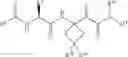
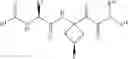
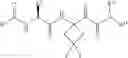
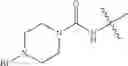

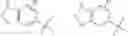
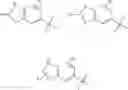
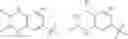
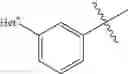
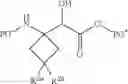




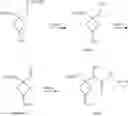

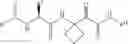
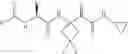
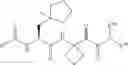
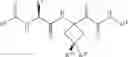

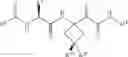
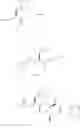
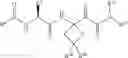
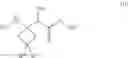
Sources:
- United States Patent and Trademark Office - verify current appl. status at the USPTO↗
Similar patent applications:
- » 20050182096
Haloalkyl containing compounds as cysteine protease inhibitors - » 20050288336
Cysteine protease inhibitors - » 20050020588
Cysteine protease inhibitors - » 20050148504
Cysteine protease inhibitor - » 10469430
Cathepsin cysteine protease inhibitors - » 20050240023
Cathepsin cysteine protease inhibitors - » 10487741
Cysteine protease inhibitors with 2-cyano-4-amino-pyrimidine structure and cathepsin k inhibitory activity for the treatment of inflammations and other diseases - » 10603437
Peptidic compounds as cysteine protease inhibitors - » 20050070598
Cysteine protease inhibitors - » 20060074092
Cysteine protease inhibitors with 2-cyano-4-amino-pyrimidine structure and cathepsin K inhibitory activity for the treatment of inflammations and other diseases
Recent applications in this class:
- » 20250188023 2025-06-12
BENZENE DERIVATIVE - » 20240400500 2024-12-05
SMALL-MOLECULE COMPOUND HAVING NAPHTHALENETHIOL ETHER STRUCTURE, AND USE THEREOF - » 20240376046 2024-11-14
PHENYL-SULFAMOYL-BENZOIC ACID DERIVATIVES AS ERAP1- MODULATORS - » 20240254078 2024-08-01
Small molecule compounds having naphthylamine structure and application thereof - » 20240190817 2024-06-13
METHODS OF TREATING CANCER - » 20240150280 2024-05-09
Compound, agent and composition for the suppression of cancer growth - » 20240101510 2024-03-28
APYRASE INHIBITORS - » 20240092733 2024-03-21
COMPOUND, POLYMERIZABLE COMPOSITION, POLYMER, AND POLYMERIZED FILM - » 20220396549 2022-12-15
SMALL MOLECULE INHIBITORS OF THE MCL-1 ONCOPROTEIN AND USES THEROF - » 20220289673 2022-09-15
WDR5-MYC INHIBITORS
Recent applications for this Assignee:
- » 20130172232 2013-07-04
Cysteine protease inhibitors - » 20130172232 2013-07-04
Cysteine protease inhibitors - » 20120309673 2012-12-06
Cysteine protease inhibitors - » 20120309673 2012-12-06
Cysteine protease inhibitors - » 20120283305 2012-11-08
Cysteine protease inhibitors - » 20120283305 2012-11-08
Cysteine protease inhibitors