Container with Wine Stem and Optional Lid and Optional Handle
US20120043296A1
2012-02-23
13/213,063
2011-08-18
Abstract:
A beverage drinking glass includes a base support segment and a beverage holding vessel segment. The beverage holding vessel segment has at least one sidewall, a bottom, and a top rim to create the vessel segment. The bottom is connected to the base support segment. The beverage drinking glass is preferably a mason or canning type jar such that a user may readily brew or “can” contents and later use the container as a serving vessel (e.g., a wine glass).
Interested in similar patents?
Get notified when new applications in this technology area are published.
Classification:
A47G19/2255 » CPC main
Table service; Drinking vessels or saucers used for table service; Drinking glasses or vessels Details related to the connection between the liquid containing part and the supporting part
A47G7/06 » CPC further
Flower holders or the like; Devices for supporting flower-pots or cut flowers Flower vases
A47J43/28 » CPC further
Implements for preparing or holding food, not provided for in other groups of this subclass Other culinary hand implements, e.g. spatulas, pincers, forks or like food holders, ladles, skimming ladles, cooking spoons; Spoon-holders attached to cooking pots
A47J47/02 » CPC further
Miscellaneous kitchen containers, stands, or the like ; Cutting-boards, e.g. for bread Closed containers for foodstuffs
A47J2203/00 » CPC further
Devices having filling level indicating means
F21V35/00 » CPC further
Candle holders
B65D25/00 IPC
Details of other kinds or types of rigid or semi-rigid containers
Description
CO-PENDING, PRIORITY APPLICATIONS
This application claims priority benefit of U.S. Provisional Patent Application No. 61/374,623 filed on Aug. 18, 2010, titled “Container with Wine Stem and Optional Lid and Optional Handle” having Ok Hui Morris named as the inventor and is incorporated herein by reference as if set forth in full below.
NOTICE OF COPYRIGHT PROTECTION
A portion of the disclosure of this patent document and its figures contain material subject to copyright protection. The copyright owner has no objection to the facsimile reproduction by anyone of the patent document or the patent disclosure, but otherwise reserves all copyrights whatsoever.
BACKGROUND OF THE INVENTION
The present invention relates to wine glasses, more particularly, wine glasses that can be used for home brewing or canning purposes. This invention provides advantages for those who like to make their own concoctions in a ready to use container that reliable preserves the prepared concoctions.
DESCRIPTION OF THE DRAWINGS
The foregoing, as well as other objects and advantages of the invention, will become apparent from the following description when taken in conjunction with the accompanying drawings, wherein like reference characters designate like parts throughout the several views, and wherein:
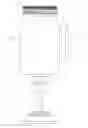
FIGS. 1 and 9 illustrate a side, exploded view of a canning container with wine stem and lid according to exemplary embodiments of the present invention;
FIGS. 2 and 8 illustrates a side view of the container of FIGS. 1 and 9;
FIG. 3 illustrates a side view of the container of FIG. 1 without the lid;
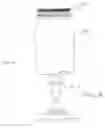
FIG. 4 illustrates a side, exploded view of a canning container with wine stem and lid according to another exemplary embodiments of the present invention;
FIG. 5 illustrates a side view of the container of FIG. 4;
FIG. 6 illustrates a side view of the container of FIG. 5 without the lid;
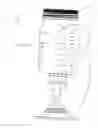
FIG. 7 illustrates the side view of the container of FIG. 2 with additional measurements in cups, ounces, tablespoons and metric units imposed on the container; and
FIG. 10 illustrates the container of FIG. 8 with the option of a handle on the container.
DESCRIPTION
The word “exemplary” is used herein to mean “serving as an example, instance, or illustration.” Any configuration or design described herein as “exemplary” is not necessarily to be construed as preferred or advantageous over other configurations or designs.
This invention now will be described more fully hereinafter with reference to the accompanying drawings and Appendix A that depict some of the exemplary embodiments are shown. This invention may, however, be embodied in many different forms and should not be construed as limited to the embodiments set forth herein. Moreover, all statements herein reciting embodiments of the invention, as well as specific examples thereof, are intended to encompass both structural and functional equivalents thereof. Additionally, it is intended that such equivalents include both currently known equivalents as well as equivalents developed in the future (i.e., any elements developed that perform the same function, regardless of structure).
The above and other exemplary embodiments, objects, uses, advantages, and novel features are more clearly understood by reference to the following description taken in connection with the accompanying figures wherein:
The present invention is a multi-use container that can be used for liquids, solids, gases, and combinations thereof. This container can mix, shake, store, ferment, and display.
This container may be for used for consumption or storage. Metric and non-metric volume measurements may be marked on a surface of the container. These measurements can be used for measuring, mixing or blending purposes. Contents can be shaken without risk of spills due to the sealable lid, such as, for example, a screw-on lid or a spring-wire lid with rubber-sealed lining The sealable lid prevents contents, such as liquids or solids, from escaping during the mixing or shaking process. The lid may be one or more pieces to facilitate ease in cleaning the components. Alternate lid configurations include composites, cork or adhesive type components.
The container may hold a candle, burn incense, fragrant potpourri, flowers, fruit, dessert, other foods, ferment wine, colored marbles, stones, or can be used for many home decor purposes such as a decorative table centerpiece. Alternatively, the container may be used for traditional canning purposes. Furthermore, the container is a multi-use container that reduces the need for multiple containers of various uses in the home; therefore, it is a space-saver.
According to some of the exemplary embodiments, the present invention is a glass mason jar-like container having a lid and a wine stem that is approximately nine (9) inches in height. Alternate shapes or dimensions may be used. This design is practical and elegant. Some of the exemplary embodiments include the bottom stem as fluted with six-faceted sides, such that it works up the stem to the mason jar-like top with the varied design making the grip easy. Alternate exemplary embodiments include a smooth stem as well as variations of the container or jar with a rough or textured surface (e.g., raised or grooved surface for measurements) making slippage less likely. The container and the stem may be one piece made from a single mold. Alternatively, the container and the stem may be multiple pieces that are affixed, attached or mated. For example, the container and the stem may be glued together. Still further, the container and stem may have mated opposing ends that slide together and then are turned or twisted for a snap-like fit. Such snap-like fit features enable the container to be readily stored for brewing, removed, and attached to the stem in a ready to drink or ready to serve container. In further embodiments, the present invention may include a handle. The handle may be attached to the container, to the wine stem, or to a portion of the container and to a portion of the wine stem.
The present invention is an elegant wine glass that includes a unique structure such that a user can brew or “can” substances for later consumption. In addition, this invention provides a canning or brewing container for measuring and storing liquids and solids as well as providing a drinking vessel that operates similar to a “mason” jar with a wine stem. This particular design is useful for home brewers and canners who want a canning-type jar that may be readily used as a wine glass.
FIGS. 1 and 9 illustrate a side, exploded view of a canning container with wine stem and lid according to exemplary embodiments of the present invention;
FIGS. 2 and 8 illustrates a side view of the container of FIGS. 1 and 9;
FIG. 3 illustrates a side view of the container of FIG. 1 without the lid;
FIG. 4 illustrates a side, exploded view of a canning container with wine stem and lid according to another exemplary embodiments of the present invention;
FIG. 5 illustrates a side view of the container of FIG. 4;
FIG. 6 illustrates a side view of the container of FIG. 5 without the lid;
FIG. 7 illustrates the side view of the container of FIG. 2 with additional measurements in cups, ounces, tablespoons and metric units imposed on the container; and
FIG. 10 illustrates the container of FIG. 8 with the option of a handle on the container.
Further exemplary embodiments may include alternative means to “can” or “brew” the contents of the container. For example, a one-piece spring-wire lid used in conventional jarring systems may be used instead of the screw on lip with sealing lid.
While the above exemplary embodiment discloses glass, the present invention may be made of alternate materials including composites, ceramics, plastic, porcelain, other man-made products, natural products and combinations thereof. Furthermore, it will be appreciated by those of ordinary skill in the art that the diagrams, schematics, illustrations, and the like represent conceptual views or perspective views illustrating some of this invention. The functions of the various elements shown in the figures may vary in shape, attachment, size, and other physical features. Those of ordinary skill in the art further understand that the exemplary systems, and/or methods described herein are for illustrative purposes and, thus, are not intended to be limited to any particular shape, to single or multiple pieces, or other relevant physical limitations (e.g., materials).
Claims
What is claimed:1. An apparatus that includes all patentable subject matter set forth in the application and drawings.
2. A system that includes all patentable subject matter set forth in the application and drawings.
Images & Drawings included:






Sources:
- United States Patent and Trademark Office - verify current appl. status at the USPTO↗
Recent applications in this class:
- » 20250120525 2025-04-17
ROTARY GOBLET - » 20240268583 2024-08-15
Mating dishware having an improved drain system - » 20230309725 2023-10-05
MULTIFUNCTIONAL WINE GLASS - » 20230233007 2023-07-27
NOVEL CONTAINERS AND USES THEREOF - » 20220233005 2022-07-28
Multi-piece stemware - » 20220133067 2022-05-05
Refillable drinking vessel - » 20220125226 2022-04-28
Multifunctional flexible deformation cup - » 20220053956 2022-02-24
DRINKING VESSELS - » 20220039574 2022-02-10
Container with removable base assembly - » 20220022672 2022-01-27
Reusable beverage container