HOUSING ASSEMBLY AND METHOD FOR MANUFACTURING SAME
US20120043319A1
2012-02-23
12/880,249
2010-09-13
Abstract:
A housing assembly includes a first housing and a second housing adhered to the first housing. Protruding from the first housing or the second housing are one or more hot-melt posts, the other of the first housing and the second housing defines one or more hot-melt holes; each hot-melt post is hot-melted in one of the hot-melt holes.
Inventors:
- KUAN-HUNG CHEN 31 🇹🇼 Shindian, Taiwan
- YAO WANG 41 🇨🇳 Shenzhen, China
- XU-DONG LU 3 🇨🇳 Shenzhen, China
Assignee:
- FIH (HONG KONG) LIMITED 1,461 🇭🇰 Kowloon, Hong Kong
- SHENZHEN FUTAIHONG PRECISION INDUSTRY CO., LTD. 1,108 🇨🇳 ShenZhen City, China
Interested in similar patents?
Get notified when new applications in this technology area are published.
Classification:
H05K5/0004 » CPC main
Casings, cabinets or drawers for electric apparatus comprising several parts forming a closed casing
H05K5/0004 » CPC main
Casings, cabinets or drawers for electric apparatus comprising several parts forming a closed casing
B29C65/48 » CPC further
Joining of preformed parts ; Apparatus therefor using adhesives, i.e. using supplementary joining material; solvent bonding
B29C65/4815 » CPC further
Joining of preformed parts ; Apparatus therefor using adhesives, i.e. using supplementary joining material; solvent bonding characterised by the type of adhesives; Non-reactive adhesives, e.g. physically hardening adhesives Hot melt adhesives, e.g. thermoplastic adhesives
B29C66/54 » CPC further
General aspects of processes or apparatus for joining preformed parts; General aspects of joining tubular articles; General aspects of joining long products, i.e. bars or profiled elements; General aspects of joining single elements to tubular articles, hollow articles or bars; General aspects of joining several hollow-preforms to form hollow or tubular articles; Joining tubular articles, profiled elements or bars; Joining single elements to tubular articles, hollow articles or bars; Joining several hollow-preforms to form hollow or tubular articles Joining several hollow-preforms, e.g. half-shells, to form hollow articles, e.g. for making balls, containers; Joining several hollow-preforms, e.g. half-cylinders, to form tubular articles
H04M1/0252 » CPC further
Substation equipment, e.g. for use by subscribers; Constructional features of telephone sets; Portable telephone sets, e.g. cordless phones, mobile phones or bar type handsets; Details of the mechanical connection between the housing parts or relating to the method of assembly by means of a snap-on mechanism
B29C66/126 » CPC further
General aspects of processes or apparatus for joining preformed parts; General aspects dealing with the joint area or with the area to be joined; Particular design of joint configurations particular design of the joint cross-sections; Joint cross-sections combining only two joint-segments; Tongue and groove joints; Tenon and mortise joints; Stepped joint cross-sections Tenon and mortise joints
B29C66/742 » CPC further
General aspects of processes or apparatus for joining preformed parts characterised by the composition, physical properties or the structure of the material of the parts to be joined; Joining with non-plastics material; Joining plastics material to non-plastics material to metals or their alloys
B29L2031/3481 » CPC further
Other particular articles; Electrical apparatus, e.g. sparking plugs or parts thereof Housings or casings incorporating or embedding electric or electronic elements
F16B11/006 » CPC further
Connecting constructional elements or machine parts by sticking or pressing them together, e.g. cold pressure welding by gluing
B32B37/12 IPC
Methods or apparatus for laminating, e.g. by curing or by ultrasonic bonding characterised by using adhesives
B29C65/02 » CPC further
Joining of preformed parts ; Apparatus therefor by heating, with or without pressure
B32B37/02 IPC
Methods or apparatus for laminating, e.g. by curing or by ultrasonic bonding characterised by a sequence of laminating steps, e.g. by adding new layers at consecutive laminating stations
Description
BACKGROUND
1. Technical Field
The disclosure generally relates to housing assemblies and methods for manufacturing the housing assemblies.
2. Description of Related Art
A typical way to assemble a metal element to a plastic housing is by adhesion of the metallic element to the plastic housing. However, typically, metallic elements can easily be separated from the plastic housing, as the adhering force created by typical adhesives is usually not strong enough.
Therefore, there is room for improvement within the art.
BRIEF DESCRIPTION OF THE DRAWINGS
Many aspects of the exemplary housing assembly can be better understood with reference to the following drawings. These drawings are not necessarily drawn to scale, the emphasis instead being placed upon clearly illustrating the principles of the exemplary housing assembly and method manufacturing the housing assembly. Moreover, in the drawings like reference numerals designate corresponding parts throughout the several views. Wherever possible, the same reference numbers are used throughout the drawings to refer to the same or like elements of an embodiment.
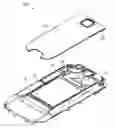
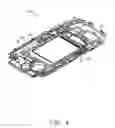
FIG. 1 is a schematic and a partially exploded view of a housing assembly according to an exemplary embodiment.
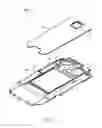
FIG. 2 is another partially exploded view of the housing assembly of FIG. 1 showing another aspect.
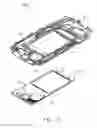
FIG. 3 is an assembled view of the housing assembly shown in FIG. 1.
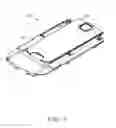
FIG. 4 is an assembled view of the housing assembly shown in FIG. 2.
DETAILED DESCRIPTION
Referring to FIGS. 1 and 2, a housing assembly 100 includes a first housing 10 (e.g., a plastic housing) and a second housing 20 (e.g., a metallic housing). The first housing 10 includes a first attachable surface 12 and adhesive 13. The second housing 20 includes a second attachable surface 22 opposite to the first attachable surface 12. The second attaching surface 22 is adhered to the first attaching surface 12 by the adhesive 13.
The first housing 10 defines one or more first hot-melt holes 14 and one or more second hot-melt holes 16. In this exemplary embodiment, the number of the first hot-melt holes 14 and the number of the second hot-melt holes 16 are both two. The second housing 20 has one or more first hot-melt posts 24 for correspondingly protruding into the first hot-melt holes 14 and one or more second hot-melt posts 26 for correspondingly protruding into the second hot-melt holes 16. Each first hot-melt post 24 extends into and is hot-melted in one of the first hot-melt holes 14 and each second hot-melt post 26 extends into and is hot-melted in one of the second hot-melt holes 16 to retain the second housing 20 to the first housing 10.
Referring to FIGS. 3 and 4, an exemplary method for manufacturing the housing assembly 100 includes the steps of:
the adhesive 13 is coated on the first attachable surface 12, the second attachable surface 22 is attached to the first attachable surface 12 so the second attachable surface 22 is adhered to the first attachable surface 12 with the adhesive 13. At this time, each first hot-melt post 24 extends into one of the first hot-melt holes 14 and each second hot-melt post 26 extends into one of the second hot-melt holes 16.
the first housing 10 and the second housing 20 are pressed together, with an exterior force, to improve the adhesive engagement of the first attachable surface 12 and the second attachable surface 22.
each first hot-melt post 24 is hot-melted in one of the first hot-melt holes 14 and each second hot-melt post 26 is hot-melted in one of the second hot-melt holes 16 to retain the second housing 20 to the first housing 10.
It is understood that the first hot-melt posts 24 and the second hot-melt posts 26 may be positioned on either the first housing 10 or the second housing 20, and the first hot-melt holes 14 and the second hot-melt holes 16 may be positioned on the element opposite the first hot-melt posts 24 and the second hot-melt posts 26.
It is to be understood, however, that even through numerous characteristics and advantages of the disclosure have been set forth in the foregoing description, together with details of the structure and function of the invention, the disclosure is illustrative only, and changes may be made in detail, especially in matters of shape, size, and arrangement of parts within the principles of the disclosure to the full extent indicated by the broad general meaning of the terms in which the appended claims are expressed.
Claims
What is claimed is:1. A housing assembly, comprising:
a first housing;
a second housing adhered to the first housing;
wherein one of the first housing and the second housing protrudes one or more hot-melt posts, the other of the first housing and the second housing defines one or more hot-melt holes; each hot-melt post is hot-melted in one of the hot-melt holes.
2. The housing of claim 1, wherein the hot-melt posts protrudes from the second housing, the hot-melt holes is defined in the first housing.
3. The housing of claim 1, wherein the first housing is plastic and the second housing is metallic.
4. A method for manufacturing a housing assembly, comprising the steps of:
providing a first housing and a second housing, wherein one of the first housing and the second hosing protrudes one or more hot-melt posts, the other of the first housing and the second housing defines one or more hot-melt holes;
adhering the first housing to the second housing by a adhesive with each hot-melt post extending into one of the hot-melt holes;
hot-melting each hot-melt post in one of the hot-melt holes.
5. The method of claim 4, wherein the hot-melt posts protrudes from the second housing, the hot-melt holes is defined in the first housing.
6. The method of claim 4, wherein the first housing is plastic and the second housing is metallic.
Images & Drawings included:
Sources:
- United States Patent and Trademark Office - verify current appl. status at the USPTO↗
Similar patent applications:
- » 20200412855
Housing assembly, method for manufacturing housing assembly, and electronic device - » 20150086347
Turbine housing assembly and manufacturing method of turbine housing assembly - » 20140093751
HOUSING ASSEMBLY, SECONDARY BATTERY COMPRISING AT LEAST TWO SECONDARY CELLS AND SAID HOUSING ASSEMBLY, AS WELL AS A METHOD FOR MANUFACTURING THE HOUSING ASSEMBLY - » 20240167611
Flywheel housing assembly, a vehicle and a method of manufacturing a flywheel housing assembly - » 20130220391
Combined parasol and storage housing assembly, and method of manufacturing the storage housing - » 20120127040
Electronic device housing assembly and manufacturing method thereof - » 20180207756
Blank assembly for housing, housing, manufacturing method for housing and terminal - » 20190291221
Blank assembly for housing, housing, manufacturing method for housing and terminal - » 20070159801
Insert molded flexible circuit with stiffener and flip housing assembly and method of manufacture - » 20180074559
Mobile terminal, housing assembly, and method for manufacturing the same
Recent applications in this class:
- » 20250056749 2025-02-13
HOUSING FOR AN ELECTRICAL DEVICE HAVING A COVER - » 20250008665 2025-01-02
SPLICING STRUCTURE AND DISPLAY SCREEN - » 20240334618 2024-10-03
SECURING COMPONENT AND ELECTRONIC DEVICE - » 20240324110 2024-09-26
Electronic display assembly with fabric panel communications box - » 20240306313 2024-09-12
CASING HAVING EXTERNAL SHELL SURFACE - » 20240292547 2024-08-29
ELECTRONIC DEVICES AND METHODS OF MANUFACTUING ELECTRONIC DEVICES - » 20240268039 2024-08-08
ELECTRONIC DEVICE - » 20240244765 2024-07-18
ELECTRONIC DEVICE - » 20240107686 2024-03-28
CASE AND SEAL - » 20240049403 2024-02-08
ELECTRICAL POWER UNIT WITH REPLACEABLE OUTER COVER
Recent applications for this Assignee:
- » 20220140846 2022-05-05
Antenna structure and wireless communication device using same - » 20220094077 2022-03-24
Antenna structure and wireless communication device using same - » 20220059931 2022-02-24
Antenna structure and wireless communication device - » 20220021116 2022-01-20
Single antenna structure capable of operating in multiple band widths - » 20220010948 2022-01-13
Anti-loosing structure and backlight module - » 20200170133 2020-05-28
Housing, electronic device, and method for manufacturing same - » 20200122194 2020-04-23
Frame and surface treatment method for the frame - » 20200060034 2020-02-20
Housing, method for manufacturing the same, and electronic device having the same - » 20200016805 2020-01-16
Housing, electronic device, and method for manufacturing the same - » 20190368052 2019-12-05
COMPOSITE AND METHOD FOR MAKING SAME