Linkage System and Apparatus for Vehicles
US20120043735A1
2012-02-23
13/181,266
2011-07-12
Abstract:
A linkage apparatus between a wheel suspension, mounted on the chassis of a motor vehicle accommodating the deflection or rebound of a motor vehicle wheel, and a rotation angle sensor connected to a control unit, having a connection rod with first and second ends, a first shaft capable of swiveling mounted on an end of the connection rod and connectable to the wheel suspension, a second shaft capable of swiveling mounted on an end of the connection rod and connectable to the rotation angle sensor, and at least one rotationally symmetrical body of elastically deformable material supporting at least one of the shafts, wherein the connecting rod is bent on at least one of its ends toward an essentially circular grommet that has been forced onto the at least one rotationally symmetrical body of elastically deformable material supporting at least one of the shafts.
Interested in similar patents?
Get notified when new applications in this technology area are published.
Classification:
B60G7/001 » CPC main
Pivoted suspension arms; Accessories thereof Suspension arms, e.g. constructional features
B60G7/005 » CPC further
Pivoted suspension arms; Accessories thereof Ball joints
B60G17/01933 » CPC further
Resilient suspensions having means for adjusting the spring or vibration-damper characteristics, for regulating the distance between a supporting surface and a sprung part of vehicle or for locking suspension during use to meet varying vehicular or surface conditions, e.g. due to speed or load the regulating means comprising electric or electronic elements characterised by the type of sensor or the arrangement thereof Velocity, e.g. relative velocity-displacement sensors
F16C11/0633 » CPC further
Pivots; Pivotal connections; Pivotal connections; Ball-joints; Other joints having more than one degree of angular freedom, i.e. universal joints the female part comprising a blind socket receiving the male part; Construction or details of the socket member with linings the linings being made of plastics
F16C11/0657 » CPC further
Pivots; Pivotal connections; Pivotal connections; Ball-joints; Other joints having more than one degree of angular freedom, i.e. universal joints the female part comprising a blind socket receiving the male part; Construction or details of the socket member the socket member being mainly made of plastics
F16C11/0695 » CPC further
Pivots; Pivotal connections; Pivotal connections; Ball-joints; Other joints having more than one degree of angular freedom, i.e. universal joints Mounting of ball-joints, e.g. fixing them to a connecting rod
B60G2204/116 » CPC further
Indexing codes related to suspensions or to auxiliary parts; Mounting of suspension elements; Mounting of sensors thereon Sensors coupled to the suspension arm
B60G2206/11 » CPC further
Indexing codes related to the manufacturing of suspensions: constructional features, the materials used, procedures or tools; Constructional features of suspension elements, e.g. arms, dampers, springs; Constructional features of arms the arm being a radius or track or torque or steering rod or stabiliser end link
B60G2206/724 » CPC further
Indexing codes related to the manufacturing of suspensions: constructional features, the materials used, procedures or tools; Constructional features of suspension elements, e.g. arms, dampers, springs; Materials used in suspensions; Steel Wires, bars or the like
B60G2206/73 » CPC further
Indexing codes related to the manufacturing of suspensions: constructional features, the materials used, procedures or tools; Constructional features of suspension elements, e.g. arms, dampers, springs; Materials used in suspensions Rubber; Elastomers
B60G2206/81 » CPC further
Indexing codes related to the manufacturing of suspensions: constructional features, the materials used, procedures or tools; Constructional features of suspension elements, e.g. arms, dampers, springs; Manufacturing procedures Shaping
B60G2206/8103 » CPC further
Indexing codes related to the manufacturing of suspensions: constructional features, the materials used, procedures or tools; Constructional features of suspension elements, e.g. arms, dampers, springs; Manufacturing procedures; Shaping by folding or bending
B60G2400/05162 » CPC further
Indexing codes relating to detected, measured or calculated conditions or factors; Attitude; Angle; Angular position of a suspension element the element being a suspension arm
B60G2400/252 » CPC further
Indexing codes relating to detected, measured or calculated conditions or factors; Stroke; Height; Displacement vertical
F16C2326/05 » CPC further
Articles relating to transporting; Parts of vehicles in general Vehicle suspensions, e.g. bearings, pivots or connecting rods used therein
B60G3/06 IPC
Resilient suspensions for a single wheel with a single pivoted arm the arm being essentially transverse to the longitudinal axis of the vehicle the arm being rigid
Description
PRIORITY CLAIM
This application claims the benefit of German Patent Application Serial No. 20 2010 008 058 filed on Jul. 13, 2010, contents of which are incorporated herein.
FIELD OF THE INVENTION
The invention relates to a linkage system and apparatus for vehicles and, more specifically, to linkage between a wheel suspension, mounted on the chassis of a motor vehicle accommodating the deflection or rebound of a motor vehicle wheel, and a rotation angle sensor connected to a control unit.
BACKGROUND OF THE INVENTION
In a known linkage of this type, a bent connecting rod, for example, is rigidly attached to both sides of ball socket casing, into each of which shaft-bearing balls are inserted.
A vehicle level sensor described in DE 43 09 226 A1 comprises two components arranged movably toward each other and connected with each other, of which the one component is connected with the vehicle chassis and the other component is connected with the wheel suspension. A measuring device in the form of a magnetoresistive sensor is arranged between the components. The components are connected with each other by a ball joint consisting of a ball inserted in a ball socket, whereby the magnetoresistive sensor is arranged in the area of the ball socket.
SUMMARY OF THE INVENTION
The present invention is directed to an improved and simplified linkage between a wheel suspension, mounted on the chassis of a motor vehicle accommodating the deflection or rebound of a motor vehicle wheel, and a rotation angle sensor connected to a control unit. The essentially circular grommets at the end of the connecting rods can be easily forced onto the essentially rotationally symmetrical bodies consisting of elastically deformable material.
BRIEF DESCRIPTION OF THE DRAWINGS
Preferred and alternative examples of the present invention are described in detail below with reference to the following drawings:
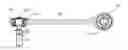
FIG. 1 shows a perspective view of a known linkage;
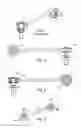
FIG. 2 shows a side view of the linkage according to the invention;
FIG. 3 shows a top view, partially in section, of the linkage according to the invention;
FIG. 4 shows a perspective view of the linkage;
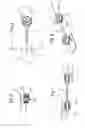
FIG. 5 shows a top view of a modified form of a linkage;
FIG. 6 shows a sectional view of the linkage shown in FIG. 5;
FIG. 7 shows a side view of the linkage shown in FIG. 5;
FIG. 8 shows a perspective view of the linkage shown in FIG. 5;
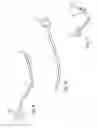
FIGS. 9 through 11 show different embodiments of the connecting rod used according to the invention. 5
DETAILED DESCRIPTION OF THE PREFERRED EMBODIMENT
The linkage shown in FIG. 1 comprises an essentially cylindrical connecting rod 4, onto the ends of which are mounted ring-shaped ball socket brackets 2 of a ball socket 3, into each of which one ball 5 is inserted. Shafts 1 and 1′ are attached to these balls, of which shaft 1 serves, for example, for connecting a rotation angle sensor mounted in or on the chassis, whereas shaft 1′ serves for mounting in the area of the wheel suspension.
In the linkage according to the invention shown in FIGS. 2-5, the cylindrical connecting rod 14 is bent at its ends toward essentially circular grommets 14.1, which have been forced onto rotationally symmetrical bodies 15 of elastically deformable material. Each body 15 is provided with a circumferential groove 15.1 on its exterior, in each of which one grommet 14.1 has been rotatably accommodated. Each body 15 is provided with a recess forming a ball socket 15.2 into which a ball 16 is inserted rotatably, which supports a shaft 11 for mounting either on the wheel suspension or on the rotation angle sensor. The body 15 consists of elastically deformable material, preferably a silicone-like material.
Embodiments of a linkage shown in FIGS. 6 through 8 are distinguished from the embodiment according to FIGS. 2 through 5 in that the rotationally symmetrical body 15a consisting of elastically deformable material is provided with a drill hole running vertically for the bearing of the shaft 11a′ supporting the pin 11a. The body 15a is provided with a circumferential groove 15a.1 accommodating a grommet 14.1 on its outer circumference.
The pin 11a can be mounted, for example, by butt welding to a support 16 that typically represents either a wheel suspension or a rotation angle sensor.
FIGS. 9 through 11 show examples of differently bent connecting rods 14 by means of which an easy adjustment into different positions is possible of the vehicle elements to be connected with each other by the linkage when producing the linkage according to the invention.
While the preferred embodiment of the invention has been illustrated and described, as noted above, many changes can be made without departing from the spirit and scope of the invention. Accordingly, the scope of the invention is not limited by the disclosure of the preferred embodiment. Instead, the invention should be determined entirely by reference to the claims that follow.
Claims
The embodiments of the invention in which an exclusive property or privilege is claimed are defined as follows:1. A linkage apparatus between a wheel suspension, mounted on the chassis of a motor vehicle accommodating the deflection or rebound of a motor vehicle wheel, and a rotation angle sensor connected to a control unit, comprising:
a connection rod having a first end and a second end;
a first shaft capable of swiveling mounted on the first end of the connection rod and connectable to the wheel suspension;
a second shaft capable of swiveling mounted on the second end of the connection rod and connectable to the rotation angle sensor; and
at least one rotationally symmetrical body of elastically deformable material supporting at least one of the first or second shafts;
wherein the connecting rod is bent on at least one of its ends toward an essentially circular grommet that has been forced onto the at least one rotationally symmetrical body of elastically deformable material supporting at least one of the first or second shafts.
2. The linkage apparatus according to claim 1, wherein the connecting rod has a cylindrical cross-section.
3. The linkage apparatus according to claim 1, wherein the at least one rotationally symmetrical body is provided with a circumferential groove on its exterior accommodating the grommet.
4. The linkage apparatus according to claim 1, wherein the at least one rotationally symmetrical body consists of silicone material.
5. The linkage according to claim 1, wherein the at least one rotationally symmetrical body has the shape of a ball socket casing into whose ball socket a ball supporting at least one of the first or second shafts is inserted.
6. The linkage according to claim 1, wherein the at least one rotationally symmetrical body has a drill hole running axially into which at least one of the first or second shafts is inserted.
7. The linkage apparatus according to claim 1, comprising:
a plurality of rotationally symmetrical bodies of elastically deformable materials, at least one each supporting the first and second shafts; and
wherein the connecting rod is bent on its first and second ends toward an essentially circular grommet that has been forced onto the rotationally symmetrical bodies of elastically deformable material supporting the first and second shafts, respectively.
8. The linkage apparatus according to claim 7, wherein the connecting rod has a cylindrical cross-section.
9. The linkage apparatus according to claim 7, wherein the plurality of rotationally symmetrical bodies are provided with a circumferential groove on their exterior accommodating the grommets.
10. The linkage apparatus according to claim 7, wherein the plurality of rotationally symmetrical bodies consist of silicone material.
11. The linkage according to claim 7, wherein the plurality of rotationally symmetrical bodies have the shape of a ball socket casing into whose ball socket a ball supporting the first or second shafts is inserted.
12. The linkage according to claim 7, wherein the plurality of rotationally symmetrical bodies have a drill hole running axially into which the first or second shafts are inserted.
13. A linkage system between a wheel suspension, mounted on the chassis of a motor vehicle accommodating the deflection or rebound of a motor vehicle wheel, and a rotation angle sensor connected to a control unit, comprising:
a connection rod having a first end and a second end;
a first shaft capable of swiveling mounted on the first end of the connection rod and connectable to the wheel suspension;
a second shaft capable of swiveling mounted on the second end of the connection rod and connectable to the rotation angle sensor; and
a plurality of rotationally symmetrical bodies of elastically deformable materials, at least one each supporting the first and second shafts; and
wherein the connecting rod is bent on its first and second ends toward an essentially circular grommet that has been forced onto the rotationally symmetrical bodies of elastically deformable material supporting the first and second shafts, respectively.
14. The linkage system according to claim 13, wherein the connecting rod has a cylindrical cross-section.
15. The linkage system according to claim 13, wherein the plurality of rotationally symmetrical bodies are provided with a circumferential groove on their exterior accommodating the grommets.
16. The linkage system according to claim 13, wherein the plurality of rotationally symmetrical bodies consist of silicone material.
17. The linkage system to claim 13, wherein the plurality of rotationally symmetrical bodies have the shape of a ball socket casing into whose ball socket a ball supporting the first or second shafts is inserted.
18. The linkage system to claim 13, wherein the plurality of rotationally symmetrical bodies have a drill hole running axially into which the first or second shafts are inserted.
Images & Drawings included:
Sources:
- United States Patent and Trademark Office - verify current appl. status at the USPTO↗
Recent applications in this class:
- » 20250162365 2025-05-22
SPRING ISOLATOR PAD WITH INTEGRATED SPRING ROTATION STOP AND PAD ROTATION STOP - » 20250153522 2025-05-15
Multi-Link Front Suspension for an Underground Articulated Dump Truck - » 20250135819 2025-05-01
COMPONENT OF SUSPENSION STRUCTURE - » 20250135818 2025-05-01
A-Arms For A Vehicle - » 20250100335 2025-03-27
AN ADJUSTING DEVICE FOR ADJUSTING THE CAMBER ANGLE FOR A SUSPENSION OF A MOTOR VEHICLE - » 20250091398 2025-03-20
Trailing Arm For a Vehicle - » 20250083486 2025-03-13
SPINDLE FOR A RECREATIONAL VEHICLE - » 20250065679 2025-02-27
LOWER CONTROL ARM AND LOWER CONTROL ARM ASSEMBLY - » 20250010674 2025-01-09
Control arm - » 20250001822 2025-01-02
COUPLING ROD AND METHOD FOR PRODUCING SAME