Handwriting board with liquid crystal display for displaying handwritten content on a projector
US20120044152A1
2012-02-23
12/859,197
2010-08-18
✅ Patent granted
US 8,363,024 B2
2013-01-29
-
-
Dwayne Bost | Larry Sternbane
Chun-Ming Shih | HDLS IPR Services
2031-06-03
Abstract:
A handwritten board includes a wireless Universal Serial Bus (USB) unit, a USB hub unit, a USB/Video Graphic Array (VGA) conversion unit, a liquid crystal display (LCD) driver unit, a LCD unit, a touch pad controller unit and a touch pad unit. The USB hub unit is electrically connected to the wireless USB unit, the USB/VGA conversion unit and the touch pad controller unit. The touch pad unit is electrically connected to the touch pad controller unit. The LCD driver unit is electrically connected to the USB/VGA conversion unit and the LCD unit.
Inventors:
- Shu-Hsuan KANG 1 🇹🇼 San-Chung City, Taiwan
- Fan Chang 1 🇹🇼 San-Chung City, Taiwan
- Ku-Ching Lu 2 🇹🇼 San-Chung City, Taiwan
- Shu-Hsuan Kang 1 🇹🇼 San-Chung, Taiwan
- Fan Chang 1 🇹🇼 San-Chung, Taiwan
- Ku-Ching Lu 2 🇹🇼 San-Chung, Taiwan
Assignee:
- Winmate Communication Inc. 2 🇹🇼 New Taipei, Taiwan
Applicant:
Interested in similar patents?
Get notified when new applications in this technology area are published.
Classification:
G06F3/04883 » CPC main
Input arrangements for transferring data to be processed into a form capable of being handled by the computer; Output arrangements for transferring data from processing unit to output unit, e.g. interface arrangements; Input arrangements or combined input and output arrangements for interaction between user and computer; Interaction techniques based on graphical user interfaces [GUI] using specific features provided by the input device, e.g. functions controlled by the rotation of a mouse with dual sensing arrangements, or of the nature of the input device, e.g. tap gestures based on pressure sensed by a digitiser using a touch-screen or digitiser, e.g. input of commands through traced gestures for inputting data by handwriting, e.g. gesture or text
G06F3/1462 » CPC further
Input arrangements for transferring data to be processed into a form capable of being handled by the computer; Output arrangements for transferring data from processing unit to output unit, e.g. interface arrangements; Digital output to display device ; Cooperation and interconnection of the display device with other functional units involving copying of the display data of a local workstation or window to a remote workstation or window so that an actual copy of the data is displayed simultaneously on two or more displays, e.g. teledisplay with means for detecting differences between the image stored in the host and the images displayed on the remote displays
G09G5/363 » CPC further
Control arrangements or circuits for visual indicators common to cathode-ray tube indicators and other visual indicators characterised by the display of a graphic pattern, e.g. using an all-points-addressable [APA] memory Graphics controllers
G09G3/001 » CPC further
Control arrangements or circuits, of interest only in connection with visual indicators other than cathode-ray tubes using specific devices not provided for in groups - , e.g. using an intermediate record carrier such as a film slide; Projection systems; Display of non-alphanumerical information, solely or in combination with alphanumerical information, e.g. digital display on projected diapositive as background
G09G2360/128 » CPC further
Aspects of the architecture of display systems; Frame memory handling Frame memory using a Synchronous Dynamic RAM [SDRAM]
G09G2370/06 » CPC further
Aspects of data communication Consumer Electronics Control, i.e. control of another device by a display or
G09G2370/16 » CPC further
Aspects of data communication Use of wireless transmission of display information
G06F3/041 IPC
Input arrangements for transferring data to be processed into a form capable of being handled by the computer; Output arrangements for transferring data from processing unit to output unit, e.g. interface arrangements; Input arrangements or combined input and output arrangements for interaction between user and computer; Arrangements for converting the position or the displacement of a member into a coded form Digitisers, e.g. for touch screens or touch pads, characterised by the transducing means
G09G3/36 IPC
Control arrangements or circuits, of interest only in connection with visual indicators other than cathode-ray tubes for presentation of an assembly of a number of characters, e.g. a page, by composing the assembly by combination of individual elements arranged in a matrix no fixed position being assigned to or needed to be assigned to the individual characters or partial characters by control of light from an independent source using liquid crystals
G06K11/06 IPC
Methods or arrangements for graph-reading or for converting the pattern of mechanical parameters, e.g. force or presence, into electrical signal Devices for converting the position of a manually-operated writing or tracing member into an electrical signal
G08C21/00 IPC
Systems for transmitting the position of an object with respect to a predetermined reference system, e.g. tele-autographic system
Description
BACKGROUND OF THE INVENTION
1. Field of the Invention
The present invention relates to a handwritten board, in particular to a handwritten board with a liquid crystal display.
2. Description of Prior Art
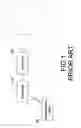
FIG. 1 is a block diagram showing a conventional virtual electronic whiteboard. A user (not shown) holds a handwritten board 102 and writes thereon. Then, the content written by the user is transmitted in a wireless manner (by infrared or Bluetooth) to a computer 104. The computer 104 processes the written content and transmits the processed content to a projector 106. Finally, the project 106 projects the written content onto a wall (not shown) for display.
Since the conventional handwritten board 102 is not provided with a display, the user cannot immediately recognize whether the written content is correct or not unless the user watches the content projected by the project 106. Thus, such an arrangement is not user-friendly and is inconvenient for the user.
SUMMARY OF THE INVENTION
In order to solve the above-mentioned problems, an object of the present invention is to provide a handwritten board with a liquid crystal display.
The present invention provides a handwritten board with a liquid crystal liquid display, which includes: a wireless Universal Serial Bus (USB) unit, an USB hub unit electrically connected to the wireless USB unit, a USB/Video Graphic Array (VGA) conversion unit electrically connected to the USB hub unit, a liquid crystal display (LCD) driver unit electrically connected to the USB/VGA conversion unit, a LCD unit electrically connected to the LCD driver unit, a touch pad controller unit electrically connected to the USB hub unit, and a touch pad unit electrically connected to the touch pad controller unit.
BRIEF DESCRIPTION OF DRAWING
FIG. 1 is a block diagram of a conventional virtual electronic whiteboard;
FIG. 2 is a block diagram showing the operation of a handwritten board with a liquid crystal display according to the present invention; and
FIG. 3 is a block diagram of the handwritten board with a liquid crystal display according to the present invention.
DETAILED DESCRIPTION OF THE INVENTION
The detailed description and technical contents of the present invention will become apparent with the following detailed description accompanied with related drawings. It is noteworthy to point out that the drawings is provided for the illustration purpose only, but not intended for limiting the scope of the present invention.
Please refer to FIGS. 2 and 3. FIG. 2 is a block diagram showing the operation of a handwritten board with a liquid crystal display according to the present invention, and FIG. 3 is a block diagram of the handwritten board with a liquid crystal display according to the present invention. The present invention provides a handwritten board 200 with a liquid crystal liquid display, which is used with a computer 300 and a projector 400. The computer 300 is electrically connected to the projector 400 and wirelessly connected to the handwritten board 200.
The handwritten board 200 with a liquid crystal liquid display includes: a wireless Universal
Serial Bus (USB) unit 202, a USB hub unit 204, a USB/Video Graphic Array (VGA) conversion unit 206, a liquid crystal display (LCD) driver unit 208, a LCD unit 210, a touch pad controller unit 212, a touch pad unit 214, a first electronic erasable programmable read only memory (EPROM) unit 216, a flash memory unit 218, a synchronous dynamic random access memory (SDRAM) unit 220, a microcontroller unit 222, a second electronic erasable programmable read only memory (EPROM) unit 224, a liquid crystal backlight driver unit 226 and a hot key unit 228.
The USB/VGA conversion unit 206 is electrically connected to the USB hub unit 204, the first electronic EPROM unit 216, the flash memory unit 218, the SDRAM unit 220 and the LCD driver unit 208. The LCD driver unit 208 is electrically connected to the LCD unit 210, the liquid crystal backlight driver unit 226 and the microcontroller unit 222.
The second electronic EPROM unit 224 is electrically connected to the microcontroller unit 222. The touch pad controller unit 212 is electrically connected to the touch pad unit 214, the microcontroller unit 222 and the USB hub unit 204. The wireless USB unit 202 is electrically connected to the USB hub unit 204. The liquid crystal backlight driver unit 226 is electrically connected to the LCD unit 210 and the microcontroller unit 222. The hot key 228 is electrically connected to the microcontroller unit 222.
The SDRAM unit 220 may be a double-data-rata (DDR) SDRAM. The microcontroller 222 is configured to control the touch pad controller unit 212, the hot key unit 228, the liquid crystal backlight driver unit 226 and the LCD driver unit 208. The LCD unit 210 and the touch pad unit 214 can be integrated into a touch panel.
After a user (not shown) writes on the touch pad unit 214, the content written by the user is transmitted from the touch pad controller unit 212 and the USB hub unit 204 to the wireless USB unit 202. Then, the wireless USB unit 202 transmits the written content to the computer 300 in a wireless manner. The computer 300 processes the written content and then transmits the processed content to the projector 400, thereby projecting the written content on a wall (not shown).
After the computer 300 processes the written content, the processed content is also transmitted back to the wireless USB unit 202 in a wireless manner. The wireless USB unit 202 receives the written content processed by the computer 300 and transmits the content to the USB hub unit 204, the USB/VGA unit 206 and the LCD driver unit 208. Finally, the written content is displayed on the LCD unit 210.
According to the present invention, the user can immediately watch the liquid crystal display of the handwritten board to recognize whether the content he/she writes is correct or not. Thus, it is unnecessary for the user to watch the content projected by the projector to recognize whether the content he/she writes is correct or not as needed in prior art. Therefore, the present invention increases the convenience of a virtual electronic whiteboard.
Although the present invention has been described with reference to the foregoing preferred embodiments, it will be understood that the invention is not limited to the details thereof. Various equivalent variations and modifications can still occur to those skilled in this art in view of the teachings of the present invention. Thus, all such variations and equivalent modifications are also embraced within the scope of the invention as defined in the appended claims.
Claims
What is claimed is:1. A handwritten board with liquid crystal liquid display, including:
a wireless Universal Serial Bus (USB) unit;
a USB hub unit electrically connected to the wireless USB unit;
a USB/Video Graphic Array (VGA) conversion unit electrically connected to the USB hub unit;
a liquid crystal display (LCD) driver unit electrically connected to the USB/VGA conversion unit;
a LCD unit electrically connected to the LCD driver unit;
a touch pad controller unit electrically connected to the USB hub unit; and
a touch pad unit electrically connected to the touch pad controller unit.
2. The handwritten board with liquid crystal liquid display according to claim 1, further including a first electronic erasable programmable read only memory (EPROM) unit electrically connected to the USB/VGA conversion unit.
3. The handwritten board with liquid crystal liquid display according to claim 2, further including a flash memory unit electrically connected to the USB/VGA conversion unit.
4. The handwritten board with liquid crystal liquid display according to claim 3, further including a synchronous dynamic random access memory (SDRAM) unit electrically connected to the USB/VGA conversion unit.
5. The handwritten board with liquid crystal liquid display according to claim 4, wherein the SDRAM unit is a double-data-rate (DDR) SDRAM.
6. The handwritten board with liquid crystal liquid display according to claim 4, further including a microcontroller electrically connected to the LCD driver unit and the touch pad controller unit, the microcontroller unit being configured to control the LCD driver unit and the touch pad controller unit.
7. The handwritten board with liquid crystal liquid display according to claim 6, further including a second electronic erasable programmable read only memory (EPROM) unit electrically connected to the microcontroller unit.
8. The handwritten board with liquid crystal liquid display according to claim 6, further including a hot key unit electrically connected to the microcontroller unit.
9. The handwritten board with liquid crystal liquid display according to claim 8, further including a liquid crystal backlight driver unit electrically connected to the LCD driver unit, the LCD unit and the microcontroller unit.
Images & Drawings included:


Sources:
- United States Patent and Trademark Office - verify current appl. status at the USPTO↗
Recent applications in this class:
- » 20250291475 2025-09-18
TOUCH APPARATUS WITH LOW LATENCY INTERACTIONS - » 20250278185 2025-09-04
DISPLAY APPARATUS FOR DISPLAYING PREDICTED TRAJECTORY AND CONTROLLING METHOD THEREOF - » 20250264990 2025-08-21
INPUT APPARATUS, INPUT METHOD, PROGRAM, AND INPUT SYSTEM - » 20250251857 2025-08-07
DISPLAY DEVICE AND DISPLAY METHOD FOR MENU BAR THEREOF - » 20250251856 2025-08-07
DIGITAL INK PROCESSING SYSTEM, METHOD, AND PROGRAM - » 20250244868 2025-07-31
INFORMATION HANDLING SYSTEM TOUCH DETECTION PALM REST TO SUPPORT TOUCH FUNCTION ROW - » 20250244867 2025-07-31
INFORMATION HANDLING SYSTEM TOUCH FUNCTION ROW WITH HOVER DETECTION AND COORDINATED PRESENTATION ON MAIN DISPLAY - » 20250231681 2025-07-17
METHOD AND APPARATUS FOR DISPLAYING TOUCH CONTROL, DEVICE, AND STORAGE MEDIUM - » 20250217028 2025-07-03
INTERACTIVE WHITEBOARD USING ARTIFICIAL INTELLIGENCE - » 20250199678 2025-06-19
ELECTRONIC DEVICE FOR AT LEAST PARTIALLY ADJUSTING BRIGHTNESS OF DISPLAY ON BASIS OF TOUCH INPUT ON DISPLAY, AND METHOD THEREFOR
Recent applications for this Assignee:
- » 20110241620 2011-10-06
Charging apparatus for laptop computer with multi-batteries and method for the same