Ceramic wavelength converter and LED light source containing same
US20120075834A1
2012-03-29
12/891,249
2010-09-27
✅ Patent granted
US 8,829,777 B2
2014-09-09
-
-
Mary Ellen Bowman
Robert F. Clark
2033-07-10
Abstract:
There is herein described an LED light source comprising an LED and a ceramic wavelength converter positioned to receive at least a portion of the light emitted by said LED, said ceramic wavelength converter converting at least a portion of the light emitted by said LED into light of a different wavelength, said ceramic wavelength converter comprising a chlorosilicate phosphor and having a density at least about 90% of theoretical density. The chlorosilicate phosphor is preferably a green-emitting Ca8Mg(SiO4)4Cl2:Eu2+ phosphor.
Inventors:
- Frank Jermann 18 🇩🇪 Koenigsbrunn, Germany
- George C. Wei 31 🇺🇸 Weston, MA, United States
- Tim Fiedler 13 🇩🇪 Munich, Germany
- Madis RAUKAS 14 🇺🇸 Charlestown, MA, United States
- Steven Mackel 1 🇺🇸 Pepperell, MA, United States
- Madis Raukas 1 🇺🇸 Charlstown, MA, United States
Assignee:
- OSRAM SYLVANIA INC. 806 🇺🇸 Danvers, MA, United States
Applicant:
Interested in similar patents?
Get notified when new applications in this technology area are published.
Classification:
C04B2235/5436 » CPC further
Aspects relating to ceramic starting mixtures or sintered ceramic products; Composition of constituents of the starting material or of secondary phases of the final product; Constituents or additives of the starting mixture chosen for their shape or used because of their shape or their physical appearance; Particle size related information expressed by the size of the particles or aggregates thereof micrometer sized, i.e. from 1 to 100 micron
H05B33/14 » CPC further
Electroluminescent light sources; Light sources with substantially two-dimensional radiating surfaces characterised by the chemical or physical composition or the arrangement of the electroluminescent material, or by the simultaneous addition of the electroluminescent material in or onto the light source
H01L2924/19107 » CPC further
Indexing scheme for arrangements or methods for connecting or disconnecting semiconductor or solid-state bodies as covered by; Details of hybrid assemblies other than the semiconductor or other solid state devices to be connected; Disposition of discrete passive components off-chip wires
H01L2924/00014 » CPC further
Indexing scheme for arrangements or methods for connecting or disconnecting semiconductor or solid-state bodies as covered by; Technical content checked by a classifier the subject-matter covered by the group, the symbol of which is combined with the symbol of this group, being disclosed without further technical details
C09K11/7734 » CPC main
Luminescent, e.g. electroluminescent, chemiluminescent materials containing inorganic luminescent materials containing rare earth metals containing europium Aluminates
C04B35/645 » CPC further
Shaped ceramic products characterised by their composition ; Ceramics compositions ; Processing powders of inorganic compounds preparatory to the manufacturing of ceramic products; Forming processes; Processing powders of inorganic compounds preparatory to the manufacturing of ceramic products; Burning or sintering processes Pressure sintering
C04B2235/652 » CPC further
Aspects relating to ceramic starting mixtures or sintered ceramic products; Aspects relating to heat treatments of ceramic bodies such as green ceramics or pre-sintered ceramics, e.g. burning, sintering or melting processes Reduction treatment
C04B2235/3206 » CPC further
Aspects relating to ceramic starting mixtures or sintered ceramic products; Composition of constituents of the starting material or of secondary phases of the final product; Constituents and secondary phases not being of a fibrous nature; Metal oxides, mixed metal oxides, or oxide-forming salts thereof, e.g. carbonates, nitrates, (oxy)hydroxides, chlorides; Alkaline earth oxides or oxide forming salts thereof, e.g. beryllium oxide Magnesium oxides or oxide-forming salts thereof
H01L33/505 » CPC further
Semiconductor devices with at least one potential-jump barrier or surface barrier specially adapted for light emission; Processes or apparatus specially adapted for the manufacture or treatment thereof or of parts thereof; Details thereof characterised by the semiconductor body packages; Wavelength conversion elements characterised by the shape, e.g. plate or foil
C04B2235/3445 » CPC further
Aspects relating to ceramic starting mixtures or sintered ceramic products; Composition of constituents of the starting material or of secondary phases of the final product; Constituents and secondary phases not being of a fibrous nature; Non-metal oxides, non-metal mixed oxides, or salts thereof that form the non-metal oxides upon heating, e.g. carbonates, nitrates, (oxy)hydroxides, chlorides; Silicates other than clay, e.g. water glass; Alkaline earth metal silicates, e.g. barium silicate Magnesium silicates, e.g. forsterite
C04B2235/3208 » CPC further
Aspects relating to ceramic starting mixtures or sintered ceramic products; Composition of constituents of the starting material or of secondary phases of the final product; Constituents and secondary phases not being of a fibrous nature; Metal oxides, mixed metal oxides, or oxide-forming salts thereof, e.g. carbonates, nitrates, (oxy)hydroxides, chlorides; Alkaline earth oxides or oxide forming salts thereof, e.g. beryllium oxide Calcium oxide or oxide-forming salts thereof, e.g. lime
C04B2235/3873 » CPC further
Aspects relating to ceramic starting mixtures or sintered ceramic products; Composition of constituents of the starting material or of secondary phases of the final product; Constituents and secondary phases not being of a fibrous nature; Non-oxide ceramic constituents or additives; Nitrides, e.g. oxynitrides, carbonitrides, oxycarbonitrides, lithium nitride, magnesium nitride Silicon nitrides, e.g. silicon carbonitride, silicon oxynitride
C04B2235/3213 » CPC further
Aspects relating to ceramic starting mixtures or sintered ceramic products; Composition of constituents of the starting material or of secondary phases of the final product; Constituents and secondary phases not being of a fibrous nature; Metal oxides, mixed metal oxides, or oxide-forming salts thereof, e.g. carbonates, nitrates, (oxy)hydroxides, chlorides; Alkaline earth oxides or oxide forming salts thereof, e.g. beryllium oxide Strontium oxides or oxide-forming salts thereof
C04B2235/444 » CPC further
Aspects relating to ceramic starting mixtures or sintered ceramic products; Composition of constituents of the starting material or of secondary phases of the final product; Constituents and secondary phases not being of a fibrous nature; Metal salt constituents or additives chosen for the nature of the anions, e.g. hydrides or acetylacetonate Halide containing anions, e.g. bromide, iodate, chlorite
C04B2235/656 » CPC further
Aspects relating to ceramic starting mixtures or sintered ceramic products; Aspects relating to heat treatments of ceramic bodies such as green ceramics or pre-sintered ceramics, e.g. burning, sintering or melting processes characterised by specific heating conditions during heat treatment
C04B2235/6582 » CPC further
Aspects relating to ceramic starting mixtures or sintered ceramic products; Aspects relating to heat treatments of ceramic bodies such as green ceramics or pre-sintered ceramics, e.g. burning, sintering or melting processes; Atmosphere during thermal treatment Hydrogen containing atmosphere
C04B2235/3454 » CPC further
Aspects relating to ceramic starting mixtures or sintered ceramic products; Composition of constituents of the starting material or of secondary phases of the final product; Constituents and secondary phases not being of a fibrous nature; Non-metal oxides, non-metal mixed oxides, or salts thereof that form the non-metal oxides upon heating, e.g. carbonates, nitrates, (oxy)hydroxides, chlorides; Silicates other than clay, e.g. water glass; Alkaline earth metal silicates, e.g. barium silicate Calcium silicates, e.g. wollastonite
C04B2235/3203 » CPC further
Aspects relating to ceramic starting mixtures or sintered ceramic products; Composition of constituents of the starting material or of secondary phases of the final product; Constituents and secondary phases not being of a fibrous nature; Metal oxides, mixed metal oxides, or oxide-forming salts thereof, e.g. carbonates, nitrates, (oxy)hydroxides, chlorides; Alkali metal oxides or oxide-forming salts thereof Lithium oxide or oxide-forming salts thereof
C04B2235/3262 » CPC further
Aspects relating to ceramic starting mixtures or sintered ceramic products; Composition of constituents of the starting material or of secondary phases of the final product; Constituents and secondary phases not being of a fibrous nature; Metal oxides, mixed metal oxides, or oxide-forming salts thereof, e.g. carbonates, nitrates, (oxy)hydroxides, chlorides Manganese oxides, manganates, rhenium oxides or oxide-forming salts thereof, e.g. MnO
C04B2235/3229 » CPC further
Aspects relating to ceramic starting mixtures or sintered ceramic products; Composition of constituents of the starting material or of secondary phases of the final product; Constituents and secondary phases not being of a fibrous nature; Metal oxides, mixed metal oxides, or oxide-forming salts thereof, e.g. carbonates, nitrates, (oxy)hydroxides, chlorides; Rare earth oxide or oxide forming salts thereof, e.g. scandium oxide Cerium oxides or oxide-forming salts thereof
C04B2235/3224 » CPC further
Aspects relating to ceramic starting mixtures or sintered ceramic products; Composition of constituents of the starting material or of secondary phases of the final product; Constituents and secondary phases not being of a fibrous nature; Metal oxides, mixed metal oxides, or oxide-forming salts thereof, e.g. carbonates, nitrates, (oxy)hydroxides, chlorides Rare earth oxide or oxide forming salts thereof, e.g. scandium oxide
C04B35/5152 » CPC further
Shaped ceramic products characterised by their composition ; Ceramics compositions ; Processing powders of inorganic compounds preparatory to the manufacturing of ceramic products based on non-oxide ceramics based on halogenides other than fluorides
C04B35/22 » CPC further
Shaped ceramic products characterised by their composition ; Ceramics compositions ; Processing powders of inorganic compounds preparatory to the manufacturing of ceramic products based on oxide ceramics based on silicates other than clay rich in calcium oxide, e.g. wollastonite
C04B2235/77 » CPC further
Aspects relating to ceramic starting mixtures or sintered ceramic products; Aspects relating to sintered or melt-casted ceramic products; Physical characteristics Density
C04B2235/80 » CPC further
Aspects relating to ceramic starting mixtures or sintered ceramic products; Aspects relating to sintered or melt-casted ceramic products Phases present in the sintered or melt-cast ceramic products other than the main phase
C04B2235/6567 » CPC further
Aspects relating to ceramic starting mixtures or sintered ceramic products; Aspects relating to heat treatments of ceramic bodies such as green ceramics or pre-sintered ceramics, e.g. burning, sintering or melting processes characterised by specific heating conditions during heat treatment Treatment time
C04B2235/445 » CPC further
Aspects relating to ceramic starting mixtures or sintered ceramic products; Composition of constituents of the starting material or of secondary phases of the final product; Constituents and secondary phases not being of a fibrous nature; Metal salt constituents or additives chosen for the nature of the anions, e.g. hydrides or acetylacetonate; Halide containing anions, e.g. bromide, iodate, chlorite Fluoride containing anions, e.g. fluosilicate
C04B2235/9661 » CPC further
Aspects relating to ceramic starting mixtures or sintered ceramic products; Aspects relating to sintered or melt-casted ceramic products; Properties of ceramic products, e.g. mechanical properties such as strength, toughness, wear resistance; Optical properties Colour
C04B2235/668 » CPC further
Aspects relating to ceramic starting mixtures or sintered ceramic products; Aspects relating to heat treatments of ceramic bodies such as green ceramics or pre-sintered ceramics, e.g. burning, sintering or melting processes; Specific sintering techniques, e.g. centrifugal sintering Pressureless sintering
H01J1/62 IPC
Details of electrodes, of magnetic control means, of screens, or of the mounting or spacing thereof, common to two or more basic types of discharge tubes or lamps; Screens on or from which an image or pattern is formed, picked-up, converted, or stored; Luminescent coatings on vessels Luminescent screens; Selection of materials for luminescent coatings on vessels
H01L33/50 IPC
Semiconductor devices with at least one potential-jump barrier or surface barrier specially adapted for light emission; Processes or apparatus specially adapted for the manufacture or treatment thereof or of parts thereof; Details thereof characterised by the semiconductor body packages Wavelength conversion elements
C04B35/515 IPC
Shaped ceramic products characterised by their composition ; Ceramics compositions ; Processing powders of inorganic compounds preparatory to the manufacturing of ceramic products based on non-oxide ceramics
C09K11/77 IPC
Luminescent, e.g. electroluminescent, chemiluminescent materials containing inorganic luminescent materials containing rare earth metals
Description
TECHNICAL FIELD
This application relates to LED-based light sources and more particularly to phosphor conversion LEDs wherein a phosphor is used to convert at least a portion of the light emitted by the LED into light having a different peak wavelength.
BACKGROUND OF THE INVENTION
An increasing number of lighting systems employ light emitting diodes (LED or LEDs) because of their small size, low power requirements and general lack of excessive heat generation during operation. Many single color light emitting diodes are available; however, in the area of green emission there exists the so-called “green gap” where optimum color efficiency is not available. Therefore, it would be an advance in the art to fill this “green gap” with a light source that is convenient and economical to manufacture.
When it is desired to construct an LED light source that produces a color different from the output color of the LED, it is known to convert the LED light output having a peak wavelength (the “primary light”) to light having a different peak wavelength (the “secondary light”).
The conversion process involves absorbing the primary light by a wavelength-converting material such as a phosphor or mixture of phosphors thereby exciting the phosphor material, which emits the secondary light. The peak wavelength of the secondary light depends on the type of phosphor material, which can be chosen to provide secondary light having a particular peak wavelength. This process may be generally referred to as “wavelength conversion” and an LED combined with a wavelength-converting material, such as phosphor, to produce secondary light, may be described as a phosphor conversion LED (pc-LED).
In a known configuration, an LED die, such as a III-V nitride die, is positioned in a reflector cup package and a volume, conformal layer or a thin film including wavelength-converting material is deposited directly on the surface of the die. In another known configuration, the wavelength-converting material may be provided in a solid, self-supporting flat plate, such as a ceramic plate, single crystal plate, or thin film structure. The plate may be attached to the LED, e.g. by wafer bonding, sintering, gluing, etc. Such a plate may be referred to herein as a “wavelength-converting plate.” Another known approach is to provide the wavelength-converting material in a solid, self-supporting dome formed separately from the LED and attached thereto.
SUMMARY OF THE INVENTION
It is an object of the invention to obviate the above enumerated disadvantages of the prior art.
It is another object of the invention to enhance LED light sources and methods of making such light sources.
Yet another object of the invention is the improvement of green-emitting light sources.
These objects are accomplished, in one aspect of the invention, by an LED light source, comprising an LED and a ceramic wavelength converter positioned to receive at least a portion of the light emitted by said LED, said ceramic wavelength converter converting at least a portion of the light emitted by said LED into light of a different wavelength, said ceramic wavelength converter comprising a chlorosilicate phosphor and having a density at least about 90% of theoretical density.
In a further aspect, there is provided a method of making a green-emitting ceramic wavelength converter for use with a light emitting diode, comprising the steps of obtaining a green-emitting chlorosilicate phosphor Ca8Mg(SiO4)4Cl2, having one or more activators selected from the group consisting of Eu2+, Mn2+, Dy3+, or Ce3+; and hot-pressing said phosphor at a temperature of 900-1100° C. in a slightly reducing atmosphere to achieve a density at least about 90% of theoretical density.
As used herein the term “ceramic wavelength converter” refers to a solid, monolithic, crystalline inorganic material that converts at least a portion of the light from an excitation source to light of a different wavelength. The ceramic wavelength converter has a density that is preferably at least about 90% of the theoretical density of the inorganic material that comprises it. More preferably, the ceramic wavelength converter has a density that is at least about 95% of theoretical density.
BRIEF DESCRIPTION OF THE DRAWINGS
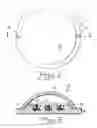
FIG. 1 is a diagrammatic plan view of a lighting system;
FIG. 2 is a sectional view taken along the line 2-2 of FIG. 1;
FIG. 3 is a graph of emission spectra comparing hot-pressed parts and original phosphor powders; and
FIG. 4 is a graph of composite materials indicating retained emission characteristics after hot-pressing.
DETAILED DESCRIPTION OF THE INVENTION
For purposes of this application it is to be understood that when an element or layer is referred to as being “on,” “connected to” or “coupled to” another element or layer, it can be directly on, connected to or coupled to the other element or layer or intervening elements or layers may be present. In contrast, when an element is referred to as being “directly on,” “directly connected to” or “directly coupled to” another element or layer, there are no intervening elements or layers present. Like numbers refer to like elements throughout. The term “and/or” includes any and all combinations of one or more of the associated listed items.
Although the terms “first,” “second,” “third” etc. may be used to describe various elements, components, regions, layers and/or sections, these elements, components, regions, layers and/or sections are not to be limited by theses terms as they are used only to distinguish one element, component, region, layer or section from another element, component, region, layer or section. Thus, a first element, component, region, layer or section could be termed a second element, component, region, layer or section without departing from the scope and teachings of the present invention.
Spatially relative terms, such as “beneath,” below,” upper,” “lower,” “above” and the like may be used herein for ease of description to describe one element or feature's relationship to another element(s) or feature(s) as illustrated in the drawings. These spatially relative terms are intended to encompass different orientations of the device in use or operation in addition to the orientation shown in the drawings. For example, if the device in the drawings is turned over, elements described as “below” or “beneath” other elements or features would then be oriented “above” the other elements or features. Thus, the exemplary term “below” can encompass both an orientation of above and below. The device may be otherwise oriented (rotated 90 degrees or at other orientations) and the spatially relative descriptors used herein interpreted accordingly.
The terminology used herein is for the purpose of describing particular embodiments only and is not intended to be limiting of the invention. For example, as used herein, the singular forms “a,” “an” and “the” are intended to include the plural forms as well, unless the context clearly indicates otherwise. It will be further understood that the terms, “comprises” and/or “comprising,” when used in this specification, specify the presence of stated features, integers, steps operations, elements, and/or components, but do not preclude the presence or addition of one or more other features, integers, steps, operations, elements, components, and/or groups thereof.
For a better understanding of the present invention, together with other and further objects, advantages and capabilities thereof, reference is made to the following disclosure and appended claims taken in conjunction with the above-described drawings.
Referring now to the drawings with greater particularity, there is shown in FIG. 1 a light source 15 comprising a substrate 2, a ceramic wavelength converter 16 and electrical lead-ins 13. The light source 15 is more clearly illustrated in the sectional view of FIG. 2, wherein the substrate 2 is provided with cup-shaped pockets that receive radiation sources 11 interconnected by wires 12. The radiation sources 11 can be blue or ultraviolet emitting LEDs and the wavelength converter 16 is a sintered chlorosilicate phosphor that emits light in the green region of the electromagnetic spectrum upon excitation by the radiation emitted by the sources 11. Preferably, the LEDs emit in a range from 420 nm to 490 nm.
While the wavelength converter 16 is illustrated as being a dome, it is to be understood that this is exemplary only and any suitable configuration can be employed.
In a particular embodiment the phosphor is a green-emitting, europium-activated chlorosilicate phosphor having a formula Ca8Mg(SiO4)4Cl2:Eu2+. The ceramic wavelength converter is sintered by hot-pressing in a slightly reducing atmosphere, preferably nitrogen gas containing 4% hydrogen gas (N2-4% H2). Additional activators and/or co-activators can be chosen from the group consisting of Mn2+, Dy3+, and Ce3+.
Table I below indicates the various temperatures (in degrees C.), times (in minutes) and pressures (ksi, i.e., 103 pounds per square inch), used to provide sintered materials achieving densities from 91.1 to 100% of theoretical. In each instance the comparison is made to the calculated density of the material being 3.03 g/cc.
| TABLE I | ||||
| DENSITY, % | ||||
| TEMP, | TIME, | PRESSURE, | OF THEO- | |
| PHOSPHOR | C. | MIN. | KSI | RETICAL |
| (1) Ca8Mg(SiO4)4Cl2:Eu2+ | 1100 | 30 | 2 | 100 |
| (2) Ca8Mg(SiO4)4Cl2:Eu2+ | 1000 | 30 | 2 | 98.8 |
| (3) Ca8Mg(SiO4)4Cl2:Eu2+ | 900 | 45 | 2 | 91.9 |
| (4) Ca8Mg(SiO4)4Cl2:Eu2+ | 1000 | 30 | 2 | 93.1 |
| (5) Ca8Mg(SiO4)4Cl2:Eu2+ | 1050 | 30 | 2.5 | 93.7 |
| (6) Ca8Mg(SiO4)4Cl2:Eu2+ | 1050 | 30 | 2.5 | 95.7 |
In TABLE I the materials labeled (1) and (2) are conventional grade phosphor materials (particle size range from 5 to 15 microns) while the remainder are finer powder materials having a particle size of about 5 microns.
In each instance the emitted wavelength was within the range of 510 to 540 nm, a range of wavelengths missing from the prior art.
Graphite dies and punches are used for uniaxial hot pressing, with molybdenum foil spacers (as reaction barriers between the carbon and Ca8Mg(SiO4)4Cl2:Eu2+).
For pressureless sintering, Ca8Mg(SiO4)4Cl2:Eu2+ powder is first doped with a 1% lithium fluoride sintering aid, uniaxially cold-pressed and isopressed, placed in a molybdenum boat, and sintered in N2 with 4% H2 at 1100° C. for 4 hours to a density of >95% theoretical.
FIG. 3 illustrates the fact that the emission spectra of the hot-pressed parts are quite similar to those of the original phosphor powders. In the graph the solid line indicates the emission spectra of the phosphor powder and the dashed line indicates the emission spectra of the hot-pressed ceramic material. The measurements were made in an integrating sphere spectrophotometer. The reflectance spectra of the hot-pressed parts showed the expected absorption at ˜450 nm, supported by the fixed-angle dispersed reflectance measurements. The phosphor powders maintained the same crystal structure and the luminescent ions kept the same valence during the hot-pressing treatment, which is supported also by the transmission data on thin sections of the hot-pressed chlorosilicate parts.
For composites containing Ca8Mg(SiO4)4Cl2:Eu2+ plus another, different phosphor, (Sr,Ca)2Si5N8:Eu, the powders were mixed and hot-pressed under nitrogen or nitrogen containing 4% hydrogen for 30 minutes at 2-10 ksi to >95% density. The composite included 80 vol. % of the Ca8Mg(SiO4)4Cl2:Eu2+ and 20 vol. % of the (Sr,Ca)2Si5N8:Eu. Emission spectra for such composites (see FIG. 4) indicated that they appeared to retain the green/red emission of the original materials. In the graph of FIG. 4, the “dot-dash-dot” line represents the (Sr,Ca)2Si5N8:Eu (a red emitting phosphor) after hot-pressing; the “dashed” line represents the Ca8Mg(SiO4)4Cl2:Eu2+ (the green emitting phosphor) after hot-pressing, and the “solid” line presents the 80/20 ratio of the composite, again after hot-pressing.
It is anticipated that as finer particle size and higher purity phosphor powders with various levels of activators become available, higher levels of translucency and nearly zero porosity may be achieved by hot-pressing at even lower temperatures.
While there have been shown and described what are at present considered to be the preferred embodiments of the invention, it will be apparent to those skilled in the art that various changes and modifications can be made herein without departing from the scope of the invention as defined by the appended claims.
Claims
What is claimed is:1. An LED light source, comprising: an LED and a ceramic wavelength converter positioned to receive at least a portion of the light emitted by said LED, said ceramic wavelength converter converting at least a portion of the light emitted by said LED into light of a different wavelength, said ceramic wavelength converter comprising a chlorosilicate phosphor and having a density at least about 90% of theoretical density.
2. The LED light source of claim 1 wherein said chlorosilicate phosphor is a green-emitting phosphor.
3. The LED light source of claim 1 said ceramic wavelength converter includes a second phosphor.
4. The LED light source of claim 3 wherein said second phosphor is (Sr,Ca)2Si5N8:Eu.
5. The LED light source of claim 1 wherein said chlorosilicate phosphor is Ca8Mg(SiO4)4Cl2, having one or more activators selected from the group consisting of Eu2+, Mn2+, Dy3+, or Ce3+.
6. The LED light source of claim 2 wherein said green-emitting chlorosilicate phosphor is Ca8Mg(SiO4)4Cl2:Eu2+.
7. A ceramic wavelength converter comprised of a chlorosilicate phosphor Ca8Mg(SiO4)4Cl2, having one or more activators selected from the group consisting of Eu2+, Mn2+, Dy3+, or Ce3+ and having a density at least about 90% of theoretical density.
8. The ceramic wavelength converter of claim 7 wherein the converter is comprised of Ca8Mg(SiO4)4Cl2:Eu2+.
9. A method of making a ceramic wavelength converter for use with a light emitting diode, comprising the steps of:
obtaining a chlorosilicate phosphor Ca8Mg(SiO4)4Cl2, having one or more activators selected from the group consisting of Eu2+, Mn2+, Dy3+, or Ce3+; and
hot-pressing said phosphor at a temperature of 900-1100° C. in a slightly reducing atmosphere to achieve a density at least about 90% of theoretical density.
10. The method of claim 9 wherein said phosphor has a particle size of 5-15 microns.
11. The method of claim 9 wherein said phosphor is hot pressed at a pressure of 2-2.5 ksi in an atmosphere of N2 containing 4% H2.
12. The method of claim 9 wherein a second phosphor is combined with said chlorosilicate phosphor to form a phosphor mixture prior to hot pressing, said second phosphor having a formula (Sr,Ca)2Si5N8:Eu.
13. The method of claim 12 wherein said chlorosilicate phosphor comprises 80 volume % of said mixture and said second phosphor comprises 20 volume % of said mixture.
14. The method of claim 12 wherein the chlorosilicate phosphor has a formula Ca8Mg(SiO4)4Cl2:Eu2+.
Images & Drawings included:



Sources:
- United States Patent and Trademark Office - verify current appl. status at the USPTO↗
Recent applications in this class:
- » 20240271039 2024-08-15
YELLOW LUMINOPHORE AND LIGHT SOURCE - » 20240067877 2024-02-29
Lighting device - » 20230287266 2023-09-14
METHODS FOR GENERATING MELATONIN-RESPONSE-TUNED WHITE LIGHT WITH HIGH COLOR RENDERING - » 20220356396 2022-11-10
BETA-SIALON PHOSPHOR PARTICLE AND LIGHT EMITTING DEVICE - » 20220325175 2022-10-13
Yellow luminophore and light source - » 20220315836 2022-10-06
Lighting device - » 20220251444 2022-08-11
Phosphor plate and light emitting device using the same - » 20220228059 2022-07-21
Phosphor composition - » 20220204842 2022-06-30
Phosphor powder and light-emitting device - » 20220169924 2022-06-02
METHODS FOR GENERATING MELATONIN-RESPONSE-TUNED WHITE LIGHT WITH HIGH COLOR RENDERING
Recent applications for this Assignee:
- » 20170094750 2017-03-30
Lighting system that self detects the relative physical arrangement of its sources - » 20170094738 2017-03-30
Controller for a phase cut dimmable LED driver - » 20170093491 2017-03-30
Adaptive baud rate in light-based communication - » 20170093490 2017-03-30
Sub-sampling raster lines in rolling shutter mode for light-based communication - » 20170093489 2017-03-30
Reconstructing light-based communication signals captured with a rolling shutter image capture device - » 20170093280 2017-03-30
Digitally compensated hysteretic power supply with enhanced resolution - » 20170093159 2017-03-30
Dynamic control of switching frequency in a switch mode power converter - » 20170089542 2017-03-30
Lamp optic for use in LED-based lamp - » 20170067612 2017-03-09
Vehicle low-beam headlamp with concave reflector and sub-reflector having two concave reflecting surfaces - » 20170063240 2017-03-02
DC-DC FLYBACK CONVERTER WITH PRIMARY SIDE AUXILIARY VOLTAGE OUTPUT