Method for the preparation of polyesters
US20120101252A1
2012-04-26
13/259,163
2010-03-18
✅ Patent granted
US 9,464,164 B2
2016-10-11
WO; PCT/EP2010/053507; 20100318
WO; WO2010/108840; 20100930
Rabon Sergent
2030-09-16
Abstract:
The invention relates to a method of stabilizing polyols and also mixtures containing polyols and stabilizers.
Assignee:
- LANXESS Deutschland GmbH 359 🇩🇪 Leverkusen, Germany
- LANXESS Deutschland GmbH 301 🇩🇪 Cologne, Germany
Applicant:
Interested in similar patents?
Get notified when new applications in this technology area are published.
Classification:
C07C2601/14 » CPC further
Systems containing only non-condensed rings with a six-membered ring The ring being saturated
C08L67/02 » CPC further
Compositions of polyesters obtained by reactions forming a carboxylic ester link in the main chain ; Compositions of derivatives of such polymers Polyesters derived from dicarboxylic acids and dihydroxy compounds
C07C31/20 » CPC further
Saturated compounds having hydroxy or O-metal groups bound to acyclic carbon atoms; Polyhydroxylic acyclic alcohols Dihydroxylic alcohols
C07C35/14 » CPC further
Compounds having at least one hydroxy or O-metal group bound to a carbon atom of a ring other than a six-membered aromatic ring monocyclic containing a six-membered rings with more than one hydroxy group bound to the ring
C08G63/672 » CPC further
Macromolecular compounds obtained by reactions forming a carboxylic ester link in the main chain of the macromolecule; Polyesters containing oxygen in the form of ether groups derived from polycarboxylic acids and polyhydroxy compounds Dicarboxylic acids and dihydroxy compounds
C08G63/19 » CPC further
Macromolecular compounds obtained by reactions forming a carboxylic ester link in the main chain of the macromolecule; Polyesters derived from hydroxycarboxylic acids or from polycarboxylic acids and polyhydroxy compounds derived from polycarboxylic acids and polyhydroxy compounds; Dicarboxylic acids and dihydroxy compounds the acids or hydroxy compounds containing carbocyclic rings Hydroxy compounds containing aromatic rings
C08G63/20 » CPC further
Macromolecular compounds obtained by reactions forming a carboxylic ester link in the main chain of the macromolecule; Polyesters derived from hydroxycarboxylic acids or from polycarboxylic acids and polyhydroxy compounds derived from polycarboxylic acids and polyhydroxy compounds; Dicarboxylic acids and dihydroxy compounds Polyesters having been prepared in the presence of compounds having one reactive group or more than two reactive groups
C07C29/94 » CPC further
Preparation of compounds having hydroxy or O-metal groups bound to a carbon atom not belonging to a six-membered aromatic ring; Separation; Purification; Use of additives, e.g. for stabilisation Use of additives, e.g. for stabilisation
C08G63/78 » CPC further
Macromolecular compounds obtained by reactions forming a carboxylic ester link in the main chain of the macromolecule Preparation processes
C08G63/193 » CPC further
Macromolecular compounds obtained by reactions forming a carboxylic ester link in the main chain of the macromolecule; Polyesters derived from hydroxycarboxylic acids or from polycarboxylic acids and polyhydroxy compounds derived from polycarboxylic acids and polyhydroxy compounds; Dicarboxylic acids and dihydroxy compounds the acids or hydroxy compounds containing carbocyclic rings; Hydroxy compounds containing aromatic rings containing two or more aromatic rings
C08G63/16 » CPC further
Macromolecular compounds obtained by reactions forming a carboxylic ester link in the main chain of the macromolecule; Polyesters derived from hydroxycarboxylic acids or from polycarboxylic acids and polyhydroxy compounds derived from polycarboxylic acids and polyhydroxy compounds Dicarboxylic acids and dihydroxy compounds
C07C31/202 » CPC further
Saturated compounds having hydroxy or O-metal groups bound to acyclic carbon atoms; Polyhydroxylic acyclic alcohols; Dihydroxylic alcohols Ethylene glycol
C07C31/207 » CPC further
Saturated compounds having hydroxy or O-metal groups bound to acyclic carbon atoms; Polyhydroxylic acyclic alcohols; Dihydroxylic alcohols 1,4-Butanediol; 1,3-Butanediol; 1,2-Butanediol; 2,3-Butanediol
C07C31/245 » CPC further
Saturated compounds having hydroxy or O-metal groups bound to acyclic carbon atoms; Polyhydroxylic acyclic alcohols; Tetrahydroxylic alcohols, e.g. pentaerythritol Pentaerythritol
C07C31/22 » CPC further
Saturated compounds having hydroxy or O-metal groups bound to acyclic carbon atoms; Polyhydroxylic acyclic alcohols Trihydroxylic alcohols, e.g. glycerol
C08L71/02 » CPC further
Compositions of polyethers obtained by reactions forming an ether link in the main chain ; Compositions of derivatives of such polymers Polyalkylene oxides
C07C43/303 » CPC further
Ethers; Compounds having groups, groups or groups; Compounds having groups having acetal carbon atoms bound to acyclic carbon atoms
C08L67/00 » CPC further
Compositions of polyesters obtained by reactions forming a carboxylic ester link in the main chain ; Compositions of derivatives of such polymers
C08K5/375 » CPC further
Use of organic ingredients; Sulfur-, selenium-, or tellurium-containing compounds; Thiols containing six-membered aromatic rings
C08K5/36 » CPC further
Use of organic ingredients Sulfur-, selenium-, or tellurium-containing compounds
C08K5/13 » CPC further
Use of organic ingredients; Oxygen-containing compounds Phenols; Phenolates
C07C41/58 » CPC further
Preparation of ethers; Preparation of compounds having groups, groups or groups; Preparation of compounds having groups Separation; Purification; Stabilisation; Use of additives
C08G63/12 » CPC main
Macromolecular compounds obtained by reactions forming a carboxylic ester link in the main chain of the macromolecule; Polyesters derived from hydroxycarboxylic acids or from polycarboxylic acids and polyhydroxy compounds derived from polycarboxylic acids and polyhydroxy compounds
C08G63/133 » CPC further
Macromolecular compounds obtained by reactions forming a carboxylic ester link in the main chain of the macromolecule; Polyesters derived from hydroxycarboxylic acids or from polycarboxylic acids and polyhydroxy compounds derived from polycarboxylic acids and polyhydroxy compounds the acids or hydroxy compounds containing carbocyclic rings Hydroxy compounds containing aromatic rings
Description
The invention relates to a method of stabilizing polyols and also mixtures containing polyols and stabilizers.
Polyols, in particular aliphatic dihydroxy, trihydroxy or tetrahydroxy compounds, have great importance in industry because of their many possible uses. They are oxidation-resistant under normal conditions and are therefore typically stored under air.
If such polyalcohols are then used for subsequent reactions in which acidic conditions are created, e.g. with the objective of ester formation, discolouration which makes the downstream product unusable or unsalable frequently occurs despite the typically high purity of the polyol used.
There is therefore a need for a method which reduces such undesirable discolouration.
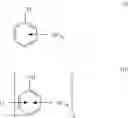
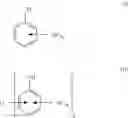
We have now found a method of stabilizing polyols, which is characterized in that one or more compounds of the formula (I) or (II),
where
-
- n is 1, 2, 3 or 4, preferably 2 or 3,
- m is 1, 2 or 3, preferably 1 or 2,
- p is 2,
- Q is sulphur or C1-C4-alkylene, preferably C1-C4-alkylene, and
- the radicals R1 are each, independently of any other radicals R1 present, C1-C8-alkyl or C1-C8-alkoxy,
- where at least one ortho position of the two phenyl rings in the formula (II) or the phenyl ring in the formula (I) must be substituted by a secondary or tertiary radical,
are added to the polyols.
Alkyl or alkylene or alkoxy is in each case independently a straight-chain, branched or unbranched, optionally cyclic, alkyl or alkylene or alkoxy radical.
C1-C8-Alkyl is, for example, methyl, ethyl, n-propyl, isopropyl, n-butyl, sec-butyl and tert-butyl, n-pentyl, 1-methylbutyl, 2-methylbutyl, 3-methylbutyl, neopentyl, 1-ethylpropyl, cyclohexyl or 2-methylcyclohexyl, preferably methyl, tert-butyl or cyclohexyl.
C1-C8-Alkoxy is, for example, methoxy, ethoxy, n-propoxy, isopropoxy, n-butoxy, sec-butoxy and tert-butoxy, neopentoxy, cyclohexoxy, cyclopentoxy and n-hexoxy.
C1-C4-Alkylene is, for example, methylene, ethanediyl, 1,2-propanediyl, 1,3-propanediyl, 1,4-butanediyl, 2,3-butanediyl or 1,3-butanediyl, preferably methylene.
Preferred compounds of the formula (I) are: 2,6-bis[tert-butyl]-4-methylphenol] (BHT), 2,4,6-tri-t-butylphenol; 2- and 3-tert-butylhydroxyanisole and mixtures thereof (BHA).
Preferred compounds of the formula (II) are:
2,2′-methylenebis[4-methyl-6-(α-methylcyclohexyl)phenol], 2,2′-methylenebis [4-methyl-6-cyclohexyl)phenol] (ZKF), 2,2′-methylenebis(4-methyl-6-tert-butylphenol), 2,2′-methylenebis[6-tert-butyl-4-ethylphenol], 2,2′-methylenebis[6-tert-butyl-4-methylphenol] (BKF), 4,4′-methylenebis[2,6-di-tert-butylphenol], 4,4′-methylenebis[6-tert-butyl-2-methylphenol], with special preference being given to 2,2′-methylenebis[4-methyl-6-cyclohexyl)phenol] and 2,2′-methylenebis[6-tert-butyl-4-methylphenol].
The abovementioned compounds of the formulae (I) and (II) can be used individually or as mixtures.
For the purposes of the present invention, polyols are compounds which bear at least two, preferably two, three or four, hydroxy groups of which at least one, preferably all, is/are bound to an aliphatic carbon atom.
Preferred polyols are aliphatic polyols such as 1,4-butanediol, 1,5-pentanediol, 1,6-hexanediol, octane-1,8-diol, decane-1,10-diol, trimethylolpropane, ditrimethylolpropane, pentaerythritol, neopentyl glycol, ethylene glycol, diethylene glycol, triethylene glycol, tetraethylene glycol, polyethylene glycol, 1,3-butylene glycol and 1,4-cyclohexanediol or mixtures thereof.
Particularly preferred polyols are 1,6-hexanediol, octane-1,8-diol, decane-1,10-diol, trimethylolpropane, ditrimethylolpropane, pentaerythritol, 1,4-cyclohexanediol or mixtures thereof.
Very particularly preferred polyols are hexane-1,6-diol and trimethylolpropane.
The total amount of compounds of the formulae (I) and (II) added is, for example, from 0.0001 to 60% by weight, preferably from 0.0001 to 2.0% by weight, particularly preferably from 0.001 to 1.0% by weight, very particularly preferably from 0.001 to 0.1% by weight and even more preferably from 0.002 to 0.8% by weight.
The invention also encompasses mixtures containing polyols and at least one compound of the formula (I) or (II).
Preference is given to mixtures containing polyols and at least one compound of the formula (I) or (II) in which the proportion by weight of the polyols is at least 40%, preferably at least 90%, particularly preferably at least 95% and very particularly preferably at least 98%, and the total content of compounds of the formulae (I) and (II) in the mixture is from 0.0001 to 60% by weight, preferably from 0.0001 to 2.0% by weight, particularly preferably from 0.001 to 1.0% by weight, very particularly preferably from 0.001 to 0.1% by weight and even more preferably from 0.002 to 0.8% by weight.
Mixtures having a high content of compound of the formula (I) or (II) can also be used as masterbatch in order to achieve the final concentrations mentioned above in preferred ranges more easily, and these are likewise preferred as raw material for the ready-to-use mixtures.
The mixtures of the invention can be solid or liquid.
The mixtures of the invention preferably contain 2% by weight or less, preferably 1% by weight or less, of materials which are not polyols or compounds of the formula (I) or (II).
Among the abovementioned mixtures, particular preference is given to those in which the polyols are selected from the group consisting of: preferred polyols are 1,6-hexanediol, 1,4-butanediol, pentaerythritol, neopentyl glycol, trimethylolpropane, pentaerythritol, polyethylene glycol, 1,3-butylene glycol.
The polyols which have been stabilized in this way or the mixtures of the invention are particularly suitable in a process for preparing polyesters, preferably a process carried out under acidic conditions, where the term “acidic” refers to a pH which, based on an aqueous comparative scale under standard conditions, is less than 7.0. The abovementioned preferred ranges for the contents of polyols and compounds of the formulae (I) and (II) apply in the same way.
Such processes for preparing polyesters are adequately known to those skilled in the art and comprise, for example, the preparation of polyesters by reaction of polyols with polycarboxylic acids with elimination of water, optionally in the presence of catalysts. The reaction temperatures here can be, for example, from 20° to 240° C., preferably from 40 to 190° C.
The compounds of the formulae (I) and (II) which are added surprisingly have no adverse effect on the esterification process but largely avoid undesirable discolouration even at high process temperatures. According to the invention, it is normally possible to limit the discolouration to a colour number of less 100 APHA, preferably to 60 or less.
The invention is illustrated by the Examples without being restricted thereto.
EXPERIMENTS
100 g in each case of the mixture of 1,6-hexanediol and stabilizer to be examined were placed in a 1 l four-neck flask and heated by means of a heating mantle at 130° C. for 4 hours while stirring. 100 g of adipic acid was subsequently introduced into the resulting melt while continually passing nitrogen over the melt, resulting in the melt cooling to about 80-90° C. The mixture was subsequently heated to 175° C. over a period of 5 minutes and allowed to react at this temperature for 10 minutes. The water vapour formed in the esterification was discharged. After the end of the reaction time, the colour number of the melt was determined at 130° C. in an 11 mm round cuvette. Calibration was in each case carried out against water (APHA colour number=0), in each case immediately before the measurement.
The experimental results are summarized in the following table:
| APHA | |||
| colour | |||
| Example | Amount | Stabilizer | number |
| 1 | 0 | none | 700 |
| 2** | 0.05% | Cyclohexen-3-ylidenemethyl benzyl | 500 |
| ether | |||
| 3** | 0.05% | Pentaerythritol bis [cyclohexen-3-yl- | 100 |
| 1-formyl]acetal | |||
| 4 | 1% | 2,6-Bis[tert-butyl]-4-methylphenol] | 15 |
| 5* | 0.1% | 2,6-Bis[tert-butyl]-4-methylphenol] | 18 |
| 6 | 0.05% | 2,6-Bis[tert-butyl]-4-methylphenol] | 9 |
| 7 | 0.025% | 2,6-Bis[tert-butyl]-4-methylphenol] | 23 |
| 8 | 0.01% | 2,6-Bis[tert-butyl]-4-methylphenol] | 56 |
| 9 | 0.025% | 2,2′-Methylenebis[6-tert-butyl-4- | 50 |
| methylphenol] | |||
| 10 | 0.025% | 2,2′-Methylenebis[4-methyl-6- | 60 |
| cyclohexylphenol] | |||
| 11** | 0.025% | Mixture of alkylated styrylphenols | 500 |
| 12** | 0.025% | Mixture of styrylphenols | 700 |
| 13 | 0.025% | Mixture of 2- and 3-tert- | 60 |
| butylhydroxyanisole | |||
| *use of caproic acid instead of adipic acid | |||
| **examples for comparison |
Antioxidants used for examples which are not according to the invention:
Claims
What is claimed is:1. Method of stabilizing polyols, characterized in that one or more compounds of the formula (I) or (II),
where
n is 1, 2, 3 or 4,
m is 1, 2 or 3,
p is 2,
Q is sulphur or C1-C4-alkylene, and
the radicals R1 are each, independently of any other radicals R1 present, C1-C8-alkyl or C1-C8-alkoxy,
where at least one ortho position of the two phenyl rings in the formula (II) or the phenyl ring in the formula (I) must be substituted by a secondary or tertiary radical,
are added to the polyols.
2. Method according to claim 1, characterized in that 1,4-butanediol, 1,5-pentanediol, 1,6-hexanediol, octane-1,8-diol, decane-1,10-diol, trimethylolpropane, ditrimethylolpropane, pentaerythritol, neopentyl glycol, ethylene glycol, diethylene glycol, triethylene glycol, tetraethylene glycol, polyethylene glycol, 1,3-butylene glycol and 1,4-cyclohexanediol or mixtures thereof are used as polyols.
3. Method according to claim 1 or 2, characterized in that 2,6-bis[tert-butyl]-4-methylphenol] (BHT), 2,4,6-tri-t-butylphenol; 2- and 3-tert-butylhydroxyanisole and mixtures thereof (BHA), 2,2′-methylenebis[4-methyl-6-(α-methylcyclohexyl)phenol], 2,2′-methylenebis[4-methyl-6-cyclohexyl)phenol] (ZKF), 2,2′-methylenebis(4-methyl-6-tert-butylphenol), 2,2′-methylenebis[6-tert-butyl-4-ethylphenol], 2,2′-methylenebis[6-tert-butyl-4-methylphenol] (BKF), 4,4′-methylenebis[2,6-di-tert-butylphenol], 4,4′-methylenebis[6-tert-butyl-2-methylphenol] or mixtures thereof are used as compounds of the formula (I) or (II).
4. Mixtures containing polyols and at least one compound of the formula (I) or (II) according to claim 1.
5. Mixtures according to claim 4, characterized in that the polyols specified in claim 2 are present either individually or as a mixture.
6. Mixtures according to claim 4 or 5, characterized in that the compounds specified in claim 3 are present either individually or as a mixture as compounds of the formulae (I) and (II).
7. Mixtures according to any of claims 4 to 6, characterized in that the total amount of compounds of the formulae (I) and (II) is from 0.0001 to 60% by weight.
8. Use of mixtures according to any of claims 4 to 7 in a process for preparing polyesters.
9. Process for preparing polyesters, characterized in that mixtures according to any of claims 4 to 7 are used.
10. Polyesters prepared by a process according to claim 9.
Images & Drawings included:

Sources:
- United States Patent and Trademark Office - verify current appl. status at the USPTO↗
Similar patent applications:
- » 20250136751
POLYESTER, PREPARATION METHOD THEREFOR AND USE THEREOF - » 20230257516
Biodegradable polyester resin, preparation method thereof, and biodegradable polyester film comprising the same - » 20240384027
BIODEGRADABLE POLYESTER RESIN, PREPARATION METHOD THEREFOR, AND BIODEGRADABLE POLYESTER FILM COMPRISING SAME - » 20190309161
POLYESTER RESIN, PREPARATION METHOD THEREFOR, AND COPOLYMER POLYESTER FILM MANUFACTURING METHOD USING SAME - » 20130116397
Method for preparing an aromatic liquid crystal polyester resin and method for preparing a compound of aromatic liquid crystal polyester resin - » 20190048133
Compound for copolymeric polyester resin, and preparation method of copolymeric polyester resin using the same - » 20130231453
Method for preparing wholly aromatic liquid crystalline polyester amide resin and method for preparing wholly aromatic liquid crystalline polyester amide resin compound - » 20170015780
Polyester and method for preparing such a polyester - » 20170066870
Polyester and method for preparing such a polyester - » 20060063088
Preparation method of polyester resin
Recent applications in this class:
- » 20240166800 2024-05-23
COMPOSITE MATERIAL - » 20210403639 2021-12-30
Synthesis of environmentally degradable alkyl polyesters - » 20210024686 2021-01-28
POLY(GLYCEROL SEBACATE)-INTERLEUKIN INHIBITOR COPOLYMERS AND METHODS OF MAKING AND USE - » 20190161574 2019-05-30
POLYESTER RESIN COMPRISING BIOMASS-DERIVED MONOMER AND PREPARATION METHOD THEREFOR, AND POWDER PAINT COMPOSITION COMPRISING RESIN - » 20190016854 2019-01-17
Poly(glycerol sebacate)-interleukin inhibitor copolymers and methods of making and use - » 20180066105 2018-03-08
Resin modifier and resin composition using same - » 20180030202 2018-02-01
Polyester polyols with increased clarity - » 20170342206 2017-11-30
POLYOXALATE COPOLYMER - » 20160297923 2016-10-13
BINDER COMPOSITIONS AND ASSOCIATED METHODS - » 20160257781 2016-09-08
Thermosetting durable powder coating composition
Recent applications for this Assignee:
- » 20250282962 2025-09-11
3D-printed products - » 20250282961 2025-09-11
3D-printed products - » 20250282636 2025-09-11
PROCESS FOR PRODUCING IRON OXYHYDROXIDE - » 20250217119 2025-07-03
Data Transformation Pipelines - » 20250188564 2025-06-12
Method for the Elution of Aluminum Ions and/or Zinc Ions - » 20250084251 2025-03-13
Pigment preparations - » 20250075023 2025-03-06
POLYMERIC CARBODIIMIDES, PROCESSES FOR THE PREPARATION AND USE THEREOF - » 20250066612 2025-02-27
METHOD FOR PRODUCING IRON OXIDE PIGMENTS - » 20250043088 2025-02-06
HYDROLYSIS STABLE COMPOSITIONS FOR FILMS IN SOLAR CELLS - » 20250011516 2025-01-09
Method for Preparing Polymers