Process for the preparation of functionalised benzocyclobutenes, and application in the synthesis of ivabradine and addition salts thereof with a pharmaceutically acceptable acid
US20120116112A1
2012-05-10
13/341,311
2011-12-30
✅ Patent granted
US 8,288,581 B2
2012-10-16
-
-
Karl J Puttlitz
2031-12-30
Abstract:
Process for the preparation of compounds of formula (IV):
wherein R1-R6 are as defined in the specification.
Application in the synthesis of ivabradine, addition salts thereof with a pharmaceutically acceptable acid and hydrates thereof.
Inventors:
- Nicolas Audic 3 🇫🇷 Amiens, France
- Jean-Louis PEGLION 17 🇫🇷 Le Vesinet, France
- Olivier Baudoin 2 🇫🇷 Meyzieu, France
- Manon Chaumontet 2 🇫🇷 Toulouse, France
- Riccardo Piccardi 2 🇫🇷 Antony, France
Assignee:
- LES LABORATOIRES SERVIER 133 🇫🇷 SURESNES CEDEX, France
- CENTRE NATIONAL DE LA RECHERCHE SCIENTIFIQUE 165 🇫🇷 Paris Cedex, France
- UNIVERSITÉ CLAUDE BERNARD-LYON 1 5 🇫🇷 Villeurbanne Cedex, France
Interested in similar patents?
Get notified when new applications in this technology area are published.
Classification:
A61P9/04 » CPC further
Drugs for disorders of the cardiovascular system Inotropic agents, i.e. stimulants of cardiac contraction; Drugs for heart failure
A61P9/10 » CPC further
Drugs for disorders of the cardiovascular system for treating ischaemic or atherosclerotic diseases, e.g. antianginal drugs, coronary vasodilators, drugs for myocardial infarction, retinopathy, cerebrovascula insufficiency, renal arteriosclerosis
C07B37/10 » CPC further
Reactions without formation or introduction of functional groups containing hetero atoms, involving either the formation of a carbon-to-carbon bond between two carbon atoms not directly linked already or the disconnection of two directly linked carbon atoms Cyclisation
C07D223/16 » CPC further
Heterocyclic compounds containing seven-membered rings having one nitrogen atom as the only ring hetero atom condensed with carbocyclic rings or ring systems Benzazepines; Hydrogenated benzazepines
C07F7/1804 » CPC further
Compounds containing elements of Groups 4 or 14 of the Periodic System; Silicon compounds; Compounds having one or more C—Si linkages; Compounds having one or more C—Si linkages as well as one or more C—O—Si linkages Compounds having Si-O-C linkages
C07B2200/07 » CPC further
Indexing scheme relating to specific properties of organic compounds Optical isomers
C07C2602/22 » CPC further
Systems containing two condensed rings the rings having only two atoms in common; All rings being cycloaliphatic the ring system containing eight carbon atoms, e.g. pentalene
C07C51/38 » CPC main
Preparation of carboxylic acids or their salts, halides or anhydrides by reactions not involving formation of carboxyl groups by splitting-off hydrogen or functional groups; by hydrogenolysis of functional groups by decarboxylation
C07C62/34 » CPC further
Compounds having carboxyl groups bound to carbon atoms of rings other than six—membered aromatic rings and containing any of the groups OH, O—metal, —CHO, keto, ether, groups, groups, or groups; Unsaturated compounds containing ether groups, groups, groups, or groups
C07C69/76 » CPC further
Esters of carboxylic acids; Esters of carbonic or haloformic acids Esters of carboxylic acids having a carboxyl group bound to a carbon atom of a six-membered aromatic ring
C07C69/753 » CPC further
Esters of carboxylic acids; Esters of carbonic or haloformic acids; Esters of carboxylic acids having an esterified carboxyl group bound to a carbon atom of a ring other than a six-membered aromatic ring of polycyclic acids
C07C67/317 » CPC further
Preparation of carboxylic acid esters by modifying the acid moiety of the ester, such modification not being an introduction of an ester group by splitting-off hydrogen or functional groups; by hydrogenolysis of functional groups
C07C67/32 » CPC further
Preparation of carboxylic acid esters by modifying the acid moiety of the ester, such modification not being an introduction of an ester group by splitting-off hydrogen or functional groups; by hydrogenolysis of functional groups Decarboxylation
C07C69/757 » CPC further
Esters of carboxylic acids; Esters of carbonic or haloformic acids; Esters of carboxylic acids having an esterified carboxyl group bound to a carbon atom of a ring other than a six-membered aromatic ring having any of the groups OH, O—metal, —CHO, keto, ether, acyloxy, groups, groups, or in the acid moiety
C07C253/30 » CPC further
Preparation of carboxylic acid nitriles by reactions not involving the formation of cyano groups
C07C255/47 » CPC further
Carboxylic acid nitriles having cyano groups bound to carbon atoms of rings other than six-membered aromatic rings to carbon atoms of rings being part of condensed ring systems
C07C211/19 IPC
Compounds containing amino groups bound to a carbon skeleton having amino groups bound to acyclic carbon atoms of a saturated carbon skeleton containing rings other than six-membered aromatic rings containing condensed ring systems
C07C233/60 IPC
Carboxylic acid amides having carbon atoms of carboxamide groups bound to carbon atoms of rings other than six-membered aromatic rings having the nitrogen atom of at least one of the carboxamide groups bound to a carbon atom of a hydrocarbon radical substituted by singly-bound oxygen atoms
C07C62/12 IPC
Compounds having carboxyl groups bound to carbon atoms of rings other than six—membered aromatic rings and containing any of the groups OH, O—metal, —CHO, keto, ether, groups, groups, or groups; Saturated compounds containing ether groups, groups, groups, or groups polycyclic
C07C255/00 IPC
Carboxylic acid nitriles
C07C69/74 IPC
Esters of carboxylic acids; Esters of carbonic or haloformic acids Esters of carboxylic acids having an esterified carboxyl group bound to a carbon atom of a ring other than a six-membered aromatic ring
Description
The present invention relates to a process for the preparation of functionalised benzocyclobutenes, and to their application in the synthesis of ivabradine, addition salts thereof with a pharmaceutically acceptable acid and hydrates thereof.
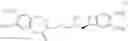
Ivabradine of Formula (I):
or 3-{3-[{[(7S)-3,4-dimethoxybicyclo[4.2.0]octa-1,3,5-trien-7-yl]methyl}(methyl)amino]-propyl}-7,8-dimethoxy-1,3,4,5-tetrahydro-2H-3-benzazepin-2-one,
and also addition salts thereof with a pharmaceutically acceptable acid, and more especially the hydrochloride thereof, have very valuable pharmacological and therapeutic properties, especially bradycardic properties, which render those compounds useful in the treatment or prevention of various clinical situations of myocardial ischaemia, such as angina pectoris, myocardial infarction and associated rhythm disorders, as well as in various pathologies involving rhythm disorders, especially supraventricular rhythm disorders, and in heart failure.
The preparation and therapeutic use of ivabradine and addition salts thereof with a pharmaceutically acceptable acid, and more especially the hydrochloride thereof, have been described in European patent specification EP 0 534 859.
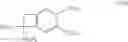
That patent specification describes the synthesis of ivabradine using as starting material a compound of formula (II):
The compound of formula (II) is obtained by resolving, with the aid of camphosulphonic acid, the compound of formula (III):
The compound of formula (II) is an important intermediate in the synthesis of ivabradine.
The present invention relates to a process for the preparation of functionalised benzocyclobutenes and to their application in the synthesis of ivabradine, addition salts to thereof with a pharmaceutically acceptable acid and hydrates thereof via the compound of formula (II).
The preparation of functionalised benzocyclobutenes has been described in Angewandte Chemie, International Edition 2003, 42, 5736-5740. This publication describes the possibility of applying C(sp3)-H bond activation to the preparation of functionalised benzocyclobutenes using a palladium catalyst system.
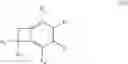
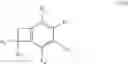
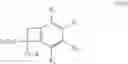
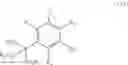
More specifically, the present invention relates to a process for the preparation of the compounds of formula (IV):
wherein R1, R2, R3 and R4, which may be identical or different, each represent a hydrogen atom, a linear or branched (C1-C6)alkyl group, a linear or branched (C1-C6)alkoxy group, a fluorine atom, a chlorine atom, a protected amine group, a protected hydroxyl group, an alkoxycarbonyl group in which the alkoxy group is linear or branched (C1-C6), or a CF3 group, or R1═R4═H and R2 and R3 together with the carbon atoms carrying them form a 1,3-dioxolane group,
R5 represents a saturated or unsaturated, linear or branched (C1-C6)alkyl group, a linear or branched (C1-C6)hydroxyalkyl group in which the hydroxyl function is protected, or a CO2R7 group in which R7 is a linear or branched (C1-C6)alkyl group,
R6 represents a cyano group or a CO2R8 group in which R8 is a linear or branched (C1-C6)-alkyl group,
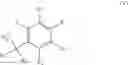
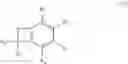
which process is characterised in that a compound of formula (V):
wherein R1, R2, R3, R4, R5, R6 are as defined hereinbefore and X represents a halogen atom, preferably a bromine atom, or a triflate group,
is subjected to a cyclisation reaction in the presence of a catalyst/ligand system comprising a palladium catalyst and an organic phosphine selected from tri-tert-butylphosphine, 2-biphenyl-di-tert-butylphosphine, 1,2,3,4,5-pentaphenyl-1′-(di-tert-butylphosphino)-ferrocene and tris(4-methoxy-2-methylphenyl)phosphine, or a phosphonium salt of the said phosphines,
in the presence of a base,
in an organic solvent.
Protected hydroxyl group or protected hydroxyl function means a hydroxyl function substituted by a protecting group customary for that function. Among those protecting groups there may be mentioned, without implying any limitation, silyl-containing groups such as triisopropylsilyl and tert-butyldimethylsilyl, and the groups tetrahydropyran, benzyl, para-methoxybenzyl, trityl, acetyl and pivaloyl.
A protected amine group means an amine function substituted by a protecting group customary for that function. Among those protecting groups there may be mentioned, without implying any limitation, the groups nosyl, tosyl, mesyl, acetyl, tert-butoxycarbonyl, benzyl and phthalimide
Among the palladium catalyst that can be used there may be mentioned, without implying any limitation, Pd(OAc)2, Pd(dba)2, Pd2(dba)3, PdCl2, PdCl2(CH3CN)2, PdBr2, or trans-di-(μ-acetate)bis[o-(di-o-tolylphosphine)benzyl]dipalladium (Herrmann's catalyst).
The palladium catalyst preferably used is Pd(OAc)2.
The organic phosphine preferably used is tri-tert-butylphosphine.
Among the phosphonium salts that can be used there may be mentioned, without implying any limitation, phosphonium tetrafluoroborates, hexafluorophosphates and hexafluoroantimonates.
The phosphonium salt preferably used is tri-tert-butylphosphonium tetrafluoroborate.
Among the bases that can be used there may be mentioned, without implying any limitation, K2CO3, Cs2CO3, Na2CO3, K3PO4, KHCO3, t-BuCO2Na, t-BuCO2K and t-BuCO2Cs.
The base preferably used is K2CO3.
Among the solvents that can be used there may be mentioned, without implying any limitation, DMF, N,N-dimethylacetamide, N-methylpyrrolidine, xylene and mesitylene.
The solvent preferably used is DMF.
The temperature of the reaction is preferably from 100° C. to 150° C.
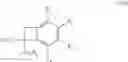
According to a preferred embodiment, the present invention relates to a process for the preparation of compounds of formula (IVa), particular cases of the compounds of formula (IV) wherein R5═CO2R7 and R6═CO2R8:
wherein R1, R2, R3, R4, R7 and R8 are as defined hereinbefore, starting from compounds of formula (Va), particular cases of the compounds of formula (V) wherein R5═CO2R7 and R6═CO2R8:
wherein R1, R2, R3, R4, R7, R8 and X are as defined hereinbefore.
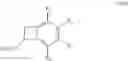
According to another preferred embodiment, the present invention relates to a process for the preparation of compounds of formula (IVb), particular cases of the compounds of formula (IVa) wherein R1═R4═H and R2═R3═OCH3:
wherein R7 and R8 are as defined hereinbefore,
starting from compounds of formula (Vb), particular cases of the compounds of formula (Va) wherein R1═R4═H and R2═R3═OCH3:
wherein R7, R8 and X are as defined hereinbefore.
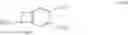
The compounds of formula (IVa) obtained according to the process of the invention can lead to compounds of formula (VIa):
wherein R1, R2, R3 and R4 are as defined hereinbefore
and R9 is a linear or branched (C1-C6)alkyl group,
by an ester saponification or hydrolysis reaction,
then the compounds of formula (VIa) lead to compounds of formula (VIIa):
wherein R1, R2, R3 and R4 are as defined hereinbefore
and R10 is a hydrogen atom or a linear or branched (C1-C6)alkyl group,
by a decarboxylation reaction.
The hydrolysis or the saponification of an ester function of the compounds of formula (IVb) results in compounds of formula (VIb), particular cases of the compounds of formula (VIa) wherein R1═R4═H and R2═R3═OCH3:
wherein R9 is as defined hereinbefore.
The decarboxylation of the compounds of formula (VIb) then results in compounds of formula (VIIb), particular cases of the compounds of formula (VIIa) wherein R1═R4═H and R2═R3═OCH3:
wherein R10 is as defined hereinbefore.
The compounds of formula (VIIb) obtained according to the process of the invention are useful in the synthesis of ivabradine, addition salts thereof with a pharmaceutically acceptable acid and hydrates thereof.
By way of example, their reaction with methylamine results in the compound of formula (VIII):
the reduction of which results in the compound of formula (III):
the resolution of which, using camphosulphonic acid, results in the compound of formula (II):
to which is converted into ivabradine of formula (I)
or 3-{3-[{[(7S)-3,4-dimethoxybicyclo[4.2.0]octa-1,3,5-trien-7-yl]methyl}(methyl)amino]-propyl}-7,8-dimethoxy-1,3,4,5-tetrahydro-2H-3-benzazepin-2-one,
which may optionally be converted into its addition salts with a pharmaceutically acceptable acid selected from hydrochloric acid, hydrobromic acid, sulphuric acid, phosphoric acid, acetic acid, trifluoroacetic acid, lactic acid, pyruvic acid, malonic acid, succinic acid, glutaric acid, fumaric acid, tartaric acid, maleic acid, citric acid, ascorbic acid, oxalic acid, methanesulphonic acid, benzenesulphonic acid and camphoric acid, and into its hydrates.
Among the methods known for carrying out the conversion of the compound of to formula (II) to ivabradine, those described in the European patent specifications EP 0 534 859 and EP 1 589 005 may be mentioned.
Obtaining compounds of formula (IVb) in good yields is thus especially useful in the synthesis of ivabradine, addition salts thereof with a pharmaceutically acceptable acid and hydrates thereof.
The compounds of formula (IVa), which are particular cases of the compounds of formula (IV) wherein R5═CO2R7 and R6═CO2R8, and also the compounds of formula (VIb), as well as the compounds of formula (VIIc), which are particular cases of the compounds of formula (VIIb) wherein R10 represents a linear or branched (C1-C6)alkyl group, are new products which are useful as synthesis intermediates in the chemical or pharmaceutical industry, especially in the synthesis of ivabradine, addition salts thereof with a pharmaceutically acceptable acid and hydrates thereof and, as such, constitute an integral part of the present invention.
List of the Abbreviations Used:
dba: dibenzylidene acetone
DMF: N,N-dimethylformamide
DMSO: dimethyl sulphoxide
eq.: equivalent
THF: tetrahydrofuran
The Examples hereinbelow illustrate the invention.
General Procedure A for the Formation of Benzocyclobutenes by C—H Bond Activation
Introduce aryl bromide (1 mmol), Pd(OAc)2 (0.1 eq.), P(t-Bu)3.HBF4 (0.2 eq.) and anhydrous K2CO3 (1.3 eq.) into a dry and hermetically sealable Schlenk tube provided with a bar magnet. The Schlenk tube is purged and placed under argon. 4 ml of anhydrous DMF are added under argon, and the Schlenk tube is hermetically sealed and then subjected to stirring in an oil bath preheated to 140° C. until complete disappearance of the aryl bromide in GC/MS. After returning to ambient temperature, the reaction mixture is diluted with diethyl ether and filtered over Celite®. The organic solution is washed with saturated aqueous NaCl solution and dried over MgSO4 and the residual solvent is evaporated off under reduced pressure. The crude reaction product is purified by flash chromatography to yield the benzocyclobutene.
General Procedure B for the Formation of Benzocyclobutenes By C—H Bond Activation
Introduce aryl bromide (1 mmol), Pd2(dba)3 (0.05 eq.), P(t-Bu)3.HBF4 (0.1 eq.) and anhydrous K2CO3 (1.3 eq.) into a dry and hermetically sealable Schlenk tube provided with a bar magnet. The Schlenk tube is purged and placed under argon. 4 ml of anhydrous DMF are added under argon, and the Schlenk tube is hermetically sealed and then subjected to stirring in an oil bath preheated to 120° C. until complete disappearance of the aryl bromide in GC/MS. After returning to ambient temperature, the reaction mixture is diluted with diethyl ether and filtered over Celite®. The organic solution is extracted with saturated aqueous NaCl solution and dried over MgSO4 and the residual solvent is evaporated off under reduced pressure. The crude reaction product is purified by flash chromatography to yield the benzocyclobutene.
EXAMPLE 1
Dimethyl 7-methylbicyclo[4.2.0]octa-1,3,5-triene-3,7-dicarboxylate
Following general procedure A and using methyl 3-bromo-4-(2-methoxy-1,1-dimethyl-2-oxoethyl)benzoate as starting material, the title compound is obtained in a yield of 92%.
IR (film): ν=2952, 1714, 1433, 1275, 1146, 1079, 768 cm−1.
EXAMPLE 2
Methyl 7-methyl-4-(trifluoromethyl)bicyclo[4.2.0]octa-1,3,5-triene-7-carboxylate
Following general procedure A and using methyl 2-[2-bromo-5-(trifluoromethyl)phenyl]-2-methylpropanoate as starting material, the title compound is obtained in a yield of 81%.
IR (film): ν=2955, 1731, 1315, 1143, 1113, 826, 685 cm−1.
EXAMPLE 3
7-Isopropylbicyclo[4.2.0]octa-1,3,5-triene-7-carbonitrile
Following general procedure A and using 2-(2-bromophenyl)-2,3-dimethylbutanenitrile as starting material, the title compound is obtained in a yield of 72%.
IR (film): ν=2964, 1458, 748, 715 cm−1.
EXAMPLE 4
Dimethyl 3-methylbicyclo[4.2.0]octa-1,3,5-triene-7,7-dicarboxylate
Following general procedure A and using dimethyl 2-(2-bromo-4-methylphenyl)-2-methylmalonate as starting material, the title compound is obtained in a yield of 87%.
IR (film): ν=2952, 1731 cm−1.
EXAMPLE 5
Dimethyl 3,4-dimethoxybicyclo[4.2.0]octa-1,3,5-triene-7,7-dicarboxylate
The title compound is obtained according to general procedure A using dimethyl 2-(2-bromo-4,5-dimethoxyphenyl)-2-methylmalonate as starting material.
IR (pure): ν=3007, 2960, 1730, 1591, 1239, 1116, 1090, 878, 758 cm−1.
EXAMPLE 6
tert-Butyl methyl 3,4-dimethoxybicyclo[4.2.0]octa-1,3,5-triene-7,7-dicarboxylate
Following general procedure A and using tert-butyl methyl 2-(2-bromo-4,5-dimethoxyphenyl)-2-methylmalonate as starting material, the title compound is obtained in a yield of 69%.
IR (pure): ν=2977, 2936, 1728, 1591, 1464, 1249, 1115, 840 cm−1.
EXAMPLE 7
Methyl 7-{4-[(triisopropylsilyl)oxy]butyl}bicyclo[4.2.0]octa-1,3,5-triene-7-carboxylate
Following general procedure A and using methyl 2-(2-bromophenyl)-2-methyl-6-[(triisopropylsilyl)oxy]hexanoate as starting material, the title compound is obtained in a yield of 82%.
IR (film): ν=2940, 2863, 1731, 1457, 1253, 1103, 881, 678 cm−1.
EXAMPLE 8
Methyl 7-methylbicyclo[4.2.0]octa-1,3,5-triene-7-carboxylate
Following general procedure B and using methyl 2-(2-bromophenyl)-2-methylpropanoate as starting material, the title compound is obtained in a yield of 81%.
IR (pure): ν=2972, 2952, 2930, 1729, 1457, 1433, 1277, 1140, 740, 711 cm−1.
EXAMPLE 9
(R,S)-3,4-Dimethoxybicyclo[4.2.0]octa-1,3,5-triene-7-carboxylic Acid
638 mg (2.28 mmol) of dimethyl 3,4-dimethoxybicyclo[4.2.0]octa-1,3,5-triene-7,7-dicarboxylate obtained in Example 5 are dissolved in 18 ml of DMSO and 445 mg (6.84 mmol) of KCN are added in one go. The mixture is stirred under an argon atmosphere at 130° C. for 12 h. After returning to ambient temperature, 25 ml of aqueous 1N HCl solution and 20 ml of diethyl ether are cautiously added to the reaction mixture (ATTENTION: HCN formation) and the mixture is stirred for 1 h. The organic phase is washed with aqueous 1N NaOH solution (3×10 ml). The aqueous phases are combined, then acidified to pH 2 using aqueous 6N HCl solution at ambient temperature and extracted with diethyl ether (3×15 ml). The organic phases are dried over MgSO4 and the residual solvents are evaporated off under reduced pressure. The crude reaction product is purified by flash chromatography (hexane/ethyl acetate: 85/15) to yield the title compound.
IR (pure): ν=3227, 2842, 2835, 1725, 1593, 1486, 1302, 1160, 1140, 970, 753 cm−1.
EXAMPLE 10
Methyl (R,S)-3,4-dimethoxybicyclo[4.2.0]octa-1,3,5-triene-7-carboxylate
424 mg (1.31 mmol) of tert-butyl methyl 3,4-dimethoxybicyclo[4.2.0]octa-1,3,5 -triene-7,7-dicarboxylate obtained in Example 6 are dissolved in 2.1 ml of trifluoroacetic acid (99%) and the mixture is refluxed for 1.5 h. After returning to ambient temperature, the mixture is evaporated under reduced pressure to yield the monocarboxylic acid methyl monoester.
The crude compound is dissolved in 4.34 ml of a 30:1 DMF/pyridine mixture and the solution is heated at 120° C. for 2 h under an argon atmosphere and then brought to ambient temperature. The reaction mixture is hydrolysed with saturated aqueous NH4Cl solution and the aqueous phase is extracted with ethyl acetate (3×10 ml). The organic phases are combined, washed with saturated aqueous NaCl solution (20 ml), dried over MgSO4 and evaporated under reduced pressure. The crude reaction product is purified by flash chromatography (hexane/AcOEt: 8/2) to yield the title product.
IR (pure): ν=2950, 2834, 1729, 1464, 1207, 1068, 729 cm−1.
EXAMPLE 11
(R,S)-3,4-Dimethoxy-N-methylbicyclo[4.2.0]octa-1,3,5-triene-7-carboxamide
0.05 ml of sulphuric acid (d=1.83) is added to a solution of 2.5 g (12 mmol) of (R,S)-3,4-dimethoxybicyclo[4.2.0]octa-1,3,5-triene-7-carboxylic acid obtained in Example 9 in 40 ml of methanol. The mixture is refluxed for 2 h and then cooled to 10° C. 40 ml of a 40% solution of methylamine in water are added in the course of 15 min. and the mixture is stirred for 2 h. The methanol is evaporated off under reduced pressure and 40 ml of water are added. After extraction with CH2Cl2, the combined organic phases are washed in succession with water, 1N HCl and saturated NaCl solution and then dried over MgSO4.
After evaporating off the solvents under reduced pressure, 2.2 g of the title product are obtained in the form of a beige solid (Yield : 83%).
Melting point: 142-147° C.
EXAMPLE 12
(R,S)-1-(3,4-Dimethoxybicyclo[4.2.0]octa-1,3,5-trien-7-yl)-N-methyl-methanamine Hydrochloride
20 ml of a molar solution of BH3 in THF are added at ambient temperature to a mixture of 2.2 g (10 mmol) of the product obtained in Example 11 in 45 ml of THF. After stirring for 1 h, 10 ml of the solution of BH3 in THF are added. After stirring overnight at ambient temperature, 20 ml of ethanol are added dropwise and the mixture is stirred until the to evolution of gas ceases (about 1 h). 20 ml of a solution of HCl in ethanol are then added dropwise. After stirring for 4 h, the precipitate obtained (1.2 g of the title product) is filtered off. The filtrate is concentrated and a further 0.65 g of title product is obtained by solidifying in an 80:20 AcOEt/ethanol mixture.
The two precipitates are combined to yield 1.85 g of the title product (Yield 77%).
Melting point: 174-177° C.
Claims
1. A process for the preparation of a compound selected from those of formula (IV):
wherein R1, R2, R3 and R4, which may be identical or different, each represent a hydrogen atom, a linear or branched (C1-C6)alkyl group, a linear or branched (C1-C6)alkoxy group, a fluorine atom, a chlorine atom, a protected amine group, a protected hydroxyl group, an alkoxycarbonyl group in which the alkoxy group is linear or branched (C1-C6), or a CF3 group, or R1 and R4 represent hydrogen and R2 and R3 together with the carbon atoms carrying them form a 1,3-dioxolane group,
R5 represents a saturated or unsaturated, linear or branched (C1-C6)alkyl group, a linear or branched (C1-C6)hydroxyalkyl group in which the hydroxyl function is protected, or a CO2R7 group in which R7 is a linear or branched (C1-C6)alkyl group,
R6 represents a cyano group or a CO2R8 group in which R8 is a linear or branched (C1-C6)alkyl group,
wherein a compound of formula (V)
wherein R1, R2, R3, R4, R5, R6 are as defined hereinbefore and X represents a halogen atom or a triflate group,
is subjected to a cyclisation reaction in the presence of a catalyst/ligand system comprising a palladium catalyst and an organic phosphine selected from tri-tert-butylphosphine,
2-biphenyl-di-tert-butylphosphine, 1,2,3,4,5-pentaphenyl-1′-(di-tert-butylphosphino)ferrocene and tris(4-methoxy-2-methylphenyl)phosphine, or a phosphonium salt of the said phosphines,
in the presence of a base,
in an organic solvent.
2. The process of claim 1, wherein the palladium catalyst is selected from Pd(OAc)2, Pd(dba)2, Pd2(dba)3, PdCl2, PdCl2(CH3CN)2, PdBr2 and trans-di-(μ-acetate)bis[o-(di-o-tolylphosphine)benzyl]dipalladium.
3. The process of claim 1, wherein the palladium catalyst is Pd(OAc)2.
4. The process of claim 1, wherein the organic phosphine is tri-tert-butylphosphine.
5. The process of claim 1, wherein the phosphonium salt is a phosphonium tetrafluoroborate, hexafluorophosphate or hexafluoroantimonate.
6. The process of claim 5, wherein the phosphonium salt is tri-tert-butylphosphonium tetrafluoroborate.
7. The process of claim 1, wherein the base is selected from K2CO3, Cs2CO3, Na2CO3, K3PO4, KHCO3, t-BuCO2Na, t-BuCO2K and t-BuCO2Cs.
8. The process of claim 7, wherein the base is K2CO3.
9. The process of claim 1, wherein the organic solvent is selected from DMF, N,N-dimethylacetamide, N-methylpyrrolidine, xylene and mesitylene.
10. The process of claim 9, wherein the organic solvent is DMF.
11. The process of claim 1, wherein the temperature of the reaction is from 100° C. to 150° C.
12. The process of claim 1, wherein X represents a bromine atom.
Images & Drawings included:









Sources:
- United States Patent and Trademark Office - verify current appl. status at the USPTO↗
Similar patent applications:
Recent applications in this class:
- » 20210047257 2021-02-18
Process for preparing azelaic acid - » 20190225568 2019-07-25
Method for preparing 1,3-cyclohexanedicarboxylic acid - » 20190194115 2019-06-27
Synthesis of azelaic acid - » 20180105481 2018-04-19
BIO-BASED METHACRYLIC ACID AND OTHER ALKENOIC-DERIVED MONOMERS VIA CATALYTIC DECARBOXYLATION - » 20170260120 2017-09-14
Method for producing acetic acid - » 20170113993 2017-04-27
ORGANIC ACIDS FROM HOMOCITRATE AND HOMOCITRATE DERIVATIVES - » 20160207867 2016-07-21
Process for the production of methacrylic acid - » 20150344396 2015-12-03
Method for producing 3,5-dimethyldodecanoic acid - » 20150307433 2015-10-29
Process for the production of (meth)acrylic acid and derivatives and polymers produced therefrom - » 20150225329 2015-08-13
ALTERNATIVE PATHWAYS TO ADIPIC ACID BY COMBINED FERMENTATION AND CATALYTIC METHODS
Recent applications for this Assignee:
- » 20250270317 2025-08-28
CANCER THERAPY TARGETING NKG2A - » 20250215091 2025-07-03
Anti-GAL3 Antibodies and Compositions - » 20250179195 2025-06-05
ANTI-FLT3 ANTIBODIES AND COMPOSITIONS - » 20250179063 2025-06-05
SELECTIVE BCL-XL PROTAC COMPOUNDS AND METHODS OF USE - » 20240376094 2024-11-14
SELECTIVE BCL-XL PROTAC COMPOUNDS AND METHODS OF USE - » 20240294638 2024-09-05
ANTI-NKG2A ANTIBODIES AND COMPOSITIONS - » 20240270848 2024-08-15
COMBINATION THERAPIES TARGETING PD-1, TIM-3, AND LAG-3 - » 20230227573 2023-07-20
ANTI-CD73 ANTIBODIES AND COMPOSITIONS - » 20220211718 2022-07-07
BCL-2 INHIBITORS FOR USE IN THE TREATMENT OF A BCL-2 MEDIATED CANCER CARRYING THE GLY101VAL MUTATION - » 20220203260 2022-06-30
CONTAINMENT DEVICE FOR A ROTARY EVAPORATOR