Massage comb
US20120118311A1
2012-05-17
13/134,837
2011-06-20
✅ Patent granted
US 8,347,895 B2
2013-01-08
-
-
Vanitha Elgart
2031-06-20
Abstract:
Disclosed is a method for applying treatment oils onto the scalp by using a composite two section massage comb. The two sections are removably attached to each other by way of a dove tail arrangement. The lower section has several teeth depending there from. The teeth have through apertures there through with openings at the ends of the tips. Treatment oil is disposed by gravity through the comb's teeth when the comb is hand held at an angle of about 5° from the vertical of the scalp which causes the treatment oil to flow out of the hollow teeth and onto the scalp. To fill the teeth with the treatment oil, and upper section of the overall combination is detachable by sliding the same horizontally and lower section which includes the teeth which is ready for filling with the oil. In addition to applying the oil to the scalp, the bamboo material allows the oil to permeate through the material to thereby allow the treatment oil to be applied to the hair strands during the combing action.
Interested in similar patents?
Get notified when new applications in this technology area are published.
Classification:
A45D24/22 » CPC further
Hair combs for care of the hair; Accessories therefor Combs with dispensing devices for liquids, pastes or powders
A45D24/04 » CPC main
Hair combs for care of the hair; Accessories therefor Multi-part combs
A45D34/042 » CPC further
Containers or accessories specially adapted for handling liquid toilet or cosmetic substances, e.g. perfumes; Appliances specially adapted for applying liquid, e.g. using roller or ball using a brush or the like
A61H7/003 » CPC further
Devices for suction-kneading massage; Devices for massaging the skin by rubbing or brushing not otherwise provided for by rubbing or brushing Hand-held or hand-driven devices
A45D19/02 » CPC further
Devices for washing the hair or the scalp; Similar devices for colouring the hair Hand-actuated implements, e.g. hand-actuated spray heads
A45D2019/0033 » CPC further
Devices for washing the hair or the scalp; Similar devices for colouring the hair Processes for treating the scalp
A61H2201/0107 » CPC further
Characteristics of apparatus not provided for in the preceding codes; Constructive details modular
A61H2201/105 » CPC further
Characteristics of apparatus not provided for in the preceding codes with further special therapeutic means, e.g. electrotherapy, magneto therapy or radiation therapy, chromo therapy, infra-red or ultraviolet therapy with means for delivering media, e.g. drugs or cosmetics
A61H2205/021 » CPC further
Devices for specific parts of the body; Head Scalp
A45D24/00 IPC
Hair combs for care of the hair; Accessories therefor
A45D24/16 IPC
Hair combs for care of the hair; Accessories therefor; Multi-part combs combined with additional devices with brushes, pads, or the like whereon the additional devices are operable without more ado
Description
This application is a Continuation-In-Part CIP of application Ser. No. 12/661,338, filed on Mar. 16, 2010, which in turn is a CIP of Provisional Application No. 61/259,073, filed on Nov. 10, 2009.
BACKGROUND OF THE INVENTION
The inventive concept of a massage comb involves a two part comb combination with an upper part which can be slidably removed to gain excess to a lower part which contains the teeth which are hollow in a lengthwise direction to receive a lotion that can be applied to the skin of the head during the massaging action. The wood of the massage comb is made of bamboo which is low in formaldehyde which allows any fluid to permeate through the wood to thereby transfer some of the fluid to the hair strands during the combing action.
U.S. Pat. No. 3,295,537 illustrates a comb having hollow teeth to permit a fluid to pass there through. However, The discharge of the fluid is accomplished on a lateral side of the teeth so that the fluid is discharged onto the hair but not directly to the skin on the head which is an object of this invention.
U.S. Pat. No. 4,013,086 discloses a comb that will transfer a fluid to the hair while combing. The discharge of the fluid is accomplished by inserts of absorbent material which is placed along the longitudinal axis of the teeth to transfer the liquid from the inside of the teeth to the outside and thereby to the hair. No fluid is directly transferred to the skin of the head during a combing action which again is an object of this invention.
BRIEF DESCRIPTION OF THE INVENTION
The method of applying treatment oils directly to the scalp involves the use of a two part comb combination, preferably made of bamboo. The treatment oil is disposed through the hollow comb's teeth that have an aperture through the teeth in the longitudinal direction. The aperture ends or is open at the tip of the teeth. The fact that the comb assembly is made of bamboo aids in the application of the treatment oils directly to the hair strands because bamboo allows the oils to permeate through the material.
BRIEF DESCRIPTION OF THE DRAWINGS
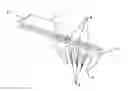
FIG. 1 is a front view of the fully assembled massage comb;
FIG. 2 is a side view of the upper section of the massage comb;
FIG. 2A is a perspective view of the upper section;
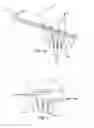
FIG. 3 is a side view of a single tooth showing an aperture there through;
FIG. 3A is an upper view of the lower section;
FIG. 4 shows two side views of the assembled comb.
DETAILED DESCRIPTION OF THE INVENTION
In FIG. 1, 1 is the fully assembled massage comb, wherein 2 is the upper section of the comb which can slidably be removed from the lower section 3. The lower removable section 3 shows at least three teeth 4 having elongated apertures 4a there through which have an opening 5 at each end thereof. The outer teeth 6 are blank and are useful in combing through the hair strands.
FIG. 2 shows the upper section 2 which has at the bottom thereof a female dove tail 7. The female dove tail 7 ends at 8. This end 8 is shown in FIG. 2A. The reason for this end 8 is to gain stability of the overall combination 1 when the lower section 2 is slid into the dove tail groove 7 so that no particular attention needs to be provided when the two sections 2 and 3 are combined. This represents an automatic sliding stop.
FIG. 3 shows a side view of the lower section 3 including the through aperture 4a. At the upper end there is shown the male part of the dove tail 9 which will slide into the female dove tail 7 as was explained above.
FIG. 3A is a perspective side view of a portion of the lower section 3 including the male dove tail 9. The jagged line indicates only a portion of the upper section.
Claims
What I claim is:1. A massage comb and fluid application combination including an upper section and a lower removable section, said lower section has several teeth depending there from with each tooth having a through aperture contained therein, any treatment fluid contained in said lower section is directly applied to the scalp through openings at each end of said teeth.
2. The massage comb of claim 1, wherein said upper and said lower sections are held in place by way of a dove tail arrangement.
3. The massage comb combination of FIG. 1, wherein the material of said massage comb combination is constructed of bamboo.
4. The massage comb combination of claim 3 wherein said bamboo material will allow said treatment fluid to permeate there through and apply said fluid to strands of hair as said massage comb is moving over said scalp.
Images & Drawings included:


Sources:
- United States Patent and Trademark Office - verify current appl. status at the USPTO↗
Similar patent applications:
- » 20240350352
MASSAGE COMB HEAD AND ELECTRICAL MASSAGE COMB - » 10317407
Electric massage comb - » 20170290733
MAGNETIC ELASTIC HAIRDRESSING MASSAGE COMB - » 20220142852
MASSAGE COMB - » 20250057723
ELECTRIC MASSAGE COMB WITH ESSENTIAL OIL ATOMIZATION AND INFRARED LIGHT APPARATUS
Recent applications in this class:
- » 20250169590 2025-05-29
COMB ASSEMBLY - » 20250009103 2025-01-09
POSITIONING DOUBLE-LAYER COMB - » 20240315419 2024-09-26
COMBING DEVICE AND METHOD OF USE - » 20240306789 2024-09-19
SPIRAL COMB TOOTH WITH HAIR FLUFFING FUNCTION - » 20230263286 2023-08-24
WIND COMB CAPABLE OF ADJUSTING A DIRECTION OF WIND - » 20220211157 2022-07-07
HAIR COMB STRUCTURE - » 20210298446 2021-09-30
Fiber Detangler - » 20200405031 2020-12-31
Fiber Detangler - » 20200297094 2020-09-24
RUBBER ASSEMBLY, COMB AND METHOD FOR MANUFACTURING COMB - » 20190357655 2019-11-28
Haircutting aid