HEAT SINK
US20120125589A1
2012-05-24
13/298,775
2011-11-17
Abstract:
A heat sink allowing circuit elements to be simply coupled thereto and allowing a size and a thickness thereof to be adjusted according to the number and capacity of circuit elements. The heat sink includes: a support plate; a plurality of heat radiation pins vertically protruded from one surface of the support plate; an element insertion groove formed to be depressed in a longitudinal direction from the other surface of the support plate; and element support parts formed to be protruded from the element insertion groove and supporting a circuit element. The circuit element slides and is coupled thereto. In addition, the circuit element is freely moved, thereby making it possible to simply correct mounting position.
Interested in similar patents?
Get notified when new applications in this technology area are published.
Classification:
H01L23/3672 » CPC main
Details of semiconductor or other solid state devices; Arrangements for cooling, heating, ventilating or temperature compensation ; Temperature sensing arrangements; Selection of materials, or shaping, to facilitate cooling or heating, e.g. heatsinks; Cooling facilitated by shape of device Foil-like cooling fins or heat sinks
F28D2021/0029 » CPC further
Heat-exchange apparatus not covered by any of the groups - ; Other heat exchangers for particular applications; Heat exchange systems not otherwise provided for for cooling heat generating elements, e.g. for cooling electronic components or electric devices Heat sinks
F28F3/048 » CPC further
Plate-like or laminated elements; Assemblies of plate-like or laminated elements; Elements or assemblies thereof with means for increasing heat-transfer area, e.g. with fins, with recesses, with corrugations the means being integral with the element in the form of ribs integral with the element or local variations in thickness of the element, e.g. grooves, microchannels
H01L2924/0002 » CPC further
Indexing scheme for arrangements or methods for connecting or disconnecting semiconductor or solid-state bodies as covered by; Technical content checked by a classifier Not covered by any one of groups , and
H01L2924/00 » CPC further
Indexing scheme for arrangements or methods for connecting or disconnecting semiconductor or solid-state bodies as covered by
F28F7/00 IPC
Elements not covered by group , or
Description
CROSS REFERENCE(S) TO RELATED APPLICATIONS
This application claims the benefit under 35 U.S.C. Section 119 of Korean Patent Application Serial Nos. 10-2010-0116173 and 10-2011-0087370, entitled “Heat Sink” filed on Nov. 22, 2010 an Aug. 30, 2011, which are hereby incorporated by reference in their entireties into this application.
BACKGROUND OF THE INVENTION
1. Technical Field
The present invention relates to a heat sink, and more particularly, to a heat sink allowing circuit elements to be simply coupled thereto and allowing a size and a thickness thereof to be adjusted according to the number and capacity of circuit elements.
2. Description of the Related Art
Generally, a heat sink is mainly mounted on a lower portion of a substrate and is electrically connected to a circuit element mounted on the substrate to radiate heat generated from the circuit element to the outside, thereby preventing the circuit element from being overheated.
This heat sink should be necessarily included in a computer, or the like, including an operation processing device such as a central processing unit (CPU), or the like, performing a high speed operation as well as industrial electronic devices. In accordance with the recent trend toward integration of elements and thinness of electronic devices in all industrial fields, heat radiation performance of the electronic devices has become more important.
Further, a high heat radiation element such as a light emitting diode (LED), or the like, has been currently used in a display device such as a flat panel television (TV), a monitor, or the like, used in a state that it is connected to electronic devices in addition to the electronic devices. Since the number of products including a high heat radiation and high integration element cannot but increase in accordance with the development of technology, the heat sink for effectively radiating heat from the element has significantly becomes important.
Here, in the case of the heat sink coupled in order to radiate heat from the circuit element, through-holes are formed in the circuit element and the heat sink to which the circuit element is coupled so that a screw-coupling may be conducted therebetween, a screw is fixed to the heat sink while penetrating through the circuit element, and the heat sink is then coupled to the substrate so that the circuit element is mounted on the substrate.
However, the heat sink having the above-mentioned configuration should be subjected to a process of drilling a hole at a position at which the circuit element is coupled thereto and fixing it using the screw and be subjected to a process of again drilling a hole and fixing it using the screw at the time of correction of a coupling position due to erroneous position setting, which are troublesome processes.
In addition, since a size and a height of the heat sink used in the electronic devices such as a computer, a monitor, or the like, are determined according to a shape of a substrate on which the element is mounted and or a disposition design of the element, the heat sink is manufactured by fabricating a mold according to a design of a shape desired by a worker and performing extrusion using the mold.
Here, molds having various shapes cannot but be fabricated according to the sizes of the heat sinks changed according to each product or the disposition design of the element, such that a fabricating cost of the mold increases. In addition, the heat sinks cannot but be individually manufactured through the molds having different sizes and shapes, such that a lead time required to manufacture the heat sink increases, thereby deteriorating productivity.
SUMMARY OF THE INVENTION
An object of the present invention is to provide a heat sink allowing a circuit element to slide and to be coupled thereto in a lower portion thereof.
Another object of the present invention is to provide a heat sink configured of unit heat sinks including a protrusion and a groove each formed at both side portions thereof to allow a size and a thickness thereof to be adjusted by lateral combination and vertical combination between the unit heat sinks.
According to an exemplary embodiment of the present invention, there is provided a heat sink including: a support plate; a plurality of heat radiation pins vertically protruded from one surface of the support plate; an element insertion groove formed to be depressed in a longitudinal direction from the other surface of the support plate; and element support parts formed to be protruded from the element insertion groove and supporting a circuit element.
An inner side of the element support part supporting the circuit element may be formed to be inclined.
The element support part may be formed to be bent in a ‘└’ shape.
The heat sink may further include: a protrusion part formed to be protruded from one side of the support plate; and a groove formed to be depressed from the other side of the support plate.
The protrusion part and the groove may have the same width, and the groove may have a depth that is the same as a protruded length of the protrusion part.
The support plate may include longitudinal grooves formed in a longitudinal direction thereof in a bottom surface thereof, and a longitudinal groove formed at an outermost side among the longitudinal grooves may be formed of a step part.
The longitudinal groove may have the same width as that of the heat radiation pin.
The heat radiation pin may include a horizontal protrusion formed on an inner side or an outer side thereof in order to increase a heat radiation area.
BRIEF DESCRIPTION OF THE DRAWINGS
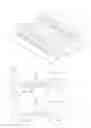
FIG. 1 is a perspective view of a heat sink according to an exemplary embodiment of the present invention;
FIG. 2 is a side view of the heat sink according to the exemplary embodiment of the present invention;
FIG. 3 is a side view showing a heat sink according to another exemplary embodiment of the present invention;
FIG. 4 is a perspective view showing a state in which the heat sinks according to the exemplary embodiment of the present invention are connected in parallel with each other;
FIG. 5 is a perspective view showing a state in which the heat sinks according to the exemplary embodiment of the present invention are stacked and coupled to each other;
FIG. 6 is a bottom perspective view showing the heat sink according to the exemplary embodiment of the present invention and a substrate to which the heat sink is coupled; and
FIG. 7 is a side view showing a state in which the heat sink according to the exemplary embodiment of the present invention is coupled to the substrate.
DESCRIPTION OF THE PREFERRED EMBODIMENTS
Hereinafter, exemplary embodiments of the present invention will be described with reference to the accompanying drawings. However, the exemplary embodiments are described by way of examples only and the present invention is not limited thereto.
In describing the present invention, when a detailed description of well-known technology relating to the present invention may unnecessarily make unclear the spirit of the present invention, a detailed description thereof will be omitted. Further, the following terminologies are defined in consideration of the functions in the present invention and may be construed in different ways by the intention of users and operators. Therefore, the definitions thereof should be construed based on the contents throughout the specification.
As a result, the spirit of the present invention is determined by the claims and the following exemplary embodiments may be provided to efficiently describe the spirit of the present invention to those skilled in the art.
FIG. 1 is a perspective view of a heat sink according to an exemplary embodiment of the present invention; FIG. 2 is a side view of the heat sink according to the exemplary embodiment of the present invention; FIG. 3 is a side view showing a heat sink according to another exemplary embodiment of the present invention; FIG. 4 is a perspective view showing a state in which the heat sinks according to the exemplary embodiment of the present invention are connected in parallel with each other: and FIG. 5 is a perspective view showing a state in which the heat sinks according to the exemplary embodiment of the present invention are stacked and coupled to each other.
As shown, the heat sink 100 according to the exemplary embodiment of the present invention may be configured to include a support plate 110, a plurality of heat radiation pins 120 vertically protruded upwardly from the support plate 110, an element insertion groove 150 formed to be depressed from a lower portion of the support plate 110 in a longitudinal direction, and element support parts 151 protruded from the element insertion groove 150 to thereby support a circuit element.
The support plate 110 includes the plurality of heat radiation pins 120 vertically protruded therefrom at predetermined intervals and is formed to have a predetermined length and width, such that it may be defined as a basic member configuring a unit heat sink. The support plate 110 has a plate shape and includes the heat radiation pins 120 formed at the same height on one surface thereof, such that heat transferred through the support plate 110 may be discharged to the outside while being dissipated through the heat radiation pins 120.
Here, the heat radiation pins 120 may be provided with horizontal protrusions 121 protruded from predetermined points of inner and outer sides thereof in a horizontal direction, wherein the horizontal protrusions 121 are formed to be protruded in a longitudinal direction of the heat radiation pins 120 to increase a heat radiation area, thereby making it possible to allow heat radiated through the heat radiation pins 120 to be efficiently radiated.
The support plate 110 may include the element insertion groove 150 formed to be depressed in the longitudinal direction of the support plate 110 from one side of the other surface thereof, and the element insertion groove 150 may include the element support parts 151 formed at both sides thereof, wherein the element support parts 151 are protruded in the longitudinal direction of the support plate 110 and support the circuit element.
Here, inner sides of the element support parts 151 supporting the circuit element are formed to be inclined to support both sides of the circuit element, such that the circuit element may be coupled to the heat sink.
That is, the circuit element may be fitted into and coupled to the element insertion groove 150 so that both sides thereof are supported by the inclined surfaces of the element support parts 151. Here, since the coupled circuit element is not fixedly coupled to the element insertion groove 150 but is slid along the element insertion groove 150 in a state in which it is supported by the element support part 151, a position of the circuit element may not only be simply set but also be simply corrected.
Here, the element support parts 151 are formed to be bent in a ‘└’ shape as shown in FIG. 3, such that the circuit element may be fitted into and coupled to the element insertion groove 150. Here, the coupled circuit element is coupled to the element insertion groove 150 so as to be slid along the element insertion groove 150 in a state in which it is supported by the element support parts 151 as described above, the setting and the correction of the position of the circuit element may be simply performed.
Further, the support plate 110 may include a protrusion part 131 and a groove 132 each formed at both side portions thereof.
The protrusion part 131 may be formed to be protruded at a predetermined length from a central portion of one side of the support plate 110, and the groove 132 may be formed to be depressed at a predetermined length from a central portion of the other side thereof.
Here, the protrusion part 131 may be formed to have a protruded length and width that are the same as a depressed length and depth of the groove 132. The reason why the protrusion part 131 is formed to have a protruded length and width that are the same as a depressed length and width of the groove 132 is that when the support plates 110 configuring a unit heat sink are horizontally connected to each other, the protrusion part 131 is insertedly coupled to the groove 132, such that the support plates 110 are coupled to each other so as to be closely adhered to each other, thereby performing parallel coupling between the heat sinks 100.
Here, the groove 132 is formed to have a depth deeper than a width of the protrusion part 131 in consideration of a width error that may be generated at the time of formation of the protrusion part 131 and an error that may be generated at the time of coupling of the unit heat sink, thereby making it possible to allow close adhesion between the support plates 110 to be smoothly performed at the time of the coupling of the unit heat sink.
Meanwhile, the support plate 110 includes a plurality of longitudinal grooves 141 formed at the same intervals as those of the heat radiation pins 120 in the longitudinal direction of the support plate 110 in an opposite surface to the surface on which the heat radiation pins 120 are formed. A longitudinal groove 141 formed at an outermost side of the support plate 110 among the longitudinal grooves 141 may be formed in a shape of a step part 142
The longitudinal grooves 141 and the step parts 142 may be formed to have widths that are equal to or wider than thicknesses of the heat radiation pins 120 formed to be protruded from the support plate 110, and upper portions of the heat radiation pins 120 may contact the longitudinal grooves 141 and the step parts 142 and be supported by the longitudinal grooves 141 and the step parts 142.
That is, as described above, the unit heat sinks each configured of a single support plate may be stacked vertically, in addition to the parallel coupling therebetween. In this case, a support plate 110 of another heat sink may be stacked on the heat radiation pins 120 protruded from the support plate 110, and upper end portions of the heat radiation pins 120 are inserted into the longitudinal grooves 141 and the step parts 142 formed in the longitudinal direction in the lower portion of the support plate 110, such that the heat sinks may be coupled to each other so as to be firmly and closely adhered to each other.
The heat sinks 100 according to the exemplary embodiment of the present invention configured as described above are assembled to each other according to the defined number in accordance with a disposition design of the circuit element. First, when the heat sinks 100 are assembled to each other in the longitudinal direction, the protrusion part 131 and the groove 132 formed at both sides of the support plates 110 are coupled to each other to couple the respective side portions of the support plate 110 to each other so as to be closely adhered to each other. Finally, both side portions of the support plates 110 are bonded and fixed to each other using a solder-pin and a plurality of heat sinks 100 are coupled in parallel with each other in a form as shown in FIG. 4, such that a heat sink (100) assembly extended in the longitudinal direction is coupled to upper and lower portions of a substrate within the substrate, thereby making it possible to discharge heat generated from the circuit elements mounted on the substrate to the outside.
Further, when a heat radiation area needs to be increased in order to improve heat radiation efficiency of the heat sink, a heat sink assembly in which the heat sinks are coupled in parallel with each other through the protrusion part 131 and the groove 132 formed at both sides of the support plate 110 are stacked on and coupled to a heat sink assembly in which the heat sinks are coupled in parallel with each other in the same form, as shown in FIG. 5, thereby making it possible to increase a heat radiation area.
Here, the longitudinal grooves 141 and the step parts 142 formed in the bottom surface of the support plate 110 are coupled to the upper portions of the heat radiation pins 120 formed to be protruded from the support plate 110, such that the respective heat sinks 110 may be coupled to each other so as to be closely adhered to each other.
FIG. 6 is a bottom perspective view showing the heat sink according to the exemplary embodiment of the present invention and a substrate to which the heat sink is coupled; and FIG. 7 is a side view showing a state in which the heat sink according to the exemplary embodiment of the present invention is coupled to the substrate.
As shown in FIGS. 6 and 7, describing a structure in which the heat sink 100 according to the exemplary embodiment of the present invention configured as described above is coupled to the substrate in more detail, disposition designs of the circuit elements mounted on the substrate P are determined according to structures of the circuits, and through-holes 170 are formed to correspond to sizes of the mounted circuit elements. In addition, the coupled circuit element is fitted into and coupled to the heat sink 100 using the element insertion groove 150 formed to be depressed from the lower portion of the support plate 110 of the heat sink 100 and the element support parts 151 formed to be protruded at both sides of the element insertion groove 150.
Here, the circuit element coupled to the heat sink 100 through the element insertion groove 150 and the element support parts 151 moves up to a position corresponding to a position at which it is mounted on the substrate P in a sliding scheme, such that it may be coupled to the heat sink without performing a process of drilling a hole in the heat sink and coupling the circuit element to the heat sink by a bolt. Therefore, manufacturing processes are reduced, thereby making it possible to reduce a cost and improve productivity. In addition, the circuit element is not fixed to the heat sink, thereby making it possible to simply correct a position of the circuit element.
In addition, the heat sink to which the circuit element is coupled to the upper portion of the substrate so that the circuit element penetrates through the through-hole 170, thereby making it possible to discharge the heat generated from the circuit element mounted on the substrate to the outside.
As described above, since the heat sink according to the exemplary embodiments of the present invention includes the element insertion groove and the element support parts formed in the longitudinal direction in the lower portion thereof, the circuit element slides and is coupled thereto to reduce a hole drilling process for coupling the circuit element to the heat sink, thereby making it possible to reduce a cost and improve productivity. In addition, the circuit element is freely moved, thereby making it possible to simply correct a mounting position.
Further, since the unit heat sinks formed and standardized to have predetermined lengths and widths according to the number and disposition designs of the elements disposed on the substrate may be assembled in various forms, only the standardized heat sink is manufactured and applied to various element design specifications, thereby making it possible to reduce a cost of a mold for manufacturing the heat sink and a manufacturing cost of the heat sink.
Furthermore, since the heat sinks according to the exemplary embodiments of the present invention are standardized to have a predetermined width and length, they may be mass-produced, and the heat sinks having various lengths, widths, and thicknesses are manufactured using the standardized heat sink, thereby making it possible to significantly reduce a lead time required to manufacture the heat sink according to the disposition design and improve productivity in a work site.
Although the exemplary embodiments of the present invention have been disclosed for illustrative purposes, those skilled in the art will appreciate that various modifications, additions and substitutions are possible, without departing from the scope and spirit of the invention as disclosed in the accompanying claims.
Accordingly, the scope of the present invention is not construed as being limited to the described embodiments but is defined by the appended claims as well as equivalents thereto.
Claims
What is claimed is:1. A heat sink comprising:
a support plate;
a plurality of heat radiation pins vertically protruded from one surface of the support plate;
an element insertion groove formed to be depressed in a longitudinal direction from the other surface of the support plate; and
element support parts formed to be protruded from the element insertion groove and supporting a circuit element.
2. The heat sink according to claim 1, wherein an inner side of the element support part supporting the circuit element is formed to be inclined.
3. The heat sink according to claim 1, wherein the element support part is formed to be bent in a ‘└’ shape.
4. The heat sink according to claim 1, further comprising:
a protrusion part formed to be protruded from one side of the support plate; and
a groove formed to be depressed from the other side of the support plate.
5. The heat sink according to claim 4, wherein the protrusion part and the groove have the same width, and the groove has a depth that is the same as a protruded length of the protrusion part.
6. The heat sink according to claim 1, wherein the support plate includes longitudinal grooves formed in a longitudinal direction thereof in a bottom surface thereof, and a longitudinal groove formed at an outermost side among the longitudinal grooves is formed of a step part.
7. The heat sink according to claim 6, wherein the longitudinal groove has the same width as that of the heat radiation pin.
8. The heat sink according to claim 1, wherein the heat radiation pin includes a horizontal protrusion formed on an inner side or an outer side thereof in order to increase a heat radiation area.
Images & Drawings included:



Sources:
- United States Patent and Trademark Office - verify current appl. status at the USPTO↗
Similar patent applications:
- » 20170271238
Bonded body, power module substrate with heat sink, heat sink, method of manufacturing bonded body, method of manufacturing power module substrate with heat sink, and method of manufacturing heat sink - » 20170271237
Bonded body, power module substrate with heat sink, heat sink, method of manufacturing bonded body, method of manufacturing power module substrate with heat sink, and method of manufacturing heat sink - » 20180108593
Bonded body, substrate for power module with heat sink, heat sink, method for producing bonded body, method for producing substrate for power module with heat sink, and method for producing heat sink - » 20180040535
Bonded body, substrate for power module with heat sink, heat sink, method for producing bonded body, method for producing substrate for power module with heat sink, and method for producing heat sink - » 20180090413
Bonded body, substrate for power module with heat sink, heat sink, method for producing bonded body, method for producing substrate for power module with heat sink, and method for producing heat sink - » 20180068871
Bonded body, substrate for power module with heat sink, heat sink, method for producing bonded body, method for producing substrate for power module with heat sink, and method for producing heat sink - » 20070039726
Fin for a heat sink, heat sink and method for manufacturing a heat sink - » 20110281520
WIRELESS HEAT SINK, WIRELESS HEAT SINK SYSTEM AND WIRELESS HEAT SINKING METHOD FOR THE SAME - » 20140240989
Method of making a heat sink assembly, heat sink assemblies made therefrom, and illumants using the heat sink assembly - » 20110279968
Heat sink having auto switching function, heat sink system and heat sinking method for the same
Recent applications in this class:
- » 20250167068 2025-05-22
MEMORY MODULE AND METHOD OF MANUFACTURING THE MEMORY MODULE - » 20250167067 2025-05-22
MULTIDIE FLIP CHIP PACKAGE WITH HEAT SINK - » 20250167066 2025-05-22
POWER MODULES - » 20250167065 2025-05-22
SEMICONDUCTOR PACKAGE INCLUDING HEAT DISSIPATION MEMBER, AND METHOD FOR MANUFACTURING THE SAME - » 20250149400 2025-05-08
PACKAGING SUBSTRATE AND MANUFACTURING METHOD OF PACKAGING SUBSTRATE - » 20250149399 2025-05-08
POWER MODULE AND POWER CONVERSION APPARATUS - » 20250140634 2025-05-01
MICROCHANNEL STRUCTURES WITH BRUIED STRUCTURES - » 20250132219 2025-04-24
SEMICONDUCTOR DEVICE, METHOD FOR MANUFACTURING SEMICONDUCTOR DEVICE, AND THERMALLY CONDUCTIVE SHEET FOR SEMICONDUCTOR DEVICE - » 20250118617 2025-04-10
POWER MODULE AND MANUFACTURING METHOD THEREFOR - » 20250112109 2025-04-03
Semiconductor Package and Method for Manufacturing Semiconductor Package