Shifting alteration windows
US20120140307A1
2012-06-07
12/927,980
2010-12-01
Abstract:
A special windshield and windows installed to a vehicle for imposing a filter between the interior of a vehicle to include driver and passenger(s) and a source of external sunlight exposed directly to the vehicle. A direct exposure to sunlight will caused windshield and windows to turn darker as a result, the interior of a car will be kept at a low temperature and driver and passenger(s) are not exposed to sunlight. A filter, such as photochromic is imposed between the source of light and the interior of the vehicle. Silver Halide or Silver Chloride is the active ingredients that cause the lenses to darken.
Interested in similar patents?
Get notified when new applications in this technology area are published.
Classification:
B60J3/04 » CPC main
Antiglare equipment associated with windows or windscreens ; Sun visors for vehicles adjustable in transparency
C03C4/06 » CPC further
Compositions for glass with special properties for photosensitive glass for phototropic or photochromic glass
B60J3/00 IPC
Antiglare equipment associated with windows or windscreens ; Sun visors for vehicles
G02B5/23 » CPC further
Optical elements other than lenses; Filters; Absorbing filters Photochromic filters
Description
DESCRIPTION
Field of the Invention
The invention relates to windshield and windows installed to a vehicle for protecting operators and passengers of vehicle and items in the vehicle. The windshield and windows are made of photochromic materials made of Silver Halide or Silver Chloride. The photochromic windows are not transparent; specifically they filter out UV light. This does not represent a problem because the human eye does not see in the UV spectrum. The windows will begin to clear as soon as they are away from UV light and will be noticeably lighter within two minutes and mostly clear within five minutes. However, it normally takes more than fifteen minutes for the windshield/windows to completely fade to their non-exposed state.
The switching speed of photochromic dyes is highly sensitive to the rigidity of the environment around the dye. As a result, they switch most rapidly in solution and slowest in the rigid environment like a polymer lens.
A study by the Institute of Ophthalmology at the University College London has suggested that even in dark conditions; photochromic windows can absorb up to 20% of ambient light. Ambient lighting can refer to the available light in an environment.
BACKGROUND OF THE INVENTION
With the many external and internal environmental factors when driving a vehicle, this invention will revolutionize the driving experience. Below depict the many safety and benefits of the invention:
Safety Feature
Shield your skin from the sun's harmful rays as well as provide a tint for your eyes to see comfortably
Reduce you risks of getting skin cancer and other illnesses cause by excess sun exposure
Reduce the amount of daily sun exposure to your skin
Provide a better driving experience without having to worry about the sun damaging your skin or getting in the way of your eyes
It is initially a lightly tinted window when there is no direct sunlight shining
Auto change to darker shades of tint when detects direct sunlight
Window will darken with the more light shining
Steady and smooth, yet immediate, transition from a light to dark tint
Depending on the brightness of the sun (light) is dependent on the darkness of the transition to tint (will not surpass illegal darkness of tint allowed by law)
The less light shining, the less the tint transition will be; until there is little or no light will the glass window turn back to its initial light tint
Less distractions, more attention on the road
Hands can always be on the steering wheel
No need for unnecessary movement to block your face from the sun
It will play as a better alternative to regular tinted cars
Gives the stylish appearance of (any) tinted car, where transition windows will provide a tint when needed and/or is necessary
Good alternative for those who wear sunglasses while driving, or those who do not wear sunglasses
Provide as a new revolutionary feature to cars that is worry free and safe
Reduces the heat within the car that heats the interior (if you do not use a reflector)
BENEFITS
Infants
Skin protection
Sun shielding screens that stick on the inside car windows will no longer be necessary
Sunscreen
Applying sunscreen religiously is time consuming
Global warming
Climate is hotter
Need for skin protection is higher
Higher risks of skin cancer
Policemen
It can be easier at night time for police to look into cars when looking for suspicious activity
Criminals or people that have windows that are too dark to see through (at night)
BRIEF DESCRIPTION OF THE DRAWING
The following drawing is illustrative of the invention.
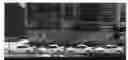
FIG. 1 is an illustrative drawing of the transformation of a vehicle's windshield and windows as it come in contact with direct sunlight. The drawing depicts the windshield and windows turning from regular lenses to dark tint.
Claims
What is claim are:1. Windshield and windows installed to a vehicle that will filter direct sunlight; thus, preventing the vehicle driver's & passenger(s)' body (to include the interior of a car) from exposure to sunlight. Filter means windshield and windows are especially made with materials to filter sunlight.
2. The windshields and windows of claim 1, wherein said filter means comprise of a photochromic windshield and windows.
3. The windshield and windows of claim 2, wherein said photochromic means the ability to turn from dark tint to light tint of the said windshield and windows.
4. The photochromic of claim 3, wherein said ability mean the photochromic is made of Silver Halide or Silver Chloride and it's mixed throughout the window. This will make the entire windshield and windows of a vehicle to change color when exposed to (sun)light.
Images & Drawings included:
Sources:
- United States Patent and Trademark Office - verify current appl. status at the USPTO↗
Recent applications in this class:
- » 20250162387 2025-05-22
DIMMABLE GLASS VISOR FOR AUTOMOTIVE - » 20250153548 2025-05-15
RETRACTABLE ELECTRIC CHARGING DEVICE - » 20250128578 2025-04-24
VEHICLE CONTROL METHOD, AUTOMATIC DOOR CONTROL METHOD, VEHICLE CONTROL DEVICE, AND AUTOMATIC DOOR CONTROL DEVICE - » 20250108679 2025-04-03
PATTERNED GLASS AND VEHICLE - » 20250050713 2025-02-13
Aftermarket dimmable sunroof - » 20240424873 2024-12-26
CONTEXTUAL ADAPTATION OF VEHICULAR DIMMABLE GLASS - » 20240416731 2024-12-19
SUN VISOR ASSEMBLY FOR A VEHICLE INTERIOR AND MOTOR VEHICLE COMPRISING SUCH A SUN VISOR ASSEMBLY - » 20240359538 2024-10-31
DEVICE FOR SHADING THE SUNLIGHT OF A VEHICLE, METHOD FOR CONTROLLING THE SAME, AND COMPUTER READABLE RECORDING MEDIUM STORING PROGRAM FOR PERFORMING THE METHOD - » 20240286468 2024-08-29
AUTONOMOUS MOBILE BODY - » 20240286467 2024-08-29
VARIABLE TRANSMITTANCE OPTICAL STACK AND MANUFACTURING METHOD FOR SAME, AND SMART WINDOW INCLUDING SAME