Dial up telephone conferencing system controlled by an online computer network
US20120140909A1
2012-06-07
13/308,027
2011-11-30
✅ Patent granted
US 8,855,278 B2
2014-10-07
-
-
Stella Woo
Christensen O'Connor Johnson Kindness PLLC
2032-08-22
Abstract:
In a telephone conferencing system, a digital communication network such as the Internet is used to establish and control the telephone connections between multiple conferees with the telephone network being the means of exchanging verbal information. Each conferee may have a computer connected to the digital network, and each has an independent telephone instrument connected to the public switched telephone network. An in-charge conferee utilizes his computer containing appropriate software to initiate the conference and to control the participation of the conferees. The in-charge conferee sends digital control signals to a switch interface controlling a telephone switch as a gateway to the telephone network using SS7 control signals. These SS7 control signals include the commands by which the conferee telephones are rung up, brought on line, or dropped from the conference.
Inventors:
- Clark E. Johnson, Jr. 2 🇺🇸 Madison, WI, United States
- Richard J. Solomon 3 🇺🇸 Monson, MA, United States
- Tice F. DeYoung 3 🇺🇸 Fairfax, VA, United States
- David J. Farber 3 🇺🇸 Pittsburgh, PA, United States
Assignee:
- XUGAVE HOLDING DE LLC 2 🇺🇸 Dover, DE, United States
Applicant:
Interested in similar patents?
Get notified when new applications in this technology area are published.
Classification:
H04M2203/5054 » CPC further
Aspects of automatic or semi-automatic exchanges related to audio conference Meet-me conference, i.e. participants dial-in
H04M7/0012 » CPC further
Arrangements for interconnection between switching centres Details of application programming interfaces [API] for telephone networks; Arrangements which combine a telephonic communication equipment and a computer, i.e. computer telephony integration [CPI] arrangements
H04M7/003 » CPC further
Arrangements for interconnection between switching centres; Services and arrangements where telephone services are combined with data services Click to dial services
H04M7/126 » CPC further
Arrangements for interconnection between switching centres for working between exchanges having different types of switching equipment, e.g. power-driven and step by step or decimal and non-decimal where the types of switching equipement comprises PSTN/ISDN equipment and switching equipment of networks other than PSTN/ISDN, e.g. Internet Protocol networks Interworking of session control protocols
H04M7/128 » CPC further
Arrangements for interconnection between switching centres for working between exchanges having different types of switching equipment, e.g. power-driven and step by step or decimal and non-decimal where the types of switching equipement comprises PSTN/ISDN equipment and switching equipment of networks other than PSTN/ISDN, e.g. Internet Protocol networks Details of addressing, directories or routing tables
H04M2207/12 » CPC further
Type of exchange or network, i.e. telephonic medium, in which the telephonic communication takes place intelligent networks
H04M11/00 » CPC further
Telephonic communication systems specially adapted for combination with other electrical systems
H04M7/00 IPC
Arrangements for interconnection between switching centres
H04M3/563 » CPC further
Automatic or semi-automatic exchanges; Systems providing special services or facilities to subscribers; Arrangements for connecting several subscribers to a common circuit, i.e. affording conference facilities User guidance or feature selection
H04M2203/5009 » CPC further
Aspects of automatic or semi-automatic exchanges related to audio conference Adding a party to an existing conference
H04M3/567 » CPC further
Automatic or semi-automatic exchanges; Systems providing special services or facilities to subscribers; Arrangements for connecting several subscribers to a common circuit, i.e. affording conference facilities Multimedia conference systems
H04M2242/16 » CPC further
Special services or facilities with computer telephone integration
H04M3/56 » CPC main
Automatic or semi-automatic exchanges; Systems providing special services or facilities to subscribers Arrangements for connecting several subscribers to a common circuit, i.e. affording conference facilities
H04M7/0009 » CPC further
Arrangements for interconnection between switching centres; Interconnection between telephone networks and data networks where voice calls remain entirely in the telephone network
H04M7/06 » CPC further
Arrangements for interconnection between switching centres using auxiliary connections for control or supervision, e.g. where the auxiliary connection is a signalling system number 7 link
H04M2203/5027 » CPC further
Aspects of automatic or semi-automatic exchanges related to audio conference Dropping a party from a conference
Description
CROSS-REFERENCES TO RELATED APPLICATIONS
This application is a continuation of application Ser. No. 12/410,269, filed Mar. 24, 2009, which was a continuation of application Ser. No. 10/705,571, filed Nov. 10, 2003, now U.S. Pat. No. 7,522,542; which was a continuation of application Ser. No. 10/087,671, filed Mar. 1, 2002, now U.S. Pat. No. 6,661,779; which was a continuation of application Ser. No. 09/819,079, filed Apr. 30, 2001, now U.S. Pat. No. 6,480,474; which was a continuation of application Ser. No. 09/587,080, filed Jun. 3, 2000, now U.S. Pat. No. 6,266,328; which was a continuation-in-part of application Ser. No. 09/212,786, filed Dec. 16, 1998, now U.S. Pat. No. 6,072,780; which was a continuation-in-part of application Ser. No. 08/918,564, filed Aug. 22, 1997, now abandoned, which claimed the benefit of priority pursuant to 35 U.S.C. §119 of Provisional Application No. 60/024,592, filed Aug. 26, 1996, all of which are hereby incorporated by reference herein in their entirety.
BACKGROUND
This invention relates to telephone conferencing, and in particular to dial up telephone conferencing utilizing computer control.
In the art, it is known that telephone conferences may be implemented through “conferencing centers” provided as a service by local and long distance telephone companies. A list of telephone numbers of the conferees and the date and time at which the conference is to begin is supplied to a conference center operator who performs the dialing operations to bring the conferees simultaneously on line to initiate the conference. This technique is limited by the necessity of setting up a relatively inflexible forum in which all participants must be designated in advance, and the inclusion and reliance upon outside telephone company personnel to implement the conference.
A more recent form of conferencing utilizes digital networks such as the Internet that are publicly accessible by individual computers (typically PCs) via Internet host, and may utilize software which allows fully duplexed communication between the PCs. Typically, the conference is conducted with the exchanged information visually appearing on the individual PC display screens. In more sophisticated applications allowing audio communication between the conferees, additional hardware is required at each PC site. A microphone and analog to digital converter provide digitized audio input to a PC by means of appropriate software, such as commercially available VocalTec software, and the audio output is derived from the digital information transmitted over the Internet by use of a digital to analog converter feeding a speaker. Encryption software may be employed to “scramble” the digital information transmitted via the network, but all potential conferees must be provided with this software, and must be alerted to the fact that it is being used. Hence, a conference of multiple conferees requires additional hardware and software at each PC site in order to implement a conference by means of the Internet.
DESCRIPTION OF THE DRAWINGS
The foregoing aspects and many of the attendant advantages of this invention will become more readily appreciated as the same become better understood by reference to the following detailed description, when taken in conjunction with the accompanying drawings, wherein:
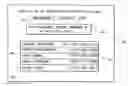
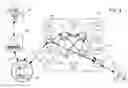
FIG. 1 is a block diagram of the system of the invention,
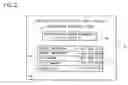
FIG. 2 is a drawing of a computer display according to the invention,
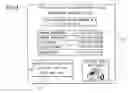
FIG. 3 is a drawing of a second embodiment of a computer display according to the invention, and
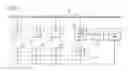
FIG. 4 is a block diagram of the invention showing the information of FIG. 1 in greater detail.
DETAILED DESCRIPTION
While illustrative embodiments have been illustrated and described, it will be appreciated that various changes can be made therein without departing from the spirit and scope of the invention.
Referring to FIG. 1, a conferee station 10 consists of a PC computer 18 and a telephone 20. Conferee stations 12, 14, correspondingly have PC computers 22, 26 and telephones 24, 28. Other conferee stations, i.e., 16, may still be connected into the conference network without the requirement of a computer; the conferee station 16 comprising only the telephone 17. All the PCs are connected to the Internet network 30 using standard Transmission Control Protocol/Internet Protocol (TCP/IP) connect software. The telephones 20, 24, 28, 17 are tied into the telephone network 32 in a conventional manner. It will be noted that the telephones 20, 24, 28, 17 are independent of the Internet network 30. A switch interface 33 controlling a telephone switch 34 is also connected so as to receive control signals via the Internet 30 and to transmit them to the telephone network 32, as will be described below.
Any one of the conferee stations 10, 12, 14, possessing a PC, may be designated as Conference Meister. For convenience of explanation, it is assumed that conferee station 14 is designated as Conference Meister. To implement this designation, PC 26 of conferee station 14 is provided with additional software which allows PC 26 to communicate with the switch interface 33 both to control the telephone switch 34 and to receive status information from the telephone switch 34, via the Internet 30.
The Conference Meister station 14 and the switch interface 33 communicate over the TCP/IP transport layer of the Internet 30 using the Internet's User Datagram Protocol (UDP) with checksum. A common fixed-length interprocess message called the Conference Protocol Data Unit (CDPU), using the software format further described below in Table I, is exchanged between the Conference Meister 14 and the switch interface 33, in the data field of a UDP-Datagram. The switch interface 33 converts the CDPU into Signalling System 7 (SS7) commands which act on the switch 34, and attendantly, on the telephone network 32 to control the conferees telephones 20, 24, 28, 17. SS7 is an internationally recognized telephony standard of 255 commands for controlling telephone calls via switch 34 using standard lookup table procedures. The switch interface 33 interacting with the switch 34 may be implemented incorporating a standard micro-computer such as a Motorola 68705P5 performing the table lookup translation of SS7 commands into CPDU commands stored in its ROM memory. It will be noted that the switch interface 33 is bi-directional, and telephone connection status information as established by the switch 34, i.e., ringing, off-hook, on-hook, busy, for all participants is transmitted back via the Internet to the Conference Meister for icon display on his PC.
All fields in the CPDU are ASCII character fields. The CPDU consists of 32 bytes of data as follows:
| Command/Response | |||
| Session ID/ | Conference ID/ | Code/ | Data/ |
| 4 bytes | 2 bytes | 2 bytes | 24 bytes |
The Session ID and Conference ID fields contain administrative “housekeeping” information. The Command/Response Code field indicates the message type and the message meaning. Parameters of the Data Field are fixed length subfields and depend upon the message type. Detailed descriptions of the Command/Response Code field are shown below in Table I.
| TABLE I | |||
| Code | Command | Response | Meaning |
| HE | X | HELLO. Conference Meister's request for Session-Id. | |
| LO | X | LOGON. The Switch Interface's response to a Conference Meister's HE | |
| (Hello) assigning him his temporary Session-Id, and signaling him to | |||
| logon. | |||
| LO | X | LOGON. A Conference Meister's logon. Information giving user id, | |
| password, and account number in the data field. | |||
| RS | X | RESOURCES. The Switch Interface's acceptance of a Conference | |
| Meister's LO (Logon). | |||
| EC | X | ESTABLISH CONNECTION. A Conference Meister's request that a | |
| specified telephone number be connected to a conference. | |||
| SU | X | SUCCESS. The Switch Interface's response to an EC (Establish | |
| Connection) request. If successfully completed, it returns a connection-id | |||
| used to refer to this member's conference connection. | |||
| FA | X | FAIL. The reply sent when LO (Logon) or EC (Establish Connection) | |
| fails. Failure details are carried in the data field. | |||
| DC | X | DISCONNECT. A request from the Conference Meister to disconnect a | |
| conference member's connection, or to terminate a conference (disconnect | |||
| all member connections on the conference). | |||
| DC | X | DISCONNECT. An unsolicited response from the Switch Interface | |
| notifying the Conference Meister that a conference member's connection | |||
| has been disconnected. | |||
| ST | X | STATUS. This command is the Conference Meister's means of | |
| maintaining and reconstructing its conference information in the face of | |||
| dropped connections and unreliable datagram transmissions. | |||
| ST | X | STATUS. The Switch Interface's reply to a Conference Meister's status | |
| request. | |||
| ER | X | ERROR. This is the reply used to signal invalid message parameters, such | |
| as Session-Id | |||
| IH | X | X | I'M HERE. This message confirms that Conference Meister and Switch |
| interface are still in contact during intervals when there is no | |||
| command/response traffic between them. | |||
In the above description of the invention, the Conference Meister 14 initiates the conference. By providing CDPU software to the other conferees, the invention allows any other one of the conferee stations, i.e., 10, 12, to serve as a Conference Meister.
The functional interrelation of the elements of the system illustrated in FIG. 1 may be further understood by reference to FIG. 4. In FIG. 4, the abbreviations, used industry-wide, have the following meanings: SSP=Central Office (i.e., Service Signalling Point), SCP=Service Control Point (it is an alternate SS7 entry point), and STP=Signal Transfer Point. (In the drawings, different but related elements are identified with the same reference characters, albeit that corresponding elements in the various drawings are distinguished by primes.) The components of the telephone system are expanded in the box 14′ showing one or more interconnected telephone central offices, e.g., 100, 104 that also contain control elements of the SS7 system, e.g., 110, 112. As one example of the interaction between the telephone system and the control disclosed in the present invention, a call placed by telephone 17′ using conventional dialing enters the system through telephone central office 116. The call is internally routed, if necessary, by the SS7 control system over the telephone network to a telephone central office 104 which is connected to a telephone system/Internet interface, 33′ and 34′, that sends SS7 signals to an Internet computer 118 that a telephone call is in process and destined to the Internet 30′. (The dashed lines of FIG. 4 denote digital control functions; while the heavy black lines denote transmitted audio telephone signals as will be described below.) As is known in the art, within the Internet system are digital computers, e.g., 118, acting as routers, servers and capable of performing other digital manipulations. Hence, via the interface/switch control path 33′, 34′ the telephone central office advises the Internet computer 118, via the SS7/Internet control interface, that an audio signal is to be passed to the Internet. The telephone central office 104 transmits 120 the voice signals 122 originating at telephone 17′, to the Internet computer 118 where it is digitized, if necessary, and packetized for transmission on the Internet. This switching and inter-node connecting of this entire process has taken place between the telephone system 14′ and the Internet 30′ under control of SS7 signals. Internet computer 118 converts or maps the SS7 command signals to TCP control signals that route and process the packets through the Internet, as disclosed above. The message 124 transits the Internet 30′ to its destination, say, PC 28 of FIG. 1 where software decodes the audio message 124, rings the telephone 28, and provides an analog audio signal for telephone 28, corresponding to audio signal 122, generated at telephone instrument 17′.
In a second embodiment of the invention, the system of FIG. 1 may be further configured to provide an inherent call-back capability. Though it uses the same conferencing software described above, call-back can be between just two parties. Essentially each PC station is set up so it can serve as a “conference meister”; no other special software or hardware need be installed on a station's PC. Only the initiating station requires a PC or other access to the Internet. A suitably programmed touchtone phone can be used to access the Internet without the use of a computer such as the PC. The two party call-back feature sets up the call via the Internet with the conversation taking place on the normal telephone system in a manner substantially the same as that described above for conferencing.
Referring to FIG. 2, a participating PC call-back station shows a display chart 40 on its monitor. The display chart 40 contains the station identification 42 (e.g., Richard) and a contact list 39, and the PC station's call-back telephone number 44. The contacts are shown with their complete dial-up telephone numbers, e.g., 46, 48, and by clicking on one or more of the displayed contacts, calls are dialed to the selected parties via the Internet and the switch 34 of FIG. 1, as previously described for conference calling. It will be appreciated that single parties can be selected to allow two person telephone conversation utilizing the convenience of simplified “point and click” dialing via the stored telephone numbers shown on the PC monitor screen. In the two party call-back connection system described above, it is not necessary to have two telephone lines at a PC station, i.e., one for connection to the Internet and one for carrying the telephonic conversation. With a single telephone line, the system software may be set to instantly disconnect the Internet connection after the called party's number is transmitted by the PC to the switch 34, and to ring the call initiator's telephone simultaneously. In this manner, the calling party and the called party are connected by means of a single telephone line in seconds.
Anonymity of the caller is preserved by the invention even when the calling party has automatic numbering identification (ANI) or “Caller ID”. Since the system makes all its connections to the called party via the call-back technique from the remote switch 34 under control of the “conference meister” software, the only records of all the connected telephone numbers are recorded at the switch 34, including the number of the calling party. This occurs because the caller or “conference meister” is also one of the call-back numbers. Each connection is shown as a separate call on the inter-office telephone control (SS7) software originating from the switch 34, not from a calling party's telephone. The switch 34 can have an anonymous telephone number assigned as the originating number. Alternately, the calling party can designate some other listed number for ANI sending or Caller ID purposes which would key the called party as to who is calling.
With the anonymous option, no traceable record of a call is available locally. This minimizes industrial espionage at hotels, customer offices, and even private homes where merely the fact that certain parties made a call could be valuable information. The proper legal authorities can always get the full records from the central switch 34, if need be, to document who initiated the call, and which telephones were called.
In a third embodiment, the call-back system can be expanded to include an advertising feature. Referring to FIG. 3, a display 40′ is expanded to include an advertising block 50. Under this embodiment, in order to place a call via the call-back system or activate a conference, the program requires clicking on the advertising block 50 by the caller to create a record that the advertisement was seen by the caller. Various subroutines can then be activated such as requiring additional periodic clicks on the advertisement to keep the call connected, or linking the caller to a web page of the advertiser providing additional information as to the users of the system.
It will be noted that the displays 40, 40′ are to be implemented in various colors, and that the selection by clicking on any portion of the display will be highlighted in a manner known in the computer art.
The invention has been described in detail with particular reference to preferred embodiments thereof, but it will be understood that variations and modifications can be effected within the spirit and scope of the invention. For example, other data networks, such as a private intranet rather than the Internet, may be used for digital data communication among the conferee PCs, as well as other telephone signaling.
Claims
The embodiments of the invention in which an exclusive property or privilege is claimed are defined as follows:1. A method for controlling a telephone, on an SS7 controlled network, such telephone to be used in exchanging audio information, the method comprising:
receiving, over an IP network, digital control signals relating to a telephone number of the telephone;
transmitting SS7 commands over an SS7 controlled network in response to the digital control signals to control the telephone;
obtaining connection status information relating to the telephone from the SS7 controlled network; and
transmitting the connection status information over the IP communication network.
Images & Drawings included:
Sources:
- United States Patent and Trademark Office - verify current appl. status at the USPTO↗
Similar patent applications:
Recent applications in this class:
- » 20250080656 2025-03-06
SYSTEMS AND METHODS FOR SEAMLESS TELECONFERENCING - » 20250023987 2025-01-16
SYSTEM FOR ESTABLISHING COMMUNICATION - » 20250008023 2025-01-02
SYSTEMS AND METHODS FOR PROVIDING HEADSET VOICE CONTROL TO EMPLOYEES IN QUICK-SERVICE RESTAURANTS - » 20240357038 2024-10-24
DIALOGUE MANAGEMENT APPARATUS, DIALOGUE MANAGEMENT SYSTEM, AND DIALOGUE MANAGEMENT METHOD - » 20230421699 2023-12-28
Portable multifunction device, method, and graphical user interface for conference calling - » 20230421698 2023-12-28
Portable multifunction device, method, and graphical user interface for conference calling - » 20230362304 2023-11-09
Systems and methods for providing headset voice control to employees in quick-service restaurants - » 20230254411 2023-08-10
GROUP CALLING SYSTEM, GROUP CALLING METHOD, AND PROGRAM - » 20230247142 2023-08-03
METHOD AND SYSTEM FOR MANAGEMENT OF MULTI-PARTY COMMUNICATIONS - » 20230097919 2023-03-30
METHOD AND SYSTEM FOR HANDLING FUNCTIONAL ALIAS IN CONFERENCE EVENT PACKAGE
Recent applications for this Assignee:
- » 20090252310 2009-10-08
Dial up telephone conferencing system controlled by an online computer network