Fluorescent polymers for oxygen sensing
US20120141807A1
2012-06-07
13/308,730
2011-12-01
✅ Patent granted
US 8,778,501 B2
2014-07-15
-
-
Callie Shosho | John Freeman
Schwegman, Lundberg & Woessner, P.A.
2032-07-05
Abstract:
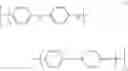
A fluorescence based oxygen sensor can be prepared comprising a polyaniline polymer doped with one or more pyrene carboxylic acids. The polyaniline has the formula:
and the pyrene carboxylic acids have the formula:
Pyrene-R—COOH (II);
wherein R is an aliphatic linking group having 1 to 11 carbon atoms, n represents half the degree of polymerization, x is about 0.5, and (1−x) is about 0.5.
-
- The sensor can be coated onto a support. Upon excitation with an appropriate wavelength, the polyaniline/pyrene coating fluoresces. Upon exposure to oxygen the fluorescence rapidly decays.
Inventors:
- Bogdan Catalin Serban 47 🇷🇴 Bucharest, Romania
- Mihai N. Mihaila 23 🇷🇴 Bucharest, Romania
- Octavian Buiu 30 🇷🇴 Bucharest, Romania
Assignee:
- HONEYWELL INTERNATIONAL INC. 10,240 🇺🇸 Morristown, NJ, United States
Applicant:
Interested in similar patents?
Get notified when new applications in this technology area are published.
Classification:
G01N21/64 IPC
Investigating or analysing materials by the use of optical means, i.e. using sub-millimetre waves, infrared, visible or ultraviolet light; Systems in which the material investigated is excited whereby it emits light or causes a change in wavelength of the incident light optically excited Fluorescence; Phosphorescence
G01N21/643 » CPC main
Investigating or analysing materials by the use of optical means, i.e. using sub-millimetre waves, infrared, visible or ultraviolet light; Systems in which the material investigated is excited whereby it emits light or causes a change in wavelength of the incident light optically excited; Fluorescence; Phosphorescence; Measuring fluorescence of fluorescent products of reactions or of fluorochrome labelled reactive substances, e.g. measuring quenching effects, using measuring "optrodes" non-biological material
C08G73/0266 » CPC further
Macromolecular compounds obtained by reactions forming a linkage containing nitrogen with or without oxygen or carbon in the main chain of the macromolecule, not provided for in groups - ; Polyamines; Wholly aromatic polyamines Polyanilines or derivatives thereof
G01N2021/6432 » CPC further
Investigating or analysing materials by the use of optical means, i.e. using sub-millimetre waves, infrared, visible or ultraviolet light; Systems in which the material investigated is excited whereby it emits light or causes a change in wavelength of the incident light optically excited; Fluorescence; Phosphorescence; Measuring fluorescence of fluorescent products of reactions or of fluorochrome labelled reactive substances, e.g. measuring quenching effects, using measuring "optrodes" Quenching
Y10T428/31645 » CPC further
Stock material or miscellaneous articles; Composite [nonstructural laminate]; Of polyamidoester [polyurethane, polyisocyanate, polycarbamate, etc.] Next to addition polymer from unsaturated monomers
C08K5/09 » CPC further
Use of organic ingredients; Oxygen-containing compounds Carboxylic acids; Metal salts thereof; Anhydrides thereof
C08L79/02 » CPC further
Compositions of macromolecular compounds obtained by reactions forming in the main chain of the macromolecule a linkage containing nitrogen with or without oxygen or carbon only, not provided for in groups - Polyamines
B32B17/10 IPC
Layered products essentially comprising sheet glass, or glass, slag, or like fibres comprising glass as the main or only constituent of a layer, next to another layer of a specific material of synthetic resin
B05D5/06 IPC
Processes for applying liquids or other fluent materials to surfaces to obtain special surface effects, finishes or structures to obtain multicolour or other optical effects
C09K11/06 IPC
Luminescent, e.g. electroluminescent, chemiluminescent materials containing organic luminescent materials
G01N31/22 IPC
Investigating or analysing non-biological materials by the use of the chemical methods specified in the subgroup; Apparatus specially adapted for such methods using chemical indicators
C08G73/02 IPC
Macromolecular compounds obtained by reactions forming a linkage containing nitrogen with or without oxygen or carbon in the main chain of the macromolecule, not provided for in groups - Polyamines
Description
FIELD OF THE INVENTION
This invention relates to fluorescence polymers for oxygen sensors using a fluorescent polyaniline doped with a pyrene compound and to methods of preparing these sensors.
BACKGROUND
Determination of oxygen concentration is important in various fields such as automotive applications, medical devices, anesthesia monitors, and environmental monitoring. Recently, devices based on the fluorescence quenching of organic molecules have been developed to determine the concentration of oxygen. When exposed to light at an appropriate wavelength, the fluorescent substances absorb energy and are promoted from their ground state energy level (So) into an excited state energy level (51). Fluorescent molecules are unstable in their excited states and can relax by different competing pathways.
Fluorescence based oxygen sensing elements work on the principle that relaxation of the 51 state can also occur through interaction with a second molecule through fluorescence quenching. Molecular oxygen (O2) is an efficient quencher of fluorescence because of its unusual triplet ground state. Fluorophores used for oxygen sensing include: pyrene and its derivatives, quinoline, decacyclene and its derivatives, phenantrene, erythrosine B, and aluminum 2,9,16,23-tetraphenoxy-29H,31H-phthalocyaninehydroxide. These fluorophores are doped into a polymer matrix such as: silicones, polystyrene, and ethyl cellulose that are selectively permeable to oxygen and adhere to glass.
One difficulty with doping fluorescent molecules into a polymer is that the fluorescent molecule may have poor solubility and may crystallize or aggregate within the polymer matrix upon coating and drying.
It would be useful to provide an oxygen sensor that does not crystallize or aggregate within the polymer matrix upon coating and drying.
SUMMARY
A composition comprises a polyaniline (I) in the form of emeraldine base doped with one or more pyrene carboxylic acid compound (II) represented by Pyrene-R—COOH;
wherein R is an aliphatic linking group having 1 to 11 carbon atoms, n represents half the degree of polymerization, x is about 0.5, and (1−x) is about 0.5.
A fluorescence oxygen sensor comprises a support having coated thereon: a polyaniline (I) in the form of emeraldine base doped with one or more pyrene carboxylic acid compound (II) represented by Pyrene-R—COOH;
wherein R is an aliphatic linking group having 1 to 11 carbon atoms,
n represents half the degree of polymerization, x is about 0.5, and (1−x) is about 0.5.
A method of preparing a fluorescence oxygen sensor comprises coating onto a support a solution of polyaniline (I) in the form of emeraldine base doped with one or more pyrene carboxylic acid compound (II) represented by Pyrene-R—COOH;
wherein R is an aliphatic linking group having 1 to 11 carbon atoms,
n represents half the degree of polymerization, x is about 0.5, and (1−x) is about 0.5.
Other aspects, advantages, and benefits of the present invention are apparent from the detailed description, examples, and claims provided in this application.
DETAILED DESCRIPTION
To prevent aggregation and crystallization, the fluorescent pyrene molecule (a fluorophore) is immobilized by doping in a polyaniline matrix. Doping of a pyrene carboxylic acid compound into a polyaniline provides a fluorescence quenching oxygen sensor.
In one embodiment the pyrene fluorophore of the oxygen sensor comprises one or more pyrene aliphatic carboxylic acid compounds of formula (II) represented by Pyrene-R—COOH; wherein R is an aliphatic linking group having 1 to 11 carbon atoms.
Polyaniline (I) can exist in one of three idealized oxidation states; leucoemeraldine—white/clear & colorless; emeraldine—green or blue, and pernigraniline—blue/violet. In compound (I), n equals half the degree of polymerization (DP). Leucoemeraldine with x is 1 and (1−x) is 0 is the fully reduced state. Pernigraniline is the fully oxidized state (x is 0 and (1−x) is 1) with imine links instead of amine links. The emeraldine form of polyaniline, often referred to as emeraldine base (EB) contains approximately equal amounts of amine and imine (i.e., x is about 0.5 and (1−x) is about 0.5). The emeraldine base is either neutral or doped, with the imine nitrogens protonated by an acid. It is regarded as the most useful form of polyaniline due to its high stability at room temperature and the fact that upon doping the emeraldine salt form of polyaniline is electrically conducting. Leucoemeraldine and pernigraniline are poor conductors, even when doped with an acid.
Representative pyrene carboxylic acid fluorophore compounds capable of being doped into the polyaniline include: pyrene butyric acid, pyrene decanoic acid, pyrene dodecanoic acid, and pyrene acetic acid. Mixtures of pyrene carboxylic acid fluorophore compounds may be used.
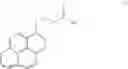
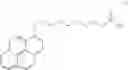
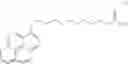
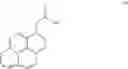
Exemplary pyrene carboxylic acid fluorophore compounds capable of being doped into the polyaniline include: 1-pyrene butyric acid (1), 1-pyrene decanoic acid (2), 1-pyrene dodecanoic acid (3), and 1-pyrene acetic acid (4). Mixtures of pyrene carboxylic acid fluorophore compounds may be used. These pyrene carboxylic acids are commercially available from Sigma-Aldrich (St. Louis, Mo.).
Structure (1) represents 1-pyrenebutyric acid.
Structure (2) represents 1-pyrenedecanoic acid.
Structure (3) represents 1-pyrenedodecanoic acid.
Structure (4) represents 1-pyrene acetic acid.
In formula (I) R is an alkylene group having from 1 to 11 carbon atoms. The alkylene group may be straight chain or branched. In one embodiment, R is a straight chain alkylene group —(CH2)m— having from 1 to 11 methylene groups. Particularly useful are —(CH2)m— groups wherein m is 1, 3, 9, and 11.
The amount of pyrene carboxylic acid and polyaniline can be determined experimentally by doping the polyaniline with various amounts of pyrene carboxylic acid until a strong fluorescence is obtained. In one embodiment, the weight ratio of pyrene carboxylic acid to polyaniline is from about 0.5:1 to about 4:1. A weight ratio of from about 2:1 to about 4:1 is also useful.
In one embodiment the oxygen sensor comprises a support. The support may be transparent, translucent, or opaque. The support may be rigid or flexible. Exemplary polymeric materials for making such supports include polyesters [such as poly(ethylene terephthalate) and poly(ethylene naphthalate)], cellulose acetate and other cellulose esters, polyvinyl acetal, polyolefins, polycarbonates, and polystyrenes. Preferred polymeric supports include polymers having good heat stability, such as polyesters and polycarbonates. Support materials may also be treated or annealed to reduce shrinkage and promote dimensional stability. Opaque supports can also be used, such metals and resin-coated papers that are stable to high temperatures. Rigid supports such as glass are also useful.
The fluorescence quenching quenching oxygen sensor can be prepared by coating the polyaniline/pyrene compounds of formula (I) onto a support using various coating procedures including spin coating, wire wound rod coating, dip coating, air knife coating, curtain coating, slide coating, or extrusion coating.
Preparation of Polyaniline
The preparation of polyaniline is shown below in Reaction Scheme (I). The acidification of polyaniline is shown below in Reaction Scheme (II).
Polyaniline (I) was prepared by chemical oxidation of aniline with ammonium peroxodisulphate. Aniline (23.3 g, 0.25 ml) was dissolved in 150 ml water, and then 20 ml of 37.5% hydrochloric acid was added to it. The mixture was stirred in an ice bath for one hour. Polymerization was started by addition of ammonium peroxodisulphate (57 g, 0.25 mol). After addition of ammonium peroxodisulphate, the solution was covered and placed in a refrigerator at 0° C. for six hours. After this, the mixture was diluted with water, and precipitate was filtered, washed with an excess of 0.5 M ammonium hydroxide, and then washed with deionizated water. The resulting polyaniline, a dark powder, was dried at 60° C. for six hours to remove the solvent and water.
wherein x is about 0.5 and (1−x) is about 0.5 and n is the degree of polymerization.
wherein x is about 0.5 and (1−x) is about 0.5, n is half the degree of polymerization, and A− is an anion of the acid, such as one or more pyrene carboxylic acid anions.
Preparation of Fluorescence Quenching Oxygen Sensors
Polyaniline polymer (0.5 g) as the free base is placed in 40 ml of dimethylformamide which contained 1 g of pyrene compound (II). Thereafter, the doped polyaniline is filtered and rinsed with water to remove the undissolved pyrene and form a homogeneous solution. The solution is coated onto a glass slide to form a film. The coated slide is stored for three days, after which the film is dried in vacuo at 50° C. for three hours. The film is then dried in a dessicator for three weeks.
Use of the Oxygen Sensor
The oxygen sensor may be incorporated in a miniature solid-state transducer that uses fluorescence to measure oxygen partial pressure. An LED excitation source and fluorescence detector are both integrated into the device. The device has a strong response to oxygen (O2) but is insensitive to common atmospheric and medical gases. The polyaniline/pyrene is excited by the LED with an appropriate wavelength and fluoresces. Upon exposure to oxygen the fluorescence rapidly decays. The intensity and rate of decay of the fluorescence is measured by the detector.
REFERENCES
- Otto S. Wolfbeis, “Materials for fluorescence-based optical chemical Sensors”, J. Mater., Chem., 15, 2657-2669, (2005).
- Wenying et al., “Oxygen sensors based on luminescence quenching: interactions of pyrene with the polymer supports”, Analytical Chem., 67, 3172-3180, (1995).
Y. Amao, K. Asai, I. Okura, “Fluorescence quenching oxygen sensor using an aluminum phthalocyanine-polystyrene film”, Analytica Chimica Acta, 407, 41-44, (2000).
B. Serban, M. Bercu, S. Voicu, M. Mihaila, Gh. Nechifor, C. Cobianu., “Calixarenedoped polyaniline for applications in sensing”, CAS 2006 Proceedings, pg. 257-260, IEEE catalog number: 06TH8867.
- B. Serban, Viorel V. Avramescu Cornel P. Cobianu, Ion Georgescu, N. Varachiu, “Design and deposition of sensing layers for surface acoustic chemical sensors based on supramolecular chemistry,” WO 2008/118740, (Oct. 2, 2008).
B. Serban, Cobianu C, Bercu M., Varachiu N., Mihaila M., Bostan C., Voicu S., “Matrix nanocomposite containing aminocarbon nanotubes for carbon dioxide sensor detection,” U.S. Patent Application Publication. No. 2008/0264147 A1, (Oct. 30, 2008).
Claims
1. A composition comprising:
a polyaniline in the form of emeraldine base (I) doped with one or more pyrene carboxylic acid compounds (II) represented by Pyrene-R—COOH;
wherein R is an aliphatic linking group having 1 to 11 carbon atoms,
n represents half the degree of polymerization, x is about 0.5, and (1−x) is about 0.5.
2. The composition of claim 1, wherein the one or more pyrene carboxylic acid compounds (II) is represented by pyrene butyric acid, pyrene decanoic acid, pyrene dodecanoic acid, and pyrene acetic acid.
3. The composition of claim 1, wherein the one or more pyrene compounds (II) is represented by 1-pyrene butyric acid (1), 1-pyrene decanoic acid (2), 1-pyrene dodecanoic acid (3), and 1-pyrene acetic acid (4)
4. The composition of any of claims 1-3, coated onto a support.
5. The composition of any of claim 4, wherein the support is glass.
6. A fluorescence oxygen sensor comprising a support having coated thereon:
a composition comprising polyaniline in the form of emeraldine base (I) doped with one or more pyrene carboxylic acid compounds (II) represented by Pyrene-R—COOH;
wherein R is an aliphatic linking group having 1 to 11 carbon atoms, and
n represents half the degree of polymerization, x is about 0.5, and (1−x) is about 0.5.
7. The fluorescence oxygen sensor of claim 6, wherein the one or more pyrene carboxylic acid compounds (II) is represented by pyrene butyric acid, pyrene decanoic acid, pyrene dodecanoic acid, and pyrene acetic acid.
8. The fluorescence oxygen sensor of any of claims 5-7, wherein the one or more pyrene compound (II) is represented by 1-pyrene butyric acid (1), 1-pyrene decanoic acid (2), 1-pyrene dodecanoic acid (3), and 1-pyrene acetic acid (4)
9. The fluorescence oxygen sensor of any of claims 5-8, further comprising a LED excitation source and a fluorescence detector.
10. A method of preparing a fluorescence oxygen sensor of claim 1, comprising coating onto a support a solution of a composition comprising polyaniline in the form of emeraldine base (I) doped with one or more pyrene carboxylic acid compounds (II) represented by Pyrene-R—COOH;
wherein R is an aliphatic linking group having 1 to 11 carbon atoms and n represents half the degree of polymerization, x is about 0.5, and (1−x) is about 0.5.
11. The method of claim 10, wherein R is —(CH2)m— and m is 1 to 11.
12. The method of any of claim 10 or 11, wherein Pyrene-R—COOH is represented by one or more of:
13. The method of any of claims 10-12, wherein the support is glass.
Images & Drawings included:












Sources:
- United States Patent and Trademark Office - verify current appl. status at the USPTO↗
Recent applications in this class:
- » 20250290853 2025-09-18
Method of Screening Microplastic Particles using a Hyperspectral Imaging Device - » 20250208042 2025-06-26
METHOD AND BORESCOPE FOR IDENTIFYING A SUBSTANCE IN A CAVITY OF AN APPARATUS - » 20250155374 2025-05-15
INSPECTION APPARATUS AND INSPECTION METHOD - » 20250155373 2025-05-15
HIGHLY FLUORESCENT CONJUGATED PLYMER AND EXPOLOSIVE VAPOR SENSOR USING THE SAME - » 20250146938 2025-05-08
SYSTEMS FOR NANOPLASTICS DETECTION AND METHOD OF USING THE SAME - » 20250035553 2025-01-30
METHODS OF MULTIPLEXED ANALYTE CHARACTERIZATION - » 20240328946 2024-10-03
FLUORESCENCE ANALYSIS METHOD FOR LITHIUM ION DETERMINATION USING FREE-BASE PHTHALOCYANINE (FBPc) AS MOLECULAR PROBE - » 20240310281 2024-09-19
FLUOROSURFACTANT DETECTION - » 20240302279 2024-09-12
OPTOCHEMICAL SENSOR AND METHOD FOR MEASURING LUMINESCING ANALYTES IN A MEASUREMENT MEDIUM - » 20240280489 2024-08-22
METHOD FOR ESTIMATING MASS OF MICROPLASTICS BY USING FLUORESCENT STAINING
Recent applications for this Assignee:
- » 20200347311 2020-11-05
Process for natural gas production - » 20200222851 2020-07-16
Integrated mercaptan extraction and/or sweetening processes combined with thermal oxidation and flue gas treatment - » 20190174102 2019-06-06
Systems and methods for automatic video recording - » 20190136108 2019-05-09
STABILIZED IODOCARBON COMPOSITIONS - » 20190120659 2019-04-25
Differential hall magnet polarity detection for AMR 360 degree sensor - » 20190104161 2019-04-04
Systems and methods for directly accessing video data streams and data between devices in a video surveillance system - » 20190084905 2019-03-21
NOVEL PROCESS FOR MANUFACTURING 2-CHLORO-3,3,3-TRIFLUOROPROPENE FROM 1,2-DICHLORO-3,3,3-TRIFLUOROPROPENE - » 20190056529 2019-02-21
Anti-fog and anti-reflective dual-functional coating for optical articles - » 20190047927 2019-02-14
Methods for removing halogenated ethylene impurities in 2, 3, 3, 3-tetrafluoropropene product - » 20190005805 2019-01-03
Systems and methods for delaying or activating a blowout device or a purge device in a sampling pipe network of an aspirated smoke detection system