Separation and/or purification of Bfrom C
US20120142893A1
2012-06-07
13/389,597
2010-08-11
✅ Patent granted
US 8,839,962 B2
2014-09-23
WO; PCT/NO2010/000301; 20100811
WO; WO2011/019285; 20110217
Marcela M Cordero Garcia | Sergio Coffa
Cantor Colburn LLP
2030-08-11
Abstract:
The present invention concerns a method for separation of the antifungal cyclic hexapeptides Pneumocandin B0 from Pneumocandin C0 using a hydrophilic stationary phase and a hydrophobic mobile phase.
Assignee:
- XELLIA PHARMACEUTICALS APS 16 🇩🇰 Copenhagen, Denmark
- Xellia Pharmaceuticals APS 14 🇩🇰 , Denmark
Applicant:
Interested in similar patents?
Get notified when new applications in this technology area are published.
Classification:
B01D12/00 IPC
Displacing liquid, e.g. from wet solids or from dispersions of liquids or from solids in liquids, by means of another liquid
B01D15/305 » CPC further
Separating processes involving the treatment of liquids with solid sorbents ; Apparatus therefor; Selective adsorption, e.g. chromatography characterised by the separation mechanism; Partition chromatography Hydrophilic interaction chromatography [HILIC]
B01D15/322 » CPC further
Separating processes involving the treatment of liquids with solid sorbents ; Apparatus therefor; Selective adsorption, e.g. chromatography characterised by the separation mechanism; Bonded phase chromatography Normal bonded phase
C07K7/56 » CPC further
Peptides having 5 to 20 amino acids in a fully defined sequence; Derivatives thereof; Cyclic peptides containing at least one abnormal peptide link with at least one abnormal peptide link in the ring the cyclisation not occurring through 2,4-diamino-butanoic acid
A61K38/00 » CPC further
Medicinal preparations containing peptides
B01D15/364 » CPC further
Separating processes involving the treatment of liquids with solid sorbents ; Apparatus therefor; Selective adsorption, e.g. chromatography characterised by the separation mechanism involving ionic interaction; Ion-exchange Amphoteric or zwitterionic ion-exchanger
B01D15/426 » CPC further
Separating processes involving the treatment of liquids with solid sorbents ; Apparatus therefor; Selective adsorption, e.g. chromatography characterised by the development mode, e.g. by displacement or by elution; Elution mode Specific type of solvent
C07K7/64 » CPC further
Peptides having 5 to 20 amino acids in a fully defined sequence; Derivatives thereof Cyclic peptides containing only normal peptide links
C07K1/20 » CPC main
General methods for the preparation of peptides, i.e. processes for the organic chemical preparation of peptides or proteins of any length; Extraction; Separation; Purification by chromatography Partition-, reverse-phase or hydrophobic interaction chromatography
B01D11/00 IPC
Solvent extraction
B01D17/00 IPC
Separation of liquids, not provided for elsewhere, e.g. by thermal diffusion
C02F1/26 IPC
Treatment of water, waste water, or sewage by extraction
C02F1/28 IPC
Treatment of water, waste water, or sewage by sorption
B01D15/08 IPC
Separating processes involving the treatment of liquids with solid sorbents ; Apparatus therefor Selective adsorption, e.g. chromatography
Description
FIELD OF THE INVENTION
The present invention concerns methods for separating and purifying Pneumocandin compounds.
BACKGROUND
Pneumocandins are antifungal cyclic hexapeptides with a lipid side chain (see Schwarts et al, 1992, Journal of antibiotics, Vol 45, No 12, pages 1853-1866, Masurekar et al, 1992, Journal of Antibiotics, Vol 45, No. 12, pages 1867-1874, Hensens et al, 1992, Journal of Antibiotics, Vol 45, No 12, pages 1875-1885, Schmatz et al, 1992, Journal of Antibiotics, Vol 45, No 12, pages 1886-1891 and Adefarati et al , 1992, Journal of Antibiotics, Vol 45, No 12, pages 1953-1957 and U.S. Pat. No. 5,021,341)
The antifungal activity of Pneumocandins is connected to inhibition of the biosynthesis of 1,3β-glucans. 1,3β-glucan synthase, a multisubunit enzyme, is responsible for fungal cell wall construction, division septum deposition, and ascospore wall assembly. The catalytic subunit of this enzyme complex, an integral membrane protein, has been identified both in model yeasts Saccharomyces cerevisiae and Schizosaccharomyces pombe, and in pathogenic fungi such as Candida, Aspergillus, Cryptococcus and Pneumocystis species”. (Curr Drug Targets Infect Disord. 2001 August ; 1(2):159-69 by Liu and Balasubramanian).
The Pneumocandins and Pneumocandin derivatives are useful as active pharmaceutical ingredients (APIs) and/or intermediates for producing APIs. Drugs comprising the APIs are intended for use in therapeutic or prophylactic treatment of diseases or conditions involving fungal infections.
For example, the API Caspofungin is a semi synthetic derivative of Pneumocandin B0. Caspofungin, marketed as Cancidas®, is indicated in adults and pediatric patients (3 months and older) for:
-
- Empirical therapy for presumed fungal infections in febrile, neutropenic patients.
- Treatment of Candidemia and the following Candida infections: intra-abdominal abscesses, peritonitis and pleural space infections.
- Treatment of Esophageal Candidiasis.
- Treatment of Invasive Aspergillosis in patients who are refractory to or intolerant of other therapies
Thus, high purity of the API is required for safety and efficacy of the drugs.
Pneumocandin B0 can be used as a starting material for producing Caspofungin.
During such production, Pneumocandin C0 will be regarded as an impurity. Thus it is desirable to separate Pneumocandin B0 from Pneumocandin C0, or even purify Pneumocandin B0 from Pneumocandin C0.
Pneumocandin B0 is often produced by fermentation of the fungus Glarea lozoyensis (earlier classified as Zalerion arboricola), but many isomers and derivatives with similar physiochemical properties, are coproduced in the fermentation processes.
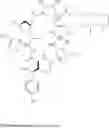
Pneumocandin B0 and Pneumocandin C0 are isomers which differ by the position of one hydroxyl group at a proline residue only:
Several methods for separation of Pneumocandin B0 from the other Pneumocandins (e.g Pneumocandin A0, B5, D0, E0) are known. However, crystallization and reverse phase chromatography methods have been unable to separate Pneumocandin B0 from Pneumocandin C0. These two isomers differ only by the position of one hydroxyl group at a proline residue.
For the separation of Pneumocandin B0 from Pneumocandin C0, normal phase chromatography utilizing ethyl acetate/methanol/water mobile phases has been used. This method, however, suffers from low Pneumocandin solubility in the loading solution and also from somewhat low robustness. In addition, this mobile phase is not very compatible with mass spectrometric methods, which limits the usefulness of the method for analytical purposes.
PRIOR ART
Several publications describe methods for purification of Pneumocandins.
-
-
Purification of Pneumocandins by preparative silica-gel high-performance liquid chromatography
- Journal of Chromatography A, 831 (1999) 217-225 by Osawaa et al.
-
Preparative high-performance liquid chromatography of echinocandins
- Journal of Chromatography A, Volume 827, Issue 2, 11 Dec. 1998, Pages 373-389 by Roush et al.
-
Normal Phase High-Performance Liquid Chromatography of Pneumocandins: In Situ Modification of Silica with L-Proline To Separate Structural Analogues
- Biotechnol Prog. 2006 March-April; 22(2):538-46 by Nti-Gyabaah et al.
-
Ultrafast liquid chromatography/tandem mass spectrometry bio analysis of polar analytes using packed silica columns
- Rapid Commun Mass Spectrom. 2002; 16(17):1613-21 by Shou et al
- WO2005026323 STATIONARY PHASES AND A PURIFICATION PROCESS USING THE STATIONARY PHASES
-
Transition Metal-Mediated Separation of Isomeric Pneumocandins by Capillary Electrochromatography
- J. High Resol. Chromatogr., 1999, 22(6): 309-314 by Hoffman and Dovletoglou
-
Potential of HILIC-MS in quantitative bio analysis of drugs and drug metabolites
- J. Sep. Sci. 2008, 31, 1481-1491 by Hsieh
-
Purification of Pneumocandins by preparative silica-gel high-performance liquid chromatography
SUMMARY OF THE INVENTION
This invention provides for separation and purification of Pneumocandin compounds.
More specifically it provides a method for purification of Pneumocandin B0.
Even more specifically, it provides a method for purification of B0 using a hydrophilic stationary phase and hydrophobic mobile phase.
In one embodiment, the hydrophilic stationary phase comprises silica.
In another embodiment, the mobile phase comprises acetonitrile, water and ammonium acetate.
In another embodiment, this invention provides a method for separation of Pneumocandin B0 from other compounds.
In another embodiment, this invention provides a method for separation of Pneumocandin B0 from other Pneumocandins.
In yet another embodiment, this invention provides a method for separation of Pneumocandin B0 from Pneumocandin C0.
This method provides very fast separation of B0 from C0 using a mobile phase which is compatible with mass spectrometric methods.
DETAILED DESCRIPTION
Definitions
As used herein, the following terms and expressions are meant to have the meanings defined below.
“Pneumocandins” are cyclic hexapeptides or derivatives thereof comprising a lipid moiety with antifungal activity.
“Pneumocandin B0” is a compound with the following structure:
However, the term “Pneumocandin B0”, as used herein, also includes salts or stereo isomers thereof.
“Pneumocandin C0” is a compound with the following structure
However, the term “Pneumocandin C0”, as used herein, also includes salts or stereo isomers thereof.
“Separation” is any method wherein a desired compound is resolved from another (analytically or preparatively).
“Purification” is any separation method by which the concentration of a desired compound is increased.
“Chromatography” is any purification technique involving a stationary phase and a mobile phase.
“A stationary phase” is any surface comprising ligands capable of retaining compounds.
“Ligands” are moieties of the stationary phase, at which the binding of compounds occurs.
“A mobile phase” is any fluid, solvent, liquid or mixture that can percolate through or along the stationary phase in a definite direction.
“A hydrophobic mobile phase” is any mobile phase comprising a high percentage of an organic solvent and a low percentage of an aqueous solution (e.g formic acid or TFA) and/or a buffer (e.g ammonium acetate or ammonium formate).
“Reverse phase chromatography” is any chromatography in which the more polar or charged components are eluted before the less polar ones.
“Normal phase chromatography” is any chromatography in which the more polar or charged components are eluted later than the less polar ones.
“High percentage” means between 60%-100%
“Low percentage” means between 0%-40%
“% v/v ” means volume percentage
HILIC is any chromatographic technique employing a hydrophilic stationary phase and aqueous-organic solvent mobile phases.
The present invention allows separation and purification of Pneumocandin compounds by chromatography, especially hydrophilic interaction chromatography (HILIC), also known as hydrophilic interaction liquid chromatography.
Without being bound by theory, it is believed that during HILIC purification a liquid-liquid extraction system is created. The mobile phase forms a water-rich layer on the surface of the highly polar stationary phase. The analytes are distributed between the water-rich stationary layer with high-aqueous contents and the mobile phase with mostly organic contents. The analytes possessing higher polarity will have a higher affinity to the stationary aqueous layer than the analytes possessing weaker polarity. Thus, a separation based on a compound's polarity and degree of solvation probably takes place. However, the exact mechanism of HILIC is still unresolved in the field.
There are several types of polar stationary phases, such as e.g. unmodified silica, amino, and zwitterionic (ZIC) columns commercially available for HILIC separation/purification.
For the present invention, unmodified silica surfaces comprising silanols and/or siloxanes are preferred.
HILIC often provides a high-organic and low-aqueous mobile phase which is MS favourable in terms of sensitivity.
It is preferred that the mobile phase contains a high percentage of an organic solvent (e.g ACN) and a low percentage of an acidic aqueous solution (e.g formic acid or TFA) and/or a buffer (e.g ammonium acetate or ammonium formate).
The Pneumocandin sample is dissolved into the mobile phase and passed through the stationary phase and is thereby allowed to be separated. In this way, Pneumocandin B0 may be separated from Pneumocandin C0 or from other Pneumocandins. This chromatographic separation may be performed either in preparative or analytical scale.
This invention provides a method for separation and purification of Pneumocandin compounds.
More specifically it provides a method for purification of Pneumocandin B0.
Even more specifically, it provides a method for purification of B0 using a hydrophilic stationary phase and hydrophobic mobile phase.
The hydrophobic mobile phase could comprise 60%-98% acetonitrile, or more preferred 75%-95% acetonitrile or even more preferred 80%-90% acetonitrile or most preferred 85%-87% acetonitrile.
The hydrophobic mobile phase could comprise 2%-40% of aqueous solutions, or more preferred 5%-25% of aqueous solutions or even more preferred 10%-20% aqueous solutions or most preferred 13%-15% aqueous solutions.
In one embodiment, the hydrophilic stationary phase comprises silica.
In another embodiment, the mobile phase comprises acetonitrile, water and ammonium acetate.
In another embodiment, this invention provides a method for separation of Pneumocandin B0 from other compounds.
In another embodiment, this invention provides a method for separation of Pneumocandin B0 from other Pneumocandins.
In yet another embodiment, this invention provides a method for separation of Pneumocandin B0 from Pneumocandin C0.
To be able to create an analytical method to analyze the content of B0 and C0 in a sample it was necessary to either separate the two compounds chromatographically or find compound specific ions, qualifiers or MS/MS-transitions. Since either of the B0 or C0 standards supplied were pure enough, we had to develop a fast separation of B0 or C0 before further MS—experiments could be done. Since reverse phase chromatography did not show any promising results, it was decided to try and set up a method based on normal phase chromatography. Initial testing was done on an Agilent-NH2 column, with different combinations of Acetonitrile (ACN) and 0, 1% Ammonium Acetate solution in water (AmAc) which showed signs of separation, but the resolution was far from good enough to give a base line separation of the two compounds. An Ascentis Express HILIC column, from Sigma-Aldrich was then tested based on that it is a “normal phase” type of column and that the Fused-Core particle technology is known to give good resolution. After testing out different combinations of ACN and AmAc a mixture of 85/15 (ACN/AmAc) was chosen. The result was a baseline separation of B0 and C0. Increasing the ACN content gave longer retention times but broader peaks, and increasing the AmAc content gave shorter retention times but less separation. B0 and C0 were monitored with ESI/MS in positive mode.
This method provides surprisingly fast separation of B0 from C0 with a mobile phase that is compatible with mass spectrometric methods (the mobile phase being volatile and gives high ionization efficiency). The method can separate B0 from C0 in less than 5 minutes or even less than 3 minutes.
The following abbreviations are used with the specified meanings throughout this specification:
Abbreviations:
API—Active Pharmaceutical Ingredients
HILIC—Hydrophilic Interaction Liquid Chromatography
LC—Liquid Chromatography
HPLC—High Performance Liquid Chromatography
MS—Mass Spectrometry
MS/MS—Tandem Mass Spectrometry
ESI/MS—Electrospray Ionization Mass Spectrometry
TOF—Time of Flight
ZIC—Zwitterionic Column
ACN—Acetonitrile
AmAc—Ammonium Acetate
TFA—Trifluoracetic Acid
EXAMPLES
Example I
In this experiment, an Agilent 1200 HPLC system coupled to an Agilent 6520 Q-TOF mass spectrometer was used. The Agilent 1200 HPLC system consisted of a binary pump, degasser, thermostated autosampler and a thermostated column compartment (set to 25° C.). A Supelco Ascentis Express HILIC 15 cm×4.6 mm, 2.7 μm column was used. The mobile phase consisted of 15% v/v 0.1% w/w ammonium acetate pH 4.5 and 85% v/v ACN. The flow rate was 1 ml/min.
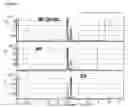
FIG. 1A shows that this chromatographic set-up is able to separate Pneumocandin B0 from Pneumocandin C0 in a mixture containing both isomers. FIG. 1B shows the identification of the Pneumocandin B0 peak using a pure Pneumocandin B0 reference standard. FIG. 1C shows the identification of the Pneumocandin C0 peak using a pure Pneumocandin C0 reference standard.
The chromatographic separation and retention times could be affected by altering the ACN or ammonium acetate contents. Increasing the ACN content resulted in longer retention times and broader peaks. Increasing the ammonium acetate content resulted in shorter retention times and decreased separation.
FIG. 1. Selective mass chromatograms from different LC-MS experiments. (A) Chromatographic separation of Pneumocandin B0 from Pneumocandin C0 in a mixture containing both isomers. (B) Identification of the Pneumocandin B0 peak using a pure Pneumocandin B0 reference standard. (C) Identification of the Pneumocandin C0 peak using a pure Pneumocandin C0 reference standard.
Example II
In this experiment, a Thermo Fisher Surveyor HPLC system was used. The Surveyor HPLC system consisted of a quaternary pump, degasser, thermostated autosampler and a thermostated column compartment (set to 40° C.). A Supelco Ascentis Si HILIC 15 cm×2.1 mm, 5 μm column was used. The mobile phase consisted of 13% v/v 0.1% w/w ammonium acetate pH 4.5 and 87% v/v ACN. The flow rate was 0.2 ml/min.
FIG. 2 shows that this chromatographic set-up is able to separate Pneumocandin B0 from Pneumocandin C0 in a sample containing both isomers:
Claims
1. A method for separation of Pneumocandin B0 from Pneumocandin C0
comprising
providing a HILIC chromatographic separation apparatus comprising a hydrophilic stationary phase and a hydrophobic mobile phase,
dissolving a sample containing, or at least suspected of containing, Pneumocandin B0 together with Pneumocandin C0 into the hydrophobic mobile phase,
passing the mobile phase through the stationary phase,
wherein Pneumocandin B0 is allowed to separate from Pneumocandin C0 or any other Pneumocandin present in the sample.
2. The method of claim 1 wherein the separation is a purification.
3. The method of claim 1 wherein the stationary phase comprises silica.
4. The method of claim 1 wherein the stationary phase comprises siloxane groups.
5. The method of claim 1 wherein the stationary phase comprises silanol groups.
6. The method of claim 1 wherein the stationary phase comprises siloxane and silanol groups.
7. The method of claim 1 wherein the stationary phase is neutral.
8. The method of claim 1 wherein the stationary phase is charged.
9. The method of claim 1 wherein the stationary phase is zwitterionic.
10. The method of claim 1 wherein the mobile phase comprises a high percentage of an organic solvent.
11. The method of claim 1 wherein the mobile phase comprises a high percentage of an organic solvent and a low percentage of an aqueous solution.
12. The method of claim 1 wherein the mobile phase comprises a high percentage of acetonitrile and a low percentage of an ammonium acetate solution.
13. The method of claim 1 wherein the mobile phase comprises acetonitrile, water and ammonium acetate.
14. The method of claim 1 wherein the mobile phase comprises acetonitrile.
15. The method of claim 1 wherein the mobile phase comprises 80%-90% v/v acetonitrile.
16. The method of claim 1 wherein the mobile phase comprises 10-20% v/v of an acidic aqueous solution.
17. The method of claim 1 wherein the mobile phase comprises 15% v/v 0, 1% aqueous ammonium acetate and 85% v/v acetonitrile.
18. The method of claim 1 wherein separation time is less than 5 minutes.
19. The method of claim 1 wherein separation time is less than 3 minutes.
Images & Drawings included:

Sources:
- United States Patent and Trademark Office - verify current appl. status at the USPTO↗
Recent applications in this class:
- » 20240352061 2024-10-24
PROCESS FOR SEPARATION AND QUANTIFICATION OF NON-IONIC SURFACTANT - » 20240327453 2024-10-03
METHOD FOR PURIFYING PROTEINS - » 20240317798 2024-09-26
METHOD FOR PURIFYING CLOSTRIDIUM BOTULINUM TOXIN COMPLEX PROTEIN - » 20240092827 2024-03-21
Process for manufacturing peptide - » 20230391820 2023-12-07
HYDROPHOBIC INTERACTION PROTEIN CHROMATOGRAPHY UNDER NO-SALT CONDITIONS - » 20230303621 2023-09-28
IMPROVED PROCESS FOR THE SEPARATION AND ANALYSIS OF PANCREATIC ENZYMES - » 20230220003 2023-07-13
PURIFICATION METHOD FOR IMIDAZOLE DIPEPTIDES - » 20230203092 2023-06-29
Optimization method for capturing proteins by multi-column continuous chromatography (MCC) - » 20230151055 2023-05-18
PRE-FRACTIONATION FOR MASS SPECTROMETRIC ANALYSIS - » 20230009990 2023-01-12
USE OF NEUTRAL pH MOBILE PHASES IN REVERSED PHASE CHROMATOGRAPHY OF ACIDIC PEPTIDES
Recent applications for this Assignee:
- » 20240358792 2024-10-31
LIQUID DALBAVANCIN COMPOSITIONS - » 20240139282 2024-05-02
Liquid dalbavancin compositions - » 20240075095 2024-03-07
Daptomycin formulations - » 20210220433 2021-07-22
Glycopeptide compositions - » 20190240155 2019-08-08
Liquid formulations of daptomycin - » 20190175632 2019-06-13
Stabilized glycopeptide antibiotic formulations - » 20190022171 2019-01-24
Inhalation device - » 20170218024 2017-08-03
Low substituted polymyxins and compositions thereof - » 20140371423 2014-12-18
Method for purification of Micafungin - » 20140371422 2014-12-18
Methods for manufacturing an antifungal agent